
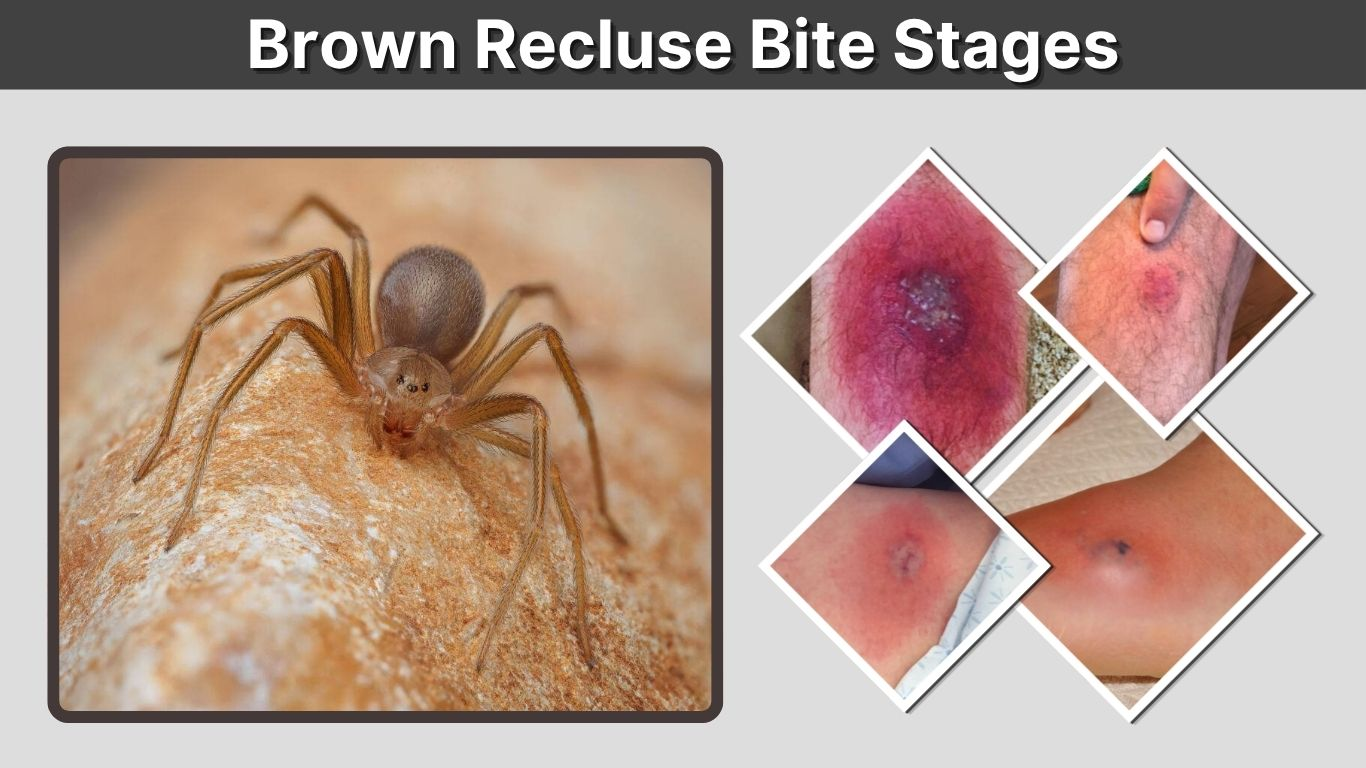
A brown recluse bite can look harmless at first, which is one reason people search for day-by-day symptoms. Some bites stay mild and heal with simple care, while others slowly become painful, blistered, dark, or open. Knowing what may happen from day 1 to day 7 can help you monitor changes, avoid panic, and know when medical attention is needed.
What a Brown Recluse Bite Looks Like Early
A brown recluse spider bite does not always hurt right away. Many people do not notice the bite when it happens. In the first few hours, the skin may look normal or show only mild redness, itching, or swelling. Later, the area may become tender, warm, or irritated.
The brown recluse is known for venom that can damage skin and small blood vessels. However, not every bite causes serious tissue injury. Many suspected “brown recluse bites” are actually other problems, such as bacterial skin infections, boils, allergic reactions, mosquito bites, tick bites, or other insect bites.
Early signs may include:
- A small red bump or patch
- Mild burning, stinging, or itching
- Swelling around the bite area
- Tenderness that increases over several hours
- A pale center or small blister in some cases
- A bruise-like color change as the bite progresses
Because the early stage can look like many other skin problems, it is important to watch the bite closely instead of relying only on appearance.
Brown Recluse Bite Day-by-Day Timeline
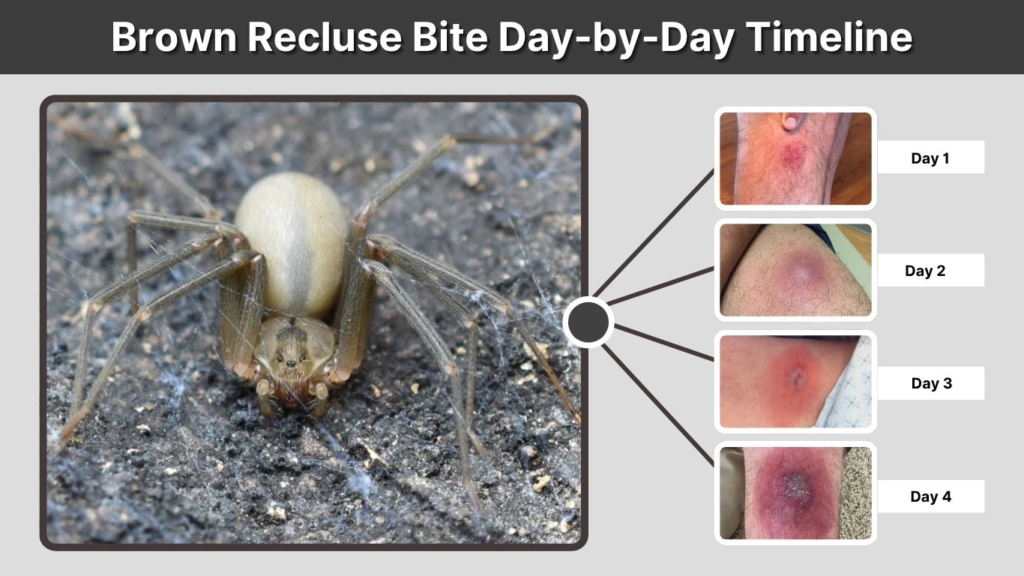
The timeline below explains what may happen during the first week. This is a general guide, not a diagnosis. A real bite can heal faster, stay mild, or worsen depending on venom amount, bite location, age, health condition, and whether infection develops.
| Day | Possible Appearance | Common Symptoms | What to Do |
|---|---|---|---|
| Day 1 | Mild redness, swelling, small bump, or normal-looking skin | Itching, stinging, mild pain, warmth | Wash the area, apply a cool compress, monitor changes |
| Day 2 | Redness may expand; blister or pale center may appear | More pain, tenderness, burning, itching | Keep clean, avoid scratching, mark the edge of redness |
| Day 3 | Purple, blue, or darker center may develop in worse cases | Increasing pain, swelling, skin tightness | Seek care if the wound grows or pain becomes severe |
| Day 4 | Blister may break; center may look darker or sunken | Pain, drainage, irritation | Use a clean dressing and watch for infection signs |
| Day 5 | Mild bites may improve; serious bites may form an open sore | Tenderness, possible fever in severe cases | Get medical help if symptoms spread or worsen |
| Day 6 | Scab or ulcer may appear in more serious bites | Ongoing pain or skin breakdown | Continue wound care; do not cut or squeeze the wound |
| Day 7 | Healing may begin, or the wound may still enlarge | Less itching if mild; worsening pain if severe | See a doctor if not improving or if tissue damage appears |
Day 1: First 24 Hours After the Bite
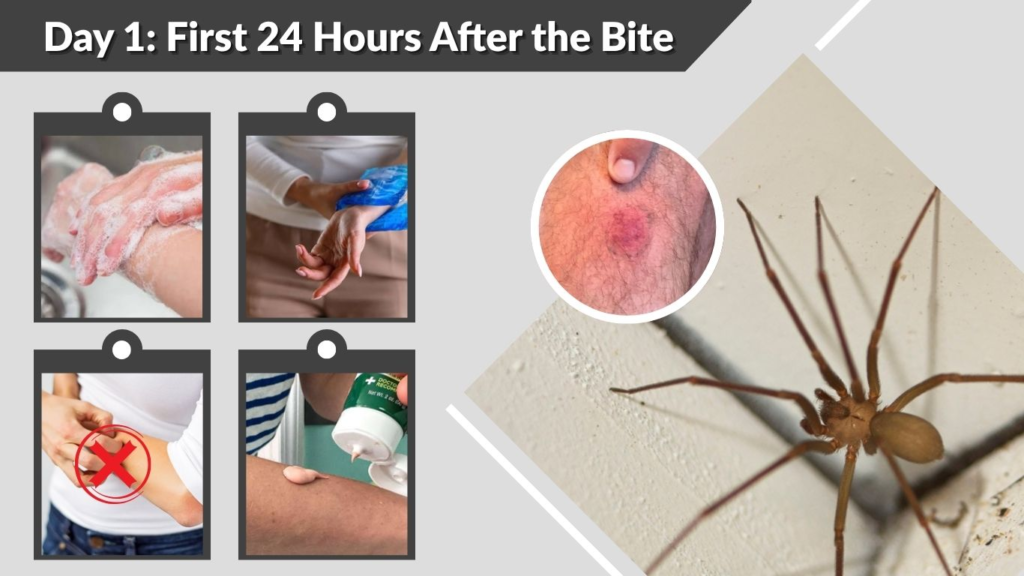
On day 1, a brown recluse bite may be difficult to identify. Some people feel a small sting, while others feel nothing at all. The bite area may look like a minor insect bite, with light redness or swelling.
During the first few hours, symptoms may include mild itching, warmth, or a small raised bump. Pain can develop later and may become more noticeable after several hours. Some bites begin with a pale center surrounded by redness, but this does not happen in every case.
What you should do on day 1:
- Wash the area with soap and water.
- Apply a cool compress for 10 to 15 minutes at a time.
- Keep the bite area elevated if possible.
- Avoid scratching or rubbing the skin.
- Take a clear photo so you can compare changes later.
- Mark the edge of redness with a pen if swelling is spreading.
Do not cut the bite, squeeze it, apply heat, or try to remove venom. These actions can irritate the tissue and make the wound worse.
Day 2: Redness, Pain, and Blistering May Increase
Day 2 is when many people begin to worry because the bite may become more painful or noticeable. The redness may spread slightly, and the center may become pale, firm, blistered, or darker. Burning and itching may also increase.
A mild bite may still look like a common bug bite. A more serious reaction may show a “bullseye-like” pattern, with a pale or bluish center and red surrounding skin. The area may feel tender, tight, or warm.
On day 2, monitor these changes carefully:
- Is the redness spreading quickly?
- Is pain getting worse instead of better?
- Is a blister forming?
- Is the center turning purple, blue, black, or gray?
- Do you feel feverish, weak, nauseated, or unusually tired?
If the wound is growing, pain is severe, or you are unsure whether the spider was dangerous, contact a healthcare professional.
Day 3: The Bite May Start Showing a Clear Pattern
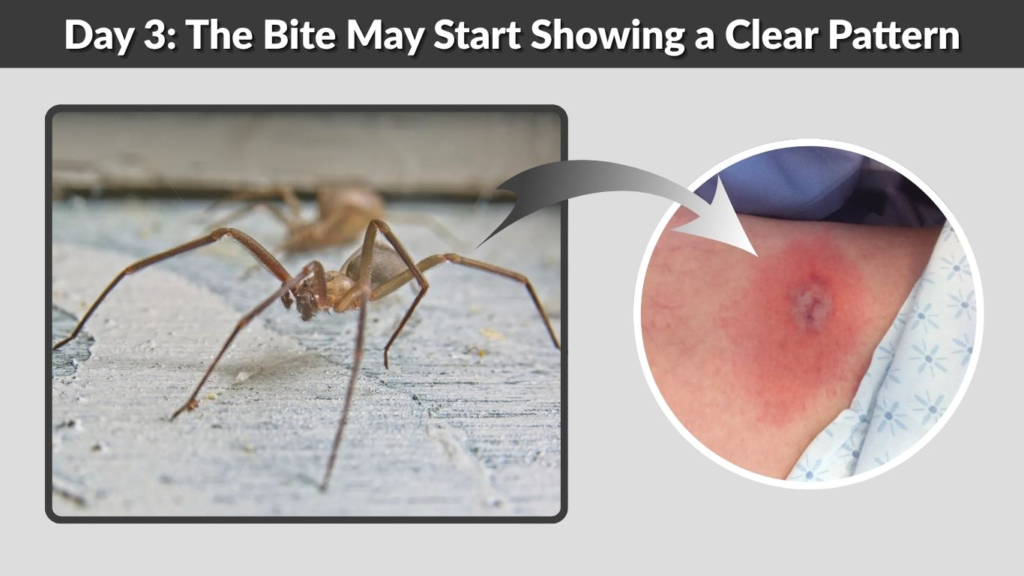
By day 3, a mild bite may begin calming down. Redness and itching may slowly improve. However, if the bite is more serious, the skin may start showing darker discoloration. The center may look purple, blue, gray, or bruised.
This color change can happen when the venom affects local tissue. Some bites may form a blister or develop a small open area. Pain may become deeper and more intense, especially when the wound is touched.
Day 3 warning signs include:
- A wound that is getting larger
- A dark center that continues to expand
- Red streaks moving away from the bite
- Pus, increasing warmth, or swelling
- Fever, chills, vomiting, muscle aches, or weakness
These symptoms may suggest a serious reaction or infection. A healthcare provider can evaluate the wound and recommend proper treatment.
Day 4: Skin Breakdown Can Happen in Worse Cases
Day 4 is often when people notice whether the bite is improving or worsening. If the bite is mild, swelling and irritation may decrease. If the bite is more severe, the center may blister, break open, or look sunken.
A brown recluse bite can sometimes lead to necrosis, which means skin tissue dies. This does not happen in every case, but when it does, the wound may become dark, crusted, or ulcer-like. The surrounding skin may remain red, swollen, and painful.
At this stage, avoid home remedies that can damage skin. Do not use harsh chemicals, do not scrape the wound, and do not pop blisters. Keep the area clean and covered with a sterile dressing. Change the dressing as needed and wash your hands before and after touching the area.
Day 5: Mild Bites May Improve, Serious Bites May Worsen
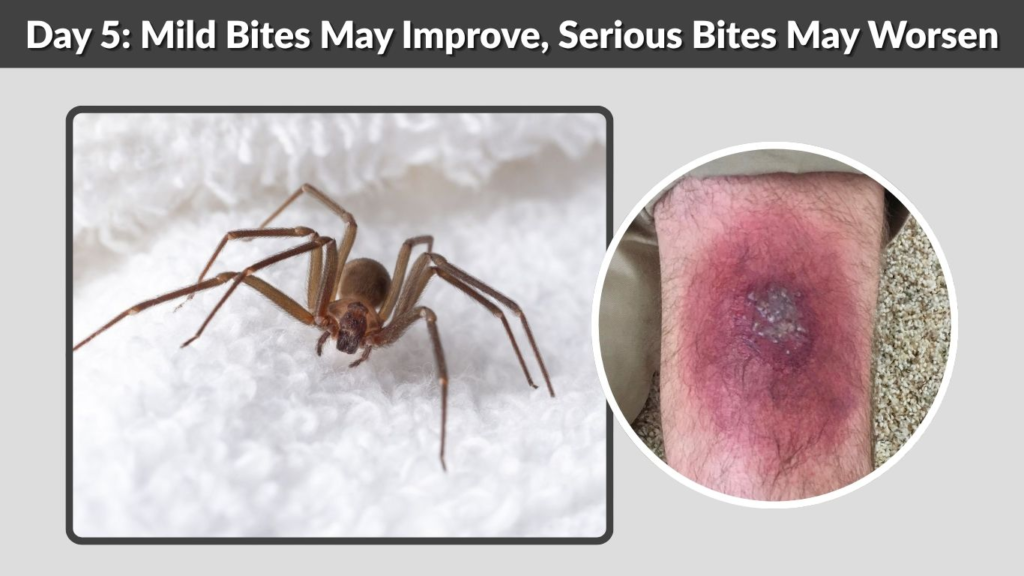
By day 5, a mild bite may look smaller, less red, and less swollen. Itching may decrease, and the skin may start healing. This is a good sign.
A serious bite may continue to worsen. The wound may look darker, deeper, or more open. Pain may remain strong. Some people may develop general symptoms such as fever, nausea, tiredness, or body aches. Children, older adults, and people with weaker immune systems may be at higher risk of complications.
Get medical help if:
- The wound keeps expanding.
- Pain is severe or worsening.
- The bite area becomes black or open.
- You see pus or spreading redness.
- You develop fever, chills, vomiting, or weakness.
- The bite is on the face, neck, hand, or near a joint.
- The person bitten is a child, older adult, or medically fragile.
Day 6: Scabbing, Ulceration, or Slow Healing
On day 6, the bite may begin to scab if it is healing. Mild bites may be much less painful by now. The skin may still be discolored, but swelling should gradually improve.
If the bite is severe, an ulcer may become more obvious. An ulcer is an open sore that may take weeks or months to fully heal. The wound may need professional care to prevent infection and manage pain.
Do not assume that every open wound after a suspected spider bite is from a brown recluse. Skin infections, especially bacterial infections, can look very similar. This is why medical evaluation is important when a wound grows or fails to improve.
Day 7: What the Bite Should Look Like After One Week
After one week, a mild brown recluse bite should show signs of improvement. Redness may fade, swelling may decrease, and pain should be less intense. Some itching or discoloration may remain.
A concerning bite may still be painful, dark, swollen, or open. If the wound is larger than before, has red streaks, produces pus, or causes fever, it should be checked by a healthcare provider. Waiting too long can make wound care more difficult.
By day 7, ask yourself:
- Is the bite smaller than it was on day 2 or day 3?
- Is pain improving?
- Is swelling going down?
- Is the skin staying intact?
- Are there any whole-body symptoms?
If the answer is no, or if the wound looks worse, seek medical advice.
First Aid for a Suspected Brown Recluse Bite
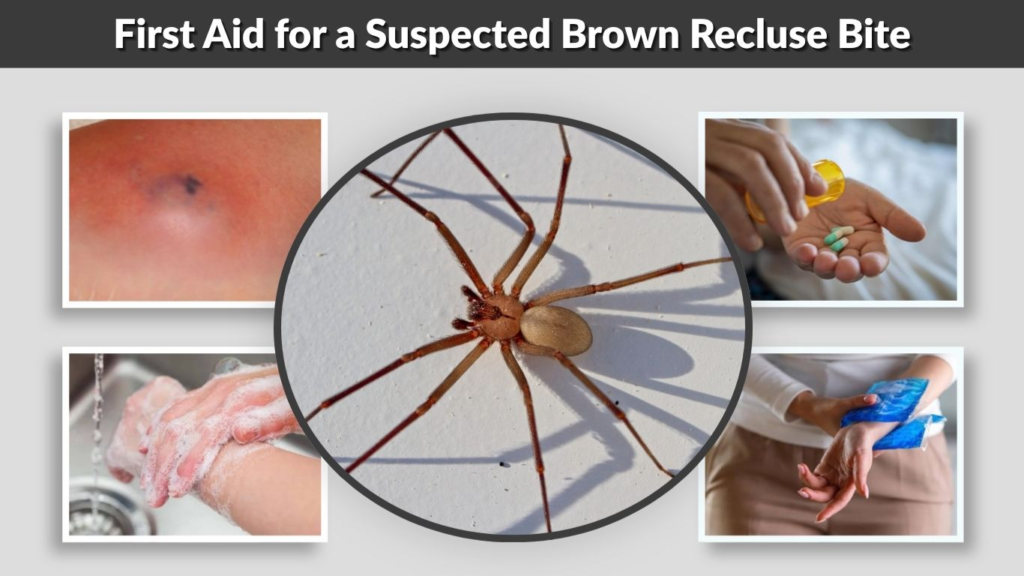
Basic first aid can reduce irritation and help you monitor the wound. Start care as soon as you notice the bite.
Helpful steps include:
- Clean the bite gently with soap and water.
- Apply a cold compress wrapped in cloth.
- Elevate the area when possible.
- Use a clean bandage if the skin is irritated or open.
- Take photos once or twice a day to track changes.
- Use over-the-counter pain relief if safe for you.
- Contact poison control or a healthcare provider if you are concerned.
Avoid these mistakes:
- Do not apply heat.
- Do not cut the bite open.
- Do not squeeze the wound.
- Do not use harsh home remedies.
- Do not ignore spreading redness or severe pain.
- Do not scratch, because scratching can increase infection risk.
When to Seek Medical Care
You should seek medical care immediately if you believe the bite came from a brown recluse and symptoms are worsening. You should also get urgent help if there is trouble breathing, trouble swallowing, severe pain, spreading redness, red streaks, a growing wound, or signs of infection.
Medical care may include wound cleaning, pain management, tetanus update, monitoring, or treatment for infection if needed. Antibiotics are not always required unless there is a bacterial infection. Severe wounds may require ongoing wound care.
Emergency symptoms include:
- Difficulty breathing or swallowing
- Severe swelling of the face, lips, throat, or neck
- Fever with a worsening wound
- Vomiting, weakness, or confusion
- Rapidly spreading redness
- Black or dead-looking skin
- Severe pain that does not improve
A brown recluse bite is not something to ignore if it is getting worse day by day.
Brown Recluse Bite vs. Skin Infection
Many people mistake skin infections for spider bites. A painful red bump, boil, abscess, or infected hair follicle can look like a bite. Staph infections may create swelling, pus, warmth, and tenderness. These symptoms can overlap with suspected brown recluse bites.
A true brown recluse bite is more likely if you saw the spider, live in an area where brown recluse spiders are common, and the bite developed in a typical way. Still, diagnosis can be difficult without seeing the spider.
A skin infection may be more likely if there is pus, multiple bumps, recurring sores, or a wound that started without any known spider exposure. Since treatment may differ, a healthcare provider should check any wound that is spreading, draining, or not improving.
How Long Does a Brown Recluse Bite Take to Heal?
Healing time depends on severity. Mild bites may improve within a few days and heal within one to two weeks. Moderate bites may take several weeks. Severe bites with tissue damage can take months and may leave a scar.
The first week is important because it shows the direction of healing. If the bite becomes smaller and less painful, that is usually reassuring. If it becomes darker, larger, more painful, or open, medical attention is important.
FAQs
What does a brown recluse bite look like on day 1?
On day 1, a brown recluse bite may look like a small red bump, mild swelling, or a simple insect bite. Some people feel little or no pain at first. Itching, warmth, or stinging may appear later. Because early signs are vague, tracking changes is more helpful than guessing from appearance alone.
What happens on day 2 of a brown recluse bite?
On day 2, the bite may become more painful, red, swollen, or itchy. Some people notice a blister, pale center, or darker discoloration. Mild bites may remain stable, but worsening pain, spreading redness, or a growing wound should be taken seriously and checked by a healthcare provider.
Is every brown recluse bite dangerous?
No, not every brown recluse bite becomes dangerous. Many remain mild and heal with basic care. However, some bites can damage skin tissue or cause serious symptoms. The safest approach is to clean the area, monitor it closely, and seek medical care if it worsens or causes whole-body symptoms.
When should I worry about a brown recluse bite?
You should worry if the wound grows, becomes very painful, turns black or purple, develops pus, or has spreading redness. Fever, vomiting, weakness, red streaks, or breathing problems are also warning signs. These symptoms may mean a serious reaction or infection and need medical attention.
Can a brown recluse bite heal in 7 days?
A mild bite may look much better within 7 days, but deeper bites can take weeks or months to heal. If the bite is smaller, less red, and less painful after a week, that is encouraging. If it is larger, darker, open, or more painful, get medical care.
