
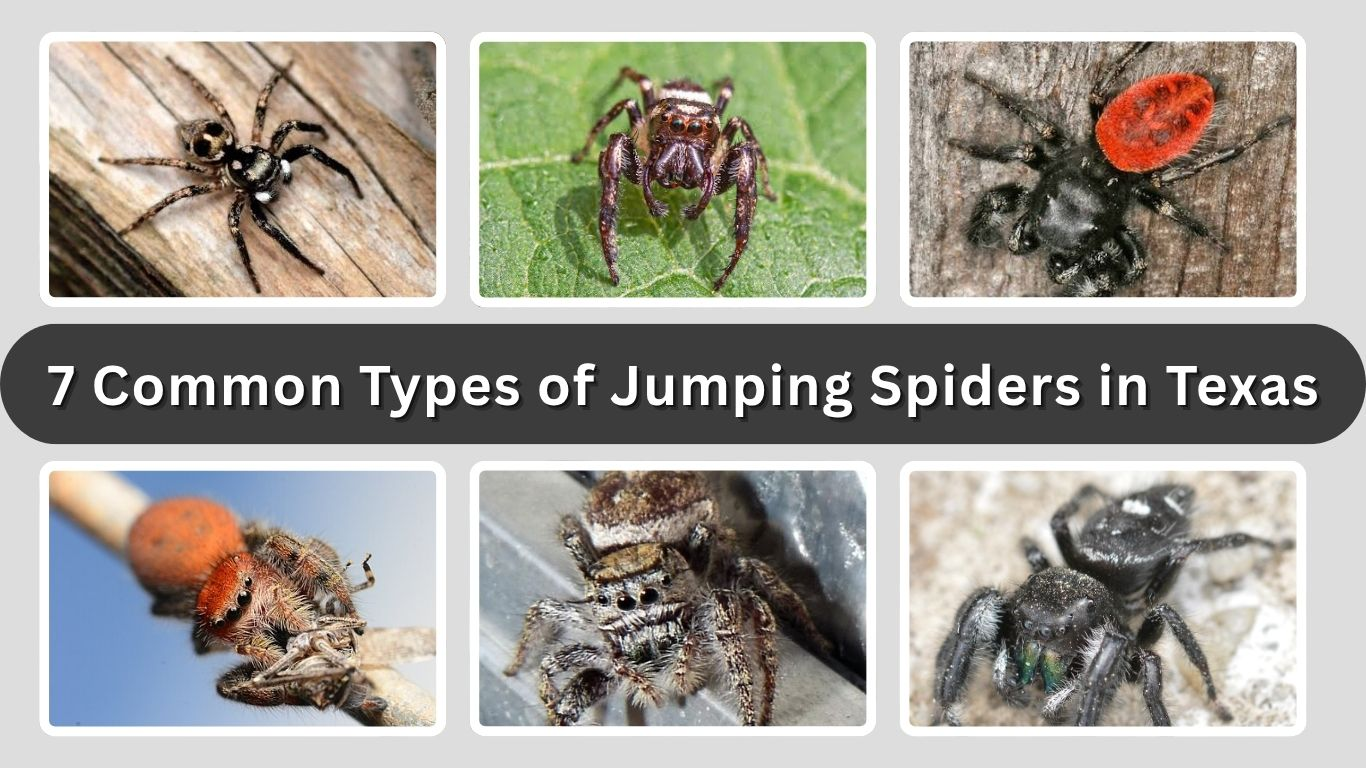
Jumping spiders in Texas are small, active hunters known for their large eyes, quick jumps, and curious behavior. From the bold jumping spider to the tiny twin-flagged jumping spider, these species live in gardens, fields, trees, leaf litter, and around homes. Most are harmless to people and helpful because they eat flies, gnats, moths, leafhoppers, and other small insects.
1. Bold Jumping Spider
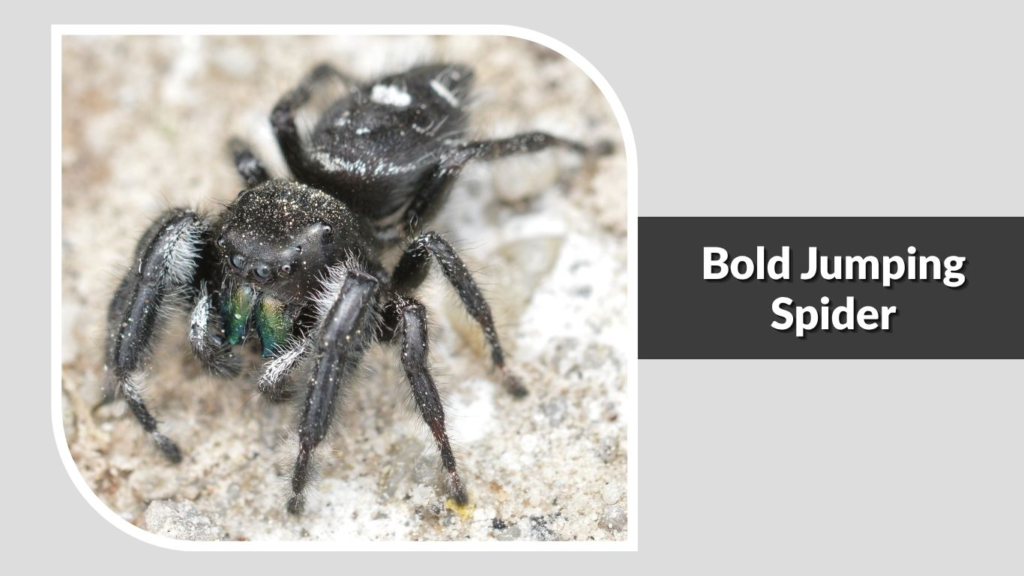
The bold jumping spider is one of the most common jumping spiders in Texas. It is also called the daring jumping spider, and its scientific name is Phidippus audax. This spider is easy to recognize because of its dark body, bright markings, and curious hunting behavior. It is not dangerous to humans and is often helpful because it eats small insects and crop pests.
Identification
- Scientific name: Phidippus audax
- Common names: Bold jumping spider, daring jumping spider, bold jumper
- Family: Salticidae
- Body color: Usually black or dark brown
- Markings: White, cream, orange, or yellow spots on the abdomen
- Mouthparts: Often metallic green or blue-green
- Eyes: Large front-facing eyes that give it a curious look
- Body shape: Compact, hairy, and sturdy
- Size: Often around 0.5 inch, though some individuals in Texas and Mexico may reach about 0.8 inch
- Movement: Walks in short bursts and jumps quickly when hunting or escaping
Habitat and Distribution
The bold jumping spider is widespread across North America, including Texas. It can live in many open and sunny habitats, such as grasslands, prairies, gardens, farms, open woodlands, fences, walls, and around houses. It is often seen during the day because it depends heavily on vision to hunt.
In Texas, this spider may appear in yards, barns, garages, crop fields, and outdoor structures. It does not need a large web to catch prey, so it moves actively across surfaces while searching for insects. At night or during bad weather, it may hide inside a small silk retreat under bark, stones, leaves, or other sheltered places.
Behavior and Diet
The bold jumping spider is an active hunter. Instead of waiting in a web, it uses its sharp eyesight to watch, stalk, and leap onto prey. Before jumping, it often attaches a silk safety line, which helps protect it if the jump fails.
Its diet includes many small insects and other arthropods. It may eat flies, mosquitoes, caterpillars, grasshoppers, beetles, leafhoppers, stink bugs, and other spiders. Because it feeds on many crop pests, it is considered a useful predator in gardens and agricultural areas.
Although it may look alert or fearless, it is not aggressive toward people. If disturbed, it usually jumps away or hides. Bites are rare and generally happen only when the spider is pressed against the skin or handled roughly.
Lifecycle
The bold jumping spider begins life inside an egg sac made by the female. After hatching, the spiderlings stay inside the sac for a short time before emerging and hunting on their own. Young spiders molt several times as they grow, becoming larger after each molt.
As adults, males search for females and use visual courtship displays. They may wave their front legs or move in specific patterns to attract a mate. Females usually live longer than males and may produce egg sacs in protected silk retreats.
In cooler regions, immature bold jumping spiders may overwinter in silk shelters and become active again when warmer weather returns. In Texas, where conditions are often warmer, they may be seen through much of the year, especially during mild and sunny periods.
2. Texas Jumping Spider
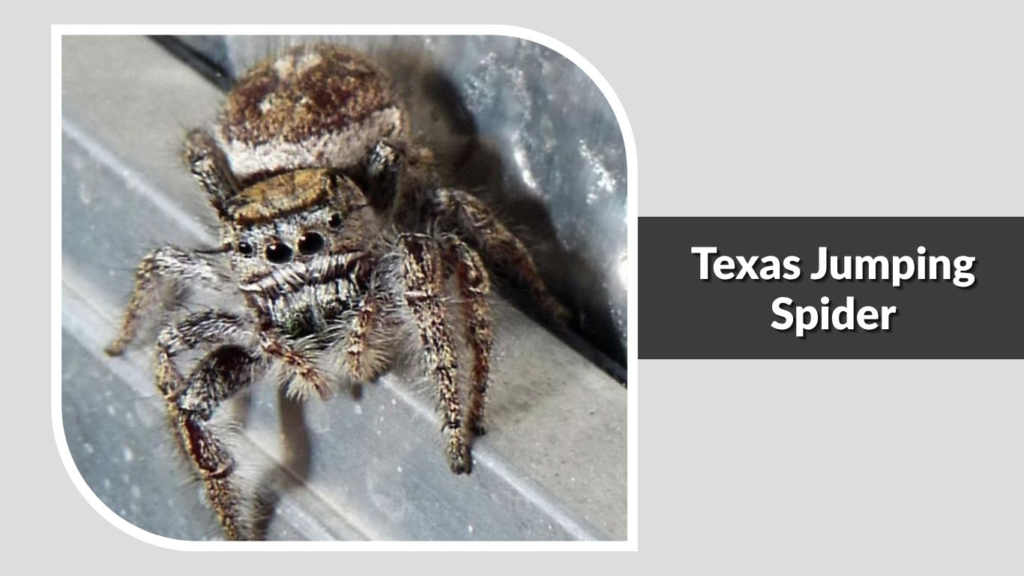
The Texas jumping spider is a true jumping spider species with the scientific name Phidippus texanus. It belongs to the Salticidae family and is found in the United States and Mexico. Like other Phidippus jumping spiders, it is a daytime hunter with strong eyesight, quick movement, and a compact body.
Identification
- Scientific name: Phidippus texanus
- Common name: Texas jumping spider
- Family: Salticidae
- Range: United States and Mexico
- Body shape: Compact, sturdy, and hairy
- Eyes: Large front-facing eyes typical of jumping spiders
- Movement: Short walking bursts with sudden jumps
- Activity: Mostly active during the day
- Similar species: May be confused with other Phidippus jumping spiders in Texas
Habitat and Distribution
The Texas jumping spider is found in parts of the United States and Mexico, with Texas being one of its key range areas. It may occur in warm, open habitats where insects are available. Like many jumping spiders, it can be found on plants, low vegetation, fences, walls, and outdoor structures.
Because it is a visual hunter, it often prefers places where it can move openly and spot prey. In Texas, that may include gardens, grasslands, brushy areas, yards, and sunny edges of buildings. It does not rely on a prey-catching web, so it spends much of its active time walking, watching, and hunting.
Behavior and Diet
The Texas jumping spider hunts by sight rather than by trapping prey in a web. It watches small insects, moves closer in short steps, and then jumps when it is within striking distance. Before jumping, it may release a silk dragline as a safety line, which helps it recover if it misses or falls.
Its diet likely includes small insects and other arthropods, similar to other Phidippus jumping spiders. Flies, small moths, leafhoppers, beetles, and other tiny invertebrates may become prey. This makes it a useful natural predator in yards and gardens.
It is not aggressive toward people. If approached, it usually freezes, turns to look, jumps away, or hides. A bite is unlikely unless the spider is squeezed or handled roughly.
Lifecycle
The Texas jumping spider begins life as an egg inside a silk egg sac. After hatching, the young spiderlings remain protected for a short period before dispersing. As they grow, they molt several times, shedding their old outer skin and becoming larger after each molt.
Adult males search for females and may use visual courtship movements, as jumping spiders commonly rely heavily on sight. Females create silk retreats where they can protect egg sacs. The full lifespan can vary depending on food, weather, predators, and local conditions, but many jumping spiders complete their life cycle within about a year.
3. Apache Jumping Spider
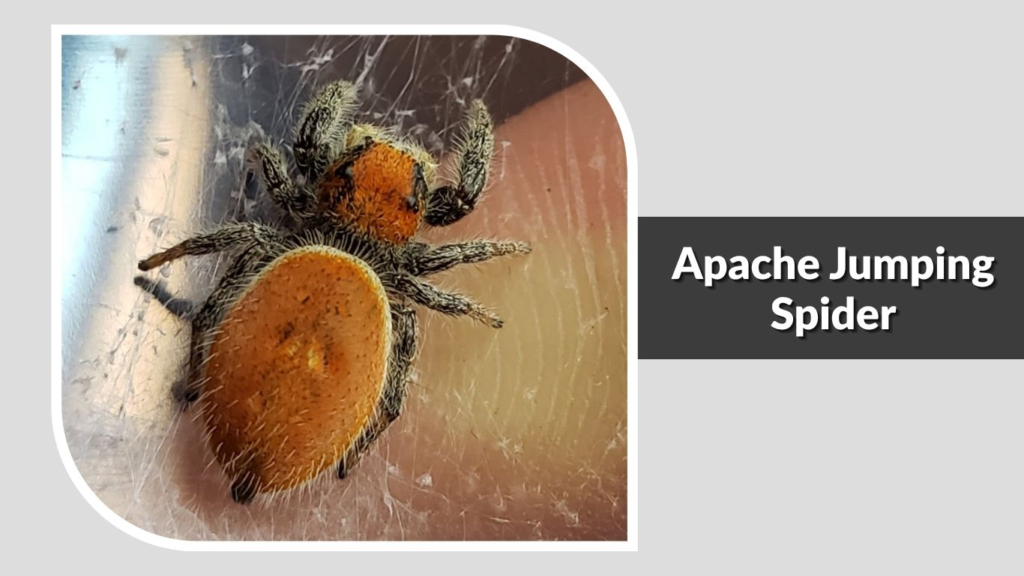
The Apache jumping spider is a colorful jumping spider known for its red, orange, yellow, and black pattern. Its scientific name is Phidippus apacheanus. In Texas, it may be found in warm, dry, open areas where it hunts small insects during the day. Like other jumping spiders, it does not use a web to catch prey. Instead, it relies on sharp eyesight, careful stalking, and sudden jumps.
Identification
- Scientific name: Phidippus apacheanus
- Common name: Apache jumping spider
- Family: Salticidae
- Body color: Black with orange, red, or yellow markings
- Chelicerae: Often iridescent green
- Female appearance: Usually black with orange or reddish color on the upper body and abdomen
- Male appearance: Often more solid red-orange on top, with darker legs and underside
- Body size: Considered large for a jumping spider; females may be much larger than males
- Eyes: Large front-facing eyes, typical of jumping spiders
- Similar look: Sometimes compared to velvet ants because of its red-and-black warning-like pattern
Habitat and Distribution
The Apache jumping spider is found in the United States, Mexico, and Cuba. In the United States, it is especially associated with dry and open habitats, including grasslands, fields, deserts, scrubby areas, and agricultural spaces.
In Texas, this spider is most likely to appear in sunny, insect-rich places such as dry fields, open yards, brushy edges, shrubs, and low vegetation. It may also be seen on fences, outdoor walls, or garden plants while searching for prey. Because it is an active hunter, it spends more time moving across surfaces than sitting in a web.
Behavior and Diet
The Apache jumping spider is a visual predator. It watches prey with its large eyes, moves closer in short steps, and then jumps when it is close enough. Like many jumping spiders, it may attach a silk dragline before jumping, which works like a safety line if it misses or falls.
Its diet includes small insects and other arthropods. In Texas landscapes, it may help control flies, leafhoppers, small moths, tiny beetles, and other soft-bodied insects. It is not aggressive toward people. If disturbed, it usually freezes, turns to look, jumps away, or hides.
Lifecycle
The Apache jumping spider begins life inside a silk egg sac made by the female. After hatching, the spiderlings remain protected for a short period before dispersing and hunting on their own. As they grow, they molt several times, gradually developing stronger color patterns with each stage.
Adult males search for females and use courtship displays. Male Apache jumping spiders may raise their front legs, shift their abdomen, and move in a zigzag pattern during courtship. After mating, the female produces egg sacs in a protected silk retreat. Its exact lifespan can vary, but like many jumping spiders, it may complete much of its life cycle within about one year depending on food, temperature, and habitat conditions.
4. Cardinal Jumping Spider
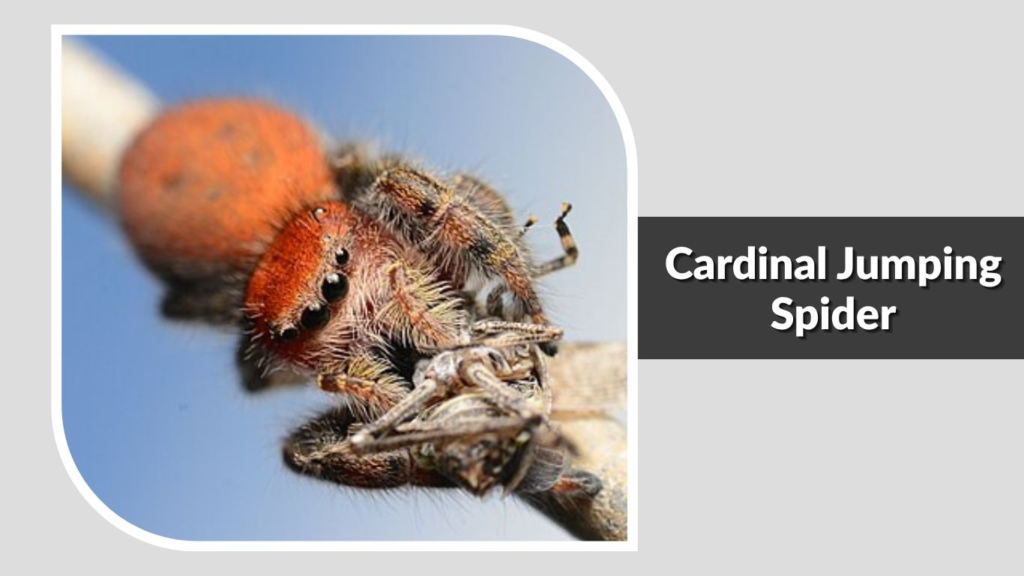
The cardinal jumping spider is a bright red and black jumping spider found in Texas and other parts of North America. Its scientific name is Phidippus cardinalis. It gets its common name from its red coloring, which can remind people of a cardinal bird. Like other jumping spiders, it is a small daytime hunter that uses excellent vision and quick jumps to catch prey.
Identification
- Scientific name: Phidippus cardinalis
- Common name: Cardinal jumping spider
- Family: Salticidae
- Body color: Usually bright red, orange-red, or reddish brown with black areas
- Legs: Often dark or black, sometimes with lighter hairs
- Body shape: Compact, fuzzy, and sturdy
- Eyes: Large forward-facing eyes, giving it an alert appearance
- Movement: Short, quick walking bursts followed by sudden jumps
- Similar species: Can be confused with the Apache jumping spider because both may show red and black coloration
- Human risk: Not considered dangerous to people
Habitat and Distribution
The cardinal jumping spider is commonly associated with warm, open habitats. In Texas, it may be found in grasslands, fields, gardens, brushy areas, woodland edges, and sunny outdoor spaces where insects are active. It may also appear on low plants, fences, walls, and tree trunks.
This spider does not build a web to trap prey. Instead, it moves through its habitat during the day, using sunlight and open surfaces to spot small insects. Its red and black coloring can make it easier to notice than many dull-colored spiders, especially when it rests on green plants, pale walls, or dry stems.
Behavior and Diet
The cardinal jumping spider is an active predator. It uses its large eyes to locate prey, then slowly approaches before making a quick leap. Like many jumping spiders, it may use a silk dragline before jumping. This silk line works as a safety thread if the spider falls or misses its target.
Its diet includes small insects and other tiny arthropods. In Texas gardens and fields, it may feed on flies, small moths, leafhoppers, tiny beetles, and other soft-bodied insects. Because of this, it can be considered a helpful garden predator.
The cardinal jumping spider is not aggressive toward humans. If disturbed, it will usually stop moving, turn toward the threat, jump away, or hide. A bite is rare and usually only happens if the spider is trapped or squeezed.
Lifecycle
The cardinal jumping spider begins life inside a silk egg sac made by the female. After hatching, the spiderlings stay protected for a short time before dispersing. Young spiders grow through several molts, gradually becoming larger and more developed.
When mature, males search for females and may use courtship displays involving leg movements and body vibrations. Females create silk retreats where they can rest and protect their egg sacs. Like many jumping spiders, its lifespan depends on food, temperature, weather, predators, and habitat quality, but many individuals complete their life cycle within about one year.
5. Johnson’s Jumping Spider
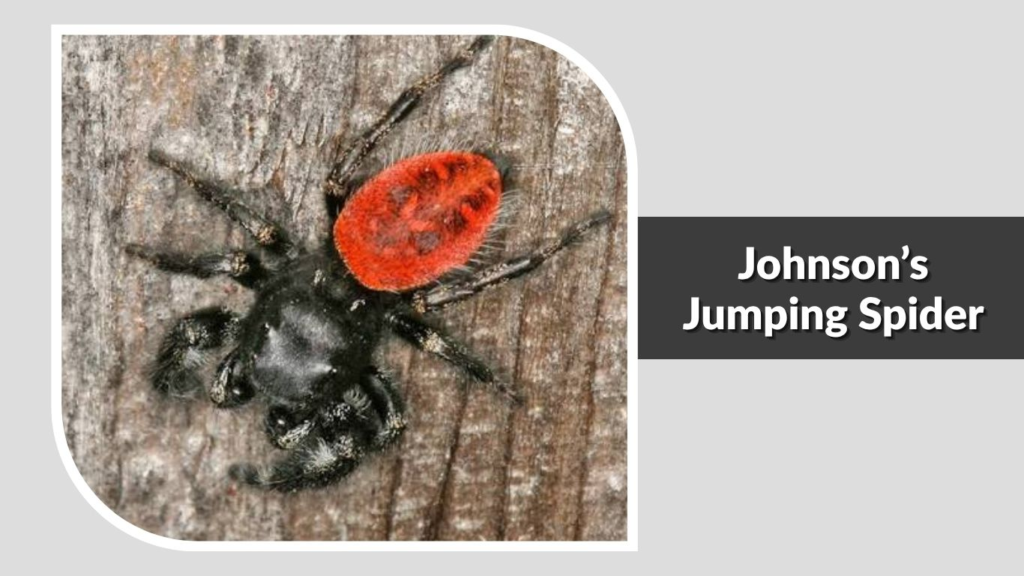
Johnson’s jumping spider is also known as the red-backed jumping spider, and its scientific name is Phidippus johnsoni. It is best known for its bright red abdomen, black body, and shiny teal mouthparts. This spider is more common in western North America, but it is still often included in jumping spider discussions because of its bold color and close similarity to other red-and-black Phidippus species.
Identification
- Scientific name: Phidippus johnsoni
- Common names: Johnson’s jumping spider, red-backed jumping spider
- Family: Salticidae
- Body color: Mostly black with a bright red abdomen
- Female marking: Female often has a black stripe down the center of the red abdomen
- Mouthparts: Shiny teal or blue-green chelicerae
- Body size: Adults are often around 10 mm, though size can vary
- Eyes: Large front-facing eyes, typical of jumping spiders
- Similar species: May be confused with Apache or cardinal jumping spiders because of its red-and-black color
- Human risk: Not considered dangerous to people
Habitat and Distribution
Johnson’s jumping spider is mainly found in western North America, from parts of Canada through the western United States and into northern Mexico. It is associated with dry habitats such as oak woodlands, coastal dunes, open ground, and sunny areas with rocks, wood, or low vegetation.
In Texas-focused content, it is worth noting that this spider may be less commonly encountered than bold, Apache, or cardinal jumping spiders. If someone sees a red-and-black jumping spider in Texas, careful identification is important because several Phidippus species can look similar at first glance.
Behavior and Diet
Johnson’s jumping spider is an active daytime hunter. It does not build a web to trap insects. Instead, it watches prey with its strong eyesight, stalks slowly, and jumps when close enough. Like other jumping spiders, it may use silk as a safety line before leaping.
Its diet includes flies, bugs, moths, caterpillars, other insects, and even other spiders. Studies and species accounts note that it can feed on a wide variety of arthropods, including prey smaller than itself. It also builds tubular silk retreats under rocks, wood, and other sheltered places, where it may rest at night or during bad weather.
Lifecycle
Johnson’s jumping spider begins life inside an egg sac protected by the female. After hatching, the young spiderlings remain sheltered briefly before dispersing and hunting on their own. As they grow, they pass through several molts, gradually developing adult colors and markings.
Adults use visual signals during courtship, which is common among jumping spiders. Males search for females, and mating may occur near or inside silk retreats. Females can produce egg sacs in protected nests. Like many jumping spiders, its lifespan depends on food, temperature, predators, and habitat conditions, but many individuals complete their main life cycle within about a year.
6. Bronze Jumping Spider
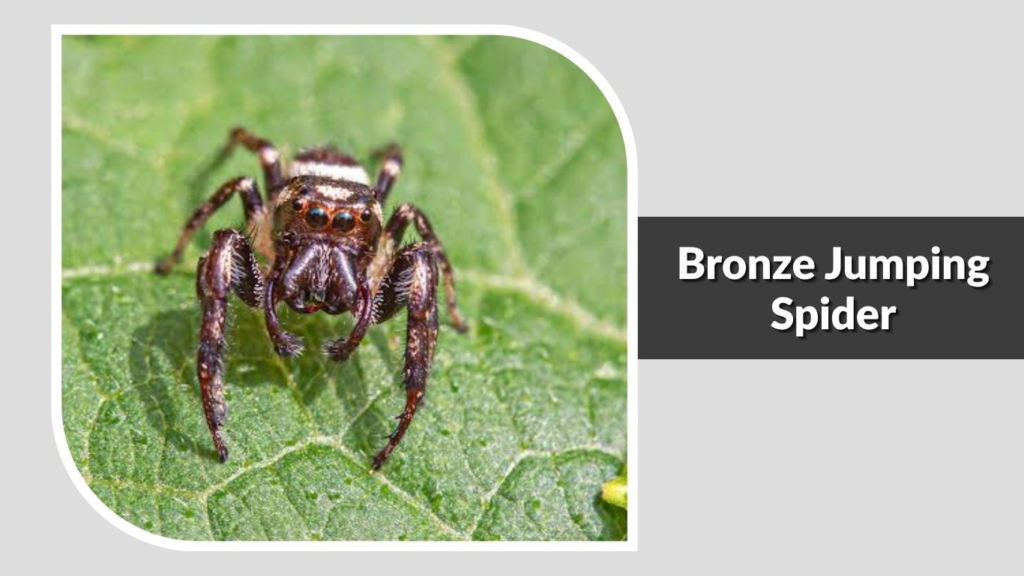
The bronze jumping spider is a small jumping spider often found on tree trunks, fences, walls, and outdoor surfaces. Its scientific name is Eris militaris. It is not as bright as red or green jumping spiders, but its bronze-brown body, pale markings, and active hunting behavior make it easy to recognize once you know what to look for. Like other jumping spiders, it uses sharp eyesight and quick jumps to catch small insects.
Identification
- Scientific name: Eris militaris
- Common name: Bronze jumping spider
- Family: Salticidae
- Body color: Usually bronze, brown, grayish brown, or tan
- Markings: Pale bands or patches may appear on the body
- Body shape: Small, compact, and slightly flattened
- Eyes: Large front-facing eyes, typical of jumping spiders
- Legs: Short to medium-length, often banded or lightly patterned
- Movement: Quick stop-and-go walking with short jumps
- Similar species: Can be confused with other small brown jumping spiders
- Human risk: Not considered dangerous to people
Habitat and Distribution
The bronze jumping spider is found across much of North America, including Texas. It is often seen in wooded areas, gardens, yards, parks, and places with trees or shrubs. It commonly rests or hunts on bark, fences, walls, porch railings, and other vertical surfaces.
In Texas, this spider may be noticed around homes, especially where outdoor lights attract insects. It does not make a web to trap prey, so it spends the day moving across surfaces and searching for food. Its brown and bronze coloring helps it blend into bark, dry leaves, wood, and soil-colored backgrounds.
Behavior and Diet
The bronze jumping spider is a daytime hunter. It relies on vision rather than a prey-catching web. When it sees a small insect, it slowly approaches, judges the distance, and then jumps onto the prey. Before jumping, it may release a silk dragline, which helps prevent a dangerous fall.
Its diet includes small flies, gnats, tiny moths, leafhoppers, aphids, and other small arthropods. Because it feeds on insects, it can be helpful in gardens and around homes. It is usually shy around people and will often jump away or hide if disturbed.
Lifecycle
The bronze jumping spider begins life inside an egg sac placed in a protected silk retreat. After hatching, the spiderlings stay sheltered for a short time before spreading out and hunting on their own. As they grow, they molt several times, becoming larger after each molt.
Adult males search for females and may use small courtship movements to attract them. Females create silk retreats where they can rest and guard egg sacs. Like many small jumping spiders, the bronze jumping spider often completes much of its life cycle within a year, although timing can vary depending on food, weather, temperature, and local conditions.
7. Twin-Flagged Jumping Spider
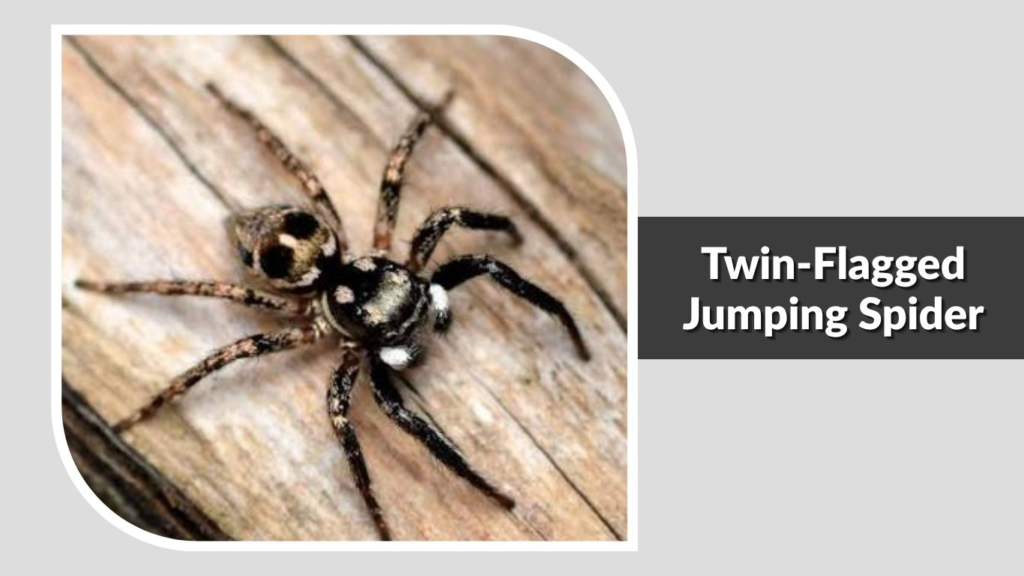
The twin-flagged jumping spider is a small but interesting jumping spider known for the two pale, flag-like markings on the male’s face. Its scientific name is Anasaitis canosa. It is often seen in warm areas, including parts of the southern United States, and may appear around leaf litter, gardens, lawns, and low vegetation. Like other jumping spiders, it hunts by sight and does not use a web to trap prey.
Identification
- Scientific name: Anasaitis canosa
- Common name: Twin-flagged jumping spider
- Family: Salticidae
- Body color: Usually brown, gray, black, or bronze-toned
- Key marking: Males have two pale, flag-like spots or bands on the face
- Body shape: Small, compact, and active
- Eyes: Large front-facing eyes, giving it a curious look
- Legs: Often patterned or lightly banded
- Movement: Quick walking with short jumps
- Similar species: May be confused with other tiny brown jumping spiders
- Human risk: Not considered dangerous to people
Habitat and Distribution
The twin-flagged jumping spider is commonly found in warm, humid areas of the southern United States. In Texas, it may occur in gardens, yards, wooded edges, parks, leaf litter, shrubs, and grassy spaces. It is usually found close to the ground rather than high on walls or tree trunks.
This spider often lives where small insects are abundant. It may hide among fallen leaves, low plants, mulch, or soil-level debris. Because it is small and brownish, it can be easy to overlook unless it moves or turns toward you.
Behavior and Diet
The twin-flagged jumping spider is an active daytime hunter. It uses strong eyesight to detect movement, then slowly approaches its prey before making a short jump. It does not spin a large web for catching insects, but it may use silk for safety lines, resting shelters, and egg protection.
Its diet includes tiny insects and other small arthropods found near the ground. It may feed on flies, gnats, springtails, leafhoppers, small beetles, and other soft-bodied insects. Around gardens and yards, it can be helpful because it naturally reduces small pest populations.
Lifecycle
The twin-flagged jumping spider begins life inside a silk egg sac made by the female. After hatching, the young spiderlings remain protected for a short time before dispersing into nearby vegetation or leaf litter. As they grow, they molt several times and become more independent hunters.
Adult males use visual courtship displays to attract females. The male’s pale facial markings may help during these displays, making the “twin-flagged” look more noticeable. Females place egg sacs in hidden, protected areas such as leaf litter or silk retreats. Like many small jumping spiders, its life cycle is influenced by temperature, food supply, humidity, and seasonal conditions.
FAQs
1. Is the twin-flagged jumping spider dangerous?
No, the twin-flagged jumping spider is not considered dangerous to humans. Like other jumping spiders, it has venom for catching tiny prey, but it is not medically significant. It usually avoids people and will jump away or hide when disturbed.
2. Where can I find twin-flagged jumping spiders?
Twin-flagged jumping spiders are often found close to the ground in warm areas. They may live in leaf litter, mulch, lawns, gardens, shrubs, wooded edges, and low vegetation. Because they are small and brownish, they are easy to miss unless they move.
3. What does the twin-flagged jumping spider eat?
The twin-flagged jumping spider eats small insects and tiny arthropods. Its diet may include gnats, flies, springtails, leafhoppers, small beetles, and soft-bodied insects. It hunts during the day by watching prey, slowly approaching, and jumping when close enough.
4. Why is it called a twin-flagged jumping spider?
It is called the twin-flagged jumping spider because males have two pale, flag-like markings on the face. These markings help make the spider easier to identify. They may also be useful during courtship displays when males signal visually to females.
5. Can twin-flagged jumping spiders live in houses?
Yes, they may occasionally appear inside homes, especially near doors, windows, or indoor plants. However, they are more common outdoors in leaf litter and gardens. If one enters your house, you can gently move it outside using a cup and paper.
