
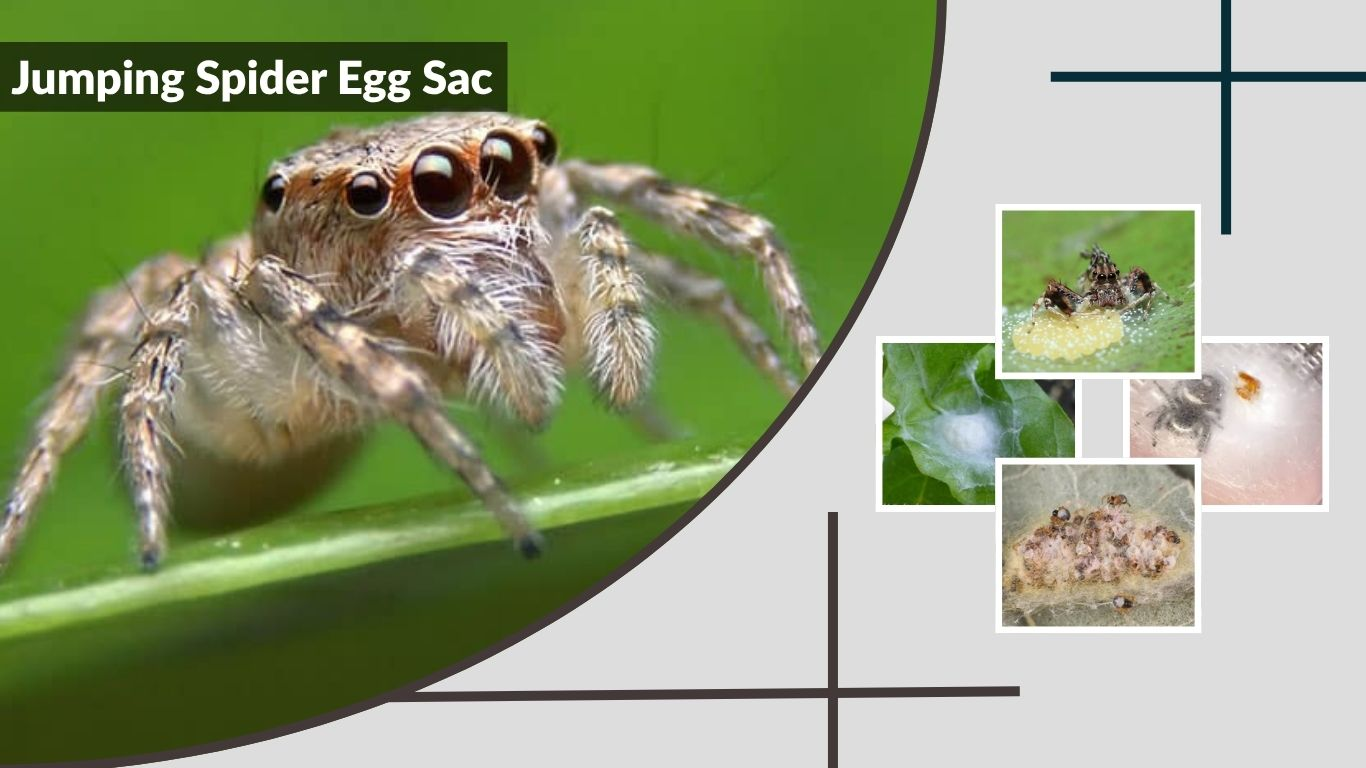
A jumping spider egg sac can surprise many keepers, especially when a female suddenly seals herself inside a thick silk nest. These sacs protect the eggs while the mother guards them until the spiderlings develop. Understanding what jumping spider eggs look like, how long they take to hatch, and how to tell fertile from infertile eggs can help you respond calmly and care for them properly.
What Is a Jumping Spider Egg Sac?
A jumping spider egg sac is a protective silk structure made by a female jumping spider after she lays eggs. It is also commonly searched as a “jumping spider egg sack,” although “egg sac” is the standard spelling.
Why Jumping Spiders Make Egg Sacs
Female jumping spiders do not leave their eggs exposed. Instead, they build a soft, thick silk retreat where the eggs can stay protected from drying out, predators, and disturbance. The sac is usually hidden in a safe place, such as a curled leaf, bark crevice, enclosure corner, plant stem, or upper section of a pet spider enclosure.
The egg sac works like a nursery. It keeps the eggs together and creates a stable microenvironment around them. The mother may stay close to the sac, guard it, and avoid eating for a period while she protects the developing spiderlings.
Egg Sac vs Molting Web
A jumping spider egg sac can sometimes look similar to a molting web because both are made of silk. However, an egg sac is usually thicker, denser, and more closed off. A molting web may look like a temporary hammock or retreat, while an egg sac often appears like a sealed cottony chamber.
If your spider disappears inside a thick white nest and refuses food for many days, she may be guarding eggs. If she only stays hidden briefly and later comes out larger or brighter, she may have been molting instead.
What Do Jumping Spider Eggs Look Like?
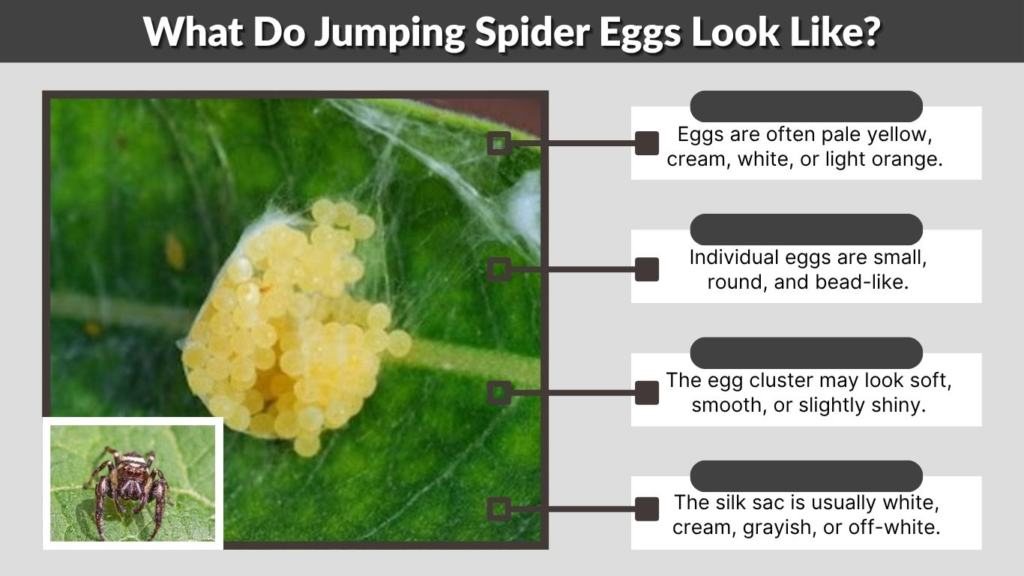
Jumping spider eggs are tiny, round, and usually grouped together inside the silk sac. You may not always see the eggs clearly because the mother often covers them with dense silk.
Common Egg and Sac Features
- Color: Eggs are often pale yellow, cream, white, or light orange.
- Shape: Individual eggs are small, round, and bead-like.
- Texture: The egg cluster may look soft, smooth, or slightly shiny.
- Sac color: The silk sac is usually white, cream, grayish, or off-white.
- Location: In captivity, sacs are often built near the top of the enclosure.
- Visibility: Some sacs are so thick that the eggs cannot be seen from outside.
- Mother’s behavior: The female often stays inside or beside the sac.
- Changes over time: Fertile eggs may darken slightly or show tiny developing spiderlings later.
Not every egg sac looks the same. A regal jumping spider egg sac may be large and fluffy, while a smaller species may make a much smaller, tighter silk nest. Bold jumping spider eggs, daring jumping spider eggs, zebra jumping spider eggs, and magnolia green jumping spider eggs can also vary by species, size, and environment.
Why Some Egg Sacs Look Dark
A dark egg sac does not always mean something is wrong. The silk may collect dust, substrate, bark particles, or moisture stains. Sometimes the eggs inside darken as embryos develop. However, a sac that becomes moldy, wet, collapsed, or foul-smelling may be unhealthy.
If you are caring for a pet jumping spider, avoid opening the sac to check. Disturbing it may stress the mother, damage the eggs, or cause her to abandon the sac.
Jumping Spider Egg Sac Stages
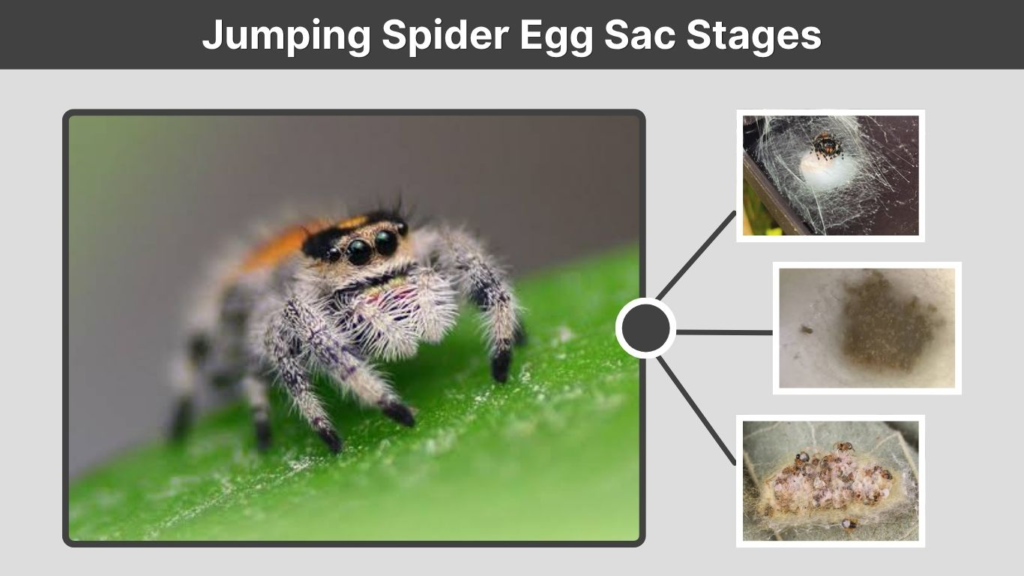
A jumping spider egg sac goes through several stages from laying to spiderling emergence. The exact timing depends on species, temperature, humidity, fertility, and the health of the female.
Stage 1: Egg Laying
The female builds a silk retreat and lays her eggs inside. She may become less active before laying. Many keepers notice that their spider eats less, hides more often, or makes a thicker web than usual.
After laying, the female may stay sealed inside the nest. This is normal. She is protecting the eggs and maintaining the sac. During this stage, avoid handling her or moving the enclosure unless absolutely necessary.
Stage 2: Egg Development
During development, fertile eggs gradually change inside the sac. They may become less clear, more opaque, or slightly darker. In some cases, tiny shapes may eventually be visible if the silk is thin enough.
The mother may remain close to the eggs and refuse food. Some females accept small prey placed nearby, but others ignore food until the eggs hatch. Remove uneaten prey quickly so it does not stress or injure the mother.
Stage 3: Hatching Inside the Sac
When the eggs hatch, the young spiderlings usually remain inside the silk nest for a while. They are very tiny and delicate at this stage. They may look pale, weak, or inactive at first.
This does not mean they are unhealthy. Newly hatched spiderlings often need time before they become active hunters. They may stay clustered together before dispersing.
Stage 4: Spiderlings Disperse
Eventually, the spiderlings leave the sac and begin exploring. This is the stage that surprises many keepers because dozens or even hundreds of tiny spiderlings may suddenly appear inside the enclosure.
Once they disperse, the enclosure must be secure. Baby jumping spiders are extremely small and can escape through tiny ventilation holes, loose lids, door gaps, or mesh openings.
How Long Do Jumping Spider Eggs Take to Hatch?
Most jumping spider eggs take a few weeks to hatch, but there is no single exact timeline for every species. Many keepers see hatching or spiderling emergence somewhere around two to six weeks after the sac is laid.
Factors That Affect Hatching Time
Temperature is one of the biggest factors. Warmer, safe temperatures may speed development, while cooler conditions may slow it. Humidity also matters because eggs can dry out if the environment is too dry. However, too much moisture can encourage mold.
Species also makes a difference. Regal jumping spider egg sacs, bold jumping spider egg sacs, and smaller species may not all develop at exactly the same pace. The female’s age, health, and whether the eggs are fertile can also affect what happens.
If an egg sac has not hatched quickly, do not panic. Some sacs take longer than expected. The best approach is to keep conditions stable and avoid disturbing the mother.
Fertile vs Infertile Jumping Spider Eggs
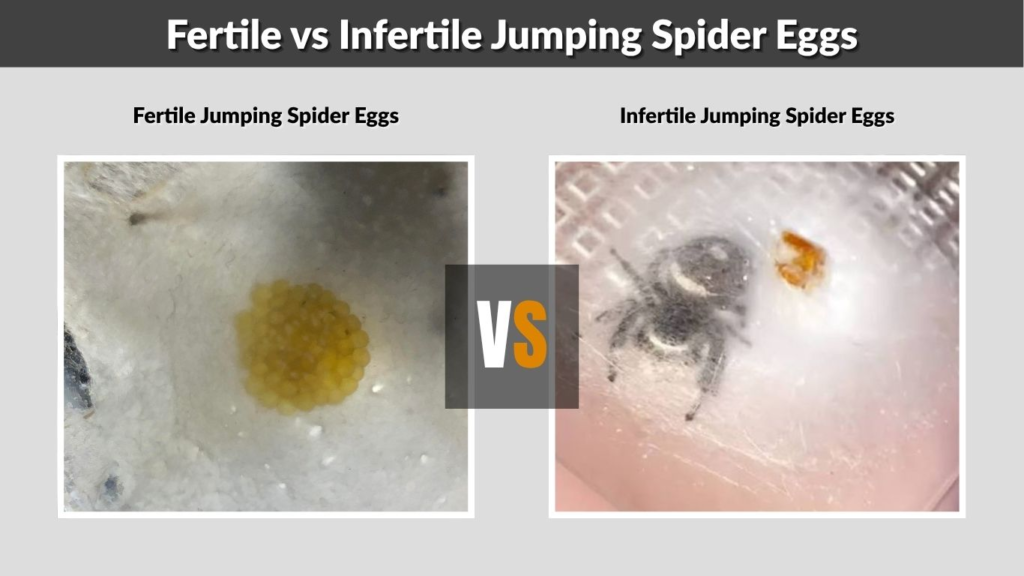
One of the most common questions is how to tell if jumping spider eggs are fertile. This is especially common when a pet spider lays eggs unexpectedly.
Signs Eggs May Be Fertile
- The female was wild-caught as an adult or subadult.
- The female was paired with a male before laying.
- The eggs stay full, rounded, and healthy-looking.
- The eggs gradually darken or show development.
- The mother continues guarding the sac.
- Spiderlings appear after a few weeks.
Signs Eggs May Be Infertile
- The female was captive-bred and never paired.
- Eggs remain unchanged for a long time.
- The sac collapses or dries out.
- The eggs turn dark, shriveled, or moldy.
- The female eventually abandons or eats the sac.
- No spiderlings appear after an extended period.
A jumping spider can lay eggs without mating, but those eggs are usually infertile. However, wild-caught female jumping spiders can store sperm and lay fertile eggs later, even if you never saw them mate. This is why a wild-caught regal jumping spider may produce a fertile egg sac after being kept alone.
What to Do If Your Jumping Spider Lays Eggs
If your jumping spider laid eggs, the first step is to stay calm. The mother usually knows what to do. Your job is to keep the environment safe and stable.
Egg Sac Care Tips
- Do not open the sac: Opening it can damage eggs or stress the mother.
- Avoid handling the spider: Handling may cause her to abandon the sac.
- Keep humidity stable: Light misting nearby may help, but do not soak the sac.
- Remove uneaten prey: Crickets or other feeders can harm a guarding female.
- Check ventilation: Good airflow helps reduce mold risk.
- Prepare for spiderlings: Baby spiders may escape through tiny gaps.
- Plan food early: Spiderlings need very small prey after they disperse.
- Separate when needed: Many spiderlings eventually need individual containers.
If you do not want to raise the spiderlings, research safe and responsible options before they emerge. Do not release non-native or captive-bred spiders outdoors. Releasing the wrong species can be harmful and may be illegal in some areas.
How Many Eggs Does a Jumping Spider Lay?
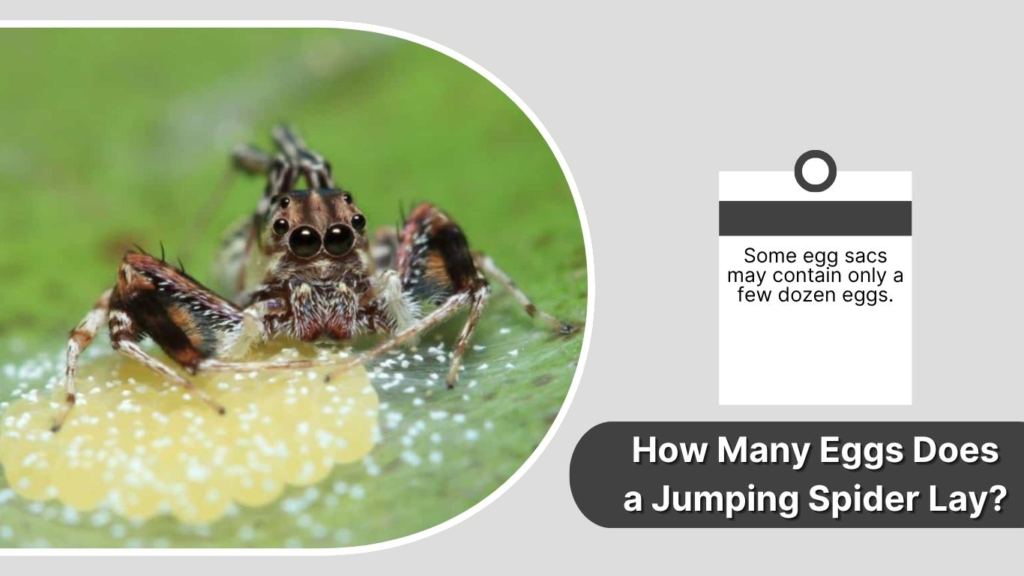
The number of eggs depends on species, female size, age, and health. Small species may lay fewer eggs, while larger species such as regal or bold jumping spiders can lay many more.
Egg Count by Species and Condition
Some egg sacs may contain only a few dozen eggs. Others may produce more than one hundred spiderlings. Larger Phidippus species are known for producing bigger sacs than many tiny jumping spiders.
A female may also lay more than one egg sac in her lifetime. Later sacs may be smaller or less fertile, especially if the female is older or has used stored sperm from an earlier mating.
For pet owners, even one fertile sac can be a major responsibility. Raising spiderlings requires space, tiny feeders, careful hydration, and time. Many beginners underestimate how much work it takes once the babies begin spreading through the enclosure.
Regal and Bold Jumping Spider Egg Sacs
Regal and bold jumping spiders are two of the most searched species related to egg sacs. Both are popular, large, and often kept by hobbyists.
Regal Jumping Spider Egg Sac
A regal jumping spider egg sac is often thick, white, and fluffy. Females commonly build it near the top of an enclosure or inside a secure hide. A gravid female may become secretive before laying and may stop accepting food while guarding the sac.
If the female is wild-caught, there is a good chance the sac could be fertile. If she is captive-bred and has never mated, the sac is likely infertile. Still, keepers often wait several weeks before deciding because early signs are not always obvious.
Bold Jumping Spider Egg Sac
A bold jumping spider egg sac is also made inside a silk shelter. The female guards the eggs until they hatch and the spiderlings disperse. Bold jumping spiders are common in North America, so people often find their sacs in gardens, walls, bark, sheds, and outdoor structures.
In captivity, the care approach is similar to regal jumping spiders. Avoid disturbing the sac, keep the enclosure secure, and prepare for tiny spiderlings if the eggs are fertile.
Jumping Spider Eggs for Sale: Should You Buy Them?
Searches like “jumping spider eggs for sale,” “jumping spider egg sac for sale,” and “buy jumping spider eggs” show some transactional interest. However, buying eggs or egg sacs is usually not the best choice for beginners.
Why Spiderlings Are Safer Than Eggs
Egg sacs are delicate. They can be damaged during shipping, exposed to poor temperature, or fail to hatch. Even if they hatch, the buyer may suddenly need to care for dozens of tiny spiderlings. That requires very small prey, escape-proof containers, and daily attention.
Buying an established spiderling or juvenile from a responsible breeder is usually easier. You can confirm that the spider is eating, growing, and already past the most fragile stage. For beginners, a healthy captive-bred juvenile is usually a better choice than an egg sac.
Common Problems With Jumping Spider Egg Sacs
Most egg sacs should be left alone, but it helps to know what problems can occur. Some issues are natural, while others come from poor enclosure conditions.
Egg Sac Problems to Watch For
- Mold: Usually caused by too much moisture and poor airflow.
- Dry eggs: Can happen if the enclosure is too dry for too long.
- Abandoned sac: May happen if the female is stressed, weak, or the eggs are infertile.
- Collapsed sac: Could mean infertile eggs, dryness, or failed development.
- Escaping spiderlings: Happens when ventilation holes or gaps are too large.
- Feeder attacks: Crickets and other prey can injure a guarding female.
- Overcrowding: Spiderlings may need separation after they disperse.
If the female dies while guarding the sac, the eggs may still hatch if they are already developed. However, artificial care is difficult and not always successful. Keep the sac stable, avoid direct misting, and reduce disturbance.
FAQs
What do jumping spider eggs look like?
Jumping spider eggs are tiny, round, and usually pale yellow, cream, white, or light orange. They are grouped together inside a silk sac, so you may not see each egg clearly. The sac itself often looks thick, fluffy, white, grayish, or cottony, depending on species and conditions.
How long do jumping spider eggs take to hatch?
Jumping spider eggs often hatch within a few weeks, commonly around two to six weeks depending on species, temperature, humidity, and fertility. Spiderlings may remain inside the sac for a while after hatching. Because timing varies, avoid disturbing the sac if it seems to be taking longer than expected.
How can you tell if jumping spider eggs are fertile?
Fertile eggs often stay full and healthy-looking, then slowly darken or show development before spiderlings appear. Infertile eggs may remain unchanged, collapse, dry out, mold, or be abandoned. A wild-caught female may lay fertile eggs even if she has been kept alone because she can store sperm.
What should I do if my jumping spider laid eggs?
Leave the mother and egg sac alone as much as possible. Keep the enclosure stable, lightly hydrate nearby areas, remove uneaten prey, and make sure ventilation holes are small enough to prevent spiderlings from escaping. Prepare tiny feeders and separate containers if you plan to raise the babies.
Can a jumping spider lay eggs without mating?
Yes, a female jumping spider can lay eggs without mating, but those eggs are usually infertile. However, if she was wild-caught or previously paired, she may have stored sperm and later produce fertile eggs. This is why unexpected fertile sacs are common with adult female jumping spiders.
