
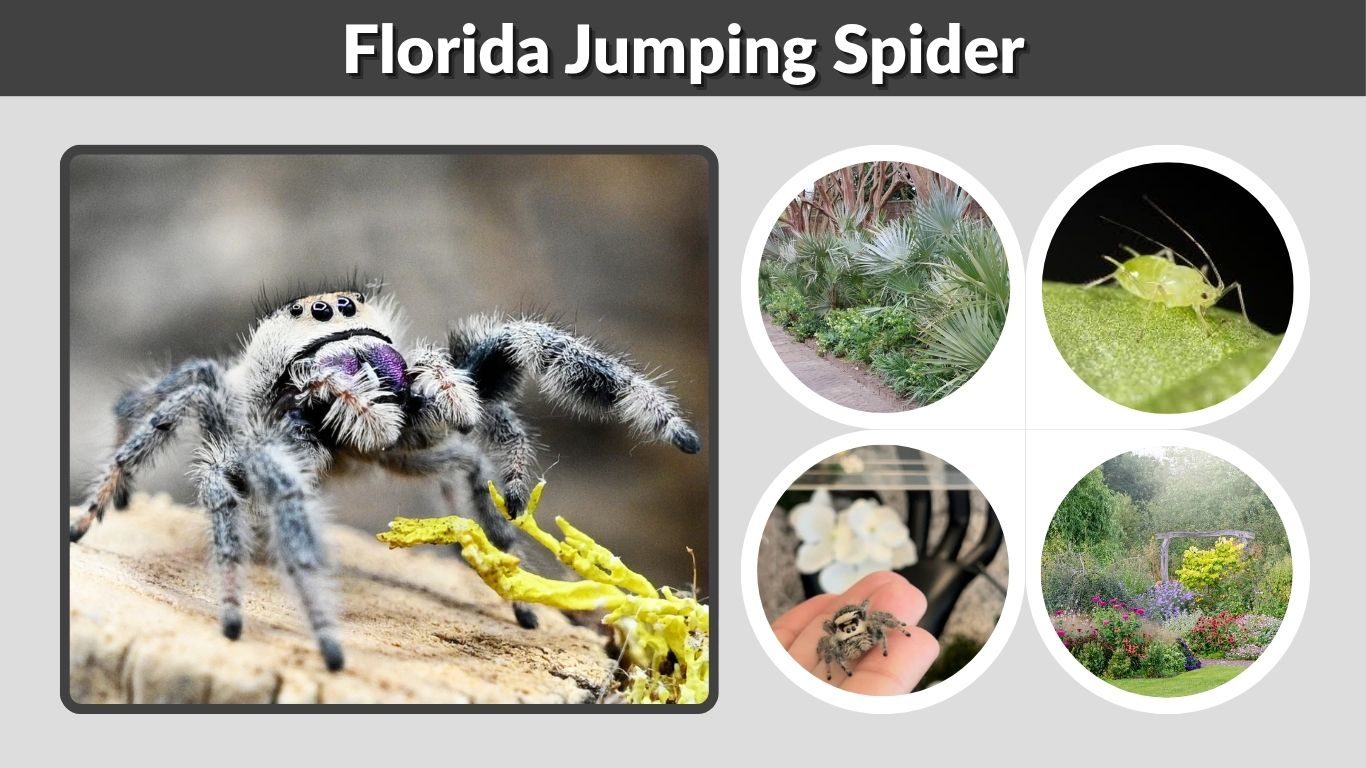
Florida jumping spiders are some of the most recognizable small spiders in the state. They are active hunters, have large forward-facing eyes, and often appear curious when they turn toward movement. Many are harmless household or garden visitors, while some, especially the regal jumping spider, are popular among spider keepers. This guide explains how to identify them, where they live, whether they bite, and what to know before buying one.
What Is a Florida Jumping Spider?
A Florida jumping spider is not one single species. It usually refers to any jumping spider found in Florida, especially members of the Salticidae family. These spiders are famous for their excellent eyesight, compact bodies, and quick pouncing behavior.
Unlike web-building spiders, jumping spiders usually do not spin large webs to trap prey. Instead, they stalk insects and leap at close range. They may still use silk as a safety line, for resting shelters, or for egg sacs.
Common signs you are looking at a jumping spider include:
- Large front-facing eyes
- Short, sturdy body
- Quick, stop-and-go movement
- Small jumps rather than long running
- Hairy or fuzzy appearance
- Bright markings on some species
- Curiosity toward people, cameras, or movement
In Florida, jumping spiders may be seen on walls, fences, window screens, garden plants, tree trunks, patio furniture, and even inside homes.
Common Florida Jumping Spider Species
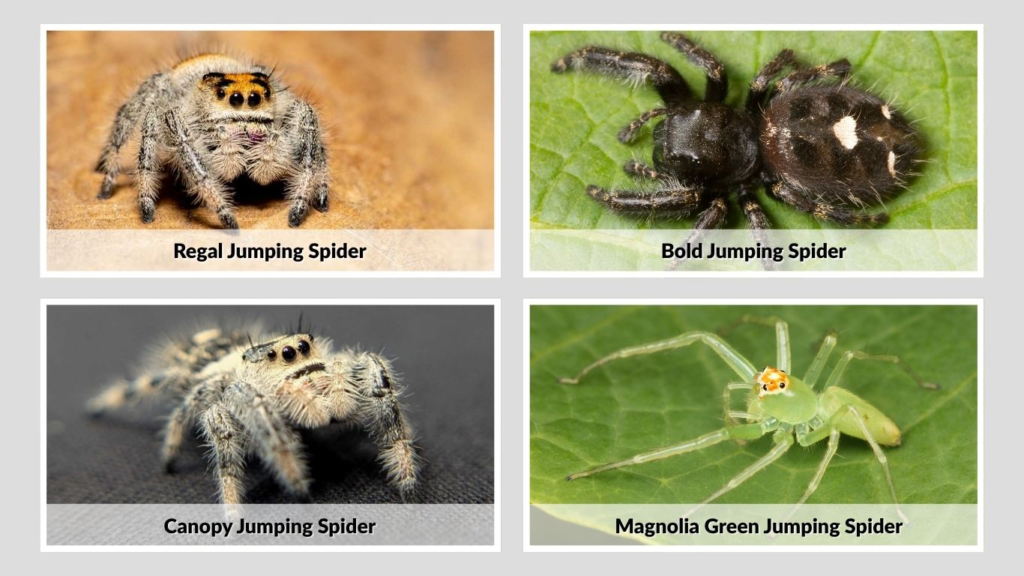
Florida has many jumping spiders, but a few types appear often in searches because they are large, colorful, or commonly found near people.
Regal Jumping Spider
The regal jumping spider is one of the best-known jumping spiders in Florida. It is often what people mean when they search for “florida jumping spider” or “regal jumping spider florida.”
Males are usually black with white markings and shiny green or blue-green mouthparts. Females can look very different, ranging from gray to tan, orange, or peach. This color difference often confuses beginners because a male and female regal jumping spider may not look like the same species.
The regal jumping spider is popular as a pet because it is large for a jumping spider, visually striking, and active during the day.
Bold Jumping Spider
The bold jumping spider is another black-and-white jumping spider that may be seen in Florida. It has a dark body, pale spots or bands, and often metallic-looking mouthparts. It is sometimes mistaken for a regal jumping spider.
A bold jumping spider may be found around houses, fences, sheds, and garden areas. It is not dangerous to people and usually tries to escape when disturbed.
Canopy Jumping Spider
The canopy jumping spider is associated with trees and wooded areas. It may have a fuzzy body and iridescent mouthparts that can look green or purple. Because it often lives above ground level, people may notice it on tree trunks, bark, outdoor furniture, or plants.
Searches such as “florida otiosus jumping spider” or “canopy jumping spider florida” often point toward this group.
Magnolia Green Jumping Spider
People searching for “green jumping spider florida” or “florida green jumping spider” may be looking for the magnolia green jumping spider. This spider is usually more slender and green than the stockier black-and-white Phidippus species.
It is commonly associated with vegetation, where its green coloring helps it blend into leaves. It may be seen in gardens, shrubs, and wooded areas.
Florida Jumping Spider Identification Table
Use this table as a quick guide when trying to identify the spider you found.
| Search Description | Possible Spider | Common Look | Where You May See It |
| Black and white jumping spider Florida | Regal or bold jumping spider | Dark body with white markings | Walls, fences, plants, homes |
| Florida regal jumping spider | Regal jumping spider | Male black/white, female gray/orange/tan | Fields, open woods, gardens |
| Green jumping spider Florida | Magnolia green jumping spider or green-jawed species | Green body or metallic green jaws | Leaves, shrubs, trees |
| Brown jumping spider Florida | Female regal, tan jumper, or other species | Brown, tan, gray, or orange tones | Plants, patios, window areas |
| Small jumping spider Florida | Many Salticidae species | Tiny, quick, large-eyed spider | Indoors, leaf litter, walls |
| Big black fuzzy jumping spider Florida | Regal, bold, or canopy jumper | Larger, hairy, dark body | Outdoor walls, trees, gardens |
Are Florida Jumping Spiders Poisonous?
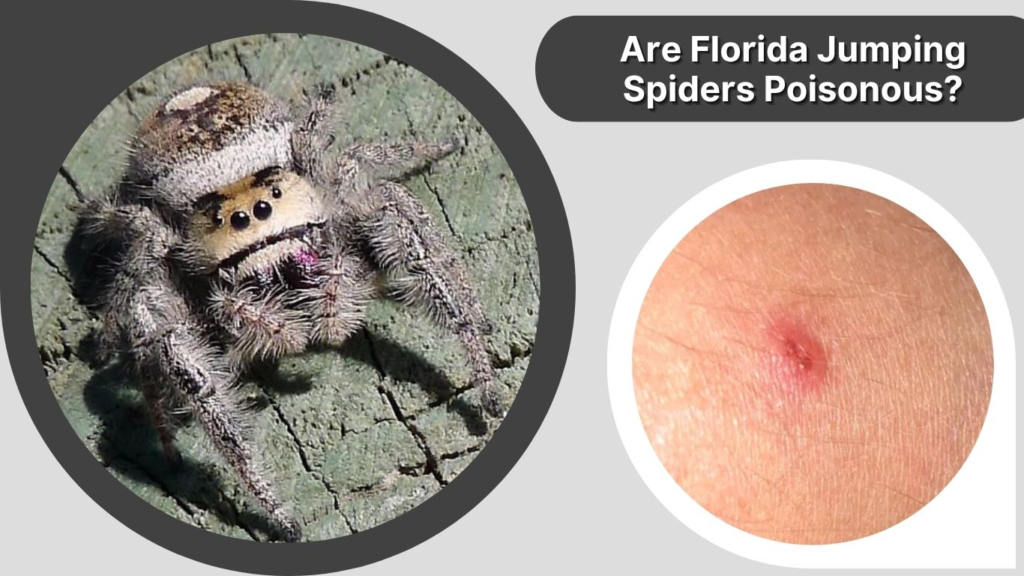
Florida jumping spiders are venomous in the same basic way most spiders are venomous: they use venom to subdue prey. However, they are not considered dangerous to healthy people.
A better word than “poisonous” is “venomous.” Poison is harmful when touched or eaten, while venom is injected through a bite. Jumping spiders do have venom, but their bites are uncommon and usually mild.
Most jumping spiders would rather flee, hide, or jump away than bite. A bite may happen if a spider is trapped against skin, squeezed, or handled roughly.
Florida Jumping Spider Bite: What to Expect
A Florida jumping spider bite is usually compared to a small pinprick or mild bee-sting-like irritation. Many people never get bitten because these spiders are reluctant to bite humans.
Possible mild symptoms include:
- Small red mark
- Slight swelling
- Brief pain or stinging
- Minor itching
- Tenderness around the bite area
Basic first aid is usually enough. Wash the area with soap and water, use a cold compress, and avoid scratching. Seek medical advice if symptoms are severe, if swelling spreads quickly, if there are signs of infection, or if the person bitten has a known allergy or unusual reaction.
Jumping spider bites are not considered lethal to humans. Queries like “small jumping spider florida bite lethality” and “regal jumping spider florida poisonous” usually come from fear, but these spiders are not among Florida’s medically significant spiders.
Florida Jumping Spider Size and Appearance
Florida jumping spider size depends on the species, age, and sex. Many are small, but some larger species can look surprisingly sturdy up close.
Most Florida jumping spiders are compact rather than long-legged. Their body shape is often squat, with a large front section and a rounded abdomen. Their eyes are one of the easiest identification clues. The large central eyes give them a direct, alert expression.
Common colors include:
- Black
- White
- Gray
- Brown
- Tan
- Orange
- Green
- Metallic blue-green or purple on the mouthparts
The “black jumping spider florida house” search usually refers to a dark jumping spider seen indoors. These spiders may wander inside while hunting small insects, but they do not infest homes like pantry pests or termites.
Where Do Jumping Spiders Live in Florida?
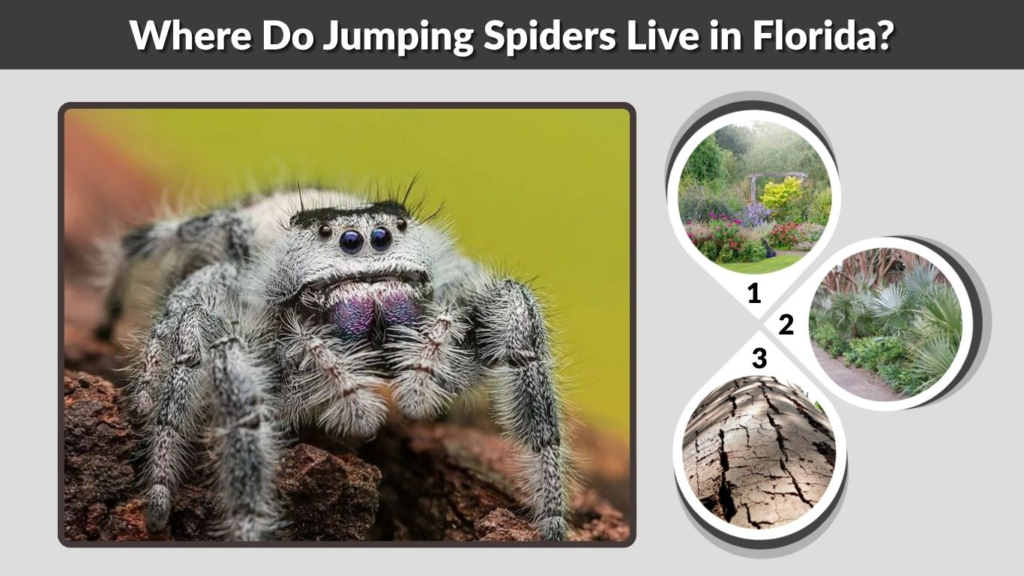
Jumping spiders are common across Florida because the warm climate supports insects and year-round plant cover. They are active hunters and often choose places where prey is easy to find.
You may find them in:
- Gardens and flower beds
- Palmettos and palms
- Tree trunks and bark
- Window screens
- Patio furniture
- Outdoor walls
- Fences and railings
- Leaf litter
- Sheds and garages
- Around porch lights where insects gather
People also search by location, such as “jumping spider florida jacksonville,” “north florida,” and “south florida.” Exact species vary by habitat, but jumping spiders can be found throughout much of the state.
What Do Florida Jumping Spiders Eat?
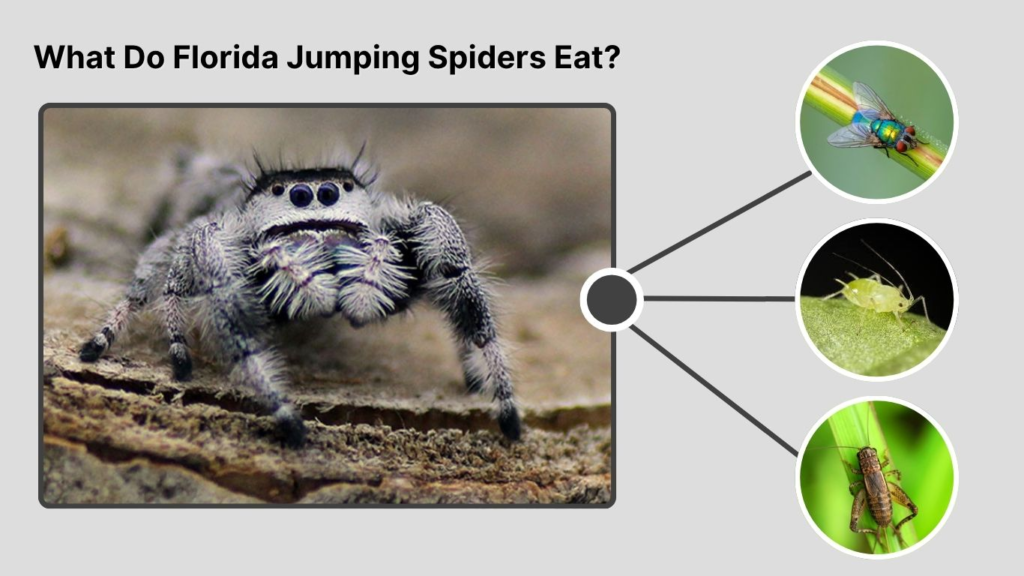
Florida jumping spiders are predators of small arthropods. They help control insects naturally and are often beneficial in gardens.
Their diet may include:
- Flies
- Mosquito-sized insects
- Small moths
- Aphids
- Beetles
- Crickets
- Small grasshoppers
- Other spiders
- Ants, depending on the species
They hunt by sight. A jumping spider may pause, face its prey, slowly approach, attach a silk dragline, and then leap. This behavior makes them fascinating to watch and explains why short videos of jumping spiders often perform well in search results.
Florida Jumping Spider Lifespan
The Florida jumping spider lifespan varies by species and conditions. In general, many jumping spiders live around several months to about a year, while some larger pet-kept species may live longer with proper care.
Females often live longer than males. Males may mature, search for mates, and have shorter adult lives. Females may spend more time feeding, producing egg sacs, and guarding young.
Factors that affect lifespan include:
- Species
- Temperature
- Food availability
- Hydration
- Stress
- Injury
- Captive care quality
- Whether the spider is wild-caught or captive-bred
For pet owners, stable humidity, safe enclosure design, proper feeding, and avoiding falls are important.
Florida Jumping Spider for Sale: What to Know
Searches like “florida jumping spider for sale” and “jumping spider for sale florida” show clear transactional intent. The most commonly sold Florida jumping spider is usually the regal jumping spider.
Before buying one, choose a responsible seller and make sure you understand basic care. A good seller should be able to identify the species, explain whether the spider is captive-bred or wild-caught, estimate age or life stage, and provide feeding and enclosure guidance.
Look for:
- Captive-bred spiders when possible
- Clear species identification
- Healthy, active spider behavior
- Proper shipping practices
- Care instructions
- Honest sex and age information
- No pressure to buy rare or poorly identified spiders
Avoid sellers who cannot identify the spider, use misleading photos, or sell very young spiderlings without care support.
If importing or moving invertebrates across state lines, check current rules first. Regulations can vary depending on species, origin, and whether the animal is native, nonnative, or being sold commercially.
Can You Keep a Florida Jumping Spider as a Pet?
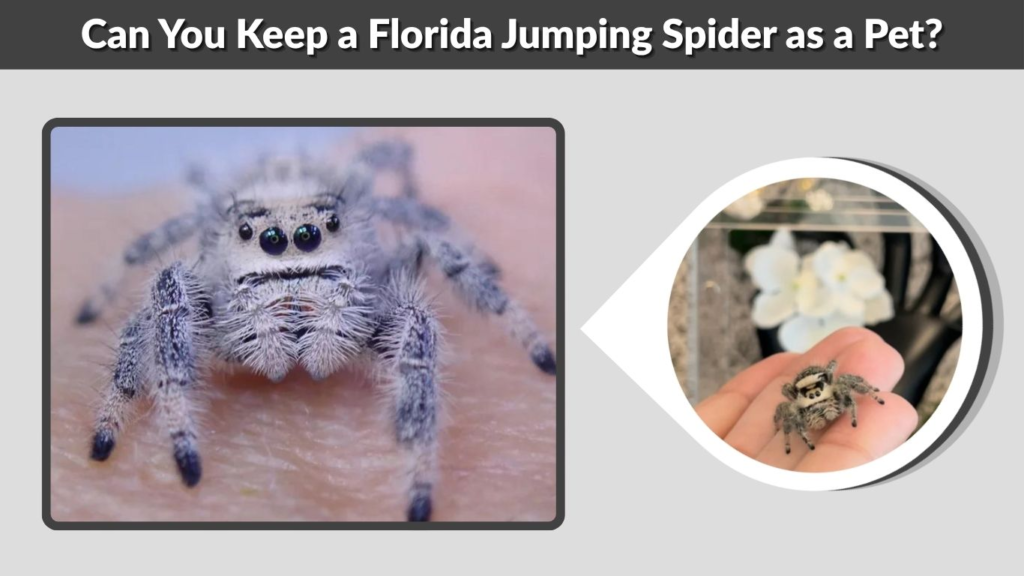
Yes, many people keep jumping spiders as pets, especially regal jumping spiders. They are small, quiet, and do not need a large enclosure. However, they still need proper care.
A basic setup should include:
- A secure, ventilated enclosure
- Climbing surfaces near the top
- Places to hide or build a silk retreat
- Light misting or a safe water source
- Appropriately sized live prey
- No pesticide exposure
- Careful handling or no handling at all
Jumping spiders are delicate. A fall, dehydration, overheating, or prey that is too large can injure or kill them. They should not be treated like toys, and frequent handling is not necessary.
Are Florida Jumping Spiders Good or Bad Around the House?
Florida jumping spiders are generally good to have around. They eat small insects, do not damage wood, do not contaminate food, and do not create messy web networks.
Inside the home, they are usually temporary visitors. If you see one, you can leave it alone or gently relocate it outdoors using a cup and paper.
Avoid spraying pesticides directly at jumping spiders. Sprays may kill beneficial predators and can make indoor pest issues worse by reducing natural insect control.
How to Find a Regal Jumping Spider in a Florida Yard
People often search “where to find a regal jumping spider florida yard” because regal jumping spiders are attractive and popular. The best places to look are sunny, insect-rich areas.
Check:
- Fence posts
- Garden plants
- Porch railings
- Palmetto leaves
- Outdoor walls
- Tree trunks
- Around lights
- Shrubs and low branches
Move slowly and look for small spiders that turn to face you. Jumping spiders often notice movement and may appear to “watch” you. Do not tear apart habitat or collect more than you can responsibly care for.
Similar-Looking Bugs and Spiders
Some people search for beetles in Florida that look similar to jumping spiders. At a glance, small dark beetles, tiny true bugs, or other compact spiders may be confused with jumping spiders.
The easiest way to separate them is by behavior and eyes. Jumping spiders move in short bursts, pause often, and have large forward-facing eyes. Beetles have hard wing covers and antennae, while jumping spiders have eight legs and no antennae.
Other spiders may jump or move quickly, but wolf spiders are usually longer-legged and run rather than stalk and pounce like a jumping spider.
FAQs
Are Florida jumping spiders dangerous?
Florida jumping spiders are not considered dangerous to healthy people. They have venom for catching prey, but bites are uncommon and usually mild. Most will jump away or hide when disturbed. If a bite causes severe swelling, spreading redness, breathing trouble, or unusual symptoms, seek medical advice.
What is the big black jumping spider in Florida?
A big black jumping spider in Florida may be a male regal jumping spider, a bold jumping spider, or another Phidippus species. These spiders often have white markings and metallic green or blue-green mouthparts. They may look intimidating up close, but they are usually harmless and beneficial predators.
What do Florida regal jumping spiders eat?
Florida regal jumping spiders eat small live prey such as flies, small crickets, moths, and other insects. In captivity, they should be fed prey that is smaller than or close to their body size. Wild spiders hunt naturally around plants, fences, fields, and open wooded areas.
Can I buy a Florida jumping spider online?
Yes, many keepers buy captive-bred regal jumping spiders online or from local breeders. Before buying, confirm the species, sex, life stage, care needs, and shipping conditions. Captive-bred spiders are usually better for beginners than wild-caught spiders because their age, health, and feeding history are easier to understand.
Why is a jumping spider staring at me?
A jumping spider may seem to stare because it has excellent vision and large front-facing eyes. It is likely tracking movement, judging distance, or deciding whether to flee. This curious behavior is normal. It does not mean the spider is aggressive or planning to bite.
