
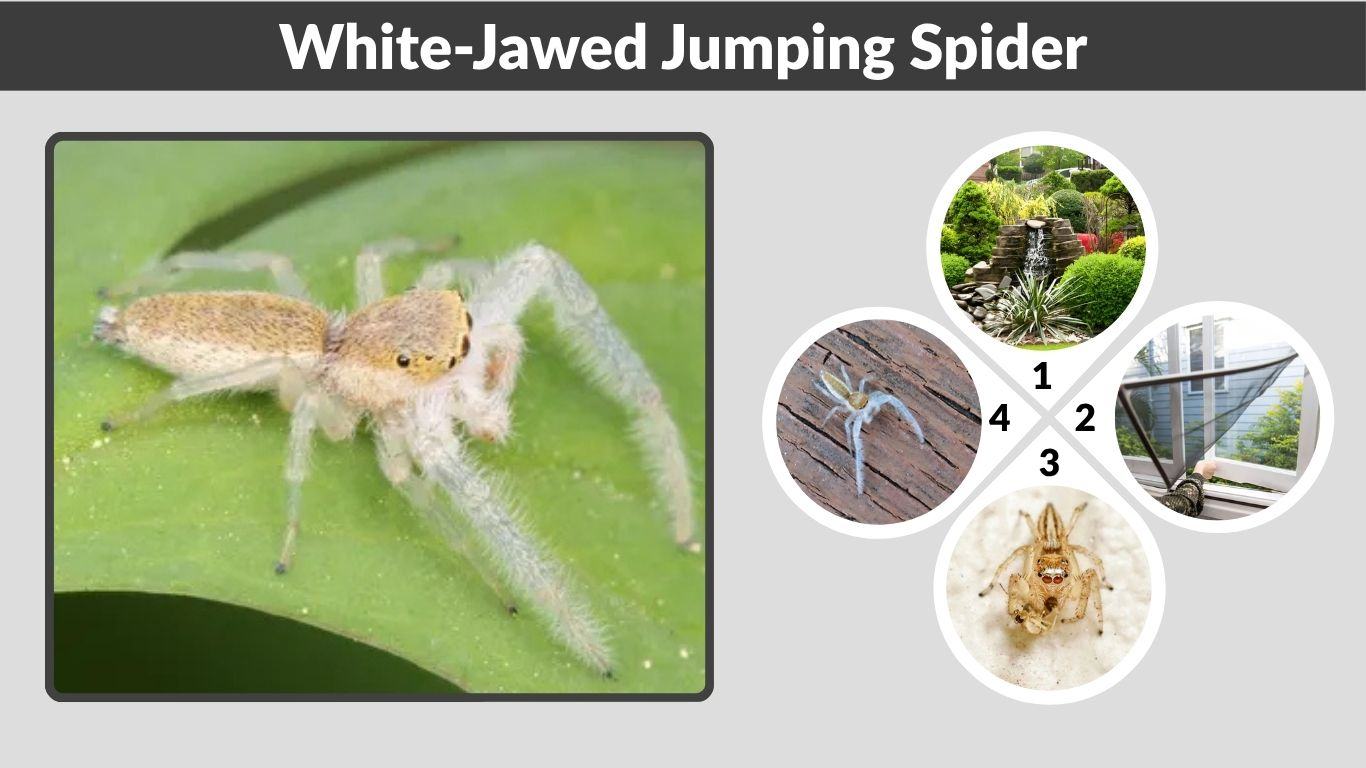
The white jawed jumping spider is a small, active spider known for its bright face markings, quick movements, and curious behavior. Like other jumping spiders, it does not build a web to catch prey. Instead, it hunts insects by sight and leaps with accuracy. Although its name may sound alarming, this spider is usually harmless to people and helpful around gardens and homes.
What Is a white-jawed jumping spider?
A white-jawed jumping spider is a type of jumping spider recognized by pale or white markings around the mouthparts, face, or “jaw” area. The name is often used by people trying to identify a small jumping spider with a light-colored face, pale chelicerae, or white front markings.
Jumping spiders belong to the family Salticidae, one of the largest spider families in the world. They are known for their large front-facing eyes, excellent vision, compact bodies, and short jumping movements.
Why It Is Called White Jawed
The term “white jawed” usually refers to the pale mouthpart area near the front of the spider. In spiders, the structures around the mouth are called chelicerae and palps. These parts may appear white, cream, pale gray, or silvery depending on the species and lighting.
Because jumping spiders are small, people often describe them by their most visible feature. A pale face or white jaw area can stand out clearly against a darker body.
Is It One Exact Species?
“White jawed jumping spider” may refer to more than one species. Many jumping spiders have pale mouthparts or white facial markings. Exact identification depends on location, size, body shape, color pattern, and clear photos.
For a casual homeowner or gardener, it is usually enough to know that the spider is a jumping spider and not a dangerous household pest.
What Does a White-Jawed Jumping Spider Look Like?
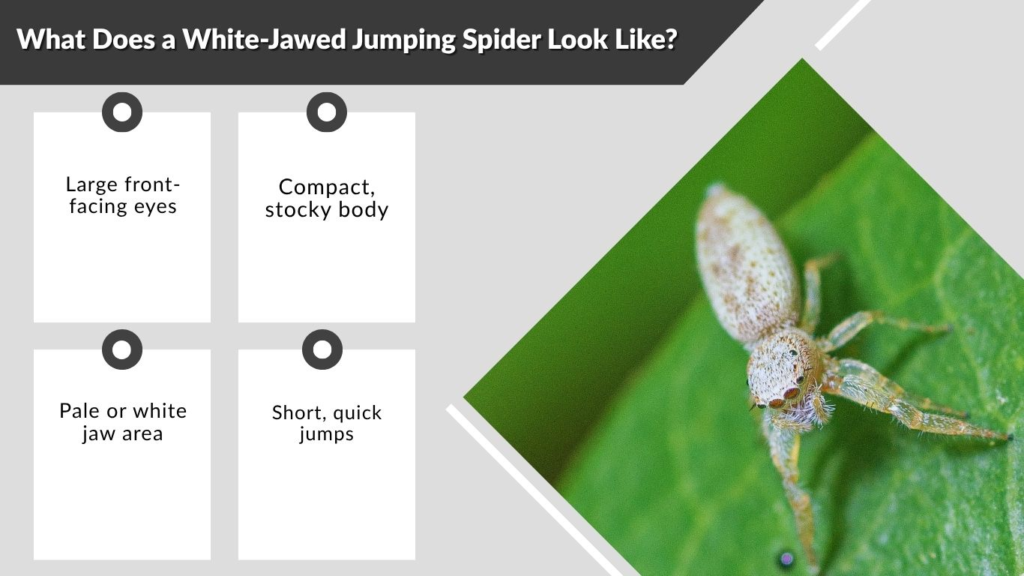
A white jawed jumping spider usually has a compact body, large eyes, short legs, and a quick, alert way of moving. Its color may be black, gray, brown, tan, or patterned, with white or pale markings near the face.
The spider may look fuzzy or slightly hairy. Like other jumping spiders, it often pauses, turns toward movement, and seems to “look” at people or objects nearby.
Key Identification Signs
Common identification features include:
- Large front-facing eyes
- Compact, stocky body
- Pale or white jaw area
- Short, quick jumps
- Active hunting during the day
- Fuzzy or hairy body texture
- No large prey-catching web
- Curious behavior around movement
If a spider has large forward-facing eyes and jumps instead of running in long, smooth movements, it may be a jumping spider.
White Jawed Jumping Spider Size
Most white jawed jumping spiders are small. Many are only a few millimeters long, though some may look larger because of their legs or fuzzy body. Females are often larger and rounder than males, while juveniles are tiny and may have less obvious markings.
Size alone is not enough for identification because many jumping spider species overlap in size.
White Jawed Jumping Spider Identification Table
Several jumping spiders may be mistaken for a white jawed jumping spider. This table can help compare similar-looking spiders.
| Spider Description | Common Appearance | Main Clue |
| White jawed jumping spider | Pale mouthparts or white facial markings | White or cream “jaw” area |
| Black and white jumping spider | Dark body with white spots or stripes | Strong contrast pattern |
| Bold jumping spider | Black body, white spots, sometimes metallic mouthparts | Larger, fuzzy body |
| Zebra jumping spider | Small body with black and white stripes | Striped pattern on body |
| Tan jumping spider | Brown or tan body with pale markings | Bark-like camouflage |
Where Do White Jawed Jumping Spiders Live?
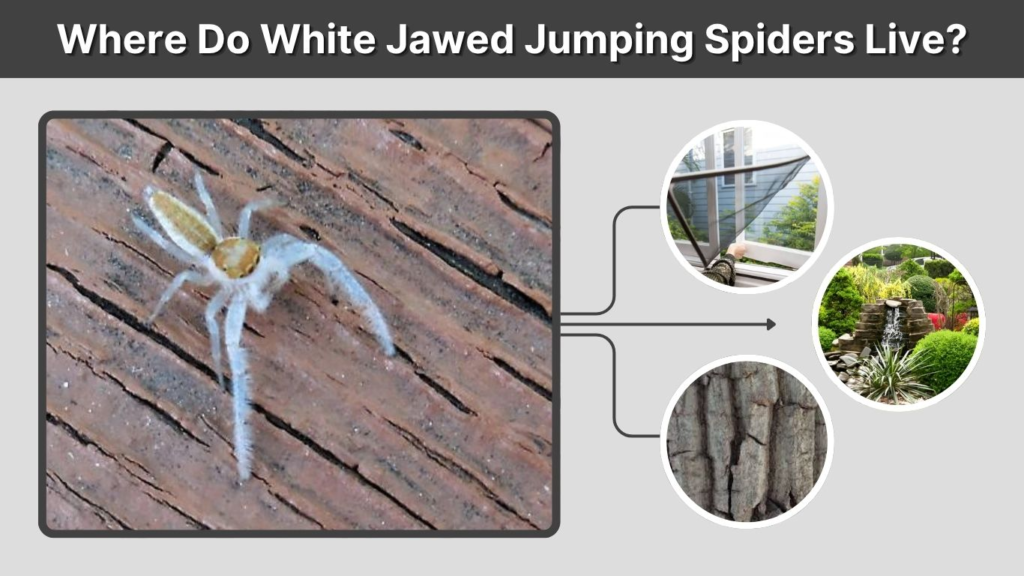
White jawed jumping spiders may be found in gardens, yards, forests, grasslands, walls, fences, sheds, and sometimes inside homes. They prefer places where small insects are available.
Unlike web-building spiders, they roam around looking for prey. They may rest in small silk shelters, but they do not make large sticky webs to trap insects.
Common Places to Find Them
You may see them on:
- Window screens
- House siding
- Garden plants
- Tree bark
- Fence rails
- Decks and patios
- Outdoor furniture
- Rocks and walls
- Garages and sheds
- Indoor windowsills
They are most active during the day because they rely heavily on vision to hunt.
Why They Come Indoors
A white jawed jumping spider may enter a home by accident. It may follow small insects, come in through gaps, or ride inside on plants, firewood, boxes, or outdoor items.
Indoor sightings do not usually mean there is an infestation. Jumping spiders do not reproduce in large indoor colonies like some household pests.
Is the White Jawed Jumping Spider Poisonous?
The white jawed jumping spider is not considered dangerous to people. Like almost all spiders, it has venom for catching prey, but its venom is meant for small insects, not humans.
The word “poisonous” is often used in searches, but “venomous” is more accurate for spiders. A venomous animal injects venom through a bite or sting. A poisonous animal causes harm when touched or eaten.
Can It Bite?
Yes, a white jawed jumping spider can bite, but bites are uncommon. It is more likely to jump away or hide than attack. A bite may happen if the spider is trapped against skin, squeezed, or handled roughly.
Most jumping spider bites are mild. They may cause a small red spot, slight swelling, itching, or brief tenderness.
What to Do If Bitten
If you think a jumping spider bit you:
- Wash the area with soap and water.
- Apply a cold compress to reduce swelling.
- Avoid scratching the bite.
- Keep the area clean.
- Watch for increasing redness, pain, or swelling.
Seek medical advice if symptoms spread, worsen, or include fever, pus, severe pain, dizziness, or trouble breathing.
White Jawed Jumping Spider Behavior
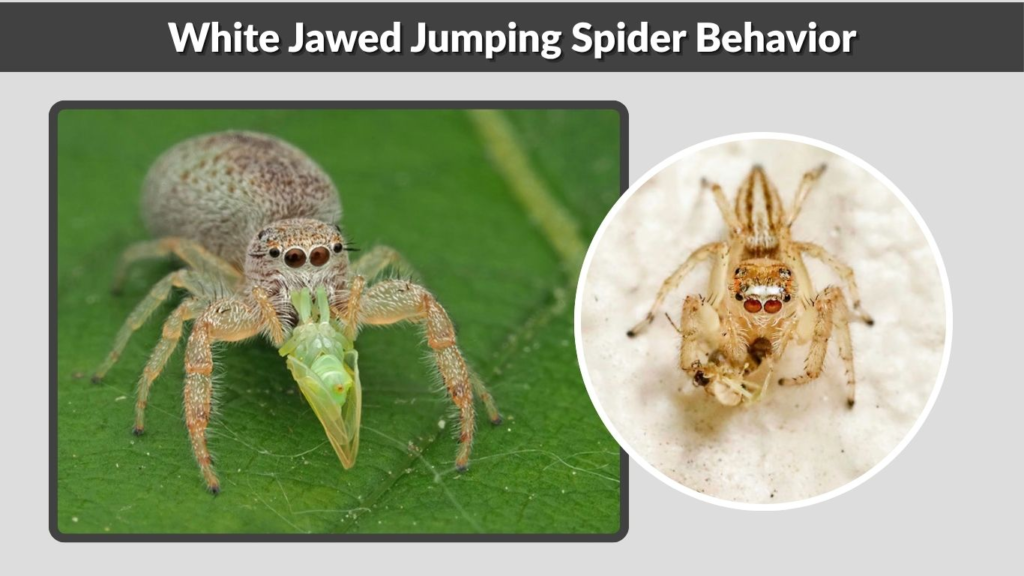
The white jawed jumping spider is an active hunter. It does not wait in a web for food. Instead, it watches for movement, stalks prey, and jumps when close enough.
Its behavior often makes it seem intelligent or curious. Many jumping spiders turn their bodies to face movement, which gives them a watchful appearance.
How It Hunts
Jumping spiders use their excellent eyesight to track prey. They slowly approach insects, judge distance, and leap with control. Before jumping, they often attach a silk line to the surface. This line works like a safety cord if they fall or miss.
Their prey may include small flies, gnats, mosquitoes, aphids, moths, and other tiny insects.
Does It Build a Web?
White jawed jumping spiders produce silk, but they do not use large webs to catch prey. Instead, they make small silk retreats for resting, hiding, molting, or laying eggs.
These silk retreats may appear in cracks, under leaves, behind bark, or in corners. They are usually small and easy to miss.
Are White Jawed Jumping Spiders Good to Have Around?
Yes, white jawed jumping spiders are usually beneficial. They help control small insects naturally and do not damage homes, plants, wood, clothing, or food.
In gardens, they may hunt pests on leaves and stems. Around windows or lights, they may catch small flies and gnats.
Benefits in the Garden
White jawed jumping spiders may help reduce:
- Gnats
- Flies
- Mosquitoes
- Aphids
- Small moths
- Leafhoppers
- Tiny caterpillars
- Other small insects
They are part of a healthy garden ecosystem. If you see one outside, it is usually best to leave it alone.
Benefits Around the Home
Indoors, a jumping spider may catch small insects near windows, houseplants, or doors. Since it does not create messy webs or cause structural damage, it is not usually a serious indoor problem.
If you do not want it inside, gently relocate it outdoors instead of killing it.
White Jawed Jumping Spider vs Other Spiders
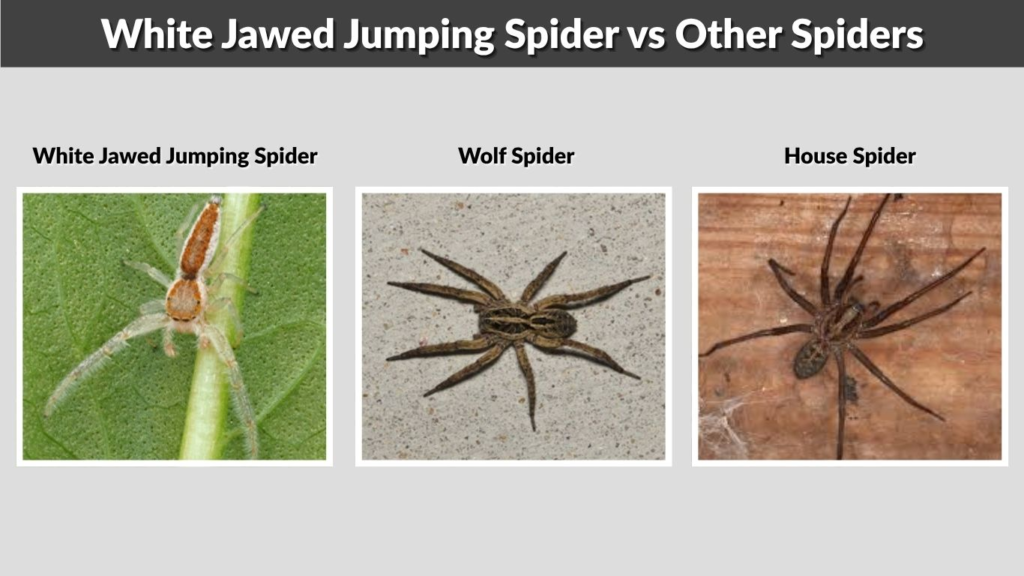
Jumping spiders are often mistaken for young wolf spiders, house spiders, or even dangerous spiders because of their dark markings. However, their body shape and eye pattern are different.
The large front eyes are the strongest clue. Most other spiders do not have the same forward-facing, almost “face-like” appearance.
White Jawed Jumping Spider vs Wolf Spider
Wolf spiders are usually larger, faster runners, and more ground-dwelling. They do not make the same short, controlled jumps as jumping spiders. Their bodies are longer and less compact.
A white jawed jumping spider is usually smaller, stockier, and more likely to pause and look directly at movement.
White Jawed Jumping Spider vs House Spider
Common house spiders often build webs in corners, ceilings, or quiet indoor spaces. Jumping spiders roam and hunt by sight instead of sitting in a web.
If the spider is moving around during the day and jumping between surfaces, it is more likely a jumping spider.
White Jawed Jumping Spider vs Dangerous Spiders
White jawed jumping spiders are not black widows or brown recluses. Black widows have shiny rounded bodies and often stay in messy webs. Brown recluses have a different body shape and do not have the same large front-facing eyes.
If you are unsure, take a clear photo and avoid handling the spider.
How to Remove a White Jawed Jumping Spider Safely
If a white jawed jumping spider is inside your home, removal is simple. You do not need harsh sprays or pesticides.
Use the cup-and-paper method. Place a clear cup over the spider, slide paper underneath, carry it outside, and release it near plants, shrubs, or a sheltered wall.
How to Keep Them Out
To reduce indoor sightings:
- Repair window screens.
- Seal gaps around doors and windows.
- Reduce small indoor insects.
- Check plants before bringing them inside.
- Keep outdoor clutter away from entrances.
- Use door sweeps where gaps are present.
- Avoid leaving lights on near open doors at night.
These steps also reduce other insects that may attract spiders.
Can You Keep a White Jawed Jumping Spider as a Pet?
Some people keep jumping spiders as pets because they are small, active, and interesting to watch. However, a wild white jawed jumping spider may not be the best choice for beginners unless you can identify it and provide the right care.
Captive-bred jumping spiders are usually better for pet keeping because their needs are better understood.
Basic Pet Care Needs
A pet jumping spider needs:
- A small secure enclosure
- Ventilation
- Climbing surfaces
- Hiding places
- Proper humidity
- Small feeder insects
- Clean water droplets
- Protection from overheating
- Minimal handling
Jumping spiders are delicate. They can be injured by falls, rough handling, or prey insects that are too large.
Should You Keep a Wild One?
It is usually better to observe wild jumping spiders and leave them in nature. If you want a pet jumping spider, buy from a responsible captive breeder and research the exact species first.
Never release a captive spider into the wild, especially if it is not native to your area.
FAQs
Is a white jawed jumping spider dangerous?
No, a white jawed jumping spider is not considered dangerous to people. It has venom for catching small insects, but bites are uncommon and usually mild. It is more likely to jump away than bite unless trapped or handled roughly.
What does a white jawed jumping spider eat?
A white jawed jumping spider eats small insects such as flies, gnats, mosquitoes, aphids, moths, and other tiny arthropods. It hunts by sight instead of using a web, stalking prey and leaping when close enough.
Why does it have white jaws?
The “white jaws” are usually pale mouthparts or facial markings near the front of the spider. These markings may be white, cream, gray, or silvery. They are normal features and do not mean the spider is dangerous.
Can a white jawed jumping spider live in my house?
It may enter a home accidentally, especially near windows, plants, or doors. However, it does not usually infest homes. If you find one indoors, you can gently move it outside with a cup and paper.
Should I kill a white jawed jumping spider?
No, killing it is usually unnecessary. White jawed jumping spiders are beneficial predators that eat small insects. If one is indoors or unwanted, relocate it outside instead of using pesticides.
