
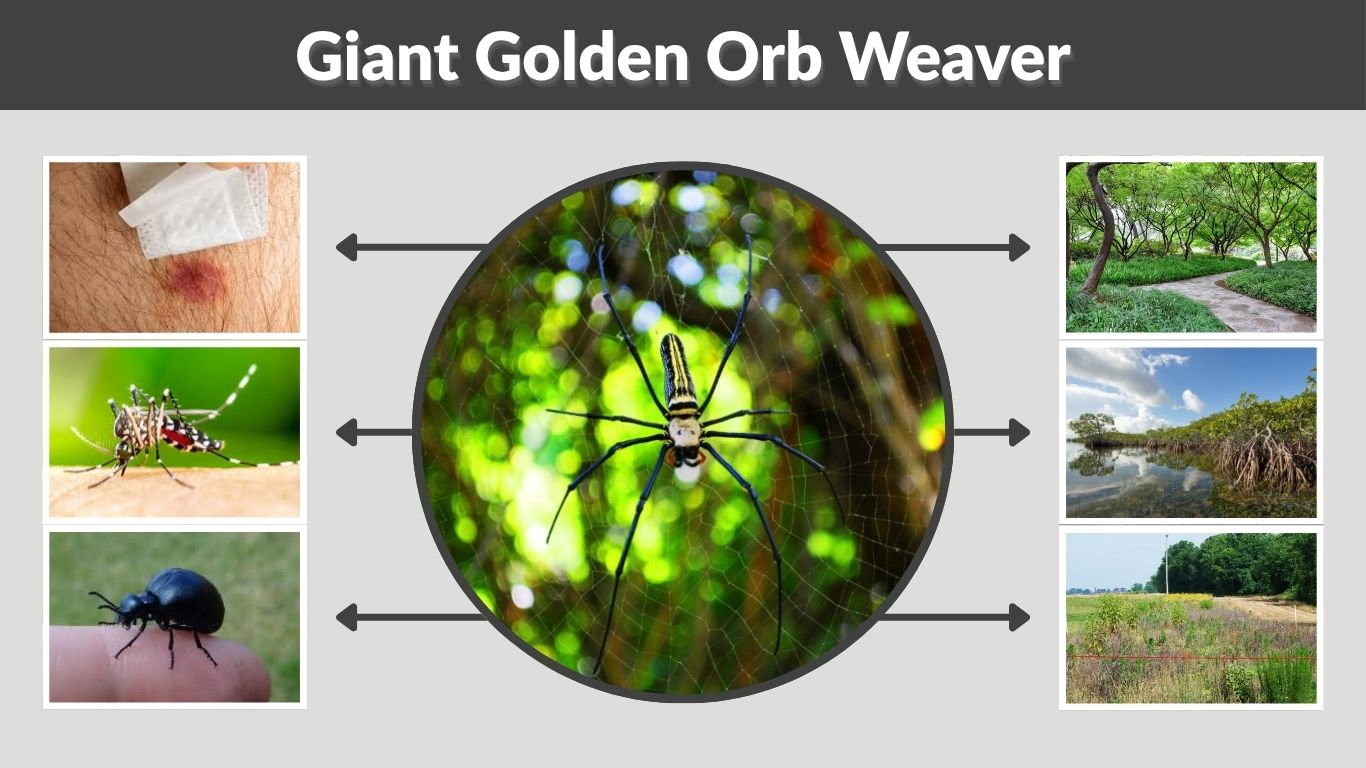
The giant golden orb weaver is one of the most fascinating spiders found in tropical and subtropical regions around the world. Known for its enormous golden-colored web and long legs, this spider often surprises people who encounter it in forests, gardens, or parks. Many people search for information about its size, venom, bite, and danger level because of its intimidating appearance. Despite its large size, the giant golden orb weaver is generally harmless to humans and plays an important role in controlling insect populations naturally.
Giant Golden Orb Weaver Overview
The giant golden orb weaver belongs to a group of orb-weaving spiders famous for building huge circular webs with silk that appears golden in sunlight. These spiders are commonly found in Australia, Asia, Africa, and other warm regions. Their impressive body size and beautiful webs make them one of the most recognizable spiders in the world.
Scientific Classification
- Kingdom: Animalia
- Phylum: Arthropoda
- Class: Arachnida
- Order: Araneae
- Family: Nephilidae
- Genus: Trichonephila or Nephila
Why Is It Called a Golden Orb Weaver?
The spider gets its name from the golden tint found in its silk. When sunlight hits the web, the strands can glow with a yellow or gold appearance. The word “orb” refers to the large circular shape of the web, which is designed to trap flying insects efficiently.
Where Are Giant Golden Orb Weavers Found?
- Australia
- Southeast Asia
- Africa
- Pacific Islands
- Tropical forests
- Gardens and woodland areas
Giant Golden Orb Weaver Size
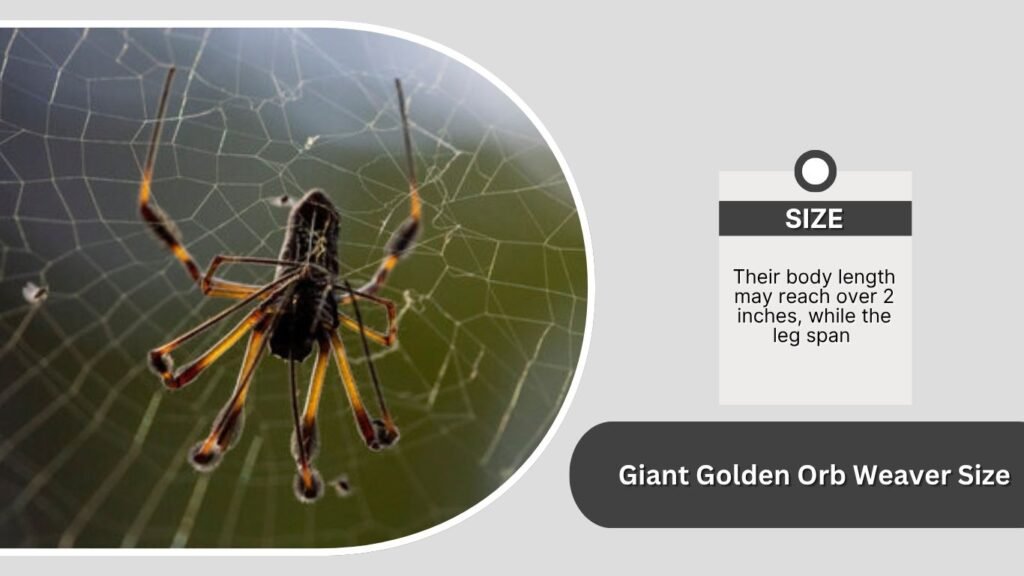
The size of the giant golden orb weaver is one reason why people fear it at first sight. Females are much larger than males and can appear enormous when sitting in the center of their webs. Their long legs and broad body create a dramatic appearance that easily attracts attention in the wild.
How Big Can a Giant Golden Orb Weaver Get?
Female giant golden orb weavers can grow quite large compared to other web-building spiders. Their body length may reach over 2 inches, while the leg span can extend beyond 5 inches in some species. Males are significantly smaller and are often difficult to notice near the female’s web.
Male vs Female Size Differences
One of the most interesting traits of this spider is its extreme sexual dimorphism. Females are many times larger than males. Tiny males usually live near the female’s web and wait for opportunities to mate while avoiding being mistaken for prey.
Is It One of the Largest Web-Building Spiders?
The giant golden orb weaver is considered one of the world’s largest orb-weaving spiders. Although tarantulas and huntsman spiders may have larger leg spans, golden orb weavers are among the biggest spiders that actively build giant aerial webs.
Giant Golden Orb Weaver Appearance
The appearance of the giant golden orb weaver makes it easy to identify in nature. Its bright body colors, long legs, and massive web create a striking combination. Many people notice these spiders hanging motionless in the middle of their webs during daylight hours.
Body Colors and Markings
- Yellow and black body patterns
- Orange or reddish patches in some species
- Long dark legs with lighter joints
- Hairy leg structures
- Glossy abdomen appearance
Leg Structure and Unique Features
The legs are extremely long and adapted for climbing and web construction. Some species have brush-like tufts on their legs that help with sensing vibrations and handling silk strands. Their lightweight body allows them to move carefully across delicate webs without damaging the structure.
How to Identify a Giant Golden Orb Weaver
The easiest way to identify this spider is by looking for its giant golden web and large female body. The spider usually hangs upside down in the center of the web with its legs stretched outward. The golden sheen of the silk becomes more visible during bright sunlight.
Giant Golden Orb Weaver Web
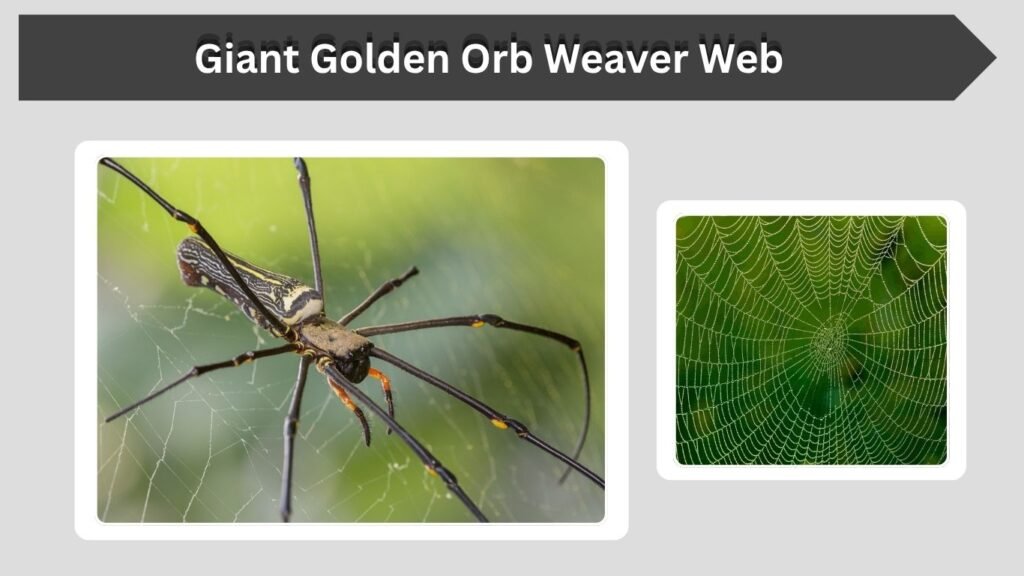
The web of the giant golden orb weaver is one of the strongest and most beautiful structures made by any spider. These webs can stretch across trees, pathways, and open spaces. Their strength allows them to catch surprisingly large prey, including insects much heavier than ordinary flies.
Why Is the Web Golden?
Scientists believe the golden color may help attract insects by reflecting sunlight. The web may also blend into surrounding vegetation during different lighting conditions, making it harder for prey to detect before becoming trapped.
How Large Can the Web Become?
- Several feet wide in mature females
- Built between trees and shrubs
- Multi-layered support strands
- Strong enough to catch large insects
- Often repaired daily
What Makes Their Silk Special?
Golden orb weaver silk is famous for its incredible strength and elasticity. Researchers have studied the silk for possible use in medical materials, protective fabrics, and advanced engineering products because it combines flexibility with durability.
Giant Golden Orb Weaver Venom
Many people wonder whether the giant golden orb weaver is dangerous because of its large size and intimidating appearance. Although it is technically venomous like most spiders, its venom is mild and mainly used to immobilize insect prey. The spider is not considered medically dangerous to healthy humans and usually avoids confrontation whenever possible.
Is the Giant Golden Orb Weaver Venomous?
Yes, the giant golden orb weaver is venomous, but the venom is weak compared to medically significant spiders. Its venom helps subdue insects caught in the web and allows the spider to feed safely. Human reactions are usually mild and temporary.
How Dangerous Is the Venom to Humans?
- Mild pain in most cases
- Temporary redness or swelling
- Rare allergic reactions
- Not considered deadly
- Symptoms usually disappear quickly
Giant Golden Orb Weaver vs Dangerous Spiders
| Spider | Venom Strength | Risk to Humans | Aggression Level |
| Giant Golden Orb Weaver | Mild | Low | Very low |
| Sydney Funnel-Web | Extremely strong | High | Aggressive |
| Redback Spider | Strong | Moderate to high | Defensive |
Giant Golden Orb Weaver Bite
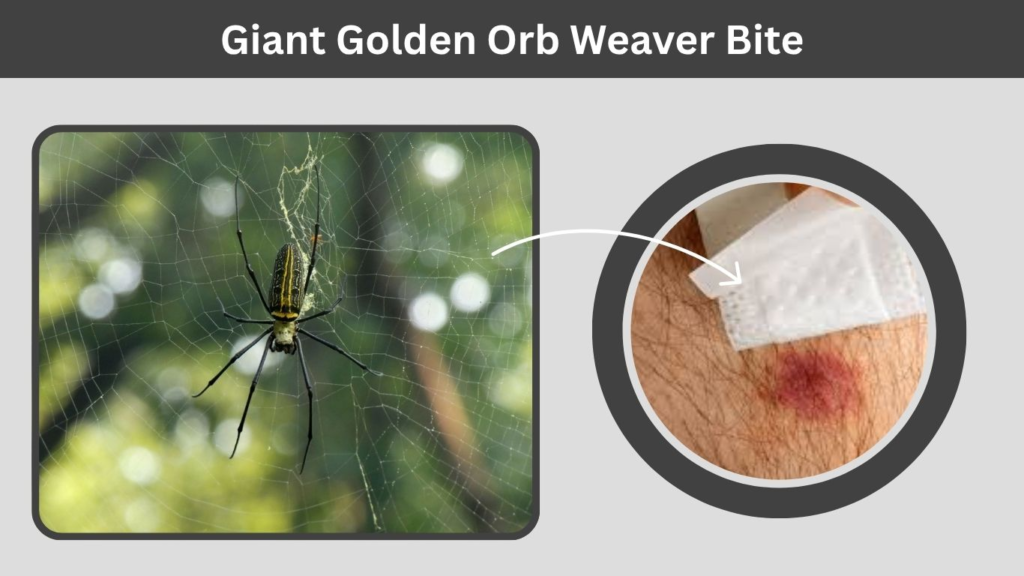
Bites from giant golden orb weavers are uncommon because these spiders are shy and prefer escaping rather than attacking. Most bites happen when the spider becomes trapped against human skin or feels threatened while being handled accidentally.
Does the Giant Golden Orb Weaver Bite Humans?
The spider can bite humans in self-defense, but it rarely does so willingly. Even when disturbed, it often tries to flee instead of standing its ground. Their large webs may surprise hikers or gardeners, but direct contact is uncommon.
What Does the Bite Feel Like?
People who have been bitten usually describe the sensation as similar to a bee sting. The discomfort is often short-lived and manageable without medical treatment. Severe symptoms are very uncommon in healthy adults.
Bite Treatment and First Aid
- Wash the bite area with soap and water
- Apply an ice pack to reduce swelling
- Avoid scratching the skin
- Use pain relief cream if needed
- Seek medical help if allergic symptoms appear
Giant Golden Orb Weaver Habitat and Distribution
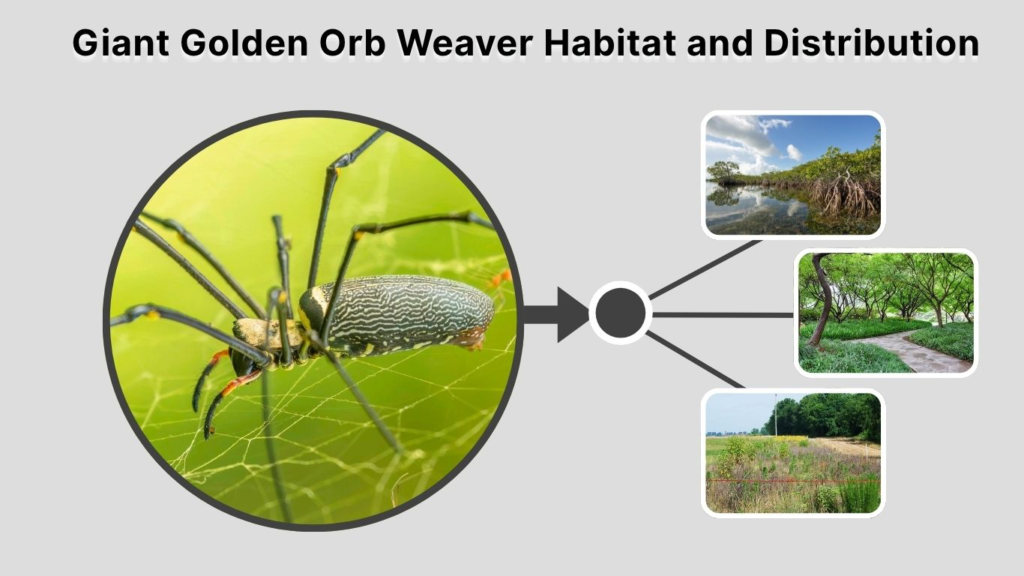
The giant golden orb weaver thrives in warm climates with plenty of vegetation and open spaces for web construction. These spiders prefer humid environments where flying insects are abundant. Their large webs are commonly found stretched between trees, shrubs, and garden structures.
Giant Golden Orb Weaver in Australia
Australia is one of the best-known locations for giant golden orb weavers. They are especially common in tropical and subtropical parts of the country where forests and gardens provide ideal conditions for large webs.
Preferred Natural Habitat
- Rainforests
- Woodlands
- Coastal vegetation
- Gardens and parks
- Forest edges
When Are They Most Active?
These spiders are most active during warmer months when insect populations increase. Females spend much of their time maintaining webs and waiting for prey, while males move carefully around female webs during mating season.
Giant Golden Orb Weaver Diet and Hunting Behavior
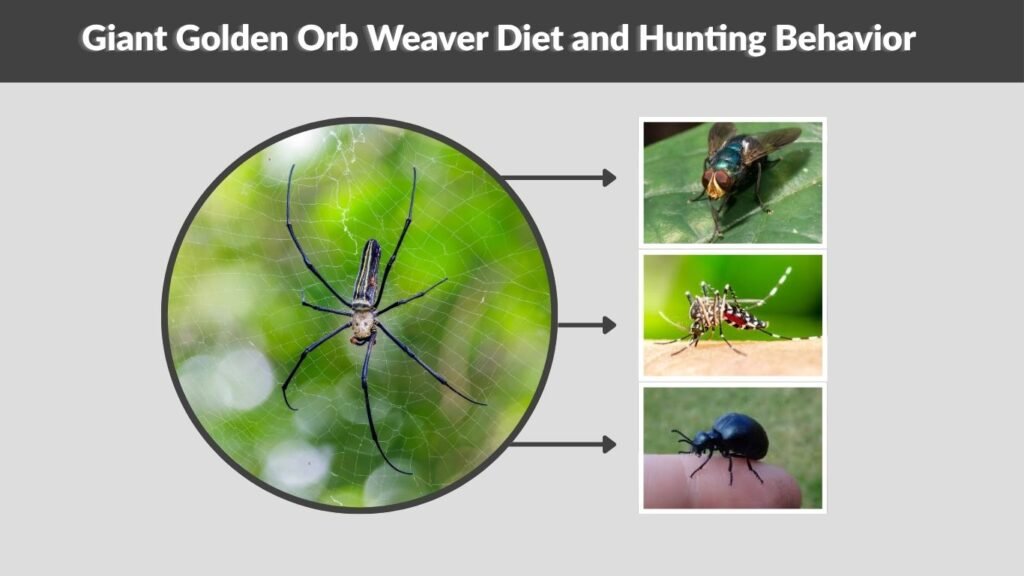
The giant golden orb weaver is an efficient predator that depends on its large sticky web to capture prey. Instead of actively hunting, it waits patiently for insects to become trapped before approaching them carefully.
What Do Giant Golden Orb Weavers Eat?
Their diet mainly includes flying insects that collide with the web. Larger females can capture surprisingly large prey due to the strength of their silk.
Common Prey Items
- Flies
- Mosquitoes
- Beetles
- Moths
- Grasshoppers
- Small butterflies
How They Catch Prey
Once an insect becomes trapped, the spider quickly moves toward it and injects venom to immobilize it. The prey is then wrapped in silk before feeding begins. Vibrations traveling through the web help the spider locate struggling insects with precision.
Is the Giant Golden Orb Weaver Dangerous?
Despite its frightening appearance, the giant golden orb weaver is not considered a dangerous spider. It plays a beneficial role in ecosystems by controlling insect populations naturally. Most people can safely observe these spiders from a distance without any risk.
Are Giant Golden Orb Weavers Aggressive?
These spiders are extremely non-aggressive and usually retreat when disturbed. They rely on their web for protection rather than attacking large animals or humans.
Should You Remove Them From Your Property?
In many cases, leaving them alone is beneficial because they reduce pest insects naturally. However, webs built across walkways or doorways may need relocation for convenience and safety.
Common Myths About Giant Golden Orb Weavers
Many myths exaggerate the danger of these spiders. Their large size often causes fear, but scientific evidence shows they are generally harmless to humans and rarely bite unless directly threatened.
FAQs
Is the giant golden orb weaver dangerous to humans?
No, the giant golden orb weaver is not considered dangerous to humans. Its venom is mild and usually causes only temporary pain, redness, or swelling. The spider is shy and prefers avoiding people rather than biting.
How big is a giant golden orb weaver?
Large females can reach over 2 inches in body length with a leg span exceeding 5 inches. Males are much smaller and are often difficult to notice near the female’s web.
Can a giant golden orb weaver bite hurt?
A bite may feel similar to a mild bee sting. Most people experience temporary discomfort, redness, or swelling that disappears within a short time without serious medical problems.
Why is the giant golden orb weaver web golden?
The silk has a yellow or golden tint that becomes visible in sunlight. Scientists believe the color may attract insects or help camouflage the web among surrounding vegetation.
Are giant golden orb weavers found in Australia?
Yes, giant golden orb weavers are common in Australia, especially in tropical and subtropical regions. They are often seen in forests, gardens, parks, and wooded areas during warm seasons.
