
Huntsman spiders are famous for their enormous leg spans and frightening appearance. Many people search for huntsman spider size after seeing viral photos of giant spiders on walls, cars, or ceilings. Although these spiders can look terrifying, their true size is often misunderstood. Some species are surprisingly large, especially in tropical regions like Australia and Southeast Asia. Understanding their body length, leg span, and growth patterns helps separate internet myths from reality while giving a clearer picture of one of the world’s most impressive spiders.
How Big Is a Huntsman Spider?
Huntsman spiders are considered some of the largest spiders by leg span. Their flattened bodies and long legs make them appear much bigger than they actually are. Most species are harmless to humans, but their wide stance can easily startle anyone who spots one indoors. Size varies greatly depending on the species and location.
Average Huntsman Spider Size
Most huntsman spiders grow to a moderate size, though some species become extremely large.
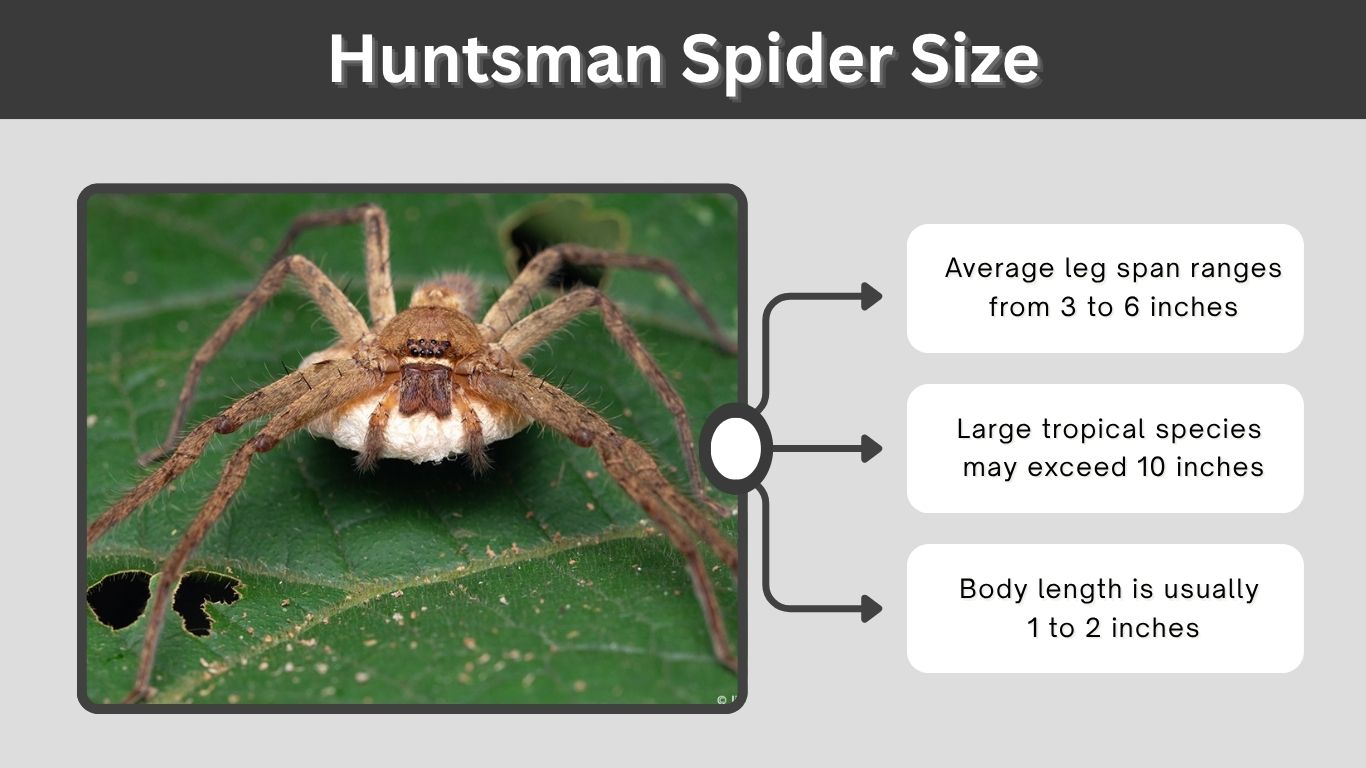
- Average leg span ranges from 3 to 6 inches
- Large tropical species may exceed 10 inches
- Body length is usually 1 to 2 inches
- Females are often larger than males
- Young huntsman spiders start very small and grow after molting
Many household huntsman spiders are much smaller than the giant specimens seen online. However, their long legs make even average-sized species appear huge.
Huntsman Spider Size in CM
Spider researchers often measure huntsman spiders using both body length and full leg span. The body itself is usually compact, while the legs account for most of the spider’s impressive width.
| Huntsman Type | Body Length | Leg Span |
| Small Species | 2–3 cm | 7–10 cm |
| Medium Species | 4–5 cm | 12–15 cm |
| Giant Species | 5–7 cm | 20–30 cm |
The giant huntsman spider discovered in Laos is one of the largest known species by leg span.
Huntsman Spider Size in Inches and Feet
Many people wonder whether huntsman spiders can actually reach a foot wide. While some giant species come close, most are smaller than internet rumors suggest. A very large huntsman spider may stretch nearly 12 inches across with its legs fully extended, but this is uncommon.
Photos taken at close range can also exaggerate the spider’s size. A huntsman on a wall near a camera lens may appear enormous even if it is only a few inches wide.
Biggest Huntsman Spider Species
Several huntsman spider species are known for their incredible size. Tropical climates allow these spiders to grow larger than species found in cooler regions. Some are famous worldwide because of viral images and documentaries featuring giant spiders.
Giant Huntsman Spider
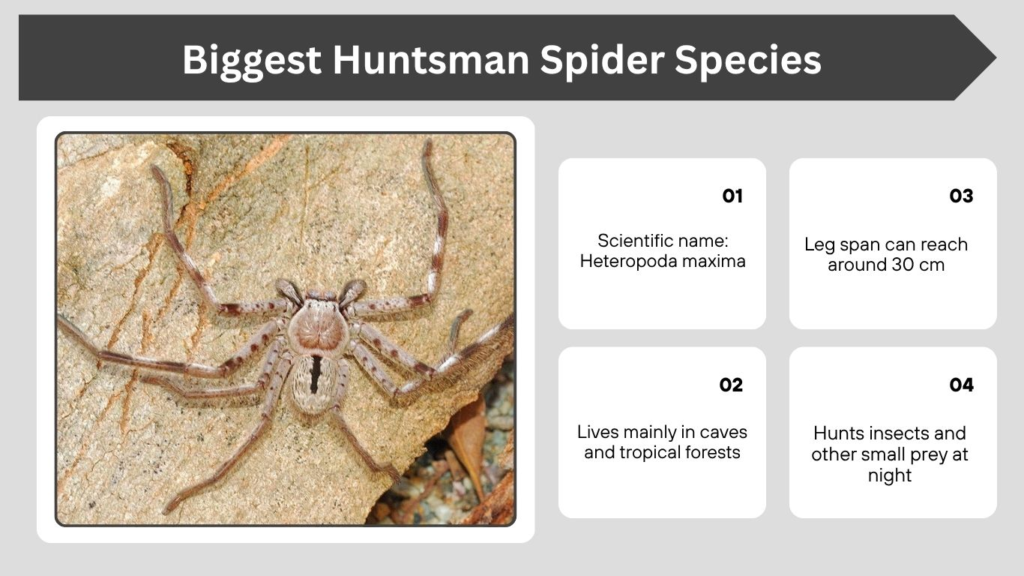
The giant huntsman spider is one of the largest spiders ever discovered by leg span. It was first identified in Laos and immediately gained attention because of its enormous size.
- Scientific name: Heteropoda maxima
- Leg span can reach around 30 cm
- Lives mainly in caves and tropical forests
- Has a flattened body for squeezing into narrow spaces
- Hunts insects and other small prey at night
Despite its frightening appearance, the spider usually avoids human contact.
Australian Huntsman Spider Size
Australia is famous for large huntsman spiders because several species thrive in warm climates. Many Australians encounter them inside homes, sheds, or vehicles.
These spiders often spread their legs widely across walls, making them seem even larger. Some species can cover an adult human hand. However, most Australian huntsman spiders are not aggressive and prefer escaping rather than biting.
Largest Huntsman Spider Ever Recorded
The largest verified huntsman spiders are measured mainly by leg span instead of body weight. While tarantulas are heavier and bulkier, huntsman spiders appear wider because of their extended legs.
Scientists continue discovering new species in tropical forests, meaning even larger huntsman spiders may still exist in remote areas.
Huntsman Spider Size Comparison
Comparing huntsman spiders with other large spiders helps people better understand their true dimensions. Although they are among the widest spiders, they are not always the heaviest or longest-bodied species.
Huntsman Spider Size vs Tarantula
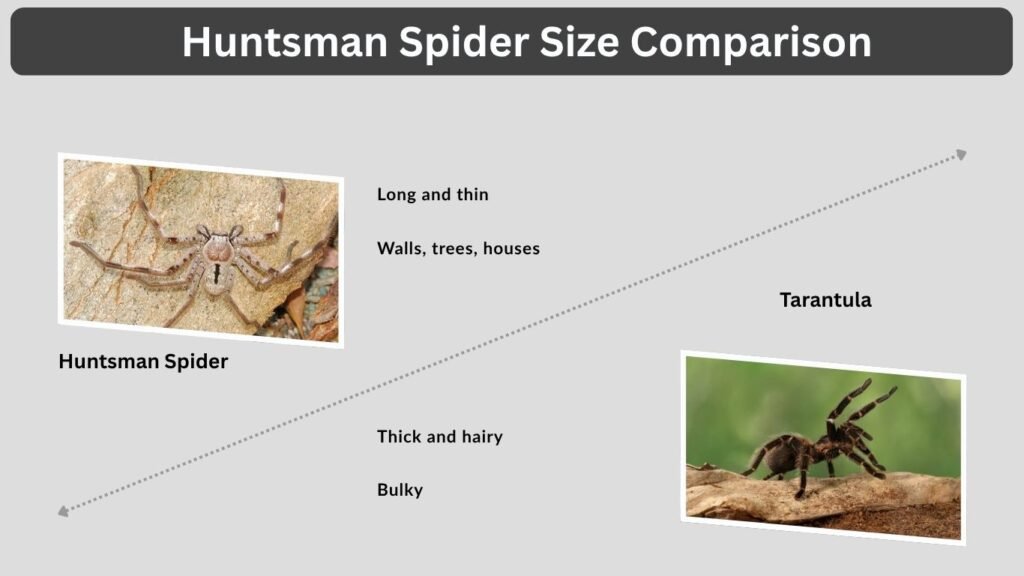
Huntsman spiders and tarantulas look very different despite both being large spiders. Huntsman spiders have thinner bodies and much longer-looking legs, while tarantulas appear heavier and hairier.
| Feature | Huntsman Spider | Tarantula |
| Leg Appearance | Long and thin | Thick and hairy |
| Body Shape | Flat | Bulky |
| Speed | Very fast | Slower |
| Typical Habitat | Walls, trees, houses | Burrows and ground |
| Largest Feature | Wide leg span | Heavy body |
Many people think huntsman spiders are larger simply because their legs spread outward in a crab-like position.
Huntsman Spider Size Comparison to Human Hand
A fully grown huntsman spider can sometimes appear as large as an adult hand. Smaller species may only cover part of the palm, while giant tropical species can stretch across nearly the entire hand.
Their flattened posture also allows them to cling closely to walls and ceilings, making them look even wider when viewed from below.
Why Huntsman Spiders Look Bigger Than They Are
Huntsman spiders often appear much larger than their actual measurements. Their body design, movement, and leg positioning create a dramatic visual effect that frightens many people. Viral internet photos also contribute to the belief that these spiders are enormous monsters. In reality, most species are far less intimidating once their true size is understood.
Long Legs and Flat Bodies
The huntsman spider’s appearance is unique compared to many other spiders. Instead of having thick, upright legs, their legs stretch outward sideways in a crab-like fashion.
- Legs spread widely across surfaces
- Flat body increases visible width
- Thin legs create a larger silhouette
- Sideways movement adds to the unusual appearance
- Wide stance helps them hunt quickly
This body structure helps huntsman spiders move rapidly across walls, tree bark, and ceilings while chasing prey.
Camera Angles and Viral Photos
Many giant huntsman spider photos online are misleading because of perspective distortion. A spider close to the camera lens can appear much larger than nearby objects in the background.
Professional wildlife photographers sometimes use close-up angles that emphasize the spider’s long legs. Social media users also share exaggerated images that make huntsman spiders seem far bigger than they really are.
Fast Movement and Fear Factor
Huntsman spiders move extremely quickly, which can make them appear even more frightening. Sudden movement across a wall or ceiling often surprises people before they can judge the spider’s true size.
Unlike web-building spiders, huntsman spiders actively chase prey. Their speed and unpredictable movement patterns increase the fear factor for many homeowners.
Are Huntsman Spiders Dangerous Despite Their Size?
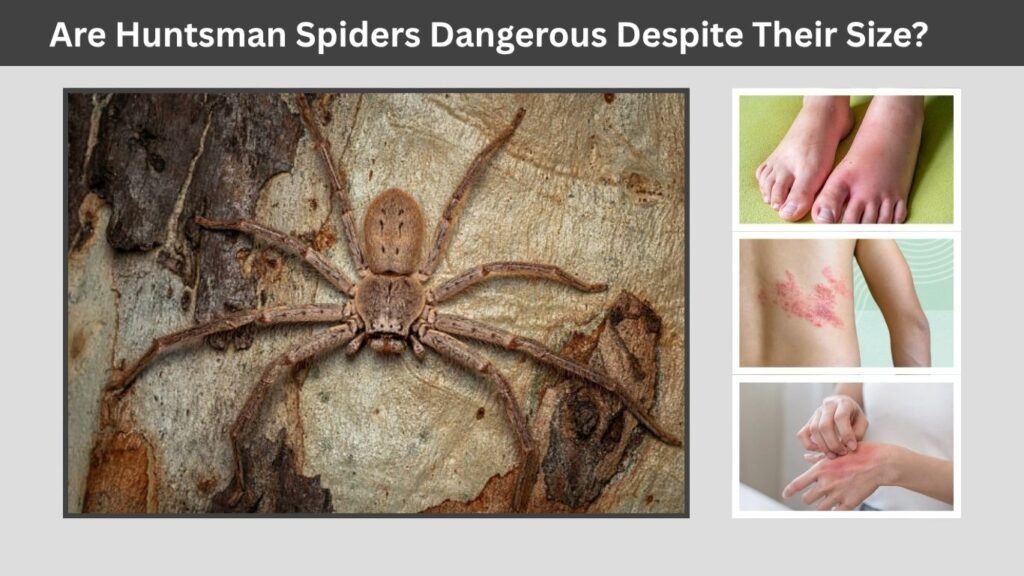
Although huntsman spiders look intimidating, they are generally considered harmless to humans. Their size alone does not make them dangerous. Most species avoid confrontation and only bite when threatened or trapped.
Bite Strength and Symptoms
A huntsman spider bite can be painful, but serious medical complications are rare.
- Mild swelling may occur
- Redness and discomfort are common
- Some people experience temporary nausea
- Severe allergic reactions are uncommon
- Most bites heal within a few days
These spiders prefer escaping rather than attacking humans. Many bites happen accidentally when a spider becomes trapped inside clothing or shoes.
Why Huntsman Spiders Enter Homes
Huntsman spiders often enter homes while searching for food or shelter. Warm indoor environments attract insects, which also attract hunting spiders.
They may hide behind furniture, curtains, or inside garages during rainy weather. In tropical countries, it is common to spot them resting on walls or ceilings at night.
Benefits of Huntsman Spiders
Despite their frightening appearance, huntsman spiders can actually help control household pests. They feed on many unwanted insects that invade homes.
Their diet commonly includes:
- Cockroaches
- Flies
- Moths
- Crickets
- Small insects and pests
Because they actively hunt insects, many people tolerate huntsman spiders as natural pest controllers.
Interesting Huntsman Spider Size Facts
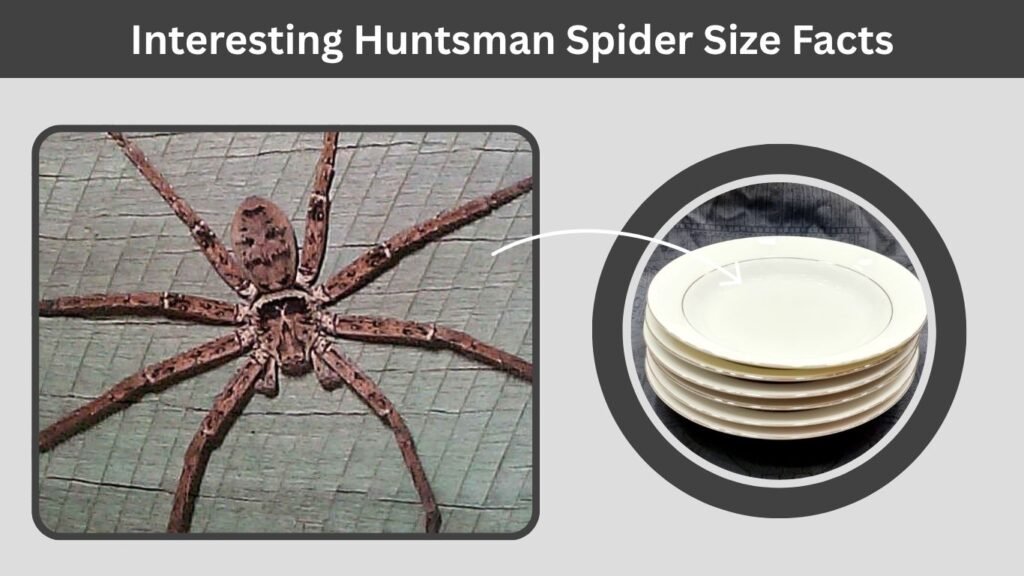
Huntsman spiders are fascinating creatures with several unusual traits. Their size, speed, and hunting abilities make them one of the most recognizable spiders in the world.
Fastest Large Spider Species
Huntsman spiders are among the fastest large spiders. Their long legs allow them to sprint rapidly across surfaces while chasing prey. Some species can move sideways with impressive speed, similar to crabs.
Record Leg Span Facts
The largest huntsman spiders can reach nearly 12 inches across their legs. That width is similar to:
- A dinner plate
- A large human hand
- A laptop screen width
However, these record-sized spiders are rare and mostly found in tropical regions.
Molting and Growth Stages
Like other spiders, huntsman spiders grow by molting their exoskeleton. Young spiders shed their outer covering multiple times before reaching adulthood. Each molt allows the spider to increase in size and develop stronger legs for hunting.
FAQs
How big can a huntsman spider get?
Most huntsman spiders have a leg span between 3 and 6 inches, but giant species can grow much larger. The biggest known huntsman spiders may reach nearly 12 inches across their legs. Their body remains relatively small compared to their impressive width.
What is the biggest huntsman spider ever found?
The giant huntsman spider (Heteropoda maxima) is considered the largest huntsman species by leg span. It was discovered in Laos and can reach around 30 centimeters across. Its enormous spread makes it one of the widest spiders ever recorded.
Are huntsman spiders bigger than tarantulas?
Huntsman spiders often appear larger because of their long, sideways legs. However, tarantulas usually have heavier and bulkier bodies. Huntsman spiders are wider by leg span, while tarantulas are generally thicker and heavier overall.
How large are Australian huntsman spiders?
Australian huntsman spiders vary in size depending on the species. Many common types have a leg span of 4 to 6 inches, while some tropical species grow much larger. Their wide stance makes them look especially huge when resting on walls or ceilings.
Can huntsman spiders grow to one foot wide?
A few giant huntsman species can come close to a one-foot leg span, though this is uncommon. Most huntsman spiders are significantly smaller. Photos online often exaggerate their size because of camera angles and close-up perspectives.
