
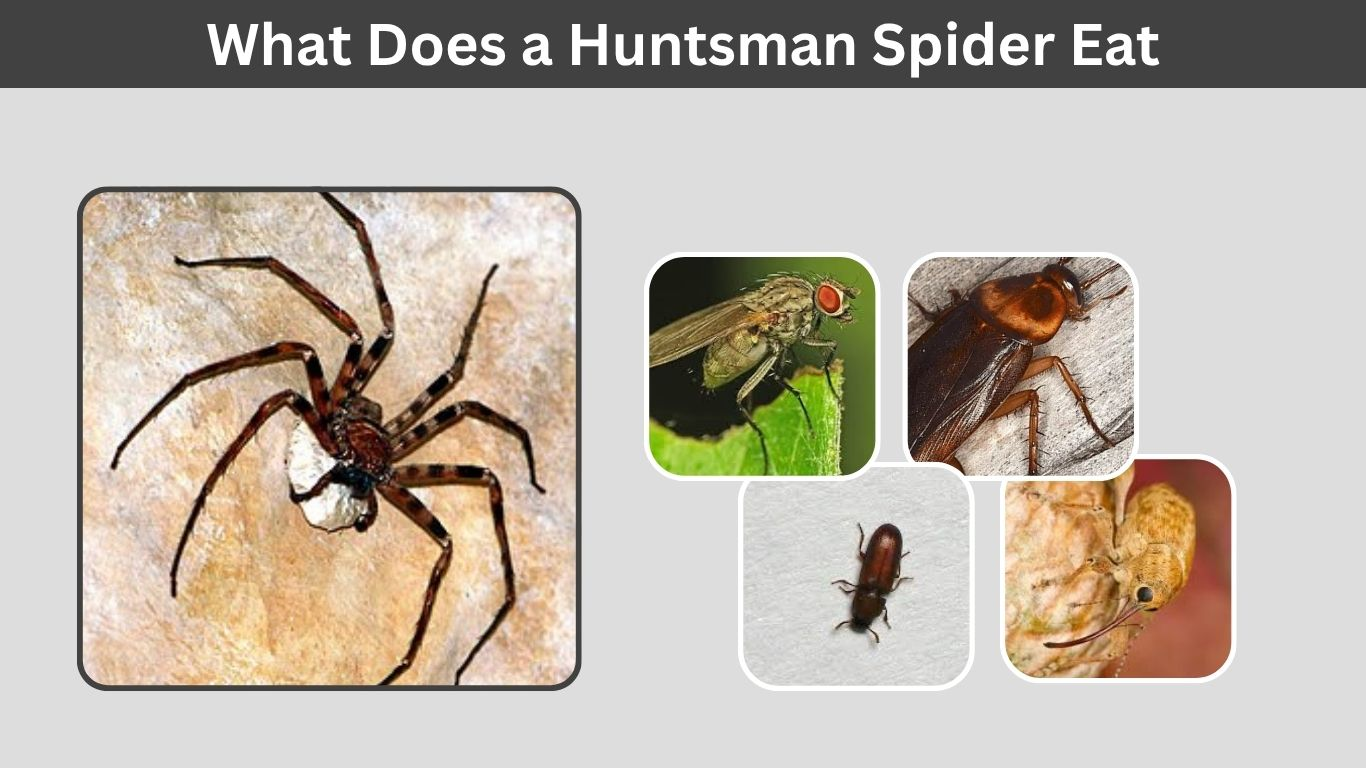
Huntsman spiders are fast-moving hunters known for their wide leg span and active hunting style. Unlike web-building spiders, huntsman spiders chase and capture prey directly using speed and strong legs. Their diet mainly consists of insects and other small creatures commonly found in tropical and subtropical habitats. Huntsman spiders are often considered beneficial because they help control pests such as cockroaches and flies inside homes and gardens. Giant huntsman spiders may occasionally catch larger prey, but most huntsman species focus mainly on insects and small invertebrates during nighttime hunting.
What Is a Huntsman Spider?
Huntsman spiders belong to the Sparassidae family and are famous for their flattened bodies and crab-like sideways movement. These spiders are found in warm climates around the world, especially in Australia, Asia, and tropical regions.
Huntsman Spider Appearance
Huntsman spiders are easy to recognize because of several features:
- Long sideways legs
- Flattened body shape
- Fast running movement
- Brown or gray coloring
- Wide leg span
- Hairy appearance
These adaptations help them move quickly while hunting.
Where Huntsman Spiders Live
Huntsman spiders commonly live in tropical forests, gardens, sheds, homes, garages, and under tree bark. Warm humid environments provide excellent hunting conditions for these spiders.
Why Huntsman Spiders Are Good Hunters
Huntsman spiders rely on speed, climbing ability, and strong vision to catch prey. Their long legs help them move rapidly across walls, ceilings, trees, and rocky surfaces.
What Does a Huntsman Spider Eat?
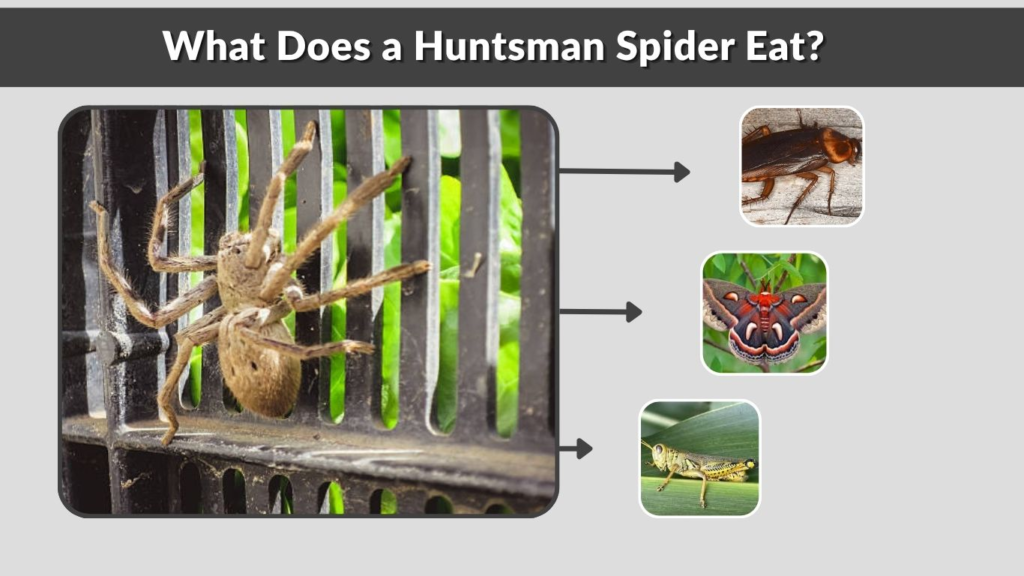
Huntsman spiders mainly feed on insects and other small animals they can overpower. Their diet depends on the species, habitat, and available prey in the environment.
Common Insects Huntsman Spiders Eat
Huntsman spiders commonly hunt:
- Cockroaches
- Crickets
- Moths
- Beetles
- Grasshoppers
- Flies
This diet makes them valuable natural pest controllers in homes and gardens.
Do Huntsman Spiders Eat Other Spiders?
Some huntsman spiders may eat smaller spiders if the opportunity appears. Cannibalism may also happen between huntsman spiders during food shortages.
Do Huntsman Spiders Eat Mosquitoes?
Yes, huntsman spiders sometimes capture mosquitoes and other flying insects, especially near lights where insects gather at night.
Huntsman Spider Diet Table
| Prey Type | Common or Rare |
| Cockroaches | Very common |
| Crickets | Common |
| Moths | Common |
| Beetles | Common |
| Small Lizards | Rare |
| Other Spiders | Occasional |
How Huntsman Spiders Hunt Their Prey
Unlike orb-weaving spiders, huntsman spiders do not wait inside webs for prey to become trapped. They actively search for insects and attack quickly.
Huntsman Spiders Do Not Use Webs
Huntsman spiders use stealth and speed rather than sticky webs. They often hide during the day and become active hunters at night.
Night Hunting Activity
Most huntsman spiders are nocturnal hunters. They search walls, ceilings, tree trunks, and outdoor structures for insects after dark.
Fast Running and Climbing
Their crab-like legs allow fast sideways movement and strong climbing ability on vertical surfaces.
How Huntsman Spiders Catch Prey
Huntsman spiders catch prey by:
- Running quickly toward insects
- Ambushing prey suddenly
- Holding prey with strong legs
- Injecting venom
- Feeding after prey stops moving
Their speed often surprises both insects and humans.
What Does the Giant Huntsman Spider Eat?
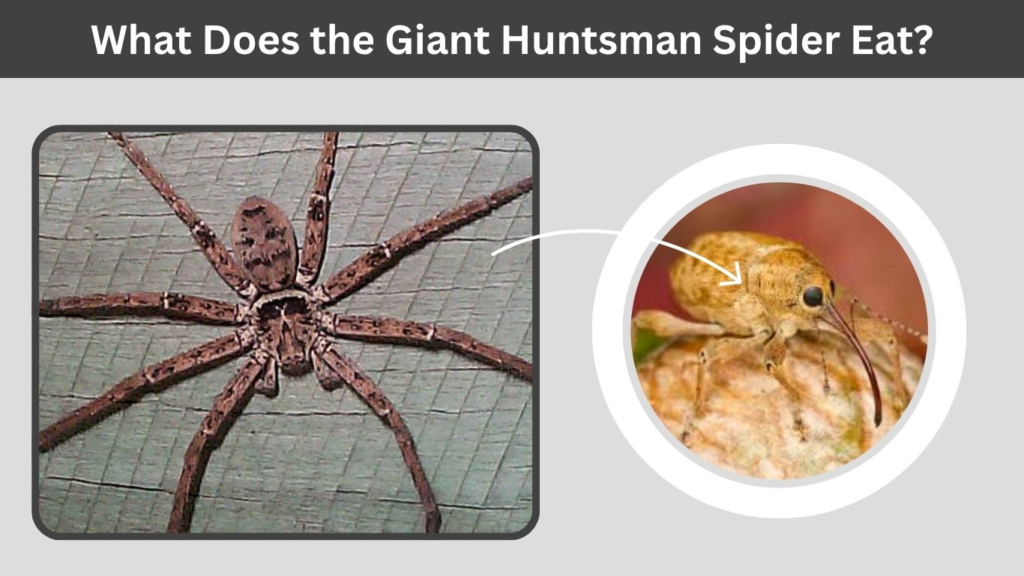
The giant huntsman spider, Heteropoda maxima, is the world’s largest huntsman spider by leg span. It hunts mainly inside dark cave environments where insects and other arthropods are available.
Giant Huntsman Spider Prey
Giant huntsman spiders may feed on:
- Large cave insects
- Cockroaches
- Crickets
- Beetles
- Other arthropods
Their larger size allows them to overpower bigger prey than smaller huntsman species.
Hunting in Cave Habitats
Cave-dwelling huntsman spiders rely heavily on movement and touch while hunting in dark environments with limited light.
Can Giant Huntsman Spiders Eat Small Vertebrates?
Large huntsman spiders may occasionally capture tiny lizards, frogs, or geckos if given the opportunity, although insects remain their primary food source.
Huntsman Spider Feeding Behavior
Huntsman spiders use venom and digestive fluids to break down prey before feeding. Their feeding process differs from animals that chew solid food.
How Often Huntsman Spiders Eat
Most huntsman spiders eat whenever prey becomes available. Larger spiders may survive long periods without food compared to smaller spiders.
How Huntsman Spiders Digest Food
Spiders inject digestive enzymes into prey and consume the liquefied tissues afterward. This feeding method allows them to process insects efficiently.
Can Huntsman Spiders Survive Without Food?
Huntsman spiders can survive for weeks without eating, especially larger adults living in warm stable environments.
Huntsman Spiders in Homes
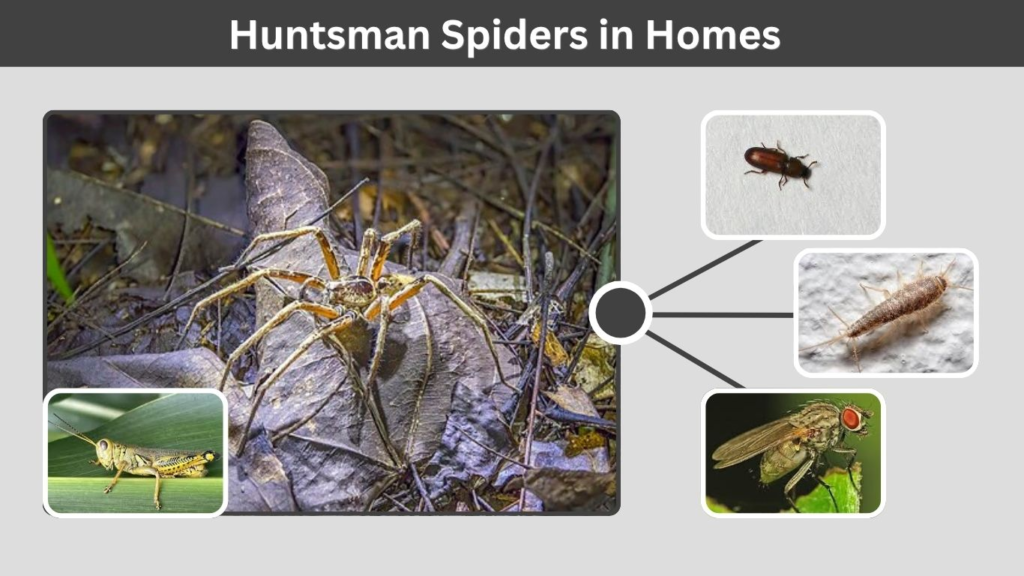
Huntsman spiders are commonly found inside houses because indoor environments attract many insects. These spiders often wander into garages, bathrooms, kitchens, and storage areas while searching for food.
Indoor Insects Huntsman Spiders Eat
Inside homes, huntsman spiders commonly feed on:
- Cockroaches
- Flies
- Moths
- Silverfish
- Mosquitoes
- Small beetles
Their hunting behavior helps naturally reduce indoor pest populations.
Why Huntsman Spiders Enter Homes
Huntsman spiders usually enter buildings while searching for prey, warmth, or shelter from weather conditions. Lights around windows and doors also attract insects that huntsman spiders hunt.
Are Huntsman Spiders Helpful Indoors?
Many people consider huntsman spiders beneficial because they help control roaches and other nuisance insects without using pesticides.
Huntsman Spider Predators
Although huntsman spiders are skilled hunters, they are also prey for many animals in nature. Their speed helps them escape danger, but predators still hunt them regularly.
Birds That Eat Huntsman Spiders
Common bird predators include:
- Owls
- Magpies
- Crows
- Tropical forest birds
- Ground-feeding birds
Birds often catch huntsman spiders while they move across trees or walls.
Reptiles and Mammals
Lizards, frogs, snakes, and small mammals may also feed on huntsman spiders when given the opportunity.
Other Spider Predators
Larger spiders sometimes attack smaller huntsman spiders, especially during territorial disputes or food shortages.
Huntsman Spider Diet vs Other Spiders
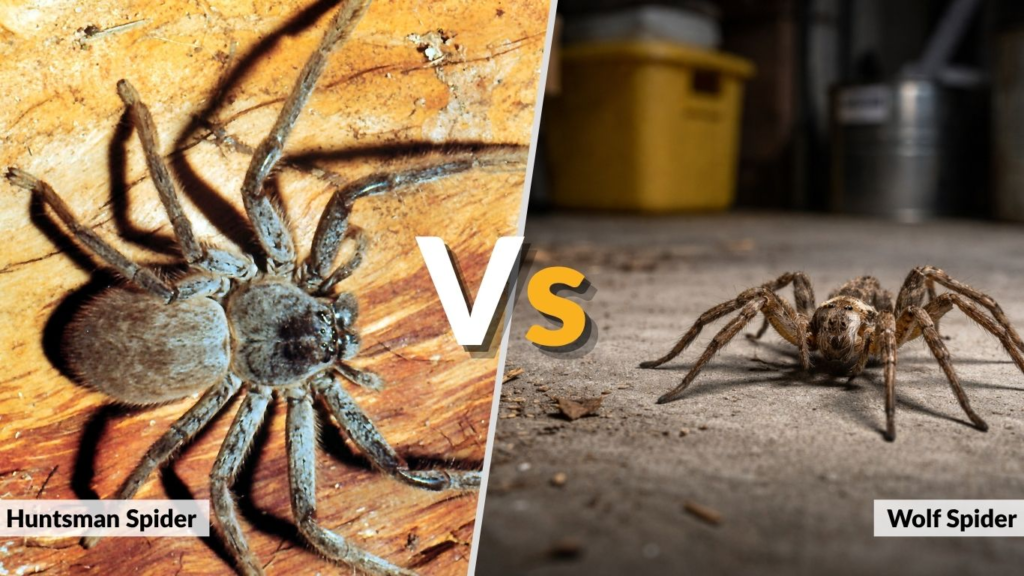
Different spider species hunt in different ways and consume different types of prey. Huntsman spiders are unique because they rely heavily on speed instead of webs.
Huntsman Spider vs Wolf Spider Diet
| Feature | Huntsman Spider | Wolf Spider |
| Hunting Style | Wall and surface hunter | Ground hunter |
| Main Prey | Insects and roaches | Ground insects |
| Web Use | No prey-catching web | No prey web |
Huntsman Spider vs Tarantula Diet
Tarantulas are larger and stronger than most huntsman spiders, allowing them to capture larger prey such as mice or frogs more often.
Huntsman Spider vs Jumping Spider Diet
Jumping spiders rely more on eyesight and short leaps, while huntsman spiders use fast running and ambush attacks to catch prey.
Are Huntsman Spiders Dangerous While Hunting?
Huntsman spiders are not considered highly dangerous to humans. Their venom mainly affects insects and small prey animals rather than people.
Huntsman Spider Venom Purpose
The venom helps immobilize prey quickly so the spider can feed safely and efficiently.
Do Huntsman Spiders Attack Humans?
Huntsman spiders generally avoid people and rarely bite unless trapped, handled, or threatened.
Huntsman Spider Bite During Hunting
Most bites cause only mild symptoms such as:
- Redness
- Swelling
- Itching
- Mild pain
- Temporary irritation
Serious reactions are uncommon.
Interesting Huntsman Spider Diet Facts
Huntsman spiders display several unusual feeding behaviors that make them fascinating predators in tropical ecosystems.
Huntsman Spiders Can Catch Fast Insects
Their quick reaction speed allows them to capture fast-moving insects like cockroaches and moths before the prey escapes.
Huntsman Spiders May Eat Geckos
Large huntsman spiders occasionally capture tiny geckos or small frogs, especially in tropical environments where prey diversity is high.
Huntsman Spiders Help Reduce Pests
By eating large numbers of insects, huntsman spiders help maintain balance in homes, gardens, and natural habitats.
FAQs
What does a huntsman spider mainly eat?
Huntsman spiders mainly feed on insects such as cockroaches, crickets, moths, flies, and beetles.
Do huntsman spiders eat cockroaches?
Yes, huntsman spiders are known for hunting cockroaches and helping reduce indoor pest populations naturally.
Can giant huntsman spiders eat small lizards?
Large huntsman spiders may occasionally catch tiny lizards or geckos, but insects remain their primary food source.
Do huntsman spiders build webs to catch prey?
No, huntsman spiders are active hunters that chase and ambush prey instead of trapping insects in webs.
Are huntsman spiders helpful around homes?
Many people consider huntsman spiders beneficial because they eat nuisance insects like roaches, moths, and flies.
