
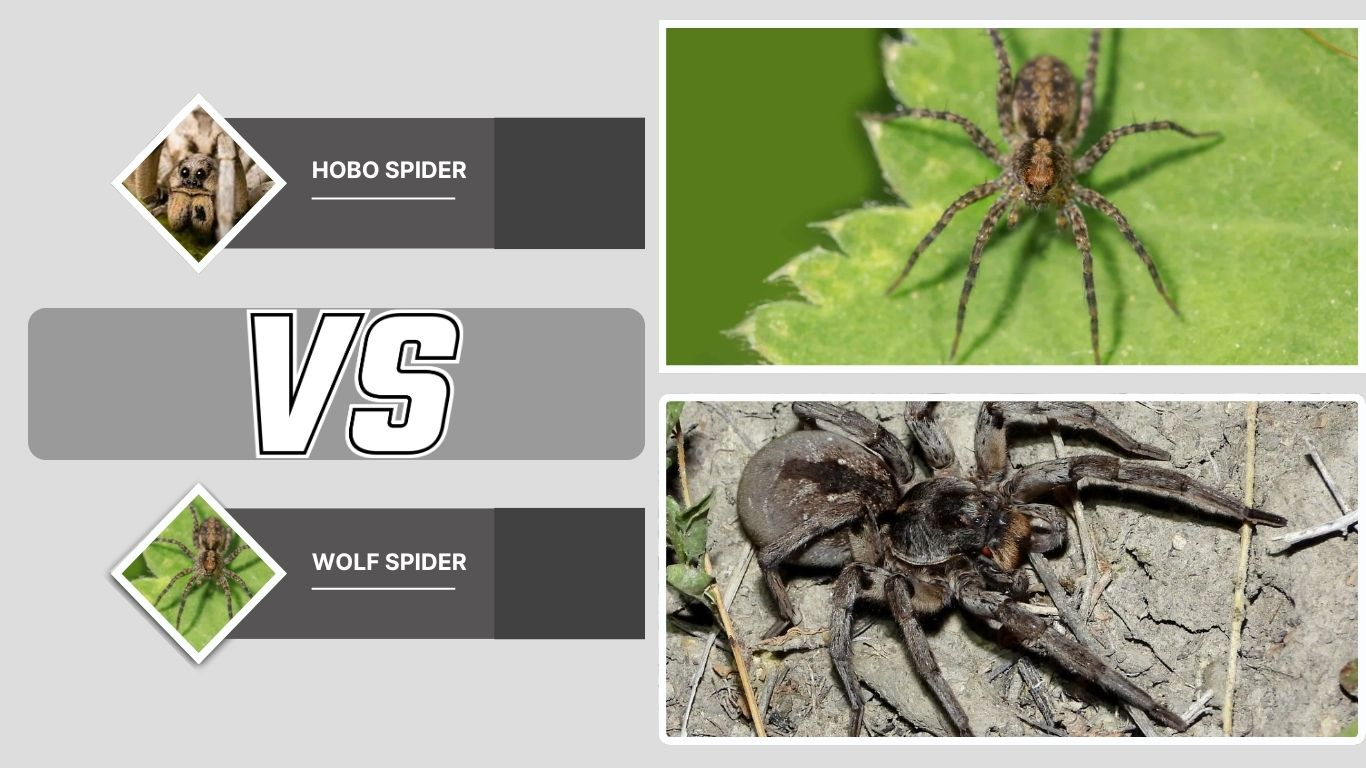
Hobo Spiders and Wolf Spiders are two commonly confused spider species found in North America and Europe. Both are brown, fast-moving, and often encountered around homes, garages, and gardens. Despite their similar appearance, they differ in size, web-building behavior, hunting style, and potential risk to humans. Many people also confuse them with Brown Recluse or Grass Spiders, which adds to the challenge of identification. Understanding these differences is key for accurate identification, safety, and proper pest management.
This guide explains their physical characteristics, web construction, habitats, hunting methods, and bite safety, helping homeowners, gardeners, and arachnology enthusiasts tell them apart effectively.
Overview of Hobo and Wolf Spiders
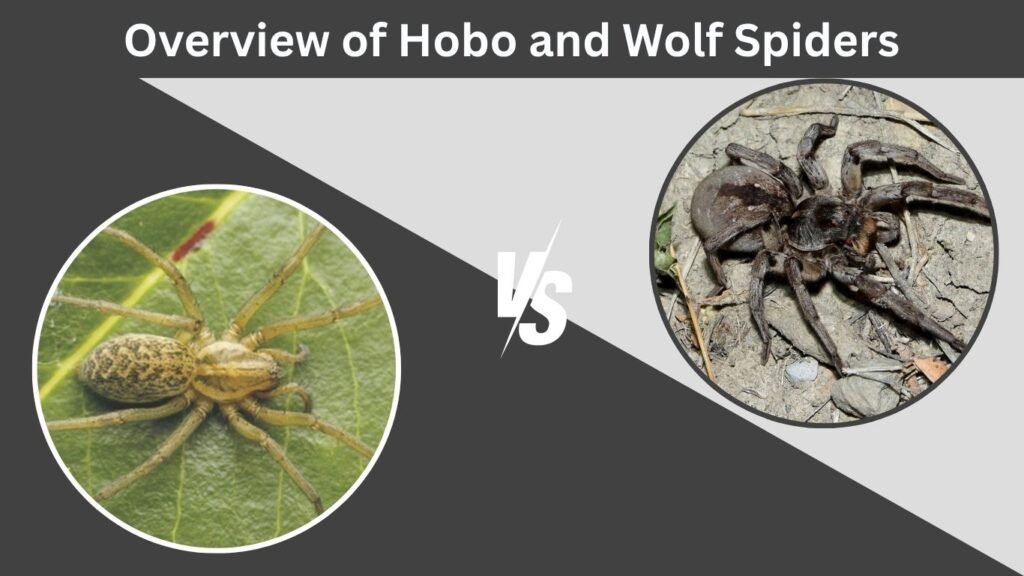
Hobo Spiders (Tegenaria agrestis) and Wolf Spiders (Lycosidae family) differ fundamentally in behavior and web-building techniques. Hobo Spiders rely on funnel-shaped webs to catch prey, while Wolf Spiders actively hunt without webs. Despite occasional overlap in habitats, their hunting methods, size, and body features are distinct, making identification possible with careful observation.
Hobo Spider Physical Characteristics
- Brown body with herringbone pattern on abdomen
- Males: 7–14 mm, Females: 9–18 mm
- Smooth, moderately hairy body
- Spinnerets clearly visible at rear
Wolf Spider Physical Characteristics
- Brown or grayish-brown body, bulkier and hairier than Hobo Spiders
- Size: 10–35 mm depending on species
- Strong, thick legs for running and hunting
- Eyes arranged in three rows, highly reflective at night
Identification Tips
- Hobo Spider builds funnel-shaped webs with retreat tunnels
- Wolf Spider roams actively and rarely uses webs for hunting
- Observe eye patterns: Hobo Spider has evenly aligned eyes, Wolf Spider has three distinct rows
- Hobo Spiders are usually found in basements, crawl spaces, and sheds, while Wolf Spiders prefer outdoor locations like gardens, leaf litter, and grass
Hobo Spider vs Wolf Spider Habitat and Distribution
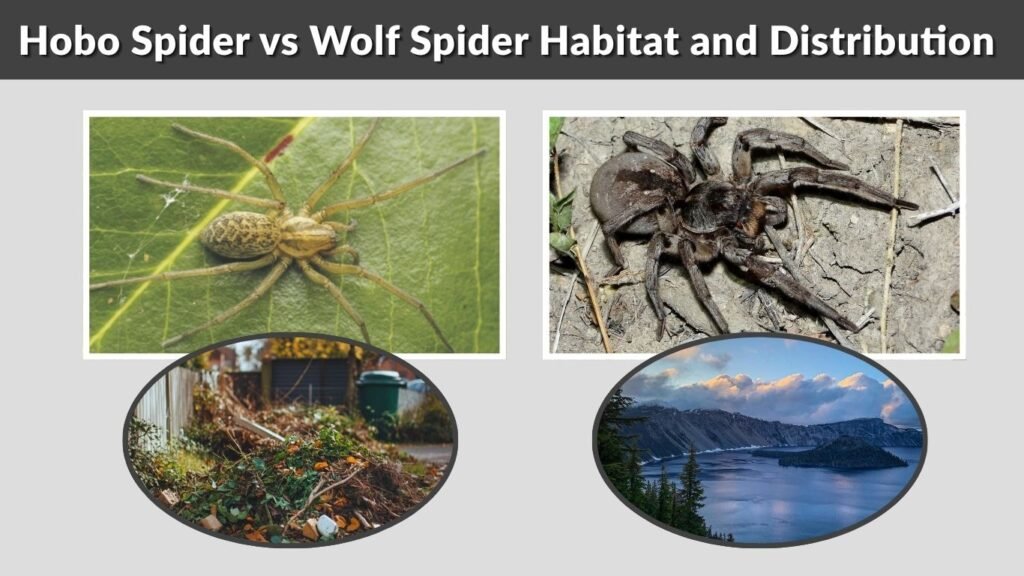
Both spiders share overlapping territories, especially in temperate regions, which leads to confusion. However, each species has preferred environments and activity patterns.
Hobo Spider Habitat
- Cool, damp areas like basements, crawl spaces, and cellars
- Outdoor areas such as woodpiles, mulch, and stone walls
- Shelter near foundations, sheds, and garden debris
Wolf Spider Habitat
- Gardens, lawns, and forest floors
- Garages, sheds, and occasionally inside homes
- Prefer open ground or leaf litter rather than indoor retreats
Geographic Distribution
- Hobo Spider: Native to Europe, introduced in the Pacific Northwest USA
- Wolf Spider: Widespread globally; common in North America
- Both species can coexist in temperate regions with sufficient shelter and prey availability
Web Construction and Hunting Behavior
Hunting style is a major distinction between Hobo and Wolf Spiders. Understanding their predation methods aids in identification.
Hobo Spider Webs
- Construct funnel-shaped silk webs with a retreat tunnel
- Wait inside the tunnel for prey to touch the web
- Capture prey quickly using speed
- Typically located near foundations, corners, and crevices
Wolf Spider Hunting
- Do not rely on webs to capture prey
- Actively chase insects and small arthropods
- Excellent vision and agility allow efficient hunting
- No permanent web structure; temporary silk lines only for egg sacs
Grass Spider vs Hobo vs Wolf Spider
- Grass Spiders also build funnel webs like Hobo Spiders
- Wolf Spiders are larger, hairier, and actively hunt
- Grass Spiders have longer spinnerets than Hobo Spiders
- Hobo Spider and Grass Spider are often misidentified due to web similarities
Size Comparison and Key Differences
While Hobo Spiders and Wolf Spiders share brown coloration and fast movement, their size, body structure, and web-building habits are distinct. Recognizing these differences helps in correct identification.
Size and Appearance
- Hobo Spider: 7–18 mm body length; slender, smooth body; less hair
- Wolf Spider: 10–35 mm body length; bulkier, hairy body; robust legs
- Grass Spider: Slightly smaller than Hobo Spider; funnel web builder
- Brown Recluse: 6–20 mm; violin-shaped marking; smooth, light brown
Web Construction
- Hobo Spider: Permanent funnel-shaped web for ambush
- Wolf Spider: Active hunter, no prey-catching web
- Grass Spider: Funnel-shaped web similar to Hobo Spider
- Brown Recluse: Irregular silk web, often near hidden crevices
Eye Arrangement
- Hobo Spider: 8 small eyes in two even rows
- Wolf Spider: 8 eyes in three distinct rows; front row highly reflective
- Brown Recluse: 6 eyes in pairs
Bite Symptoms and Human Safety
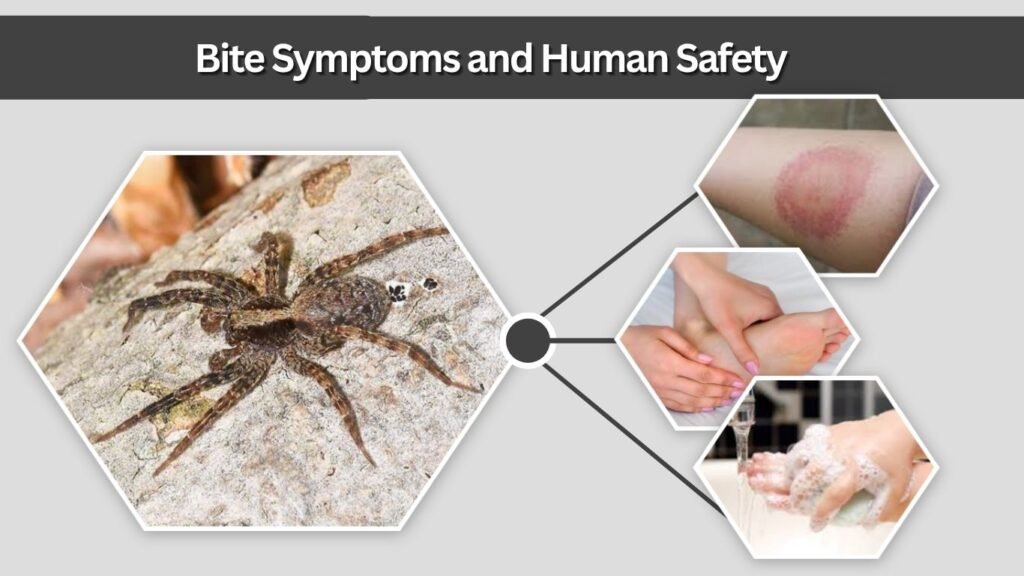
Bites from these spiders are rare. Both Hobo and Wolf Spiders are generally non-aggressive, but their bites can cause mild irritation. Brown Recluse bites are more medically significant.
Hobo Spider Bite
- Redness and localized swelling
- Mild pain or itching
- Rare necrotic lesions in unusual cases
Wolf Spider Bite
- Temporary redness, swelling, and minor pain
- Usually heals within a few days without complications
Safety Tips
- Avoid handling spiders directly
- Seal cracks and reduce clutter in homes
- Use sticky traps or professional pest control if infestations occur
- Monitor bite sites and consult a doctor if symptoms worsen
Hobo Spider vs Brown Recluse vs Wolf Spider
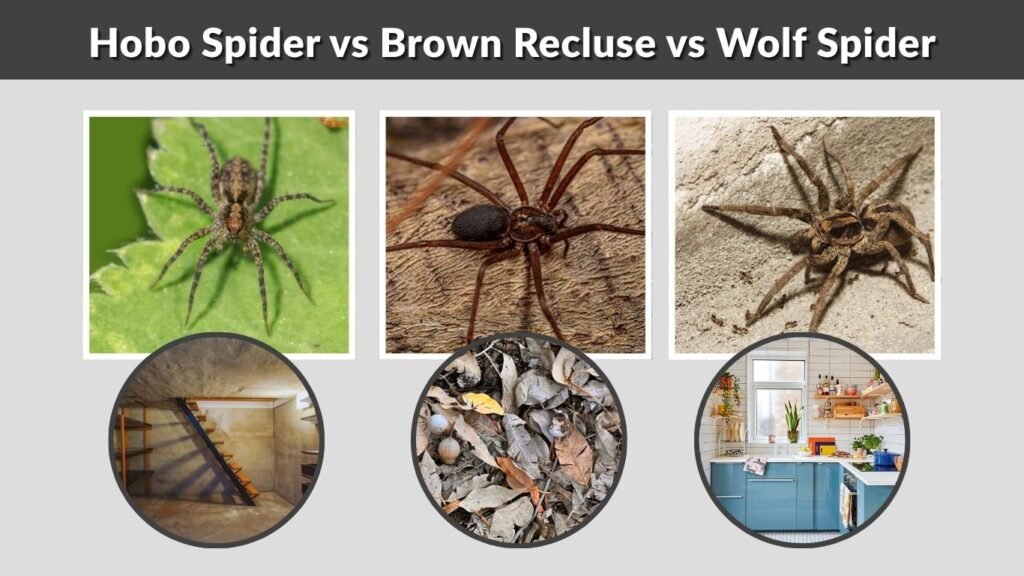
People often confuse Hobo Spiders with Brown Recluse and Wolf Spiders due to similar coloration. Here’s a concise comparison:
Key Differences
| Feature | Hobo Spider | Wolf Spider | Brown Recluse |
| Web Type | Funnel-shaped | None (active hunter) | Irregular web |
| Body Hair | Moderate | Heavy | Minimal |
| Body Size | 7–18 mm | 10–35 mm | 6–20 mm |
| Eye Arrangement | 8 eyes, even rows | 8 eyes, 3 rows | 6 eyes in pairs |
| Bite Risk | Low | Low | Moderate, necrotic in rare cases |
| Habitat | Basements, sheds, outdoor debris | Gardens, leaf litter, garages | Hidden indoor corners, woodpiles |
Misidentification Issues
- Hobo Spiders and Grass Spiders both build funnel webs
- Wolf Spiders are bulkier and do not rely on webs
- Brown Recluse has distinctive violin-shaped marking, which Hobo and Wolf Spiders lack
FAQs
How can I tell a Wolf Spider from a Hobo Spider?
Wolf Spiders are larger, hairier, and have three rows of eyes. Hobo Spiders are smaller, smoother, and build funnel-shaped webs. Observing eye patterns and body structure helps accurate identification.
Do Wolf Spiders build webs like Hobo Spiders?
No, Wolf Spiders are active hunters and rarely use webs to catch prey. They rely on speed and eyesight for hunting.
Are Hobo Spiders dangerous?
Hobo Spider bites are uncommon and usually cause mild symptoms. Necrotic reactions are extremely rare.
Which spider is bigger, a Wolf Spider or Hobo Spider?
Wolf Spiders are generally larger and more robust than Hobo Spiders, with thicker legs and a hairier body.
Are Wolf Spiders aggressive toward humans?
No, Wolf Spiders are not aggressive. They bite only when trapped or threatened, and their bites are not medically significant for healthy adults.
