
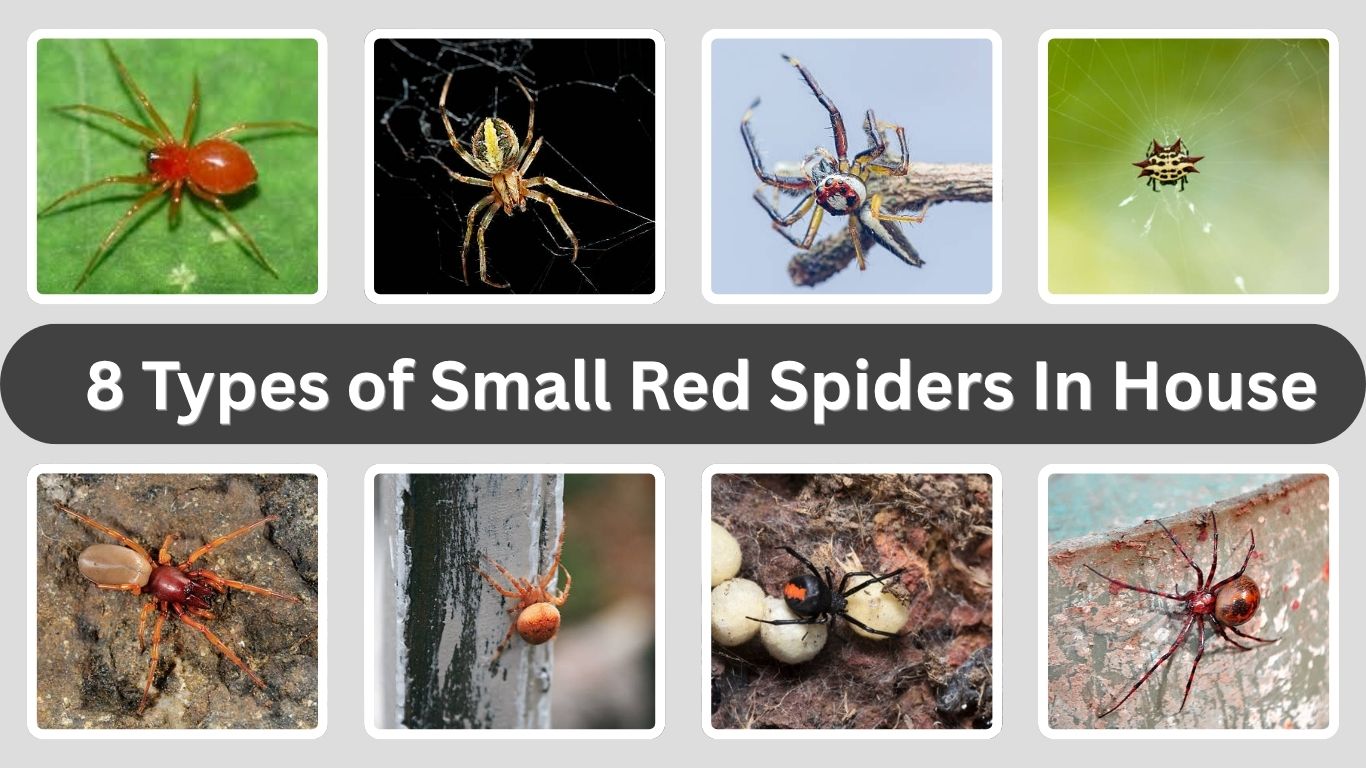
Small red spiders can sometimes appear inside homes, often causing concern due to their unusual color. While they may look alarming, most of these spiders are harmless and actually help control common household pests. They usually hide in quiet corners, ceilings, or near windows where insects are present. Understanding the different types of small red spiders can help you identify them correctly and know whether they pose any risk. In this guide, you’ll discover eight common types of small red spiders you might find indoors and learn more about their characteristics.
1. Red House Spider

The Red House Spider is a small, reddish-colored spider commonly found inside homes, especially in quiet, undisturbed areas. Its subtle red or reddish-brown tone makes it stand out slightly from typical gray or brown house spiders. Although it may look concerning at first glance, it is generally harmless and plays a useful role in controlling indoor insect populations. This spider is not aggressive and prefers to stay hidden, making it more of a background presence than a noticeable pest.
Identification
- Small body size, typically 5–8 mm in length
- Reddish-brown to deep red coloration
- Rounded, slightly bulbous abdomen
- Smooth, somewhat glossy body texture
- Thin legs, often lighter or pale compared to the body
- Irregular, messy-looking web structure
- Often seen hanging upside down in its web
Habitat
The Red House Spider is well-adapted to indoor living and is commonly found in homes, apartments, and other buildings. It prefers dry, warm, and quiet spaces where human activity is minimal. Typical locations include ceiling corners, behind furniture, inside cupboards, basements, attics, and storage areas. These spiders favor spots where they can build webs undisturbed for long periods. Outdoors, they may live in sheds, garages, or under eaves, but they are far more frequently encountered indoors. Their ability to thrive in human environments makes them a consistent but often unnoticed resident in many households.
Behavior
This spider is non-aggressive and tends to avoid human contact whenever possible. It spends most of its time sitting in or near its web, waiting for prey to become trapped. Unlike active hunters, the Red House Spider relies on its web rather than chasing insects. If disturbed, it may retreat quickly to a hidden corner or drop from its web to escape. It rarely leaves its web unless necessary. These spiders are solitary and do not interact much with others of their kind, except during mating periods. Their quiet and stationary behavior is one reason they often go unnoticed.
Diet and Lifespan
The Red House Spider feeds primarily on small household insects such as flies, mosquitoes, ants, and other tiny bugs that wander into its web. By capturing these pests, it actually helps maintain a cleaner indoor environment. The spider injects venom into its prey to immobilize it before feeding. Its lifespan typically ranges from several months to about one year, depending on factors like food availability and environmental conditions. Females may live longer than males and can produce multiple egg sacs during their lifetime, ensuring the continuation of their presence in indoor spaces.
2. Red Widow Spider

The Red Widow Spider is a striking species known for its reddish head and legs combined with a darker abdomen. While it is more commonly found outdoors, it may occasionally appear in houses, especially in warm regions. Its appearance can be alarming, but encounters indoors are rare. This spider is venomous, though it is not aggressive and usually avoids human interaction unless provoked.
Identification
- Medium-sized spider, around 10–13 mm in body length
- Reddish-orange head and legs
- Dark abdomen, often black or brown, sometimes with red spots
- Smooth, shiny body surface
- Long, slender legs
- Females are larger and more brightly colored than males
- Often hangs upside down in its web
Habitat
The Red Widow Spider typically prefers outdoor environments such as shrubs, trees, woodpiles, and under logs. However, it may enter homes accidentally, especially in areas close to natural vegetation. Indoors, it may be found in quiet, undisturbed places like garages, storage rooms, basements, or cluttered corners. It favors warm climates and tends to stay hidden in sheltered locations where it can build its web without disturbance. Homes near gardens or wooded areas are more likely to encounter this spider occasionally.
Behavior
This spider is reclusive and avoids human contact. It spends most of its time hanging in its web, waiting for prey rather than actively hunting. If threatened, it prefers to retreat rather than attack. Bites are rare and usually occur only when the spider is accidentally pressed against the skin. The Red Widow is mostly active during nighttime and remains still during the day. Its calm and non-aggressive nature means it poses little risk in normal situations.
Diet and Lifespan
The Red Widow Spider feeds on insects such as beetles, flies, and other small arthropods that become trapped in its web. It uses venom to subdue prey before consuming it. The lifespan typically ranges from one to three years, with females living longer than males. During its life, the female produces multiple egg sacs, each containing numerous eggs. Despite its venom, its role in controlling insect populations makes it beneficial in its natural environment.
3. Redback Spider

The Redback Spider is a well-known species recognized for its dark body and distinctive red stripe on its back. Although it is more commonly found outdoors, it can sometimes appear in and around homes, particularly in warm climates. Its presence can be concerning due to its venom, but it is generally shy and avoids human interaction unless disturbed.
Identification
- Small to medium size, about 8–10 mm for females
- Black or dark brown body with a clear red or orange stripe on the abdomen
- Rounded abdomen with a smooth, glossy texture
- Long, thin legs
- Females are larger and more noticeable than males
- Males are smaller, lighter in color, and less often seen
- Often hangs upside down in its web
Habitat
The Redback Spider prefers sheltered, dry locations both outdoors and around human structures. It is often found in sheds, garages, outdoor furniture, mailboxes, and under eaves. Indoors, it may occasionally appear in storage areas, closets, or quiet corners where there is minimal disturbance. It favors places close to the ground or low structures where it can easily build its web. Homes with cluttered spaces or outdoor debris nearby are more likely to encounter this spider.
Behavior
This spider is non-aggressive and typically avoids confrontation. It spends most of its time in its web, waiting for prey rather than actively hunting. If disturbed, it will usually retreat or remain still rather than attack. Bites are rare and generally occur only when the spider is accidentally pressed against the skin. The Redback is mostly active at night and remains hidden during the day, contributing to its low visibility indoors.
Diet and Lifespan
The Redback Spider feeds on insects such as flies, beetles, ants, and sometimes even small lizards or other spiders. It uses its venom to immobilize prey before feeding. The lifespan can range from one to three years, with females living significantly longer than males. Females produce multiple egg sacs during their lifetime, each containing numerous eggs, allowing their population to grow in suitable environments.
4. Woodlouse Spider

The Woodlouse Spider is a small, reddish spider often noticed for its unusual appearance and hunting behavior. Unlike many house spiders, it does not rely on webs to catch prey. Instead, it actively hunts, which makes it more likely to be seen moving around floors or walls. It occasionally appears indoors, especially in damp areas where its preferred prey is found.
Identification
- Medium-sized spider, about 10–15 mm long
- Reddish-orange head and legs
- Pale gray or cream-colored abdomen
- Large, forward-pointing fangs
- Smooth, slightly shiny body
- Legs are sturdy and well-spaced
- Does not build typical capture webs
Habitat
The Woodlouse Spider prefers moist environments where woodlice (its main prey) are abundant. Outdoors, it is commonly found under rocks, logs, leaf litter, and garden debris. Indoors, it may appear in basements, bathrooms, crawl spaces, or near damp walls and floors. Homes with high humidity or nearby gardens are more likely to attract this spider. It tends to hide during the day and becomes more active at night while searching for food.
Behavior
This spider is a nocturnal hunter rather than a web-builder. It actively roams in search of prey, using its strong fangs to pierce the tough outer shell of woodlice. It is generally slow-moving and non-aggressive toward humans. If disturbed, it will try to escape rather than defend itself. Encounters with people are usually accidental, as it does not seek out human interaction. Its unique hunting style makes it different from most indoor spiders.
Diet and Lifespan
The Woodlouse Spider mainly feeds on woodlice, but it may also consume other small insects when available. Its specialized fangs allow it to target prey that other spiders avoid. The lifespan is typically around one to two years, depending on environmental conditions and food availability. Females lay eggs in silken sacs hidden in sheltered areas, ensuring the next generation continues in suitable habitats.
5. Red Orb Weaver

The Red Orb Weaver is a small to medium-sized spider known for its reddish coloration and beautifully structured circular webs. While it is primarily an outdoor species, it can sometimes be found near windows, door frames, or inside homes where it has access to light and flying insects. Its presence is usually harmless and often beneficial.
Identification
- Medium-sized spider, around 6–12 mm in body length
- Reddish, orange, or rust-colored body
- Rounded, often patterned abdomen
- Legs may have slight banding or darker tips
- Builds large, circular (orb-shaped) webs
- Often seen sitting in the center of its web
- Females are larger and more colorful than males
Habitat
The Red Orb Weaver prefers areas where it can build large, symmetrical webs to catch flying insects. Outdoors, it is commonly found in gardens, bushes, trees, and around porch lights. Indoors, it may occasionally appear near windows, ceilings, or entryways where insects are attracted to light. It favors locations with good airflow and steady insect activity. Although not a typical indoor spider, it may temporarily stay inside if conditions are suitable.
Behavior
This spider is calm and non-aggressive, spending most of its time sitting in the center of its web or hiding nearby during the day. It is mainly active in the evening and at night when it rebuilds or repairs its web. If the web is disturbed, it may quickly retreat to a hidden spot. It does not chase prey but relies entirely on its web to capture food. Human encounters are rare and usually harmless.
Diet and Lifespan
The Red Orb Weaver feeds on flying insects such as flies, mosquitoes, moths, and small beetles that get trapped in its web. It quickly immobilizes prey using silk and venom before consuming it. The lifespan is typically about one year, with most individuals living through a single season. Females lay eggs in protective sacs before dying, ensuring the continuation of the species in suitable environments.
6. Red Jumping Spider

The Red Jumping Spider is a small, active spider known for its bright reddish coloration and excellent vision. Unlike web-building spiders, it hunts by stalking and jumping on its prey. It may occasionally be seen inside homes, especially near windows or well-lit areas where insects are present.
Identification
- Small size, usually 4–10 mm long
- Reddish or orange body with a compact shape
- Short, sturdy legs designed for jumping
- Large front-facing eyes, giving a “curious” appearance
- Slightly fuzzy or hairy body texture
- Does not build webs for catching prey
- Often seen moving in quick, jerky motions
Habitat
The Red Jumping Spider prefers bright environments where it can easily spot prey. Outdoors, it is commonly found on walls, fences, plants, and tree bark. Indoors, it may appear near windows, curtains, ceilings, or sunlit walls. It is attracted to areas with good lighting and insect activity. Unlike many other spiders, it does not stay hidden in corners but moves around actively during the day.
Behavior
This spider is highly active and curious. It relies on its strong vision to hunt, often stalking its prey before making a quick jump to capture it. It is diurnal, meaning it is active during the day rather than at night. The Red Jumping Spider is non-aggressive and rarely bites humans. If approached, it may turn to face movement or jump away to escape. Its bold movements make it one of the more noticeable indoor spiders.
Diet and Lifespan
The Red Jumping Spider feeds on small insects such as flies, mosquitoes, and gnats. It does not use a web to catch food but instead relies on speed and precision. After capturing prey, it uses venom to immobilize it before feeding. Its lifespan is typically around one year. Females may lay eggs in small silk shelters, often hidden in cracks or behind objects, where the young spiders develop safely.
7. Red Sac Spider

The Red Sac Spider is a small, pale-to-reddish spider that is sometimes found indoors, especially at night. It does not build visible webs like many other spiders but instead creates small silk “sacs” where it rests during the day. Its wandering behavior makes it more likely to be seen moving across walls and ceilings.
Identification
- Small size, typically 5–10 mm long
- Light red, orange, or pale brown coloration
- Slender body with a slightly elongated abdomen
- Long, thin legs
- Smooth, soft-looking body texture
- No large web structures; creates small silk sacs
- Often seen walking rather than sitting in a web
Habitat
The Red Sac Spider can be found both indoors and outdoors. Inside homes, it prefers walls, ceilings, behind picture frames, and near windows. It often hides in small silk sacs during the day in corners or crevices. Outdoors, it may live in gardens, under leaves, or in shrubs. It is commonly found in dry, warm environments and adapts easily to indoor living, especially in quiet, undisturbed areas.
Behavior
This spider is a nocturnal hunter, meaning it becomes active at night. Instead of waiting in a web, it roams around in search of prey. During the day, it rests inside a small silk sac for protection. It is generally non-aggressive but may bite if trapped against the skin. Its wandering nature makes it one of the more frequently noticed indoor spiders, especially during nighttime.
Diet and Lifespan
The Red Sac Spider feeds on small insects such as flies, ants, and other tiny bugs it encounters while roaming. It uses venom to subdue its prey before feeding. The lifespan is usually around one year, depending on environmental conditions. Females lay eggs inside their silk sacs, providing protection until the spiderlings hatch and begin their independent lives.
8. Red Dwarf Spider

The Red Dwarf Spider is a very small spider that often goes unnoticed due to its tiny size and subtle reddish coloration. It may occasionally be found inside homes, especially in quiet and undisturbed areas. Despite its size, it plays a role in controlling very small insect populations indoors.
Identification
- Very small size, usually 2–4 mm long
- Reddish, orange, or light brown body
- Compact body with a slightly rounded abdomen
- Thin, delicate legs
- Often appears shiny under light
- Builds fine, barely visible webs
- Difficult to spot due to its tiny size
Habitat
The Red Dwarf Spider prefers hidden, low-traffic areas both indoors and outdoors. Inside homes, it can be found in corners, behind furniture, under shelves, and in small cracks or crevices. It thrives in places where dust and tiny insects accumulate. Outdoors, it may live in leaf litter, under stones, or among low vegetation. Its small size allows it to occupy spaces that larger spiders cannot use.
Behavior
This spider is quiet and non-aggressive, spending most of its time in or near its delicate web. It rarely moves far from its chosen spot and is not commonly seen unless closely observed. If disturbed, it may retreat quickly into a crack or drop from its web. Its behavior is slow and subtle, making it one of the least noticeable spiders found indoors.
Diet and Lifespan
The Red Dwarf Spider feeds on extremely small insects and microscopic prey that get caught in its fine web. It uses venom to immobilize prey before feeding. Due to its small size, its lifespan is relatively short, typically a few months to about a year. Females lay tiny egg sacs hidden in sheltered areas, allowing the next generation to develop safely.
FAQs
Are small red spiders in the house dangerous?
Most small red spiders found indoors are harmless and not dangerous to humans. They rarely bite, and even when they do, the effects are usually mild. Only a few species, like certain widow spiders, have stronger venom, but they are shy and avoid contact.
Why do I see red spiders in my house?
Red spiders usually enter homes in search of food, shelter, or warmth. If your house has insects like flies or ants, it naturally attracts spiders. Cluttered or undisturbed areas also provide ideal hiding spots for them to settle.
Where do red spiders hide indoors?
They commonly hide in corners, ceilings, behind furniture, inside cupboards, and in basements or storage areas. Some species prefer damp places like bathrooms, while others stay in dry, warm spots where they can build webs or hunt quietly.
How can I get rid of small red spiders?
Keeping your home clean and reducing clutter helps a lot. Regular dusting, sealing cracks, and controlling insects will remove their food source. You can also use natural repellents or gently remove them using a vacuum or container.
Do red spiders help control pests?
Yes, most red spiders are beneficial because they feed on small insects like mosquitoes, flies, and ants. By reducing these pests, they help maintain a cleaner indoor environment without the need for chemical control methods.
