
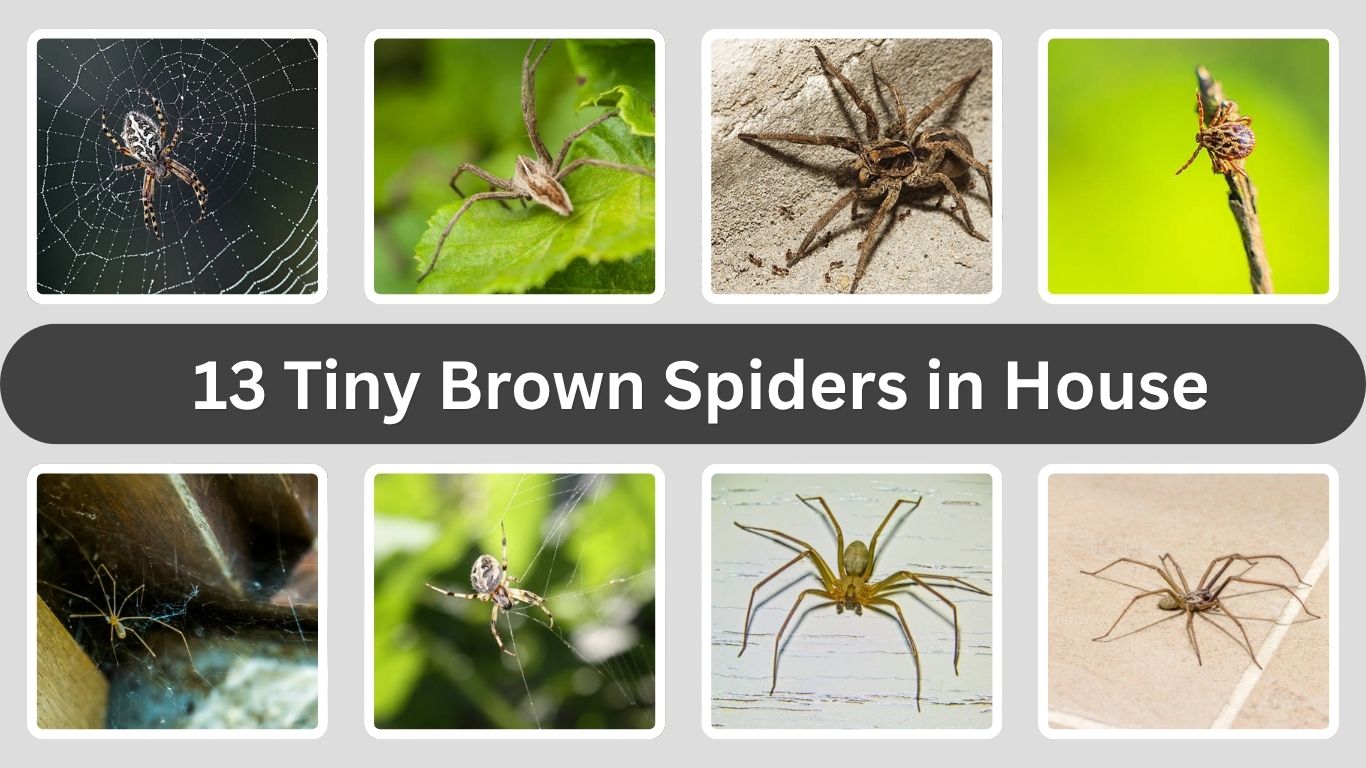
Tiny brown spiders are a common sight in many homes, often appearing in corners, basements, and quiet spaces. While their presence can be unsettling, most of these spiders are harmless and actually help control household pests. From web-building species to active hunters, each type has unique traits and behaviors. Understanding these spiders can make it easier to identify them and decide whether action is needed. This guide covers 13 common tiny brown spiders you may find indoors, along with their key characteristics and habits.
1. American House Spider

A very common indoor spider, the American house spider is frequently seen in corners of rooms where it quietly builds its web. It belongs to the cobweb spider family (Theridiidae) and is considered harmless to humans. Despite its small size, it plays a useful role in controlling household pests. These spiders prefer undisturbed spaces, making them easy to overlook unless their webs become noticeable.
Identification
- Small body size, typically around 4–6 mm in length
- Color ranges from light brown to dull yellowish-brown
- Rounded, bulbous abdomen with mottled or patchy dark markings
- Slender legs, often slightly banded with darker tones
- Fine hairs covering the legs and body
- Builds irregular, tangled cobwebs rather than symmetrical webs
- Females are usually larger and more commonly seen than males
Habitat
The American house spider thrives in indoor environments where there is minimal disturbance. Common locations include ceiling corners, behind furniture, inside closets, basements, garages, and attics. They prefer dry, sheltered areas where their delicate webs can remain intact for extended periods. Outdoors, they may be found around windows, under eaves, or in sheds, but they strongly favor indoor living spaces. Their webs are often placed strategically near light sources, which attract flying insects, providing a steady food supply.
Behaviors
This spider is non-aggressive and tends to remain in its web most of the time. It relies on vibrations in the web to detect prey and will quickly respond when something gets trapped. If disturbed, it may retreat to a hidden corner or drop down on a silk thread to escape. American house spiders are mostly nocturnal, becoming more active at night when insects are more abundant. They rarely wander far and are not known to bite unless directly handled or threatened.
Diet and Lifespan
The diet of the American house spider consists mainly of small household insects such as flies, mosquitoes, ants, and other tiny arthropods. It uses its sticky, irregular web to trap prey, then immobilizes it with venom before feeding. This makes it beneficial for natural pest control inside homes. In terms of lifespan, these spiders typically live for about one year, although females may survive longer if conditions are stable and food is plentiful. During their life, females can produce multiple egg sacs, each containing dozens of spiderlings.
2. Brown House Spider

The brown house spider is another small, commonly found indoor species that prefers quiet, hidden areas. It is often confused with other brown spiders due to its simple appearance, but it is generally harmless. These spiders are known for their ability to adapt well to indoor environments, where they help control insect populations.
Identification
- Small body, usually 5–8 mm in length
- Light to medium brown coloration
- Oval-shaped abdomen with faint or subtle markings
- Long, thin legs that may appear slightly translucent
- Body lacks bold patterns compared to other spiders
- Fine web-building spinnerets visible at the rear
- Overall plain and dull appearance
Habitat
Brown house spiders are typically found indoors in sheltered, low-traffic areas. Common locations include behind furniture, inside storage boxes, under beds, in basements, and along wall edges. They prefer dry environments where their webs can remain undisturbed. In some cases, they may also inhabit outdoor structures like sheds or under roof eaves, but they are more frequently encountered inside homes.
Behaviors
These spiders are shy and non-aggressive, spending most of their time hidden or within their webs. They are not active hunters and instead rely on their webs to catch prey. When disturbed, they usually retreat quickly rather than confront threats. They are mostly nocturnal, becoming more active during the night when insects are more likely to get trapped in their webs.
Diet and Lifespan
The brown house spider feeds on small insects such as flies, ants, and other tiny pests. It captures prey using a loose, irregular web and then injects venom to immobilize it. This species is beneficial for indoor pest control. Their lifespan typically ranges from several months to about a year, depending on environmental conditions and food availability. Females may produce multiple egg sacs during their lifetime.
3. Common House Spider

The common house spider is one of the most frequently encountered tiny brown spiders indoors. It is closely related to the American house spider and is often found in similar environments. Harmless to humans, it plays an important role in reducing household insect populations. Its messy web is usually the first sign of its presence.
Identification
- Small body size, typically 4–7 mm long
- Brown to grayish-brown coloration
- Rounded abdomen with irregular darker patterns
- Thin, slightly hairy legs with subtle banding
- Body appears somewhat glossy under light
- Builds tangled, irregular cobwebs
- Females are larger and more visible than males
Habitat
Common house spiders prefer indoor spaces that are quiet and undisturbed. They are often found in corners of ceilings, behind furniture, inside closets, basements, garages, and storage areas. Their webs are usually placed in locations where insects are likely to pass, such as near lights, windows, or doorways. Outdoors, they may live under eaves or in sheds, but they are most commonly associated with indoor living environments.
Behaviors
These spiders are non-aggressive and spend most of their time sitting in their webs, waiting for prey. They rarely leave their web unless necessary. If disturbed, they quickly retreat or drop down on a silk thread. They are primarily nocturnal, becoming more active at night when insect activity increases. Their behavior is passive, relying on their web rather than active hunting.
Diet and Lifespan
The common house spider feeds on small insects such as flies, mosquitoes, ants, and other tiny arthropods. It traps prey in its tangled web and uses venom to subdue it before feeding. This makes it beneficial for natural pest control inside homes. The lifespan is usually around one year, though females may live longer in stable indoor conditions and can produce several egg sacs during their lifetime.
4. Brown Recluse Spider

The brown recluse spider is a well-known species due to its medically significant bite, although it is rarely aggressive and avoids human contact. It prefers dark, undisturbed areas and is not as commonly seen as typical house spiders. Despite its reputation, encounters are uncommon, and bites usually occur only when the spider is accidentally pressed against the skin.
Identification
- Small to medium size, about 6–10 mm body length
- Uniform light to dark brown color
- Distinct violin-shaped marking on the cephalothorax (head region)
- Long, thin legs without noticeable banding or spines
- Six eyes arranged in pairs (unlike most spiders with eight eyes)
- Smooth, plain abdomen without patterns
- Overall simple and unpatterned appearance
Habitat
Brown recluse spiders prefer quiet, dark, and undisturbed indoor spaces. Common hiding spots include closets, storage boxes, basements, attics, and behind furniture. They may also be found in shoes, clothing, or bedding that has been left unused for a long time. Outdoors, they inhabit woodpiles, sheds, and under rocks. They thrive in dry environments and tend to avoid open, busy areas.
Behaviors
This spider is shy and reclusive, living up to its name. It does not build typical webs to catch prey but instead creates small, irregular silk retreats where it hides during the day. It is mostly active at night, wandering in search of food. The brown recluse is not aggressive and will only bite if trapped or threatened. It avoids light and human activity whenever possible.
Diet and Lifespan
The brown recluse feeds on small insects and other arthropods, hunting rather than relying on webs. It uses venom to immobilize prey before consuming it. These spiders can survive long periods without food or water, making them highly resilient. Their lifespan typically ranges from 1 to 2 years, with females producing several egg sacs during their lifetime under favorable conditions.
5. Yellow Sac Spider

The yellow sac spider is a small, pale-colored spider often found indoors. Although it may appear light yellow rather than brown, it is frequently grouped with tiny house spiders due to its size and indoor presence. It is an active hunter and does not rely on webs to catch prey, making it different from many other house spiders.
Identification
- Small size, about 5–10 mm in body length
- Pale yellow, light brown, or cream-colored body
- Slightly darker head area compared to the abdomen
- Long, slender legs with a smooth appearance
- Oval-shaped abdomen without distinct markings
- Fine hairs on legs, giving a slightly soft look
- Lacks bold patterns or noticeable markings
Habitat
Yellow sac spiders are commonly found indoors along walls, ceilings, and corners of rooms. They often hide in small silk sacs during the day, which can be located in upper wall corners, behind picture frames, or along edges of furniture. Outdoors, they may live on plants, under leaves, or beneath bark. They prefer warm, dry environments and are often seen in bedrooms, living areas, and near windows.
Behaviors
Unlike web-building spiders, the yellow sac spider is an active hunter that moves around at night in search of prey. During the day, it rests inside a small silk sac that it creates for shelter. It is generally not aggressive but may bite if disturbed or trapped. These spiders are nocturnal and can sometimes be seen wandering on walls or ceilings after dark.
Diet and Lifespan
The yellow sac spider feeds on small insects such as flies, mosquitoes, and other soft-bodied pests. It captures prey by stalking and quickly attacking rather than using a web. This makes it an effective natural pest controller. Its lifespan typically ranges from several months to about a year, depending on environmental conditions. Females produce egg sacs within their silk shelters.
6. Cellar Spider (Juvenile)

Juvenile cellar spiders are often mistaken for tiny brown house spiders due to their small size and pale coloration. As they mature, they develop very long legs and a more recognizable appearance. These spiders are harmless and commonly found indoors, especially in damp or quiet areas of homes.
Identification
- Very small body, typically 2–5 mm in juveniles
- Light brown, pale tan, or grayish coloration
- Extremely long, thin legs compared to body size
- Small, elongated or slightly rounded abdomen
- Legs appear delicate and almost transparent
- Body lacks strong markings or bold patterns
- Often seen hanging upside down in webs
Habitat
Juvenile cellar spiders are usually found in indoor environments with low disturbance and higher humidity. Common locations include basements, bathrooms, crawl spaces, garages, and ceiling corners. They prefer areas where moisture is present, which helps support their survival. Their webs are often built in corners, under furniture, or along ceilings, where insects are likely to pass.
Behaviors
These spiders are known for their unique defensive behavior—when disturbed, they rapidly shake or vibrate in their web, making them harder for predators to detect. Juveniles tend to stay close to their web and are not aggressive. As they grow, they become more active hunters within their web. They are mostly nocturnal but can remain visible during the day.
Diet and Lifespan
Juvenile cellar spiders feed on very small insects such as gnats, flies, and tiny arthropods caught in their loose webs. As they grow, they can capture larger prey, including other spiders. Their lifespan can range from 1 to 2 years, depending on environmental conditions. They are beneficial in homes as they help control insect populations and rarely interact with humans.
7. Ground Spider

Ground spiders are small, fast-moving spiders that may occasionally wander indoors. They are more commonly outdoor species but can enter homes in search of food or shelter. Their brown coloration and size often lead them to be mistaken for other tiny house spiders, though they are active hunters rather than web builders.
Identification
- Small size, typically 3–10 mm in body length
- Brown, dark brown, or grayish coloration
- Elongated body with a slightly flattened appearance
- Cylindrical or oval abdomen with subtle markings
- Legs are moderately long and strong for running
- Often have visible spinnerets at the rear
- Body may appear slightly shiny or smooth
Habitat
Ground spiders are usually found outdoors under rocks, logs, leaf litter, and soil surfaces. However, they may enter homes through cracks, doors, or windows. Indoors, they are often seen along floors, baseboards, or in corners, especially in basements and ground-level rooms. They prefer dry environments and tend to stay close to the ground rather than climbing walls or ceilings.
Behaviors
Unlike web-building spiders, ground spiders actively hunt their prey. They are quick and agile, moving rapidly across surfaces, especially at night. They do not rely on webs to catch food but may use silk for shelter or egg sacs. These spiders are non-aggressive and usually avoid human contact, quickly fleeing when disturbed. They are mostly nocturnal hunters.
Diet and Lifespan
Ground spiders feed on small insects such as ants, beetles, and other ground-dwelling arthropods. They capture prey by chasing and overpowering it with speed and venom. This hunting behavior makes them effective at controlling pests. Their lifespan generally ranges from several months to about one year, depending on species and environmental conditions. Females may lay multiple egg sacs during their life cycle.
8. Wolf Spider (Juvenile)

Juvenile wolf spiders are small and often mistaken for other tiny brown spiders found indoors. While adult wolf spiders are larger and more noticeable, juveniles are much smaller and less intimidating. They are active hunters and do not rely on webs, making them different from many common house spiders.
Identification
- Small size in juvenile stage, around 3–8 mm
- Brown, dark brown, or grayish coloration
- Slight striping or faint patterns on the body
- Hairy body and legs, even at a young age
- Robust, compact body shape
- Legs are strong and built for running
- Eyes arranged in multiple rows (often hard to see without magnification)
Habitat
Juvenile wolf spiders are typically found outdoors in grass, soil, leaf litter, and under stones. However, they may enter homes through doors, windows, or cracks. Indoors, they are usually seen on floors, near baseboards, or in basements and garages. They prefer ground-level areas and rarely climb walls or ceilings. Their presence indoors is often temporary as they search for food or shelter.
Behaviors
These spiders are active hunters and do not build webs to catch prey. They move quickly and rely on speed and good vision to capture insects. Juvenile wolf spiders are shy and avoid human interaction, quickly running away when disturbed. They are mostly nocturnal but can sometimes be seen during the day. Their behavior is alert and mobile rather than stationary.
Diet and Lifespan
Juvenile wolf spiders feed on small insects such as ants, flies, and other tiny arthropods. As they grow, they can take on larger prey. They hunt by chasing and overpowering their targets using venom. Their lifespan varies by species, but many wolf spiders live around 1 year, with some surviving longer. Females are known for carrying egg sacs and, later, spiderlings on their backs.
9. Hobo Spider

The hobo spider is a small brown spider that may occasionally be found indoors, especially in ground-level areas. It is known for building funnel-shaped webs and prefers quiet, undisturbed environments. Although often misunderstood, it is generally not aggressive and tends to avoid human interaction.
Identification
- Medium-small size, about 7–14 mm body length
- Brown coloration with darker markings on the abdomen
- Elongated body with a somewhat flattened look
- Legs are long, slender, and uniformly colored (no strong banding)
- Fine hairs on the body and legs
- Distinct chevron (V-shaped) patterns on the abdomen
- Spinnerets may be slightly visible at the rear
Habitat
Hobo spiders are commonly found in ground-level areas such as basements, crawl spaces, and along foundations. Outdoors, they live in cracks, woodpiles, rocks, and dense vegetation. Indoors, they prefer dark, quiet spaces where they can build their funnel-shaped webs, often in corners, behind furniture, or near floor edges. They are more likely to be found in cooler, dry environments.
Behaviors
These spiders build funnel webs that allow them to quickly retreat when disturbed. They are not aggressive and usually stay within or near their web. When prey enters the web, the spider rushes out to capture it. If disturbed, they will retreat rather than attack. They are mostly active at night and are known for their quick movements.
Diet and Lifespan
Hobo spiders feed on small insects such as ants, beetles, and other crawling pests. They rely on their funnel web to trap prey and then immobilize it with venom. This makes them useful for controlling insect populations. Their lifespan typically lasts about 1 to 2 years, with females living longer and producing multiple egg sacs during their lifetime.
10. Cobweb Spider

Cobweb spiders are small, brown spiders commonly found inside homes. They belong to the same family as the American house spider and are known for creating messy, irregular webs. These spiders are harmless and often go unnoticed unless their webs become visible in corners or along ceilings.
Identification
- Small body size, usually 3–6 mm long
- Brown, tan, or grayish coloration
- Rounded abdomen with variable, often mottled patterns
- Thin, delicate legs with slight banding
- Body may appear somewhat glossy
- Fine hairs on legs and abdomen
- Builds tangled, irregular cobwebs
Habitat
Cobweb spiders prefer indoor environments where there is little disturbance. They are commonly found in ceiling corners, behind furniture, inside closets, basements, and storage areas. Their webs are often placed in locations where insects are likely to pass, such as near windows, light fixtures, or doorways. Outdoors, they may inhabit sheds, under eaves, or in sheltered corners, but they are primarily indoor dwellers.
Behaviors
These spiders are passive and non-aggressive, spending most of their time sitting in their webs waiting for prey. They rely on vibrations to detect trapped insects and quickly move to subdue them. If disturbed, they may retreat deeper into their web or drop down on a silk thread. They are mostly nocturnal and rarely wander far from their web.
Diet and Lifespan
Cobweb spiders feed on small insects such as flies, mosquitoes, ants, and other tiny arthropods. Their sticky, tangled webs are effective at trapping prey, which they then immobilize with venom. This makes them beneficial for natural pest control indoors. Their lifespan is typically around one year, though females may live longer and produce several egg sacs during their lifetime.
11. Funnel Weaver Spider

Funnel weaver spiders are small to medium-sized brown spiders known for their distinctive funnel-shaped webs. They are commonly found both indoors and outdoors, especially in quiet areas where their webs can remain undisturbed. These spiders are generally harmless and tend to avoid human contact.
Identification
- Small to medium size, typically 6–12 mm body length
- Brown or grayish-brown coloration
- Elongated abdomen with faint patterns or stripes
- Long legs, often slightly hairy
- Two noticeable spinnerets extending from the rear
- Body appears somewhat streamlined
- Builds flat webs with a funnel-shaped retreat
Habitat
Funnel weaver spiders prefer locations where they can build their characteristic funnel webs. Indoors, they are often found in basements, corners, behind furniture, and along floor edges. Outdoors, they inhabit grass, shrubs, woodpiles, and cracks in walls or rocks. They favor low-traffic areas where their webs are less likely to be disturbed and where insects frequently pass by.
Behaviors
These spiders spend most of their time inside the narrow funnel portion of their web, waiting for prey to touch the outer strands. When vibrations are detected, they quickly rush out to capture the prey and drag it back into the funnel. They are shy and non-aggressive, retreating rapidly if disturbed. Funnel weavers are mostly active at night but may remain in their webs during the day.
Diet and Lifespan
Funnel weaver spiders feed on small insects such as ants, flies, beetles, and other crawling pests. Their web structure helps them efficiently trap and detect prey. They immobilize insects with venom before feeding. Their lifespan generally ranges from several months to about a year, depending on the species and environmental conditions. Females may produce egg sacs within or near their web.
12. Spitting Spider

The spitting spider is a tiny, unique house spider known for its unusual hunting method. It gets its name from its ability to “spit” a sticky, venomous silk onto prey. These spiders are harmless to humans and are often found indoors in quiet, dimly lit areas.
Identification
- Small size, about 3–6 mm in body length
- Light brown, yellowish-brown, or tan coloration
- Distinct dark markings or spots on the body
- Dome-shaped cephalothorax (head region)
- Long, thin legs with a delicate appearance
- Abdomen is oval and lightly patterned
- Overall slightly glossy or shiny look
Habitat
Spitting spiders prefer indoor environments with low light and minimal disturbance. They are commonly found in basements, closets, behind furniture, and along walls or ceilings. They favor warm, dry areas where they can move freely while hunting. Unlike web-building spiders, they do not rely on webs, so they are often seen wandering slowly across surfaces.
Behaviors
This spider is known for its slow movement and unique hunting technique. Instead of using webs, it spits a sticky silk mixed with venom to trap prey from a short distance. Once the prey is immobilized, it approaches and feeds. Spitting spiders are non-aggressive and avoid human contact. They are mostly nocturnal and remain hidden during the day.
Diet and Lifespan
Spitting spiders feed on small insects such as flies, mosquitoes, and even other spiders. Their specialized hunting method allows them to capture prey efficiently without webs. This makes them beneficial for indoor pest control. Their lifespan typically ranges from 1 to 2 years, depending on environmental conditions. Females lay small egg sacs and may guard them until they hatch.
13. Lace-Web Spider

Lace-web spiders are small brown spiders that may occasionally be found inside homes, especially near windows and walls. They are named for the lace-like pattern of their webs. While more common outdoors, they sometimes enter houses in search of shelter and prey. They are generally harmless and not aggressive toward humans.
Identification
- Small to medium size, around 5–10 mm body length
- Brown to dark brown coloration
- Elongated body with a slightly flattened appearance
- Abdomen may show faint patterns or markings
- Legs are moderately long and somewhat hairy
- Prominent chelicerae (mouthparts), especially in males
- Builds lace-like, sheet-style webs
Habitat
Lace-web spiders are commonly found outdoors on walls, fences, tree bark, and rocky surfaces. Indoors, they may appear near windows, door frames, or wall crevices. They prefer sheltered areas where they can build their sheet-like webs undisturbed. These spiders are more likely to be seen in homes located near gardens, wooded areas, or exterior walls with cracks.
Behaviors
These spiders are active hunters that use their web as a base rather than a trap. They often stay near their web and quickly rush out when prey is detected. Lace-web spiders are shy and will retreat into cracks or hidden spaces if disturbed. They are mostly active at night and tend to avoid bright, open areas.
Diet and Lifespan
Lace-web spiders feed on small insects such as flies, ants, and other tiny arthropods. They capture prey near their web and subdue it using venom. This makes them useful for controlling pests around the home. Their lifespan typically ranges from about 1 year to slightly longer, depending on environmental conditions, with females producing egg sacs during their life cycle.
FAQs
Are tiny brown spiders in the house dangerous?
Most tiny brown house spiders are harmless and do not pose any serious threat to humans. They typically avoid contact and only bite if provoked. In fact, many of them are beneficial because they help reduce common household pests like flies and mosquitoes.
Why do I keep seeing small brown spiders indoors?
Small brown spiders are usually attracted to homes because of shelter, warmth, and food sources. If your house has insects, dark corners, or undisturbed areas, it creates an ideal environment for them to live and reproduce.
Where do these spiders usually hide?
They commonly hide in quiet, undisturbed places such as ceiling corners, basements, closets, behind furniture, and storage areas. Some species also stay near windows or light sources where insects are more likely to gather.
How can I get rid of tiny brown spiders naturally?
You can reduce spiders by keeping your home clean, removing webs regularly, sealing cracks, and reducing insect populations. Natural repellents like peppermint oil or vinegar sprays may also help discourage them from settling indoors.
Do tiny brown spiders come back after removal?
Yes, spiders can return if the conditions remain favorable. If food sources and hiding spots are still available, new spiders may enter your home. Consistent cleaning and prevention methods are key to keeping them away long-term.
