
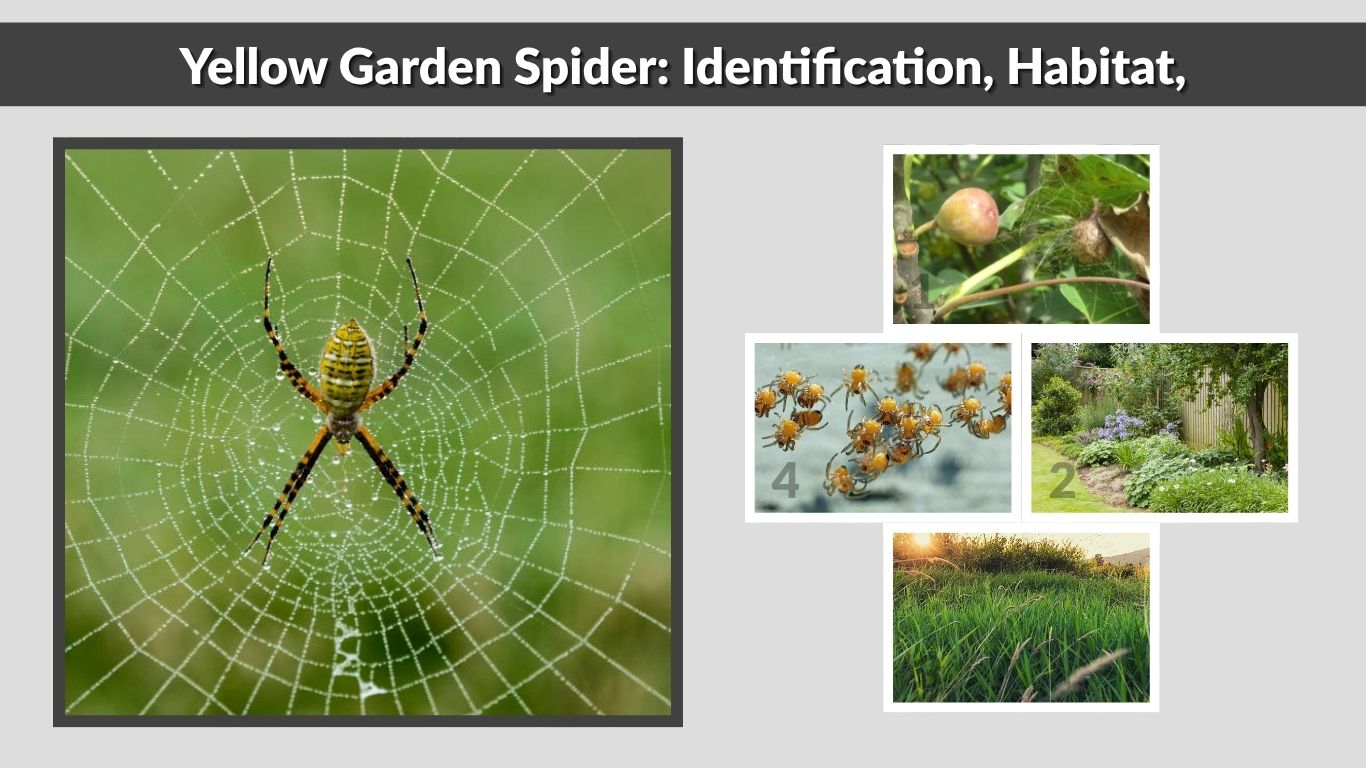
The yellow garden spider is one of the most noticeable spiders found in outdoor spaces. Its bold markings and large web often attract attention, leading many people to wonder if it is dangerous or beneficial. This article explains how to identify it, where it lives, and whether it poses any risk.
What Is a Yellow Garden Spider?
The yellow garden spider (Argiope aurantia) is a member of the orb-weaver family. It is commonly found in gardens, farms, and open fields where it builds large circular webs.
It is also known as the writing spider due to the zigzag pattern seen in the center of its web. This spider is not aggressive and plays a useful role by controlling insect populations, making it a natural helper in gardens.
How to Identify a Yellow Garden Spider

The yellow garden spider is easy to recognize because of its unique appearance and web structure.
- Bright yellow markings mixed with darker patterns on the abdomen
- Long, thin legs often held in pairs
- Large, circular web with a zigzag silk design in the center
- Females are much larger and more visible than males
These features make it stand out from most other garden spiders.
Yellow Garden Spider Size and Appearance
Yellow garden spiders vary in size depending on their gender. Females are significantly larger and more noticeable, while males are smaller and often go unnoticed.
Female spiders can grow up to around 1 inch in body length, not including their legs. Males are much smaller, usually only a fraction of that size. The female’s abdomen is broad and rounded, while the male has a slimmer body.
Their coloration helps them blend into flowers and plants while also warning predators. The combination of yellow and dark markings creates a bold visual pattern that is both protective and recognizable.
Habitat and Where They Live

Yellow garden spiders prefer open, sunny areas where they can build strong webs. They are commonly found in places with plenty of insects.
- Gardens and backyard plants
- Tall grass and shrubs
- Farms and agricultural fields
- Around fences, porches, and outdoor structures
They are widely distributed and can be found in many regions, including Texas, Florida, Michigan, and other parts of North America. Their activity is highest during late summer and early fall when they reach full size.
Yellow Garden Spider Web Characteristics
The web of a yellow garden spider is one of its most distinctive features. It is usually large, circular, and carefully constructed to catch flying insects.
One of the most unique elements is the zigzag pattern, often called a stabilimentum. This structure may help attract prey or make the web more visible to larger animals to prevent damage.
These spiders rebuild or repair their webs regularly, especially if they are damaged. They sit in the center of the web, waiting for vibrations that signal trapped prey.
Are Yellow Garden Spiders Poisonous or Dangerous?
Many people are concerned about whether the yellow garden spider is dangerous. The truth is that it is not considered harmful to humans.
Like most spiders, it has venom, but it is mild and used mainly to subdue prey. Bites are rare and usually happen only if the spider is handled or threatened.
For most people, the bite causes minor discomfort, similar to a mild insect sting. Serious reactions are very uncommon, making this spider generally safe to have around.
Yellow Garden Spider Bite: Symptoms and Treatment
Although bites are rare, it is helpful to know what to expect and how to respond.
Common symptoms include mild pain, redness, and slight swelling at the bite site. These effects usually go away within a short time without serious complications.
Basic first aid includes cleaning the area, applying a cold compress, and monitoring for unusual reactions. Medical attention is only needed if symptoms become severe or if there is an allergic reaction.
Life Cycle and Reproduction

Yellow garden spiders have a short but fascinating life cycle that usually lasts about one year. Their activity peaks in late summer when they are fully grown and most visible.
After mating, the female produces one or more egg sacs, which are brown and papery in texture. These sacs are usually attached to nearby plants or hidden within the web. Each sac can contain hundreds of eggs.
The eggs hatch in late fall or early winter, but the spiderlings remain inside the sac for protection until spring. Once they emerge, they disperse and begin building small webs of their own.
Male vs Female Yellow Garden Spider
There is a clear difference between male and female yellow garden spiders, especially in size and visibility.
- Females are much larger and easier to spot
- Males are smaller and less colorful
- Females build and maintain the main web
- Males usually stay near the edges of the web
The female’s larger size helps her capture bigger prey, while the male’s main role is reproduction. Because of their size difference, many people only notice the female spider.
What Do Yellow Garden Spiders Eat?
Yellow garden spiders are active predators that feed mainly on flying insects. Their webs are designed to trap prey efficiently.
They commonly eat insects such as flies, mosquitoes, grasshoppers, and beetles. Once prey gets caught in the web, the spider quickly immobilizes it using silk and venom.
This feeding behavior makes them highly beneficial, especially in gardens where insect populations can damage plants.
Benefits of Yellow Garden Spiders
Despite their intimidating look, yellow garden spiders are very helpful to humans and the environment.
- They reduce harmful insect populations
- They support natural pest control
- They do not damage plants or structures
- They help maintain ecological balance
Having these spiders in a garden is usually a good sign of a healthy ecosystem.
Yellow Garden Spider vs Other Spiders
| Feature | Yellow Garden Spider | Banana Spider | Joro Spider | Orb Weaver |
| Color | Yellow with dark patterns | Brownish-yellow | Bright yellow with blue tones | Varies widely |
| Size | Medium to large | Large | Large | Varies |
| Web Type | Orb with zigzag pattern | Orb web | Orb web | Orb web |
| Behavior | Non-aggressive | Generally calm | Non-aggressive | Non-aggressive |
| Danger Level | Low | Low to moderate | Low | Low |
Common Myths and Misconceptions
There are several myths about yellow garden spiders that often cause unnecessary fear.
One common belief is that they are highly dangerous, which is not true. Their venom is mild and rarely affects humans seriously. Another myth is that they chase people, but in reality, they prefer to stay in their webs and avoid contact.
Some people also confuse them with other spider species that may look similar. Understanding their appearance helps avoid misidentification.
How to Keep or Remove Them Safely
In most cases, it is best to leave yellow garden spiders alone since they are beneficial. However, if they are in an inconvenient location, there are safe ways to manage them.
- Gently relocate the spider using a container
- Remove webs from high-traffic areas
- Keep outdoor spaces clean to reduce web building spots
- Avoid using harmful chemicals
Relocation is the safest and most eco-friendly option when removal is necessary.
FAQs
Is the yellow garden spider poisonous?
Yellow garden spiders are venomous, but their venom is not harmful to humans. A bite may cause mild irritation, but serious effects are extremely rare.
Do yellow garden spiders bite often?
They rarely bite and usually only do so if they feel threatened or are handled directly. Most people will never experience a bite.
How long do yellow garden spiders live?
Their lifespan is typically around one year. They grow during spring and summer, reproduce in late summer, and die after laying eggs.
Are yellow garden spiders good for gardens?
Yes, they are very beneficial because they help control insect populations. They act as natural pest control without harming plants.
