
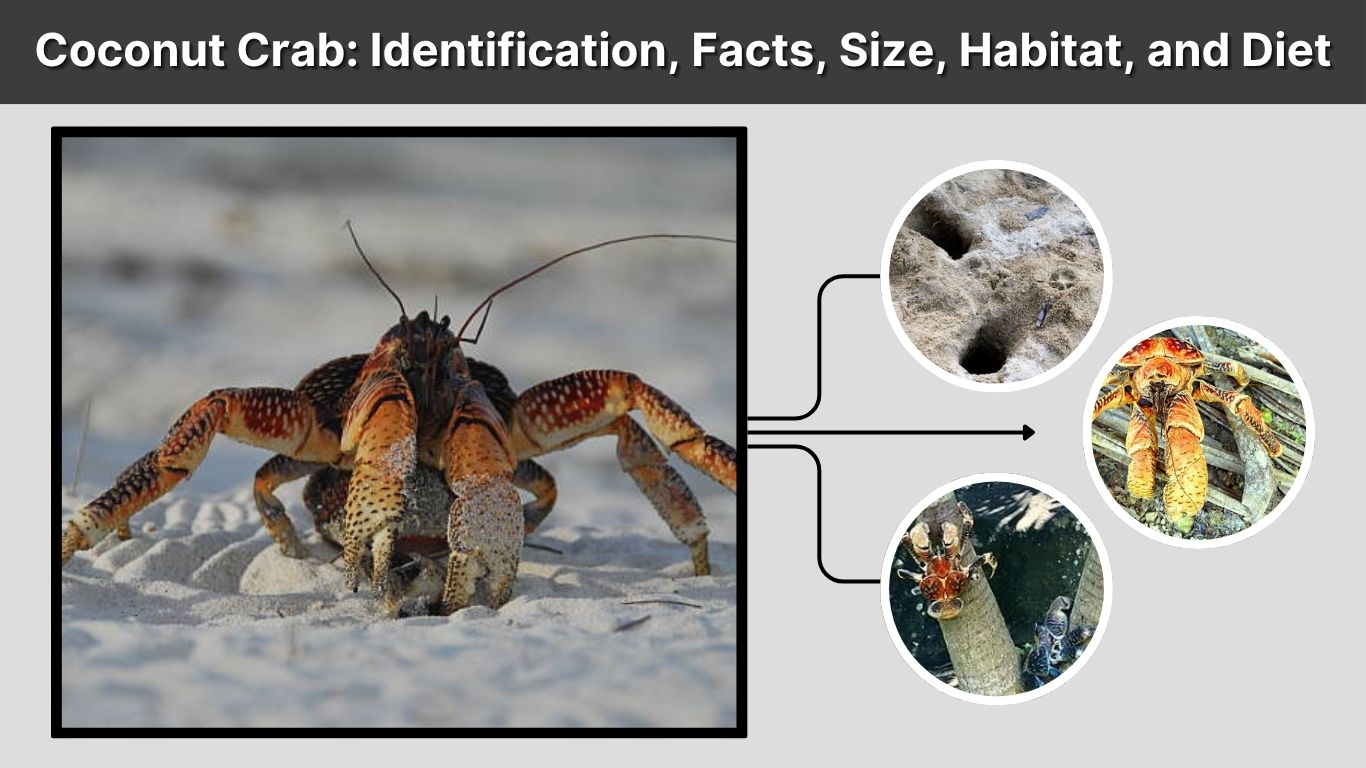
The coconut crab (Birgus latro) is one of the most fascinating creatures found in tropical regions. Known as the largest land-living arthropod in the world, this unusual crab has captured attention due to its strength, size, and unique behavior. Unlike most crabs, it spends the majority of its life on land and has developed remarkable adaptations to survive outside water. From cracking coconuts to climbing trees, the coconut crab is truly a natural wonder worth exploring.
What is a Coconut Crab?
Scientific Classification
The coconut crab belongs to the animal kingdom under the following classification:
- Kingdom: Animalia
- Phylum: Arthropoda
- Class: Malacostraca
- Order: Decapoda
- Family: Coenobitidae
Its scientific name is Birgus latro, and it is closely related to hermit crabs.
General Description
Coconut crabs are a type of terrestrial hermit crab that undergoes a significant transformation as they grow. While young coconut crabs use shells for protection, similar to other hermit crabs, they eventually abandon this habit as adults. Instead, they develop a hard, calcified abdomen that protects them without needing a shell.
These crabs are primarily land dwellers but still rely on the ocean for reproduction. Their unique combination of land adaptation and marine dependence makes them highly specialized creatures.
Identification of Coconut Crab

Physical Appearance
Coconut crabs are easily recognized by their large and powerful bodies. They have thick legs designed for walking and climbing, along with a pair of massive claws. One claw is usually larger and stronger, which they use for cracking hard objects like coconuts.
Their bodies are covered with a hard exoskeleton that provides protection and support. The abdomen, unlike in many crabs, is not soft in adulthood but becomes hardened over time.
Color Variations
Coconut crabs display a variety of colors depending on their geographic location. These colors can range from deep blue and purple to orange and brown. The variation helps them blend into their surroundings and may also be influenced by environmental factors.
Key Identification Features
Some defining characteristics make coconut crabs stand out from other crab species:
- Massive claws capable of cracking coconuts
- Thick and durable exoskeleton
- Hairy legs adapted for gripping surfaces
- Hardened abdomen without a shell in adults
- Antennae used for detecting smells instead of relying on gills
These features make them one of the most unique and easily identifiable crustaceans in the world.
Coconut Crab Size and Growth

Average Size
Coconut crabs are famous for their impressive size. They can weigh up to 4–5 kilograms and have a leg span reaching up to 1 meter. This makes them the largest terrestrial arthropod on Earth.
Growth Stages
The life cycle of a coconut crab involves several stages:
- Larval stage in the ocean
- Juvenile stage where they use shells for protection
- Adult stage where they live fully on land without shells
During the early stages, they are vulnerable and depend heavily on marine environments. As they grow, they gradually adapt to life on land.
Lifespan
Coconut crabs are long-lived animals, with some individuals living between 40 to 60 years. Their slow growth rate contributes to their long lifespan, but it also makes them more vulnerable to population decline.
Coconut Crab Habitat

Geographic Distribution
Coconut crabs are found in tropical regions across the Indian and Pacific Oceans. They are commonly seen on islands such as Christmas Island, the Seychelles, and parts of Southeast Asia and the Pacific islands.
Natural Environment
These crabs prefer coastal environments where they can easily access both land and sea. They are often found in:
- Coastal forests
- Rocky shorelines
- Sandy areas where they can dig burrows
They create burrows in soil or sand to protect themselves from heat and predators.
Habitat Preferences
Coconut crabs thrive in specific environmental conditions that support their survival:
- Warm tropical climates
- High humidity levels
- Access to the ocean for breeding
They are highly sensitive to dry conditions and can suffocate if exposed to low humidity for extended periods.
Coconut Crab Diet

What Do Coconut Crabs Eat?
Coconut crabs are omnivores, meaning they eat both plant and animal matter. Their diet is diverse and depends on the availability of food in their habitat.
Common Food Sources
Their diet includes a wide range of items:
- Coconuts, which they are famous for
- Fruits and seeds
- Dead animals (carrion)
- Small animals like birds or other crabs
Despite their name, coconuts are not their only food source but are an important part of their diet.
Feeding Behavior
Coconut crabs are primarily nocturnal, meaning they search for food at night. They have a highly developed sense of smell, which helps them locate food from long distances.
They use their powerful claws to break open coconuts by stripping away the husk and cracking the shell. This behavior is rare among animals and demonstrates their incredible strength.
Interesting Facts About Coconut Crabs
Unique Abilities
Coconut crabs possess several extraordinary abilities that set them apart from other crustaceans. One of their most impressive traits is their ability to climb trees, sometimes reaching heights of up to 10 meters. They do this to access food sources like coconuts and fruits.
Their claws are incredibly powerful, capable of exerting one of the strongest pinching forces in the animal kingdom. This strength allows them to crack open hard shells and even break bones.
Surprising Facts
Here are some fascinating facts about coconut crabs:
- They have the strongest grip strength among all crustaceans
- They can carry objects heavier than their own body weight
- They are known to steal shiny objects, earning the nickname “robber crab”
- They use modified gills to breathe air, making them fully adapted to land
- They can drown if kept underwater for too long
These facts highlight just how unusual and highly adapted these creatures are.
Coconut Crab vs Other Crabs
| Feature | Coconut Crab | Typical Crab |
| Habitat | Land (terrestrial) | Mostly aquatic |
| Size | Very large (up to 1m) | Usually small-medium |
| Shell Use | Only as juveniles | Permanent shell |
| Diet | Omnivorous | Mostly scavengers |
| Lifespan | 40–60 years | 3–10 years |
This comparison clearly shows how coconut crabs differ significantly from most other crab species, especially in their size, habitat, and behavior.
Reproduction and Life Cycle
Mating Behavior
Coconut crab mating typically occurs on land. Males and females come together during the breeding season, usually in warmer months when environmental conditions are favorable.
Egg Laying
After mating, the female carries fertilized eggs under her abdomen for several weeks. When the eggs are ready to hatch, she travels to the ocean and releases them into the water.
Development
Once in the ocean, the larvae go through several developmental stages. During this time, they drift in the sea as plankton before eventually settling on the ocean floor.
After this stage, young crabs find and occupy empty shells for protection, much like hermit crabs. As they grow, they gradually move onto land and eventually abandon the shell altogether, developing a hardened abdomen.
Threats and Conservation
Natural Threats
In the wild, coconut crabs face threats from natural predators such as birds and larger animals. Juveniles are especially vulnerable during their early stages of life.
Human Impact
Human activities pose a significant threat to coconut crab populations. Some of the main issues include:
- Overhunting for food
- Habitat destruction due to development
- Pollution affecting coastal ecosystems
Because they grow slowly and reproduce at a low rate, their populations can decline quickly when disturbed.
Conservation Status
Coconut crabs are protected in some regions, such as Christmas Island, where conservation efforts are in place to preserve their populations. However, in other areas, they remain at risk due to lack of regulation.
Protecting their natural habitats and limiting hunting are essential steps to ensure their survival in the long term.
FAQs
1. Why are coconut crabs called coconut crabs?
Coconut crabs get their name from their ability to climb coconut trees and crack open coconuts using their powerful claws. Although coconuts are not their only food source, this unique behavior made them famous.
2. Are coconut crabs dangerous to humans?
Coconut crabs are generally not aggressive toward humans. However, their claws are extremely strong and can cause serious injury if they pinch. It’s best to observe them from a safe distance.
3. Where do coconut crabs live?
Coconut crabs are found on tropical islands in the Indian and Pacific Oceans, including places like Christmas Island, the Seychelles, and parts of Southeast Asia.
4. What do coconut crabs eat besides coconuts?
Coconut crabs are omnivores. They eat fruits, seeds, nuts, dead animals, and sometimes small animals like birds or other crabs.
5. How big can a coconut crab get?
Coconut crabs can grow up to 1 meter (3 feet) in leg span and weigh around 4–5 kilograms, making them the largest land-living arthropods in the world.
