
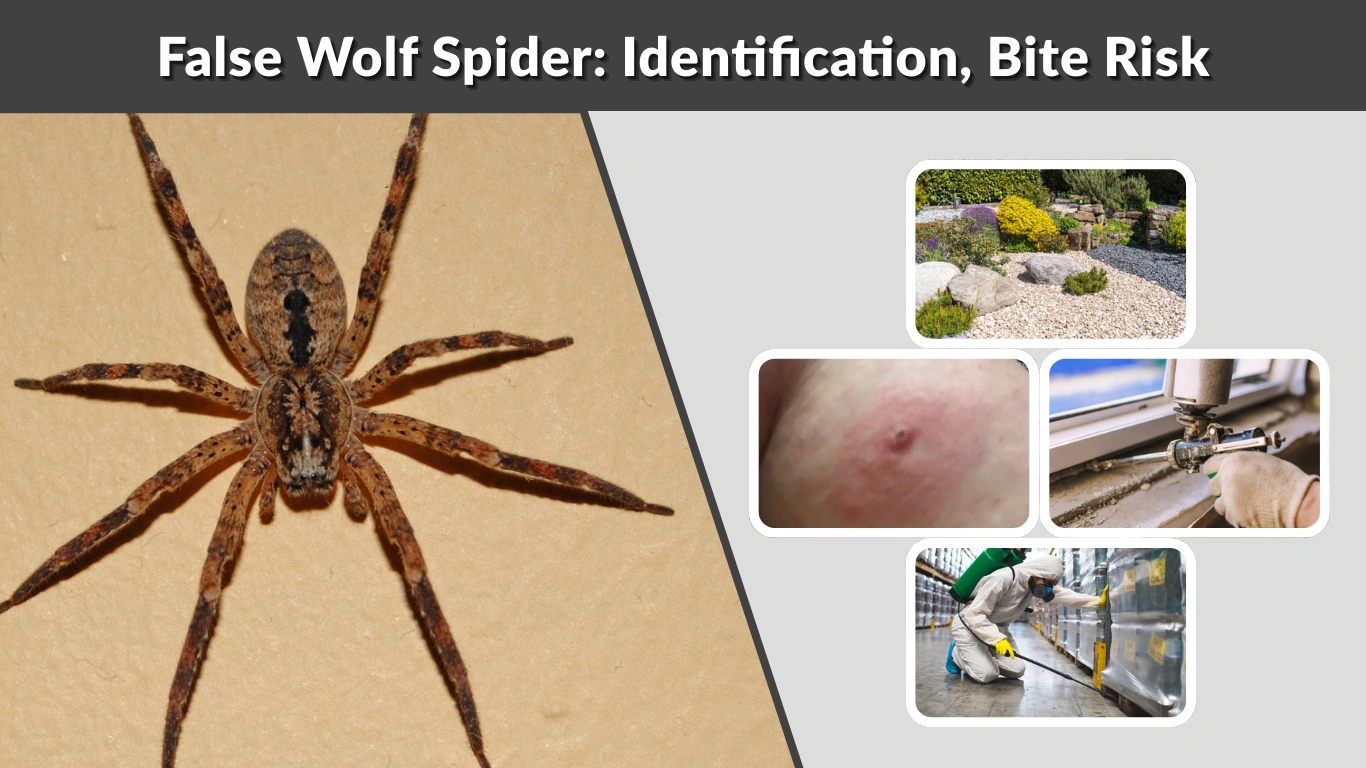
The false wolf spider is frequently mistaken for the true wolf spider because of its similar size, coloring, and quick movements. This confusion often leads to unnecessary fear, especially when one is spotted inside the home. While they may look intimidating, false wolf spiders are very different from true wolf spiders in several important ways. Understanding how to identify them, where they live, and whether they pose any real danger can help you respond calmly and correctly if you encounter one.
What Is a False Wolf Spider?
A false wolf spider is a medium-to-large ground-dwelling spider that resembles a wolf spider but belongs to a different spider family. The species most commonly referred to as a false wolf spider is Zoropsis spinimana, a member of the family Zoropsidae. It earned its common name because of its strong visual similarity to wolf spiders (family Lycosidae).
Originally native to parts of the Mediterranean region, false wolf spiders have expanded their range over time. In some areas, they are now commonly found inside houses, garages, and other buildings. This increasing indoor presence has made them more noticeable — and sometimes more concerning — to homeowners.
Unlike many spiders that rely on webs to trap prey, false wolf spiders are active hunters. They roam surfaces at night, searching for insects and other small arthropods to capture.
False Wolf Spider Identification Guide

Correct identification is essential, especially since people often confuse this spider with more well-known species.
Size and Physical Appearance
False wolf spiders are moderately large. Their body length typically ranges from 10 to 18 millimeters, with a leg span that makes them appear even bigger. When fully extended, their legs give them a wide, somewhat intimidating appearance.
They usually have a brown or gray base color with darker markings across the abdomen and cephalothorax (the front body segment). These patterns often appear mottled or leaf-like, helping them blend into tree bark, rocks, or indoor surfaces.
Although they look robust, their bodies are somewhat flatter than those of true wolf spiders. This flattened shape allows them to squeeze into cracks and crevices.
Eye Arrangement (Key Identification Feature)
One of the most reliable ways to distinguish a false wolf spider from a wolf spider is by examining the eyes.
Wolf spiders have a very distinctive eye pattern:
- Two large forward-facing central eyes
- Four smaller eyes below
- Two medium eyes on top
False wolf spiders do not have the two oversized central eyes that wolf spiders are known for. Instead, their eyes are more evenly sized and arranged in a less dramatic pattern. While this difference may require close inspection, it is one of the most important identification clues.
Body Hair and Texture
Another noticeable difference is hair density. True wolf spiders tend to be quite hairy, with thick, visible body hair that gives them a rugged appearance.
False wolf spiders, by comparison, are less hairy. Their bodies appear smoother and slightly more streamlined. While they are not hairless, they lack the dense fuzz commonly associated with wolf spiders.
Movement and Behavior
False wolf spiders are fast runners. They rely on speed rather than webs to catch prey. If startled, they may quickly dart across floors or walls in search of shelter.
They do not build traditional prey-catching webs. Instead, they may produce silk for egg sacs or temporary shelter, but they actively hunt insects such as flies, beetles, and other small arthropods.
Their quick movements are often what alarm people the most when they are seen indoors.
False Wolf Spider vs Wolf Spider

Because confusion between these two spiders is so common, understanding their differences is important.
Physical Differences
The most significant physical difference is the eye pattern. Wolf spiders have two large, highly visible central eyes that reflect light strongly at night. False wolf spiders lack these oversized eyes.
Hair density is another distinguishing factor. Wolf spiders generally have thicker, more noticeable hair covering their bodies and legs. False wolf spiders appear smoother and slightly less bulky.
Body shape can also vary. Wolf spiders often appear more compact and heavy-bodied, while false wolf spiders can look flatter and somewhat elongated.
Behavioral Differences
Both species are hunters rather than web-builders, but wolf spiders are more strongly associated with outdoor environments such as grasslands, gardens, and forest floors.
False wolf spiders, while also found outdoors, are increasingly reported inside homes. They may settle in basements, garages, or behind furniture where insects are present.
In terms of temperament, neither species is considered aggressive. Both prefer to flee rather than confront threats. Bites typically occur only if the spider is accidentally pressed against the skin or deliberately handled.
Are False Wolf Spiders Dangerous?

One of the most common concerns about the false wolf spider is whether it poses a threat to humans. Because of its size and fast movements, it can appear intimidating. However, in most cases, it is not considered medically significant.
Venom and Toxicity
Like nearly all spiders, false wolf spiders are venomous. Their venom is designed to immobilize and digest small insect prey. However, their venom is not considered dangerous to healthy humans.
There is no strong evidence suggesting that false wolf spider bites cause serious medical complications. They are not classified among spiders with medically significant venom.
False Wolf Spider Bite Symptoms
Bites from false wolf spiders are uncommon. These spiders are not aggressive and typically avoid contact with humans. A bite usually occurs only if the spider feels trapped, such as when pressed against skin inside clothing or bedding.
If a bite does happen, symptoms are typically mild and may include:
- Localized pain or stinging sensation
- Redness around the bite area
- Mild swelling
- Temporary itching
Symptoms usually resolve within a short period without medical treatment. However, as with any insect or spider bite, individuals who experience severe pain, spreading redness, allergic reactions, or unusual symptoms should seek medical advice.
Are They Aggressive?
False wolf spiders are defensive rather than aggressive. When disturbed, their first instinct is to run away. Their speed is a survival mechanism, not a sign of hostility.
They do not chase people, and they do not attack unprovoked. Most indoor encounters happen accidentally when the spider is exploring for food or shelter.
False Wolf Spider Habitat and Distribution

Understanding where false wolf spiders live can help explain why they sometimes appear indoors.
Natural Outdoor Habitat
In outdoor environments, false wolf spiders are commonly found in:
- Wooded areas
- Rocky landscapes
- Under bark and stones
- Leaf litter
Their brown and gray coloration provides effective camouflage in these natural surroundings. They prefer mild to warm climates but have adapted well to various environments.
Why They Enter Homes
False wolf spiders may enter houses for several reasons:
- Searching for warmth during colder months
- Following insect prey indoors
- Seeking shelter from extreme weather
- Entering through cracks, gaps, or open doors
Homes provide stable temperatures and a steady supply of insects, making them attractive environments.
Where They Hide Indoors
Once inside, false wolf spiders tend to stay in quiet, undisturbed areas. Common hiding spots include:
- Basements
- Garages
- Storage rooms
- Behind furniture
- Along baseboards
- Inside wall crevices
They are most active at night, which is why many sightings occur after dark.
Life Cycle and Behavior
Learning about their life cycle can further reduce fear and misunderstanding.
Reproduction and Egg Sacs
Female false wolf spiders lay eggs in silk sacs. These egg sacs are usually hidden in protected areas. After hatching, spiderlings disperse and begin hunting small prey on their own.
Unlike wolf spiders, which are known for carrying egg sacs attached to their spinnerets and sometimes carrying spiderlings on their backs, false wolf spiders do not typically display the same visible maternal behavior.
Hunting and Feeding Habits
False wolf spiders are nocturnal hunters. They rely on speed and stealth rather than webs. Their diet consists mainly of:
- Flies
- Beetles
- Ants
- Other small insects
In this way, they can actually help control indoor insect populations.
Lifespan
The lifespan of a false wolf spider typically ranges from one to two years, depending on environmental conditions, food availability, and climate. Indoor environments with stable temperatures may slightly extend their survival.
How to Prevent False Wolf Spiders in Your Home

If you prefer not to share your space with these spiders, preventive measures can significantly reduce the chances of encounters.
Seal Entry Points
Inspect your home for possible entryways:
- Seal cracks in foundations
- Repair gaps around doors and windows
- Install door sweeps
- Fix damaged window screens
Blocking access points is one of the most effective long-term solutions.
Reduce Indoor Insects
Because false wolf spiders hunt insects, reducing their food source makes your home less attractive. You can:
- Keep food sealed properly
- Clean up crumbs and spills
- Use appropriate pest control for insect infestations
- Reduce clutter where insects may hide
Outdoor Maintenance Tips
Outdoor maintenance can also help:
- Trim vegetation close to the house
- Move firewood away from exterior walls
- Reduce bright exterior lighting that attracts insects
- Keep gutters and exterior walls clean
These steps lower the number of insects near your home, indirectly reducing spider activity.
What to Do If You Find a False Wolf Spider
If you encounter a false wolf spider indoors, remain calm. They are not likely to attack.
You can safely remove the spider using a simple method:
- Place a clear container over the spider.
- Slide a stiff piece of paper or cardboard underneath.
- Carry the container outside and release it away from the home.
Avoid handling the spider directly. If you notice repeated sightings or suspect a larger issue, consulting a pest control professional may be helpful.
Conclusion
The false wolf spider may look intimidating at first glance, but it is generally harmless to humans. Its resemblance to the true wolf spider often causes confusion, yet key differences — especially in eye structure and body hair — make proper identification possible. These spiders are active hunters that help control insect populations and rarely bite unless provoked. By understanding their behavior, habitat, and prevention methods, you can respond confidently and appropriately if you encounter one in your home.
