
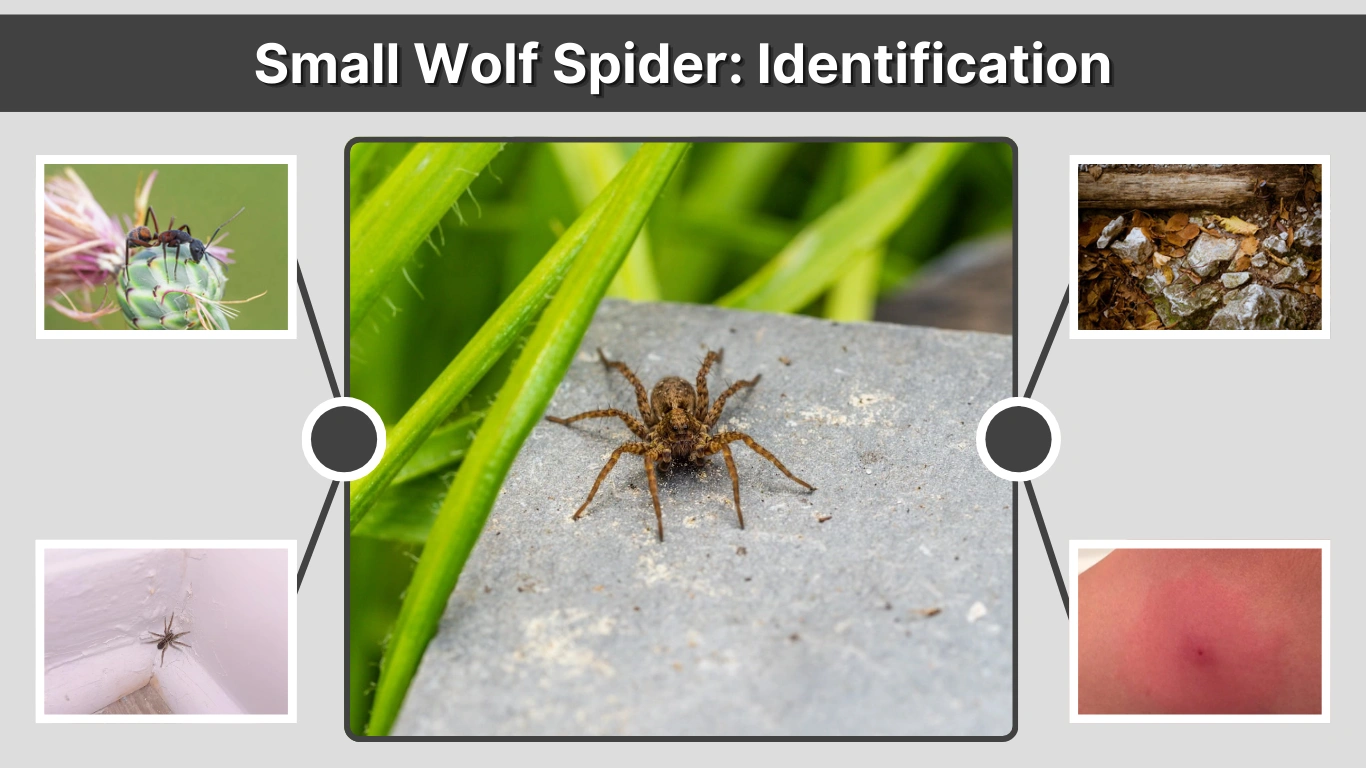
A small wolf spider may look intimidating at first glance, especially when it suddenly darts across your floor. Because of their speed and brown coloring, they are often mistaken for more dangerous species like the brown recluse. However, most wolf spiders are harmless and play an important role in controlling insect populations. Understanding how to properly identify a small wolf spider can help reduce unnecessary fear. In this guide, you’ll learn how to recognize them, where they live, and whether they pose any real danger.
What Is a Small Wolf Spider?
A small wolf spider belongs to the Lycosidae family, a group of ground-hunting spiders found all over the world. The word “wolf” refers to their hunting style. Instead of building webs to trap prey, they actively chase and ambush insects, much like a wolf hunts its target.
The term small wolf spider can mean two things. It may describe a juvenile (young) wolf spider that has not yet reached full size, or it may refer to one of the naturally smaller species within the family. While some wolf spiders grow over an inch long, smaller varieties typically measure between ¼ and ½ inch in body length, excluding the legs.
Unlike delicate web-building spiders, wolf spiders have sturdy, muscular bodies designed for speed and strength. They are solitary hunters and do not live in colonies. You’ll usually see them alone, especially at night when they are most active.
How to Identify a Small Wolf Spider

Correct identification is important because wolf spiders are frequently confused with other brown spiders. Paying attention to physical features and behavior can help you tell the difference.
Size and Body Structure
Small wolf spiders generally measure ¼ to ½ inch long, though their leg span can make them appear larger. Their bodies are:
- Stocky and robust
- Covered in short, fine hairs
- Equipped with long, strong legs for running
Females are usually slightly larger than males. If you notice a spider that looks solid and athletic rather than thin and fragile, it may be a wolf spider.
Another clue is posture. Wolf spiders tend to hold their bodies low to the ground, ready to sprint if disturbed.
Color and Markings
Most small wolf spiders are excellent at camouflage. Their coloring helps them blend into soil, leaves, and grass. Common colors include:
- Brown
- Gray
- Tan
- Dark brown with lighter stripes
Many have a light stripe running down the center of the cephalothorax (the front body section). The abdomen may appear mottled or patterned with subtle markings.
Unlike brown recluse spiders, wolf spiders do not have a clear violin-shaped marking on their backs. If the marking is faint, unclear, or absent, it is more likely a wolf spider.
Unique Eye Arrangement (Key Identifier)
The most reliable way to identify a wolf spider is by looking at its eyes. Wolf spiders have eight eyes arranged in three rows:
- Four small eyes on the bottom row
- Two very large, forward-facing eyes in the middle
- Two medium-sized eyes on the top row
The two large middle eyes are especially noticeable and give the spider excellent night vision. When light shines on them in the dark, their eyes may reflect brightly. This feature is a strong indicator that you’re looking at a wolf spider.
Movement and Behavior
Behavior can also help with identification. Small wolf spiders:
- Move very quickly
- Do not build webs to catch prey
- Hunt actively at night
- Suddenly sprint when disturbed
If you see a spider running across the floor instead of sitting in a web, there’s a good chance it’s a wolf spider. Their speed is often what startles people the most.
Small Wolf Spider vs. Other Common Spiders

Because many household spiders are brown, confusion is common. Here’s how small wolf spiders compare to other species.
Wolf Spider vs. Brown Recluse
This is one of the most common misidentifications. Key differences include:
- Eye count: Wolf spiders have eight eyes; brown recluse spiders have six.
- Markings: Brown recluse spiders typically have a clear violin-shaped marking; wolf spiders do not.
- Body type: Wolf spiders are hairier and more robust.
In terms of danger, brown recluse bites can cause serious skin reactions, while wolf spider bites are usually mild and rare.
Wolf Spider vs. Grass Spider
Grass spiders are also fast and brown, but they build funnel-shaped webs in lawns and shrubs. You may notice:
- Long, visible spinnerets (silk-producing organs) on grass spiders
- Web structures in grass or corners
- A slimmer body shape
Wolf spiders, on the other hand, do not rely on webs to hunt.
Where Do Small Wolf Spiders Live?

Wolf spiders are adaptable and can survive in a variety of environments.
Outdoor Habitats
Outdoors, small wolf spiders are commonly found in:
- Gardens
- Lawns
- Leaf litter
- Under rocks and logs
- Woodpiles
- Soil burrows
Some species dig shallow burrows where they hide during the day. Others simply shelter under debris. Their natural camouflage makes them difficult to spot against soil or mulch.
They thrive in areas with abundant insects, which provide a steady food supply.
Indoor Appearances
Although they prefer outdoor habitats, small wolf spiders sometimes wander indoors. You might find them in:
- Basements
- Garages
- Ground-level rooms
- Near doors and windows
They typically enter by accident while hunting or seeking shelter during cooler weather, especially in the fall. Unlike web-building spiders, they don’t establish permanent indoor nests. Most indoor sightings involve a single wandering spider.
Are Small Wolf Spiders Dangerous?

Seeing a fast-moving spider indoors can be alarming, but small wolf spiders are generally not dangerous to humans. While they are technically venomous, their venom is designed to subdue insects—not people.
Are They Venomous?
Yes, small wolf spiders have venom, as do most spiders. However, their venom is mild and medically insignificant to healthy adults. They use it to immobilize prey such as ants, beetles, and crickets.
For humans, the venom typically causes little to no reaction beyond minor irritation.
Do Small Wolf Spiders Bite?
Bites are rare and usually occur only if the spider feels trapped or threatened. For example, a bite might happen if a spider is accidentally pressed against skin.
When bites do occur, symptoms are typically mild and may include:
- Redness
- Slight swelling
- Mild pain
- Itching
Most reactions are comparable to a bee sting and resolve within a few days without medical treatment.
When to Seek Medical Attention
Although uncommon, some individuals may experience stronger reactions. Seek medical advice if you notice:
- Severe swelling
- Intense pain
- Signs of infection (pus, warmth, spreading redness)
- Allergic symptoms such as difficulty breathing
Serious complications from wolf spider bites are extremely rare.
What Do Small Wolf Spiders Eat?

Small wolf spiders are active hunters with a diet made up mainly of insects and other small arthropods. Common prey includes:
- Ants
- Flies
- Beetles
- Crickets
- Caterpillars
- Other small spiders
Instead of spinning webs to trap prey, they rely on speed and stealth. They either ambush insects or chase them down over short distances. Their strong legs and good vision make them efficient nighttime predators.
Because they consume many common household and garden pests, wolf spiders can actually be beneficial. In gardens, they help control insect populations naturally, reducing the need for chemical pesticides.
Life Cycle of a Small Wolf Spider
Wolf spiders have one of the more fascinating life cycles among spiders, particularly because of the female’s maternal behavior.
Egg Sac and Maternal Care
After mating, the female produces an egg sac containing dozens of eggs. Unlike many spider species that leave their egg sacs hidden in webs, wolf spider mothers carry the egg sac attached to their spinnerets.
Once the eggs hatch, the tiny spiderlings climb onto the mother’s back and ride there for several days or weeks. This level of parental care is unusual in the spider world and is a defining trait of wolf spiders.
Growth and Lifespan
As spiderlings grow, they molt (shed their exoskeleton) multiple times before reaching adulthood.
Most small wolf spiders live about one to two years, depending on species and environmental conditions. Juveniles are often seen in late summer, while adults are more noticeable in fall when they wander in search of mates or shelter.
Why Are Small Wolf Spiders in My House?
If you’ve spotted one indoors, you may wonder why it entered in the first place. Common reasons include:
- Searching for prey: Indoor insects attract them.
- Weather changes: Cooler temperatures drive them inside.
- Accidental entry: They wander through cracks or gaps.
- Mating season movement: Increased activity in fall.
Unlike some house spiders, wolf spiders do not typically infest homes. Seeing one does not mean your house has a spider problem. Most indoor encounters are isolated incidents.
How to Get Rid of Small Wolf Spiders
If you prefer not to share your space with them, there are safe and practical ways to reduce encounters.
Prevention Tips
Prevention focuses on blocking entry points and reducing food sources:
- Seal cracks and foundation gaps
- Install door sweeps
- Repair window screens
- Reduce clutter in basements and garages
- Remove leaf litter and woodpiles near the house
- Control indoor insects
By limiting insects around your home, you also reduce the reason spiders enter.
Natural Removal Methods
If you find a single spider indoors:
- Capture it with a cup and release it outside
- Use sticky traps in corners
- Vacuum it safely
These methods are usually sufficient for occasional sightings.
When to Call Pest Control
Professional pest control may be helpful if:
- You see repeated spider activity
- There is a noticeable increase in insects
- You feel uncomfortable handling the situation yourself
However, widespread infestations of wolf spiders inside homes are uncommon.
Are Small Wolf Spiders Beneficial?
Despite their intimidating appearance, small wolf spiders are helpful predators. They reduce populations of:
- Garden pests
- Flying insects
- Crop-damaging bugs
Because they rarely bite and do not build messy webs inside homes, many experts consider them low-risk and ecologically beneficial.
In outdoor environments, it is often best to leave them undisturbed. They play an important role in maintaining natural balance.
FAQs
How big is a small wolf spider?
A small wolf spider typically measures between ¼ and ½ inch in body length, not including the legs. Juveniles may be even smaller. While their leg span can make them look larger, their bodies remain compact and stocky compared to many other spider species.
Can a small wolf spider hurt you?
Small wolf spiders are not considered dangerous. Although they can bite in self-defense, bites are rare and usually cause only mild redness or swelling. Serious reactions are extremely uncommon in healthy individuals.
Why do small wolf spiders move so fast?
Wolf spiders are active hunters that rely on speed instead of webs to catch prey. Their strong legs and sharp eyesight allow them to sprint quickly across surfaces, which is why they often appear to “dash” suddenly when disturbed.
How can you tell if a spider is a wolf spider?
The most reliable sign is the eye arrangement: eight eyes in three rows, including two large forward-facing eyes. They also have a stocky, hairy body and do not build webs to capture prey.
Should I kill a small wolf spider?
In most cases, there is no need to kill a small wolf spider. They are harmless and help control insect populations. If found indoors, you can safely capture and release it outside instead.
Conclusion
Small wolf spiders may look intimidating, but they are generally harmless and even beneficial. Their fast movement, sturdy bodies, and unique eye arrangement make them easy to identify once you know what to look for. While they may occasionally wander indoors, they rarely pose a threat to humans. By sealing entry points and reducing insects around your home, you can minimize encounters. In many cases, understanding these spiders is the best way to replace fear with confidence.
