
Large wolf spiders are among the most intimidating spiders people encounter in yards, garages, and even inside homes. Their size, speed, and hairy appearance often cause alarm. However, despite their frightening look, a large wolf spider is usually harmless and plays an important role in controlling insect populations. Understanding how to identify one, how big it can grow, and whether it poses any danger can help reduce unnecessary fear and confusion.
What Is a Large Wolf Spider?
A large wolf spider belongs to the Lycosidae family, a group of ground-dwelling hunting spiders known for their speed and excellent eyesight. Unlike web-building spiders, wolf spiders actively chase and ambush their prey.
There are over 2,000 species worldwide, but only a handful are considered truly large. In North America, the Carolina wolf spider (Hogna carolinensis) is the largest and most commonly referenced species when people talk about a “giant wolf spider.”
Scientific Classification
- Family: Lycosidae
- Common Name: Wolf spider
- Notable Large Species: Carolina wolf spider
These spiders are solitary hunters and do not live in colonies or build large webs in corners like house spiders.
How Big Do Large Wolf Spiders Get?
Size is what makes a large wolf spider so noticeable. Depending on the species:
- Body length: 1 to 2 inches (females are larger)
- Leg span: Up to 3 to 4 inches in large species
- Weight: Heavier and more robust than most house spiders
Females are typically bigger than males, especially when carrying egg sacs. When seen indoors, their leg span can make them appear even larger than they actually are.
Where Are Large Wolf Spiders Found?
Large wolf spiders are widespread and adaptable. They are commonly found in:
- Grasslands
- Forest edges
- Gardens and lawns
- Under rocks and logs
- Basements and garages
They prefer ground-level habitats and often hide during the day. At night, they become active hunters.
How to Identify a Large Wolf Spider

Correct identification is important because many large brown spiders are mistaken for wolf spiders.
Physical Appearance
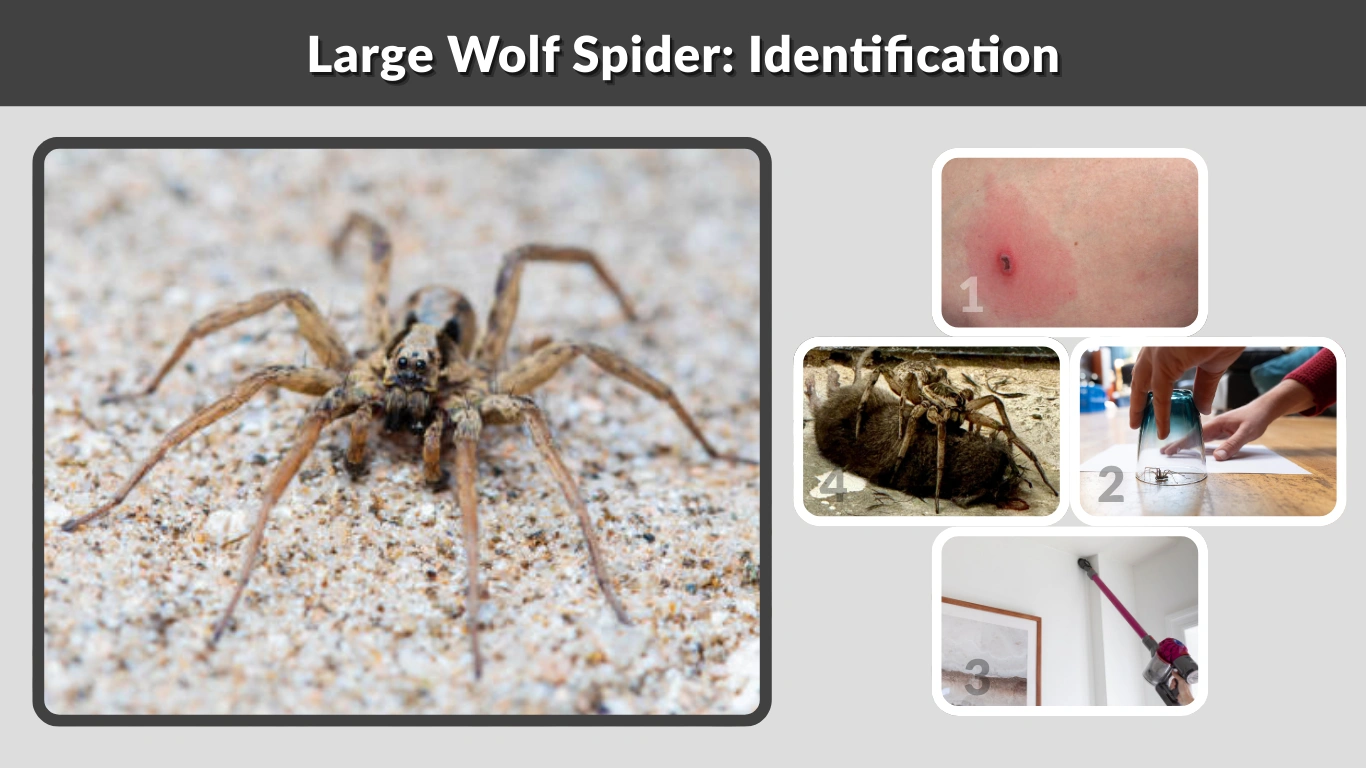
A large wolf spider typically has:
- Brown, gray, or dark tan coloring
- A hairy, thick body
- Strong, sturdy legs
- Subtle stripe patterns along the back
They are built for speed rather than web-spinning. Their bodies look muscular compared to thinner house spiders.
Eye Pattern (The Key Identifier)
The easiest way to confirm a large wolf spider is by looking at its eyes. They have a unique 8-eye arrangement in three rows:
- Bottom row: 4 small eyes
- Middle row: 2 very large eyes
- Top row: 2 medium-sized eyes
The two large middle eyes are especially noticeable and often reflect light at night. This reflective shine is a common sign when spotting them with a flashlight outdoors.
Wolf Spider vs Other Large Spiders
Many people confuse large wolf spiders with other species:
Wolf Spider vs Tarantula
Tarantulas are much larger, thicker, and slower-moving. Wolf spiders are smaller and more agile.
Wolf Spider vs Fishing Spider
Fishing spiders have longer, thinner legs and are often found near water. Wolf spiders are stockier and ground-focused.
Wolf Spider vs Brown Recluse
Brown recluse spiders are smaller and have a distinct violin-shaped marking on their back. Wolf spiders lack this marking and have a more patterned body.
Why Are Wolf Spiders So Large?

Their size serves a practical purpose. Large wolf spiders are active hunters rather than passive web builders.
Evolutionary Hunting Advantage
Because they chase prey, larger body size provides:
- Greater speed
- Stronger leg muscles
- Ability to overpower bigger insects
- Improved survival outdoors
They hunt crickets, beetles, ants, grasshoppers, and other ground insects. Their size allows them to control pests effectively.
Female Size and Egg Carrying
Female wolf spiders are larger because they carry egg sacs attached to their spinnerets. After hatching, the spiderlings climb onto the mother’s back and stay there until they are ready to disperse.
This maternal behavior is unique among many spider species and often surprises people who see a “large spider covered in babies.”
Is a Large Wolf Spider Dangerous?

Despite their intimidating appearance, large wolf spiders are not considered dangerous to humans.
Do Wolf Spiders Bite?
Yes, they can bite, but it is rare. Bites typically happen only if:
- The spider is trapped against skin
- It feels threatened
- Someone tries to handle it
They are not aggressive and usually prefer to run away rather than confront people.
What Does a Wolf Spider Bite Feel Like?
A wolf spider bite is often compared to a mild bee sting. Symptoms may include:
- Redness
- Mild swelling
- Localized pain
- Itching
In most cases, symptoms fade within a few days without medical treatment. Serious reactions are uncommon.
When to Seek Medical Attention
Although a large wolf spider bite is typically mild, there are situations where medical care may be necessary. Seek attention if you notice:
- Severe or spreading swelling
- Increasing pain after 24–48 hours
- Signs of infection (pus, warmth, fever)
- Allergic reactions such as difficulty breathing or hives
These reactions are rare. Most bites can be treated at home by washing the area with soap and water, applying a cold compress, and using over-the-counter pain relief if needed.
Why Is There a Large Wolf Spider in My House?

Seeing a large wolf spider indoors can be unsettling. However, their presence usually has a simple explanation.
Common Reasons They Enter Homes
Wolf spiders may wander inside because:
- They are hunting insects
- Weather conditions changed (rain, heat, cold)
- Doors or cracks allow easy entry
- It is mating season
They do not enter homes to build nests or infest living spaces. Most indoor sightings involve a single wandering spider.
Are They Infesting Your Home?
Wolf spiders are solitary creatures. They do not form colonies and do not create large web networks in corners. If you see more than one, it is usually because your home has an insect population that attracts them.
In many cases, the spider is actually helping reduce other pests such as roaches, ants, or crickets.
How to Get Rid of a Large Wolf Spider

If you prefer not to share your space with a large wolf spider, removal is simple and safe.
Safe Removal Methods
- Cup and card method: Place a clear container over the spider, slide a stiff card underneath, and release it outdoors.
- Vacuum removal: Use a vacuum hose to quickly remove the spider from floors or walls.
- Avoid crushing: Crushing may create unnecessary mess and risk contact.
Wolf spiders are fast, so move calmly and deliberately.
Preventing Entry
Prevention is more effective than repeated removal. Consider:
- Sealing cracks around doors and windows
- Installing door sweeps
- Reducing clutter in basements and garages
- Keeping outdoor lights away from entry points
- Controlling insect populations indoors
Because large wolf spiders follow food sources, reducing insects significantly lowers the chance of seeing them.
Natural Deterrents
Some homeowners use natural repellents such as:
- Peppermint oil sprays
- Eucalyptus oil
- Keeping storage areas clean and dry
While these may help slightly, physical sealing and insect control are more reliable solutions.
Fascinating Facts About Large Wolf Spiders
Large wolf spiders are more impressive than frightening once you understand them.
- They have excellent night vision.
- Their eyes reflect light, making them easier to spot outdoors.
- They can run quickly but rarely climb smooth vertical surfaces.
- Females carry their babies on their backs — a rare spider behavior.
- They play a major role in natural pest control.
In ecosystems, they help maintain balance by controlling insect populations without the need for chemicals.
FAQs
How big is a large wolf spider?
A large wolf spider can have a body length of 1 to 2 inches, with a leg span reaching up to 3 or even 4 inches in larger species like the Carolina wolf spider. Females are generally bigger than males, especially when carrying egg sacs.
Are large wolf spiders poisonous?
Large wolf spiders are venomous, like most spiders, but they are not dangerous to humans. Their venom is designed to subdue insects, not people. Bites are rare and usually result in mild pain, redness, and temporary swelling.
What attracts large wolf spiders to houses?
Large wolf spiders enter homes primarily in search of food. If insects such as crickets, ants, or roaches are present, spiders may follow. Seasonal weather changes and easy entry points like cracks and gaps also increase indoor sightings.
Can a large wolf spider kill a human?
No, a large wolf spider cannot kill a human. Their venom is not medically significant for healthy adults. Serious reactions are extremely rare, and most bites heal within a few days without complications.
What is the largest wolf spider species?
The Carolina wolf spider (Hogna carolinensis) is considered the largest wolf spider in North America. It can reach up to 2 inches in body length and has a leg span of several inches, making it one of the most noticeable ground spiders.
Conclusion
A large wolf spider may look intimidating, but it is far less dangerous than many people assume. These fast-moving hunters are beneficial predators that help control unwanted insects both outdoors and inside homes. While their size can be alarming, they are not aggressive and rarely bite. With proper identification and simple prevention steps, you can confidently manage encounters and appreciate the ecological value these impressive spiders provide.
