
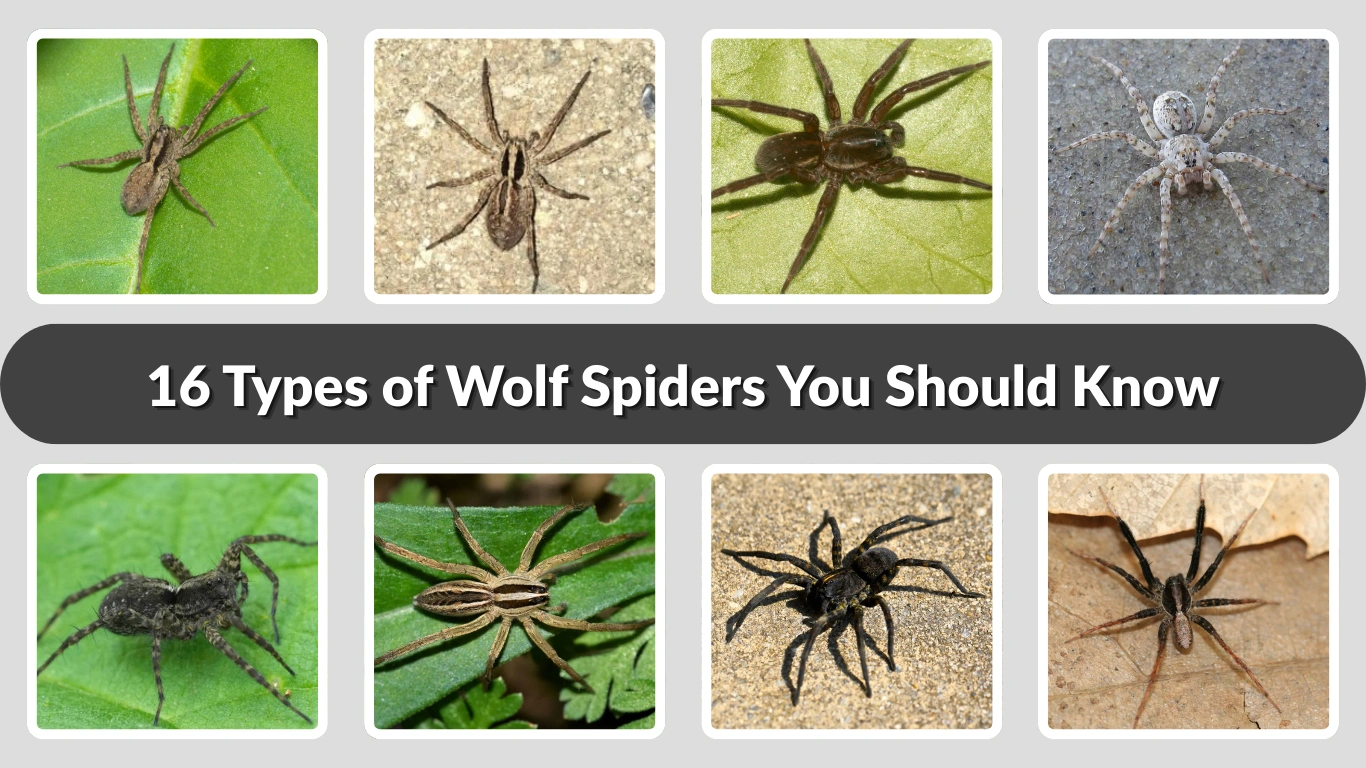
Wolf spiders are fast, ground-dwelling hunters found in a wide range of habitats across the world. Unlike web-building spiders, they actively chase and capture their prey using speed, strong legs, and excellent eyesight. These spiders vary in size, color, and behavior, but all share similar hunting instincts and unique maternal care habits. From sandy shorelines to forest floors and grassy fields, wolf spiders play an important role in controlling insect populations in natural and agricultural ecosystems.
1. Carolina Wolf Spider (Hogna carolinensis)

The Carolina wolf spider is the largest wolf spider species in North America. Known for its impressive size and speed, this ground-dwelling hunter does not spin webs to catch prey. Instead, it actively chases and ambushes insects, playing an important role in controlling pest populations.
Identification
- One of the largest wolf spiders in North America (females can reach up to 35 mm in body length)
- Brown to dark gray body with subtle striping
- Hairy, robust body and long, powerful legs
- Eight eyes arranged in three distinct rows
- Underside often darker, sometimes nearly black
Habitat
Carolina wolf spiders prefer dry, open areas such as grasslands, deserts, agricultural fields, and prairies. They often dig burrows in the ground, which they line with silk and use as shelters during the day. These spiders are mostly terrestrial and rarely climb vegetation.
Behavior
This species is primarily nocturnal and hunts at night. Instead of building webs, it relies on speed and strong eyesight to capture prey. When threatened, it may retreat quickly to its burrow. Females are known for carrying their egg sacs attached to their spinnerets and later carrying spiderlings on their backs after they hatch.
Diet and Lifecycle
Carolina wolf spiders feed mainly on insects and other small invertebrates, including crickets, beetles, and grasshoppers. They are opportunistic predators and will consume a wide range of prey. The lifecycle typically includes egg, spiderling, and adult stages. Spiderlings disperse after a short period of riding on their mother’s back, and individuals may live for one to two years.
2. Hogna antelucana

Hogna antelucana is a large and fast-moving wolf spider species commonly found in parts of North and Central America. Like other wolf spiders, it is an active ground hunter that does not rely on webs to capture prey. It is often noticed for its size and wandering behavior, especially at night.
Identification
- Large, robust body typical of the Hogna genus
- Brown to gray coloration with darker markings
- Faint stripe pattern on the cephalothorax
- Long, sturdy legs adapted for running
- Eight eyes arranged in three rows, with two large central eyes
Habitat
Hogna antelucana prefers open and semi-open environments such as fields, grasslands, forest edges, and sometimes suburban areas. It typically shelters under rocks, logs, or debris during the day and becomes more active after sunset.
Behavior
This species is primarily nocturnal and hunts by actively chasing down prey. It relies on strong vision and vibration detection rather than web-building. When disturbed, it may freeze briefly before darting away quickly to find cover.
Diet and Lifecycle
Hogna antelucana feeds on insects and other small arthropods, including beetles, ants, and grasshoppers. Females carry egg sacs attached to their spinnerets and later transport spiderlings on their backs. The lifecycle includes egg, spiderling, juvenile, and adult stages, with individuals typically living up to one to two years.
3. Hogna baltimoriana

Hogna baltimoriana is a medium to large wolf spider species commonly found in North America. It is a ground-dwelling hunter known for its speed and strong vision. Like other wolf spiders, it does not build webs to trap prey but actively pursues insects in open areas.
Identification
- Medium to large body size
- Brown to gray coloration with darker markings
- Distinct pale stripe running down the center of the cephalothorax
- Hairy body with long, powerful legs
- Eight eyes arranged in three rows, with prominent middle eyes
Habitat
Hogna baltimoriana is typically found in grasslands, meadows, forest edges, and open woodlands. It prefers areas with loose soil or leaf litter where it can hide during the day. It may also be seen in agricultural fields and occasionally near human structures.
Behavior
This species is mainly nocturnal and hunts at night. It relies on quick movements and sharp eyesight to detect and chase prey. When threatened, it may retreat into vegetation or shallow ground shelters. Females show maternal care by carrying their egg sacs and later their spiderlings.
Diet and Lifecycle
Hogna baltimoriana feeds on a variety of insects and small invertebrates, including crickets, flies, and beetles. The lifecycle includes egg, spiderling, juvenile, and adult stages. After hatching, spiderlings ride on the mother’s back for a short period before dispersing. Adults typically live for about one year.
4. Rabid Wolf Spider (Rabidosa rabida)

The Rabid Wolf Spider is a fast-moving and slender species commonly found in North America. Despite its alarming name, it is harmless to humans. It is known for its agility, striped body pattern, and active hunting style, especially in grassy and wooded areas.
Identification
- Slender body compared to other large wolf spiders
- Brown to light brown coloration with bold longitudinal stripes
- Distinct pale stripe running down the center of the cephalothorax
- Long, thin legs built for speed
- Eight eyes arranged in three rows, with large forward-facing middle eyes
Habitat
Rabid Wolf Spiders are commonly found in grasslands, meadows, forest edges, and gardens. They prefer areas with tall grass or low vegetation where they can hide during the day. Unlike some wolf spiders, they do not typically dig deep burrows.
Behavior
This species is highly active and primarily nocturnal, though it may also be seen during the day. It hunts by chasing down prey rather than using webs. When disturbed, it quickly runs to nearby cover. Females carry egg sacs and later transport spiderlings on their backs.
Diet and Lifecycle
Rabid Wolf Spiders feed on insects such as grasshoppers, beetles, flies, and other small arthropods. Their lifecycle includes egg, spiderling, juvenile, and adult stages. Spiderlings remain on the mother’s back briefly after hatching before dispersing. Adults usually live about one year.
5. Tigrosa helluo

Tigrosa helluo is a large and commonly encountered wolf spider species in North America. It is known for its strong build and bold markings. Like other wolf spiders, it is an active hunter that does not rely on webs, instead chasing down prey on the ground.
Identification
- Large, sturdy body
- Brown coloration with darker mottled markings
- Broad pale stripe running down the center of the cephalothorax
- Thick, hairy legs adapted for running
- Eight eyes arranged in three rows, with two large central eyes
Habitat
Tigrosa helluo is often found in meadows, fields, wetlands, forest edges, and suburban lawns. It prefers moist environments but can adapt to a variety of habitats. During the day, it hides under rocks, logs, or leaf litter.
Behavior
This species is mostly nocturnal and hunts by actively pursuing insects. It relies on sharp vision and sensitivity to vibrations to locate prey. When threatened, it may freeze briefly before rapidly escaping. Females carry egg sacs attached to their spinnerets and later carry spiderlings on their backs.
Diet and Lifecycle
Tigrosa helluo feeds on a wide range of insects and small invertebrates, including crickets, beetles, and ants. The lifecycle includes egg, spiderling, juvenile, and adult stages. After hatching, spiderlings ride on the mother’s back for a short time before dispersing. Adults typically live for about one year.
6. Tigrosa aspersa

Tigrosa aspersa is a large and robust wolf spider species found in North America. It is commonly seen in wooded and suburban areas and is known for its mottled appearance and strong hunting abilities. Like other wolf spiders, it actively hunts prey rather than spinning webs to catch it.
Identification
- Large, heavy-bodied wolf spider
- Brown to dark brown coloration with mottled or speckled markings
- Subtle pale stripe on the cephalothorax
- Thick, hairy legs built for speed and strength
- Eight eyes arranged in three rows, with two prominent forward-facing eyes
Habitat
Tigrosa aspersa is typically found in forests, woodlands, leaf litter, and suburban yards. It prefers areas with plenty of ground cover where it can hide during the day. It may shelter under logs, stones, or debris.
Behavior
This species is primarily nocturnal and hunts on the ground at night. It relies on excellent eyesight and quick movements to capture prey. When disturbed, it may remain still to avoid detection or suddenly dash away to safety. Females carry egg sacs and later transport spiderlings on their backs.
Diet and Lifecycle
Tigrosa aspersa feeds on insects and other small arthropods, including beetles, ants, and grasshoppers. Its lifecycle includes egg, spiderling, juvenile, and adult stages. After hatching, spiderlings briefly ride on the mother’s back before dispersing. Adults generally live around one year.
7. Tigrosa georgicola

Tigrosa georgicola is a medium to large wolf spider species native to North America. It is often found in open habitats and is recognized for its earthy coloration and ground-hunting behavior. Like other members of the wolf spider family, it does not spin capture webs but actively searches for prey.
Identification
- Medium to large body size
- Brown to gray coloration with darker markings
- Noticeable pale stripe along the center of the cephalothorax
- Hairy, sturdy legs adapted for running
- Eight eyes arranged in three rows, with large central eyes
Habitat
Tigrosa georgicola commonly inhabits fields, grasslands, agricultural areas, and open woodlands. It prefers ground-level environments with loose soil or leaf litter for cover. During the day, it hides under debris, stones, or vegetation.
Behavior
This species is primarily nocturnal and hunts by chasing down insects. It relies on strong vision and sensitivity to ground vibrations to locate prey. When threatened, it may quickly retreat into nearby cover. Females carry egg sacs attached to their spinnerets and later carry spiderlings on their backs.
Diet and Lifecycle
Tigrosa georgicola feeds on a variety of small insects and arthropods, including beetles, ants, and crickets. Its lifecycle includes egg, spiderling, juvenile, and adult stages. After hatching, spiderlings remain on the mother’s back briefly before dispersing. Adults typically live about one year.
8. Pardosa milvina

Pardosa milvina is a small to medium-sized wolf spider commonly found in North America. It is especially abundant in agricultural fields and open habitats. This species is known for its quick movements and adaptability, actively hunting prey on the ground rather than using webs.
Identification
- Small to medium body size
- Light brown to gray coloration
- Faint stripe pattern on the cephalothorax
- Slender, hairy legs built for speed
- Eight eyes arranged in three rows, with noticeable central eyes
Habitat
Pardosa milvina is frequently found in crop fields, grasslands, meadows, and open disturbed areas. It prefers low vegetation and bare ground where it can move quickly while hunting. It does not typically create deep burrows.
Behavior
This species is active both during the day and at night, making it more visible than many other wolf spiders. It hunts by rapidly chasing small insects across the ground. When disturbed, it may freeze briefly before darting away. Females carry egg sacs and later transport spiderlings on their backs.
Diet and Lifecycle
Pardosa milvina feeds on small insects such as aphids, flies, and other tiny arthropods. It plays an important role in agricultural pest control. The lifecycle includes egg, spiderling, juvenile, and adult stages, with multiple generations possible in a single year.
9. Pardosa moesta

Pardosa moesta is a small to medium-sized wolf spider species found in parts of North America. It is commonly seen in open and grassy habitats. Like other members of the Pardosa genus, it is an agile ground hunter that actively pursues prey instead of building webs.
Identification
- Small to medium body size
- Brown to gray coloration with darker markings
- Distinct pale stripe on the cephalothorax
- Slender, hairy legs designed for quick movement
- Eight eyes arranged in three rows, with prominent middle eyes
Habitat
Pardosa moesta typically inhabits grasslands, meadows, forest edges, and open woodland areas. It prefers areas with low vegetation and leaf litter where it can hide and hunt efficiently. It does not usually dig burrows.
Behavior
This species is active during the day and night, often seen running across the ground in search of prey. It relies on speed and strong vision to capture insects. When threatened, it quickly escapes into nearby vegetation. Females carry egg sacs and later transport spiderlings on their backs.
Diet and Lifecycle
Pardosa moesta feeds on small insects and other arthropods, including flies, ants, and beetles. Its lifecycle includes egg, spiderling, juvenile, and adult stages. After hatching, spiderlings briefly ride on the mother’s back before dispersing. Multiple generations may occur in favorable conditions.
10. Pardosa amentata

Pardosa amentata is a small and active wolf spider species widely distributed across Europe and parts of Asia. It is commonly seen in open habitats and is known for its quick movements and distinctive markings. Like other wolf spiders, it hunts prey directly rather than using a web.
Identification
- Small body size
- Brown to gray coloration with contrasting markings
- Distinct pale stripe running down the cephalothorax
- Slender, hairy legs adapted for speed
- Eight eyes arranged in three rows, with large central eyes
Habitat
Pardosa amentata is typically found in grasslands, meadows, heathlands, and forest clearings. It prefers moist but open environments with low vegetation. This species does not build burrows and usually shelters in leaf litter or under small debris.
Behavior
This species is primarily active during the day and can often be seen running rapidly across the ground. It relies on sharp eyesight and quick reflexes to capture prey. When disturbed, it may pause briefly before making a fast escape. Females carry egg sacs and later transport spiderlings on their backs.
Diet and Lifecycle
Pardosa amentata feeds on small insects and other arthropods, including flies, aphids, and tiny beetles. Its lifecycle includes egg, spiderling, juvenile, and adult stages. Spiderlings ride on the mother’s back for a short time after hatching. The species may produce more than one generation per year in suitable climates.
11. Arctosa littoralis

Arctosa littoralis is a medium-sized wolf spider species commonly associated with sandy and coastal environments. It is well camouflaged against light-colored substrates, allowing it to blend seamlessly into its surroundings. Like other wolf spiders, it actively hunts prey instead of spinning capture webs.
Identification
- Medium body size
- Sandy brown to gray coloration
- Mottled pattern that provides strong camouflage
- Sturdy, hairy legs suited for running on loose sand
- Eight eyes arranged in three rows, with prominent central eyes
Habitat
Arctosa littoralis is typically found along sandy shorelines, riverbanks, dunes, and other open sandy habitats. It prefers dry, loose substrates where it can burrow slightly or hide beneath debris. Its coloration helps it remain nearly invisible against sand.
Behavior
This species is mostly nocturnal and emerges at night to hunt. It relies on camouflage and quick bursts of speed to catch prey. When threatened, it may freeze to blend in with the sand or rapidly dig itself into the substrate for protection.
Diet and Lifecycle
Arctosa littoralis feeds on small insects and arthropods found in sandy habitats, such as beetles and flies. The lifecycle includes egg, spiderling, juvenile, and adult stages. Females carry egg sacs attached to their spinnerets and may guard them closely until the spiderlings hatch.
12. Pirata piscatorius

Pirata piscatorius is a small to medium-sized wolf spider often associated with wet environments. Commonly called a “pirate wolf spider,” it is known for its ability to move quickly across the surface of water. Like other wolf spiders, it hunts actively rather than building webs to trap prey.
Identification
- Small to medium body size
- Brown to dark brown coloration with lighter markings
- Subtle pale stripe on the cephalothorax
- Long, slender legs adapted for moving on water surfaces
- Eight eyes arranged in three rows, with large central eyes
Habitat
Pirata piscatorius is typically found near ponds, marshes, streams, and other freshwater habitats. It prefers moist ground and vegetation close to water. This species often rests among grasses or debris along the water’s edge.
Behavior
This spider is active both day and night and is especially known for running across the surface of water to escape predators or capture prey. It relies on speed, vibration detection, and sharp eyesight. When disturbed, it may quickly retreat into nearby vegetation.
Diet and Lifecycle
Pirata piscatorius feeds on small aquatic and semi-aquatic insects, including mosquito larvae and other tiny invertebrates found near water. Its lifecycle includes egg, spiderling, juvenile, and adult stages. Females carry egg sacs and later transport spiderlings on their backs after hatching.
13. Schizocosa ocreata

Schizocosa ocreata is a small to medium-sized wolf spider commonly found in eastern North America. It is especially known for the distinctive dark “brushes” on the front legs of males, which are used in courtship displays. Like other wolf spiders, it hunts prey directly on the ground instead of using webs.
Identification
- Small to medium body size
- Brown to dark brown coloration
- Pale stripe running down the center of the cephalothorax
- Males have noticeable black brush-like tufts on their front legs
- Eight eyes arranged in three rows, with prominent middle eyes
Habitat
Schizocosa ocreata is typically found in deciduous forests, woodland edges, and areas with thick leaf litter. It prefers shaded environments where it can blend into the forest floor. This species does not dig deep burrows and usually shelters under leaves or debris.
Behavior
This species is mainly active during the warmer months and is often seen moving through leaf litter. Males perform visual and vibrational courtship displays by raising and waving their front legs. When threatened, they rely on camouflage and quick movements to escape.
Diet and Lifecycle
Schizocosa ocreata feeds on small insects and other arthropods found in forest litter. The lifecycle includes egg, spiderling, juvenile, and adult stages. Females carry egg sacs attached to their spinnerets and later allow spiderlings to ride on their backs briefly after hatching.
14. Schizocosa mccooki

Schizocosa mccooki is a small to medium-sized wolf spider commonly found in North America, particularly in western regions. It is a ground-dwelling hunter known for its subtle markings and agile movements. Like other wolf spiders, it does not spin capture webs but actively pursues its prey.
Identification
- Small to medium body size
- Brown to gray coloration with darker patterning
- Pale median stripe on the cephalothorax
- Slender, hairy legs adapted for quick running
- Eight eyes arranged in three rows, with large central eyes
Habitat
Schizocosa mccooki is typically found in grasslands, open woodlands, forest edges, and leaf litter. It prefers dry to moderately moist environments where it can blend into the ground surface. It usually shelters under debris rather than digging burrows.
Behavior
This species is active mainly during warmer months and hunts on the ground both day and night. It relies on strong vision and sensitivity to vibrations to locate prey. Males may perform subtle courtship displays involving leg movements and vibrations.
Diet and Lifecycle
Schizocosa mccooki feed on small insects and arthropods such as ants, flies, and beetles. Its lifecycle includes egg, spiderling, juvenile, and adult stages. Females carry egg sacs attached to their spinnerets and later transport spiderlings on their backs after hatching.
15. Gladicosa pulchra

Gladicosa pulchra is a small to medium-sized wolf spider found in parts of North America. It is a ground-dwelling species that blends well into leaf litter and forest floors. Like other wolf spiders, it actively hunts prey instead of using webs to capture insects.
Identification
- Small to medium body size
- Brown to dark brown coloration with subtle markings
- Faint pale stripe on the cephalothorax
- Hairy body and moderately long legs
- Eight eyes arranged in three rows, with two large central eyes
Habitat
Gladicosa pulchra is commonly found in woodlands, forest edges, and areas with thick leaf litter. It prefers shaded habitats where it can remain concealed during the day. This species typically shelters beneath leaves, bark, or small debris.
Behavior
This spider is mainly active at night and hunts along the forest floor. It relies on camouflage and quick bursts of speed to capture prey. When disturbed, it may freeze to avoid detection or rapidly retreat into cover.
Diet and Lifecycle
Gladicosa pulchra feeds on small insects and other arthropods found within leaf litter. Its lifecycle includes egg, spiderling, juvenile, and adult stages. Females carry egg sacs attached to their spinnerets and later allow spiderlings to ride on their backs briefly after hatching.
16. Alopecosa kochi

Alopecosa kochi is a medium-sized wolf spider species commonly found in Europe and parts of Asia. It is a fast-moving ground hunter that relies on speed and sharp vision rather than webs to catch prey. Its earthy coloration helps it blend into open landscapes and dry habitats.
Identification
- Medium body size
- Brown to gray coloration with darker markings
- Subtle pale stripe along the cephalothorax
- Sturdy, hairy legs adapted for running
- Eight eyes arranged in three rows, with large central eyes
Habitat
Alopecosa kochi is typically found in grasslands, heathlands, sandy areas, and open woodlands. It prefers dry, open habitats with sparse vegetation. During the day, it may hide under stones, in shallow depressions, or among low plants.
Behavior
This species is mainly active during the day, especially in warm weather. It hunts by quickly chasing down insects across the ground. When threatened, it may freeze briefly or dash into nearby cover. Like other wolf spiders, females show maternal care by carrying egg sacs and spiderlings.
Diet and Lifecycle
Alopecosa kochi feeds on small insects and other arthropods, including beetles, flies, and ants. Its lifecycle includes egg, spiderling, juvenile, and adult stages. After hatching, spiderlings ride on the mother’s back for a short period before dispersing. Adults typically live about one year.
FAQs
Are wolf spiders dangerous to humans?
Wolf spiders are not considered dangerous to humans. While they can bite if handled or threatened, their venom is not medically significant for most people. A bite may cause mild pain, redness, or swelling, similar to a bee sting, but serious reactions are rare.
How can you identify a wolf spider?
Wolf spiders are typically brown or gray with striped or mottled patterns. They have eight eyes arranged in three rows, including two large forward-facing eyes. Unlike many spiders, they do not build webs to catch prey and are often seen running on the ground.
Where do wolf spiders live?
Wolf spiders live in a wide range of habitats, including grasslands, forests, deserts, wetlands, and even gardens. Some species dig burrows, while others hide under rocks, logs, or leaf litter. They are found on nearly every continent except Antarctica.
What do wolf spiders eat?
Wolf spiders are active hunters that feed mainly on insects and other small arthropods. Their diet includes beetles, ants, crickets, flies, and grasshoppers. They help control pest populations in both natural ecosystems and agricultural areas.
Do wolf spiders carry their babies?
Yes, female wolf spiders are known for their unique maternal behavior. They carry their egg sacs attached to their spinnerets. After the eggs hatch, the spiderlings climb onto the mother’s back and stay there for a short period before dispersing.
