
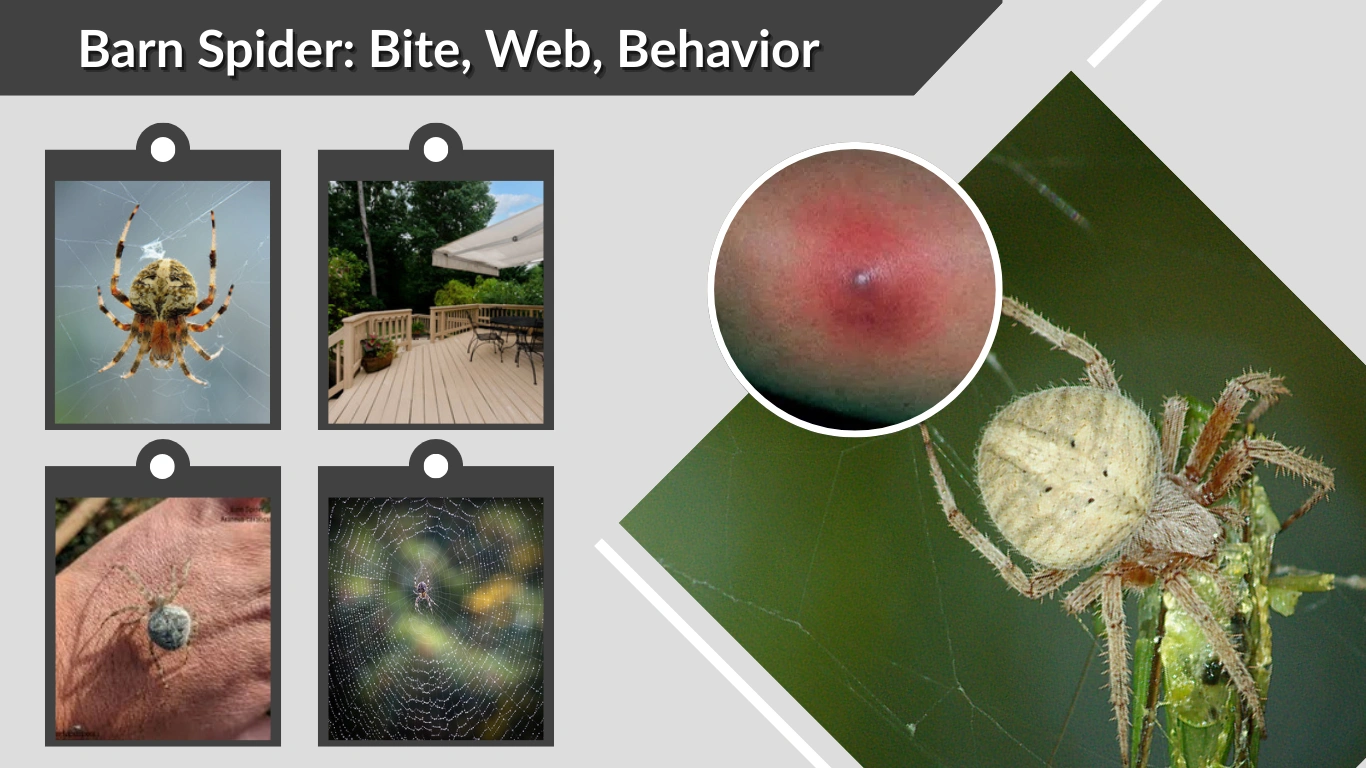
The barn spider is a large orb-weaving spider commonly found in barns, sheds, garages, and around outdoor structures. Known for its impressive circular web and nighttime activity, this spider often catches the attention of homeowners and farmers alike. While its size can seem intimidating, the barn spider is generally harmless and plays an important role in controlling flying insects. In this guide, you’ll learn essential barn spider facts, including details about its web, habitat, behavior, lifespan, and whether a barn spider bite is dangerous.
What Is a Barn Spider?
Scientific Classification
The barn spider most commonly refers to Araneus cavaticus, a species in the orb-weaver family Araneidae. Orb-weavers are known for spinning large, symmetrical circular webs that are both sticky and strong. This family includes many familiar garden spiders that appear during late summer and early fall.
Like other orb-weavers, barn spiders rely on their web rather than active hunting to catch prey. Their silk is remarkably durable and flexible, allowing them to trap insects much larger than themselves.
Why Is It Called a Barn Spider?
The name “barn spider” comes from its frequent presence in barns, stables, and rural buildings. These quiet, sheltered structures provide ideal conditions for web-building. High rafters, wooden beams, and open entryways allow the spider to anchor its web securely while giving it access to flying insects.
Because barns often attract flies, moths, and beetles, they offer a steady food supply. For this reason, barn spiders are especially common in agricultural and rural environments.
Where Are Barn Spiders Found?
Barn spiders are widely distributed across North America. They thrive in:
- Barns and stables
- Sheds and garages
- Porches and decks
- Attics and rafters
- Gardens and wooded edges
They are most noticeable from late summer through fall, when adult females reach full size and build large, visible webs. During colder months, their population declines as part of their seasonal life cycle.
Barn Spider Web

What Does a Barn Spider Web Look Like?
A barn spider web is a classic orb-shaped web. It features:
- A large circular frame
- Radiating support strands
- Sticky spiral threads
- A central resting point
These webs are often between two and three feet wide, making them some of the most noticeable spider webs around homes and farms.
The silk is both strong and elastic, allowing it to absorb the impact of flying insects without breaking easily.
Where Do They Build Their Webs?
Barn spiders prefer elevated, sheltered areas that provide structural support and easy access to insects. Common web locations include:
- Barn rafters
- Shed ceilings
- Garage corners
- Porch beams
- Between tree branches
- Near outdoor lights
Outdoor lights attract flying insects at night, which in turn attract barn spiders. This is why their webs are often seen near illuminated areas.
Do Barn Spiders Rebuild Their Webs?
Yes, barn spiders frequently repair or rebuild their webs. Many orb-weavers consume damaged silk and spin fresh threads. Web maintenance typically occurs at night when the spider is most active.
If a web becomes too damaged or unproductive, the spider may relocate and construct a new one nearby.
Barn Spider Habitat

Natural Habitat
In the wild, barn spiders are commonly found along forest edges, meadows, and farmlands. These areas provide abundant flying insects and sturdy vegetation for anchoring webs.
Human Structures
Barn spiders adapt well to human-made environments. Structures like barns, sheds, decks, and attics offer protection from wind and rain. The presence of lights and stored feed often increases insect activity, creating an ideal hunting ground.
Their ability to thrive in both natural and man-made settings makes them one of the more visible orb-weaving spiders.
Barn Spider Behavior

Understanding barn spider behavior can help reduce fear and confusion when you spot one in a web.
Hunting Behavior
Barn spiders are passive hunters. Instead of chasing prey, they rely entirely on their orb web. The spider usually waits in the center of the web or slightly off to the side, resting while monitoring vibrations.
When an insect becomes trapped:
- The spider senses vibrations through the silk
- It quickly moves toward the prey
- It wraps the insect tightly in silk
- It injects mild venom to immobilize it
This process happens quickly and efficiently, allowing the spider to secure its meal before the insect can escape.
Nocturnal Activity
Barn spiders are primarily nocturnal. They become active at dusk and remain active through the night. During this time, they:
- Repair or rebuild their webs
- Capture prey
- Feed
During the day, barn spiders often hide in nearby crevices, leaves, or corners. Some rest near the web but remain motionless to avoid attracting predators.
Defensive Behavior
Barn spiders are not aggressive. If disturbed, they typically:
- Drop down on a silk thread
- Retreat into hiding
- Shake their web rapidly to confuse predators
Biting is rare and usually happens only if the spider is accidentally pressed against the skin.
Barn Spider Bite

One of the most common concerns is whether a barn spider bite is dangerous.
Are Barn Spiders Venomous?
Yes, barn spiders are venomous, like most spiders. However, their venom is designed to subdue insects, not humans. They are not considered medically significant.
Their fangs are small, and they rarely attempt to bite unless directly threatened.
What Does a Barn Spider Bite Feel Like?
A barn spider bite is usually mild. Symptoms may include:
- Minor redness
- Slight swelling
- Mild itching or irritation
The discomfort is often compared to a small bee sting, though many bites cause very minimal pain. In most cases, symptoms fade within a few hours or days.
Treatment for a Barn Spider Bite
If bitten:
- Wash the area with soap and water.
- Apply a cold compress to reduce swelling.
- Use an over-the-counter antihistamine or hydrocortisone cream if itching develops.
Seek medical attention only if unusual symptoms or signs of an allergic reaction appear, which is rare.
Barn Spider Lifespan
The typical barn spider lifespan is about one year. Like many orb-weavers, they follow a seasonal life cycle.
Most barn spiders:
- Hatch in spring
- Grow through summer
- Mature in late summer
- Reproduce in early fall
- Die after the first frost
Because of this cycle, they are most noticeable in late summer and autumn when adult females are largest and most active.
Male vs Female Lifespan
Male barn spiders usually mature earlier than females. After reaching adulthood, males focus on finding a mate. Their lifespan is often shorter, and they may die shortly after mating.
Females typically live longer, as they must produce and protect egg sacs before cold weather arrives.
How to Identify a Barn Spider

Here are key identification features to help recognize a barn spider:
- Large, rounded abdomen
- Brown, orange, tan, or yellow coloration
- Hairy legs with darker banding
- Pale or white markings on the abdomen
- Builds a large circular orb web
- Active mainly at night
- Commonly found in barns, sheds, garages, or porch rafters
Because several orb-weaver species look similar, location and web size are often helpful clues for identification.
Are Barn Spiders Beneficial?
Despite their size, barn spiders are highly beneficial.
They help control populations of:
- Flies
- Mosquitoes
- Moths
- Beetles
In agricultural settings, this natural pest control can be especially valuable. Since they are non-aggressive and rarely bite, barn spiders are usually safe to leave undisturbed.
If their web is in an inconvenient spot, gently relocating the spider outdoors is often the best solution.
Barn Spider Facts
Here are some interesting barn spider facts that help explain why they’re so commonly noticed:
- Females are much larger than males. Adult females can grow over an inch long including their legs, while males are smaller and slimmer.
- They are mostly nocturnal. Barn spiders are most active at dusk and throughout the night.
- They build impressive orb webs. Their webs can span several feet in diameter.
- They are not aggressive. Barn spiders prefer retreat over confrontation.
- They are beneficial predators. They reduce populations of flies, mosquitoes, moths, and other pests.
- They have a seasonal life cycle. Most live for about one year.
Despite their size and hairy legs, barn spiders are generally calm and non-threatening toward humans.
FAQs
Are barn spiders dangerous to humans?
Barn spiders are not considered dangerous to humans. Although they are venomous, their venom is mild and intended for insects. Bites are rare and usually cause only minor irritation, redness, or slight swelling.
How big do barn spiders get?
Female barn spiders can grow over an inch long when including their legs, while males are smaller. Their large size and rounded abdomen often make them appear more intimidating than they actually are.
When do barn spiders lay eggs?
Barn spiders typically lay eggs in early fall before temperatures drop. The eggs are protected inside a silk egg sac, which remains sheltered through winter. Spiderlings hatch in spring when warmer weather returns.
Why do barn spiders build webs at night?
Barn spiders are nocturnal and build or repair their webs at dusk. Nighttime conditions reduce disturbance from predators and increase the likelihood of catching flying insects attracted to lights.
How can I safely remove a barn spider?
To remove one safely, place a container over the spider, slide cardboard underneath, and relocate it outdoors. Avoid direct contact to reduce the chance of a defensive bite.
Conclusion
The barn spider is a fascinating and beneficial orb-weaver commonly found in rural and suburban environments. With its large circular web, nocturnal behavior, and mild venom, it may look intimidating but is rarely harmful. Its one-year lifespan and important role in pest control make it a valuable part of many ecosystems. Understanding barn spider behavior, habitat, and bite symptoms can help you feel more comfortable sharing space with this helpful arachnid.
