
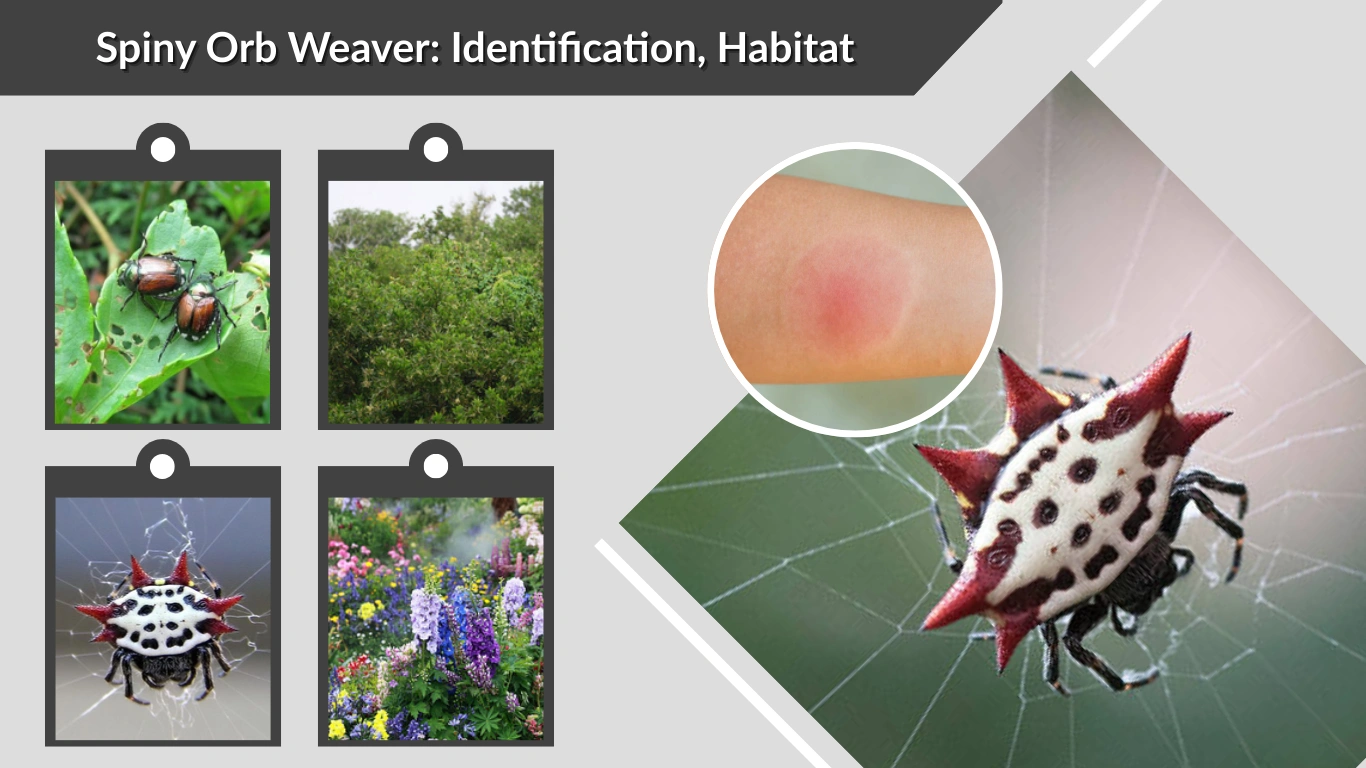
The spiny orb weaver (Gasteracantha cancriformis) is one of the most eye-catching spiders you might find in a garden. With its bright colors and hard, spiked abdomen, this small spider looks more like a tiny crab or a decorative jewel than a typical orb weaver. Despite its unusual appearance, it is harmless to humans and highly beneficial for controlling flying insects. In this guide, you’ll learn how to identify a spiny orb weaver, where it lives, what it eats, and whether you should be concerned about its bite.
What Is a Spiny Orb Weaver?
The spiny orb weaver is a species of orb-weaving spider belonging to the family Araneidae. Orb weavers are known for building classic circular webs that are both strong and sticky. The spiny orb weaver stands out within this family because of its flattened, armor-like abdomen covered in sharp-looking spines.
Scientific Classification
- Kingdom: Animalia
- Phylum: Arthropoda
- Class: Arachnida
- Order: Araneae
- Family: Araneidae
- Genus: Gasteracantha
- Species: Gasteracantha cancriformis
This species is closely related to other orb weavers, but its bold shape and coloration make it easy to distinguish from the more common garden orb weaver.
Why Is It Called “Spiny”?
The name “spiny orb weaver” comes from the six prominent spines that extend from its abdomen. These spikes are rigid and give the spider a star-like or crab-like appearance. The abdomen itself is hard and flattened, almost like a shield.
Interestingly, the spines are not used for attacking prey. Instead, they likely serve as a defense mechanism against predators such as birds and lizards. The sharp outline makes the spider harder to swallow and may discourage potential threats.
Other Common Names
Depending on the region, this spider may also be called:
- Spiny-backed orb weaver
- Crab-like orb weaver
- Jewel spider
The “crab-like” nickname refers to its wide body shape, which resembles a small crab more than a traditional spider.
Physical Characteristics and Identification

Correctly identifying a spiny orb weaver is fairly easy due to its unusual appearance.
Size and Gender Differences
Female spiny orb weavers are significantly larger than males. A female typically measures about 5–9 mm in body length, not including the spines. Males are much smaller and less noticeable.
Most of the spiders people see in gardens are females. Males are rarely observed because of their small size and more secretive behavior.
Color Variations
One of the most fascinating features of the spiny orb weaver spider is its wide range of color variations. The abdomen may appear:
- White with black spots
- Bright yellow
- Orange or red
- Black with white markings
The spines are usually darker in color, often black or deep red. These bold color patterns may serve as a warning signal to predators, suggesting the spider is not worth attacking.
Color variation can depend on geographic location, which means spiny orb weavers in Florida may look slightly different from those in Texas or Central America.
Web Structure
Like other orb weavers, the spiny orb weaver builds a classic circular web. The web consists of:
- Radial threads extending from the center
- Sticky spiral threads designed to trap insects
These webs are usually built in open areas between shrubs, small trees, or garden plants. They are often positioned at eye level, which is why people frequently walk into them by accident.
The spider typically sits in the center of the web during the day, waiting for vibrations that signal trapped prey.
Habitat and Geographic Distribution

Where Do Spiny Orb Weavers Live?
The spiny orb weaver is commonly found in:
- The southeastern United States (especially Florida and Texas)
- Central America
- South America
- The Caribbean
In the U.S., they are especially abundant in warm, humid climates.
Preferred Environment
Spiny orb weavers prefer areas with plenty of flying insects. You will often find them in:
- Gardens
- Forest edges
- Shrubbery
- Backyard landscapes
- Citrus groves
They thrive in environments where plants provide strong anchor points for web construction. Because they rely on flying insects, they are more common in areas with healthy insect populations.
Seasonal Activity
These spiders are most active during warm months. In the United States, they typically appear in late spring and remain visible through early fall.
By late summer, their webs become more noticeable, and this is when many homeowners first spot them. As temperatures drop, their numbers decline.
Diet and Hunting Behavior

The spiny orb weaver plays an important role in controlling insect populations.
What Do Spiny Orb Weavers Eat?
Their diet consists mainly of small flying insects, including:
- Flies
- Mosquitoes
- Beetles
- Moths
- Gnats
Because they feed on mosquitoes and flies, they are considered highly beneficial garden spiders.
How They Catch Their Prey
The hunting strategy of a spiny orb weaver is simple but effective. The spider remains in the center of its web, waiting for vibrations caused by trapped insects. Once an insect becomes entangled in the sticky spiral threads, the spider quickly moves toward it.
It then injects venom to immobilize the prey. The venom is mild and designed to subdue small insects rather than harm large animals. After immobilizing the insect, the spider may wrap it in silk before feeding.
This passive hunting method allows the spiny orb weaver to conserve energy while efficiently capturing food.
Are Spiny Orb Weavers Dangerous?
One of the most common questions people ask is whether the spiny orb weaver is dangerous. Because of its sharp-looking spines and bright colors, it may appear intimidating. However, this spider is not considered harmful to humans.
Venomous vs. Poisonous – What’s the Difference?
Spiny orb weavers are venomous, not poisonous. This means they inject venom through a bite rather than causing harm when touched or eaten. Nearly all spiders possess venom, but most species — including this one — have venom that is too mild to cause serious problems for humans.
Their venom is designed specifically to immobilize small insects caught in their web.
Spiny Orb Weaver Bite Symptoms

Bites from a spiny orb weaver are extremely rare. These spiders are not aggressive and will typically drop from their web or retreat if disturbed. Most bites occur only if the spider is accidentally pressed against skin.
If a bite does happen, symptoms may include:
- Mild pain or stinging
- Redness
- Slight swelling
- Minor irritation
The sensation is often compared to a bee sting and usually resolves within a short time without medical treatment.
When to Seek Medical Attention
Although reactions are generally mild, medical attention may be necessary if:
- Severe swelling occurs
- Symptoms worsen instead of improving
- Signs of an allergic reaction appear (such as difficulty breathing or hives)
For most people, simple cleaning of the area and applying a cold compress is sufficient.
Life Cycle and Reproduction
Like many garden spiders, the spiny orb weaver has a relatively short life cycle.
Mating Behavior
Male spiny orb weavers are much smaller than females. During mating season, a male carefully approaches the female’s web to avoid being mistaken for prey. In some spider species, males risk being eaten after mating, though this behavior is less commonly observed with spiny orb weavers.
Because males are small and less colorful, they are rarely noticed by people.
Egg Sac Development
After mating, the female produces one or more egg sacs. These sacs are typically placed on nearby foliage rather than directly in the web. The egg sac protects the developing spiderlings from predators and environmental conditions.
Each sac can contain hundreds of eggs.
Spiderlings and Growth
Spiderlings hatch within a few weeks, depending on temperature. After emerging, they may disperse by a process known as “ballooning,” where they release silk threads that catch the wind and carry them to new locations.
Spiny orb weavers typically live for about one year. In colder regions, most adults die off as temperatures drop, and the next generation emerges the following season.
Spiny Orb Weaver vs. Similar Spiders

Because of its unusual appearance, the spiny orb weaver is often confused with other spiders.
Spiny Orb Weaver vs. Crab Spider
Crab spiders do not build orb webs. Instead, they actively hunt and ambush prey on flowers or leaves. While both spiders may have a crab-like body shape, the key difference is web-building behavior.
If you see a circular web, you are likely looking at a spiny orb weaver rather than a crab spider.
Spiny Orb Weaver vs. Garden Orb Weaver
Garden orb weavers are typically larger and lack the rigid spines found on Gasteracantha cancriformis. Their bodies are more rounded and less flattened.
Both species build circular webs and are beneficial for controlling insect populations.
Interesting Facts About the Spiny Orb Weaver
- The hard, flattened abdomen acts like armor, helping protect the spider from predators.
- Bright coloration may serve as a warning or deterrent signal.
- Females are far more visible than males due to their larger size and vibrant colors.
- Orb webs are often rebuilt regularly to maintain strength and effectiveness.
- Despite their intimidating appearance, these spiders are shy and prefer avoiding contact with humans.
Should You Remove a Spiny Orb Weaver From Your Garden?
In most cases, removal is unnecessary. Spiny orb weavers provide natural pest control by reducing populations of flies, mosquitoes, and other small insects.
If a web is built in a high-traffic area, you can gently remove it with a stick or relocate the spider using a container. Avoid direct handling to prevent accidental bites.
Unless they are causing a significant inconvenience, allowing them to remain in your garden can benefit your outdoor environment.
FAQs
Are spiny orb weavers harmful to humans?
No, spiny orb weavers are not considered harmful to humans. They are non-aggressive and rarely bite. Even if a bite occurs, symptoms are typically mild and short-lived.
Can a spiny orb weaver bite you?
Yes, but bites are uncommon and usually happen only if the spider is pressed against skin. The bite is mild and comparable to a small insect sting.
What does a spiny orb weaver eat?
They primarily eat small flying insects such as mosquitoes, flies, beetles, and moths. This makes them beneficial for gardens and outdoor spaces.
Where do spiny orb weavers live?
They are commonly found in warm regions, including the southeastern United States, Central America, South America, and the Caribbean. They prefer gardens, shrubs, and wooded areas.
How long do spiny orb weavers live?
Most spiny orb weavers live for about one year. Adults are most visible during warm months, and new generations hatch from egg sacs each season.
Conclusion
The spiny orb weaver is a fascinating and beneficial garden spider known for its bold colors and distinctive spines. Although its appearance may seem intimidating, it poses little threat to humans and plays an important role in controlling insect populations. By understanding its habits, habitat, and life cycle, you can better appreciate this unique species. Rather than fearing the spiny orb weaver, consider it a helpful and harmless part of your local ecosystem.
