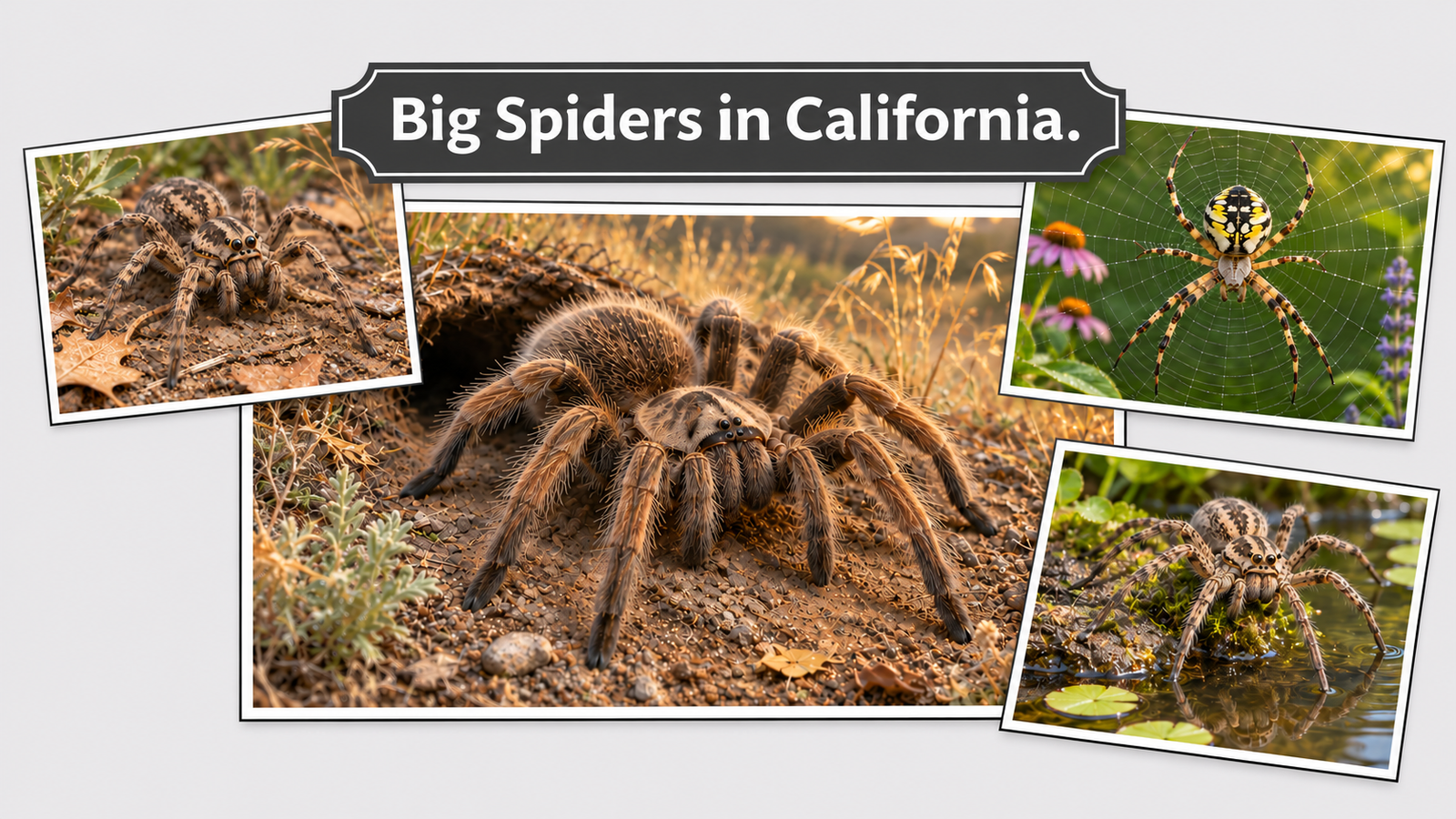
California has several large-looking spiders, from hairy tarantulas in dry habitats to fast-running wolf spiders near homes and gardens. Some have bodies around 1 to 2 inches long, while others look large mainly because of their long legs. A spider’s size can be startling, but most large California spiders avoid people and are not considered medically dangerous. This guide compares five large spiders found in the state, explains where they live, and shares what to do if you find one indoors.
How big are California’s largest spiders?
California’s largest spiders include tarantulas, wolf spiders, fishing spiders, and some large web-building species. Tarantulas are especially bulky, with bodies that can reach about 1 to 2 inches long. Long-legged spiders may span several inches even when their bodies are much smaller.
Body length versus leg span
Body length measures a spider from the front of its body to the end of its abdomen. It does not include the legs. Leg span measures the distance between the tips of opposite legs when they are extended.
This distinction explains why size descriptions can seem inconsistent. A spider may be described as 2 inches long in body length, but appear 4 or 5 inches wide with its legs spread. When comparing species, check which measurement is being used.
| Spider | What makes it look large | Typical places to find it |
|---|---|---|
| California tarantula | Thick, hairy body and sturdy legs | Dry habitats, foothills, and open land |
| Wolf spider | Stocky body and quick movement | Yards, gardens, fields, and homes |
| Fishing spider | Long legs and broad stance | Ponds, streams, and damp areas |
| Orb-weaver | Large circular web and visible abdomen | Gardens, shrubs, and outdoor spaces |
| Huntsman or giant crab spider | Flattened body and long legs | Mostly occasional finds in warmer areas |
Why a spider may look larger
A spider’s posture changes its apparent size. Long-legged spiders hold their legs out to the sides, creating a wide outline. Dark markings, thick hairs, and a pale background can also make a spider stand out. A spider photographed close to a camera may look bigger than it is.
1. California tarantulas
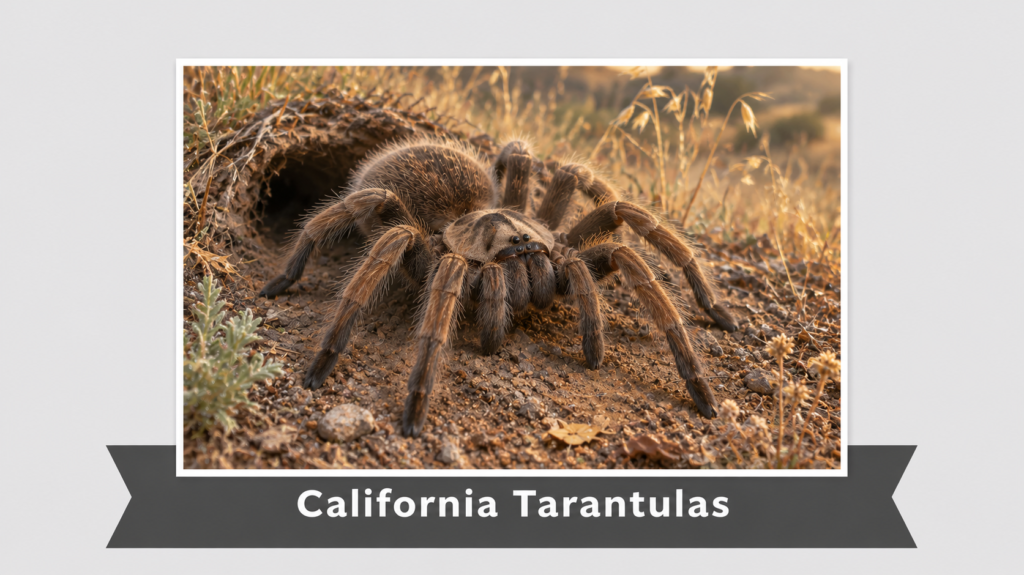
Tarantulas are among the largest and most recognizable spiders in California. They have thick, hairy bodies and sturdy legs. Adult tarantulas can have a body length of roughly 1 to 2 inches, making them look much heavier than many other spiders of similar leg span.
Where tarantulas live
California tarantulas are found in a range of dry and open habitats, including grasslands, foothills, and areas with loose soil. They shelter in burrows or other protected spaces during the day and become more active at night. In some areas, people may see males wandering during mating season as they search for females.
Tarantulas are not usually household spiders. If one turns up near a home, it has likely wandered through the yard rather than established itself indoors. Their large size and noticeable hair can make them seem threatening, but they generally avoid people.
Are California tarantulas dangerous?
California tarantulas are not considered dangerous to people. They may bite if grabbed or cornered, and their hairs can irritate skin or eyes if they are disturbed. Avoid handling one, especially with bare hands. If you find a tarantula in your yard, giving it space is usually the simplest response.
2. Wolf spiders
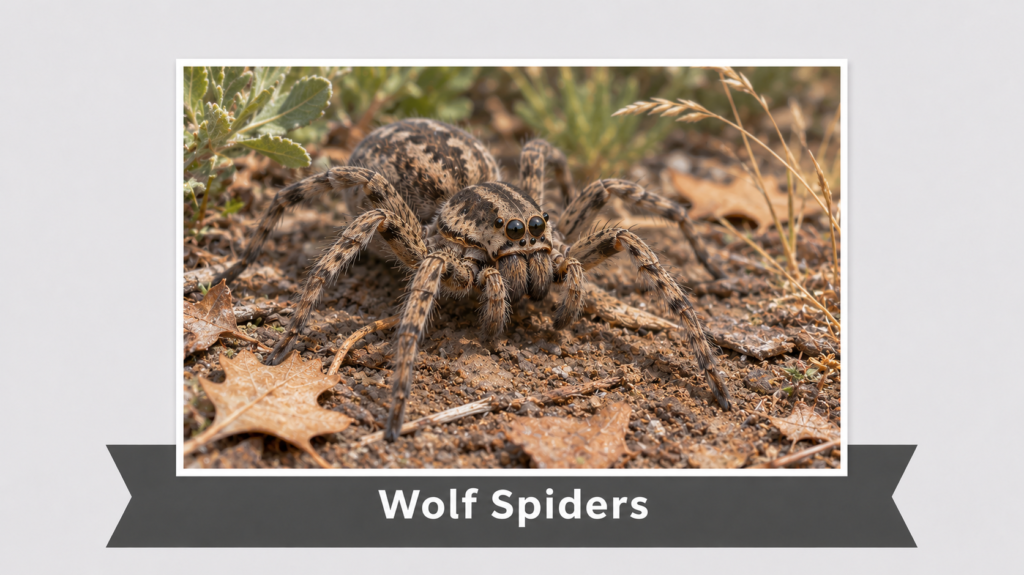
Wolf spiders are active hunters rather than web-builders. They run along the ground to find insects, and their speed can make them more startling than a spider sitting quietly in a web. Some California wolf spiders are large and hairy enough to be mistaken for tarantulas.
How to recognize a wolf spider
Wolf spiders are generally brown, gray, or patterned in darker colors. They have sturdy legs and a compact, hairy body. Unlike web-building spiders, they do not use a large web to catch prey. Some hide in burrows or under objects, while others move through gardens and yards.
Wolf spiders may wander inside while searching for prey or shelter. They are more likely to be found near ground level, such as in garages, basements, or other quiet spaces. A single wolf spider indoors does not necessarily indicate an infestation.
What wolf spiders eat
Wolf spiders help control insects by catching them directly. Their prey can include flies, crickets, and other small arthropods. They normally avoid people and may try to escape when approached. Like other spiders, they can bite if handled or trapped, so it is best not to pick one up.
3. Fishing spiders
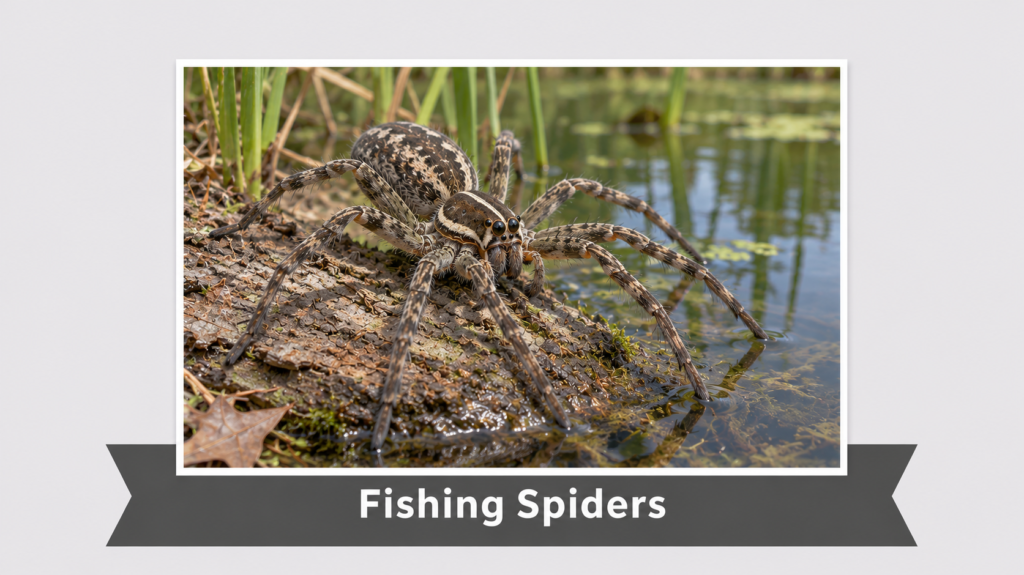
Fishing spiders are large, long-legged hunters often associated with water. Some species can move across the surface of ponds or streams and hunt aquatic insects. Their wide stance and ability to move quickly can make them look larger than their body length suggests.
Where they are found
Look for fishing spiders near ponds, streams, marshes, and other damp habitats. They may rest on rocks, docks, or vegetation close to the water. Some fishing spiders can also be found away from shore, especially in wooded places or near buildings.
A fishing spider that wanders indoors is usually there by accident. It may enter a garage or basement while moving through the surrounding habitat. Fishing spiders are not generally aggressive, but avoid handling them because any spider may bite when it feels threatened.
4. Large orb-weaving spiders
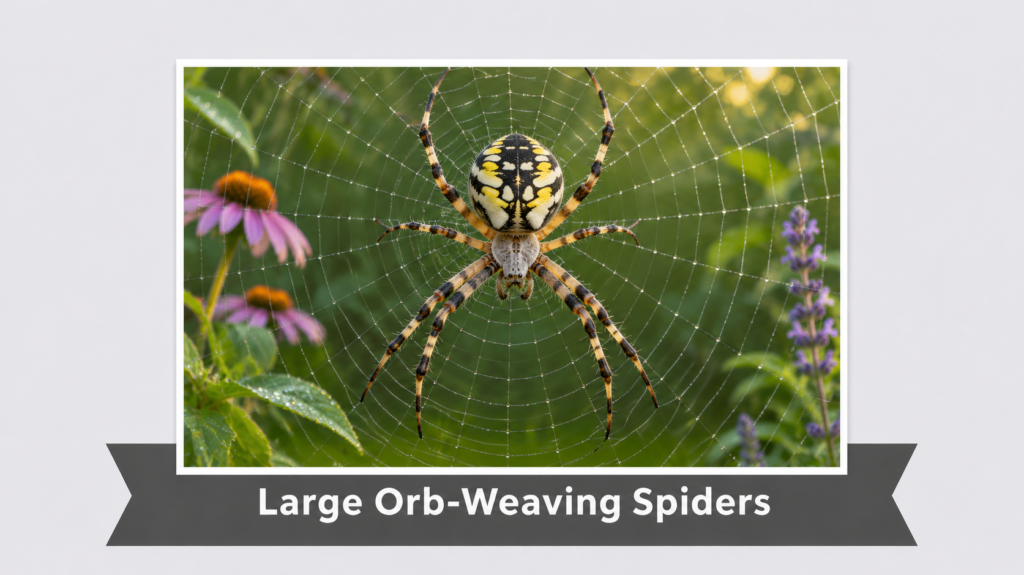
Orb-weavers build circular webs that can be much more noticeable than the spider itself. Some California garden orb-weavers are large and colorful, with a broad abdomen and long legs. Their webs may stretch across shrubs, fences, or garden paths.
Where to spot them
Check gardens, bushes, tall grass, and other areas where flying insects are common. Many orb-weavers stay near the center of the web or hide nearby during the day. The web can make a spider appear especially large when it is silhouetted against sunlight.
Orb-weavers are generally not interested in people. If a web crosses a walkway, you can avoid it or carefully remove the web from the path. The spider may rebuild elsewhere if the location still offers good support and prey.
5. Huntsman and giant crab spiders
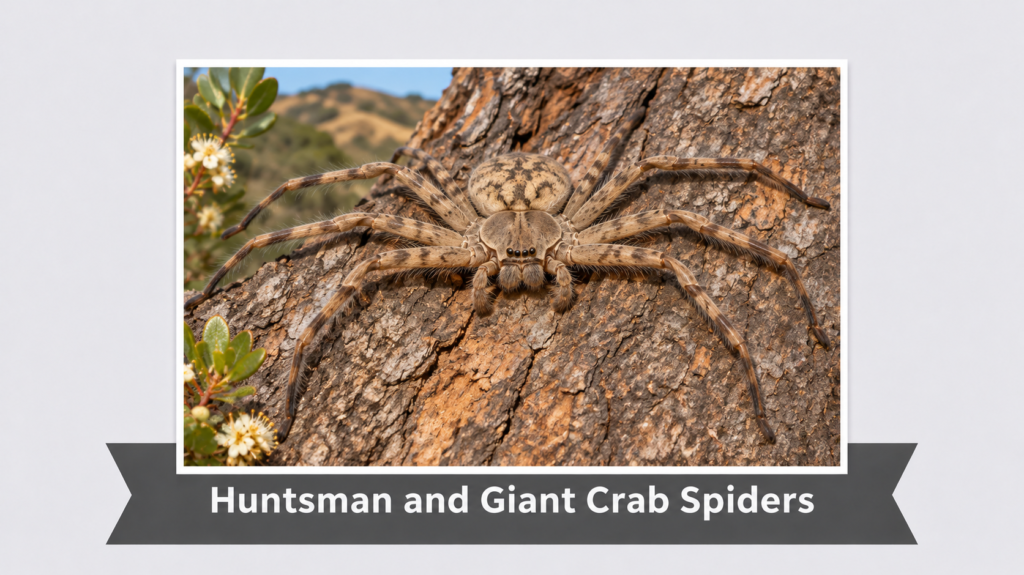
Huntsman spiders, also called giant crab spiders, have long legs and flattened bodies. Their legs extend sideways, giving them a crab-like appearance. The group includes very large spiders in other parts of the world, but huntsman spiders are not among the most commonly encountered spiders in California.
Some huntsman spiders have been found in warmer parts of the state, including Southern California, but they are occasional rather than typical household spiders. Large, fast-moving spiders found indoors may also be wolf spiders or other local species, so size alone is not enough for identification.
Why they can be confused with other spiders
Huntsman spiders, wolf spiders, and fishing spiders can all be large and fast. A photo may not show enough detail to identify one confidently. Body shape, leg posture, markings, location, and behavior can all help distinguish them.
If you see an unfamiliar spider, take a photo from a safe distance rather than trying to catch it by hand. An expert may be able to identify it from the image.
Why large spiders enter California homes
Most large spiders found indoors have wandered in from outside. A garage, shed, basement, or storage area may provide shelter, while insects inside can attract hunting spiders. Open doors, gaps under doors, and damaged screens make entry easier.
- Nearby habitat: Homes near gardens, open land, or foothills may see more wandering spiders.
- Shelter: Cardboard boxes, storage piles, and quiet corners offer hiding places.
- Prey: Spiders may follow insects that have entered the building.
- Seasonal movement: Some spiders become more noticeable when adults roam in search of mates.
Finding one spider does not automatically mean there are many more inside. Most large hunting spiders do not build a household infestation. Reducing clutter, repairing screens, sealing gaps, and limiting indoor insects can help reduce encounters.
Are big spiders in California dangerous?
Most large California spiders are not considered dangerous to people. Tarantulas, wolf spiders, and orb-weavers generally avoid people and bite only if they are threatened or handled. A bite may cause local pain or irritation, but size does not tell you how serious a spider’s bite is.
The western black widow is more medically important than most large spiders in California, even though it is not especially large. Adult females are shiny black and often have a red or orange hourglass mark underneath the abdomen. They tend to stay in sheltered, undisturbed places such as wood piles, sheds, and garages.
What to do if you find a spider
If you find a large spider indoors, keep a little distance and let it move away if possible. If you want it outside, use a container and stiff paper to guide it out without touching it. Avoid handling unfamiliar spiders, even if they appear slow or inactive.
If someone is bitten and develops severe pain, spreading swelling, difficulty breathing, or other concerning symptoms, seek medical advice. A photo of the spider taken from a safe distance may help with identification.
FAQs
What is the biggest spider in California?
California tarantulas are among the largest spiders in the state by body size. Their bodies can reach roughly 1 to 2 inches long. Some wolf spiders and fishing spiders also look large because of their sturdy bodies or long legs.
Are tarantulas common in California?
Tarantulas live in parts of California, especially in dry, open habitats. They are not typically found living inside homes. People are more likely to notice a wandering male outdoors during the period when males search for females.
Are wolf spiders common in California homes?
Wolf spiders sometimes enter homes while searching for prey or shelter. They may be found in garages, basements, or other quiet areas, but seeing one does not necessarily mean there is an infestation. They usually come from outdoor habitats nearby.
Are huntsman spiders common in California?
Huntsman spiders are not among the most commonly encountered California spiders. Occasional finds have been reported in warmer areas, but a large spider indoors is more likely to be a local wolf spider or another common species.
Should I kill a large spider in my house?
Usually, there is no need to kill a large spider. You can leave it alone or move it outside using a container and stiff paper. Avoid touching it directly, and seek medical advice if a bite causes severe or unusual symptoms.
