
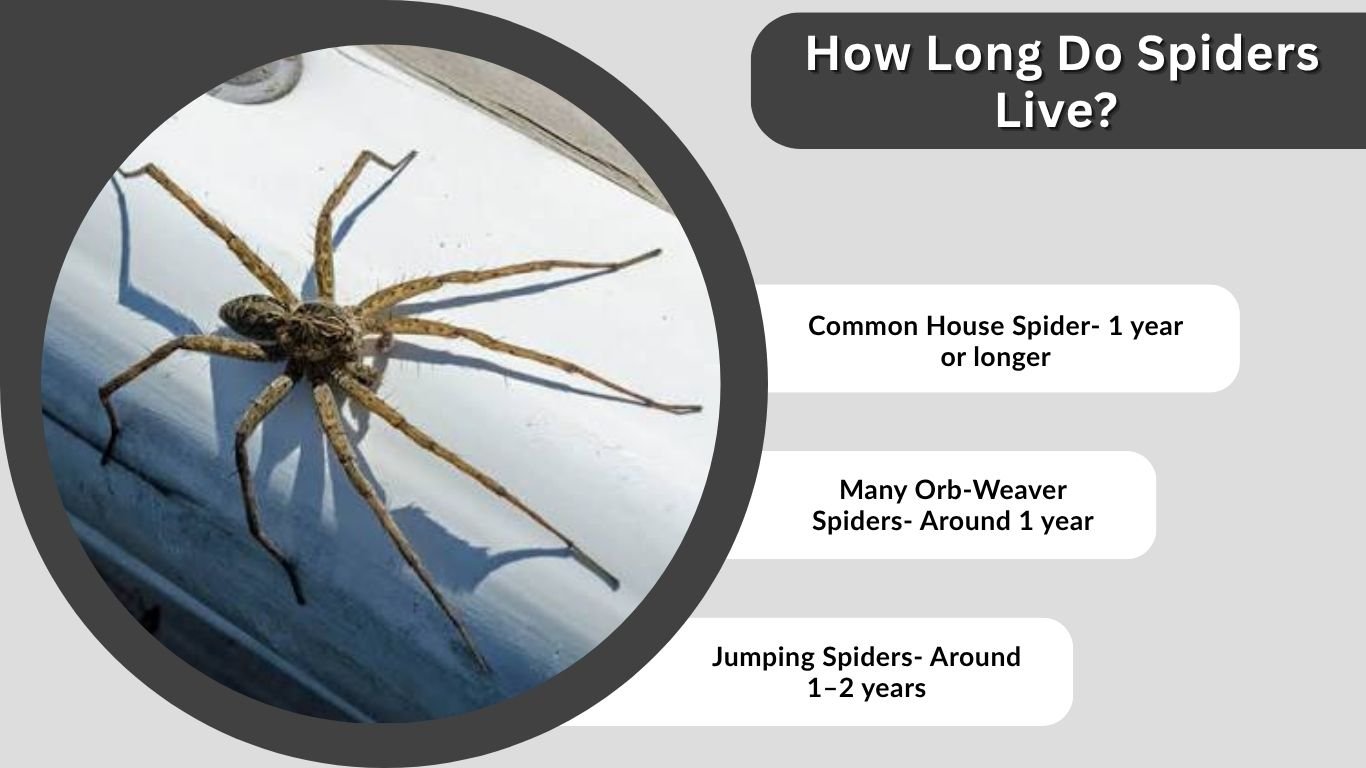
Have you ever wondered how long spiders live in your house or survive without food? While some tiny spiders live for less than a year, others can survive for decades. Their lifespan depends on species, habitat, food availability, and environmental conditions. From common house spiders to long-lived tarantulas, this guide explains spider lifespans, survival without food or water, and the factors that influence how long these eight-legged creatures live.
How Long Do Spiders Live on Average?
Most common spiders live for approximately one to two years, although their lifespans vary significantly between species. Many outdoor spiders complete their life cycle within a single year, while some house spiders survive longer in protected environments. Larger species, particularly female tarantulas, may live for several decades under favorable conditions.
Average Lifespan of Different Spiders
| Spider Type | Approximate Lifespan |
| Common House Spider | 1 year or longer |
| Many Orb-Weaver Spiders | Around 1 year |
| Jumping Spiders | Around 1–2 years |
| Wolf Spiders | Around 1–2 years, sometimes longer |
| Brown Recluse Spider | 2–4 years on average |
| Male Tarantulas | About 3–10 years, depending on species |
| Female Tarantulas | 10–30+ years, depending on species |
These are general estimates rather than fixed limits. For example, the Missouri Department of Conservation notes that common house spiders may live beyond one year indoors, while zoological institutions document tarantula species with female lifespans exceeding 20 years.
How Long Do Spiders Live Without Food?
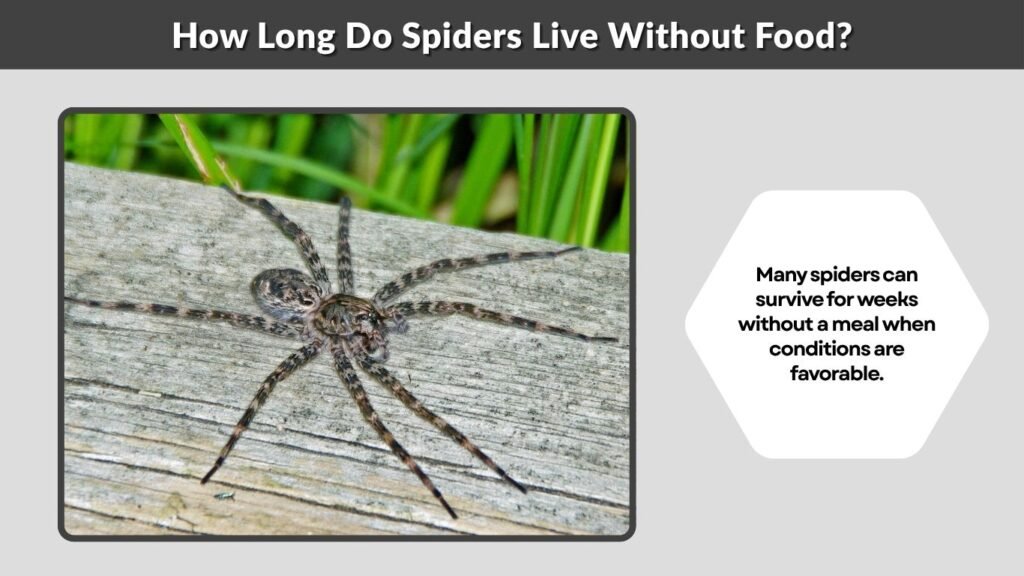
Spiders can survive surprisingly long periods without eating because many have relatively low energy requirements. Their survival depends on species, body size, temperature, activity level, and access to water. Some survive several weeks without prey, while particularly resilient species can endure months of fasting.
How Long Can Spiders Go Without Eating?
Many spiders can survive for weeks without a meal when conditions are favorable. Some species have much greater endurance.
For example, Alabama Cooperative Extension reports that adult female black widows can survive an average of about 90 days without food. Brown recluse spiders have demonstrated the ability to survive 6–12 months without feeding under favorable conditions.
These examples do not establish a universal survival period for every spider.
How Long Do Spiders Live Without Food or Water?
Without both food and water, survival is generally more difficult. Spiders lose moisture through evaporation and other biological processes, making dehydration an important concern.
However, their tolerance varies greatly. University of Florida researchers documented a captive brown recluse surviving more than six months without food or water. Such exceptional cases should not be treated as normal survival expectations for household spiders.
How Long Do Spiders Live in a House?
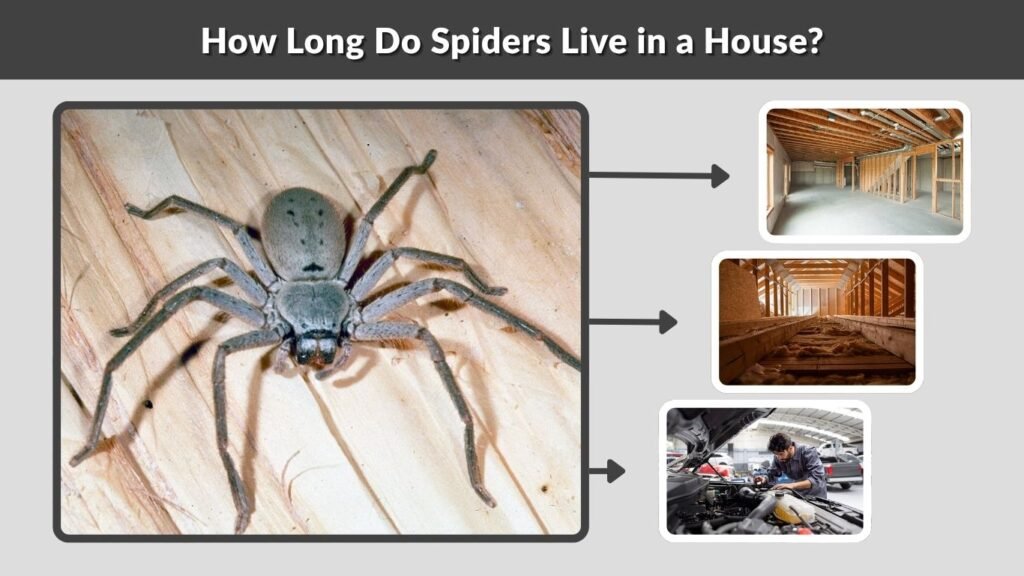
House spiders can live for a year or longer, depending on the species and indoor conditions. Homes often provide relatively stable temperatures, protected hiding places, and access to insects. These conditions may allow some spiders to survive longer than they would in exposed outdoor environments.
How Long Do Spiders Live Indoors?
Indoor spiders commonly inhabit basements, attics, garages, closets, and undisturbed corners. They may remain in these locations for extended periods when sufficient prey is available.
The common house spider (Parasteatoda tepidariorum) is known to survive for a year or more after reaching maturity. Protected indoor environments can support adults throughout different seasons.
How Long Can House Spiders Live Without Food?
House spiders may survive for weeks without catching prey, but their tolerance depends on the species and environmental conditions.
A spider living near windows or lights may encounter insects regularly. However, a spider trapped inside an empty room could eventually face starvation or dehydration. Access to moisture is particularly important during prolonged fasting.
How Long Do Spiders Live Outside?
Outdoor spider lifespans are strongly influenced by weather, predators, and seasonal changes. Many species in temperate climates complete their life cycles within one year. Others survive multiple seasons by hiding underground, sheltering beneath bark, or remaining protected during unfavorable conditions.
Do Spiders Survive Winter?
Yes, some spiders survive winter as adults or juveniles, while others overwinter as eggs inside protective silk sacs.
For example, grass spider adults generally do not survive winter, but their eggs remain protected until spring. Black widow spiders, by contrast, may survive winter in sheltered locations.
How Long Do Spiders Live in a Car?
There is no fixed lifespan for spiders living inside vehicles. A spider may survive for days, weeks, or potentially longer when moisture, suitable temperatures, and insects are available.
However, parked vehicles can experience extreme temperatures. Hot summer conditions and freezing winter weather may significantly reduce spider survival, especially when they cannot escape.
How Long Do Spiders Live in Captivity?
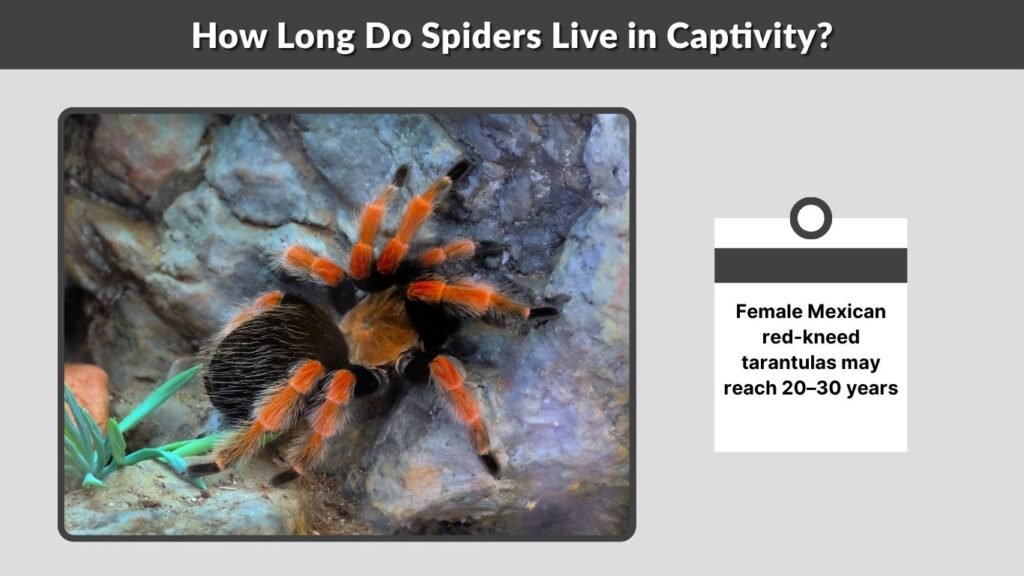
Spiders kept in suitable captive environments may survive longer than wild individuals because they receive consistent food, appropriate humidity, and protection from predators. However, lifespan still depends heavily on the species, sex, and quality of care.
Why Do Female Tarantulas Live Longer?
Female tarantulas generally live significantly longer than males. Female Mexican red-kneed tarantulas may reach 20–30 years, while males commonly live for a much shorter period.
Males typically stop molting after maturity and devote much of their remaining lives to finding mates. Many females continue growing and reproducing for years.
What Factors Affect a Spider’s Lifespan?
A spider’s lifespan is determined by a combination of biological and environmental factors. Even individuals belonging to the same species may live for different lengths of time depending on their surroundings.
Main Factors That Influence Survival
- Species: Some spiders naturally live only months, while others survive decades.
- Food Availability: Reliable prey supports growth, reproduction, and survival.
- Water and Humidity: Adequate moisture helps prevent dehydration.
- Temperature: Extreme heat and cold can increase mortality.
- Predators: Birds, reptiles, insects, and other spiders may shorten survival.
- Sex: Females often live longer than males, particularly among tarantulas.
- Habitat: Protected environments can reduce exposure to predators and severe weather.
Do Spiders Die After Laying Eggs?
Some female spiders die shortly after producing their final egg sac, but this is not universal. Yellow garden spiders generally die after laying eggs in autumn, while common house spiders can produce multiple egg sacs during their lifetime.
The relationship between reproduction and lifespan therefore varies substantially between species.
FAQs
1. How Long Do Small Spiders Live?
Many small spiders live approximately one year, although some species survive for only a few months and others live longer. Food availability, habitat, and environmental conditions influence their lifespan.
2. How Long Do Daddy Long Legs Spiders Live?
Cellar spiders, which are often called daddy longlegs spiders, may live for roughly one to three years, depending on the species and conditions. True daddy longlegs, also called harvestmen, are different arachnids and generally have shorter lifespans.
3. How Long Do Spiders Live in Their Webs?
Web-building spiders may remain in the same location for weeks or months when prey is plentiful. However, the lifespan of a spider is not determined by how long it stays in one web. Some abandon their webs and construct new ones elsewhere.
4. How Long Do Spiders Live Underwater?
Most spiders cannot remain submerged indefinitely. Some species can temporarily trap air around their bodies, allowing them to survive underwater for limited periods. The diving bell spider is exceptional because it lives underwater using an air-filled silk retreat.
5. How Long Do Spiders Live Without Oxygen?
Spiders need oxygen to survive, but some tolerate temporary oxygen shortages better than others. Survival depends on species, temperature, metabolic activity, and whether air remains trapped around the body. There is no single reliable timeframe for all spiders.
