
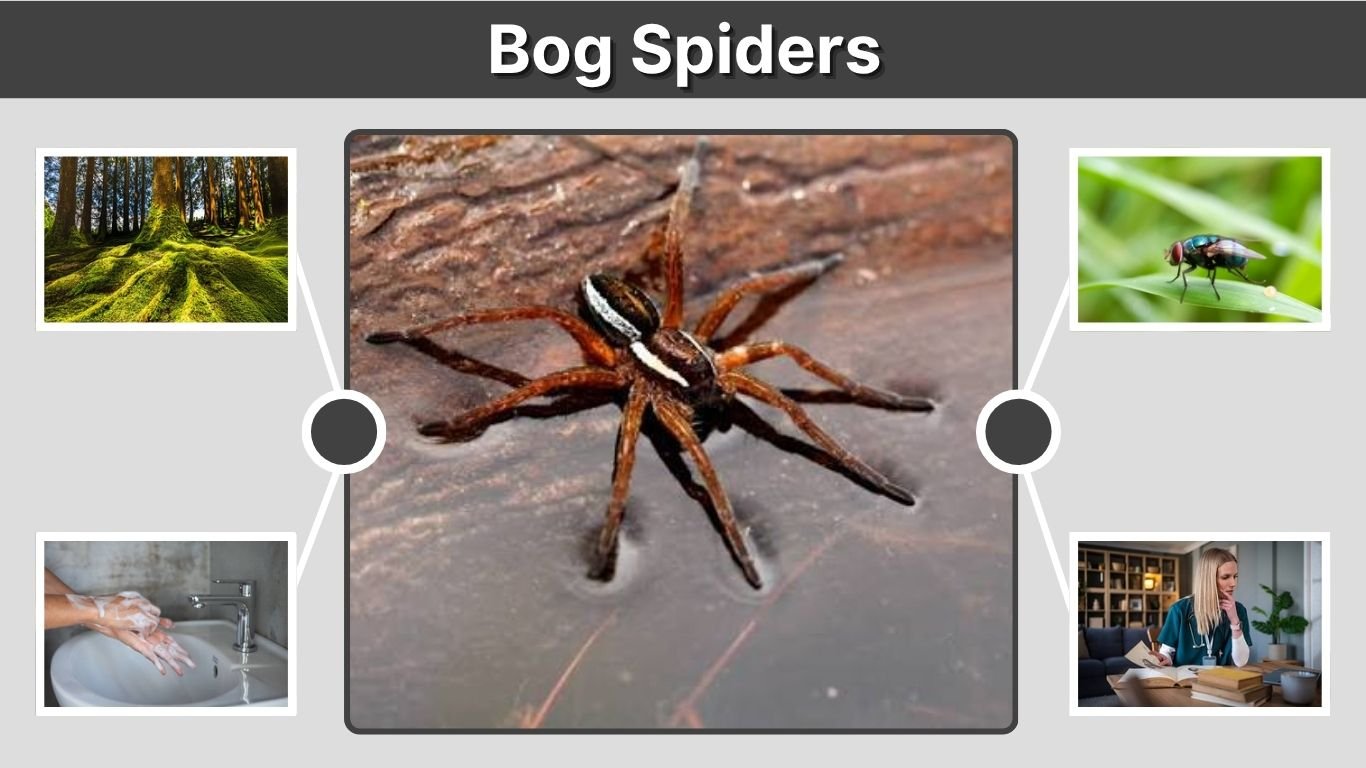
Have you ever wondered why thousands of spiders are supposedly hiding in cranberry bogs? These fascinating creatures have gained attention through viral videos showing spiders crawling among floating cranberries during harvest. But are bog spiders dangerous, and do they really appear in such enormous numbers? From their appearance and size to their hunting behavior, this guide explores cranberry bog spiders, their habitats, feeding habits, and the truth behind their frightening reputation.
What Are Bog Spiders?
Bog spiders are spiders that inhabit wetland environments, including cranberry bogs, marshes, and areas with dense vegetation. The name does not identify a single species. Instead, it describes several spider groups that live in these habitats. Wolf spiders are among the best-known examples associated with North American cranberry fields.
Are Bog Spiders a Real Species?
Bog spiders are real, but the term is not an official scientific species name. Different species inhabit different wetland environments. In cranberry fields, wolf spiders are frequently discussed because they hunt among the low-growing plants and become more noticeable during harvesting.
Other spiders, including orb-weavers and nursery web spiders, may also inhabit wetlands and cranberry-growing areas.
Wolf Spiders in Cranberry Bogs
Wolf spiders belong to the family Lycosidae and are active hunters rather than traditional web-building predators. They move across soil, moss, and vegetation searching for insects.
Their excellent eyesight, fast movements, and strong legs help them survive in cranberry fields. Female wolf spiders are also recognizable for carrying egg sacs attached to their spinnerets and, after hatching, young spiderlings on their backs.
What Do Bog Spiders Look Like?
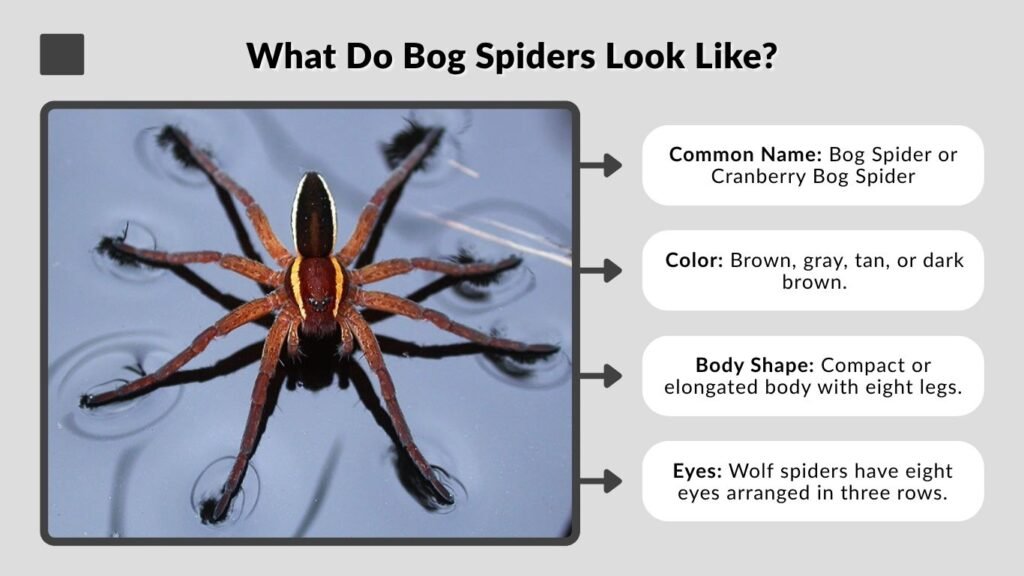
Cranberry bog spiders vary in appearance depending on their species. Many wolf spiders have brown or grayish bodies with darker stripes that provide camouflage among soil and plants. Their hairy legs and quick movements make them easy to notice when they emerge from dense vegetation.
Identification
- Common Name: Bog Spider or Cranberry Bog Spider
- Scientific Classification: Multiple species, including wolf spiders (family Lycosidae).
- Color: Brown, gray, tan, or dark brown.
- Body Shape: Compact or elongated body with eight legs.
- Eyes: Wolf spiders have eight eyes arranged in three rows.
- Legs: Strong, often hairy legs adapted for running.
- Web: Wolf spiders do not construct prey-catching webs.
- Habitat: Cranberry bogs, wetlands, marshes, and grassy fields.
How Big Are Bog Spiders?
Bog spider size depends on the species. Many wolf spiders have bodies measuring approximately 5–25 mm, while some larger species exceed 30 mm. Their extended legs make them appear considerably bigger.
Most cranberry bog spiders are not enormous. Viral videos sometimes exaggerate their size through close-up filming and camera angles. Large individuals may look intimidating but are typically much smaller than tarantulas.
Why Are There Spiders in Cranberry Bogs?
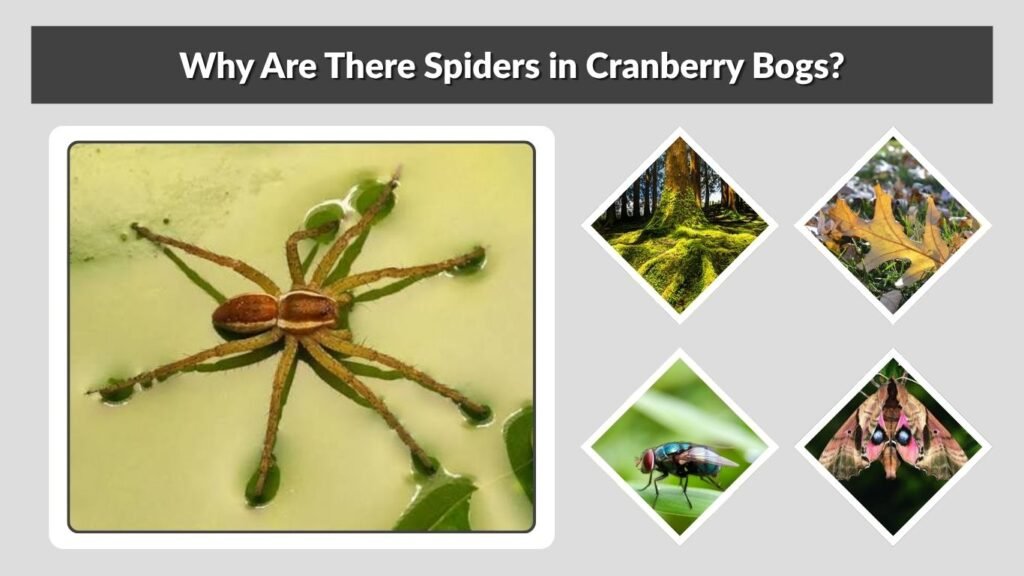
Cranberry bogs provide suitable living conditions for many spider species. Dense vegetation, moist soil, sheltered spaces, and abundant insects create opportunities for hunting and reproduction. Bog spiders live naturally in these environments throughout the growing season, making them an important part of the agricultural ecosystem.
Natural Habitat and Shelter
Cranberry bog spiders usually hide among vines, moss, fallen leaves, and surrounding vegetation. They prefer protected locations where they can avoid predators and search for prey.
Despite their association with water, many spend most of their lives on relatively dry ground. Commercial cranberry beds are generally drained during the growing season rather than permanently flooded.
What Do Bog Spiders Eat?
Bog spiders are carnivorous predators that primarily consume insects and other small arthropods. Their diet may include flies, beetles, moths, leafhoppers, and caterpillars.
Wolf spiders actively pursue prey instead of waiting inside webs. Their feeding habits can help suppress some insect populations that might otherwise damage cranberry plants.
What Happens to Spiders During Cranberry Harvest?
Cranberry harvesting creates unusual conditions for the spiders living among the vines. During wet harvesting, farmers temporarily flood the fields so ripe cranberries can float to the surface. As the water rises, ground-dwelling spiders search for higher surfaces and dry areas, making them more visible.
Why Do Cranberry Bog Spiders Float?
Bog spiders do not necessarily float alongside cranberries intentionally. When floodwater enters their habitat, spiders may climb onto vegetation, floating berries, or other surfaces to escape.
Some can move across the water’s surface, while others travel toward the edges of the flooded area. This natural escape behavior explains why spiders occasionally appear among harvested cranberries.
Cranberry Bog Spiders in Viral Videos
Videos showing wolf spiders crawling across cranberry bogs have attracted considerable attention online. However, claims that every bog contains enormous spider swarms are exaggerated.
Cranberry growers and university specialists have explained that spiders are normal inhabitants of agricultural fields. Wet harvesting can temporarily make them more visible without indicating an infestation.
Are Bog Spiders Dangerous?

Most bog spiders, including the wolf spiders commonly associated with cranberry fields, are not considered medically dangerous to humans. They generally prefer escaping rather than confronting people. Although their appearance can be frightening, they primarily hunt insects and have little reason to interact with humans.
Are Bog Spiders Poisonous or Venomous?
Wolf spiders are venomous, not poisonous. They use venom to immobilize insect prey, but their venom is not generally considered medically significant to humans.
A defensive bite may cause localized pain, redness, or swelling. Serious reactions are uncommon, and most symptoms resolve without complications.
What Should You Do if a Bog Spider Bites?
If a spider bites you, wash the affected area with soap and water. Apply a cold compress to reduce discomfort and swelling.
Avoid scratching the bite, and monitor for unusual symptoms. Seek medical attention if severe pain, breathing difficulties, widespread swelling, or signs of infection develop.
How Many Wolf Spiders Are in a Cranberry Bog?
There is no reliable universal number of wolf spiders living in a cranberry bog. Populations vary according to field size, vegetation, weather, insect availability, and agricultural management. A large field may support numerous spiders, but claims of thousands of spiders gathering around every harvest worker are not supported by available evidence.
Do Cranberry Farmers Release Wolf Spiders?
Cranberry farmers do not routinely release wolf spiders into fields to protect their crops. These spiders naturally inhabit suitable agricultural environments.
A 2026 University of Massachusetts Boston study documented diverse spider communities in cranberry bog environments, reinforcing their ecological importance.
FAQs
1. Are Cranberry Bog Spiders Real?
Yes, cranberry bog spiders are real spiders living in cranberry-growing environments. They are not a distinct species. Wolf spiders are among the commonly discussed spiders found in these agricultural habitats.
2. Do Bog Spiders Bite Humans?
Bog spiders can bite when trapped, threatened, or handled roughly. However, bites are uncommon because most species prefer escaping from humans rather than attacking.
3. Can Bog Spiders Climb on People During Harvest?
Yes, a spider escaping rising floodwater might occasionally climb onto a worker’s clothing or equipment. However, claims that massive numbers of spiders routinely swarm cranberry harvest workers are exaggerated.
4. Are There Bog Spiders in Massachusetts?
Yes, Massachusetts cranberry bogs support wolf spiders and other spider species. These animals naturally inhabit the vegetation and surrounding wetland environments.
5. Can Bog Spiders End Up in Cranberry Juice?
It is highly unlikely. Harvested cranberries undergo cleaning and processing procedures that remove leaves, debris, and other unwanted materials before being turned into juice or other commercial products.
