
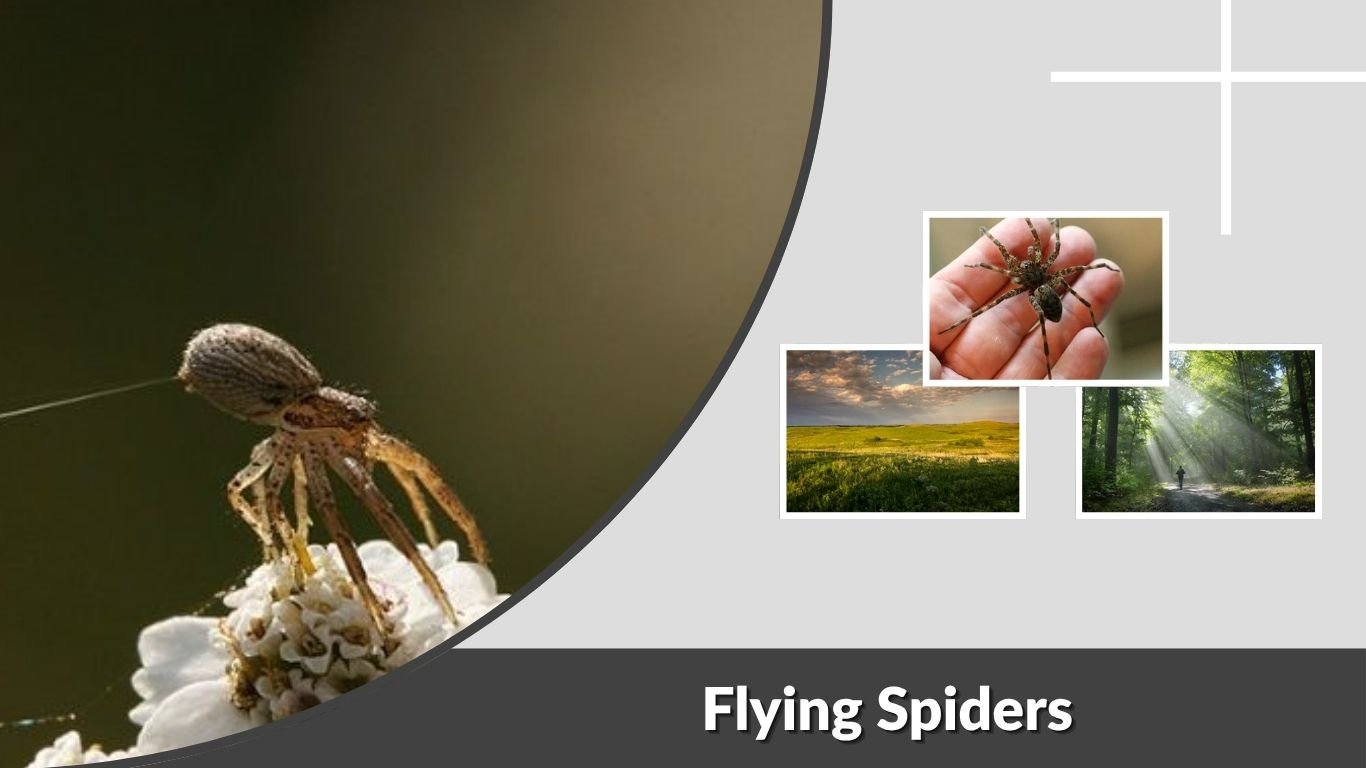
Imagine looking into the sky and seeing tiny spiders floating through the air. It might sound unbelievable, but flying spiders are real. Unlike birds or insects, spiders cannot fly using wings. Instead, certain species travel through the air using delicate silk threads in a process called ballooning. This remarkable ability allows spiders to reach new habitats and escape crowded environments. But how do flying spiders work, where can you find them, and are they dangerous to humans?
Are Flying Spiders Real?
Flying spiders are real, although they do not fly in the traditional sense. They cannot flap wings or control their direction like birds and insects. Instead, certain spiders release thin strands of silk that allow air currents to carry them away. This natural behavior helps spiders travel between habitats and establish populations in new locations.
Can Spiders Actually Fly?
Spiders cannot perform powered flight because they lack wings. However, many small spiders and young spiderlings can become airborne through ballooning.
During ballooning, a spider releases extremely fine silk strands into the air. These threads interact with air currents, allowing the spider to lift off the ground and drift through the atmosphere.
Some spiders travel only a few feet, while others can cover much greater distances under favorable conditions.
Do Flying Spiders Have Wings?
No spider species has wings. All spiders belong to the class Arachnida, and their bodies are built for walking, climbing, jumping, or other specialized movements rather than wing-powered flight.
When people describe winged flying spiders, they are usually referring to ballooning spiders or mistaking winged insects for spiders.
True spiders have eight legs and two main body sections, which distinguish them from insects.
How Do Flying Spiders Fly Without Wings?
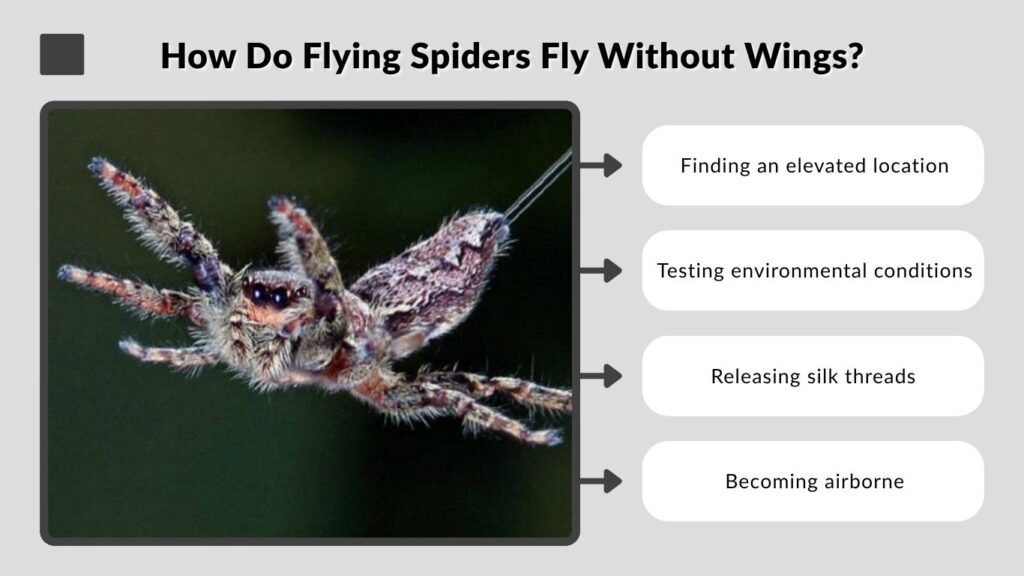
Spiders use a fascinating technique called ballooning to travel through the air. This behavior is particularly common among spiderlings, although some small adult spiders can also balloon. By releasing lightweight silk threads, spiders take advantage of natural forces that help lift and transport them without wings.
How Spider Ballooning Works
The ballooning process generally involves several steps:
- Finding an elevated location: A spider climbs onto grass, vegetation, a fence, or another raised surface.
- Testing environmental conditions: It raises its body and responds to air movement and other environmental signals.
- Releasing silk threads: The spider produces several extremely thin silk fibers from its spinnerets.
- Becoming airborne: Aerodynamic forces acting on the silk help lift the spider away from its starting point.
- Landing elsewhere: The spider eventually settles when conditions change or the silk catches on a surface.
This process allows small spiders to disperse without spending considerable energy walking long distances.
Can Spiders Fly Using Electricity?
Scientific research indicates that atmospheric electricity can contribute to spider ballooning.
The atmosphere contains natural electric fields, and experiments have shown that some spiders can detect these fields using sensitive body hairs.
Electric fields can stimulate ballooning behavior and help generate lift. However, this does not mean spiders produce electricity or control their flight like powered aircraft.
Air movement and electrostatic forces can both influence their aerial movement.
How Far Can Flying Spiders Travel?
Most ballooning spiders land relatively close to their starting points, but some travel several kilometers or farther.
Researchers have documented spiders at altitudes of several kilometers, and airborne dispersal can occasionally carry them across large bodies of water.
Travel distance depends on weather conditions, air currents, silk properties, and the spider’s size.
What Types of Spiders Can Fly?
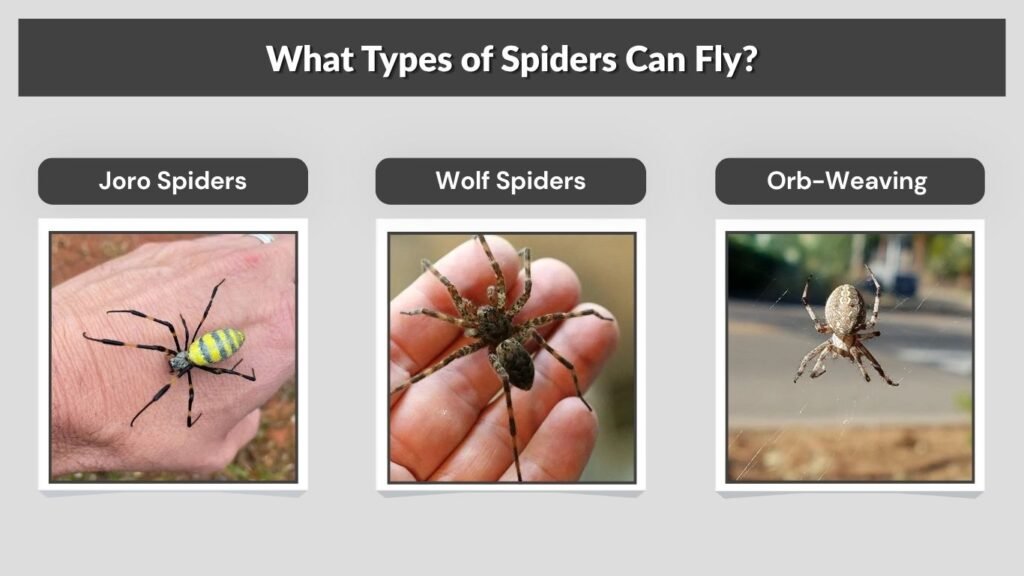
Several spider groups can disperse through ballooning, especially during their early life stages. These include orb-weaving spiders, wolf spiders, and various small web-building species. Not every individual or species balloons regularly, and many larger adult spiders remain on the ground or within their webs throughout their lives.
Joro Spiders
Joro spiders (Trichonephila clavata) are large, yellow-and-black orb-weaving spiders native to East Asia that have established populations in parts of the United States.
These spiders became widely discussed because of reports describing them as giant flying spiders.
However, adult Joro spiders do not actively fly through the air. Their young spiderlings can release silk threads and disperse by ballooning.
This ability contributes to their movement into new environments and helps explain their expanding distribution.
Wolf Spiders
Wolf spiders belong to the family Lycosidae and are recognized for their active hunting behavior.
Although adults generally travel by walking or running, young wolf spiders can use ballooning to disperse.
This allows them to leave crowded areas and establish themselves in suitable habitats.
Wolf spiders are frequently found in grasslands, gardens, forests, and other ground-level environments.
Orb-Weaving and Other Small Spiders
Many orb-weaving spiders use ballooning during their juvenile stages.
Small spiders from the sheet-weaver family, Linyphiidae, are also well known for aerial dispersal.
Some crab spiders can balloon, including individuals larger than the tiny spiderlings commonly associated with the behavior.
Their ability to travel through the air helps distribute spider populations across suitable environments.
Where Do Flying Spiders Live?
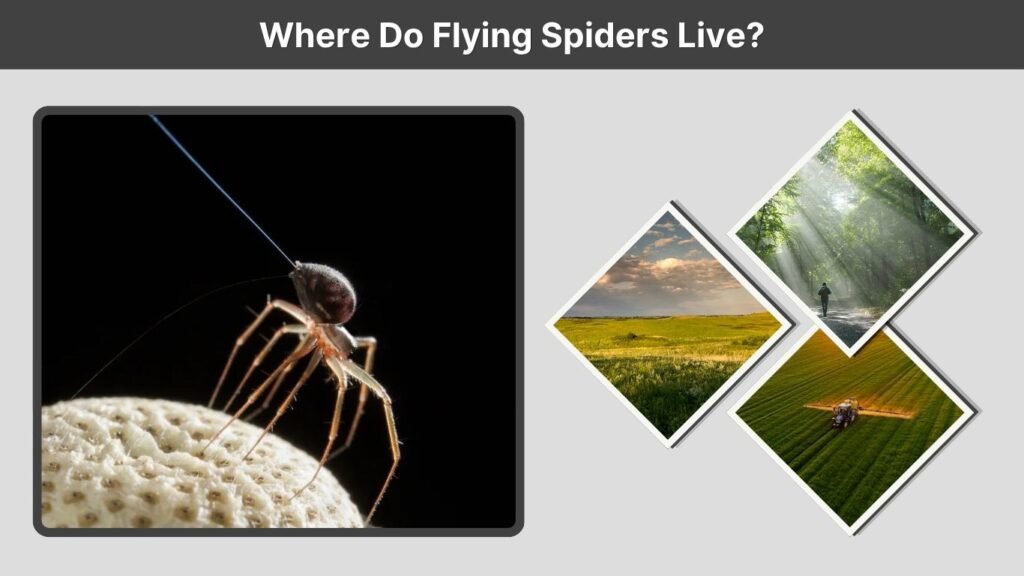
Ballooning spiders occur in many parts of the world. Because the behavior is found in different spider families, flying spiders are not restricted to a single climate or geographic region. They may appear in grasslands, forests, agricultural fields, gardens, and other habitats where suitable conditions allow spiders to disperse.
Flying Spiders in Australia
Australia is particularly famous for dramatic spider ballooning events sometimes described as spider rain.
During mass ballooning, large numbers of spiders release silk threads and drift through the air.
When the spiders settle, their silk can cover grass, fences, and entire fields, creating a white, web-like appearance.
These events may occur when weather conditions encourage spiders to disperse or seek higher ground.
Despite dramatic photographs and headlines, Australian flying spiders do not possess wings.
Flying Spiders in the United States
Ballooning spiders also occur throughout the United States, including states such as Texas, Florida, Georgia, and New York.
Different species may become airborne depending on local habitats, seasonal conditions, and weather patterns.
Joro spiderlings have attracted particular attention in the eastern United States because their aerial dispersal contributes to their expansion.
However, reports of giant flying spiders should not be confused with large adult spiders actively flying toward people.
Are Flying Spiders Dangerous to Humans?
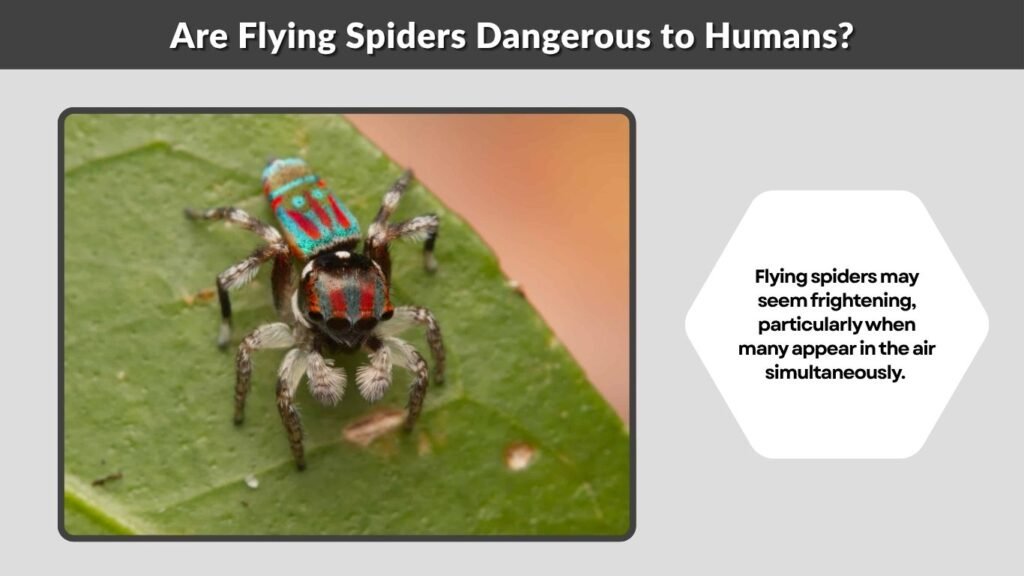
Flying spiders may seem frightening, particularly when many appear in the air simultaneously. However, ballooning itself does not make a spider dangerous. Most spiders involved in mass ballooning are small, and their primary purpose is to disperse rather than approach humans. The potential risk depends on the actual species, not its ability to travel through the air.
Can Flying Spiders Bite?
Like most spiders, ballooning species generally possess venom used to subdue prey.
However, many tiny ballooning spiders are not capable of causing significant harm to humans.
Larger spiders, including Joro spiders, may bite when trapped or threatened, although they are generally reluctant to do so.
A bite from an unfamiliar spider should not automatically be considered harmless. Severe pain, spreading symptoms, or breathing difficulties require appropriate medical attention.
What Should You Do If You See Flying Spiders?
If you notice spiders floating through your garden or around your home, there is usually no reason to panic.
Avoid disturbing large groups of spiders and allow them to disperse naturally.
Close open windows or use window screens if airborne spiders are entering indoor spaces.
Avoid handling unidentified spiders directly, particularly in regions containing medically significant species.
Most ballooning events are temporary and end as weather conditions change.
Why Do Spiders Fly?
Ballooning provides spiders with an effective way to disperse and find suitable living conditions. Unlike ordinary movement across the ground, aerial dispersal allows small spiders to cross obstacles and reach places that would otherwise be difficult to access.
Escaping Competition and Finding New Habitats
Young spiders often emerge in large numbers from egg sacs. Remaining together increases competition for shelter and food.
Ballooning helps them spread into new areas, reducing crowding and improving their chances of finding suitable hunting locations.
It can also help spider populations colonize isolated habitats, including islands.
Does Ballooning Help Spiders Survive?
Ballooning can improve a spider’s chances of reaching suitable habitat, but it also involves risks.
Airborne spiders may land in unsuitable environments, become exposed to predators, or fail to survive after landing.
Nevertheless, the behavior remains an important dispersal strategy for many spider species.
FAQs
1. Are there spiders that can actually fly?
Yes. Some spiders become airborne through ballooning, using silk threads and natural atmospheric forces. However, no spiders possess wings or perform powered flight.
2. Are flying spiders real in Australia?
Yes. Australia experiences spider ballooning events, sometimes called spider rain, when numerous spiders drift through the air and leave silk across vegetation and fields.
3. Can Joro spiders fly toward humans?
Joro spiderlings can disperse by ballooning, but they cannot deliberately steer toward humans. Large adult Joro spiders do not perform this type of flight.
4. Are giant flying spiders venomous?
Some large spiders described as giant flying spiders possess venom. However, sensational headlines often refer to Joro spiders, whose bites are generally not medically significant. Adult Joro spiders cannot actively fly.
5. Can spiders fly across oceans?
Yes. Exceptional ballooning events can carry spiders across substantial stretches of water. This natural dispersal ability helps explain how certain spiders reach distant islands and isolated habitats.
