
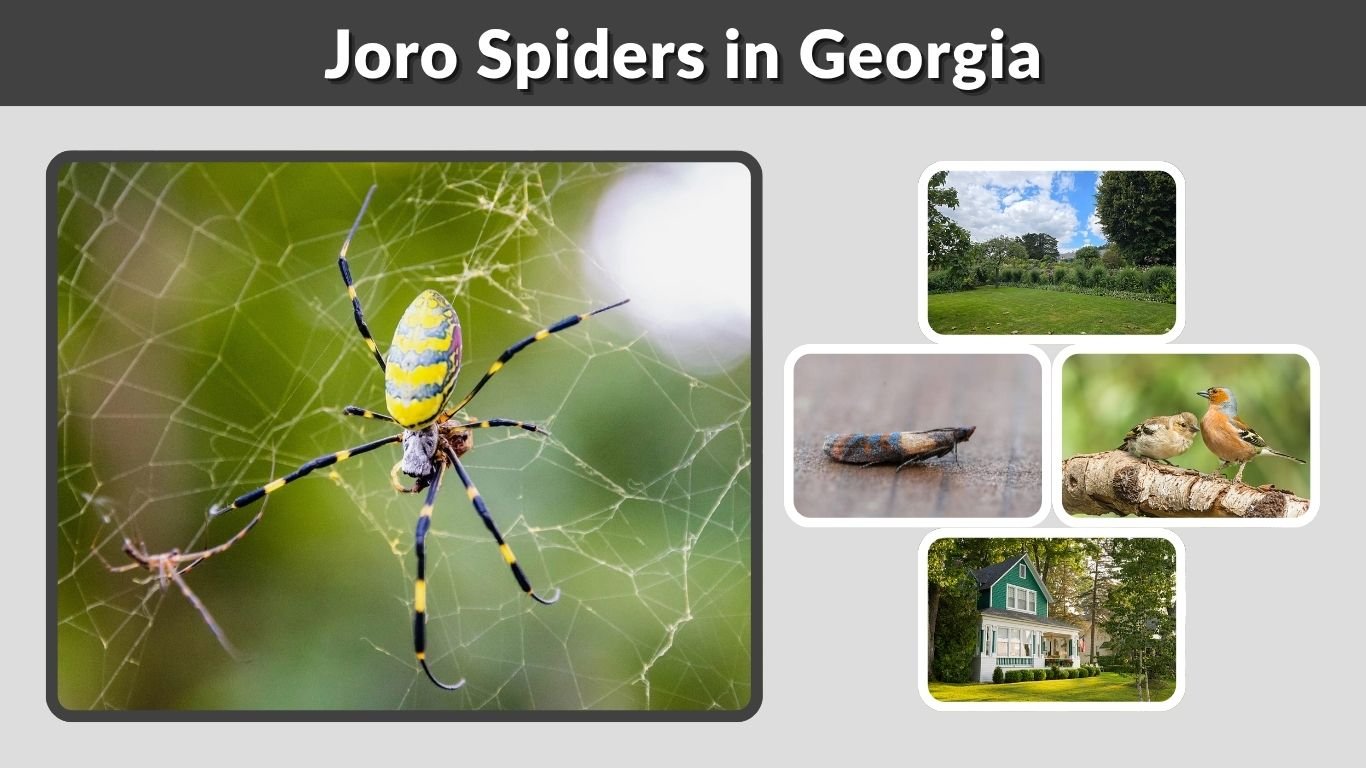
Joro spiders in Georgia have become a familiar sight, especially during late summer and fall when large females and their golden webs are easiest to notice. Native to East Asia, these colorful orb-weaving spiders were first documented in northeast Georgia in 2014 and have since spread across much of the state and into neighboring areas. Although their size can be alarming, Joro spiders pose little danger to people. Here is what Georgia residents should know about their arrival, life cycle, ecological impact, and control.
How Did Joro Spiders Get to Georgia?
Joro spiders (Trichonephila clavata) are native to East Asia, including Japan, China, and Korea. Researchers cannot say exactly how the first spiders reached Georgia, but accidental transport through international trade is considered the likely explanation. The earliest documented U.S. population was concentrated near Braselton and Hoschton along the Interstate 85 corridor in northeast Georgia.
When Did Joro Spiders Come to Georgia?
Joro spiders were officially documented in the United States in 2014 in northeast Georgia, although observations suggest they may have been present slightly earlier. UGA Extension reports that the original population was centered around Braselton and Hoschton.
By 2022, their known range had expanded roughly 75 miles in all directions from that original detection area.
How Were They Introduced?
Scientists have not identified the exact shipment or event responsible for their arrival. The leading explanation is that Joro spiders or their egg sacs accidentally traveled with imported cargo or shipped goods.
Possible pathways include:
- Shipping containers
- Imported equipment or materials
- Vehicles carrying egg sacs
- Cargo transported through distribution centers
- Subsequent natural dispersal after arrival
Young Joro spiders can also disperse through ballooning, releasing silk that allows air currents to carry them to new locations.
Why Are There So Many Joro Spiders in Georgia?
Georgia provides conditions that allow Joro spiders to complete their annual life cycle successfully. Their numbers can appear especially dramatic because hundreds of juveniles may hatch from individual egg sacs, while mature females construct enormous golden webs in highly visible locations. By late summer and fall, these webs can make established populations seem much larger than they did earlier in the year.
When Do Joro Spiders Come Out in Georgia?
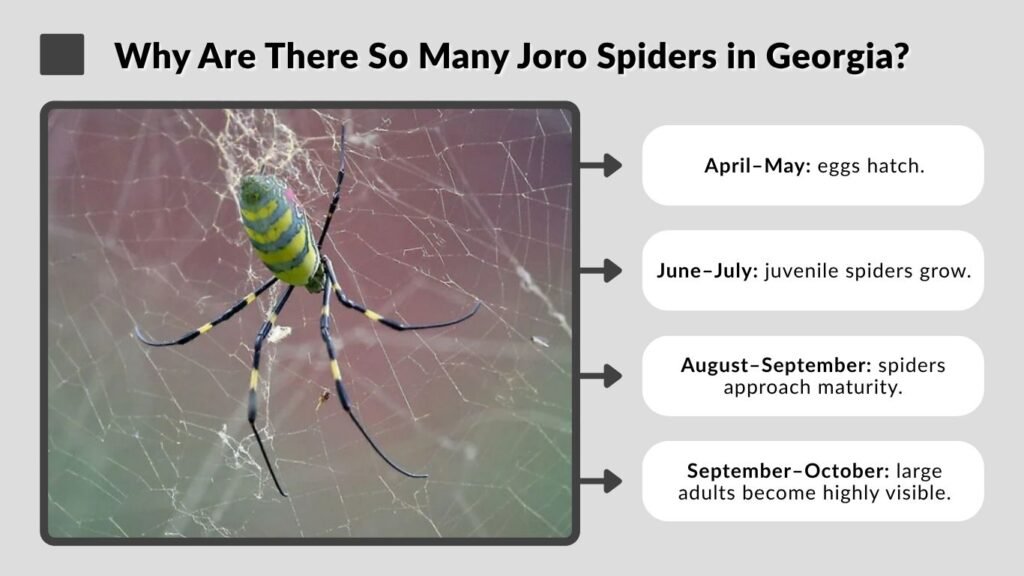
Joro spiders spend winter as eggs. UGA Extension reports that eggs generally hatch during April and May. Juveniles grow throughout spring and summer, becoming much easier to notice as their webs increase in size.
The spiders begin maturing during August and September, while adult females are especially conspicuous during September and October.
When Do Joro Spiders Go Away?
Adults generally disappear when colder conditions arrive in late fall. Before dying, females deposit silk-covered egg masses on surfaces such as bark, leaves, and human-made structures.
Their yearly pattern can be summarized as:
- April–May: eggs hatch.
- June–July: juvenile spiders grow.
- August–September: spiders approach maturity.
- September–October: large adults become highly visible.
- October–November: females produce egg sacs.
- Winter: adults disappear while eggs remain.
Joro spiders have one generation per year.
Are Joro Spiders Invasive in Georgia?
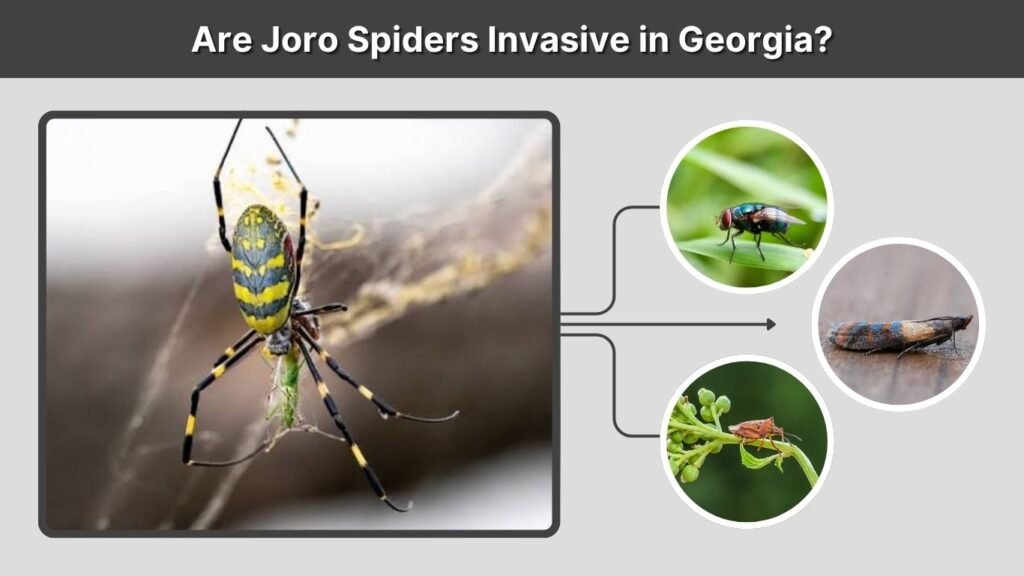
Joro spiders are a non-native species and are commonly treated as invasive in Georgia. However, scientists are still studying exactly how their expanding populations affect native spiders, insects, pollinators, and food webs. Their presence does not automatically mean every Joro spider is causing measurable ecological damage at a particular location. UGA researchers continue to investigate their long-term effects.
Are Joro Spiders Bad for Georgia?
The ecological picture is complicated. Joro spiders consume numerous insects and may capture some pests, including brown marmorated stink bugs. However, their large webs can also catch bees and other beneficial insects.
Because Joro spiders are relatively recent arrivals, researchers do not yet have enough long-term evidence to determine their complete impact on Georgia ecosystems. Describing them as entirely beneficial or entirely harmful would therefore be premature.
What Do Joro Spiders Eat in Georgia?
Joro spiders wait in large orb webs for flying insects and other arthropods to become trapped. Their prey can include:
- Flies
- Moths
- Beetles
- Mosquitoes
- Stink bugs
- Bees and other pollinating insects
They do not hunt people, pets, birds, or other large animals. Their web-and-venom system is designed primarily for capturing relatively small arthropod prey.
What Eats Joro Spiders in Georgia?
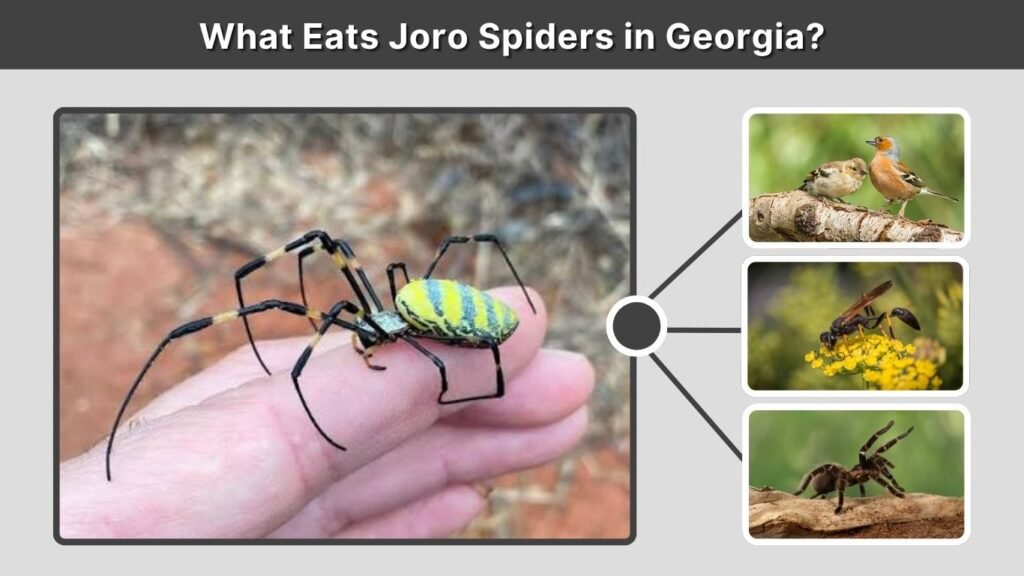
Although Joro spiders are impressive predators, they are also part of the food web. Georgia wildlife can prey on spiders themselves, particularly when Joros are young or exposed. Researchers continue to study predator-prey interactions as Joro populations become more established throughout the Southeast.
Natural Predators of Joro Spiders
Observed or potential predators include:
- Birds
- Mud dauber wasps
- Other predatory insects
- Some spiders
- Small animals capable of capturing spiders
UGA Extension has specifically reported birds and mud dauber wasps among predators of Joro spiders. Natural predation may remove individual spiders, although it has not prevented the species from spreading through Georgia.
Do Joro Spiders Have an Advantage in Georgia?
Their reproductive capacity, strong webs, and ability of young spiders to disperse help them establish new populations.
Adult females also build very large webs. UGA Extension reports that mature webs may span 10 feet or more, while supporting silk strands can extend beyond 20 feet between trees and structures.
Should You Kill Joro Spiders in Georgia?
There is no need to eliminate every Joro spider you encounter. UGA Extension recommends focusing primarily on spiders whose webs interfere with areas people regularly use. Joros in distant trees or less-traveled parts of a yard can generally be left alone, while spiders around entrances, porches, decks, or walkways may reasonably be removed.
When Removal Makes Sense
Consider removing a Joro spider when:
- Its web crosses a doorway or walkway.
- Webs repeatedly cover a porch or deck.
- Spiders are positioned where accidental contact is unavoidable.
- Webs occur close to a beehive.
- Large webs interfere with a pollinator garden.
- Numerous spiders create a significant nuisance around the home.
Their presence by itself does not mean your home has a dangerous spider infestation.
Are Joro Spiders Dangerous?
Joro spiders are venomous, as are most spiders, but they are considered very timid and pose little danger to humans.
UGA researchers report that the spiders usually attempt to escape rather than bite. Their large bodies, yellow-and-black coloration, and strong webs may look intimidating, but appearance does not reflect their medical risk.
How to Get Rid of Joro Spiders in Georgia
If Joro spiders are creating webs in inconvenient places, physical removal is often the simplest approach. Merely knocking down a web may provide only temporary relief because the spider can quickly rebuild it. Management is most practical when targeted at individual spiders around heavily used areas rather than attempting to remove every spider from an entire property.
Physical Removal
UGA Extension recommends several practical options:
- Use a broom, rake, or long stick to remove accessible spiders and webs.
- Concentrate on webs near doors, decks, porches, and paths.
- Relocate spiders farther from frequently used areas if preferred.
- Avoid disturbing high webs that are not causing problems.
- Remove egg sacs from structures when practical to reduce local hatching.
Spiders high in trees usually do not require any action.
Using Insecticides
Products labeled for spiders can kill Joro spiders when applied directly, but broad pesticide treatments are generally unnecessary.
Residual sprays may provide limited control because orb-weaving spiders spend much of their time suspended in webs rather than walking across treated surfaces. UGA also cautions that broad pyrethroid applications can kill pollinators, beneficial predators, and other non-target insects.
Where Are Joro Spiders in Georgia?
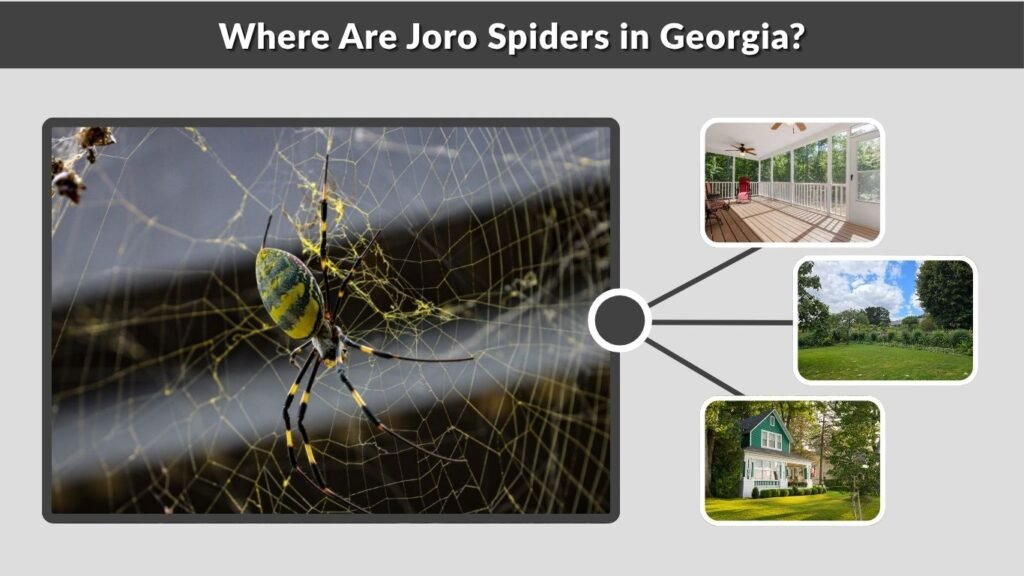
Joro spiders became established first in northeast Georgia and subsequently spread outward. They are now familiar across many parts of northern and central Georgia, and their range continues expanding into other southeastern states. There is no dependable statewide population count because individual spiders are numerous, seasonal, and widely dispersed across forests, neighborhoods, parks, roadsides, and developed landscapes.
Joro Spiders in North Georgia
North Georgia remains one of the areas where Joro spiders are particularly noticeable. Mature females may build webs between trees, utility structures, porches, shrubs, and buildings.
During fall, multiple webs can sometimes occur close together, creating the impression of a sudden population explosion even though the spiders have actually been growing since spring.
How Long Will Joro Spiders Remain in Georgia?
Joro spiders are considered established rather than temporary visitors. Their range has continued expanding since the original northeast Georgia population was identified.
UGA Extension notes that their Asian native range covers areas with varied climates, suggesting they could continue occupying additional parts of Georgia and the eastern United States.
FAQs
1. How did Joro spiders get to Georgia?
The exact introduction is unknown, but researchers believe Joro spiders or their egg sacs probably arrived accidentally through international cargo or shipped goods. The first documented U.S. population appeared in northeast Georgia near the Interstate 85 corridor.
2. When did Joro spiders come to Georgia?
Joro spiders were officially documented in northeast Georgia in 2014, although some observations suggest they may have been present shortly before that.
3. Should you kill Joro spiders in Georgia?
It is generally unnecessary to kill every Joro spider. Removal is most useful when webs obstruct doors, porches, walkways, decks, pollinator gardens, or beehives. Spiders in out-of-the-way locations can often be left alone.
4. When do Joro spiders go away in Georgia?
Adult Joro spiders become most noticeable during late summer and fall and generally disappear as cold weather arrives. Their eggs survive winter and hatch during April and May, beginning the next generation.
5. Why are there so many Joro spiders in Georgia?
Georgia provides suitable conditions for their annual life cycle, and each female can produce a large egg mass. Their highly visible golden webs and large adult females also make populations look especially abundant during fall. The species has steadily expanded its range since becoming established in northeast Georgia.
