
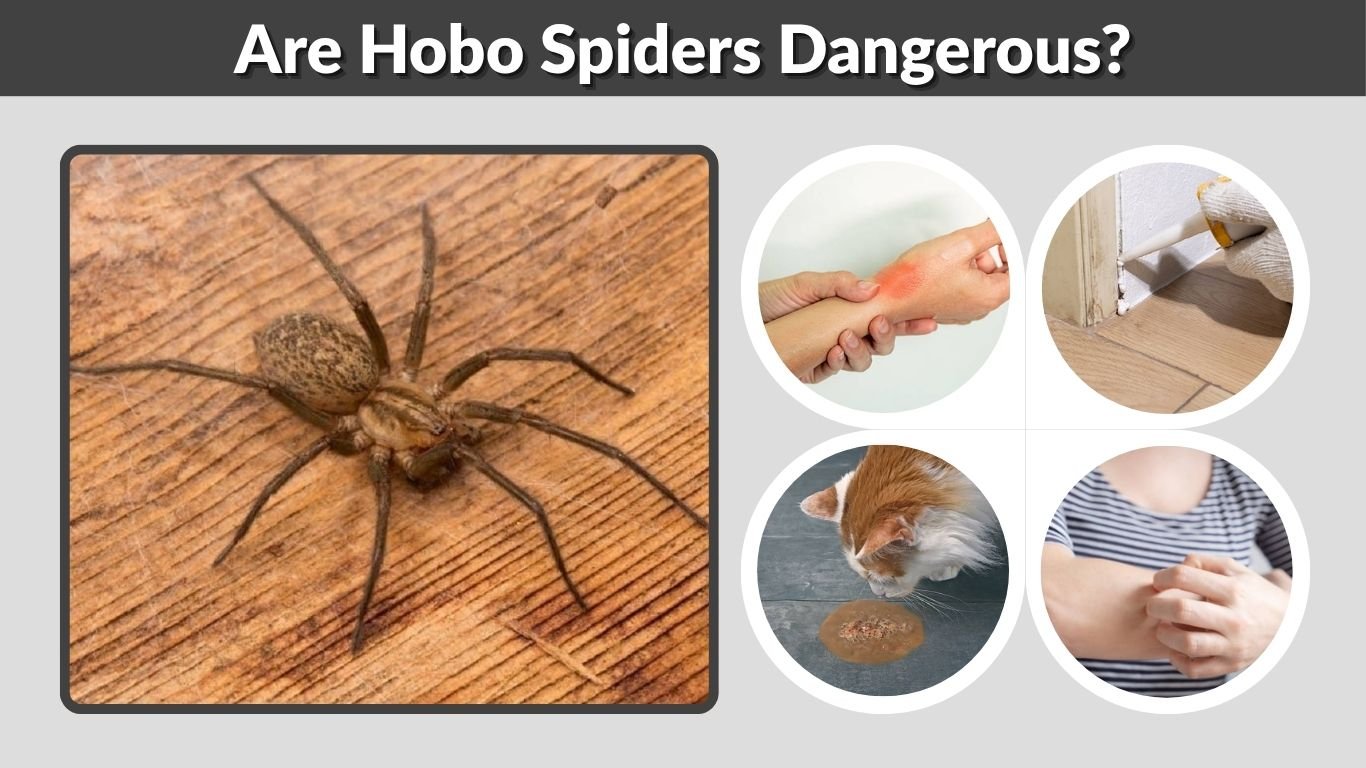
Hobo spiders have a frightening reputation, but modern evidence shows they are far less dangerous than once believed. These brown funnel-web spiders can bite when trapped, handled, or pressed against the skin, yet confirmed bites generally cause only mild local symptoms. Earlier reports linked hobo spiders with severe skin damage, but newer research has not established that their venom causes tissue necrosis. Understanding their behavior, bite symptoms, identification, and possible risks to people and pets can help you respond appropriately without unnecessary fear.
Are Hobo Spiders Dangerous to Humans?
Hobo spiders (Eratigena agrestis) were historically considered medically significant in parts of North America. However, current evidence does not support the idea that their venom routinely causes serious injury or flesh-eating wounds. Oregon State University states that hobo spiders are not considered dangerous, while Utah State University reports no significant scientific evidence of a necrotic bite.
How Dangerous Are Hobo Spiders?
For most healthy people, hobo spiders pose a low health risk. They possess venom because they use it to subdue insect prey, but having venom does not automatically make a spider medically dangerous to humans.
Important facts include:
- Hobo spiders are not normally aggressive toward people.
- Bites are uncommon and usually occur defensively.
- A bite may produce mild pain, redness, or irritation.
- Strong evidence linking their venom to skin necrosis is lacking.
- Serious systemic reactions have not been established as a typical result of confirmed bites.
Utah State University notes that hobo spiders may bite defensively but generally are not considered a significant health concern.
Are Hobo Spiders Actually Dangerous?
Their reputation is considerably worse than the evidence suggests. Older medical reports associated hobo spiders with necrotic skin lesions. A 1996 CDC report, for example, discussed suspected severe hobo spider envenomation in the Pacific Northwest.
Later scientific evaluations questioned these conclusions because many cases lacked reliable spider identification. A review published in the Annals of Emergency Medicine found that evidence connecting verified hobo spider bites with dermonecrotic lesions was weak and that other medical conditions could have explained many suspected cases.
Why Were Hobo Spiders Considered Dangerous?
The belief that hobo spiders cause severe wounds developed from suspected bite reports and early experimental research. Because these spiders were common in homes where unexplained skin lesions occurred, they were sometimes blamed even when no spider was captured or positively identified. Modern research emphasizes that finding a spider indoors does not prove it caused a nearby skin problem.
The Flesh-Eating Bite Myth
The term “flesh-eating spider” is misleading when applied to hobo spiders. Modern evidence has not demonstrated that their venom normally destroys human tissue.
Several factors can cause wounds that resemble supposed spider bites:
- Bacterial skin infections
- Infected cuts or scratches
- Allergic skin reactions
- Other insect or arthropod bites
- Underlying skin disorders
This is why an unexplained sore should not automatically be diagnosed as a hobo spider bite.
Why Misidentification Is Common
Hobo spiders resemble numerous other brown spiders. Color alone is not sufficient for reliable identification. Grass spiders and other funnel weavers can look extremely similar, especially to someone without experience examining spider anatomy. Utah State University specifically cautions that non-experts are unlikely to identify hobo spiders accurately.
What Does a Hobo Spider Bite Look Like?
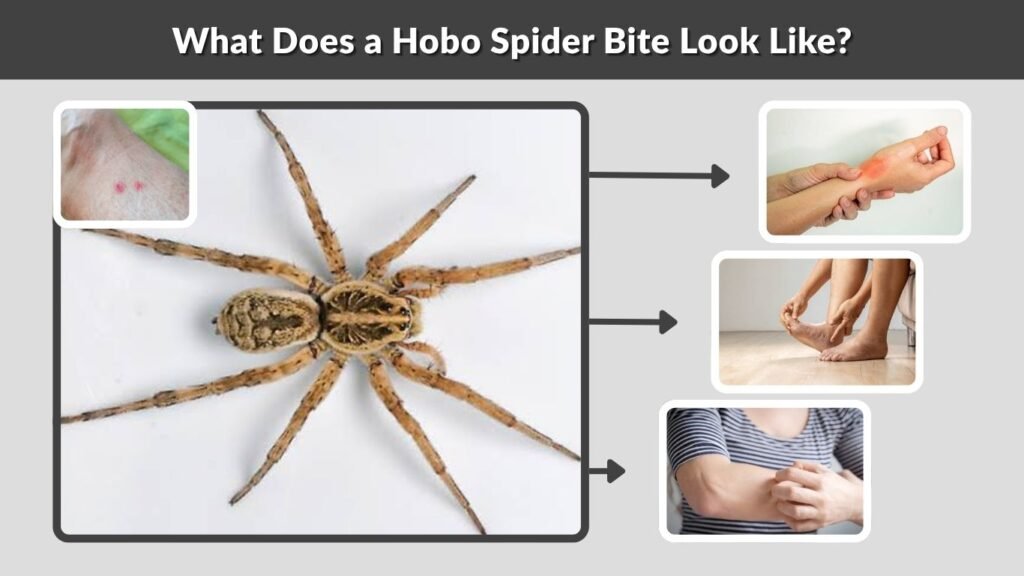
A confirmed hobo spider bite may cause a relatively mild local reaction. Because many skin conditions resemble spider bites, appearance alone cannot reliably establish which species was responsible. When a spider is actually observed biting, preserving it safely or taking a clear photograph may help an entomologist or healthcare professional with identification.
Possible Hobo Spider Bite Symptoms
Reported mild reactions can include:
- Local redness
- Mild pain or tenderness
- Slight swelling
- Irritation around the bite
- Temporary itching or discomfort
These symptoms can also occur with many other insect bites and skin irritations.
When to Seek Medical Care
Medical attention is appropriate if a suspected bite produces symptoms that are severe, rapidly worsening, or unusual.
Seek professional care for:
- Rapidly increasing swelling
- Severe or persistent pain
- Spreading redness
- Pus, drainage, or signs of infection
- Fever or significant illness
- Difficulty breathing or facial swelling
- A wound that continues to worsen instead of healing
Persistent or enlarging wounds deserve medical evaluation rather than being assumed to be spider bites.
When Do Hobo Spiders Bite?
Hobo spiders generally try to escape rather than confront people. They may bite when physically trapped against the body, accidentally grabbed, or compressed inside clothing or bedding. Wandering males are particularly noticeable during their seasonal search for females, which can create the impression that the spiders are unusually aggressive.
Situations That Can Lead to Bites
Accidental encounters can occur when someone:
- Puts on clothing containing a hidden spider
- Picks up objects where a spider is sheltering
- Traps a spider against bare skin
- Reaches into clutter without looking
- Handles a spider directly
Keeping clothing and bedding off floors and checking stored items can reduce accidental contact.
Are Hobo Spiders Aggressive?
Despite an older common name, “aggressive house spider,” hobo spiders are not known for pursuing people. Oregon State University states that they are no more aggressive or likely to bite humans than other funnel-weaving spiders.
Are Hobo Spiders Dangerous to Cats and Dogs?
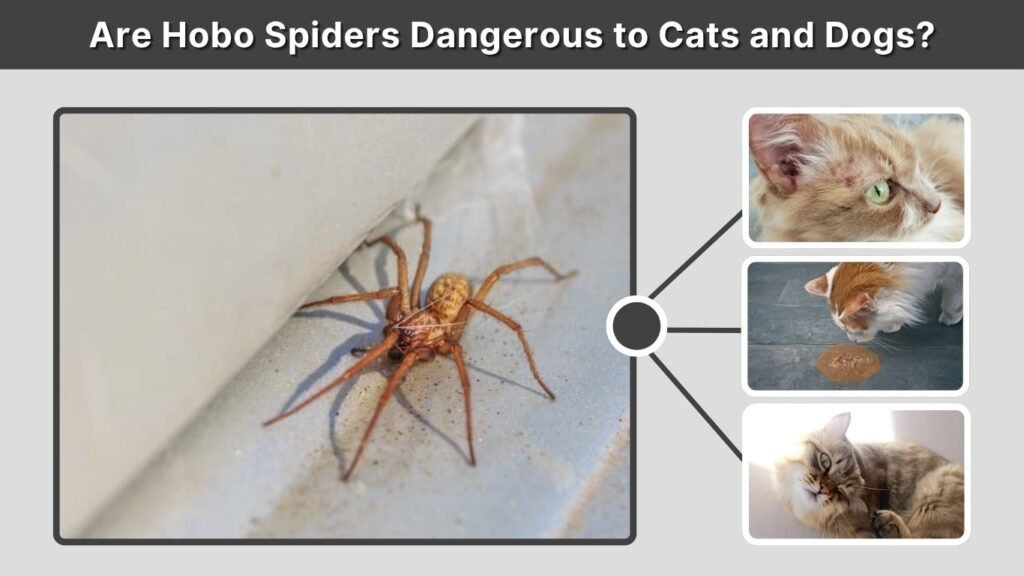
Specific evidence showing that hobo spiders are seriously toxic to cats or dogs is limited. Veterinary references identify widow spiders and recluse spiders—not hobo spiders—as the primary medically important spiders in the United States. Most spider species are unlikely to cause significant mammalian envenomation.
Signs to Watch for in Pets
After a suspected spider bite, monitor a cat or dog for:
- Redness or swelling
- Tenderness around the affected area
- Excessive licking
- Skin irritation
- Vomiting
- Weakness or unusual behavior
- Difficulty breathing
A mild local reaction may resolve without complications, but symptoms should be monitored carefully.
When a Pet Needs Veterinary Attention
Contact a veterinarian promptly if your pet develops major swelling, significant pain, vomiting, weakness, neurological abnormalities, collapse, or breathing difficulties.
Respiratory distress and substantial swelling around the head or neck are especially urgent veterinary concerns.
How to Prevent Hobo Spiders in the House
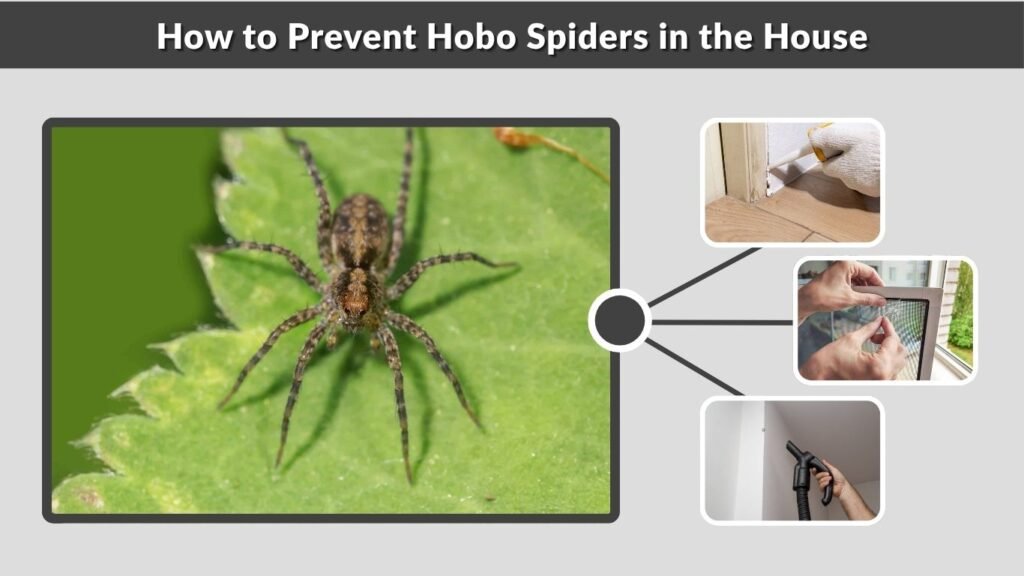
Hobo spiders may wander indoors, particularly during seasonal periods when males search for mates. Reducing hiding places and blocking entry points can lower the chance of encounters without requiring extensive pesticide use.
Simple Prevention Methods
Useful steps include:
- Seal cracks around doors, windows, and foundations.
- Repair damaged window and door screens.
- Reduce clutter in basements and storage rooms.
- Keep clothes, blankets, and towels off floors.
- Shake out stored shoes before wearing them.
- Remove debris and dense vegetation near foundations.
- Use a vacuum to remove unwanted spiders indoors.
Oregon State University recommends sealing openings, repairing screens, and reducing debris around buildings as practical spider-prevention strategies.
Should You Be Worried About Hobo Spiders?
For most people, finding a hobo spider does not represent a medical emergency. Current evidence indicates that the species is considerably less dangerous than its historical reputation suggests. Avoid handling spiders directly, reduce accidental contact, and pay attention to any unusual symptoms after a suspected bite.
Putting the Risk in Perspective
Hobo spiders can bite, but being capable of biting and being dangerously venomous are different things. Confirmed bites are uncommon, and modern research does not support routinely blaming hobo spiders for severe necrotic wounds.
If an unexplained skin lesion becomes painful, infected, or progressively worse, obtaining a medical diagnosis is more useful than trying to determine whether a spider caused it.
FAQs
1. Are hobo spiders dangerous to humans?
Hobo spiders are not currently considered medically dangerous to most humans. They can bite defensively, but typical reactions appear to be mild, and evidence linking their venom with serious necrotic wounds is lacking.
2. Can a hobo spider bite kill you?
There is no strong modern evidence showing that typical confirmed hobo spider bites are fatal to healthy people. Older severe cases attributed to the species have been questioned because identification and alternative medical causes were often uncertain.
3. Do hobo spider bites cause flesh to rot?
Current scientific evidence does not support hobo spider venom as a proven cause of typical flesh-eating or necrotic wounds. Other infections and medical conditions can produce lesions that are mistakenly attributed to spiders.
4. Are hobo spiders dangerous to cats?
Hobo spiders are not recognized among the major medically important spider threats to cats. Still, any suspected bite accompanied by severe swelling, pain, vomiting, weakness, or breathing problems should be evaluated by a veterinarian.
5. Are hobo spiders dangerous to dogs?
Serious hobo spider envenomation in dogs is not well established. Monitor a dog after a suspected bite for swelling, pain, vomiting, weakness, or abnormal behavior, and contact a veterinarian if significant symptoms develop.
