
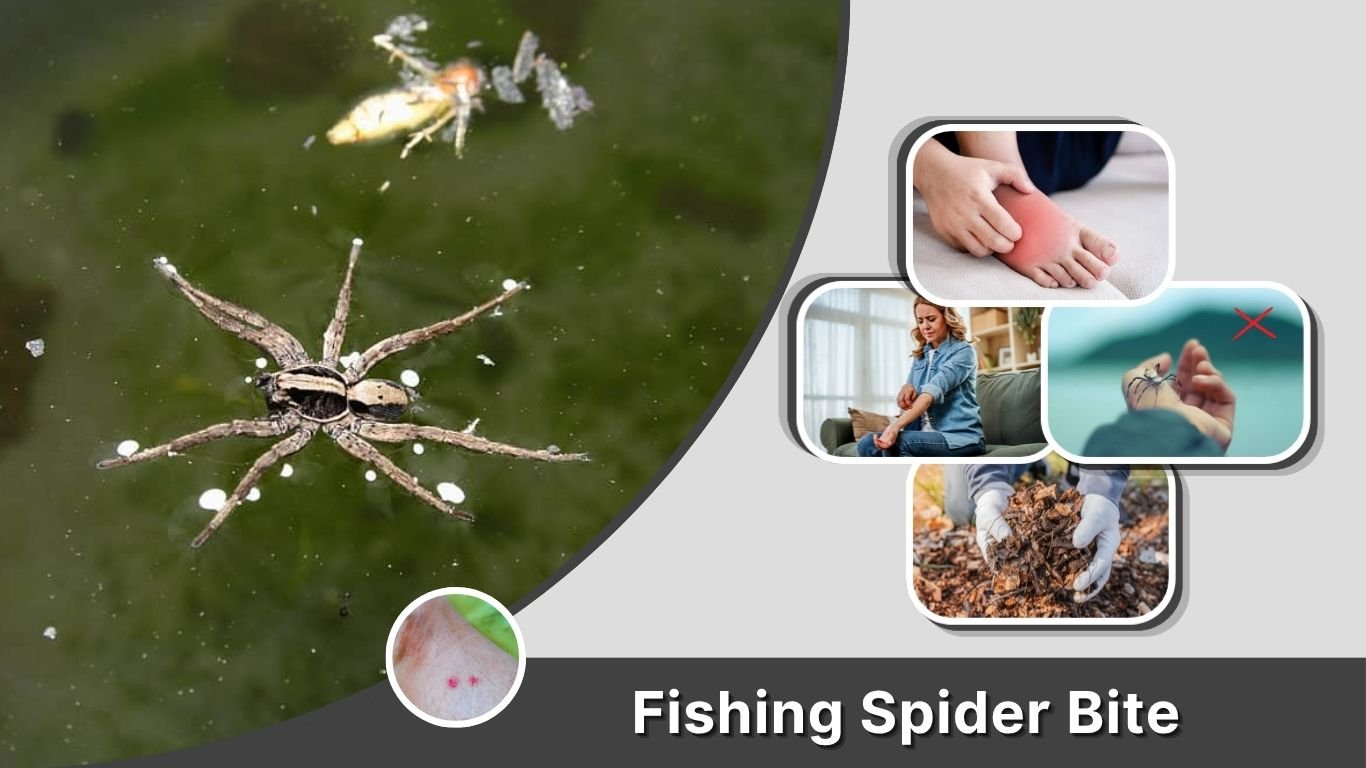
A fishing spider bite can look alarming because these spiders are large, fast, and often found around water, docks, basements, and wooded areas. However, fishing spiders in the genus Dolomedes are not considered medically dangerous to most people. A defensive bite may cause brief pain, redness, mild swelling, or itching around the site. Symptoms usually remain local. Correct identification matters because many skin reactions blamed on spiders have other causes. This guide explains fishing spider bite symptoms, appearance, treatment, risks, and when medical care is appropriate.
Do Fishing Spiders Bite Humans?
Fishing spiders are capable of biting because they have fangs and venom used to subdue prey. Nevertheless, they generally avoid people and do not seek humans as prey. University of Minnesota Extension describes the dark fishing spider, Dolomedes tenebrosus, as harmless to people despite its impressive size. Bites are most likely when a spider is accidentally trapped, squeezed, handled, or pressed against the skin.
Why Does a Fishing Spider Bite?
A fishing spider normally relies on running away rather than attacking. A bite is primarily defensive.
Situations that may increase the chance of a bite include:
- Picking up a fishing spider with bare hands
- Trapping one inside clothing or shoes
- Accidentally pressing against one
- Handling objects where a spider is hiding
- Trying to capture a spider directly
Fishing spiders are predators of insects and may occasionally take small aquatic vertebrates, but humans are not part of their diet.
What Does a Fishing Spider Bite Look Like?
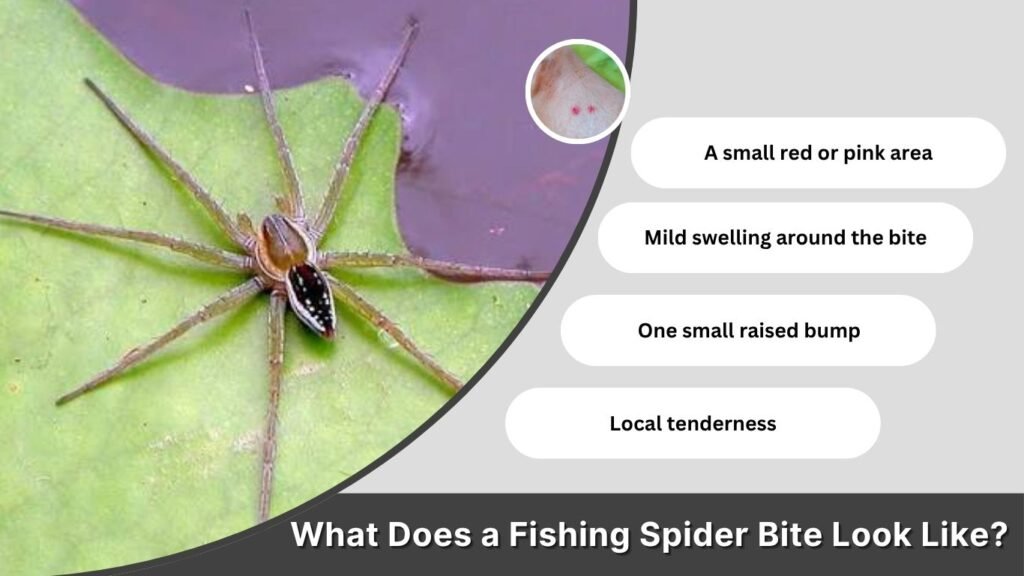
There is no unique mark that reliably identifies a fishing spider bite. A mild reaction may resemble many other insect bites, skin irritations, or minor punctures. Poison Control notes that common bite reactions can include redness, swelling, pain, itching, and a raised bump. Therefore, appearance alone usually cannot prove which spider caused a skin lesion.
Fishing Spider Bite Pictures and Appearance
A fresh bite may appear as:
- A small red or pink area
- Mild swelling around the bite
- One small raised bump
- Local tenderness
- Itching or irritation
- Occasionally tiny puncture marks
Two obvious fang marks should not be considered a requirement for identifying a spider bite. The marks can be too small to notice, and many unrelated skin conditions can produce similar-looking spots.
How Does the Bite Change?
For a typical mild reaction, discomfort should remain concentrated around the bite site rather than producing severe whole-body symptoms. Redness and swelling may temporarily become more noticeable before improving.
A rapidly expanding wound, severe blistering, blackening skin, significant drainage, or progressively worsening pain is not something that should automatically be attributed to a fishing spider. Such symptoms deserve medical assessment because infection or another cause may be responsible.
Fishing Spider Bite Symptoms
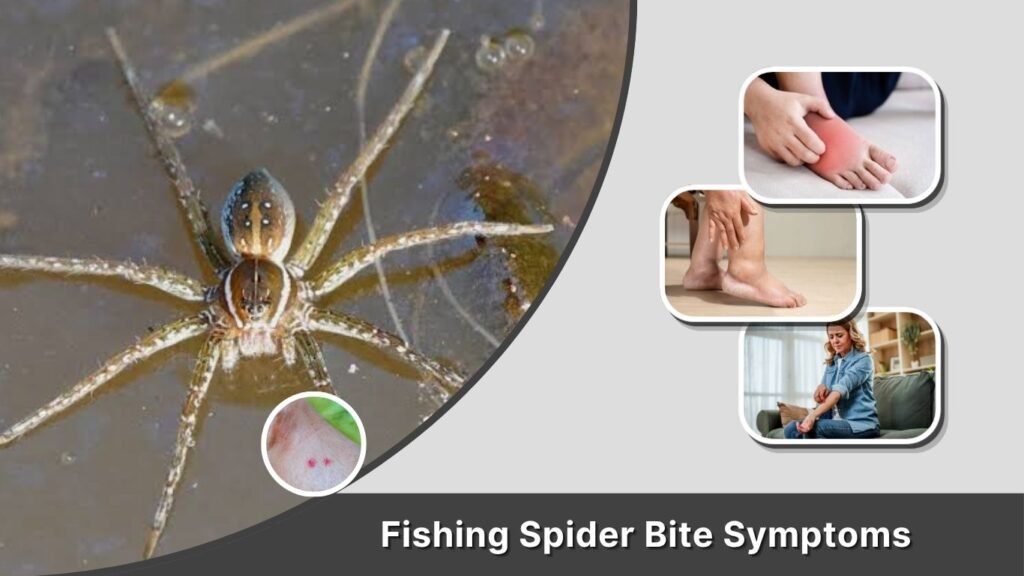
Most ordinary spider and insect bites produce local rather than severe systemic symptoms. Fishing spiders are not regarded as medically important spiders, so a confirmed fishing spider bite would generally be expected to cause limited local irritation rather than the characteristic severe syndromes associated with black widow or brown recluse bites.
Common Symptoms
Possible fishing spider bite symptoms include:
- Immediate stinging or mild pain
- Redness
- Local swelling
- Tenderness
- Itching
- Warmth around the bite
- A small raised bump
Reactions vary between individuals. Some people may notice little more than a brief sting, while others can develop more noticeable local swelling.
How Long Do Symptoms Last?
There is no precise duration that applies to every fishing spider bite. Minor reactions should generally begin improving rather than becoming progressively more severe.
Monitor the area over the following days. Increasing redness, warmth, swelling, pus, swollen lymph nodes, or worsening pain can indicate infection and should be evaluated rather than simply assumed to be a normal venom reaction.
Are Fishing Spider Bites Dangerous?
For most healthy people, fishing spiders are not considered dangerous. Their intimidating size can create more concern than their venom warrants. The University of Minnesota Extension specifically describes Dolomedes tenebrosus as not harmful to people. As with almost any bite, however, individual reactions and secondary infection can occasionally make an otherwise minor injury more significant.
Dark Fishing Spider Bite
The dark fishing spider (Dolomedes tenebrosus) is particularly intimidating because it can reach about 3.5 inches across including its legs. It has brown coloration, banded legs, and commonly visible chevron-like abdominal markings. Despite its size, it is not considered harmful to humans.
A dark fishing spider bite could still hurt because the spider is physically large enough to puncture skin. Local pain, redness, and swelling should be monitored in the same manner as other minor spider bites.
Six-Spotted Fishing Spider Bite
The six-spotted fishing spider is another member of the Dolomedes group commonly encountered around ponds and other freshwater habitats.
Like other fishing spiders, it may defend itself if trapped or handled, but a bite is not generally associated with the dangerous systemic effects expected from medically important spiders such as black widows.
The same basic first-aid approach is appropriate for an uncomplicated bite.
Striped and White-Banded Fishing Spider Bites
Searches for striped fishing spider bites and white-banded fishing spider bites often arise because several Dolomedes species have conspicuous pale stripes or bands.
The exact species cannot be determined by looking at a bite mark. If the spider itself was not safely photographed or identified, it is better to describe the injury as a suspected spider bite rather than assuming a species based solely on symptoms.
How to Treat a Fishing Spider Bite
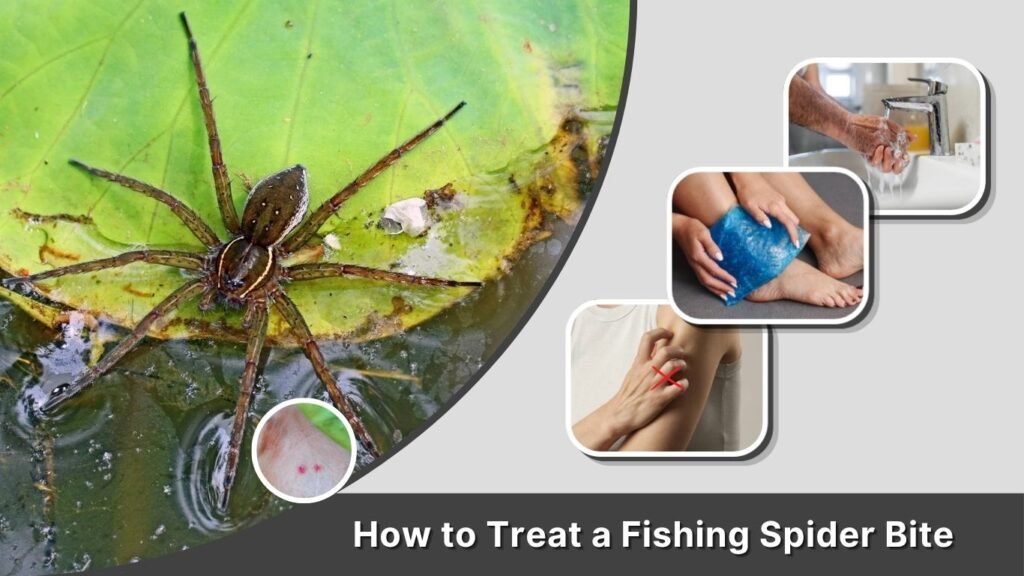
An uncomplicated fishing spider bite can usually be managed with basic wound care. Poison Control recommends cleaning bites with soap and water and applying cold treatment to reduce discomfort and swelling. The bite should then be monitored for worsening local or systemic symptoms.
Fishing Spider Bite First Aid
For a mild bite:
- Wash the area thoroughly with soap and water.
- Apply a cold compress or wrapped ice for about 10–20 minutes.
- Avoid scratching the bite, which can damage the skin.
- Monitor redness and swelling over the following hours and days.
- Consider an over-the-counter antihistamine for troublesome itching if it is safe for you to use.
- Ask a healthcare professional about tetanus vaccination if your immunization is not current or you are unsure of your status.
Poison Control also notes that topical hydrocortisone or calamine may help itching from uncomplicated bites.
What Not to Do
Do not cut the bite, attempt to suck out venom, deliberately break blisters, or apply harsh chemicals to the skin.
You also do not need to capture a live spider and risk another bite. If identification would be useful, a clear photograph taken from a safe distance is preferable.
When Should You Seek Medical Attention?
Even though fishing spider bites are usually minor, symptoms are more important than the presumed spider species. A person should seek medical attention when the reaction becomes severe, spreads well beyond the original bite area, shows signs of infection, or involves symptoms elsewhere in the body.
Warning Signs to Watch For
Get prompt medical help for:
- Difficulty breathing or wheezing
- Swelling of the face, lips, tongue, or throat
- Widespread hives
- Fainting or severe dizziness
- Severe or rapidly worsening pain
- Rapidly spreading redness or swelling
- Pus or other signs of infection
- Fever or significant illness
- Severe muscle cramps or body-wide symptoms
- A wound that continues getting larger or darker
Difficulty breathing, throat swelling, or other signs of a severe allergic reaction require emergency care. Poison Control recommends seeking help when local symptoms worsen significantly, systemic symptoms develop, or a medically important spider may have been responsible.
How to Prevent Fishing Spider Bites
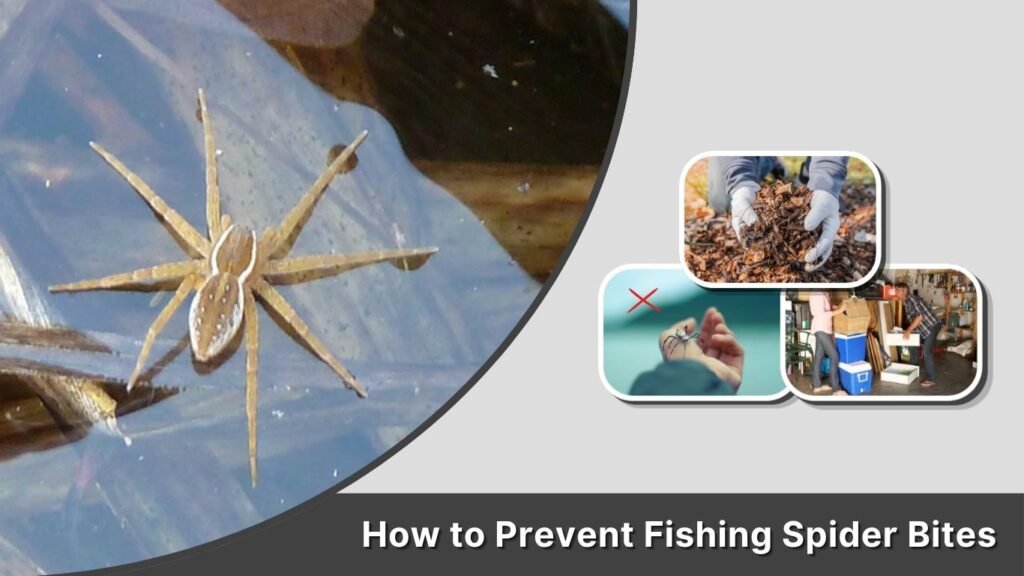
Fishing spiders are beneficial predators and generally do not need to be killed simply because they are nearby. Dark fishing spiders are associated with ponds, swamps, and slow-moving streams but can wander away from water and occasionally enter buildings. Avoiding direct handling is usually enough to prevent bites.
Simple Prevention Tips
- Do not handle fishing spiders with bare hands.
- Shake out outdoor shoes and clothing before wearing them.
- Wear gloves when moving wood, rocks, or stored outdoor items.
- Use a container to relocate an indoor spider rather than grabbing it.
- Reduce clutter in garages, basements, and sheds.
- Teach children not to pick up unfamiliar spiders.
A large fishing spider may look threatening, but leaving it alone is normally the safest approach for both the spider and the person.
FAQs
Fishing spider bites generate concern largely because these spiders can grow surprisingly large. Size, however, does not automatically indicate dangerous venom. Most encounters do not result in bites, and uncomplicated bites are expected to cause local symptoms. The following questions address some of the most common concerns about dark, six-spotted, and other fishing spiders.
Do Dark Fishing Spiders Bite Humans?
Yes, they are physically capable of biting, particularly if trapped or handled. However, dark fishing spiders are not considered harmful to people and normally avoid confrontation.
Is a Fishing Spider Bite Poisonous?
Fishing spiders use venom to capture prey, but their bites are not considered medically dangerous to most humans. A bite can still produce temporary local pain, redness, or swelling.
Does a Six-Spotted Fishing Spider Bite?
A six-spotted fishing spider can bite defensively if seriously disturbed or trapped, but bites are uncommon and the species is not known for causing severe human envenomation.
Can You Identify a Fishing Spider Bite From a Picture?
Not reliably. Redness, swelling, bumps, and itching occur with many insect bites and skin conditions, so a picture of the wound alone usually cannot confirm that a fishing spider caused it.
Should I Worry About a Fishing Spider Bite?
Usually not if symptoms remain mild and local. Wash the area, use a cold compress, and monitor it. Seek medical attention if swelling or pain worsens substantially, infection develops, or you experience breathing problems, hives, severe cramps, or other body-wide symptoms.
