
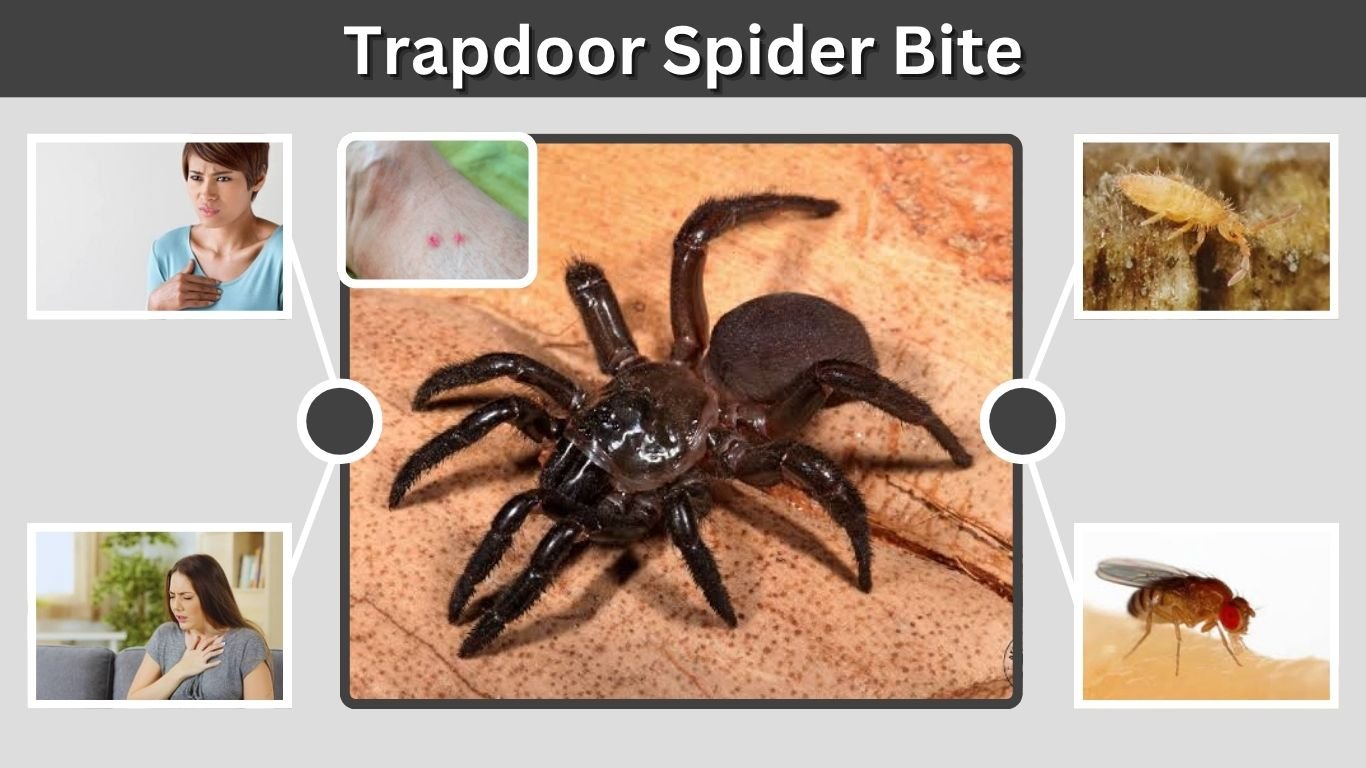
A trapdoor spider bite can be painful, but bites from typical trapdoor spiders are not generally considered dangerous to humans. Most documented cases involve temporary pain, redness, and swelling around the bite area. Trapdoor spiders normally remain inside underground burrows and are more likely to bite when handled or threatened. However, some Australian trapdoor spiders resemble medically significant funnel-web spiders, so uncertain identification should always be taken seriously. Knowing the symptoms and correct first aid can help you respond safely after a suspected bite.
Do Trapdoor Spiders Bite Humans?
Yes, trapdoor spiders are physically capable of biting humans. They possess strong fangs and venom used primarily for capturing prey. However, they are secretive burrowing spiders rather than animals that actively pursue people. Most encounters occur when a spider is accidentally disturbed, uncovered, trapped against the skin, or deliberately handled. Australian Museum guidance describes typical trapdoor spider bites as painful but not dangerous.
Why Would a Trapdoor Spider Bite?
Situations that may increase the chance of a bite include:
- Picking up a spider by hand
- Disturbing its burrow
- Trapping the spider against clothing or skin
- Handling soil, wood, or objects where a spider is hiding
- Attempting to capture the spider
- Accidentally stepping close to or contacting a wandering male
Most trapdoor spiders prefer remaining concealed rather than confronting humans.
Female Trapdoor Spider Bite
Female trapdoor spiders usually spend most of their lives in burrows, making encounters less frequent than encounters with wandering males.
A female can still bite defensively if removed from its retreat or handled. Because females of many species have robust bodies and strong fangs, the bite itself may be mechanically painful even when it does not cause serious envenomation.
Trapdoor Spider Bite Symptoms
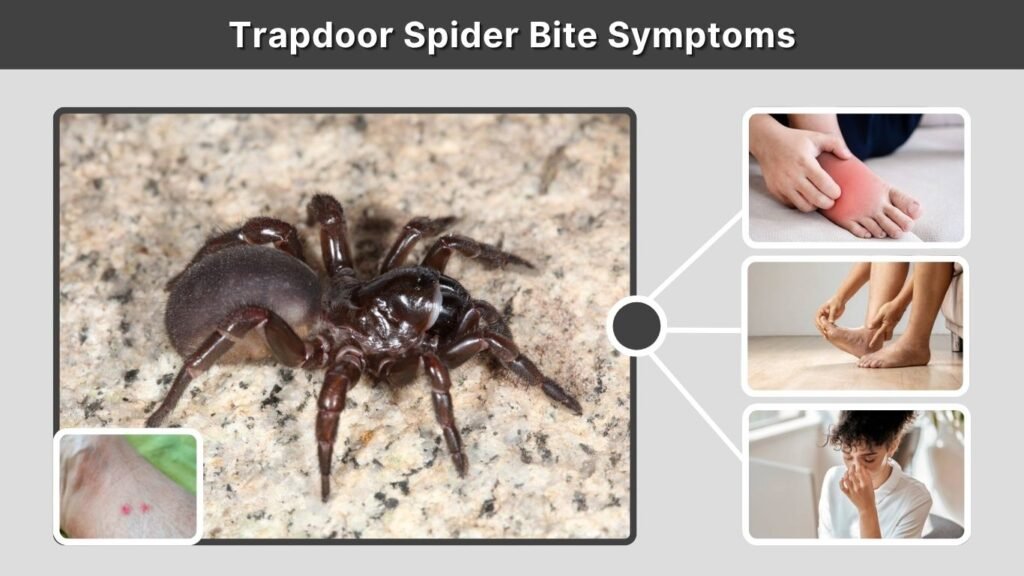
The most consistently reported trapdoor spider bite symptoms are localized pain and swelling. Australian Museum information specifically notes these effects for brown and sigillate trapdoor spiders. Severe systemic effects are not typical, although one unspecified report of severe effects has been associated with a sigillate trapdoor spider bite.
Common Symptoms
A typical bite may cause:
- Immediate pain
- Redness around the bite
- Local swelling
- Tenderness
- Mild irritation
- Small puncture marks
- Temporary discomfort around the affected area
Symptoms and severity can vary according to the species, location of the bite, amount of venom delivered, and individual response.
What Does a Trapdoor Spider Bite Look Like?
There is no distinctive skin appearance that reliably proves a wound came from a trapdoor spider.
A fresh bite may show redness, swelling, tenderness, or small puncture marks. These features can resemble bites, stings, skin infections, and other minor injuries. Therefore, trapdoor spider bite pictures alone are not a dependable method of identification.
If possible, identifying the actual spider is much more useful than trying to identify the species from the skin reaction.
What Happens If You Get Bit by a Trapdoor Spider?
For a correctly identified common trapdoor spider, symptoms usually remain around the bite site rather than developing into severe whole-body poisoning. Brown trapdoor spider bites may produce pain and local swelling but are not regarded as dangerous. Persistent or worsening symptoms should still receive medical assessment.
How Long Can Symptoms Last?
There is no exact duration that applies to every bite. Mild local reactions may gradually improve, while larger or more painful reactions can persist longer.
Seek medical advice if pain or swelling continues, becomes substantially worse, or new symptoms appear. Australian Museum guidance specifically recommends medical attention when symptoms persist.
Can a Trapdoor Spider Bite Kill You?
Typical trapdoor spider bites are not considered life-threatening to humans. This is very different from bites by some Australian funnel-web spiders, which can cause severe and potentially life-threatening envenomation.
The distinction is particularly important because some dark, stocky trapdoor spiders can be mistaken for funnel-web spiders.
Trapdoor Spider Bite First Aid
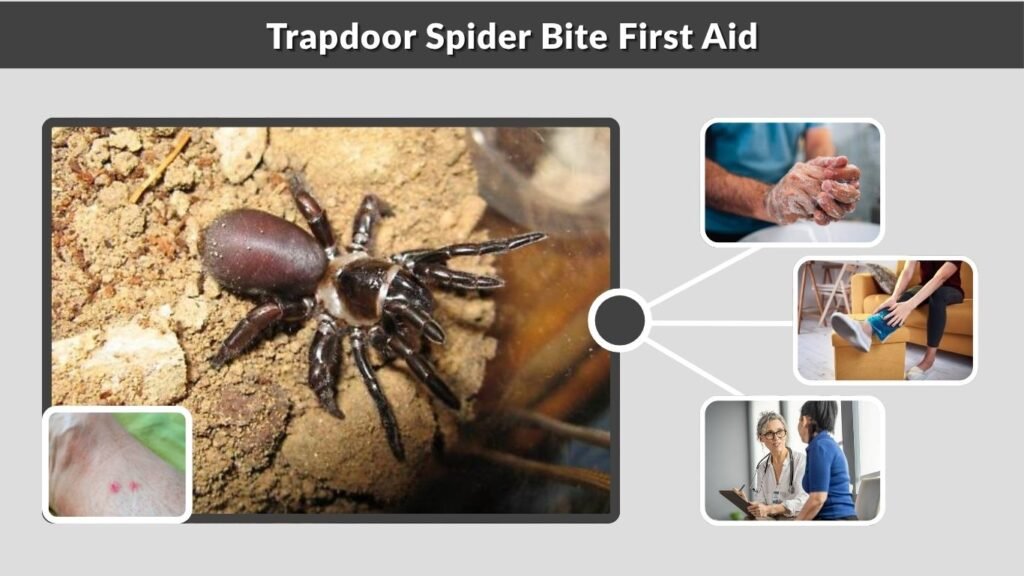
For most spider bites other than suspected funnel-web, mouse spider, or redback bites, Australian health guidance recommends cleaning the area and using a cold pack to control pain. Treatment should be based on the spider involved and the person’s symptoms rather than attempting home remedies marketed as a specific “trapdoor spider bite cure.”
What to Do After a Bite
For a suspected ordinary trapdoor spider bite:
- Move away from the spider to prevent another bite.
- Wash the area thoroughly with soap and water.
- Apply a cold pack for about 15 minutes to reduce pain and swelling.
- Avoid cutting or sucking the wound.
- Monitor symptoms for worsening pain, swelling, or other reactions.
- Seek medical advice if symptoms persist or become concerning.
Health guidance advises against cutting spider bites or applying a tourniquet.
When Should You Seek Medical Attention?
Medical evaluation is appropriate when:
- The spider cannot be confidently identified
- Pain or swelling continues or worsens
- Significant symptoms develop away from the bite
- The bite involves a young child or vulnerable person
- The spider could be a funnel-web or another medically significant species
- You are concerned about the person’s condition
Any suspected funnel-web spider bite in Australia should be treated as potentially dangerous and requires immediate emergency care.
Australian Trapdoor Spider Bite
Australian trapdoor spiders deserve special attention because several species can superficially resemble funnel-web spiders. Brown trapdoor spiders are commonly mistaken for funnel-webs, but their bites are generally associated only with local pain and swelling. Identification can nevertheless be difficult for someone without spider expertise.
Trapdoor Spider vs Funnel-Web Bite
The difference is medically important.
Trapdoor spider: Usually produces localized pain and swelling and is not generally considered dangerous.
Funnel-web spider: A suspected bite should be treated as a medical emergency because funnel-web venom can affect the nervous system and potentially cause severe envenomation.
If a dark Australian mygalomorph spider cannot confidently be distinguished from a funnel-web, do not rely on appearance alone to dismiss the bite.
Pressure Bandage or Cold Pack?
For ordinary spider bites, health guidance recommends washing the site and applying a cold pack. A pressure immobilization bandage is specifically recommended for suspected funnel-web and mouse spider bites, not as routine first aid for ordinary trapdoor spider bites.
California and Texas Trapdoor Spider Bites
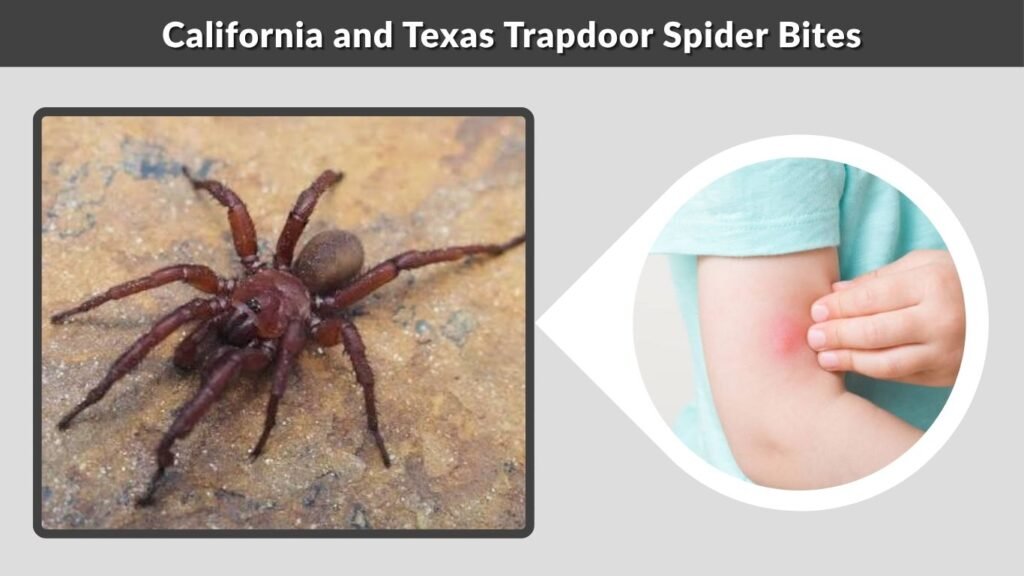
North America contains several trapdoor spider species, including members of groups such as Ummidia. Searches for a California trapdoor spider bite or Texas trapdoor spider bite often reflect concern after encountering one of these large, dark burrowing spiders.
Are American Trapdoor Spiders Dangerous?
The appearance of a spider alone cannot determine the severity of a bite, and “California trapdoor spider” or “Texas trapdoor spider” can refer to more than one species.
If a bite occurs, clean the wound, monitor the reaction, and seek medical care when symptoms are severe, persistent, or unusual. Identification by a qualified local expert can be useful when the spider has safely been photographed or collected.
Ravine Trapdoor Spider Bite
The ravine trapdoor spider, often associated with Cyclocosmia, is famous for its unusual hardened abdominal disc. Although its appearance can be intimidating, its defensive body shape does not automatically mean its venom is unusually dangerous to people.
Does a Ravine Trapdoor Spider Bite?
Like other trapdoor spiders, it has fangs and can potentially bite defensively when threatened or handled.
However, reliable species-specific human bite information is limited. It is therefore better to avoid making assumptions about symptoms based solely on photographs or informal reports.
African and Red Trapdoor Spider Bites
Africa contains many trapdoor spider species, and names such as African trapdoor spider, African red trapdoor spider, and red trapdoor spider can refer to different spiders depending on the source. Consequently, their bite effects should not be treated as identical without an accurate species identification.
Are African Trapdoor Spiders Venomous?
Trapdoor spiders use venom to subdue prey, but venom potency and documented effects on humans vary among species.
If someone is bitten by an unidentified African burrowing spider, the safest approach is to clean the wound, monitor symptoms, and obtain local medical advice if the reaction is significant or persistent.
Trapdoor Spider Bite Prevention
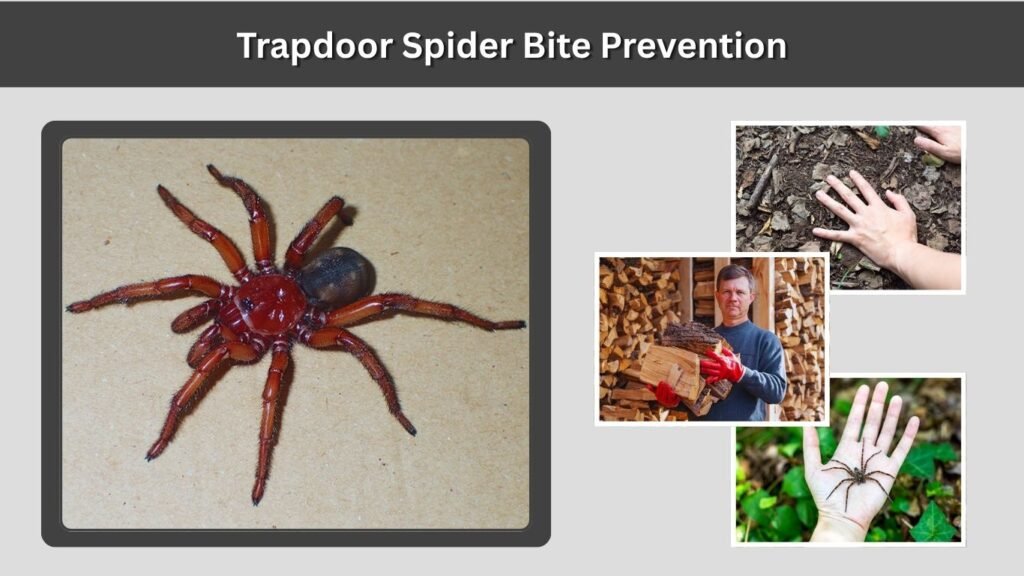
Avoiding direct contact is the simplest way to prevent a bite. Trapdoor spiders generally have little reason to interact with humans, and leaving them undisturbed allows them to remain concealed in their burrows.
Useful precautions include:
- Never handle an unidentified spider with bare hands.
- Avoid inserting fingers into spider burrows.
- Wear gloves when moving logs, rocks, or soil.
- Shake out outdoor shoes and gloves before wearing them.
- Keep children from touching unfamiliar spiders.
- Use a container rather than your hands if a spider must be moved.
- Avoid destroying burrows unnecessarily.
Trapdoor spiders are predators of insects and other small arthropods, so an undisturbed spider outdoors usually does not need to be removed.
FAQs
Is a trapdoor spider bite poisonous?
Trapdoor spiders are venomous rather than poisonous because they deliver venom through their fangs. Typical trapdoor spider bites are not generally considered dangerous to humans, although they can cause pain and swelling.
What does a trapdoor spider bite look like?
It may appear red or swollen and may have small puncture marks, but there is no unique appearance that can reliably identify a trapdoor spider bite from a picture alone.
What are the main trapdoor spider bite symptoms?
The most commonly reported symptoms are local pain and swelling around the bite area. Persistent or worsening symptoms should be medically assessed.
What should I do if a trapdoor spider bites me?
Wash the bite with soap and water and use a cold pack for pain. Seek medical attention if symptoms persist or worsen. If an Australian funnel-web spider could be responsible, treat the situation as an emergency.
Are trapdoor spider bites dangerous to humans?
Most correctly identified trapdoor spider bites are not considered dangerous and usually cause localized symptoms. The major concern is confusing certain Australian trapdoor spiders with medically significant funnel-web spiders.
