
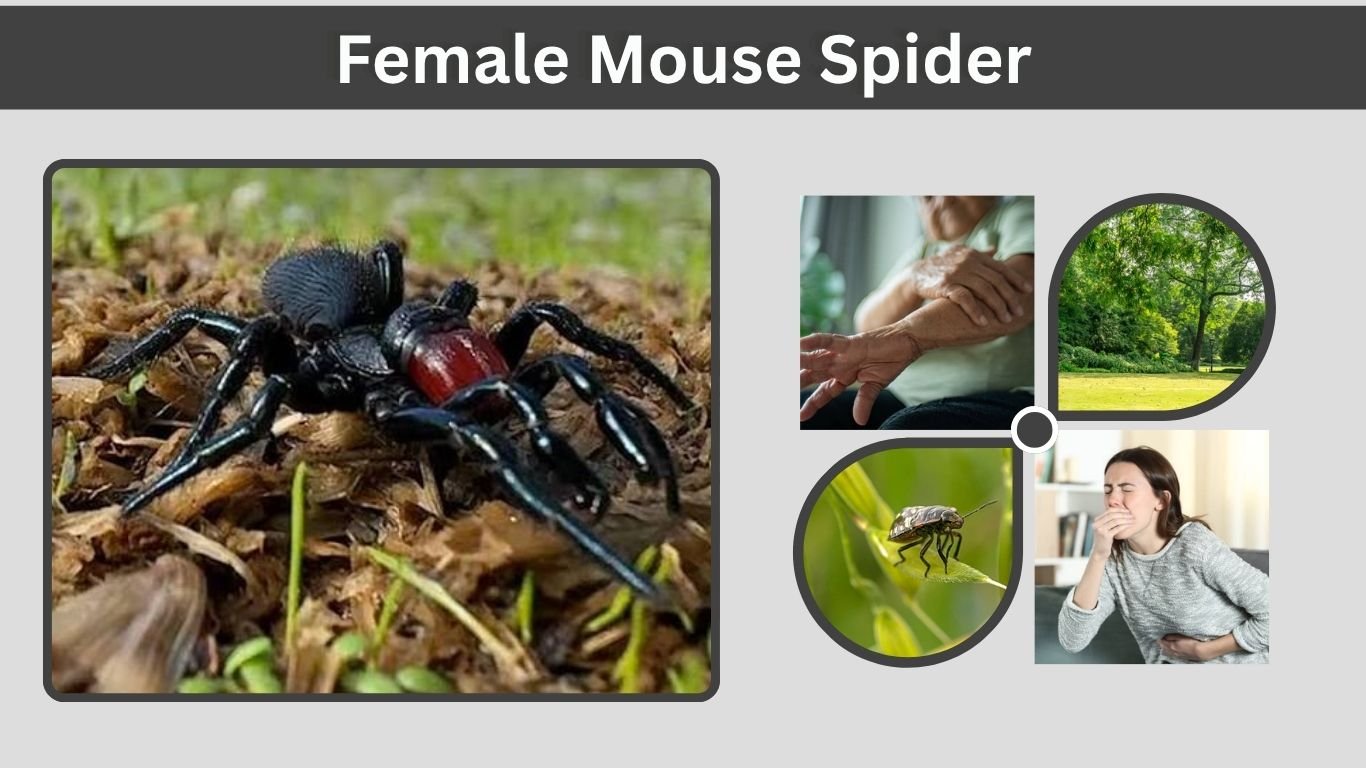
The female mouse spider is a powerful, burrowing spider belonging to the genus Missulena. Females are generally stockier and darker than males, with strong jaws, a glossy carapace, and a compact body built for life underground. Mouse spiders occur across mainland Australia, where females spend much of their lives inside silk-lined burrows. Although encounters with people are uncommon, their venom can be medically significant, making correct identification and safe handling especially important.
What Does a Female Mouse Spider Look Like?
Female mouse spiders have the heavy, muscular appearance typical of mygalomorph spiders, the group that also includes funnel-webs and trapdoor spiders. Their dark coloration and large jaws can make them look intimidating, while their compact legs distinguish them from many long-legged wandering spiders.
Female Mouse Spider Identification
Common identification features include:
- Color: Usually black, dark brown, or very dark reddish-brown
- Body: Thick, compact, and strongly built
- Carapace: Smooth and often glossy
- Jaws: Large, powerful chelicerae with substantial fangs
- Legs: Shorter and sturdier than those of many common house spiders
- Abdomen: Rounded and usually dark-colored
- Lifestyle: Primarily a ground-dwelling, burrowing spider
- Movement: Females are usually encountered much less often than roaming males
Mouse spiders possess very large fangs relative to their body size, allowing them to pierce and crush prey effectively.
Female Mouse Spider Size
Female mouse spider size varies among species. They are usually robust rather than exceptionally long-legged, and a large mouse spider may measure several centimeters when its legs are included. Queensland Museum notes that large individuals may reach around 5 cm overall, although many are considerably smaller.
Females often appear larger and heavier than males because they spend most of their adult lives maintaining a burrow and producing eggs. Their thick body and powerful jaws can also make them look larger than their measurements suggest.
What Does a Female Red-Headed Mouse Spider Look Like?
The name red-headed mouse spider can be misleading when identifying females. The striking red head associated with Missulena occatoria is especially characteristic of adult males.
Female red-headed mouse spiders are generally much darker and can appear almost entirely black or very dark brown. Therefore, finding a dark female does not rule out the red-headed mouse spider species. Missulena occatoria is widely distributed across mainland Australia.
Female Mouse Spider Habitat and Behavior
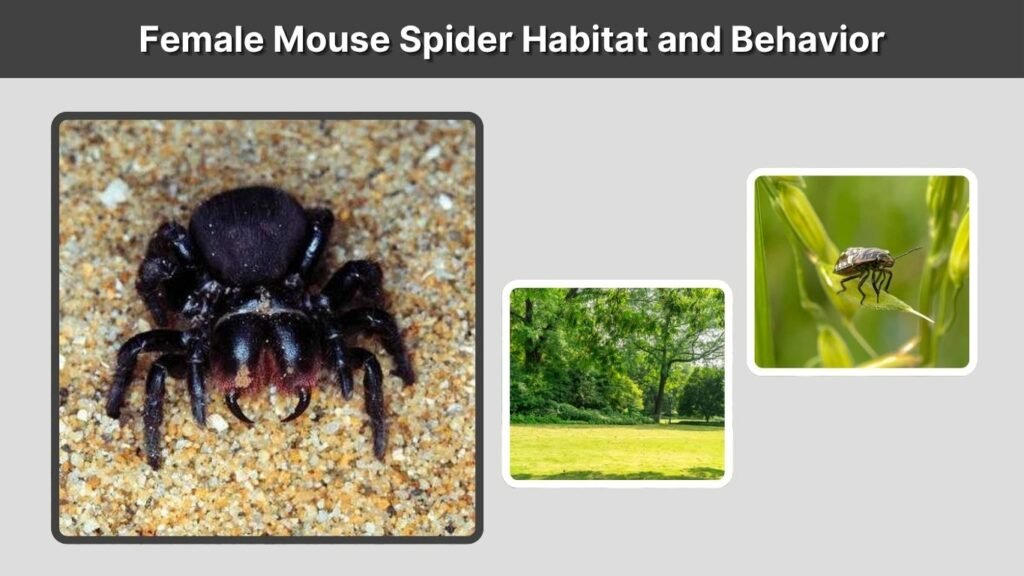
Female mouse spiders are closely associated with underground burrows. Rather than regularly wandering across open ground, they normally remain concealed and wait for suitable prey. This lifestyle is one reason females are seen less frequently than males.
Where Do Female Mouse Spiders Live?
Mouse spiders occur across much of mainland Australia in habitats ranging from open forests to relatively dry shrubland. Some species can also occur near suburban areas where suitable soil, leaf litter, and prey are available.
Claims of native Australian mouse spiders naturally occurring in places such as California, Texas, Georgia, North Carolina, Virginia, or the UK should therefore be treated cautiously. Similar-looking trapdoor or mygalomorph spiders can easily be mistaken for Missulena.
Female Mouse Spider Burrows
Females construct silk-lined burrows in the soil and may remain associated with them for long periods. Queensland Museum describes Eastern Mouse Spider shelters as occurring beneath leaf litter, where the entrance can be difficult to notice.
The burrow provides protection from predators, dry weather, and temperature extremes. It also creates an effective location from which the spider can detect and capture passing prey.
What Do Female Mouse Spiders Eat?
Female mouse spiders are predators. Their strong fangs allow them to seize and crush small animals that approach their burrow. Their diet mainly consists of insects and other arthropods that they can overpower.
Because females typically hunt from or around the burrow rather than actively chasing prey over long distances, people rarely notice them feeding.
Are Female Mouse Spiders Venomous?
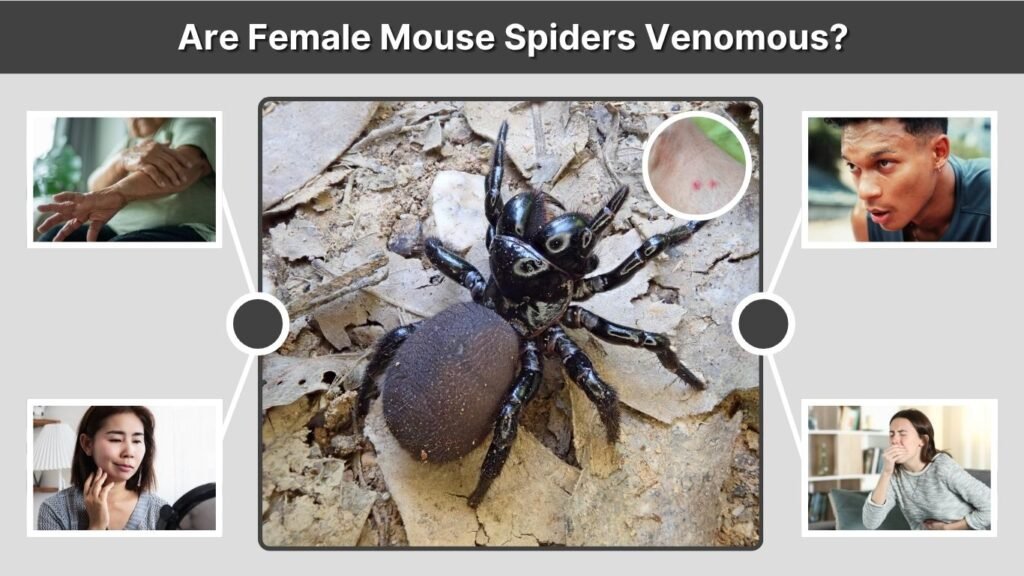
Yes. Female mouse spiders are venomous, and bites should be considered potentially serious. Mouse spiders are closely related to other medically important Australian mygalomorph spiders and possess venom capable of affecting humans.
However, bites are uncommon, and mouse spiders do not necessarily inject a significant amount of venom every time they bite. Queensland Museum notes that encounters and bites are relatively rare, despite the spider’s powerful fangs.
Female Mouse Spider Bite
A female mouse spider can deliver a painful bite because its large fangs can penetrate human skin. A bite may happen if the spider is trapped, picked up, stepped on, or otherwise disturbed.
A mouse spider should never be handled with bare hands. If identification is uncertain and the spider resembles a large, dark Australian mygalomorph, it is safer to treat a suspected bite seriously.
Female Mouse Spider Bite Symptoms
Possible symptoms of significant mouse spider envenomation may include:
- Severe pain around the bite
- Sweating
- Nausea or vomiting
- Abdominal pain
- Excessive saliva
- Muscle twitching
- Numbness around the mouth
- Rapid pulse
- Breathing difficulty
- Confusion or disorientation
Severe symptoms are not expected after every bite, but the potential consequences mean suspected mouse spider bites warrant urgent medical attention.
What Should You Do After a Mouse Spider Bite?
Australian first-aid guidance recommends treating a suspected mouse spider bite similarly to a funnel-web spider bite.
Keep the person as still as possible, apply a pressure immobilisation bandage to the affected limb, immobilise the limb, and seek emergency medical assistance. Do not cut the bite, use a tourniquet, or encourage unnecessary movement.
If a bite occurs outside Australia, contact the appropriate local emergency medical service or poison-information service.
Male vs Female Mouse Spider
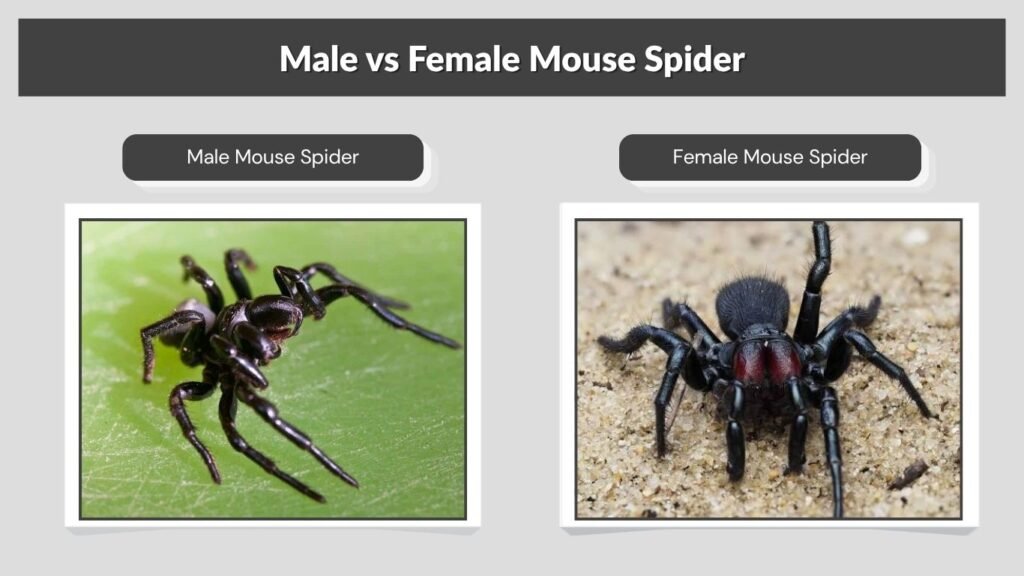
Male and female mouse spiders can look sufficiently different that people sometimes mistake them for separate species. Sex-related differences are especially noticeable in species such as the red-headed mouse spider.
Female Mouse Spider vs Male Mouse Spider
Female mouse spiders tend to be heavier, darker, and more robust, while adult males are generally better adapted for wandering in search of females.
Females spend much more of their lives in or around burrows. Mature males are more likely to leave shelter and travel across the ground, which makes males more likely to be noticed by people.
Color can also differ significantly. Male red-headed mouse spiders are famous for their contrasting reddish head region, whereas females of the same species are much darker.
Why Are Female Mouse Spiders Rarely Seen?
A female may spend years associated with an underground retreat instead of roaming in exposed areas. This secretive lifestyle keeps her protected and close to a reliable hunting location.
Queensland Museum reports that mouse spiders are rarely seen and tend to remain hidden in dark areas and leaf litter.
Female Mouse Spider Facts
Female mouse spiders are impressive Australian burrowing predators, but their secretive habits mean relatively few people encounter them.
They belong to the genus Missulena, are equipped with exceptionally strong fangs, and occur widely across mainland Australia. Their resemblance to funnel-web and trapdoor spiders can make visual identification difficult, especially for anyone unfamiliar with Australian mygalomorph spiders.
Despite their intimidating appearance, they usually remain hidden rather than actively seeking contact with humans.
FAQs
Are Female Mouse Spiders Poisonous?
Female mouse spiders are venomous rather than poisonous. Venom is delivered through their fangs when they bite. Because potentially serious envenomation is possible, a suspected mouse spider bite should receive urgent medical attention rather than being treated as an ordinary spider bite.
How Big Is a Female Mouse Spider?
Size varies depending on species and age. Female mouse spiders have thick bodies and sturdy legs, and larger specimens can measure several centimeters overall. Their robust shape and large jaws often make them look bigger and more powerful than similarly sized common spiders.
Is a Female Red-Headed Mouse Spider Red?
Usually not in the way the male is. Adult male red-headed mouse spiders are famous for their striking reddish head region, whereas females are much darker. A female may therefore appear primarily black or dark brown despite belonging to the red-headed mouse spider species.
Where Are Female Mouse Spiders Found?
Native mouse spiders of the genus Missulena occur primarily in Australia, with species distributed widely across the mainland. They inhabit environments including forests, shrublands, leaf litter, gardens, and areas with soil suitable for constructing underground burrows.
Are Female Mouse Spiders Aggressive?
Female mouse spiders are not normally wandering around looking for people to bite. Their lifestyle centers on remaining concealed in a burrow. They can defend themselves if disturbed or handled, however, and their large fangs make direct contact risky.
