
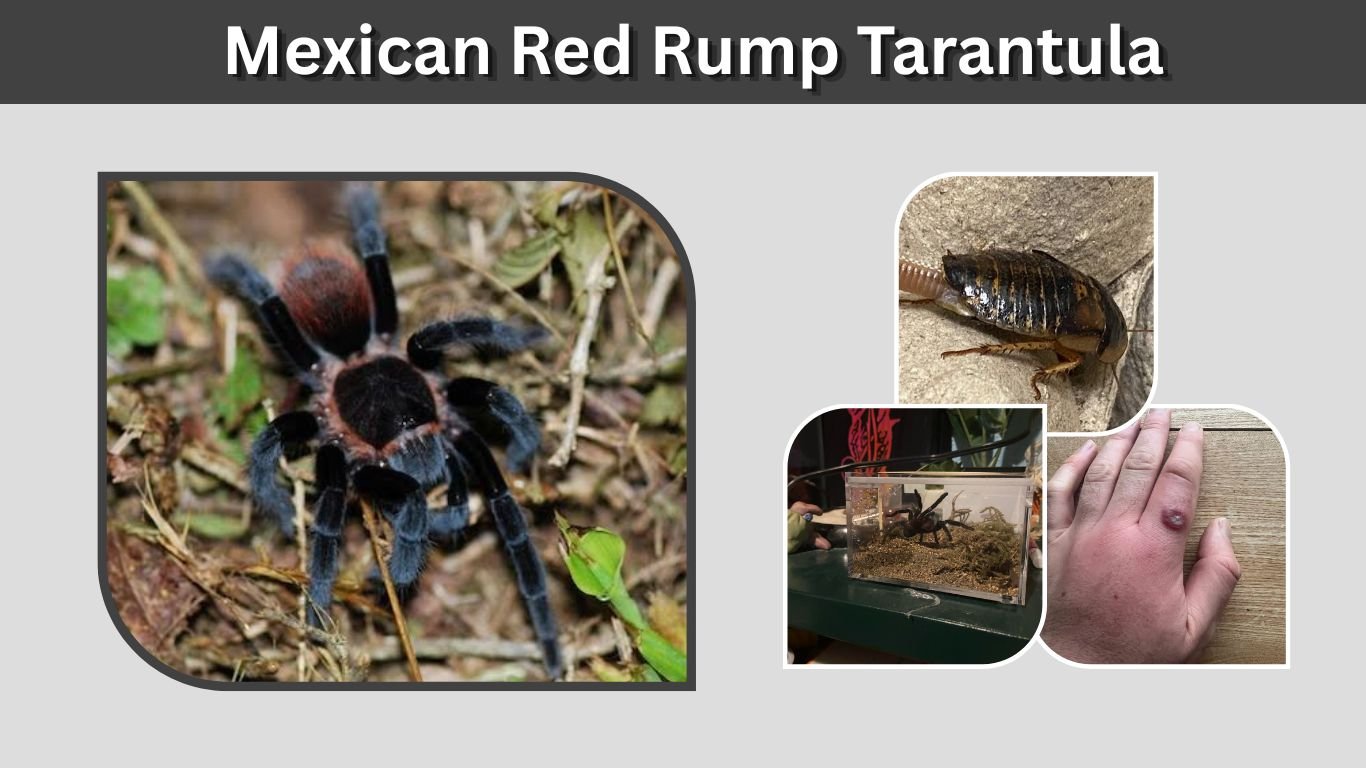
The Mexican red rump tarantula is a dark, heavy-bodied species recognized by the reddish hairs covering its abdomen. Its manageable size, strong feeding response, burrowing behavior, and relatively straightforward care make it popular among new and experienced tarantula keepers.
Its accepted scientific name is Tliltocatl vagans, although older books and pet listings may still call it Brachypelma vagans. The species naturally occurs in Mexico, Guatemala, and Belize.
Mexican Red Rump Overview
| Feature | Information |
| Scientific name | Tliltocatl vagans |
| Former name | Brachypelma vagans |
| Adult leg span | Approximately 5–6.5 inches |
| Lifestyle | Terrestrial and opportunistically burrowing |
| Temperament | Usually manageable but sometimes defensive |
| Diet | Live insects |
| Female lifespan | Often 15–20 years or longer |
| Male lifespan | Approximately 4–8 years |
| Experience level | Beginner to intermediate |
Adult size and lifespan vary with sex, genetics, temperature, feeding frequency, and general husbandry. Females become heavier and live considerably longer than mature males.
Mexican Red Rump vs. Mexican Golden Red Rump
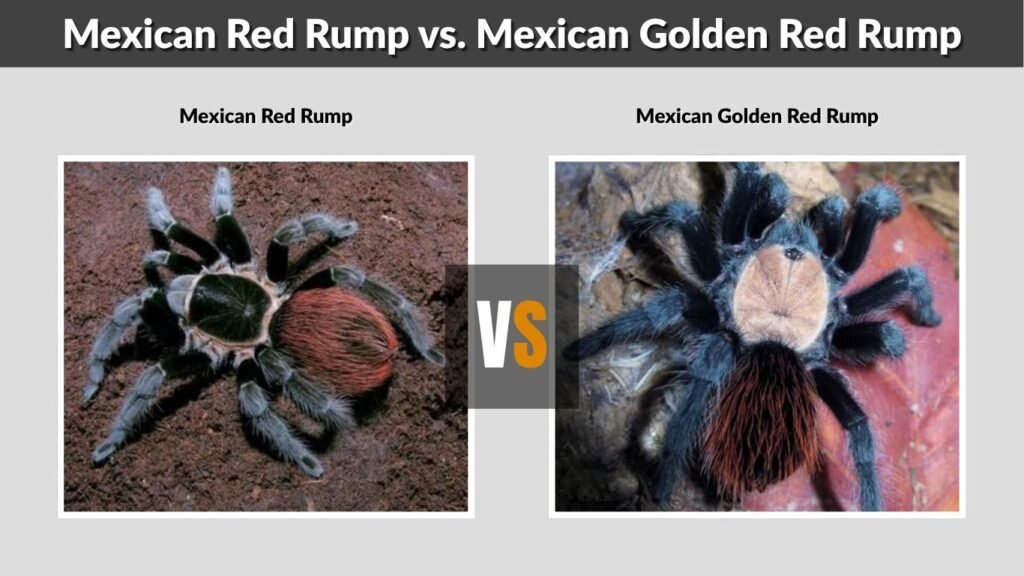
The Mexican red rump and Mexican golden red rump are separate species despite their similar common names.
The standard Mexican red rump is Tliltocatl vagans. It has a mostly black body with prominent reddish abdominal hairs. The Mexican golden red rump is Brachypelma albiceps, a Mexican species with a golden or tan carapace, black legs, and a red-haired abdomen.
| Feature | Mexican red rump | Mexican golden red rump |
| Scientific name | Tliltocatl vagans | Brachypelma albiceps |
| Carapace | Dark brown to black | Golden or tan |
| Legs | Mostly black | Black |
| Abdomen | Black with red hairs | Black with reddish hairs |
| Distribution | Mexico, Guatemala, and Belize | Mexico |
Always check the scientific name before purchasing, because common names are applied inconsistently by some sellers.
What Does a Mexican Red Rump Look Like?
An adult Mexican red rump has a velvety black or dark brown carapace, thick black legs, and a rounded abdomen covered with copper-red or rust-red hairs. Recently molted individuals generally display the strongest contrast.
Identification Features
- Dark, velvety body and legs
- Dense reddish hairs on the abdomen
- Thick, powerful terrestrial build
- Shorter legs than many arboreal species
- Urticating hairs on the abdomen
- Adult leg span of approximately 5–6.5 inches
- Burrow or cork-bark retreat
Spiderlings often appear brownish and less colorful. Their dark body and red abdominal coloration become more noticeable as they grow and complete additional molts.
Mexican Red Rump Tarantula Size
A full-grown Mexican red rump commonly reaches approximately five to six inches in diagonal leg span. Particularly large females may approach 6.5 inches, while mature males usually appear slimmer and leggier.
Females generally develop larger bodies and rounded abdomens. Mature males have smaller abdomens, proportionally longer legs, and swollen reproductive structures at the ends of their pedipalps.
Growth is moderate. Warmer conditions and frequent feeding may increase growth, but overfeeding should not be used to force rapid development.
Mexican Red Rump Enclosure
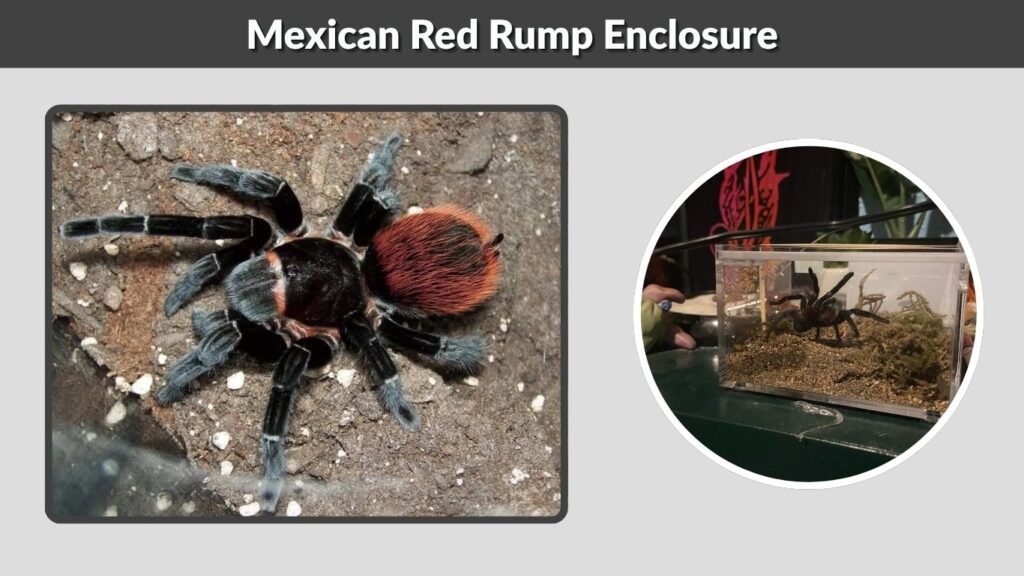
This is a terrestrial tarantula, so its enclosure should prioritize floor space and substrate depth rather than climbing height. An adult can be housed in a low, well-ventilated enclosure with a width and length measuring at least three to four times its leg span.
Enclosure Essentials
- Secure, escape-resistant lid
- Good cross-ventilation
- Four to six inches of compactable substrate
- Cork bark or another sturdy hide
- Shallow water dish
- Artificial foliage or leaf litter
- Limited empty space above the substrate
A 5- to 10-gallon-style terrestrial enclosure can work for an adult when arranged correctly. Excessive height should be avoided because a fall can seriously injure a heavy-bodied tarantula.
Substrate and Burrowing
Use pesticide-free topsoil, coconut fiber, peat-based substrate, or a mixture that holds a tunnel without remaining muddy. Compact the substrate lightly and place cork bark partly beneath it to create a starter burrow.
Some Mexican red rumps excavate deep retreats, while others remain visible near the entrance. Rearranging substrate, blocking the water dish, and covering decorations with soil are normal behaviors.
Temperature and Moisture
Normal warm indoor temperatures are generally suitable. Approximately 70–80°F is a practical range, although short-term variation is usually less concerning than overheating or sudden temperature changes.
Keep the lower substrate slightly moist while allowing much of the surface to remain comparatively dry. Overflowing the water dish occasionally can maintain a moisture gradient without soaking the entire enclosure.
Avoid heat rocks and intense overhead lamps. When supplemental heat is necessary, warm the room rather than placing a strong heat source directly against the enclosure.
What Do Mexican Red Rump Tarantulas Eat?
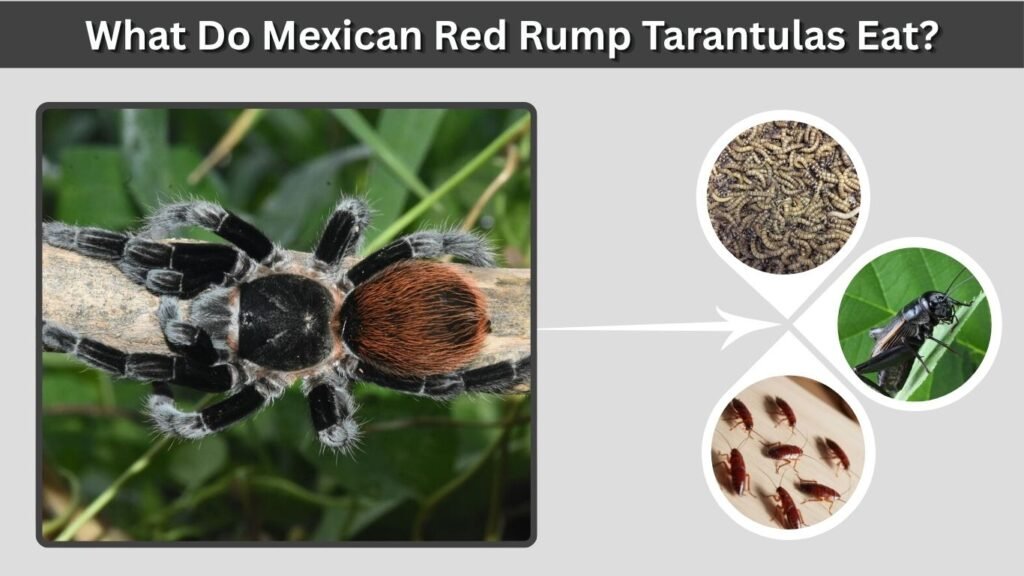
Mexican red rumps are carnivorous ambush predators that accept a variety of live feeder insects.
Suitable foods include:
- Crickets
- Dubia roaches
- Red runner roaches
- Mealworms
- Superworms
- Locusts
- Black soldier fly larvae
Spiderlings can receive small meals once or twice weekly. Juveniles may eat approximately once a week, while healthy adults often need only one appropriately sized meal every one or two weeks. Feeding should be adjusted according to abdomen size rather than following a rigid schedule.
Remove uneaten prey after about 24 hours. Live insects can disturb or injure a tarantula during molting.
Temperament and Handling
Mexican red rumps are often calm when left undisturbed, but individual behavior varies. Some retreat quickly, while others turn toward a disturbance or release urticating hairs from the abdomen.
Handling is not recommended. Urticating hairs can irritate the skin and are especially dangerous around the eyes. A startled spider may also bolt, fall, or bite.
Use long feeding tongs, a soft brush, and a catch cup during enclosure maintenance. Never use your hands to stop an escaping tarantula.
Mexican Red Rump Bite and Venom
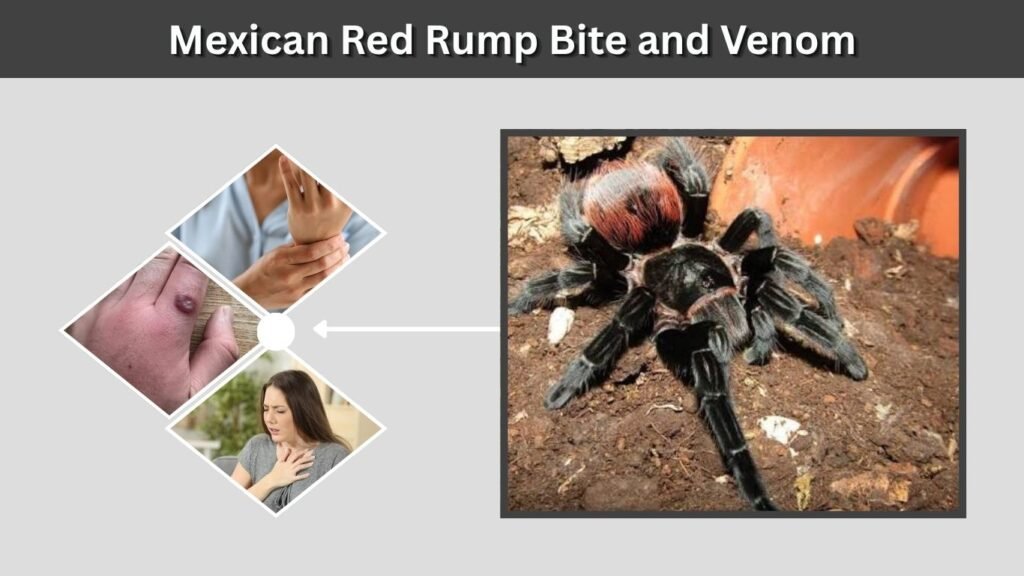
The Mexican red rump is venomous rather than poisonous. It uses venom to immobilize insects, and it may bite when trapped or repeatedly disturbed.
Human bites appear uncommon because retreating or releasing irritating hairs is often the spider’s first response. Nevertheless, its fangs can produce painful puncture wounds. Wash a bite with soap and water and seek medical attention for severe pain, spreading swelling, breathing difficulty, faintness, or persistent symptoms.
Molting and Refusing Food
A Mexican red rump may stop eating for days or weeks before molting. Its abdomen may darken, activity may decline, and it may seal its burrow with substrate.
Do not dig it out or place feeders inside a sealed retreat. A tarantula lying on its back is normally preparing to molt and should not be turned over.
After molting, wait until the fangs become completely dark before feeding. A juvenile may require approximately one week, while a large adult may need 10–14 days or longer.
Mexican Red Rump Lifespan
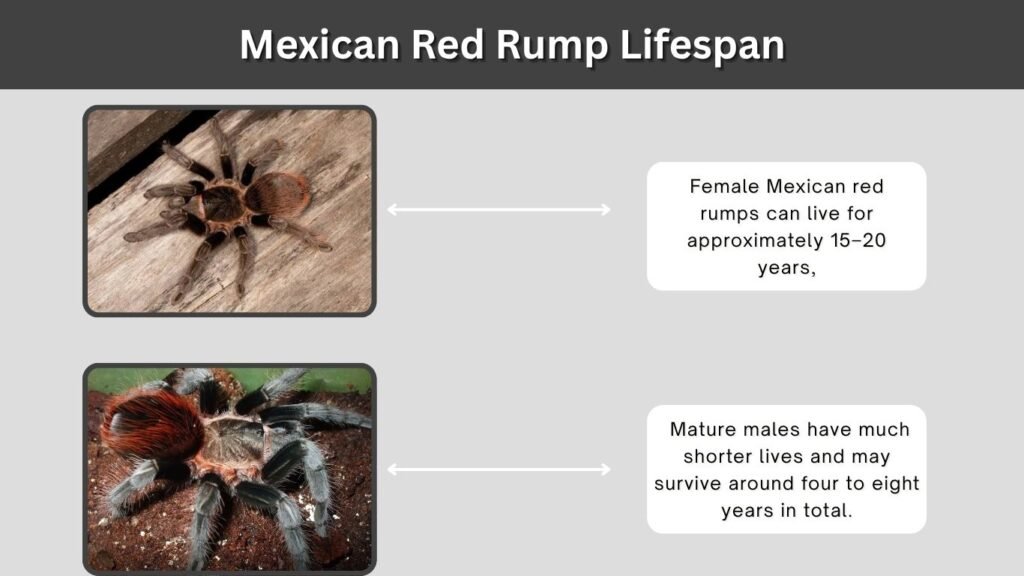
Female Mexican red rumps can live for approximately 15–20 years, with some husbandry reports describing females exceeding 20 years. Mature males have much shorter lives and may survive around four to eight years in total.
Males typically mature sooner and may become restless after their final molt. Females continue molting throughout adulthood and can remain healthy for many additional years.
Mexican Red Rump in Florida
A breeding population was documented in a citrus grove in St. Lucie County, Florida, during the 1990s. However, a more recent review reported that the last verified collection occurred in 2009 and that subsequent surveys failed to locate individuals, suggesting the population declined substantially or disappeared.
Pet tarantulas should never be released outdoors. Released animals can die, establish invasive populations, or negatively affect local wildlife.
Buying a Mexican Red Rump
Confirm that a specimen offered for sale is labeled Tliltocatl vagans. Choose a captive-bred animal with coordinated movement, an undamaged body, all eight legs, and a reasonably rounded abdomen.
Trade in this species is regulated internationally under CITES, so imported or exported specimens may require documentation. Buyers should check local ownership rules and retain receipts showing the animal’s lawful source.
FAQs
Is the Mexican Red Rump Good for Beginners?
Yes, it can be suitable for a responsible beginner. It is hardy, visible, and generally manageable, but keepers must understand urticating hairs, molting, escape prevention, and safe enclosure maintenance.
How Big Does a Mexican Red Rump Get?
Most adults reach approximately five to six inches in diagonal leg span. Large females may approach 6.5 inches, while mature males usually have slimmer bodies and proportionally longer legs.
How Long Does a Mexican Red Rump Live?
Females commonly live 15–20 years and may sometimes exceed 20 years. Males grow and mature faster, generally living only around four to eight years.
Is a Mexican Red Rump Aggressive?
It is usually defensive rather than aggressive. Most individuals prefer retreating, but some may kick urticating hairs, display a threat posture, or bite when cornered.
Why Won’t My Mexican Red Rump Eat?
Food refusal commonly occurs before molting, after a large meal, during cooler conditions, or following rehousing. Remove uneaten prey, provide fresh water, and avoid disturbing a spider that has darkened or sealed its burrow.
