
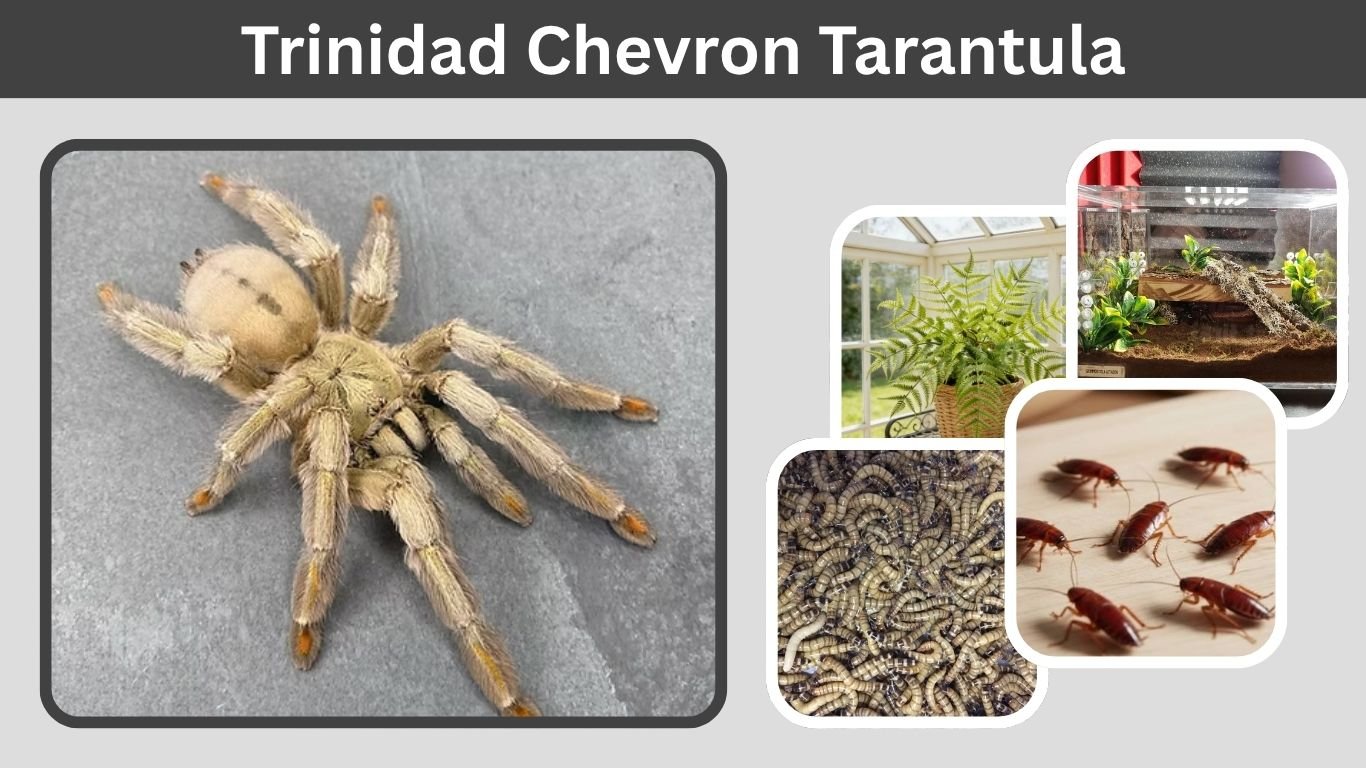
The Trinidad chevron tarantula is a fast-growing, tree-dwelling species recognized by its olive-brown coloration, orange markings, and dark chevron patterns. Scientifically named Psalmopoeus cambridgei, it is native to Trinidad and Tobago and belongs to the tarantula family Theraphosidae.
Although hardy in captivity, this tarantula is extremely quick and can become defensive when cornered. It is better suited to intermediate keepers than complete beginners and should be maintained as a display animal rather than handled.
Trinidad Chevron Tarantula Overview
| Feature | Information |
| Scientific name | Psalmopoeus cambridgei |
| Common name | Trinidad chevron tarantula |
| Native range | Trinidad and Tobago |
| Lifestyle | Arboreal to semi-arboreal |
| Adult leg span | Approximately 5–7 inches |
| Diet | Insects and other invertebrates |
| Female lifespan | Commonly estimated at 10–15 years |
| Male lifespan | Commonly estimated at 3–4 years |
| Temperament | Fast, alert, and defensive |
| Experience level | Intermediate |
Lifespan figures used in the hobby are estimates rather than firmly established scientific records. Genetics, sex, feeding, temperature, hydration, and general care can all influence longevity.
What Does a Trinidad Chevron Tarantula Look Like?
Adult Trinidad chevrons usually have an olive, gray-brown, or greenish body. Dark markings form a chevron-like pattern along the abdomen, while orange or reddish patches may appear near the ends of the legs.
Identification Features
- Olive-green or gray-brown carapace
- Dark chevrons across the abdomen
- Orange markings near the leg tips
- Long legs adapted for climbing
- Dense webbing around its retreat
- Adult leg span of roughly 5–7 inches
- Slimmer, leggier appearance in mature males
Its coloration may look different under various lighting conditions. Freshly molted specimens often appear brighter, while individuals approaching a molt may become darker or duller.
Trinidad Chevron Tarantula Size
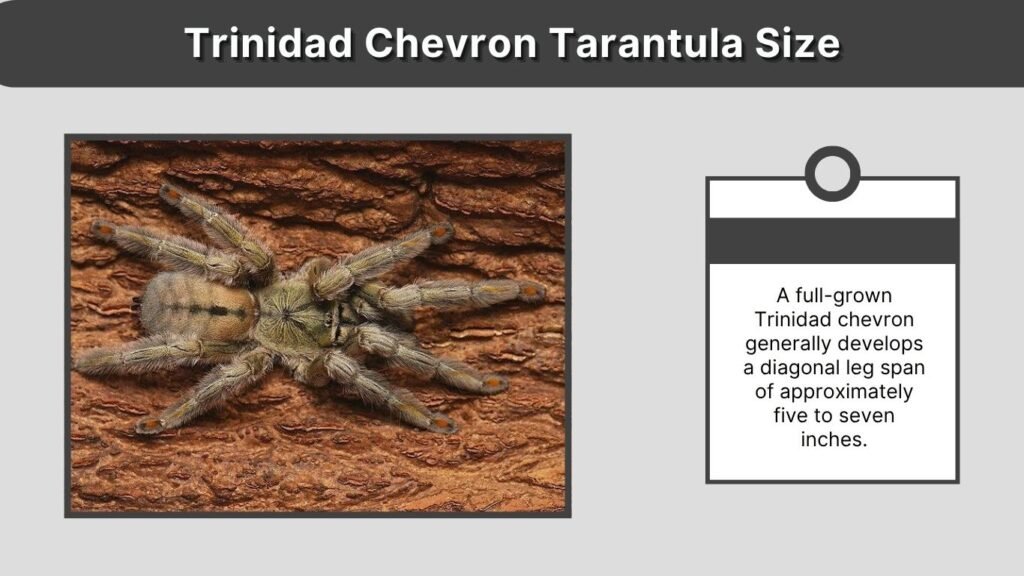
A full-grown Trinidad chevron generally develops a diagonal leg span of approximately five to seven inches. Females usually have heavier bodies and larger abdomens, while mature males tend to be thinner and more long-legged.
Spiderlings grow relatively quickly when kept warm and fed regularly. Females may reach maturity in approximately two to three years, although growth varies among individuals.
The terms “giant” or “huge Trinidad chevron” are sometimes used informally, but this species is considered medium to large rather than one of the world’s largest tarantulas.
Trinidad Chevron Temperament and Behavior
The Trinidad chevron is fast, responsive, and capable of sudden bursts of movement. Its first response is often to retreat into its webbed shelter, but a cornered specimen may raise its front legs, strike, or bite.
This species lacks the abdominal urticating hairs used defensively by many other New World tarantulas. Members of the subfamily Psalmopoeinae instead rely more heavily on speed, threat displays, and biting when escape is impossible.
Is It Aggressive?
“Aggressive” is not the most accurate description because the spider does not normally pursue people. However, it can be highly defensive when disturbed.
Common responses include:
- Running into its retreat
- Bolting upward or across the enclosure
- Turning toward a disturbance
- Raising its front legs
- Striking when repeatedly threatened
- Hiding for days after rehousing
Its speed makes enclosure maintenance and rehousing more challenging than caring for slow terrestrial species.
Can You Handle a Trinidad Chevron?
Handling is strongly discouraged. This tarantula can bolt unexpectedly, climb quickly, and potentially jump short distances between surfaces.
Handling presents risks to both the keeper and the spider. A startled tarantula may bite, while a fall can rupture its abdomen or cause fatal internal injuries.
Use long feeding tongs, catch cups, soft brushes, and escape-proof working containers during maintenance. Never use bare hands to block a fleeing spider.
Trinidad Chevron Tarantula Enclosure
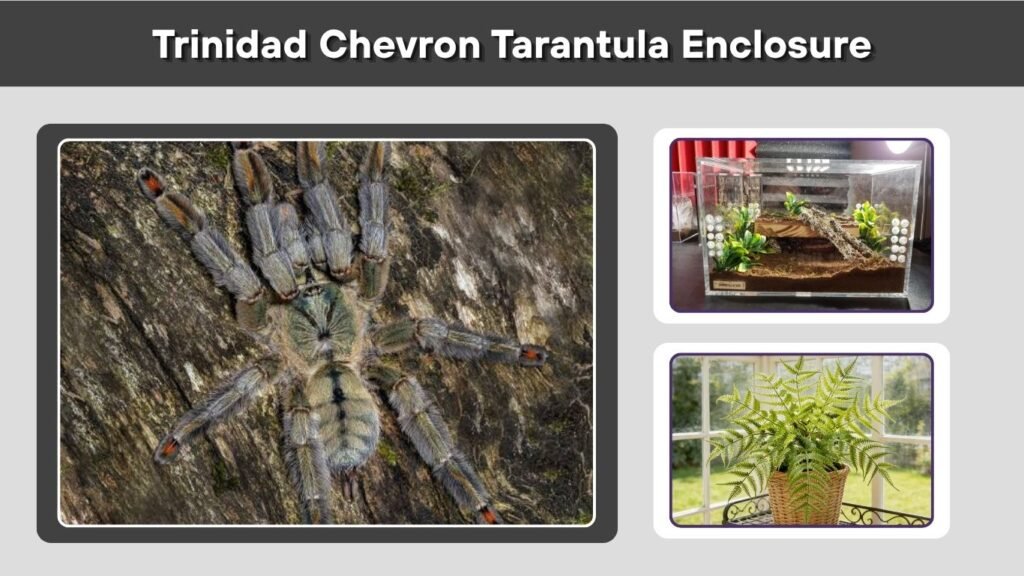
An adult needs a vertically oriented enclosure that provides climbing height, a secure retreat, and good ventilation. An enclosure measuring approximately 12 × 12 × 18 inches works well for a large female, although slightly smaller housing may be suitable when designed efficiently.
Essential Enclosure Features
- Secure, escape-proof door or lid
- Cross-ventilation
- Several inches of moisture-holding substrate
- Tall cork bark positioned vertically or diagonally
- Artificial or live foliage
- Anchor points for webbing
- Shallow water dish
- Easy access for safe feeding
In nature, Trinidad chevrons occupy tree holes, cracks, spaces beneath bark, and even suitable openings in human-made structures. They line these shelters with dense silk.
Juveniles may burrow more than adults, so provide enough substrate for digging and place the cork bark partly into the soil.
Temperature and Moisture
Normal warm room temperatures are usually suitable. A practical range is approximately 72–80°F, provided the enclosure does not experience sudden extremes.
Keep part of the lower substrate slightly moist but never waterlogged. Allow the surface to become drier between watering while maintaining a full water dish.
Good ventilation is as important as moisture. A constantly wet enclosure with stagnant air may encourage mold, mites, and poor substrate conditions. Avoid relying only on a humidity-gauge number; observe the substrate, ventilation, and spider’s access to water.
What Does a Trinidad Chevron Eat?
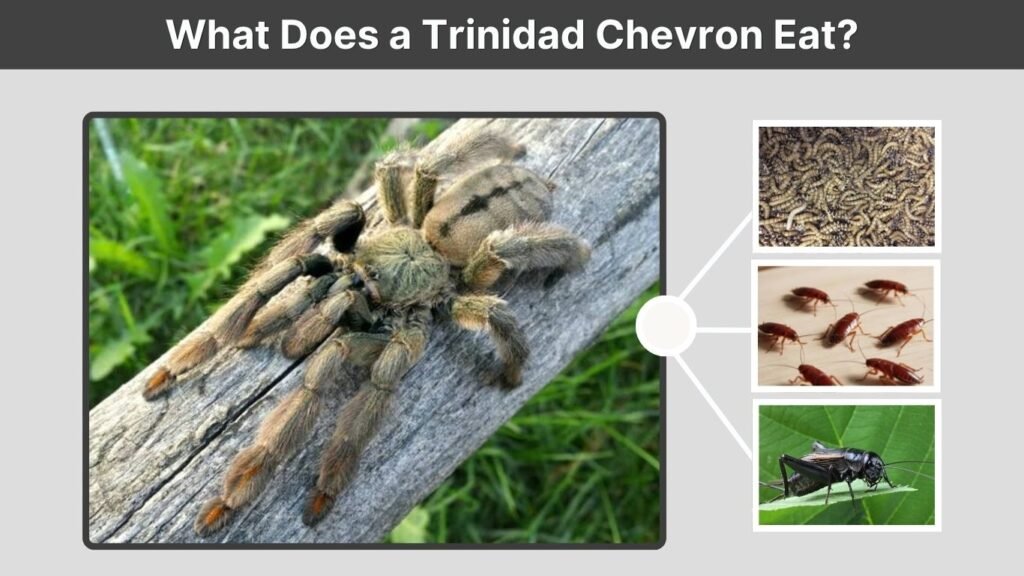
Trinidad chevrons are carnivorous ambush predators that readily accept appropriately sized live invertebrates.
Suitable feeder insects include:
- Crickets
- Dubia roaches
- Red runner roaches
- Locusts
- Mealworms
- Superworms
- Black soldier fly larvae
Spiderlings can receive small prey once or twice weekly. Juveniles may be fed every five to seven days, while healthy adults often require one suitable meal every one or two weeks.
Adjust feeding according to abdomen size rather than following a rigid schedule. Remove uneaten prey within 24 hours, particularly when the tarantula appears to be approaching a molt.
Molting
Before molting, a Trinidad chevron may stop eating, become darker, remain hidden, or seal the entrance of its retreat with silk and substrate.
Do not open the retreat or attempt to expose the spider. Maintain access to water and remove all live feeders. A cricket left inside the enclosure could injure a soft, defenseless tarantula during or immediately after molting.
Wait until the new fangs have turned completely dark before offering food. Juveniles may be ready after about a week, while large adults may need 10–14 days or longer.
Trinidad Chevron Bite and Venom
Like almost all tarantulas, the Trinidad chevron possesses venom for subduing prey. Its venom contains several biologically active peptides, including psalmotoxin and compounds that have been studied for their effects on ion channels and malaria parasites. Laboratory interest in these compounds does not mean a bite is harmless or that the venom itself can be used as medicine.
Reliable clinical information specifically documenting human bites from this species is limited. A bite could cause puncture wounds, localized pain, swelling, muscle discomfort, or other symptoms.
After a bite:
- Wash the area with soap and water.
- Remove rings or tight items before swelling develops.
- Avoid cutting, squeezing, or attempting to extract venom.
- Seek medical care for severe pain, spreading swelling, breathing difficulty, faintness, or persistent symptoms.
People with known allergies or serious health conditions should seek professional medical advice promptly.
Male vs. Female Trinidad Chevron
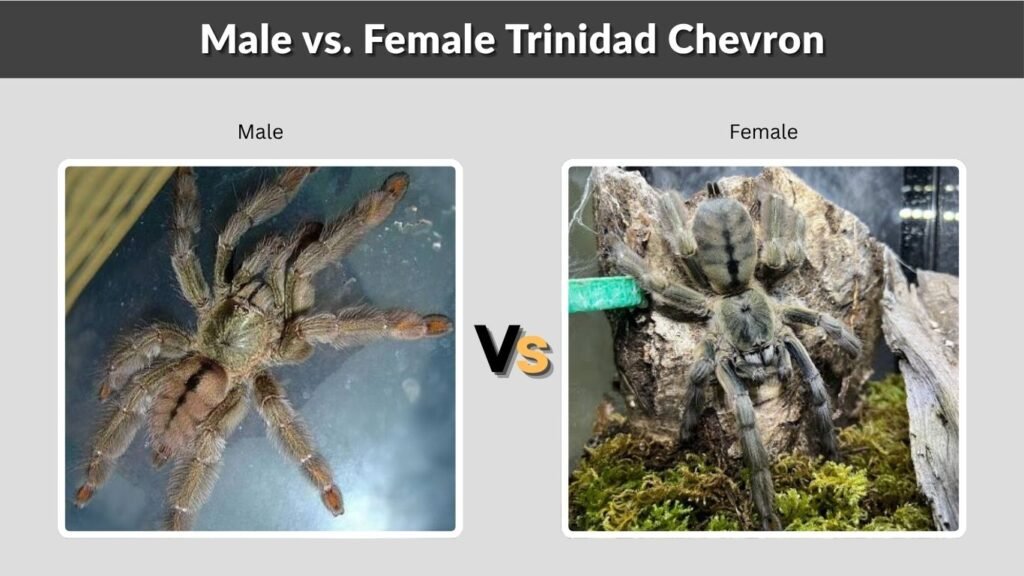
Visual sexing from body shape is unreliable, especially in juveniles. The most dependable method is examining a well-preserved molt.
Female Trinidad Chevron
A female’s shed skin contains spermathecae between the first pair of book lungs. Females generally become heavier, retain a larger abdomen, and continue molting after reaching reproductive maturity.
Male Trinidad Chevron
A mature male develops emboli at the ends of his pedipalps, making them look similar to small boxing gloves. Mature males also develop tibial structures on the first pair of legs and usually become slimmer and more restless while searching for a mate.
Females usually live much longer because mature males often survive only a limited period after their final molt.
Buying a Trinidad Chevron Tarantula
Choose a captive-bred specimen from a seller who provides the correct scientific name, approximate size, feeding history, and molt information.
Look for a tarantula with:
- Coordinated movement
- All eight legs present
- A rounded but not oversized abdomen
- No leaking fluid or visible wounds
- A normal resting posture
- Accurate species identification
Prepare the enclosure before purchasing the spider. Check local ownership, shipping, and import rules, especially when ordering from another country.
FAQs
Is a Trinidad Chevron Good for Beginners?
It is hardy, but its speed and defensive potential make it challenging for a first-time keeper. Someone beginning with tarantulas may find a slower terrestrial species easier to feed, maintain, and rehouse safely.
How Big Does a Trinidad Chevron Get?
Most adults reach approximately five to seven inches in diagonal leg span. Females usually have heavier bodies, while mature males appear thinner and may have proportionally longer legs.
How Long Does a Trinidad Chevron Live?
Captive females are commonly estimated to live around 10–15 years. Males mature faster and often live approximately three to four years in total, although individual longevity varies.
Does the Trinidad Chevron Make Webs?
Yes. It may produce extensive sheet-like and tubular webbing around cork bark, foliage, and its shelter. Juveniles often mix webbing with substrate to create concealed retreats.
Is Trinidad Chevron Venom Deadly?
No confirmed evidence shows that a bite is normally fatal to a healthy person, but species-specific clinical data are limited. The spider has large fangs and active venom, so bites should be avoided and significant symptoms assessed by a medical professional.
