
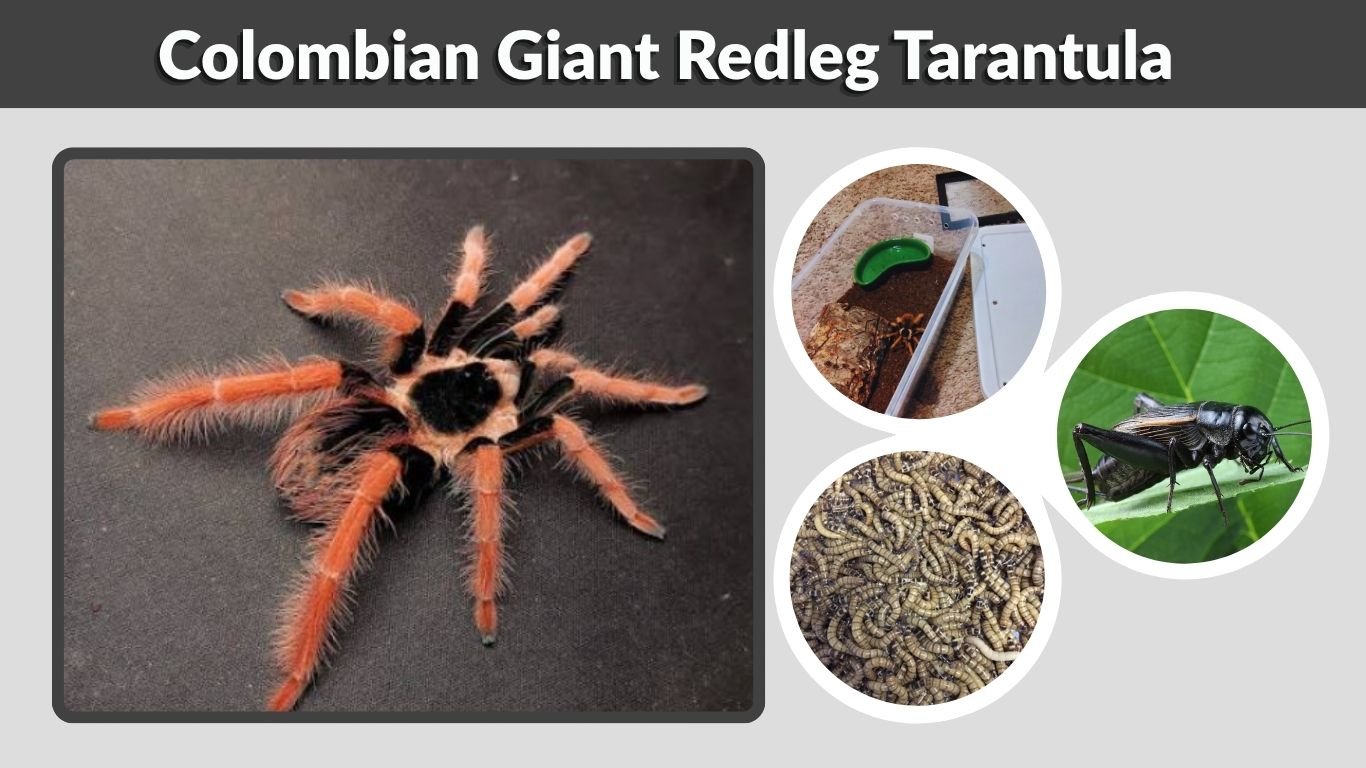
The Colombian giant redleg tarantula is a large, colorful New World species known for its rust-red legs, dark body, burrowing habits, and unusual defensive behavior. Scientifically named Megaphobema robustum, it is native to Colombia and belongs to the tarantula family Theraphosidae.
Although visually impressive, this species is defensive, powerful, and sensitive to poor housing. It is best kept as a display animal by an intermediate or experienced tarantula keeper rather than handled like a conventional pet.
Colombian Giant Redleg Overview
| Feature | Information |
| Scientific name | Megaphobema robustum |
| Common names | Colombian giant redleg, Colombian giant tarantula |
| Native range | Colombia |
| Adult leg span | About 7–8 inches |
| Lifestyle | Terrestrial and burrowing |
| Diet | Insects and other invertebrates |
| Female lifespan | Commonly estimated at 12–20 years |
| Temperament | Skittish and defensive |
| Experience level | Intermediate to advanced |
The word “giant” can be slightly misleading. This tarantula is undoubtedly large, but it is not as enormous as the world’s biggest tarantula species. Adults commonly develop a leg span of around seven inches, with some individuals approaching eight inches.
Colombian Giant Redleg Identification
A full-grown Colombian giant redleg has a thick, muscular body and striking contrasting colors. Its carapace is usually dark or nearly black, while the legs are covered with reddish, rust-orange, or salmon-colored hairs.
Main Identification Features
- Rust-red or orange hairs covering much of the legs
- Dark chocolate or black femurs
- Dark, velvety carapace
- Reddish-brown abdominal hairs
- Thick body and powerful rear legs
- Adult leg span of approximately 7–8 inches
- Dense irritating hairs on the abdomen
Young spiderlings may look less colorful than mature individuals. Their brighter red-orange coloration becomes more noticeable as they grow and molt.
Colombian Giant Redleg Tarantula Size
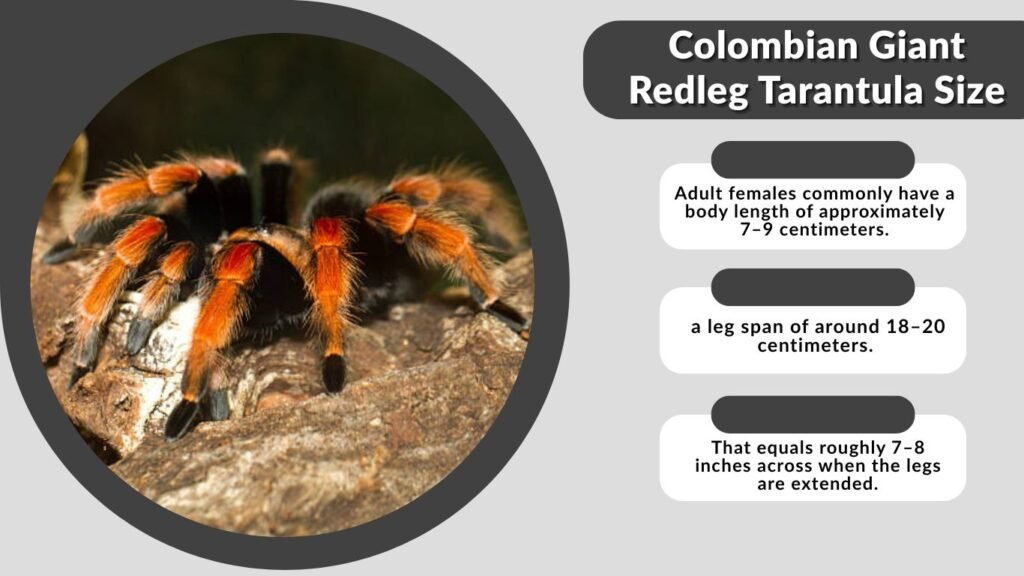
Adult females commonly have a body length of approximately 7–9 centimeters and a leg span of around 18–20 centimeters. That equals roughly 7–8 inches across when the legs are extended. Males may become leggier and less heavily built after reaching maturity.
Females generally appear heavier and more robust. Mature males have longer legs, a smaller abdomen, and reproductive structures that become visible after their final maturation molt.
Growth can be reasonably fast compared with some slow-growing desert tarantulas. However, the exact growth rate depends on temperature, feeding, genetics, and the animal’s individual molting schedule.
Temperament and Defensive Behavior
The Colombian giant redleg is not generally recommended for frequent handling. It can be fast, unpredictable, and highly defensive when disturbed.
Its defensive behavior is particularly unusual. Instead of relying only on a typical raised-front-leg threat posture, it may lift its abdomen, extend its spiny rear legs, turn rapidly, and strike backward. This circling defense is sometimes dramatically nicknamed the “cartwheel of death,” although the name exaggerates the actual danger.
The species may also release urticating hairs from its abdomen. These microscopic hairs can irritate the skin, eyes, nose, and respiratory system. A bite is also possible when the animal is cornered.
Routine handling should therefore be avoided. Handling also creates a serious fall risk because a heavy terrestrial tarantula can rupture its abdomen after dropping onto a hard surface.
Colombian Giant Redleg Enclosure
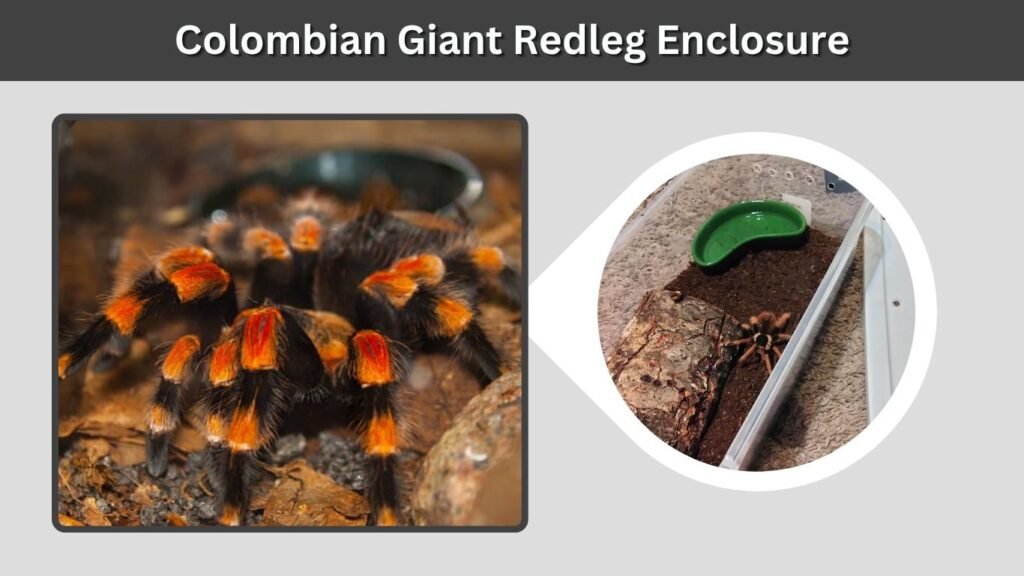
An adult requires a secure, low enclosure with more floor space than height. A practical adult setup is approximately 16 × 12 × 12 inches, although slightly larger housing can work when it remains secure and easy to maintain.
The enclosure should include:
- A tightly secured lid or door
- Good cross-ventilation
- Deep, compactable substrate
- A cork-bark hide
- A stable water dish
- Leaf litter or artificial cover
- Limited open height above the substrate
Only one tarantula should be housed in each enclosure. Tarantulas are solitary, and keeping multiple individuals together can result in injury or cannibalism.
Substrate and Burrowing Space
Provide at least 5–8 inches of substrate for a large juvenile or adult. A mixture of pesticide-free topsoil, coconut fiber, and sphagnum peat can hold burrows better than loose coconut fiber alone.
Press the substrate down gently so tunnels do not collapse. Place a curved piece of cork bark partly beneath the soil to create the beginning of a burrow.
This tarantula may remain hidden for long periods, especially after being moved. Hiding is normal and should not be interpreted as illness.
Temperature and Moisture
A temperature of approximately 73–79°F is suitable for most specimens. Slightly warmer conditions can increase activity and growth, but overheating is far more dangerous than moderately cool room temperatures.
Provide a moisture gradient rather than soaking the entire enclosure. Keep the lower substrate slightly moist while allowing the surface to become less damp. Good airflow is essential because constantly wet, stagnant conditions encourage mold, mites, and unhealthy substrate.
A practical humidity range is often listed at approximately 65–80%, but keepers should concentrate more on substrate condition, ventilation, and hydration than constantly chasing one exact percentage.
Keep fresh water available at all times. Overflowing the water dish occasionally can help moisten one section of the lower substrate.
What Does a Colombian Giant Redleg Eat?

The Colombian giant redleg is an opportunistic carnivore that primarily eats live invertebrates in captivity.
Suitable foods include:
- Dubia roaches
- Crickets
- Red runner roaches
- Locusts
- Superworms
- Mealworms
- Other appropriately sized feeder insects
Offer juveniles a suitable meal every five to seven days. Adults may eat once every one or two weeks, depending on body condition. Feeding schedules should be adjusted rather than followed rigidly.
Avoid allowing the abdomen to become excessively swollen. Overfeeding can increase the risk of injury and shorten the time between stressful molts.
Remove uneaten prey within 24 hours. Crickets and worms can disturb or injure a vulnerable tarantula, especially during molting.
Molting and Growth
Before molting, the tarantula may refuse food, become less active, darken in color, seal its burrow, or lie on its back. Lying upside down is normally part of the molting process and does not mean the spider is dead.
Do not touch, move, or feed a molting tarantula. Maintain access to water and leave the enclosure undisturbed.
Wait until the new fangs have hardened before feeding again. Smaller juveniles may be ready after approximately one week, while a large adult may need 10–14 days or longer.
Colombian Giant Redleg Lifespan
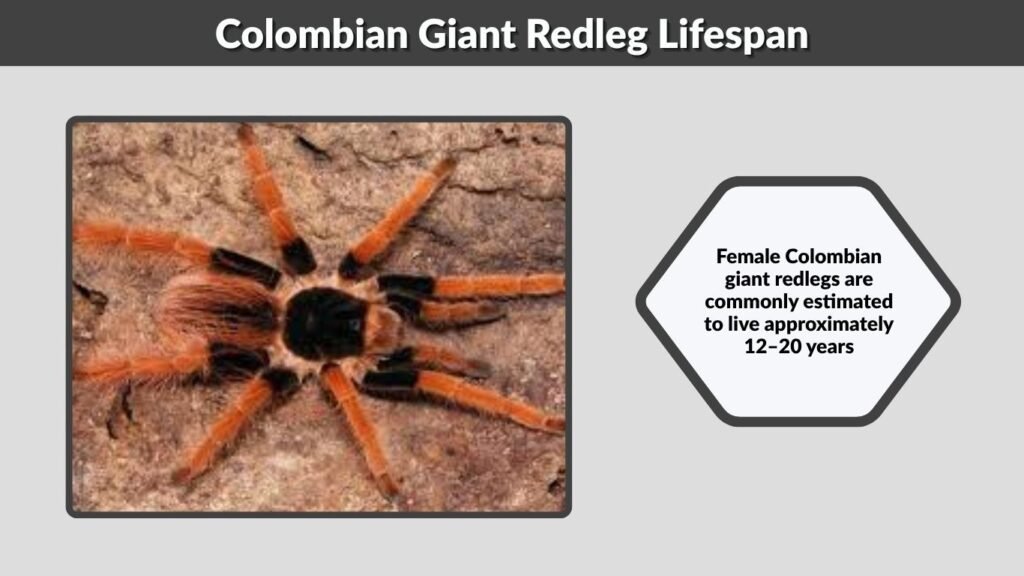
Female Colombian giant redlegs are commonly estimated to live approximately 12–20 years in captivity with appropriate care. Reliable scientific longevity records are limited, so these numbers should be viewed as husbandry estimates rather than guaranteed lifespans.
Males live considerably shorter lives. Once mature, a male usually focuses on finding a mate and may gradually stop feeding. His remaining lifespan may range from several months to a few years, depending on age and condition.
Buying a Colombian Giant Redleg Tarantula
Before looking for a Colombian giant redleg for sale, confirm that the seller provides the correct scientific name: Megaphobema robustum. Common names can be applied inconsistently and may lead to purchasing the wrong species.
Choose a specimen that has:
- A rounded but not excessively swollen abdomen
- All eight legs intact
- Normal posture and coordinated movement
- No leaking fluid or visible injuries
- Clear information about its size and feeding history
- A documented captive-bred or lawful source
Purchase the enclosure and prepare it before obtaining the tarantula. Local rules governing ownership, transport, and importation vary, so buyers should verify applicable regulations and retain purchase records.
FAQs
Is the Colombian Giant Redleg Good for Beginners?
It is not an ideal first tarantula. Its speed, defensive behavior, large adult size, moisture requirements, and unusual rear-leg strikes make it better suited to keepers who already understand tarantula feeding, rehousing, and molting.
Is the Colombian Giant Redleg Venomous?
Like other tarantulas, it possesses venom used to subdue prey. Species-specific bite information is limited, but a bite may cause pain and localized symptoms. Avoid handling and seek medical advice after a serious reaction.
Can You Handle a Colombian Giant Redleg?
Handling is strongly discouraged. The spider may bolt, kick irritating hairs, bite, or perform its distinctive rear-leg defense. A fall can also be fatal to the tarantula.
How Big Does a Colombian Giant Redleg Get?
A full-grown specimen commonly develops a leg span of around seven inches, while some may approach eight inches. Females generally have heavier bodies, while mature males appear slimmer and leggier.
Does This Tarantula Stay Underground?
Many individuals spend considerable time inside burrows, particularly during daylight, premolt, or after rehousing. Providing a deep substrate and a secure retreat allows the tarantula to display its natural behavior.
