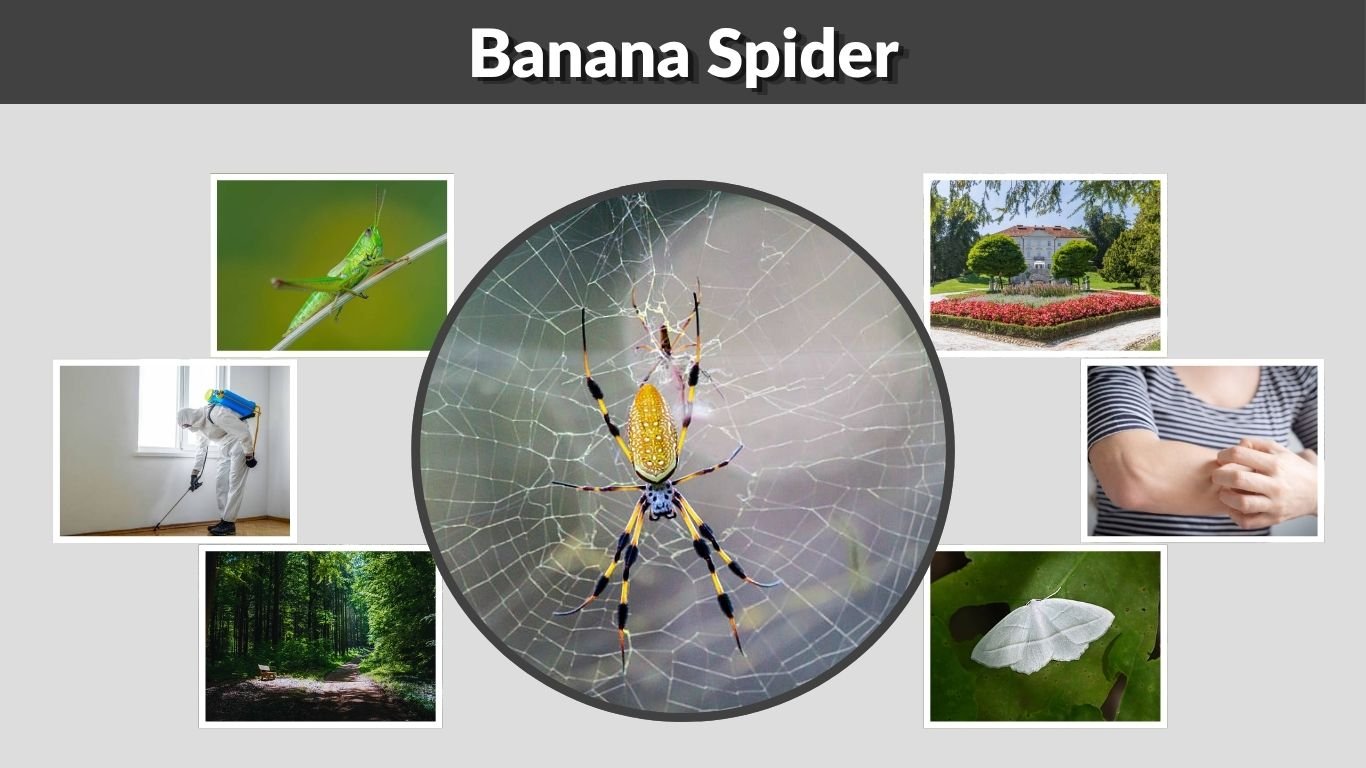
The name “banana spider” does not describe one specific species. In the United States, it usually refers to the golden silk orb-weaver (Trichonephila clavipes), a large but relatively harmless spider that builds golden webs. However, the same name is sometimes used for Brazilian wandering spiders, which are medically significant and may occasionally hide in banana plants. Because these spiders differ greatly in appearance and danger, correct identification is important. This guide explains banana spider size, habitat, diet, webs, bites and common species.
What Is a Banana Spider?
“Banana spider” is an informal common name used for several unrelated spiders. Some receive the name because of their yellow colouring, while others live around banana plants or occasionally enter fruit shipments.
The golden silk orb-weaver is the spider most Americans mean when using the name. It is commonly found in forests, gardens and wooded areas throughout the southeastern United States, Central America and South America.
| Common name | Scientific group | Appearance | Bite risk |
| Golden silk orb-weaver | Trichonephila clavipes | Yellow, silver and brown with long legs | Low |
| Brazilian wandering spider | Phoneutria species | Large, hairy and brown | Potentially serious |
| Banana wandering spider | Cupiennius species | Large and brown with patterned legs | Usually minor |
| Yellow garden spider | Argiope aurantia | Black and yellow abdomen | Low |
Golden Silk Banana Spider Identification
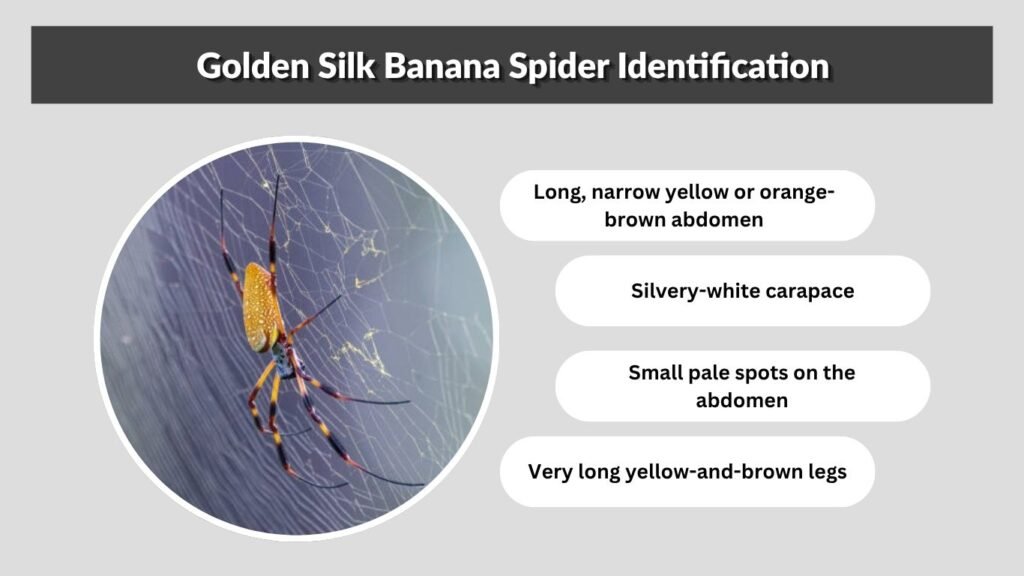
The golden silk orb-weaver is a large and colourful web-building spider. Females are much larger and more noticeable than males, creating one of the most dramatic size differences found among common garden spiders.
Female Banana Spider
An adult female has an elongated cylindrical abdomen that may appear yellow, golden-orange or brown. Small pale spots often decorate the upper surface. The carapace, or front section of the body, is generally silvery-white.
Her legs are extremely long and usually feature yellow-and-brown bands. Several pairs have distinctive black, brush-like hair tufts near the joints. When the legs are extended, the spider can appear much larger than its actual body measurements.
Male Banana Spider
Adult males are only a fraction of the female’s size. They are usually dark brown, reddish-brown or orange-brown and lack the female’s bright patterns and prominent leg tufts.
A male may live along the edge of a female’s web or remain close to her body while waiting for an opportunity to mate. Because of his small size, people sometimes mistake him for a juvenile or an unrelated spider.
Main Identification Features
- Long, narrow yellow or orange-brown abdomen
- Silvery-white carapace
- Small pale spots on the abdomen
- Very long yellow-and-brown legs
- Black brush-like hair patches on the legs
- Large circular web with a golden appearance
- Female positioned near the web’s centre
- One or more tiny males nearby
- Strong size difference between males and females
How Big Is a Banana Spider?
Adult female golden silk orb-weavers generally measure approximately 24–40 mm in body length. Particularly large individuals may approach 50 mm. Their long legs can produce a total span of several inches, making them appear enormous when resting in a web.
Males normally measure only around 5–8 mm. A female can therefore be several times longer and many times heavier than a mature male.
The Brazilian wandering spider has a heavier body than the golden silk orb-weaver. Some species can have a body approaching 5 cm and a leg span of approximately 13–15 cm. Unlike the golden silk spider, it does not have an elongated yellow abdomen or live in a large circular web.
Where Do Banana Spiders Live?
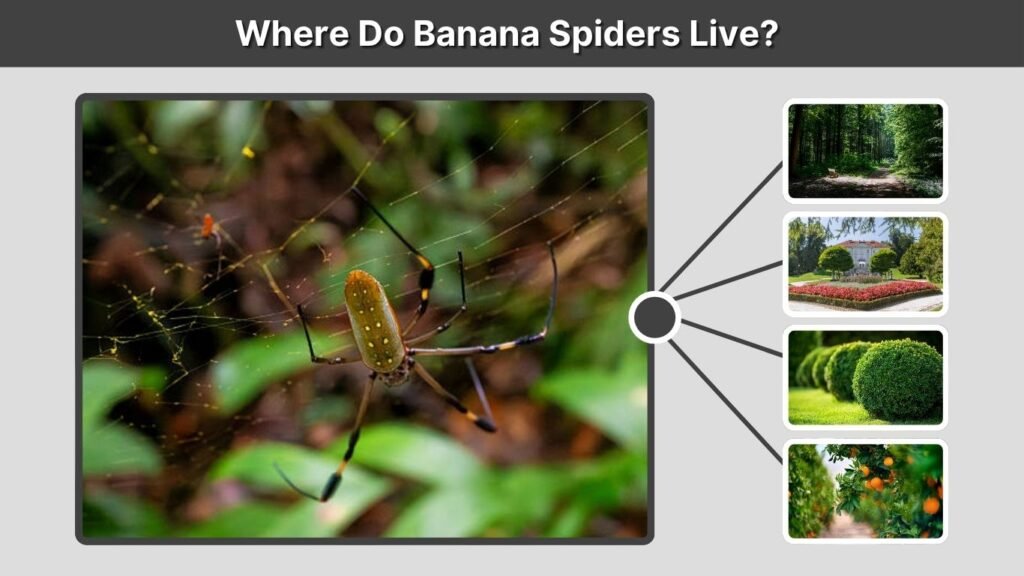
Golden silk banana spiders occupy warm regions of North, Central and South America. Their distribution extends from the southeastern United States through Mexico, Central America and parts of South America.
In the United States, they are especially associated with Florida and other warm southeastern states. Seasonal individuals may occasionally appear farther north, but cold winter temperatures prevent permanent populations in many northern areas.
Preferred Habitat
Golden silk orb-weavers commonly inhabit:
- Open forests
- Woodland edges
- Swamps and wetlands
- Gardens and parks
- Shrubs and hedges
- Citrus groves
- Hiking trails
- Areas near streams
- Spaces between trees
They prefer locations offering sturdy anchor points for their webs and regular movement of flying insects. Gardens with healthy insect populations can provide excellent habitat.
Banana Spider Web
The golden silk orb-weaver is named for the yellow or golden colour of its silk. The colour is most noticeable when sunlight passes through the web.
A mature female constructs a large, vertical orb web between trees, bushes or other supports. The main web can measure one to two metres across, while its supporting strands may extend even farther.
The central web is not always perfectly circular. It may be asymmetrical and surrounded by irregular barrier threads. These extra lines protect the spider and help prevent birds or other large animals from crashing into the main web.
Golden silk is both strong and flexible. It can stop relatively large flying insects without breaking. The female repairs damaged sections and may remain in the same favourable location for an extended period.
What Do Banana Spiders Eat?
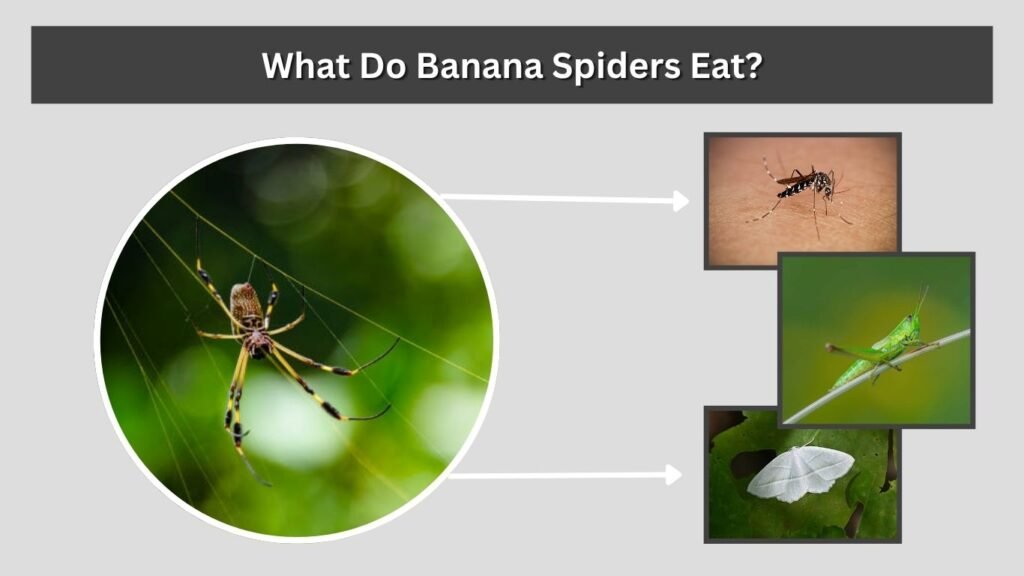
Golden silk banana spiders are carnivorous predators that mainly capture flying insects. Their large webs allow them to catch prey that smaller orb-weavers might be unable to control.
Common prey includes:
- Flies
- Mosquitoes
- Moths
- Beetles
- Grasshoppers
- Wasps
- Bees
- Dragonflies
- Small butterflies
- Other flying insects
When an insect becomes trapped, vibrations travel through the silk and alert the spider. She approaches the prey, bites it and usually wraps it in silk. Venom immobilises the insect, while digestive fluids break down its internal tissues.
Banana spiders can benefit gardens by reducing populations of flying insects. They do not eat plants, damage fruit or infest wood.
Reproduction and Life Cycle
A mature male enters or approaches a female’s web during the breeding season. He must move carefully because the much larger female may treat him as prey.
After mating, the female produces one or more egg sacs containing numerous eggs. She surrounds the eggs with protective silk and usually attaches the sac to a hidden leaf, branch or nearby structure.
In areas with colder seasonal weather, adult golden silk spiders commonly die as temperatures fall. Their protected eggs survive until warmer conditions return. Spiderlings emerge, disperse and begin constructing small webs. In consistently warm tropical areas, development and breeding periods may be less seasonal.
Is a Banana Spider Poisonous or Venomous?
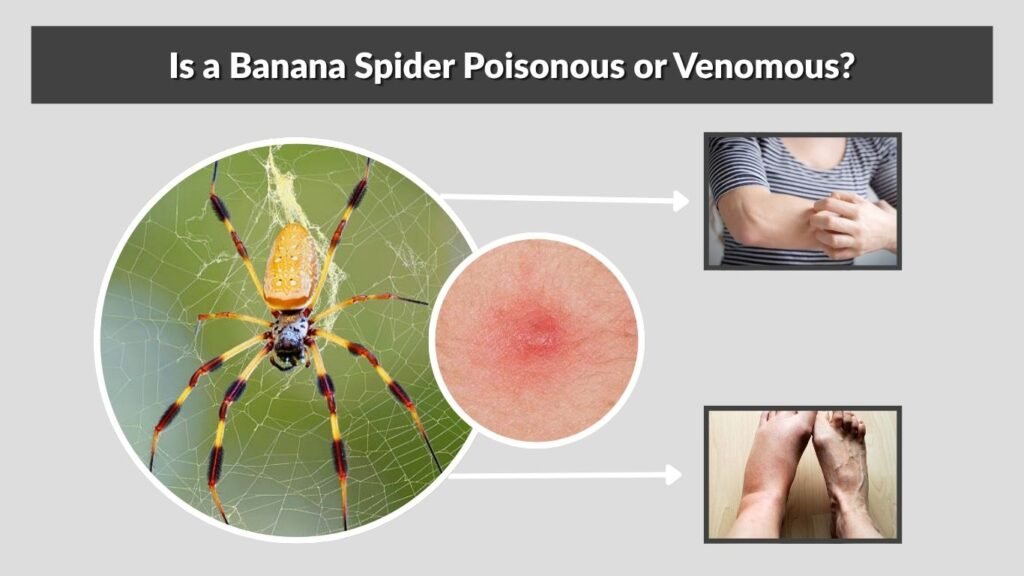
Banana spiders are venomous rather than poisonous. Venom is injected through fangs, while poison causes harm when touched or eaten.
Almost all spiders produce venom for controlling prey. However, the medical effect depends on the species. Golden silk orb-weaver venom is designed for insects and is not considered medically important to healthy people.
Golden Silk Banana Spider Bite
Golden silk orb-weavers are not aggressive. They usually remain still, retreat to the edge of the web or drop toward the ground when disturbed. A bite is most likely when someone squeezes or handles the spider.
Possible symptoms include:
- Brief pain or burning
- Mild redness
- Local swelling
- Itching or tenderness
- Temporary numbness around the bite
The effects are generally localised and resolve without serious complications. The University of Florida describes these spiders as likely to bite only when squeezed, with local effects that usually clear quickly.
Wash the area with soap and water and use a wrapped cold pack to reduce discomfort. Seek medical attention if symptoms become severe, continue worsening or involve breathing difficulty, facial swelling, vomiting or widespread muscle symptoms.
Brazilian Wandering Spider vs Golden Silk Banana Spider
Brazilian wandering spiders belong to the genus Phoneutria. They live in parts of Central and South America and do not build orb webs. They spend the night actively hunting and hide in sheltered places during daylight.
| Feature | Golden silk spider | Brazilian wandering spider |
| Body shape | Long and slender | Heavy and muscular |
| Main colour | Yellow, silver and brown | Brown or grey-brown |
| Web | Large golden orb web | No prey-catching orb web |
| Behaviour | Waits in its web | Actively hunts |
| Legs | Long with black hair tufts | Thick and hairy |
| Bite severity | Usually mild | Potentially serious |
| Typical location | Forest edges and gardens | Tropical forests and sheltered ground areas |
A threatened Phoneutria may raise its front legs and expose contrasting bands or reddish hairs around its jaws. However, several harmless wandering spiders can look similar, so identification should be left to an expert.
Do Banana Spiders Hide in Bananas?
Spiders can occasionally shelter inside banana bunches, particularly in tropical growing areas. However, the popular belief that Brazilian wandering spiders regularly arrive in supermarket bananas is exaggerated.
A study of 135 spiders submitted from international cargo found that true Phoneutria represented only a small portion. Many suspected Brazilian wandering spiders were actually less-dangerous Cupiennius species or other large tropical spiders.
If a live spider is discovered in bananas, do not touch it or attempt close identification. Move away, keep children and pets out of the area and contact local pest-control or public-health professionals. If someone is bitten by an unidentified imported spider, seek urgent medical advice.
Should You Remove a Banana Spider?
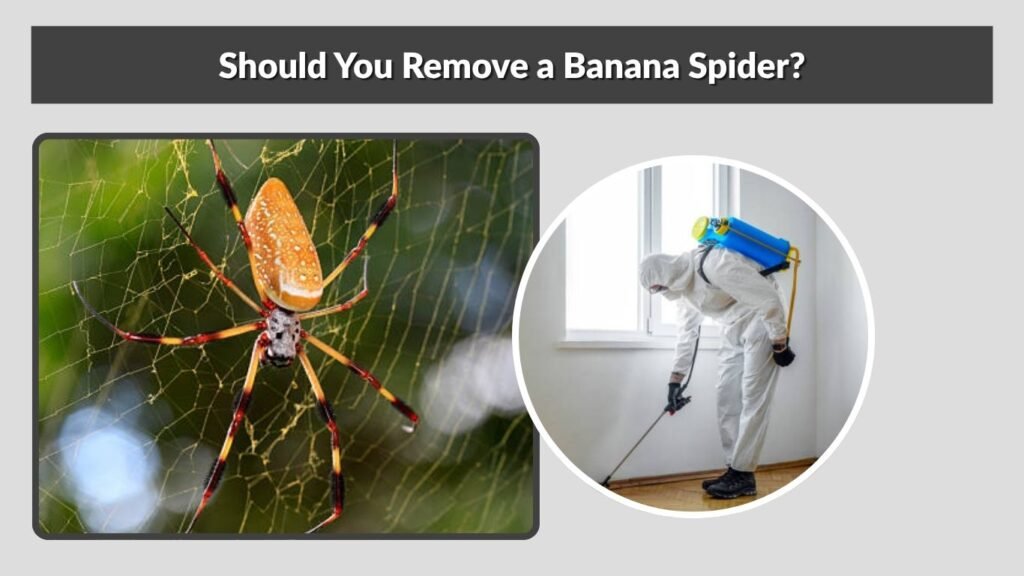
A golden silk orb-weaver in a garden normally does not need to be removed. It controls insects and generally stays within its web. If the web crosses a doorway or walking path, use a long object to move one of its anchor lines when the spider is safely away from you. The spider will usually rebuild elsewhere.
Avoid spraying pesticides unnecessarily. These chemicals may kill beneficial spiders and other helpful garden animals. Professional removal is appropriate when the species cannot be identified or when a potentially dangerous imported spider is suspected.
FAQs
Are banana spiders dangerous to humans?
Most spiders called banana spiders are not dangerous. Golden silk orb-weavers and Cupiennius spiders typically cause only mild local bite symptoms. Brazilian wandering spiders are the important exception because their venom can cause serious systemic effects and requires urgent medical assessment.
Can a banana spider kill you?
A golden silk banana spider is not considered deadly. Brazilian wandering spider venom can produce severe illness, but serious outcomes are uncommon when appropriate medical treatment is available. Any bite from an unidentified large tropical spider should receive prompt professional medical evaluation.
Why are they called banana spiders?
The name has several origins. Golden silk orb-weavers may be called banana spiders because of their yellow bodies. Brazilian wandering and Cupiennius spiders receive the name because they live around banana plants and are occasionally transported inside fruit bunches.
How large is a female banana spider?
A female golden silk orb-weaver generally measures 24–40 mm in body length, although unusually large individuals may approach 50 mm. Her long legs create a span of several inches. The male is considerably smaller, normally measuring only around 5–8 mm.
Are banana spiders good for gardens?
Golden silk banana spiders are beneficial predators. Their large webs capture flies, mosquitoes, moths, beetles, wasps and other insects. They do not eat plants or damage fruit, so leaving an undisturbed spider in a safe garden location can support natural pest control.
