
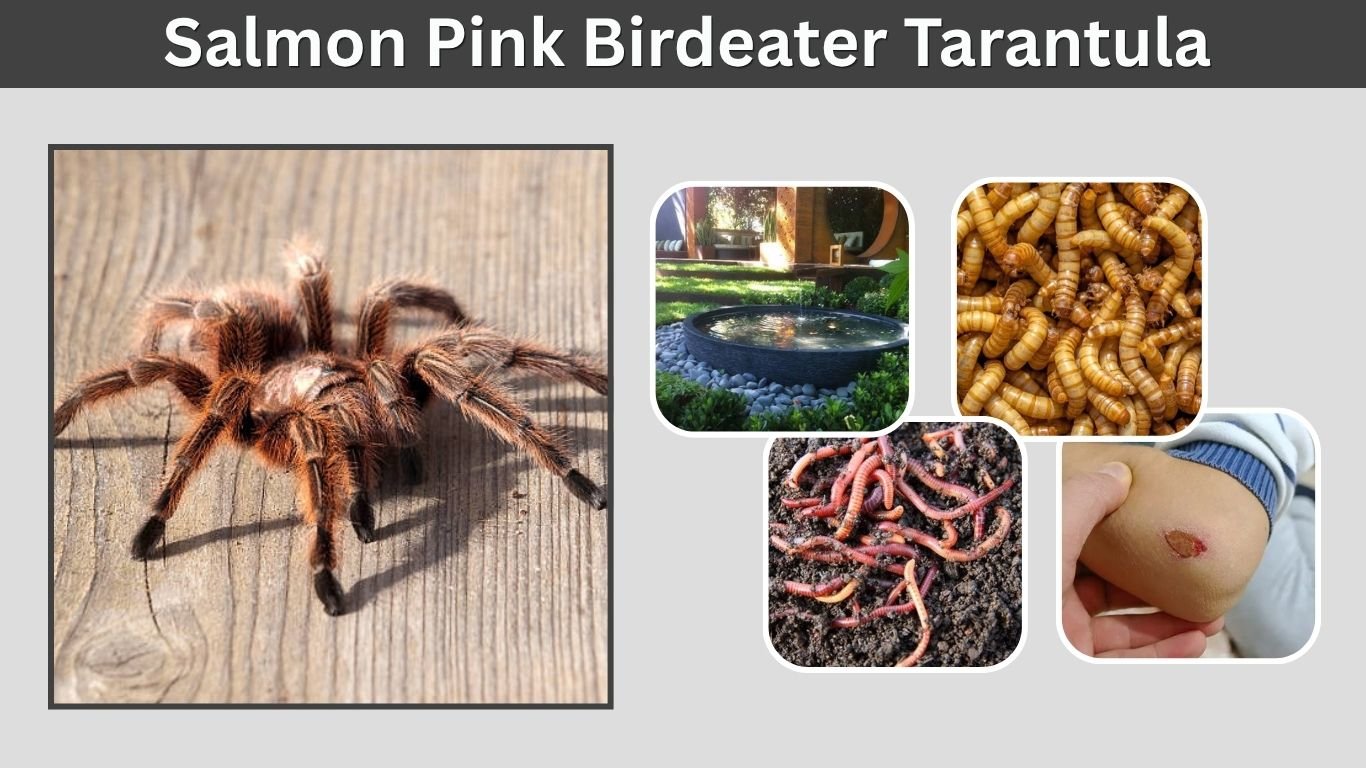
The salmon pink birdeater tarantula (Lasiodora parahybana) is a massive terrestrial spider native to northeastern Brazil. Its dark body is covered with long salmon-colored hairs that become especially noticeable after molting. Despite its intimidating size and “birdeater” name, it mainly consumes insects and other small animals rather than regularly hunting birds. This fast-growing species is popular among tarantula keepers, but its strong feeding response, defensive hairs, speed, and large adult size require careful handling and a secure enclosure.
Salmon Pink Birdeater Quick Facts
The accepted scientific name is Lasiodora parahybana. It belongs to the tarantula family Theraphosidae and is associated with Brazil’s Atlantic Forest region.
| Feature | Description |
| Scientific name | Lasiodora parahybana |
| Other name | Brazilian salmon pink birdeater |
| Type | New World terrestrial tarantula |
| Adult leg span | Commonly up to 10–11 inches |
| Natural range | Northeastern Brazil |
| Habitat | Humid tropical forest floor |
| Diet | Invertebrates and small vertebrates |
| Female lifespan | Approximately 15–20 years |
| Male lifespan | Usually much shorter |
| Temperament | Fast, food-responsive, and potentially defensive |
Adult females may reach a leg span of approximately 10–11 inches and weigh more than 100 grams. Males are generally slimmer and leggier, while females have heavier bodies and much longer lifespans.
What Does a Salmon Pink Birdeater Look Like?
The Brazilian salmon pink birdeater has a dark brown or black body covered with dense hairs. Long pinkish, reddish, or salmon-colored hairs grow across the legs and abdomen, producing the warm coloration responsible for its common name.
Identification Features
- Dark brown to nearly black body
- Salmon-pink hairs on the legs and abdomen
- Thick, muscular legs
- Broad carapace and large abdomen
- Downward-pointing fangs
- Defensive urticating hairs
- Heavy body, especially in adult females
- Leg span that may exceed 10 inches
Young spiderlings may look plain brown or gray. Their darker body and salmon-colored hairs become more noticeable as they grow and pass through successive molts.
How Big Does a Salmon Pink Birdeater Get?
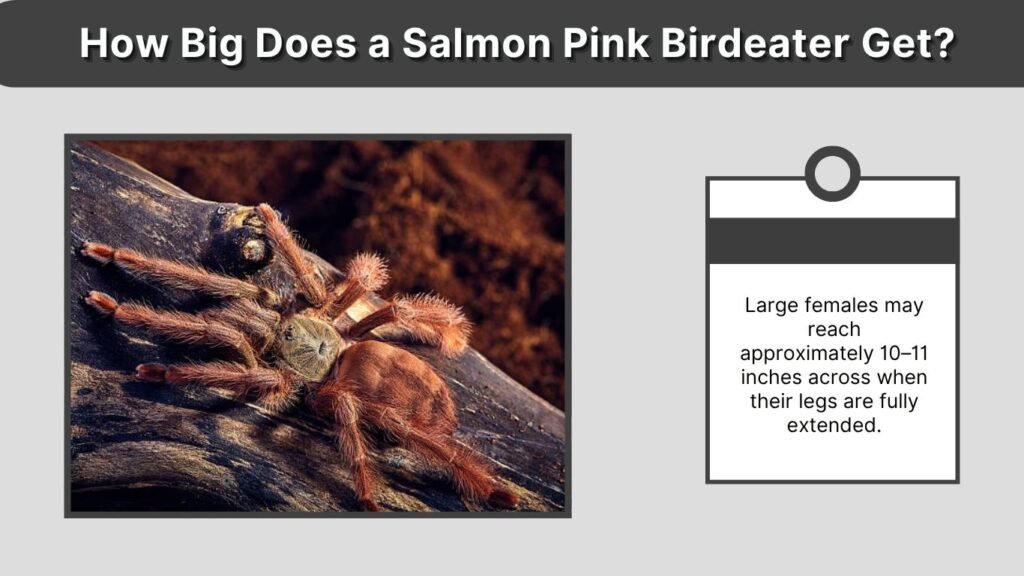
The salmon pink birdeater is one of the world’s largest tarantulas. Large females may reach approximately 10–11 inches across when their legs are fully extended. However, individual size depends on sex, genetics, age, feeding, temperature, and general health.
Although comparable in leg span to some Goliath birdeaters, the salmon pink birdeater usually has a different body shape and belongs to the genus Lasiodora, not Theraphosa. It is still an extremely large spider that requires substantially more floor space than an average pet tarantula.
Natural Habitat and Behavior
This species comes from northeastern Brazil, where it lives at ground level in the Atlantic Forest biome. It shelters beneath natural debris, inside crevices, or in burrows dug into suitable soil. Its earthy coloration helps it disappear against leaf litter and forest-floor material.
Hunting Behavior
The salmon pink birdeater does not use a large aerial web to trap food. It senses vibrations, waits for prey to approach, and then rushes forward with surprising speed.
It captures the animal with its legs and fangs, injects venom and digestive fluids, and later consumes the liquefied tissues. Cincinnati Zoo describes it as a fast, voracious hunter that actively forages along the forest floor.
What Does a Salmon Pink Birdeater Eat?
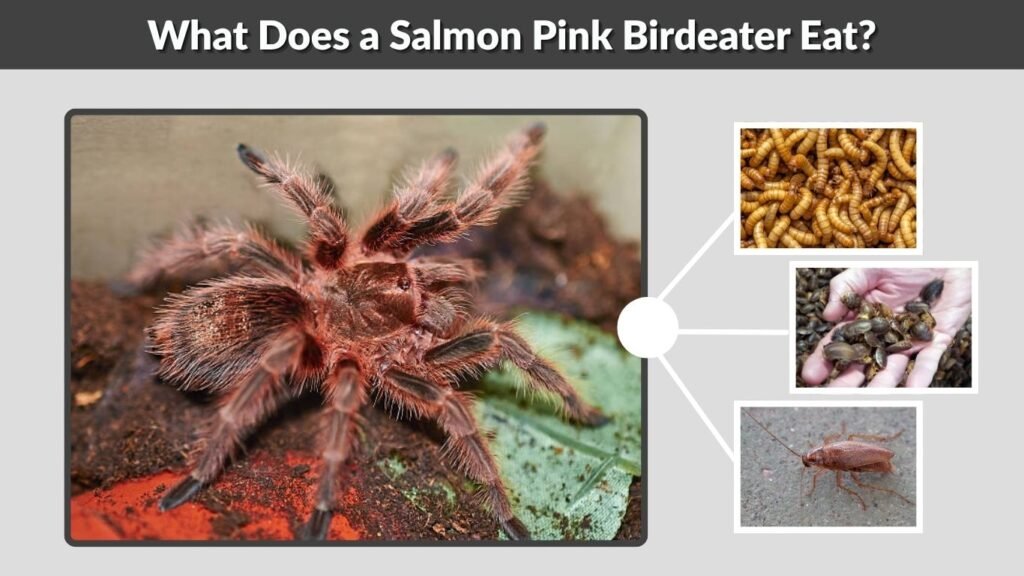
In the wild, this tarantula eats insects and other animals small enough to overpower. Its normal diet may include cockroaches, crickets, beetles, worms, spiders, small lizards, frogs, and occasional small rodents. Birds are physically possible prey but are not a regular part of its diet.
Feeding in Captivity
Suitable captive foods include:
- Dubia roaches
- Crickets
- Red runner roaches
- Locusts where legally available
- Mealworms
- Superworms
- Other appropriately sized feeder insects
Young tarantulas can receive small meals more frequently than adults. Large adults may eat several substantial insects and then refuse food for days or weeks.
Use the abdomen as a guide rather than feeding on an inflexible schedule. Remove uneaten insects, particularly when the tarantula is preparing to molt. Vertebrate prey is unnecessary and can injure the spider or leave an unhygienic enclosure.
Salmon Pink Birdeater Enclosure
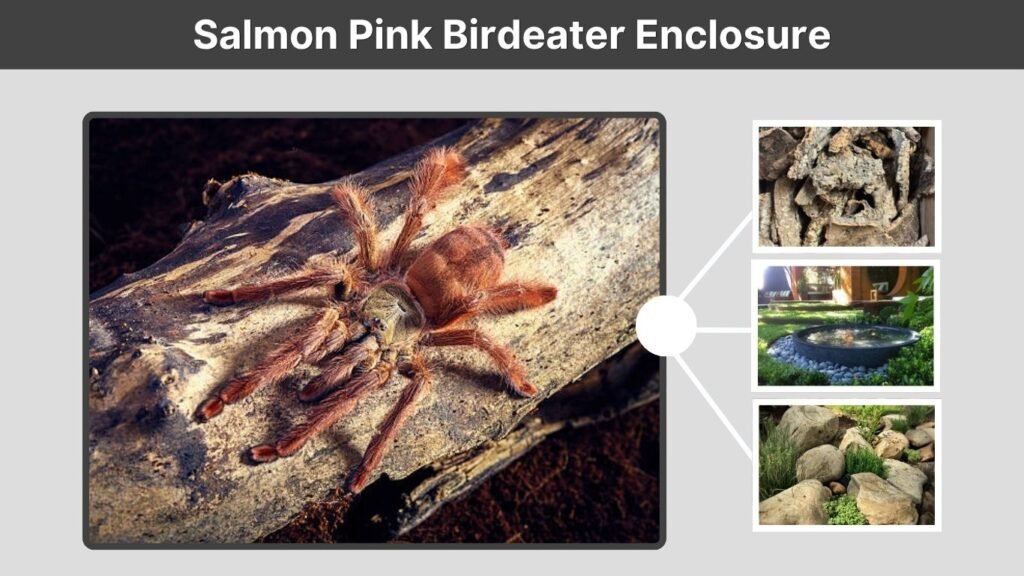
Because this is a heavy terrestrial species, its enclosure should prioritize floor space and substrate depth rather than climbing height. A fall from the wall or lid can injure or rupture the abdomen.
Enclosure Setup
A practical enclosure should include:
- Secure, escape-resistant lid
- Generous horizontal floor space
- Several inches of compactable substrate
- Cork bark or another dark hide
- Shallow water dish
- Effective cross-ventilation
- No sharp rocks or tall decorations
A deep mixture of pesticide-free topsoil, coconut fiber, or another suitable invertebrate substrate allows the spider to dig and rearrange its surroundings. The enclosure should have enough moisture to prevent excessive dryness but should never remain swampy or poorly ventilated.
This setup is an inference from the species’ terrestrial, burrow-associated life in humid tropical forest-floor habitats.
Temperature and Moisture
Normal warm indoor temperatures are usually more appropriate than intense direct heating. Keep the enclosure away from sunlight, radiators, and extreme temperature changes.
Provide clean water continuously. Lightly moisten part of the substrate when necessary while allowing the upper surface to dry somewhat. Constant saturation can encourage mold, mites, and stagnant conditions.
Molting Behavior
A growing tarantula must periodically shed its old exoskeleton. Before a molt, the salmon pink birdeater may refuse food, move less often, darken in color, enlarge a bald abdominal patch, or create a silk mat.
It may lie on its back during the molt. This position is normal and should not be mistaken for death. Remove all live prey and avoid touching or moving the spider.
After molting, the new exoskeleton and fangs remain soft. Wait until the fangs have darkened and hardened before offering food. Large specimens may need considerably longer to recover than small spiderlings.
Temperament and Handling
Salmon pink birdeaters are often visible and responsive, but that does not make them safe handling pets. They can move quickly and may react strongly when they mistake movement for food.
Some individuals retreat when disturbed, while others flick abdominal hairs or display their fangs. Temperament can also change before molting, after feeding, or during enclosure maintenance.
Routine handling is discouraged because:
- A fall can seriously injure the spider.
- Sudden movement can lead to escape.
- The spider may mistake fingers for prey.
- Defensive hairs can irritate the skin and eyes.
- Its large fangs can create deep punctures.
Use long feeding tools and a catch container during transfers instead of picking it up directly.
Bite, Venom and Defensive Hairs
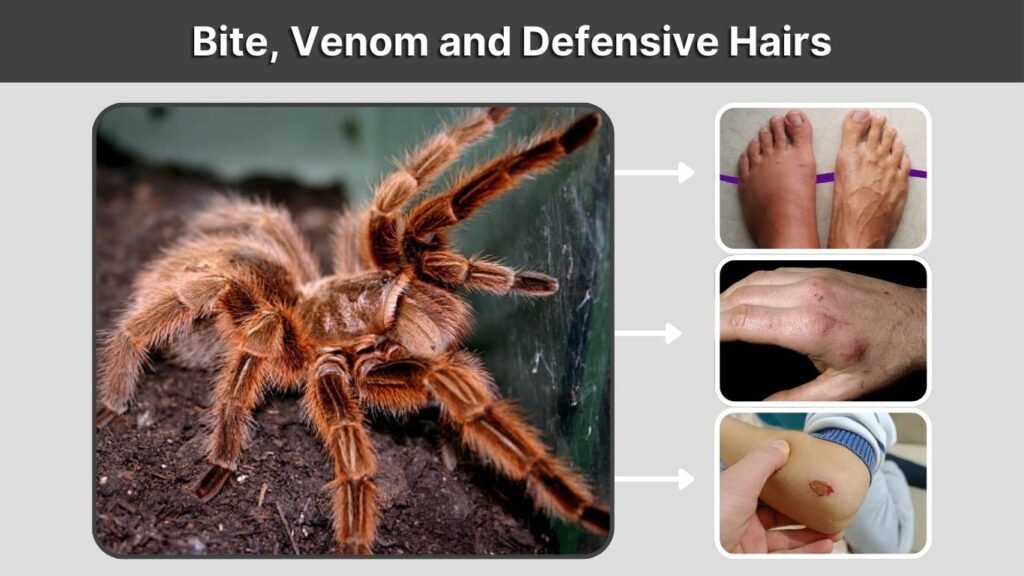
The salmon pink birdeater is venomous rather than poisonous. It uses venom to immobilize prey, but tarantula bites from species native to the Americas generally cause localized pain and swelling rather than severe poisoning in most healthy people. Any bite can still produce deep wounds, infection, or an unusual allergic reaction.
Its urticating hairs may be the more likely problem. The spider can kick tiny barbed hairs from its abdomen, causing itching, pain, redness, and swelling. Hairs entering the eyes can produce prolonged inflammation and possible corneal injury.
Wash a bite with soap and water and apply a cool compress. Seek medical advice for severe pain, worsening swelling, breathing problems, infection, or eye exposure.
Male vs. Female Salmon Pink Birdeater
Adult females usually have heavier bodies, shorter-looking legs, and much longer lifespans. A female may live approximately 15–20 years under suitable conditions. Mature males are slimmer, have longer-looking legs, and typically live only a few years after reaching adulthood.
A mature male develops specialized reproductive structures on his pedipalps and may also have mating hooks on the first pair of legs. The most dependable way to sex an immature tarantula is to examine the inside of a well-preserved molt.
Is It a Good Pet Tarantula?
The salmon pink birdeater can be a rewarding display animal for someone prepared for its adult size and defensive abilities. It grows relatively quickly, often remains visible, and usually feeds enthusiastically.
However, it may not be the best first tarantula for someone who is uncomfortable with fast movement, irritating hairs, or powerful feeding responses. A keeper must also be ready to provide a large enclosure as the spider matures.
When purchasing one, choose a legally obtained, captive-bred specimen from a knowledgeable breeder. Confirm its approximate size, feeding history, sex when known, and scientific name. Prices vary by age, size, sex, availability, and location, with confirmed females generally costing more than unsexed spiderlings or mature males.
FAQs
Does the salmon pink birdeater really eat birds?
It could overpower a very small bird, but birds are not normal everyday prey. Its diet mainly consists of insects, worms, spiders, and occasional small vertebrates.
How large can a salmon pink birdeater become?
A large adult female may reach approximately 10–11 inches in leg span and weigh more than 100 grams, making it one of the largest tarantulas.
Is the salmon pink birdeater dangerous?
It is not generally considered deadly to humans, but its bite can be painful and its large fangs can cause puncture wounds. Defensive hairs may create significant skin or eye irritation.
How long does a female salmon pink birdeater live?
Females may live approximately 15–20 years with suitable care. Males generally have much shorter lives and often survive only a few years after maturity.
Can you handle a salmon pink birdeater?
Handling is not recommended. The spider is large, potentially fast, and capable of flicking irritating hairs. A fall can also cause a fatal abdominal injury, even when the spider does not bite.
