
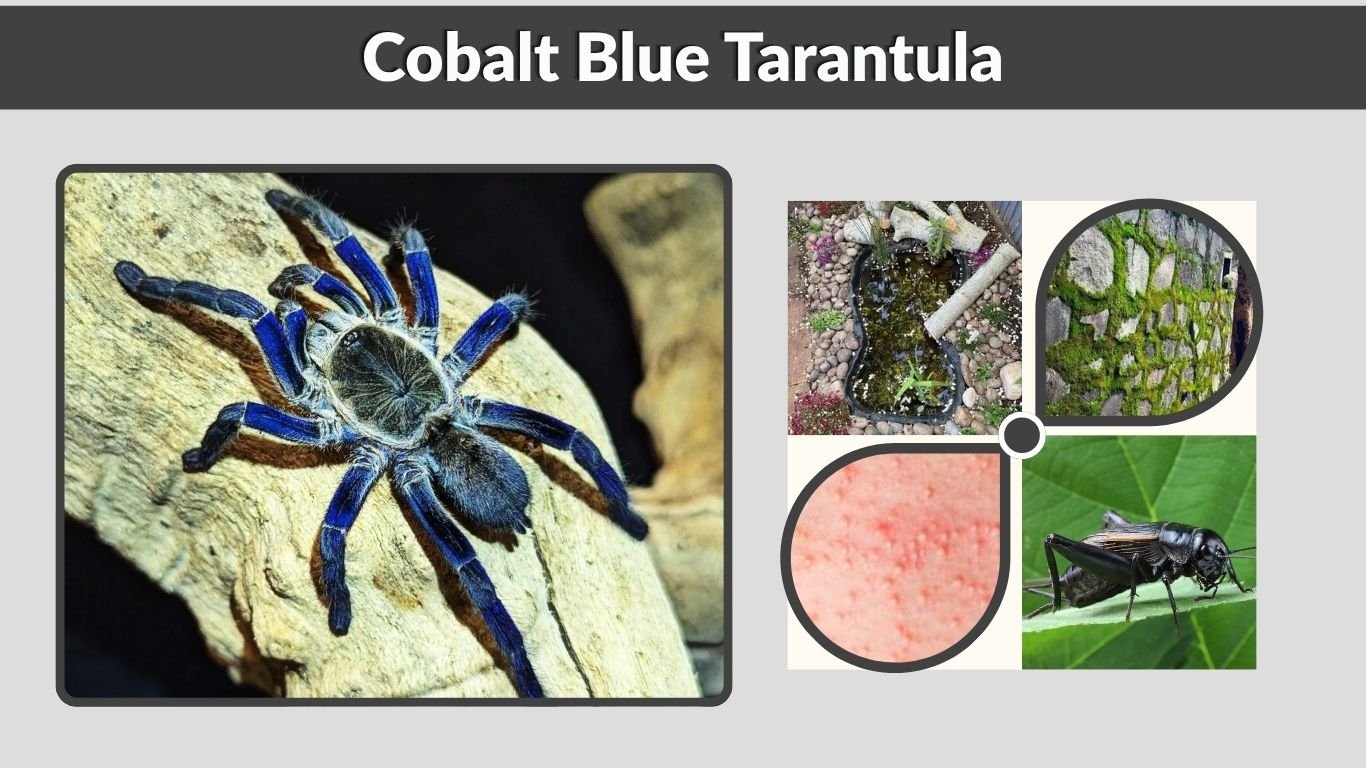
The Cobalt Blue Tarantula is a striking Asian burrowing spider known for its metallic blue legs, secretive lifestyle, speed, and defensive temperament. Although it is commonly sold as a pet, it is not recommended for inexperienced keepers or anyone seeking a tarantula they can handle. It requires deep substrate, reliable ventilation, controlled moisture, and careful enclosure maintenance. Its venom may also cause significant pain and other symptoms, making safe rehousing especially important.
What Is a Cobalt Blue Tarantula?
The currently accepted scientific name is Melopoeus lividus. It was widely known as Cyriopagopus lividus and was previously called Haplopelma lividum. The World Spider Catalog recorded its transfer to Melopoeus in March 2026 and lists its natural distribution as Myanmar and Thailand.
It is an Old World tarantula, meaning it comes from Africa, Asia, Europe, or Australia rather than the Americas. Old World tarantulas generally lack the defensive urticating hairs found on many American species and depend more heavily on speed, threat displays, and biting.
Identification
Important features include:
- Deep cobalt-blue or violet-blue legs
- Grey, brown, or dark olive body
- Subtle markings on the abdomen
- Thick, powerful front legs
- Large downward-pointing fangs
- Dense covering of sensory hairs
- Compact, muscular appearance
The legs can appear electric blue, navy, turquoise, or greenish depending on lighting and the spider’s molt cycle. Names such as “electric blue” and “emerald green cobalt” usually describe this reflective coloration rather than separate recognized species or color morphs.
Cobalt Blue Tarantula Size
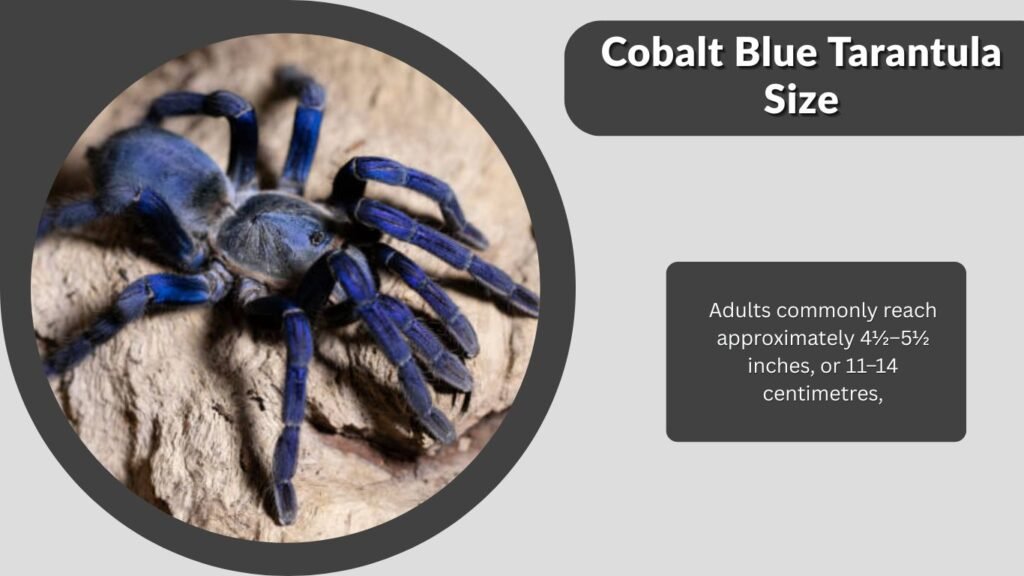
Adults commonly reach approximately 4½–5½ inches, or 11–14 centimetres, in diagonal leg span. Females are generally heavier-bodied, while mature males become slimmer and leggier.
| Feature | Typical information |
| Scientific name | Melopoeus lividus |
| Former names | Cyriopagopus lividus, Haplopelma lividum |
| Adult leg span | About 4½–5½ inches |
| Native range | Myanmar and Thailand |
| Lifestyle | Fossorial or deep-burrowing |
| Experience level | Advanced |
| Diet | Live invertebrates |
Juveniles may initially look brown or muted. The intense blue coloration becomes more noticeable as they grow and molt.
Habitat and Natural Behavior
Cobalt Blue Tarantulas are strongly fossorial. They spend most of their lives inside deep, silk-lined burrows and may rarely sit in the open.
Their burrows provide:
- Protection from predators
- Stable moisture levels
- Reduced temperature fluctuations
- A secure place for molting
- A concealed location for ambushing prey
The spider often covers the entrance and surrounding substrate with silk. Webbing allows it to detect vibrations created by insects walking nearby.
Because it remains hidden, it is sometimes called a “pet hole.” An owner may see only the spider’s legs at the burrow entrance during feeding.
Cobalt Blue Tarantula Care
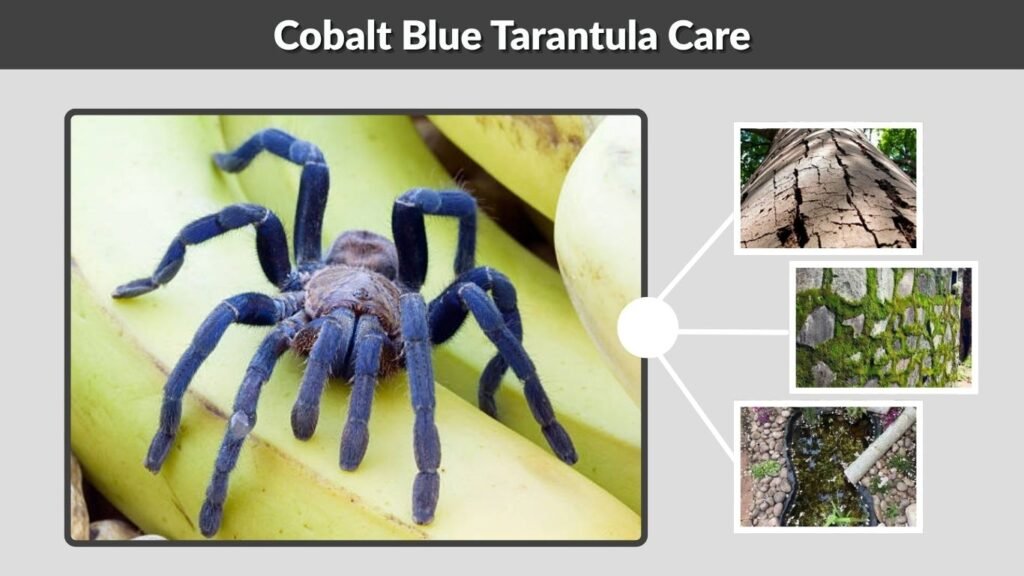
This species is best suited to keepers experienced with fast, defensive Old World tarantulas. Husbandry guidance is based mainly on long-term captive-keeping experience rather than formal veterinary care standards.
Enclosure Setup
Use a secure terrestrial enclosure with more room for digging than climbing. The enclosure must have ventilation holes too small for the spider to escape through.
A suitable setup includes:
- At least 6 inches of deep substrate for an adult
- Moisture-retentive soil that holds a burrow
- A cork-bark starter hide
- A securely fitted lid
- Cross-ventilation
- A shallow water dish
- Limited open height above the substrate
Common keeper guidance recommends deep substrate because burrowing is central to the species’ natural behavior.
Avoid tall enclosures. Although the spider can climb, it is a heavy-bodied terrestrial species that could suffer a fatal abdominal injury after a fall.
Temperature and Moisture
Ordinary warm indoor temperatures of approximately 22–27°C are generally suitable. Stable conditions are safer than extreme heat.
Keep the lower substrate slightly moist without making the enclosure swampy. The surface can be allowed to become somewhat drier while deeper layers retain moisture.
Good moisture management requires:
- Regularly filling the water dish
- Adding water along one side of the enclosure
- Allowing airflow through cross-ventilation
- Avoiding constantly wet surface soil
- Watching for mold and stagnant conditions
Do not depend on heavy misting alone. A deep burrowing species needs moisture available within the substrate, not only temporary droplets on the enclosure walls.
Feeding and Diet
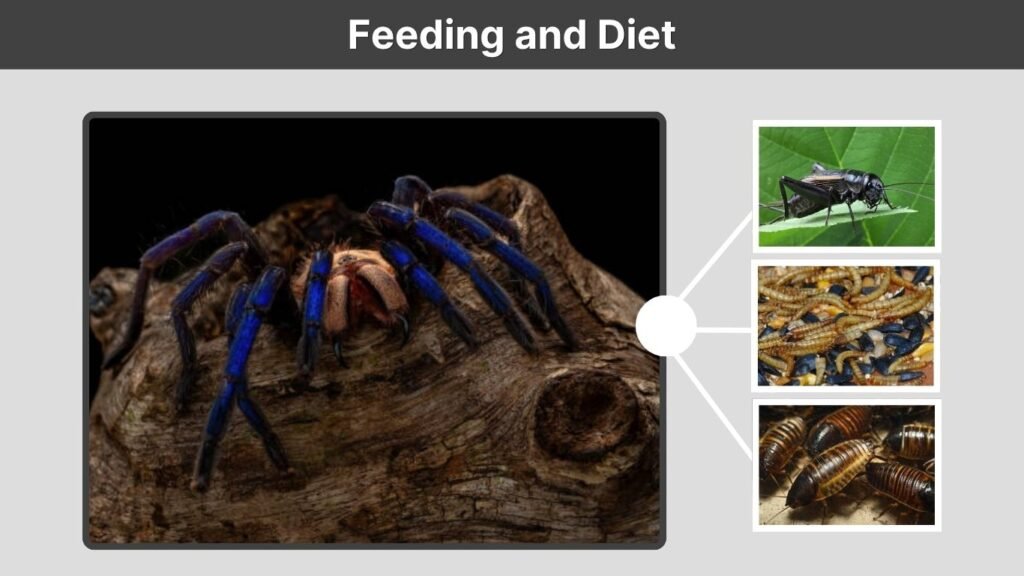
Cobalt Blue Tarantulas are carnivorous ambush predators. In captivity, they can eat:
- Crickets
- Dubia roach nymphs
- Red runner roaches
- Mealworms
- Superworms
- Locusts
- Other appropriately sized feeder insects
Offer prey suitable for the spider’s size. Spiderlings may take fruit flies, tiny roach nymphs, pinhead crickets, or pieces of pre-killed prey.
Juveniles can usually be offered food once or twice weekly. Adults may eat less frequently. Use the abdomen’s condition as a guide rather than forcing a fixed schedule.
Remove uneaten prey when the tarantula refuses food, closes its burrow, or appears ready to molt. Crickets can injure a vulnerable spider during molting.
Temperament and Handling
Cobalt Blue Tarantulas are often described as defensive rather than aggressive. They do not chase people, but they may respond quickly when their burrow is disturbed or escape routes are blocked.
Possible defensive behavior includes:
- Rapidly retreating underground
- Raising the front legs
- Displaying the fangs
- Striking
- Biting
- Running unexpectedly
Handling is strongly discouraged. This species is fast, venomous, easily lost, and vulnerable to injury from falls. Handling offers no benefit to the spider.
Maintenance should be performed with long feeding tongs, catch cups, and a clear escape-management plan. Rehousing is safer inside a larger empty container or another controlled area.
Is the Cobalt Blue Tarantula Venomous?
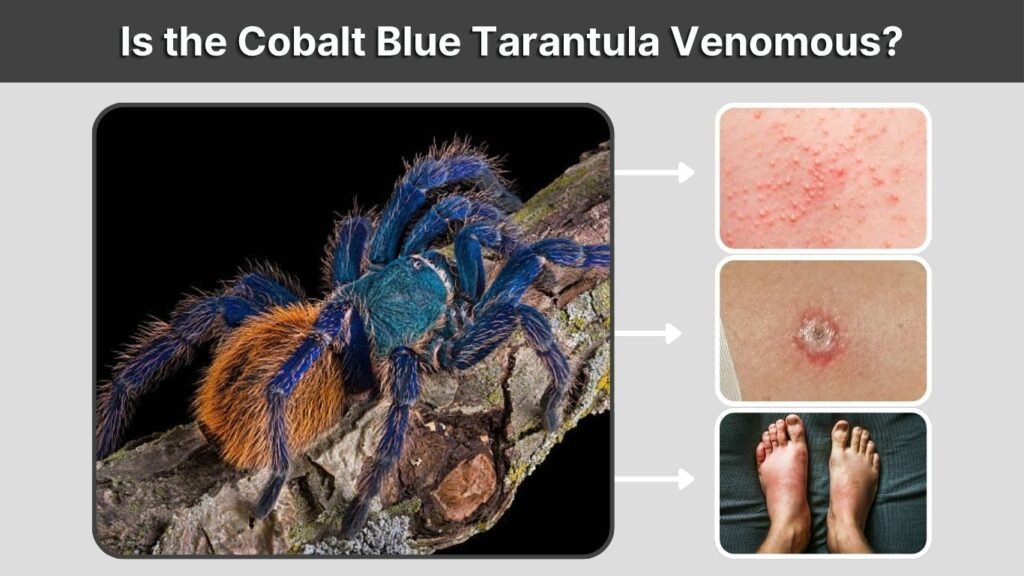
Yes. Like all tarantulas, it injects venom through its fangs to subdue prey. It is venomous, not poisonous.
Old World tarantula bites can be more medically significant than bites from many commonly kept American species. Potential symptoms include:
- Immediate pain
- Redness and swelling
- Throbbing or burning
- Nausea
- Muscle pain
- Local or generalized cramping
- Symptoms lasting several days
Tarantulas outside the Americas may produce stronger human reactions than many North American species.
A Cobalt Blue Tarantula should therefore never be intentionally provoked or handled.
Can a Cobalt Blue Tarantula Kill You?
A fatal outcome would be considered extremely unlikely, but that does not make the bite harmless. Species-specific medical evidence is limited, and individual reactions vary.
After a bite, wash the wound with soap and water, remove restrictive jewelry before swelling develops, and contact a medical professional or poison-control service. Seek urgent care for breathing difficulty, severe spreading pain, vomiting, weakness, widespread cramps, facial swelling, or signs of an allergic reaction.
Do not cut the wound, apply a tourniquet, or attempt to suck out the venom.
Lifespan and Molting
Females may live approximately 10–15 years or longer under good captive conditions. Males have much shorter lives and often survive only several years, particularly after reaching maturity.
Before molting, the spider may:
- Stop eating
- Remain inside its burrow
- Seal the entrance with webbing
- Become less active
- Develop darker coloration
- Lie on its back during the molt
Never assume a tarantula lying on its back is dead. This is a normal molting position. Avoid feeding until its new fangs have hardened, which may take several days in juveniles and longer in adults.
Male vs. Female
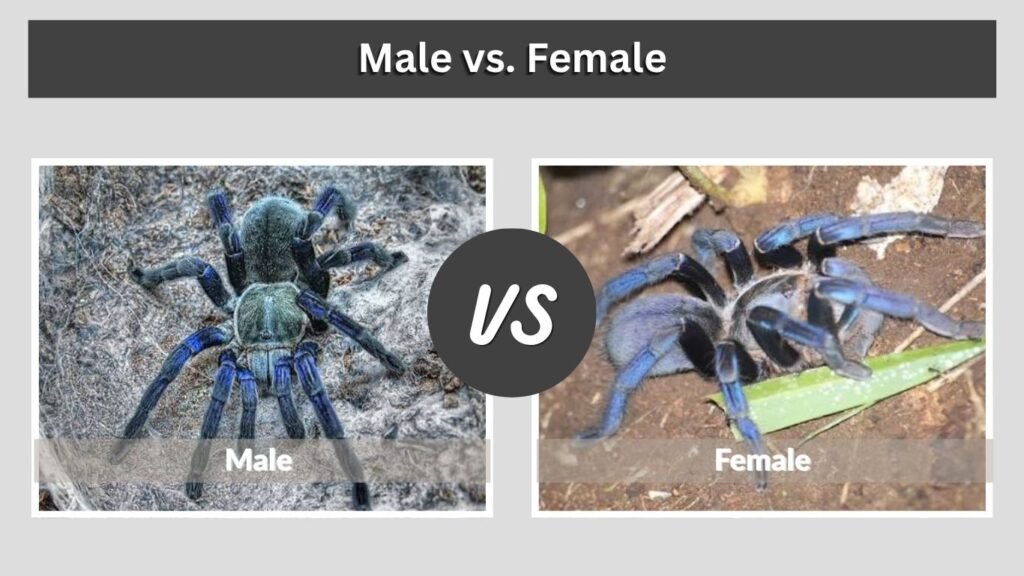
Females usually retain the rich blue coloration and develop a heavier abdomen. Mature males become slimmer and may appear more brown, grey, or bronze after their final molt.
| Female | Mature male |
| Heavier body | Slimmer, leggier body |
| Longer lifespan | Shorter adult lifespan |
| Usually brighter blue | May become duller or bronze |
| Remains near its burrow | Often wanders in search of females |
| Lacks male mating structures | Develops emboli and often tibial hooks |
The most reliable method of identifying sex before maturity is examining the inside of a suitable shed exoskeleton.
Price and Buying Considerations
Price depends on size, sex, origin, availability, and seller reputation. Current US listings in July 2026 show small spiderlings around $38–$45, while females may be listed around $98–$130, excluding shipping and enclosure costs. Prices can change quickly.
Before buying:
- Confirm whether the spider is captive-bred or wild-caught.
- Check local ownership and transport regulations.
- Ask how the sex was confirmed.
- Inspect the seller’s live-arrival policy.
- Prepare the enclosure before delivery.
- Avoid sellers who cannot explain the spider’s origin.
A captive-bred spiderling is generally preferable to a wild-caught adult because it reduces pressure on natural populations and may carry fewer parasites.
FAQs
Is a Cobalt Blue Tarantula a good pet?
It can be an impressive display pet for an advanced keeper. However, its speed, defensive temperament, potent venom, deep burrowing behavior, and difficult rehousing requirements make it unsuitable for most beginners.
Is the Cobalt Blue Tarantula aggressive?
It is more accurately described as defensive. It normally prefers retreating into its burrow, but it may display its fangs or strike when cornered. Individual temperament varies considerably.
How often should a Cobalt Blue Tarantula eat?
Spiderlings may eat once or twice weekly, while adults can usually be fed less often. Adjust feeding according to abdomen size, recent molts, activity, and prey refusal.
Why is my Cobalt Blue Tarantula always hiding?
Hiding is normal for this fossorial species. A properly housed individual may spend most of its life inside a deep burrow and appear mainly at night or when detecting prey.
Is the Cobalt Blue Tarantula suitable for handling?
No. Handling creates unnecessary risks of escape, biting, and fatal injury to the spider from falling. It should be maintained as a hands-off observation animal.
