
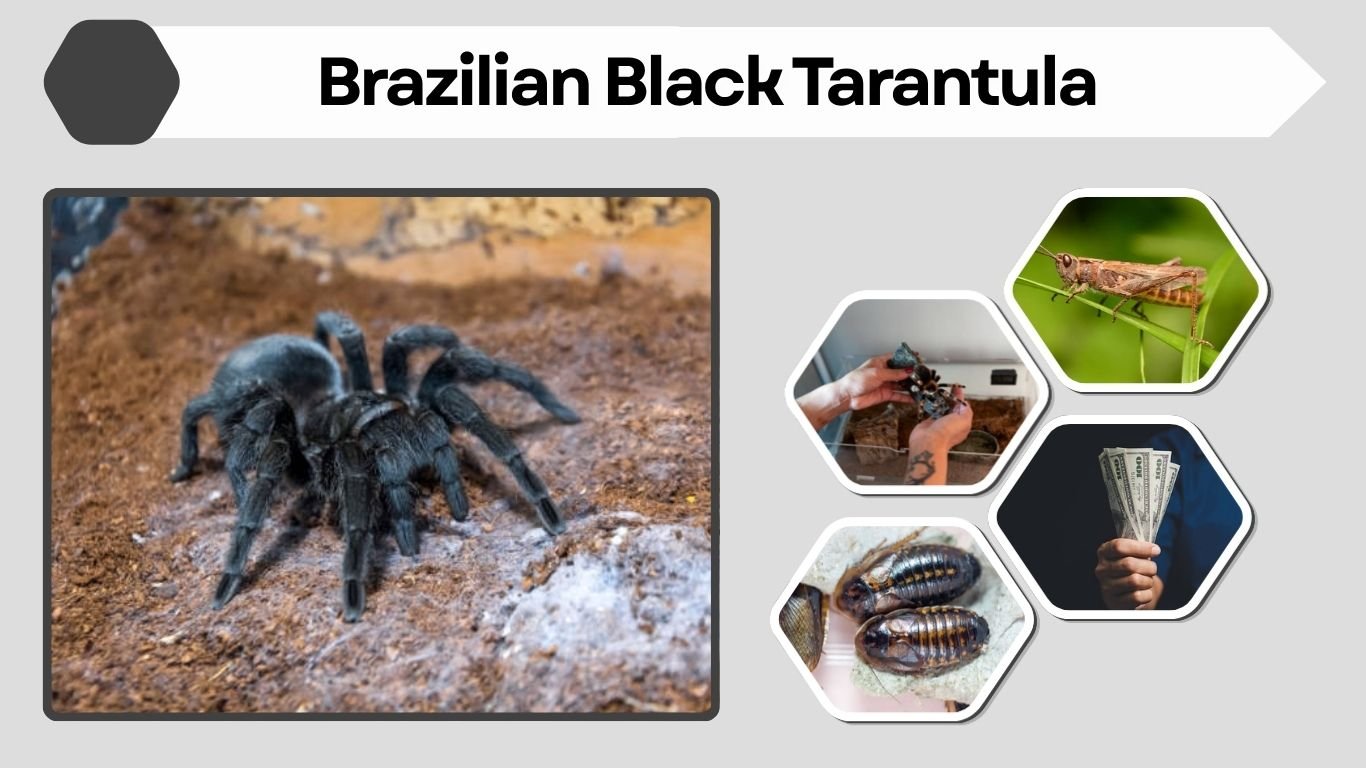
The Brazilian black tarantula is admired for its deep, velvety-black color, heavy build, and generally calm behavior. Scientifically known as Grammostola pulchra, this terrestrial species is frequently recommended to beginner tarantula keepers. However, its slow growth, long lifespan, feeding habits, and specialized housing requirements mean that ownership requires patience and a lasting commitment.
Brazilian Black Tarantula Overview
Adult Brazilian black tarantulas are almost completely black, including the legs, abdomen, and carapace. Their dense covering of dark hairs creates the smooth, velvet-like appearance that makes the species especially desirable in the pet trade.
| Feature | Description |
| Scientific name | Grammostola pulchra |
| Common name | Brazilian black tarantula |
| Native range | Southern Brazil |
| Lifestyle | Terrestrial and occasionally burrowing |
| Adult leg span | Commonly 6–7 inches |
| Temperament | Usually calm and slow-moving |
| Female lifespan | Commonly reported as 20–30 years |
| Male lifespan | Commonly reported as 6–8 years |
| Diet | Live invertebrates |
| Experience level | Beginner to intermediate |
Modern taxonomic research supports G. pulchra as a species from southern Brazil. Records are particularly associated with the country’s southern region, including Rio Grande do Sul.
Size and Appearance
A full-grown Brazilian black tarantula commonly develops a leg span of approximately 6–7 inches, although individual size depends on sex, genetics, feeding, and environmental conditions. Females usually become heavier-bodied than mature males.
The spider’s nearly uniform jet-black coloration is its most distinctive feature. It lacks the bright knee bands, red abdominal hairs, or colorful markings found on many other popular pet tarantulas.
Brazilian Black vs Brazilian Black-and-White Tarantula
The Brazilian black tarantula should not be confused with the Brazilian black-and-white tarantula. The latter is generally identified as Nhandu coloratovillosus, a separate species with obvious pale or white bands on its legs.
The Brazilian whiteknee, Acanthoscurria geniculata, is another separate black-and-white species. Check the scientific name before buying, because similar common names can easily cause confusion.
Brazilian Black Tarantula Enclosure Setup
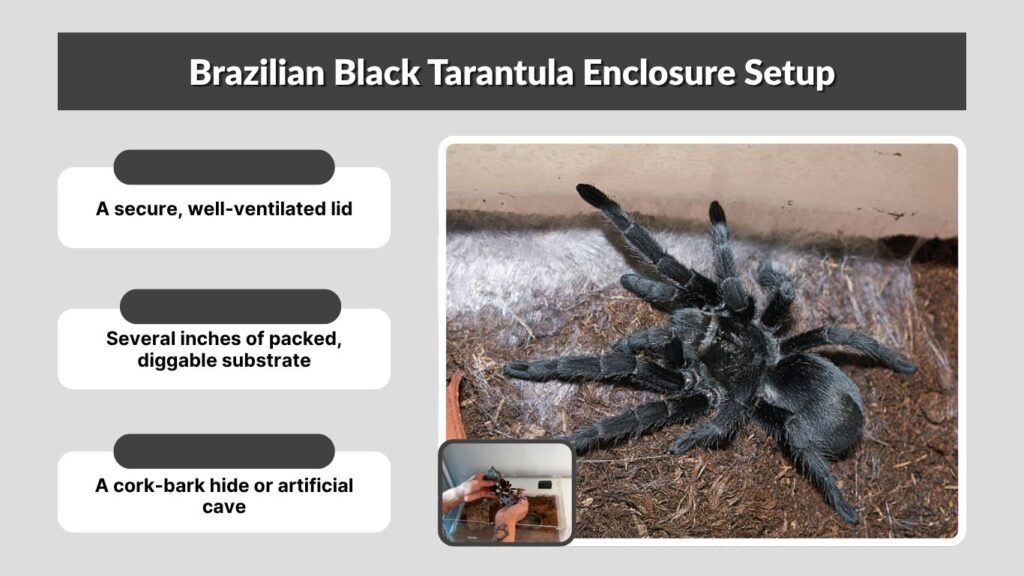
Because the Brazilian black is terrestrial rather than arboreal, its enclosure should provide generous floor space but limited climbing height. A tall enclosure can be dangerous because a fall may rupture the spider’s delicate abdomen.
Enclosure Requirements
A suitable setup should include:
- A secure, well-ventilated lid
- A horizontal enclosure at least three times the spider’s leg span
- Several inches of packed, diggable substrate
- A cork-bark hide or artificial cave
- A shallow water dish
- No sharp stones, mesh floors, or spiny decorations
Deep substrate reduces the distance the tarantula can fall while allowing natural digging behavior. Brazilian blacks may construct a shallow burrow, modify an existing hide, or simply remain visible above the substrate.
Substrate and Humidity
A mixture of pesticide-free topsoil, coconut fiber, or peat-based substrate can work well. Pack it firmly enough that a burrow will not immediately collapse.
Juveniles may benefit from a slightly damp lower layer or one moist corner. Adults generally do well with mostly dry surface substrate, occasional moisture in one area, good ventilation, and constant access to clean water. The enclosure should never become swampy or permanently wet.
Temperature and Lighting
Normal indoor temperatures of approximately 68–75°F, or 20–24°C, are appropriate in many homes. Avoid intense heat lamps, heating rocks, direct sunlight, and poorly controlled heat sources, which can quickly overheat or dehydrate the enclosure. Special ultraviolet lighting is unnecessary.
What Do Brazilian Black Tarantulas Eat?
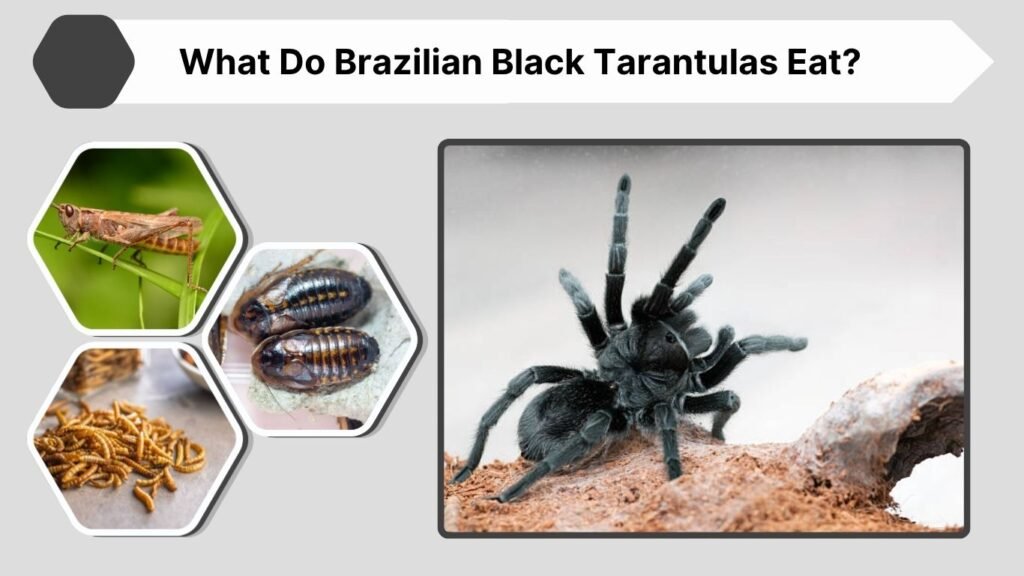
Brazilian black tarantulas are carnivorous ambush predators. In captivity, they should receive appropriately sized feeder invertebrates rather than human food or wild insects that may have contacted pesticides.
Suitable Foods
Common feeder options include:
- Crickets
- Dubia roaches
- Mealworms
- Superworms
- Locusts where legally available
- Small pre-killed prey for tiny spiderlings
Prey should generally be no larger than the tarantula’s abdomen. Adults may eat every one to three weeks, while growing slings and juveniles are normally offered smaller meals more frequently. Remove uneaten insects after about 24 hours.
Fasting and Molting
A Brazilian black tarantula may refuse food for weeks or occasionally longer, particularly before a molt. Fasting is not automatically an emergency when the abdomen remains reasonably full and the spider has access to water.
Remove all live prey when molting appears likely. Feeder insects can injure a helpless tarantula while its new exoskeleton is soft. Wait until the spider has hardened and its fangs have turned dark before feeding again.
Brazilian Black Tarantulas Lifespan and Growth Rate
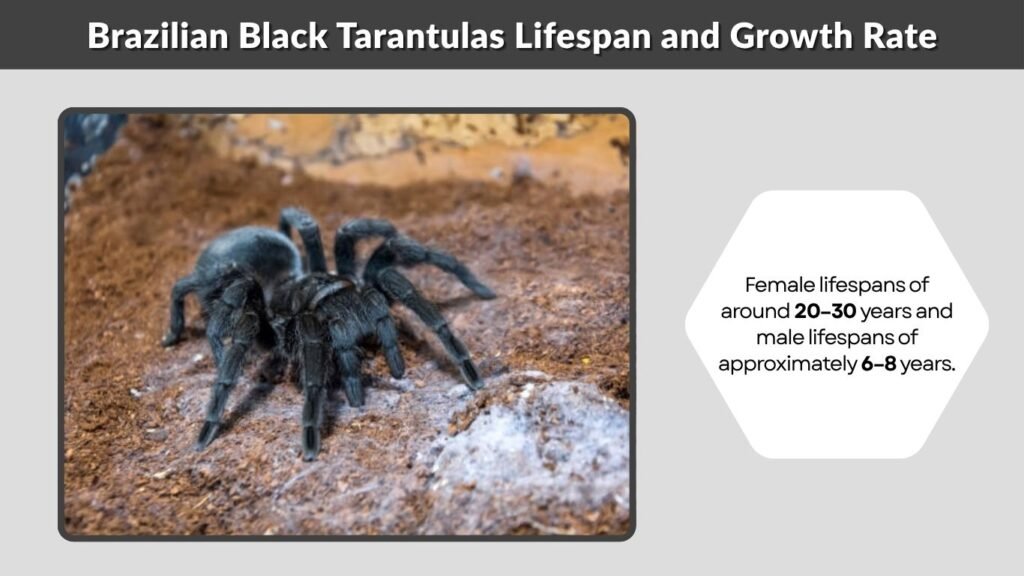
The Brazilian black is considered a very slow-growing tarantula. A spiderling may require several years to develop into a large juvenile, while females can take considerably longer to reach full maturity.
Captive-care sources commonly report female lifespans of around 20–30 years and male lifespans of approximately 6–8 years. A mature male usually has less time remaining than a mature female, so buyers seeking a long-term pet often prefer confirmed females.
This longevity should be considered before purchasing. The owner may need to provide housing, live food, and responsible care for several decades.
Temperament and Handling
Brazilian black tarantulas have a reputation for being calm, slow-moving, and less defensive than many other species. Nevertheless, “docile” does not mean domesticated or completely predictable. Any individual can run, kick defensive hairs, or bite when frightened.
Regular handling is not recommended. The greater risk is often to the tarantula because even a short fall can cause a fatal abdominal injury. When moving the spider, gently guide it into a secure catch cup instead of picking it up by hand.
Are Brazilian Black Tarantulas Venomous?
Brazilian black tarantulas are venomous rather than poisonous. They use venom to immobilize prey and can bite defensively, although bites are considered uncommon when the animal is left undisturbed.
Tarantula bites can cause local pain, itching, redness, and swelling. Individual reactions vary, and severe symptoms require medical attention. New World tarantulas also possess urticating abdominal hairs that may irritate the skin, airways, or eyes. Wash your hands after enclosure maintenance and never rub your eyes after contacting the spider, substrate, or shed skin.
Buying a Brazilian Black Tarantula

Brazilian black tarantulas are often more expensive than faster-growing species because captive-bred individuals take years to mature. Prices vary according to the spider’s size, sex, availability, location, and whether it has been reliably identified.
Purchase only from a reputable captive breeder or specialist seller. Confirm the scientific name, approximate size, feeding history, and whether the sex has been verified. Before arranging live-animal shipping, check local ownership laws, seasonal temperatures, and the carrier’s current live-animal policy.
FAQs
Are Brazilian black tarantulas good pets?
They can be excellent display pets for responsible beginners. They are generally hardy, quiet, slow-moving, and require relatively little space. However, they are unsuitable for someone wanting a pet that enjoys being touched or handled.
Are Brazilian black tarantulas arboreal?
No. Brazilian black tarantulas are terrestrial spiders that live primarily at ground level. Their enclosure should be wider than it is tall, with deep substrate and limited empty climbing height to reduce the danger of falling.
Do Brazilian black tarantulas burrow?
Yes, especially when young or when provided with suitable substrate. Some individuals dig extensively, while others merely enlarge a hide or remain visible on the surface. Both behaviors can be normal.
How often do Brazilian black tarantulas molt?
The frequency depends on age, feeding, temperature, and growth. Spiderlings may molt several times a year, while large adults can go much longer between molts. Females continue molting after maturity, but mature males generally do not molt normally again.
Are Brazilian black tarantulas friendly?
They are often described as calm or docile, but “friendly” is not an accurate biological description. A Brazilian black does not form the same social bond as a dog or cat. It is best appreciated as an observation-only animal.
