
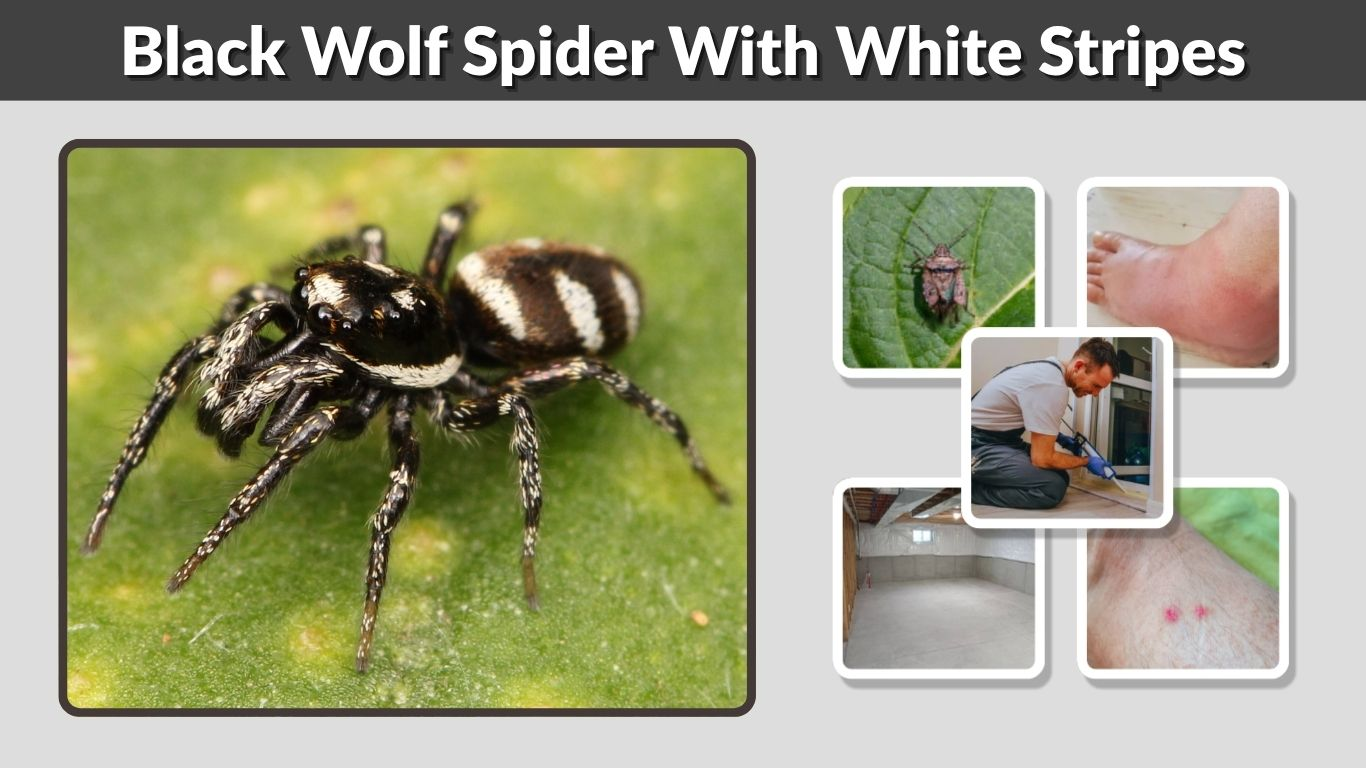
Finding a black spider with white stripes can be alarming, especially if it moves quickly across the ground. Many people assume it is a wolf spider because of its speed, size, and hunting behavior. In reality, several spider species have black bodies with white or pale stripes, including some wolf spiders. Correct identification is important because most of these spiders are harmless and help control insect populations.
This guide explains how to identify a black wolf spider with white stripes, where it lives, whether it is dangerous, and how to tell it apart from similar spiders.
Can Wolf Spiders Be Black With White Stripes?
Yes, some wolf spiders can appear black or very dark brown with white, gray, or cream-colored stripes. Their appearance varies depending on the species, age, lighting, and location.
Many wolf spiders have:
- Dark brown to nearly black bodies
- White, gray, or tan stripes on the cephalothorax
- Light markings or chevrons on the abdomen
- Hairy legs with faint bands
- Excellent camouflage against soil, rocks, and leaf litter
A spider that looks completely black indoors may actually appear dark brown when viewed in natural sunlight.
How to Identify a Black Wolf Spider With White Stripes
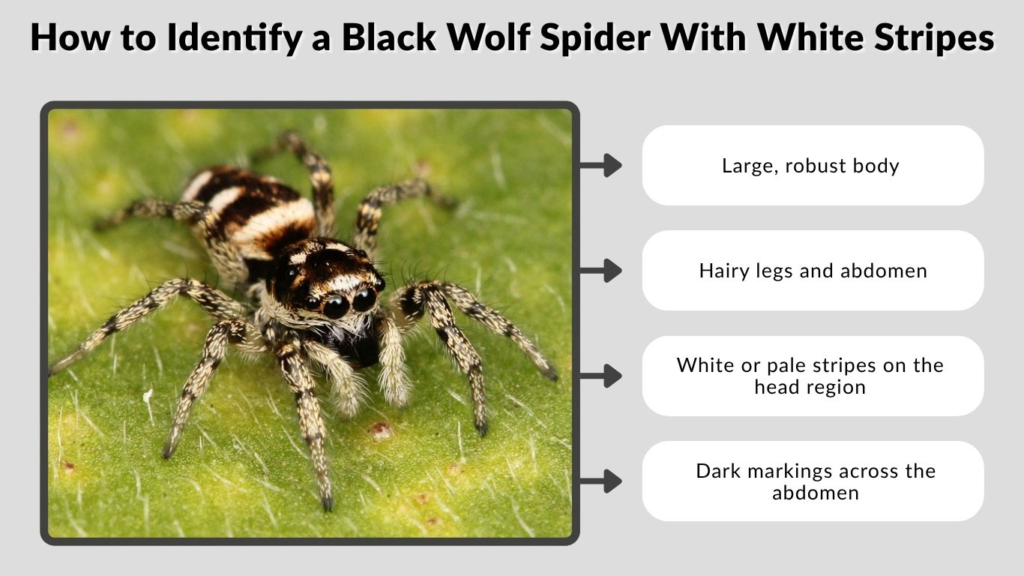
Wolf spiders have several distinctive characteristics that make them easier to recognize.
Identification Features
- Large, robust body
- Hairy legs and abdomen
- White or pale stripes on the head region
- Dark markings across the abdomen
- Eight eyes arranged in three rows
- Fast-running behavior
- Does not sit in a web waiting for prey
- Usually found on the ground
One of the easiest identification clues is the eye arrangement. Wolf spiders have two large forward-facing eyes that reflect light when illuminated at night.
Common Wolf Spider Species With White Stripes
Several wolf spider species may appear black with white or pale stripes.
| Species | Typical Appearance | Distribution |
|---|---|---|
| Rabid Wolf Spider (Rabidosa rabida) | Brown to dark with pale stripes | Eastern and Central U.S. |
| Carolina Wolf Spider (Hogna carolinensis) | Dark brown with lighter markings | Much of the United States |
| Tigrosa helluo | Brown to nearly black with pale patterns | Eastern North America |
| Tigrosa aspersa | Dark body with lighter striping | Eastern U.S. |
Color varies between individuals, so markings are usually more reliable than overall body color.
Why Does the Spider Look Black?
Several factors can make a wolf spider appear darker than it actually is.
Common Reasons
- Poor indoor lighting
- Wet or freshly molted spider
- Dark-colored species
- Shadow on the abdomen
- Camera exposure
- Natural color variation
This is why identification should never rely on color alone.
Habitat and Distribution
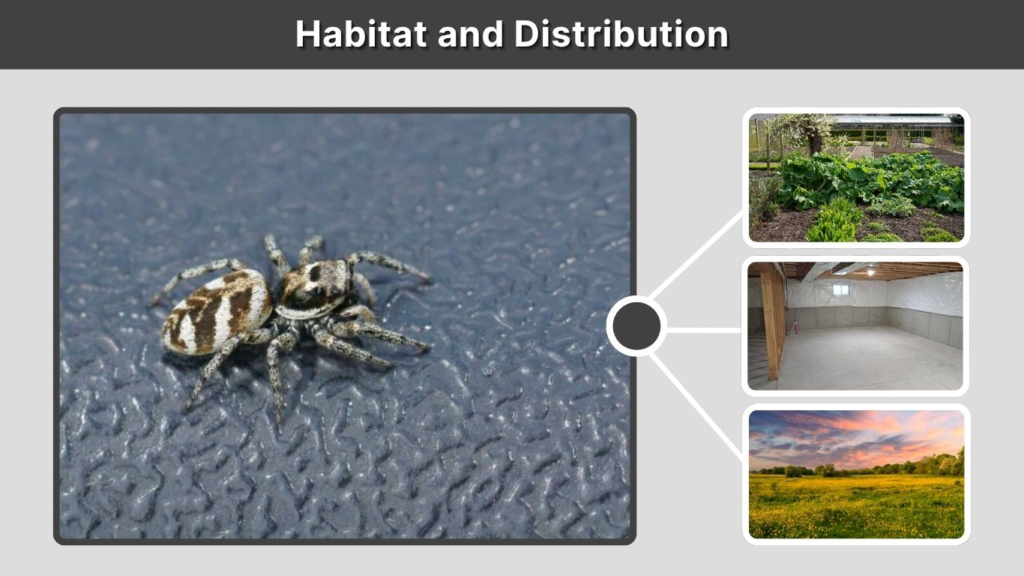
Wolf spiders live across most of North America and adapt well to many environments.
They are commonly found in:
- Lawns
- Gardens
- Forest floors
- Meadows
- Leaf litter
- Mulch beds
- Under rocks
- Wood piles
- Basements
- Garages
- Crawl spaces
Most species spend the day hiding and become active after sunset.
Behavior
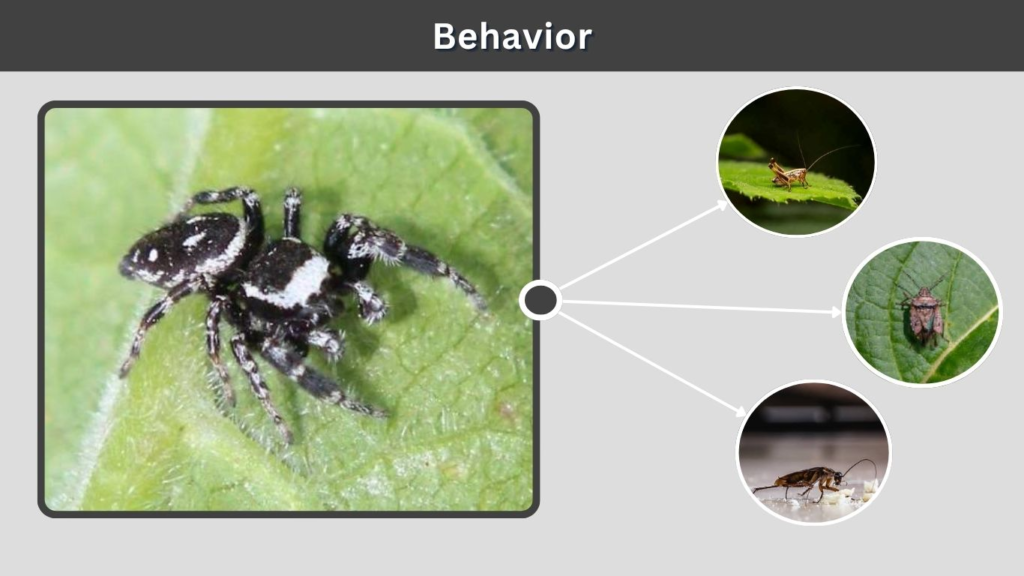
Unlike orb-weavers, wolf spiders actively chase prey instead of trapping it in webs.
They hunt:
- Crickets
- Beetles
- Cockroaches
- Flies
- Grasshoppers
- Caterpillars
- Small spiders
- Other arthropods
Their excellent eyesight and speed make them effective nighttime hunters.
Do Black Wolf Spiders Build Webs?
One of the biggest misconceptions is that wolf spiders build large webs.
They produce silk, but they do not build sticky capture webs.
Instead, silk is used for:
- Egg sacs
- Burrow lining
- Temporary shelters
- Safety draglines
If you see a spider sitting in the center of a circular web, it is almost certainly not a wolf spider.
Are Black Wolf Spiders With White Stripes Dangerous?
Although their appearance may be intimidating, wolf spiders are generally not dangerous to humans.
They usually bite only when:
- Trapped against skin
- Handled
- Stepped on
- Accidentally squeezed
Their first instinct is almost always to run away.
Wolf Spider Bite
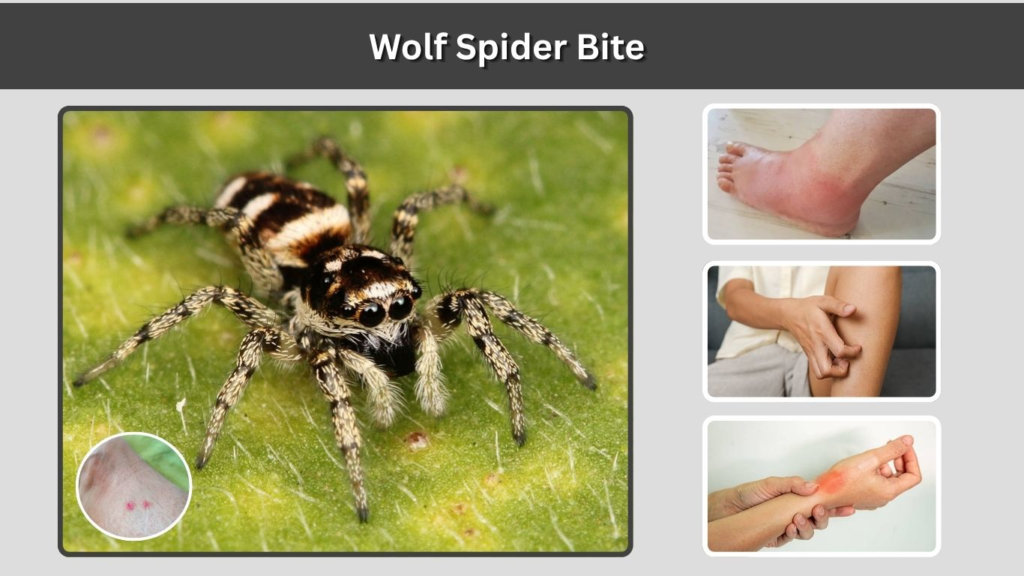
A wolf spider bite is usually mild.
Common Symptoms
- Immediate sharp pain
- Mild redness
- Local swelling
- Tenderness
- Itching
- Minor burning sensation
Symptoms often improve within a day or two.
Wash the bite with soap and water, apply a cold compress, and monitor the area. Seek medical attention if swelling becomes severe, signs of infection develop, or you experience difficulty breathing.
Black Wolf Spider vs Jumping Spider
These spiders are frequently confused because some jumping spiders are black with white stripes.
| Feature | Wolf Spider | Jumping Spider |
|---|---|---|
| Size | Medium to large | Small |
| Body | Long and robust | Compact |
| Legs | Long | Short and stout |
| Eyes | Three rows | Two very large front eyes |
| Hunting | Runs after prey | Jumps onto prey |
| Hair | Moderate | Often very fuzzy |
Jumping spiders usually stay under one inch long, while many wolf spiders appear much larger.
Black Wolf Spider vs Grass Spider
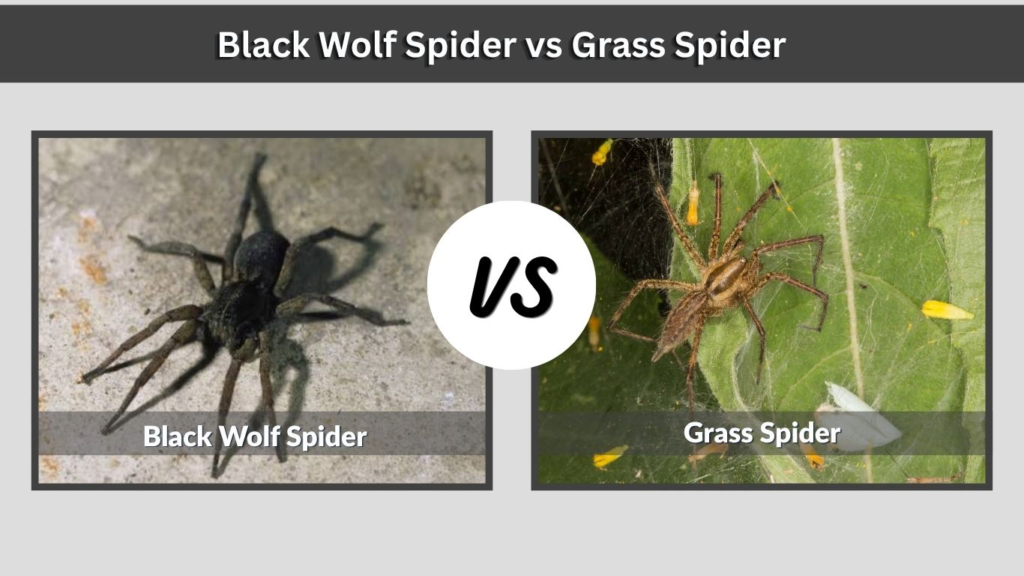
Grass spiders are another common lookalike.
| Feature | Wolf Spider | Grass Spider |
|---|---|---|
| Web | No hunting web | Funnel web |
| Spinnerets | Short | Long and visible |
| Movement | Runs across ground | Usually stays near web |
| Habitat | Ground hunter | Grass and shrubs |
If the spider is sitting in a funnel-shaped web, it is more likely a grass spider.
Black Wolf Spider vs Fishing Spider
Fishing spiders can also appear dark with pale markings.
| Feature | Wolf Spider | Fishing Spider |
|---|---|---|
| Family | Lycosidae | Pisauridae |
| Habitat | Ground | Near water, walls, trees |
| Legs | Thick | Longer and flatter |
| Hunting | Ground hunter | Hunts on water and vegetation |
Fishing spiders often have a flatter body and longer legs than wolf spiders.
Female Black Wolf Spider
Female wolf spiders are generally larger than males.
One remarkable behavior is carrying an egg sac attached to the spinnerets. After hatching, hundreds of spiderlings may ride on the mother’s back until they become independent.
This maternal care is unique among many common spiders and is one of the easiest ways to identify a female wolf spider.
Why Are Wolf Spiders Beneficial?
Wolf spiders are natural pest controllers.
They help reduce populations of:
- Roaches
- Crickets
- Beetles
- Flies
- Moths
- Caterpillars
- Earwigs
- Other garden pests
For this reason, many gardeners consider them beneficial predators.
How to Keep Wolf Spiders Out of Your Home
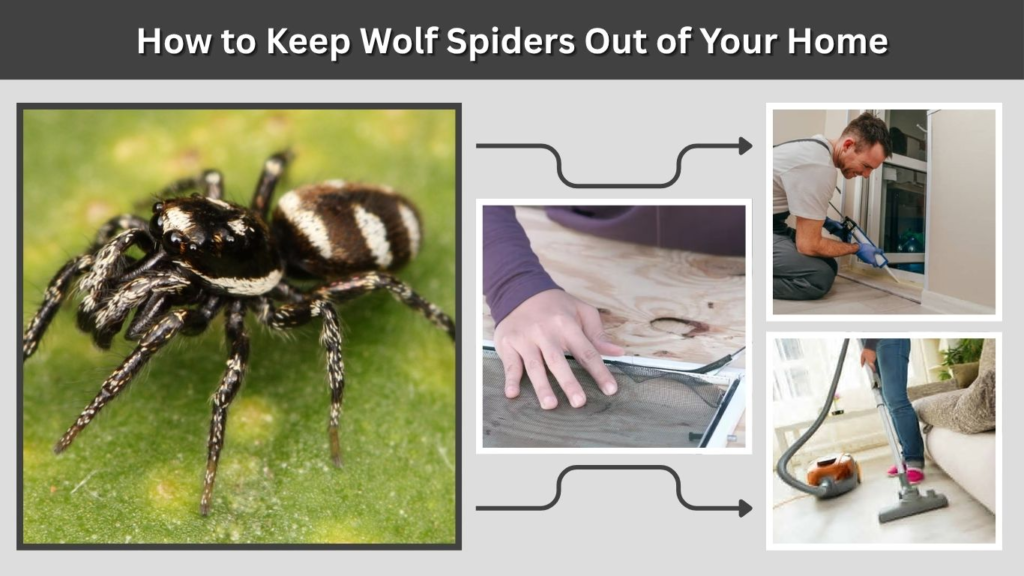
If you prefer not to have wolf spiders indoors, simple prevention measures are usually effective.
Prevention Tips
- Seal cracks around windows and doors.
- Install door sweeps.
- Repair damaged screens.
- Remove wood piles from the foundation.
- Reduce indoor clutter.
- Vacuum regularly.
- Keep outdoor lighting to a minimum when possible.
- Control insects that attract spiders.
Most indoor wolf spiders entered accidentally and are not trying to establish an infestation.
FAQs
Is a black spider with white stripes always a wolf spider?
No. Jumping spiders, fishing spiders, grass spiders, and several other species may also have black bodies with white stripes. Body shape, eye arrangement, and behavior are better identification clues than color alone.
Are black wolf spiders poisonous?
Wolf spiders are venomous, not poisonous. Their venom is used to capture prey, and their bites are usually mild for healthy people.
Can a black wolf spider climb walls?
Yes. Many wolf spiders can climb rough surfaces, rocks, wood, and some walls, although they are primarily ground-dwelling hunters.
Do black wolf spiders make webs?
They produce silk but do not build sticky prey-catching webs. Instead, they actively hunt insects on the ground.
Should I kill a black wolf spider?
Usually, no. Wolf spiders help control insect pests and rarely bite unless threatened. If one enters your home, safely capture it with a container and release it outdoors.
