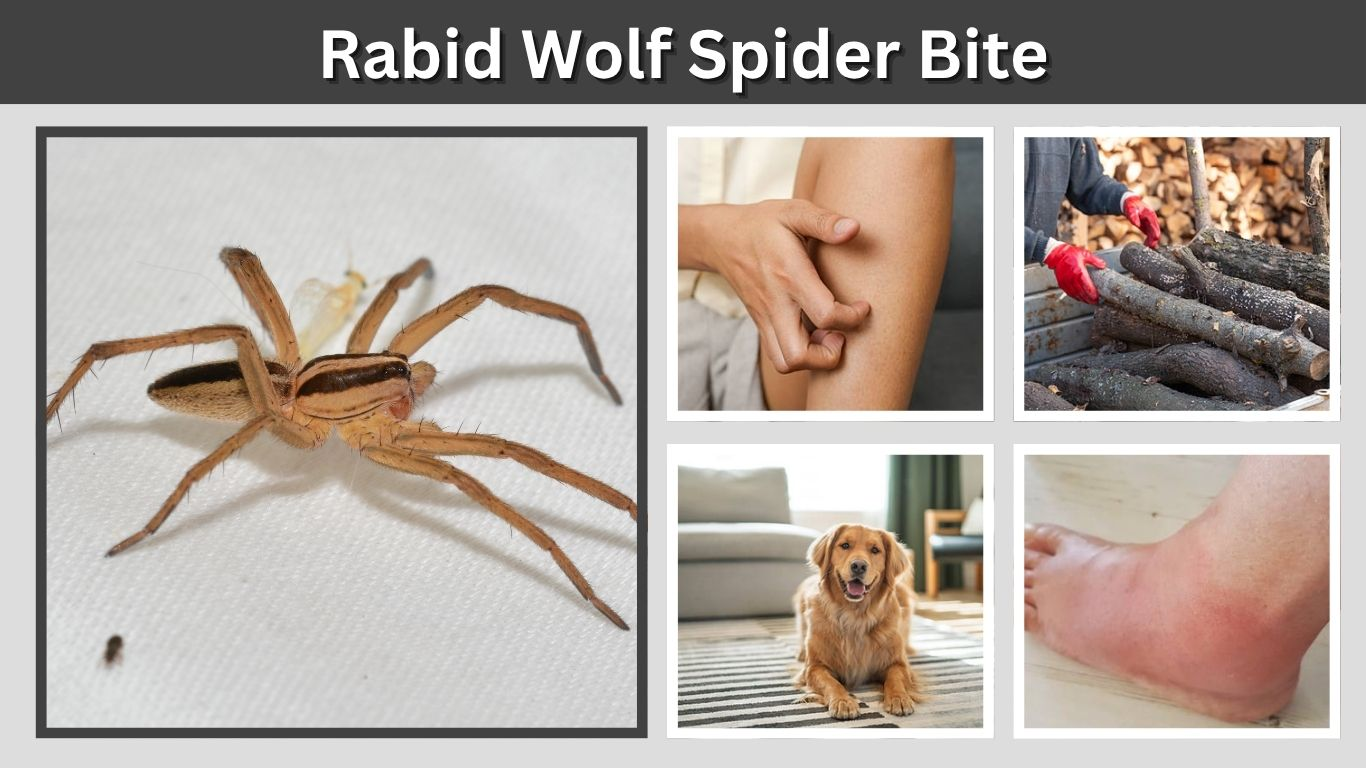
A rabid wolf spider bite sounds scary because of the spider’s name, but this species does not carry rabies. The rabid wolf spider is a real wolf spider, scientifically known as Rabidosa rabida, and it may bite if trapped, handled, or pressed against skin. Most bites are mild and not dangerous to healthy adults. Still, knowing what a bite looks like, what symptoms to expect, and when to get medical help can prevent panic and reduce risk.
What Is a Rabid Wolf Spider Bite?
A rabid wolf spider bite happens when the spider uses its fangs to defend itself. These spiders are not aggressive toward people and usually try to escape. Bites are uncommon and usually occur when someone accidentally grabs the spider, steps on it barefoot, or traps it in clothing, bedding, shoes, or gloves.
The bite may feel like a quick pinch or sting. Some people may not notice it immediately, while others feel sharp pain right away.
What Does a Rabid Wolf Spider Bite Look Like?
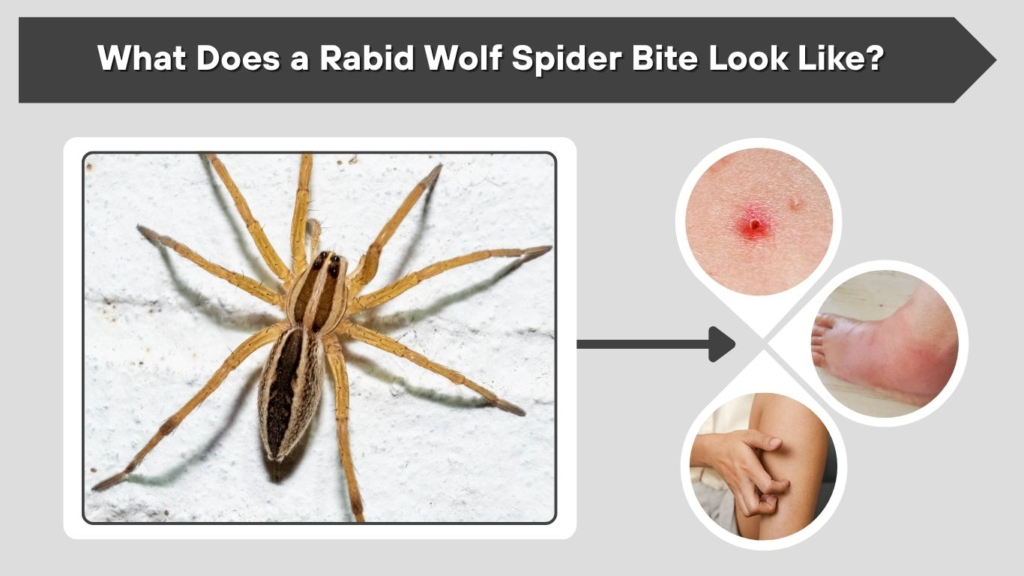
A rabid wolf spider bite usually looks like a small red bump or irritated spot. It may resemble a mosquito bite, ant bite, or mild bee sting. In some cases, two tiny puncture marks may be visible, but they are not always easy to see.
Common Bite Appearance
- Small red spot
- Mild swelling
- Tender bump
- Itching or irritation
- Slight warmth around the area
- Possible tiny puncture marks
- No large open wound in most cases
A bite should not usually turn into a deep ulcer or spreading wound. If the skin becomes dark, blistered, severely painful, or infected-looking, it may be something else and should be checked by a doctor.
Rabid Wolf Spider Bite Symptoms
Most rabid wolf spider bite symptoms are local, meaning they stay near the bite area. Symptoms usually appear soon after the bite and improve with basic care.
Mild Symptoms
- Quick stinging pain
- Redness
- Swelling
- Itching
- Tenderness
- Mild burning feeling
- Skin irritation
Some people may also feel anxious after seeing the spider, especially if they mistake it for a brown recluse or another dangerous spider.
What Happens If a Rabid Wolf Spider Bites You?
If a rabid wolf spider bites you, the most likely result is short-term pain, redness, and swelling. The venom is mainly used to subdue insects, not harm humans. For most people, symptoms improve within a few hours to a couple of days.
However, everyone reacts differently. Children, older adults, people with allergies, and people with weakened immune systems should be monitored more carefully.
Rabid Wolf Spider Bite Treatment
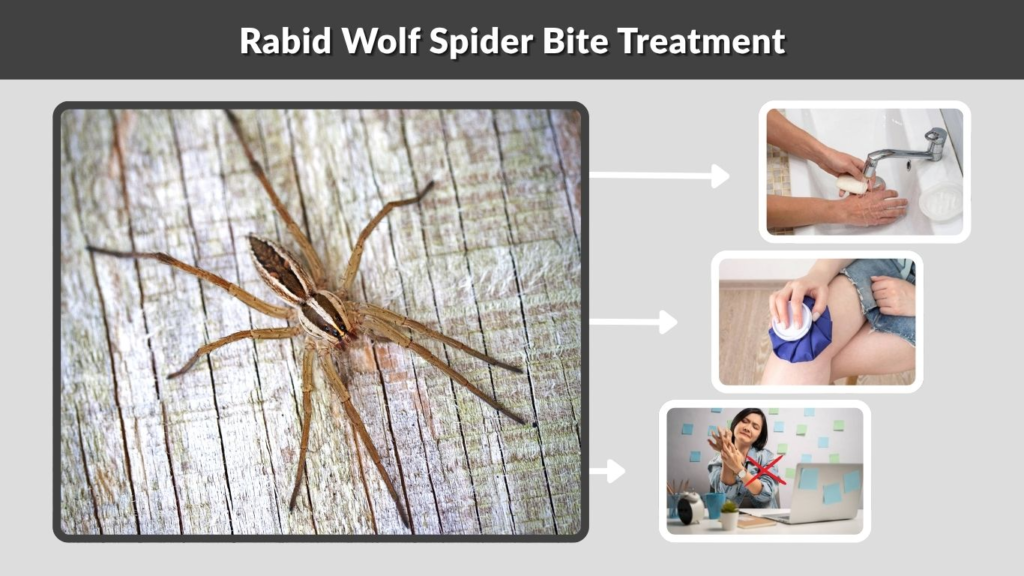
Most bites can be treated at home with simple first aid. The goal is to clean the area, reduce swelling, and prevent infection.
First Aid Steps
- Wash the bite with soap and water.
- Apply a cold compress for 10–15 minutes.
- Keep the bite area elevated if possible.
- Avoid scratching the skin.
- Use an over-the-counter pain reliever if needed.
- Apply an anti-itch cream if irritation occurs.
- Watch for changes over the next 24–48 hours.
Do not cut the bite, squeeze it, or try to remove venom. These actions can make irritation or infection worse.
When to See a Doctor
Although rabid wolf spider bites are usually mild, medical care is needed if symptoms are severe or unusual.
Seek medical help if you notice:
- Trouble breathing
- Swelling of lips, face, or throat
- Severe pain
- Spreading redness
- Pus or signs of infection
- Fever or chills
- Dizziness or weakness
- A growing blister or open sore
- Symptoms that worsen after 24–48 hours
If the bite is on a baby, very young child, or someone with a serious medical condition, it is safer to call a healthcare provider for advice.
Rabid Wolf Spider Bite Pictures and Photos
Many people search for rabid wolf spider bite pictures, but photos online can be misleading. Skin reactions from insects, infections, allergies, ticks, fleas, and other spiders can look very similar. A red swollen bump does not prove that a rabid wolf spider caused it.
If you want to identify the cause, a clear photo of the spider is more helpful than a photo of the bite. Do not handle the spider to take a picture. Use a container or take a photo from a safe distance.
Male Rabid Wolf Spider Bite
Male rabid wolf spiders can bite, but they are not more dangerous than females. Males often wander more, especially during mating season, so they may be seen indoors more often. A male bite may cause the same mild symptoms: pain, redness, itching, and swelling.
The size of the spider does not always predict how someone will react. Personal sensitivity matters more than whether the spider is male or female.
Rabid Wolf Spider Bite on Dogs
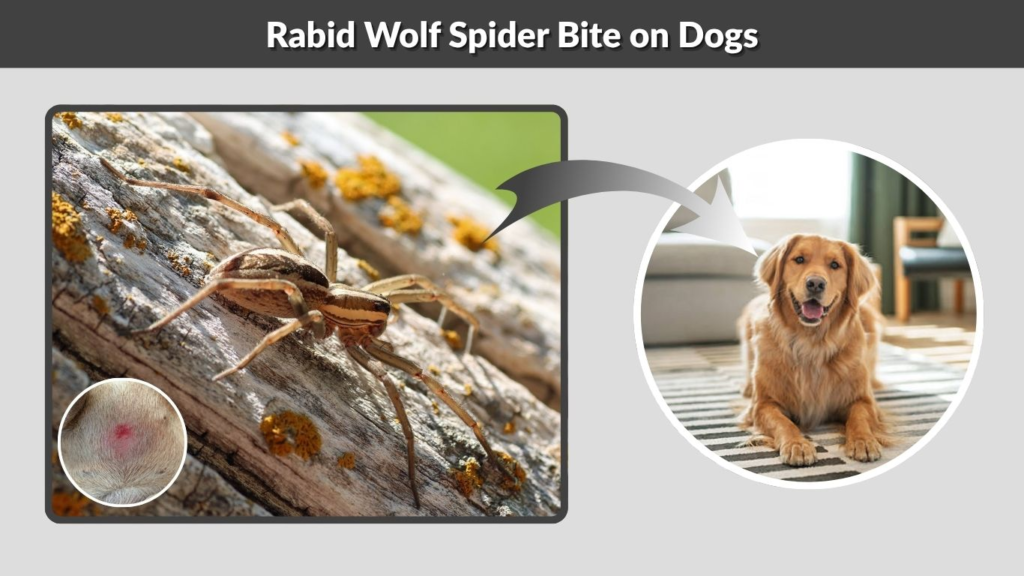
A rabid wolf spider bite on a dog is usually not serious, but pets may react differently from humans. Dogs may get bitten when sniffing, pawing, or trying to eat the spider.
Possible Dog Symptoms
- Licking or chewing one spot
- Mild swelling
- Redness
- Limping if bitten on a paw
- Whining or discomfort
- Small tender bump
Call a veterinarian if your dog has strong swelling, vomiting, weakness, shaking, trouble breathing, or signs of pain that do not improve.
Effects of Rabid Wolf Spider Bites on Cats
Cats may be bitten if they chase or play with a rabid wolf spider. Most mild bites cause local irritation, but cats can hide pain well, so watch their behavior.
Possible signs include swelling, licking, hiding, limping, reduced appetite, or sensitivity when touched. Contact a vet if symptoms are severe, if your cat seems weak, or if swelling spreads.
Texas Rabid Wolf Spider Bite Baby
Searches like “Texas rabid wolf spider bite baby” show that many parents worry about young children. A bite on a baby or toddler should be treated more carefully than an adult bite because small children may react more strongly and cannot describe symptoms clearly.
Wash the area gently, apply a cold cloth, and call a pediatrician or poison control for advice. Get urgent help if the child has trouble breathing, unusual sleepiness, spreading swelling, fever, or continuous crying.
Rabid Wolf Spider Bite vs Brown Recluse Bite
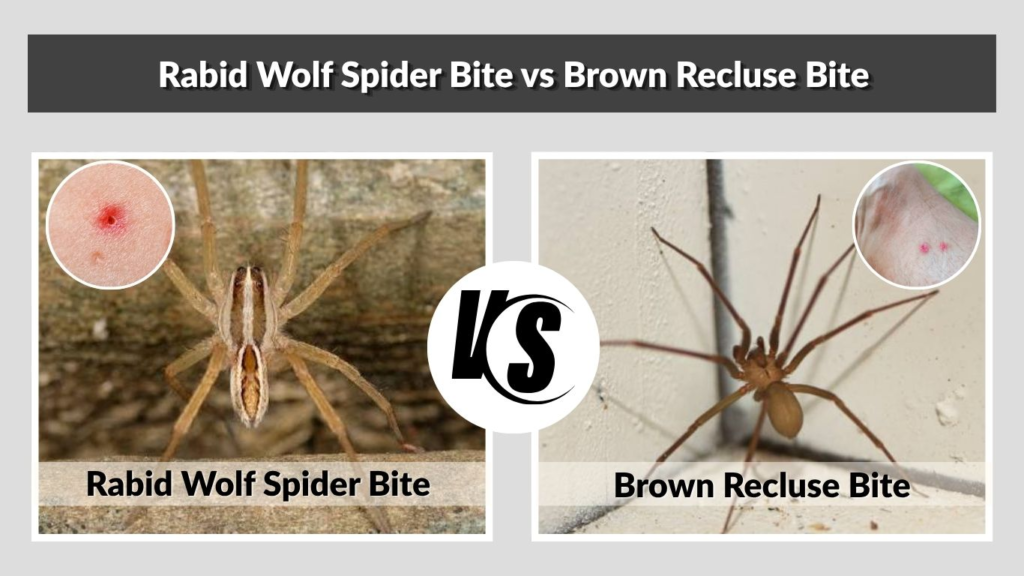
Rabid wolf spider bites are often confused with brown recluse bites. This matters because brown recluse bites can sometimes cause more serious skin damage.
| Feature | Rabid Wolf Spider Bite | Brown Recluse Bite |
|---|---|---|
| Usual severity | Mild | Can be more serious |
| Skin damage | Usually small red bump | May blister or ulcerate |
| Pain | Often immediate sting | May be delayed |
| Spider appearance | Hairy, striped, fast | Smooth, brown, violin mark |
| Medical concern | Usually low | Higher |
If a bite develops a dark center, spreading wound, blister, or severe pain, seek medical advice.
How to Avoid Rabid Wolf Spider Bites
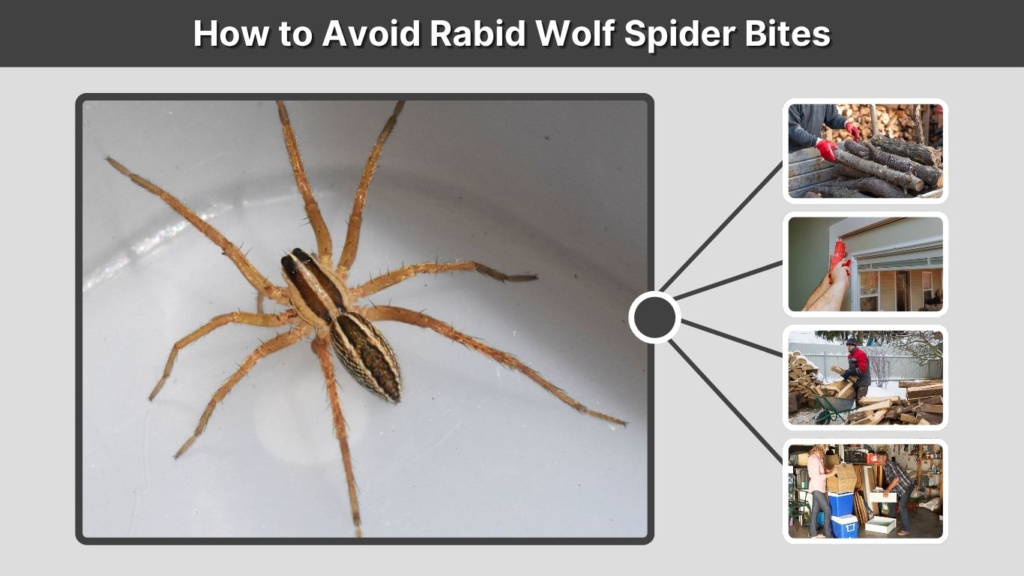
Rabid wolf spiders usually bite only when disturbed. Preventing accidental contact is the best way to avoid bites.
Prevention Tips
- Shake out shoes, gloves, and outdoor clothing.
- Wear gloves when moving firewood, leaves, or debris.
- Seal gaps around doors and windows.
- Use door sweeps.
- Keep beds away from walls if spiders are common indoors.
- Reduce clutter in garages and basements.
- Move wood piles away from the house.
- Control insects that attract spiders.
If you find one indoors, use a cup and paper to move it outside instead of handling it.
FAQs
Is a rabid wolf spider bite dangerous?
A rabid wolf spider bite is usually not dangerous to healthy adults. Most bites cause mild pain, redness, itching, or swelling. Serious reactions are rare, but medical help is needed if symptoms spread, worsen, or include breathing trouble.
What does a rabid wolf spider bite look like?
It often looks like a small red bump with mild swelling or irritation. Some bites may show tiny puncture marks, but not always. Severe wounds, dark skin, or spreading ulcers are not typical and should be checked by a doctor.
Can a rabid wolf spider bite a dog?
Yes, a rabid wolf spider can bite a dog if the dog paws at or tries to eat it. Most reactions are mild, but call a veterinarian if your dog has strong swelling, vomiting, weakness, shaking, or breathing problems.
What should I do after a rabid wolf spider bite?
Wash the bite with soap and water, apply a cold compress, avoid scratching, and monitor symptoms. Over-the-counter pain relief or anti-itch cream may help. Seek medical care if symptoms become severe or show signs of infection.
Can rabid wolf spiders give you rabies?
No, rabid wolf spiders cannot give you rabies. The word “rabid” is part of the spider’s common name and does not mean the spider carries the rabies virus. It is a venomous spider, but its venom is usually mild for humans.
