
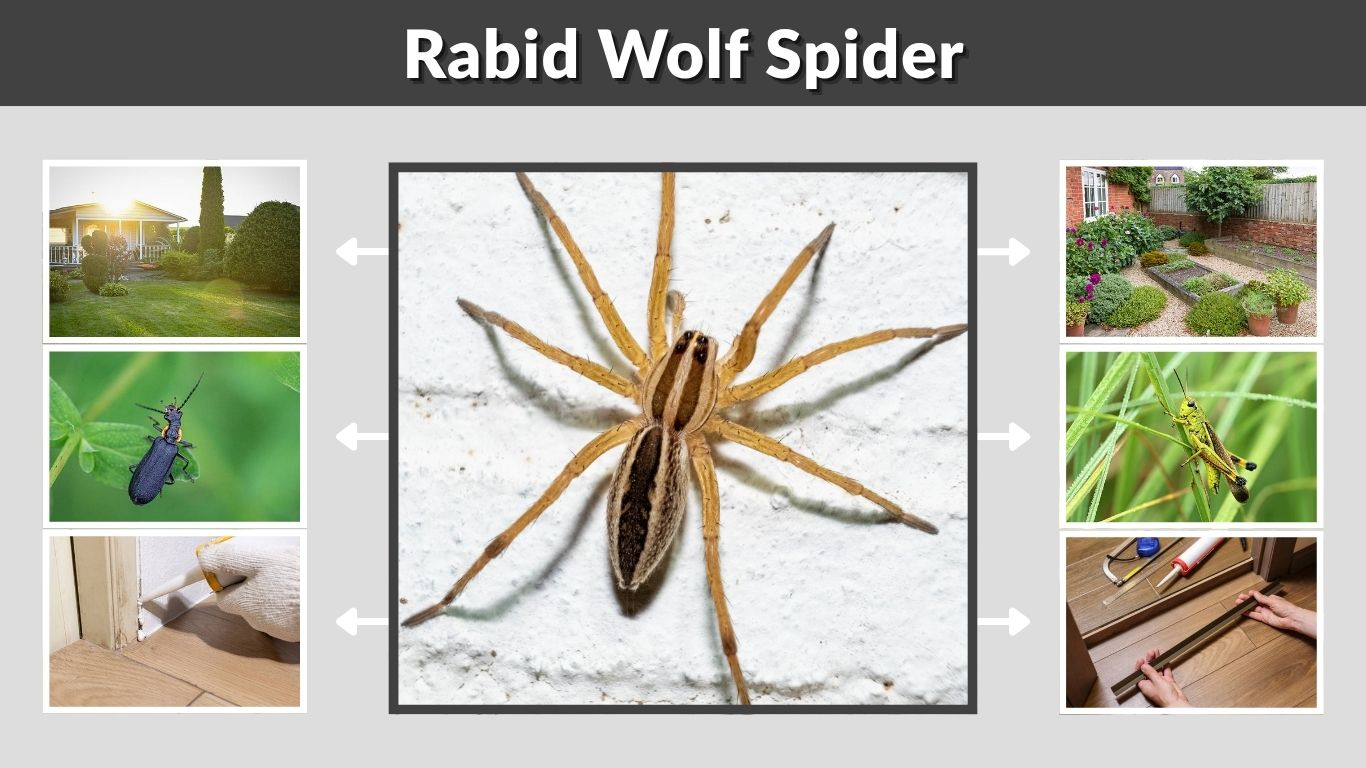
The rabid wolf spider is a common wolf spider in the United States, but its name often causes confusion. Despite the word “rabid,” this spider does not carry rabies and is not aggressive like the name suggests. The rabid wolf spider, scientifically known as Rabidosa rabida, is a fast-moving ground hunter found in lawns, fields, gardens, forests, and sometimes homes. It is venomous like most spiders, but its bite is usually mild and not dangerous to most people.
What Is a Rabid Wolf Spider?
The rabid wolf spider is a species of wolf spider in the family Lycosidae. Like other wolf spiders, it does not rely on a web to catch prey. Instead, it hunts insects on the ground using speed, eyesight, and quick reflexes.
The name “rabid” comes from its scientific name and active hunting behavior, not from disease. It cannot give people or pets rabies. Many people search for this spider because it looks large, runs quickly, and may be found near homes.
Rabid Wolf Spider Identification
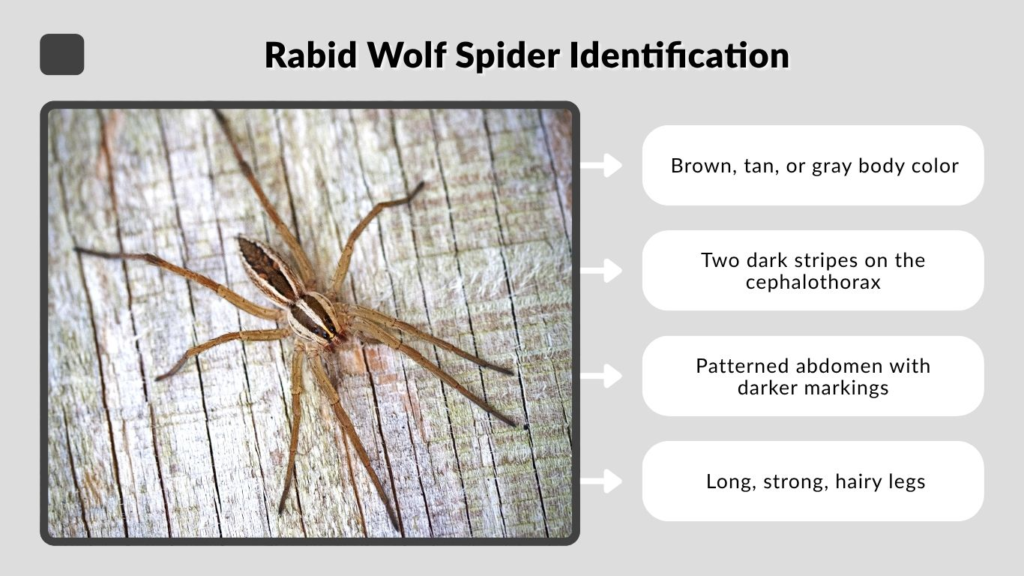
Rabid wolf spiders are usually brown, tan, or grayish with clear dark stripes on the body. They have long legs, a hairy body, and a slim hunting-spider shape. Their markings can make them look similar to grass spiders or other wolf spiders.
Key Identification Features
- Brown, tan, or gray body color
- Two dark stripes on the cephalothorax
- Patterned abdomen with darker markings
- Long, strong, hairy legs
- Fast movement on the ground
- Large forward-facing eyes
- No sticky prey-catching web
- Females may carry an egg sac
A rabid wolf spider may look scary because it moves fast, but it usually tries to escape when disturbed.
Rabid Wolf Spider Size
Rabid wolf spider size is another major search topic. Adults are medium to large compared with many house spiders. Females are usually larger and fuller-bodied than males.
| Type | Approximate Size | Notes |
|---|---|---|
| Male rabid wolf spider | Smaller, slimmer | Often wanders more |
| Female rabid wolf spider | Larger, heavier | May carry egg sac |
| Large rabid wolf spider | Looks bigger with legs spread | Often mistaken for more dangerous spiders |
The body length is usually less than some giant wolf spiders, but the long legs make it appear larger. When one runs across a floor or wall, many people overestimate its actual size.
Male Rabid Wolf Spider vs Female
Male and female rabid wolf spiders are similar in color and markings, but they differ in size, body shape, and behavior. Males are often slimmer with longer-looking legs, while females are broader and heavier.
Male Rabid Wolf Spider
Male rabid wolf spiders are more likely to wander, especially when searching for females. They may enter homes by accident through cracks, doors, garages, or basement openings. Their slimmer shape can sometimes make them look like grass spiders.
Female Rabid Wolf Spider
Female rabid wolf spiders are usually larger and may be seen carrying a round egg sac attached to the spinnerets. After the eggs hatch, baby spiderlings may climb onto the mother’s back for protection. This is a common wolf spider behavior.
Rabid Wolf Spider Bite
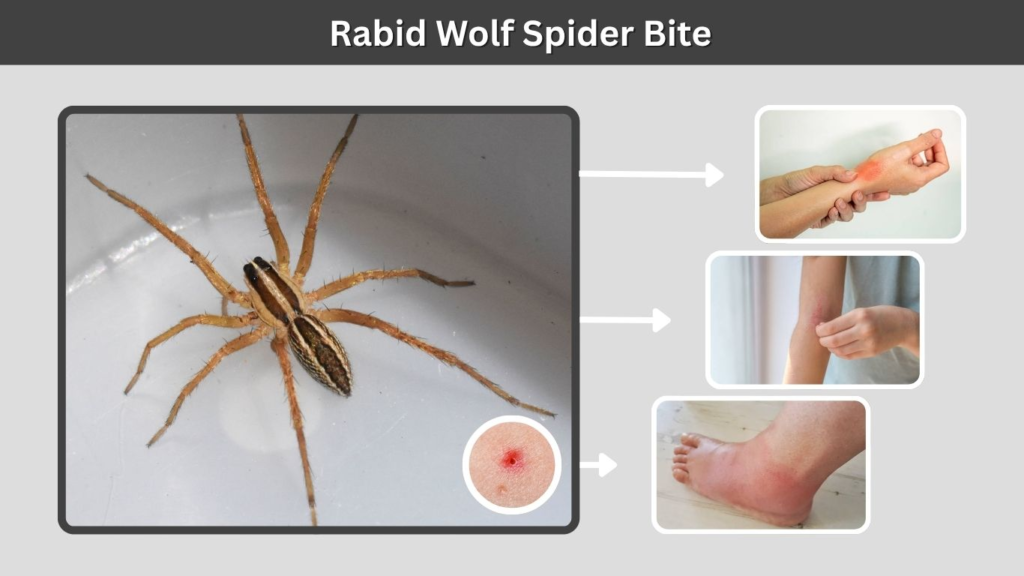
A rabid wolf spider bite is possible, but it is uncommon. These spiders usually bite only when handled, trapped, squeezed, or threatened. They do not chase people or attack intentionally.
Most bites are mild and may feel similar to a bee sting or small puncture wound. The symptoms usually stay around the bite area.
Rabid Wolf Spider Bite Symptoms
- Mild to moderate pain
- Redness around the bite
- Swelling
- Itching or irritation
- Tenderness
- Small puncture marks
- Rare allergic reaction
Wash the bite with soap and water, use a cold compress, and avoid scratching. Medical help is recommended if pain becomes severe, swelling spreads, or symptoms include fever, dizziness, breathing trouble, or signs of infection.
Is a Rabid Wolf Spider Poisonous?
A rabid wolf spider is venomous, not poisonous. Venomous animals inject venom through a bite or sting. Poisonous animals are harmful when touched or eaten.
The rabid wolf spider uses venom to subdue insects and other small prey. Its venom is not considered medically significant for most healthy adults. However, people with allergies, young children, older adults, or pets may react differently, so bites should still be watched carefully.
Is the Rabid Wolf Spider Dangerous?
The rabid wolf spider is not considered dangerous to most people. Its name sounds alarming, but it is not rabid, not aggressive, and not deadly. The main reason people fear it is its speed and appearance.
In fact, rabid wolf spiders are helpful predators. They eat insects that may become pests in gardens, lawns, and around homes. If one is found indoors, it can usually be removed safely using a cup and paper.
Rabid Wolf Spider Habitat
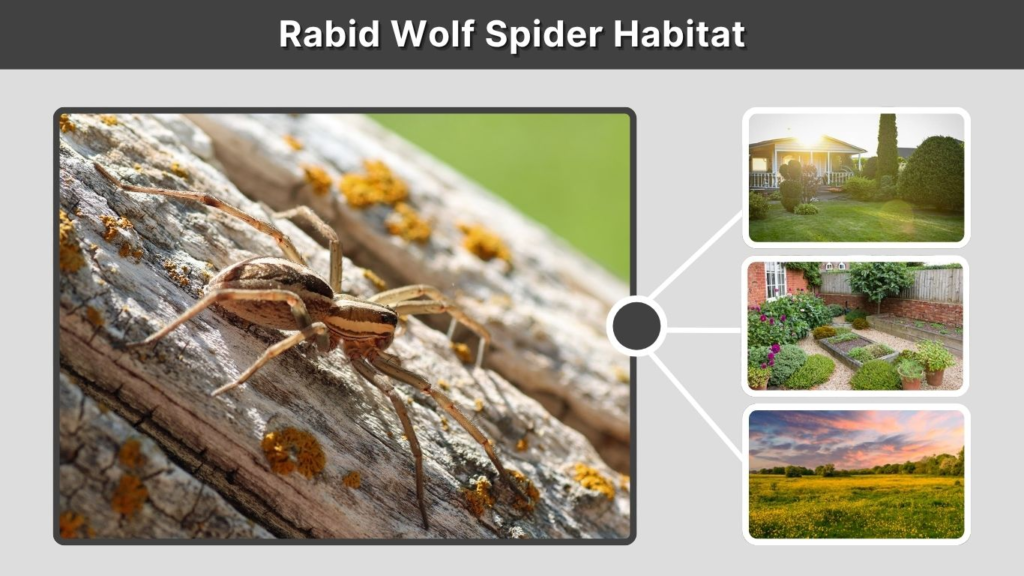
Rabid wolf spiders prefer ground-level habitats where they can hide and hunt. They are often found in areas with grass, leaves, mulch, stones, or low vegetation.
They may live in:
- Lawns
- Gardens
- Fields
- Meadows
- Forest edges
- Leaf litter
- Mulch beds
- Around sheds and garages
- Under rocks, boards, or logs
They are often seen at night when they hunt. A flashlight may reveal their eyes shining back from grass or soil.
Rabid Wolf Spider Range
The rabid wolf spider is found in many parts of the United States. Search interest is especially common in Texas, Oklahoma, Illinois, Indiana, Maryland, Massachusetts, North Carolina, and other states.
Common Location Searches
| Search Query | User Intent |
|---|---|
| Texas rabid wolf spider | Identification in Texas |
| Rabid wolf spider NC | Local spider ID |
| Rabid wolf spider Oklahoma | Range and safety |
| Rabid wolf spider Illinois | Home and garden sightings |
| Rabid wolf spider Massachusetts | Regional concern |
| Rabid wolf spider Florida | Possible sightings |
| Rabid wolf spider California | Range curiosity |
Some location searches may come from people trying to identify any large wolf spider. Not every wolf spider in those states is a rabid wolf spider.
Rabid Wolf Spider in the House
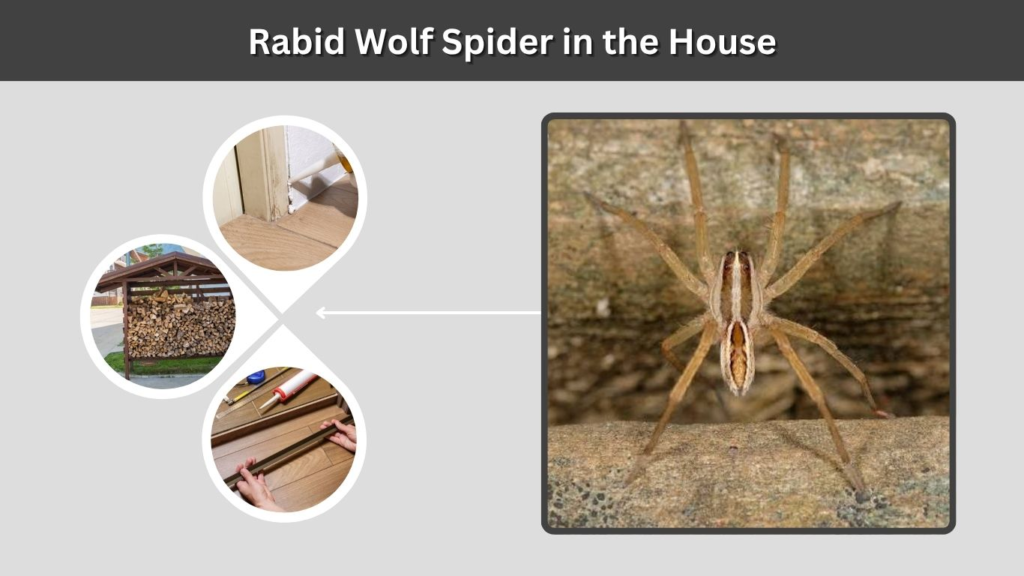
A rabid wolf spider in the house usually entered by accident. It may come inside while chasing prey, looking for shelter, or moving during mating season. Finding one spider indoors does not always mean there is an infestation.
How to Get Rid of Rabid Wolf Spiders
- Seal gaps under doors and windows
- Add door sweeps
- Repair torn screens
- Reduce clutter in basements and garages
- Move firewood and debris away from the house
- Keep grass and weeds trimmed near walls
- Reduce insects that attract spiders
- Capture and release single spiders outdoors
Avoid leaving piles of clothes, boxes, or cardboard on the floor because these create hiding places.
Rabid Wolf Spider Web
Rabid wolf spiders can produce silk, but they do not spin webs to catch prey. This is an important difference between rabid wolf spiders and grass spiders.
They may use silk for egg sacs or shelter, but they hunt by running on the ground. If you see a funnel-shaped web in grass, shrubs, or corners, the spider may be a grass spider instead of a rabid wolf spider.
Rabid Wolf Spider Diet
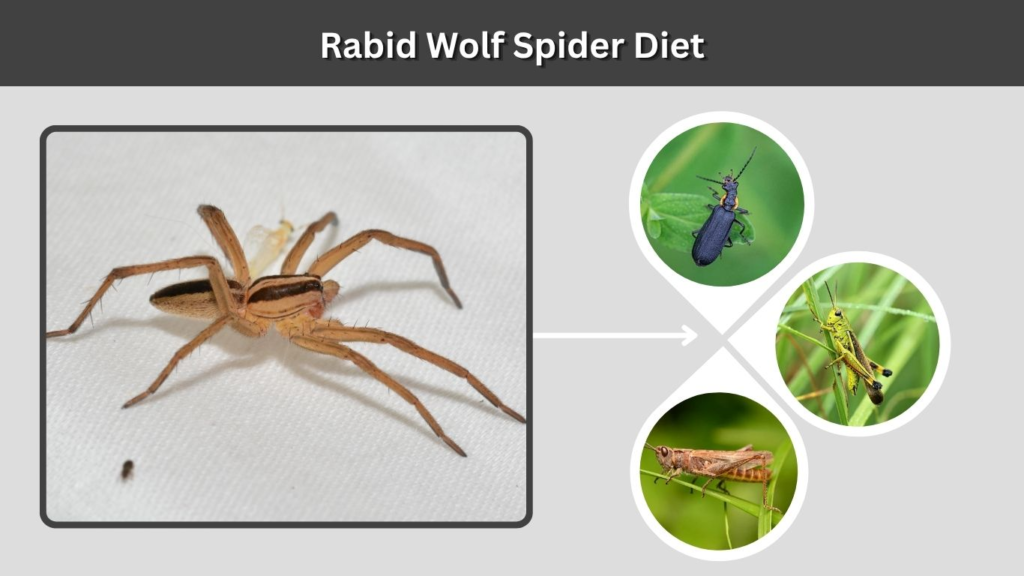
Rabid wolf spiders are carnivores. They feed mostly on insects and other small arthropods. They are nighttime hunters and use speed rather than web traps.
What Do Rabid Wolf Spiders Eat?
- Flies
- Crickets
- Grasshoppers
- Roaches
- Beetles
- Moths
- Small spiders
- Other soft-bodied insects
Because they eat common pests, they can be useful in yards and gardens.
Rabid Wolf Spider Life Cycle
Rabid wolf spiders start as eggs inside an egg sac carried by the female. After hatching, baby spiders may stay on the mother’s back for a short time. This behavior helps protect them from predators while they are very small.
As they grow, the spiderlings molt several times. Males usually mature faster and wander in search of females. Females often live longer and may produce egg sacs during the breeding season.
Rabid Wolf Spider vs Wolf Spider
“Rabid wolf spider” refers to one specific species, while “wolf spider” refers to a large family of spiders. There are many wolf spider species, and they can look similar.
| Feature | Rabid Wolf Spider | General Wolf Spider |
|---|---|---|
| Scientific name | Rabidosa rabida | Many species |
| Web use | Does not catch prey in webs | Usually does not catch prey in webs |
| Behavior | Fast ground hunter | Ground hunter |
| Danger level | Low for most people | Usually low |
| Appearance | Brown with stripes | Varies by species |
Rabid Wolf Spider vs Brown Recluse
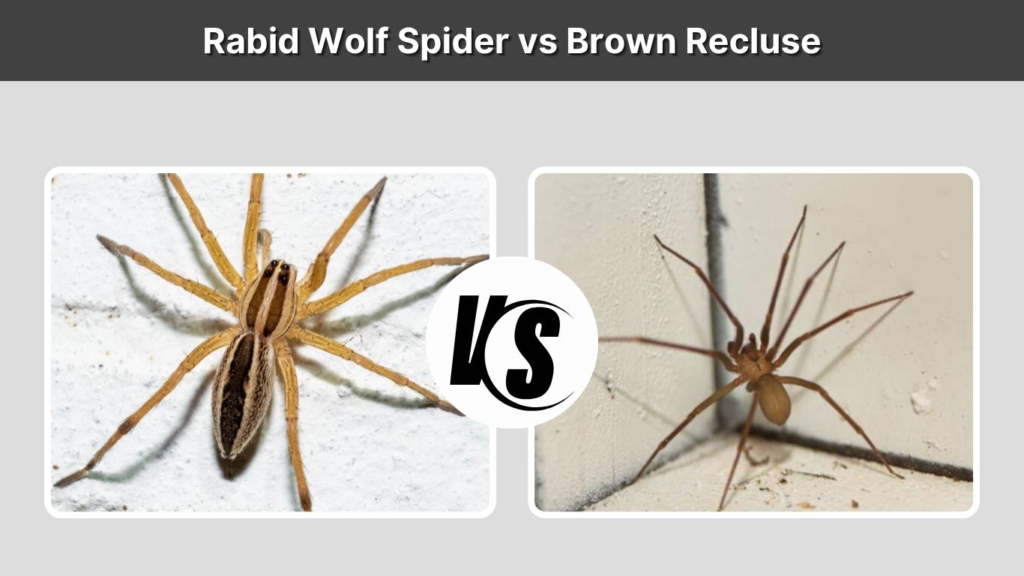
Many people confuse rabid wolf spiders with brown recluse spiders because both can be brown. However, they are very different.
Rabid wolf spiders are usually larger, hairier, faster, and have more visible striping. Brown recluse spiders are smoother-looking, have a violin-shaped marking, and are medically more concerning.
| Feature | Rabid Wolf Spider | Brown Recluse |
|---|---|---|
| Body | Hairy and patterned | Smoother, plain brown |
| Marking | Stripes and abdomen pattern | Violin-shaped mark |
| Hunting | Active ground hunter | Hides in dark areas |
| Web | No prey-catching web | Irregular retreat webs |
| Medical concern | Usually mild bite | Potentially serious bite |
If you are unsure which spider you found, avoid handling it and use a clear photo for identification.
Rabid Wolf Spider vs Grass Spider
Rabid wolf spiders and grass spiders are commonly confused. Grass spiders often build funnel webs, while rabid wolf spiders actively roam and hunt.
Main Differences
- Grass spiders build funnel-shaped webs
- Rabid wolf spiders do not use webs to catch prey
- Grass spiders often have long spinnerets
- Rabid wolf spiders look stockier and more ground-hunting
- Both are usually not dangerous to humans
If the spider is sitting in a funnel web, it is more likely a grass spider.
Rabid Wolf Spider vs Black Widow
Rabid wolf spiders and black widows look very different. Black widows are shiny black with a rounded abdomen, and females usually have a red hourglass marking underneath. Rabid wolf spiders are brown, striped, hairy, and fast-moving.
Black widows are more medically important, while rabid wolf spiders are generally low-risk. Still, any unknown spider should be treated with caution.
Are Rabid Wolf Spiders Dangerous to Dogs or Cats?
Rabid wolf spiders are not usually dangerous to dogs or cats. A curious pet may get bitten if it paws at or eats the spider. Most reactions are mild, but smaller pets may show swelling, drooling, limping, or discomfort.
If a dog or cat has strong swelling, vomiting, weakness, or breathing problems after a suspected bite, contact a veterinarian.
FAQs
Why is it called a rabid wolf spider?
It is called a rabid wolf spider because of its scientific name and active movement, not because it has rabies. Spiders cannot transmit rabies. The name sounds scary, but this species is not unusually aggressive toward humans.
What happens if a rabid wolf spider bites you?
Most bites cause mild pain, redness, swelling, or itching near the bite. Wash the area, apply a cold compress, and monitor symptoms. Seek medical care if swelling spreads, pain becomes severe, or you notice allergic symptoms.
Is a rabid wolf spider venomous?
Yes, a rabid wolf spider is venomous because it uses venom to catch prey. However, its venom is not considered dangerous to most people. It is much less concerning than medically significant spiders such as black widows or brown recluses.
Do rabid wolf spiders make webs?
Rabid wolf spiders can make silk, but they do not build sticky webs to catch prey. They hunt by running on the ground. Silk is mainly used for egg sacs, shelter, or other non-hunting purposes.
How do I keep rabid wolf spiders out of my house?
Seal cracks, repair screens, add door sweeps, reduce indoor clutter, and remove insects that attract spiders. Keep grass trimmed near the foundation and move wood, leaves, and debris away from exterior walls.
