
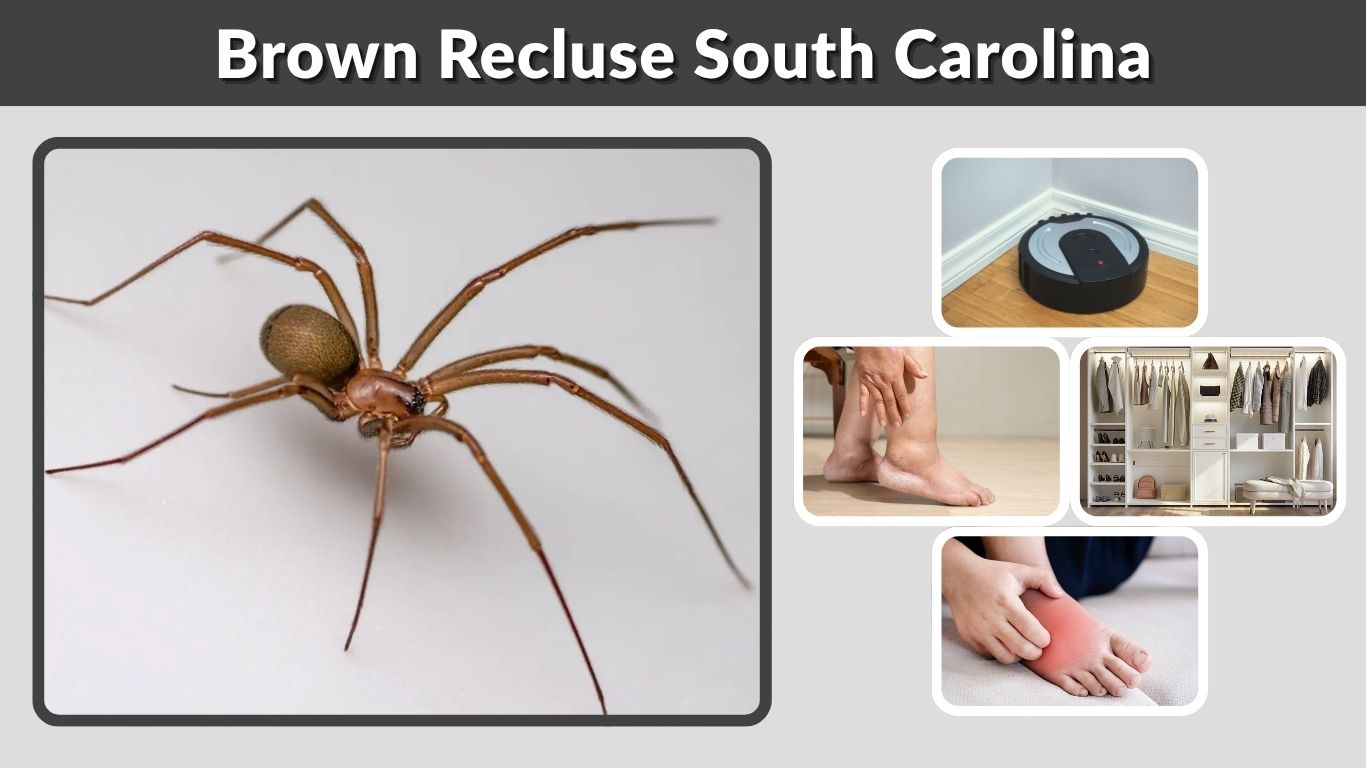
Many people search for “brown recluse South Carolina” because they are worried about dangerous spiders in homes, garages, closets, and storage areas. The short answer is yes, brown recluse spiders have been found in South Carolina, but they are considered rare and often misidentified. Many reported brown recluse bites or sightings in the state turn out to be other spiders or skin conditions. Knowing their range, appearance, hiding places, and look-alikes can help you stay cautious without unnecessary fear.
Are Brown Recluse Spiders in South Carolina?
Brown recluse spiders can occur in South Carolina, but they are not considered common across the state. Clemson-related reporting has noted that brown recluse bite reports in South Carolina have greatly outnumbered verified spider specimens, suggesting many cases are misidentified.
South Carolina is near the edge of the brown recluse’s known range, so sightings are possible but uncommon. They may sometimes be introduced through boxes, furniture, shipments, or stored materials from areas where brown recluse spiders are more common.
How Common Are Brown Recluse Spiders in South Carolina?
Brown recluse spiders are rare in South Carolina compared with states such as Missouri, Arkansas, Oklahoma, Kansas, Tennessee, and parts of Kentucky. A report on South Carolina records found only a small number of verified brown recluse specimens compared with hundreds of diagnosed bite cases.
| Question | Simple Answer |
| Does South Carolina have brown recluse spiders? | Yes, but they are rare |
| Are they common statewide? | No |
| Are bite reports always reliable? | No, many are misdiagnosed |
| Are look-alikes common? | Yes |
| Should homeowners stay cautious? | Yes, especially in storage areas |
Where Might Brown Recluse Spiders Live in South Carolina?
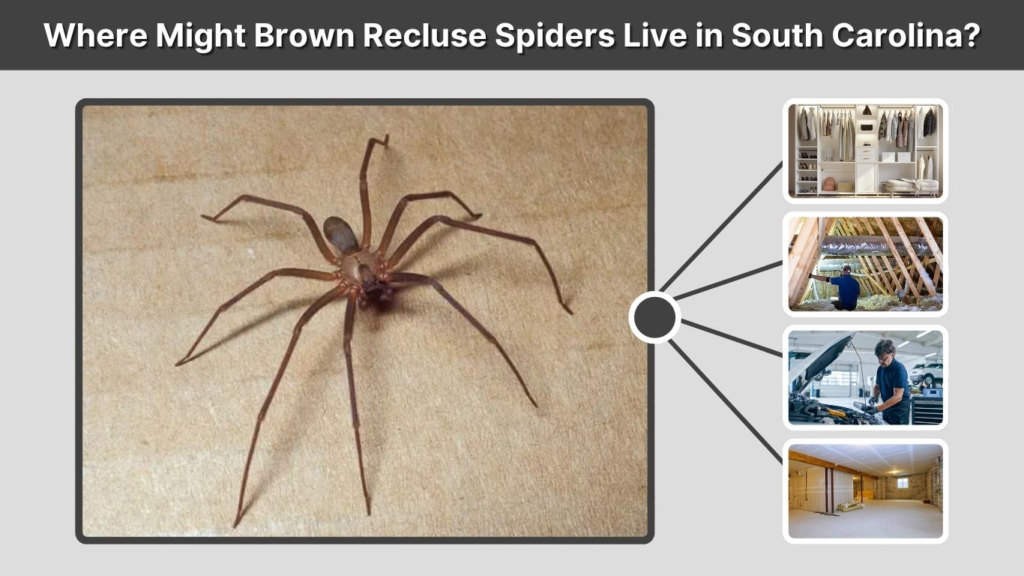
Brown recluse spiders prefer quiet, dry, dark places. If they are present in a South Carolina home, they are more likely to hide in undisturbed areas than open living spaces.
Indoor Hiding Places
Common indoor hiding places may include:
- Closets
- Attics
- Basements
- Garages
- Storage boxes
- Behind furniture
- Under beds
- Inside shoes or clothing
- Cardboard boxes
- Ceiling corners
Outdoor Hiding Places
Outside, they may hide in:
- Woodpiles
- Sheds
- Debris piles
- Stored lumber
- Rock piles
- Crawl spaces
- Old building materials
Brown recluse spiders are called “recluse” because they avoid people and usually stay hidden.
Brown Recluse Spiders in Columbia, Greenville, and Myrtle Beach
People often search for brown recluse spiders in Columbia, Greenville, and Myrtle Beach. Brown recluse spiders are not impossible in these areas, but they are still considered uncommon.
Brown Recluse in Columbia, South Carolina
Columbia has warm weather and many homes with garages, crawl spaces, and storage areas, but that does not mean brown recluse spiders are common there. Most brown spiders found around Columbia are more likely to be wolf spiders, house spiders, southern house spiders, or other harmless species.
Brown Recluse in Greenville, South Carolina
Greenville is sometimes mentioned in brown recluse discussions because of occasional reports and possible isolated findings. However, verified populations are still considered rare compared with the spider’s stronger range farther west.
Brown Recluse in Myrtle Beach, South Carolina
Myrtle Beach residents and visitors may worry about brown recluse spiders in vacation homes, rentals, garages, and storage areas. However, coastal South Carolina is not known as a major brown recluse hotspot. Many suspected sightings are likely look-alikes.
What Does a Brown Recluse Spider Look Like?
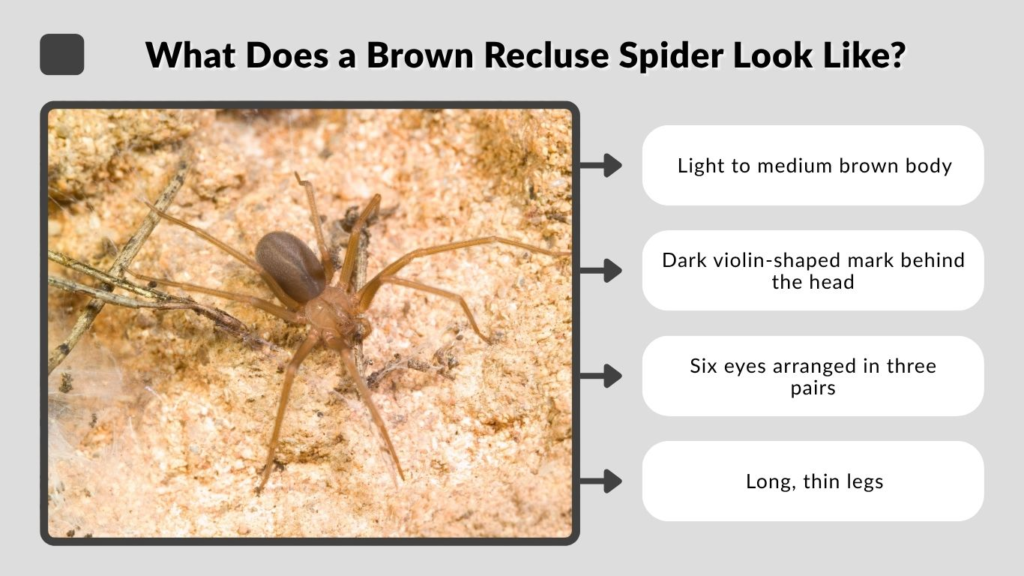
A true brown recluse is usually light brown to medium brown with long, thin legs and a plain-looking body. It is not hairy like a wolf spider and does not have bold stripes or bright markings.
Key Identification Features
Look for these features:
- Light to medium brown body
- Dark violin-shaped mark behind the head
- Six eyes arranged in three pairs
- Long, thin legs
- Plain abdomen without patterns
- Body usually about ¼ to ½ inch long
The six-eye pattern is one of the most important clues. Most spiders have eight eyes, while brown recluse spiders have six.
Brown Recluse Look-Alikes in South Carolina
Many South Carolina spiders are mistaken for brown recluse spiders. Clemson’s Home & Garden Information Center notes that male southern house spiders are often mistaken for brown recluse spiders because of similar color and shape.
| Look-Alike Spider | Why It Is Confused |
| Southern house spider | Similar brown color and body shape |
| Wolf spider | Brown, fast-moving, common indoors |
| Cellar spider | Long legs and indoor hiding places |
| Nursery web spider | Brown body and long legs |
| Huntsman-type spiders | Large, flat, brown appearance |
| Funnel weaver spider | Often found around homes |
Are Brown Recluse Spiders Dangerous?
Brown recluse spiders are venomous, but they are not aggressive. Most bites happen when the spider is trapped against the skin, such as inside clothing, bedding, towels, or shoes.
Their venom can sometimes damage skin tissue. Most bites heal without serious complications, but some may form blisters, ulcers, or slow-healing wounds. Medical care is important if symptoms worsen.
Brown Recluse Bite in South Carolina
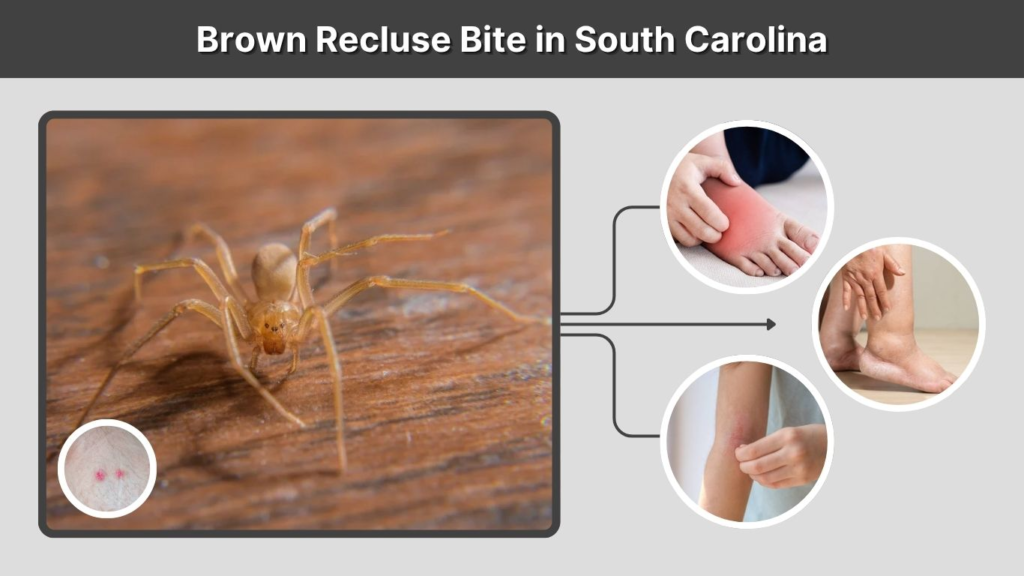
A suspected brown recluse bite in South Carolina should be treated carefully, but not automatically assumed to be from a brown recluse. Many skin infections, including bacterial infections, can look like spider bites.
Possible Bite Symptoms
A brown recluse bite may cause:
- Redness
- Swelling
- Mild to severe pain
- Itching
- Blistering
- Bruise-like color
- Dark center
- Open sore
- Slow healing
When to Get Medical Help
Get medical care if you notice:
- Worsening pain
- Expanding redness
- Fever
- Pus
- A growing open sore
- Black or dead-looking skin
- Nausea or weakness
- Bite on a child or older adult
Do not cut the wound, apply heat, or use harsh home remedies.
Why Brown Recluse Bites Are Often Misdiagnosed
Brown recluse bites are commonly overdiagnosed in places where the spider is rare. A person may wake up with a painful red bump and assume it is a spider bite, but many other conditions can cause similar symptoms.
Common causes mistaken for brown recluse bites include:
- MRSA infection
- Boils
- Abscesses
- Tick bites
- Bed bug bites
- Allergic reactions
- Mosquito bites
- Skin ulcers
- Fire ant stings
This is why confirmed spider identification matters.
What to Do If You Find a Suspected Brown Recluse
If you find a spider that may be a brown recluse, avoid handling it with bare hands. Try to capture it safely in a jar or take a clear photo for identification.
Safe Steps
- Do not crush it with your hand
- Use a jar, cup, or container
- Take photos from above if possible
- Keep children and pets away
- Contact local extension services or pest professionals if needed
- Check nearby storage areas for more spiders
One spider does not always mean an infestation, but repeated sightings should be inspected.
How to Prevent Brown Recluse Spiders in South Carolina Homes
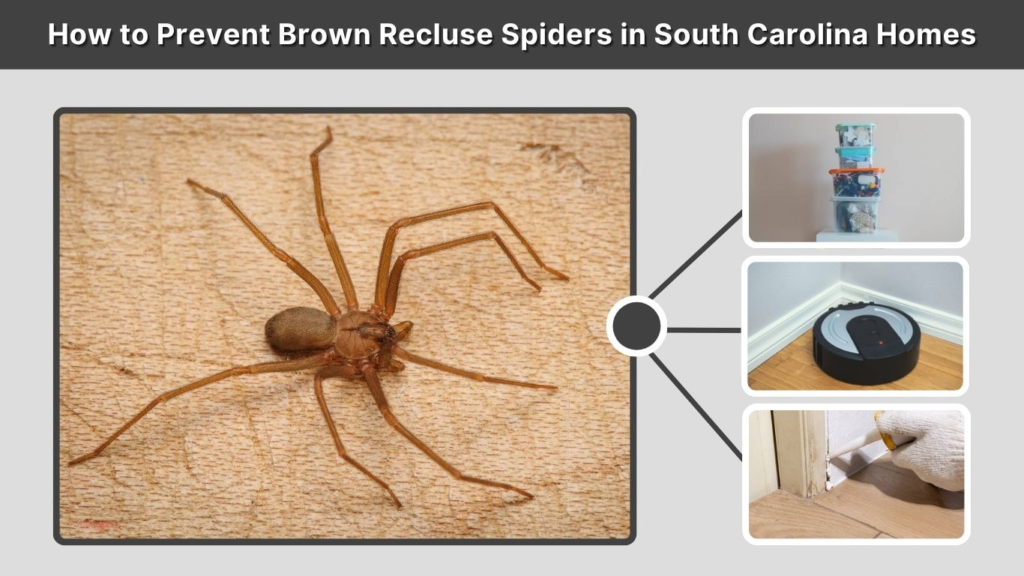
Even though brown recluse spiders are rare in South Carolina, prevention helps reduce many spider problems.
Home Prevention Tips
- Reduce clutter in closets, attics, and garages
- Store items in sealed plastic bins instead of cardboard
- Shake out shoes and clothing before use
- Move beds away from walls
- Seal cracks around doors and windows
- Use gloves when moving wood or boxes
- Vacuum corners and storage areas
- Keep outdoor debris away from the home
- Install door sweeps
- Inspect secondhand furniture before bringing it inside
These steps are especially useful in homes with basements, crawl spaces, sheds, or long-term storage.
Should You Be Worried About Brown Recluse Spiders in South Carolina?
You should be aware, but not overly worried. Brown recluse spiders can be found in South Carolina, but they are not common statewide. The bigger issue is misidentification. Many brown spiders are harmless, and many “brown recluse bites” are actually skin infections or bites from other insects.
The best approach is simple: learn the key ID features, avoid handling unknown spiders, keep storage areas clean, and seek medical care for serious or worsening wounds.
FAQs
Are brown recluse spiders in South Carolina?
Yes, brown recluse spiders have been found in South Carolina, but they are rare. They are not common across the state, and many suspected sightings are actually other brown spiders. Verified records are much lower than reported bite cases.
Are brown recluse spiders common in Myrtle Beach?
Brown recluse spiders are not considered common in Myrtle Beach. While an occasional spider could be transported in boxes or furniture, most brown spiders seen around coastal homes are likely look-alikes, not true brown recluse spiders.
Do brown recluse spiders live in Greenville, South Carolina?
They may occur in or near Greenville in rare cases, but they are not considered common. Some reports mention possible isolated findings, but most suspected brown recluse spiders in the Upstate are usually other species.
What spiders look like brown recluses in South Carolina?
Common look-alikes include southern house spiders, wolf spiders, nursery web spiders, cellar spiders, and funnel weavers. Male southern house spiders are especially often confused with brown recluse spiders because of their brown color and similar shape.
What should I do after a brown recluse spider bite?
Wash the area with soap and water, apply a cool compress, and monitor symptoms. Seek medical care if pain worsens, redness spreads, a blister or ulcer forms, fever appears, or the wound shows signs of infection.
