
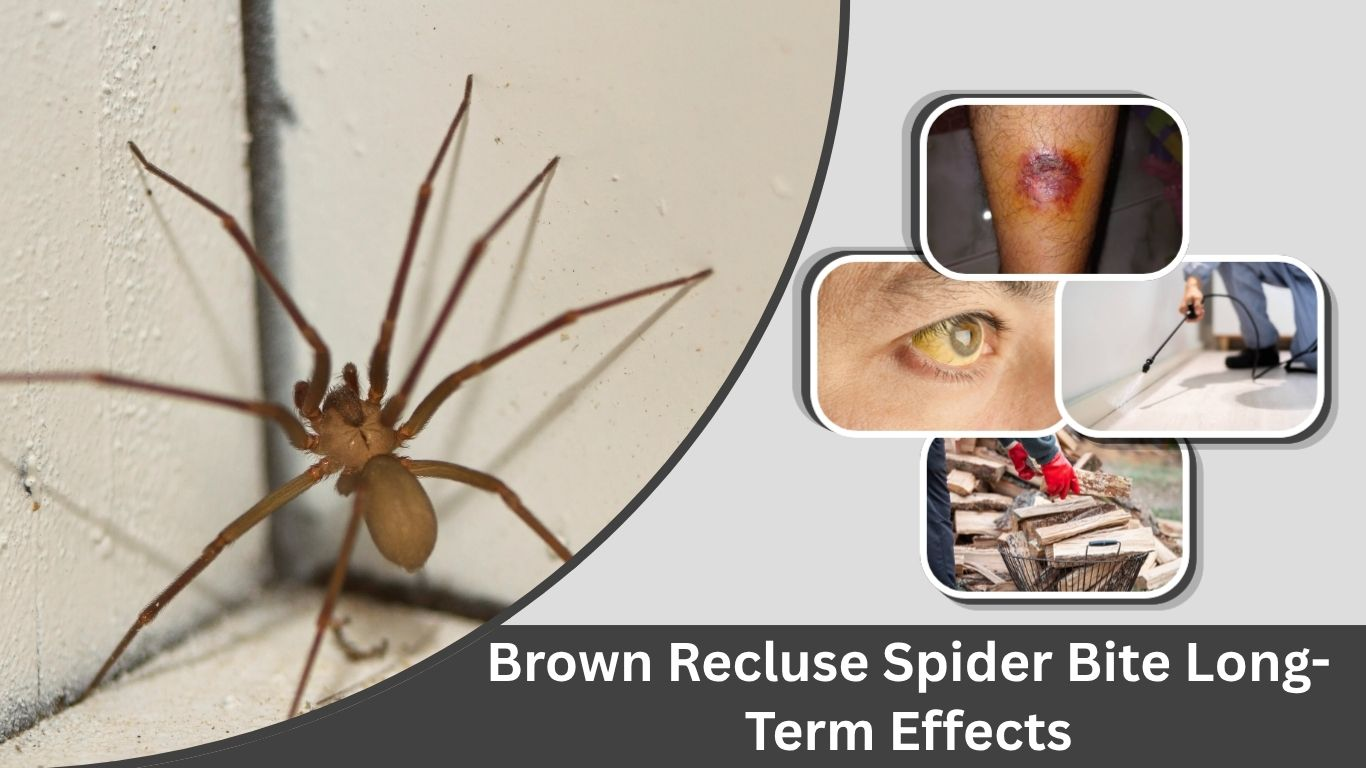
A brown recluse spider bite can look mild at first, but in some cases, it may lead to slow-healing wounds, skin damage, scarring, or rare whole-body reactions. Most bites heal with basic wound care, but severe bites may take weeks or months to recover. Understanding the possible long-term effects of a brown recluse spider bite helps you know when a bite is healing normally and when medical care is needed.
What Makes a Brown Recluse Bite Different?
Brown recluse spiders have venom that can damage skin tissue. The bite may be painless at first, then become painful, red, swollen, or blistered within several hours. In more serious cases, the skin may darken and form an open sore.
Many suspected brown recluse bites are actually caused by other skin problems, such as bacterial infections, boils, allergic reactions, or other insect bites. A true diagnosis is easier when the spider is seen or captured safely.
Common Long-Term Effects of a Brown Recluse Spider Bite
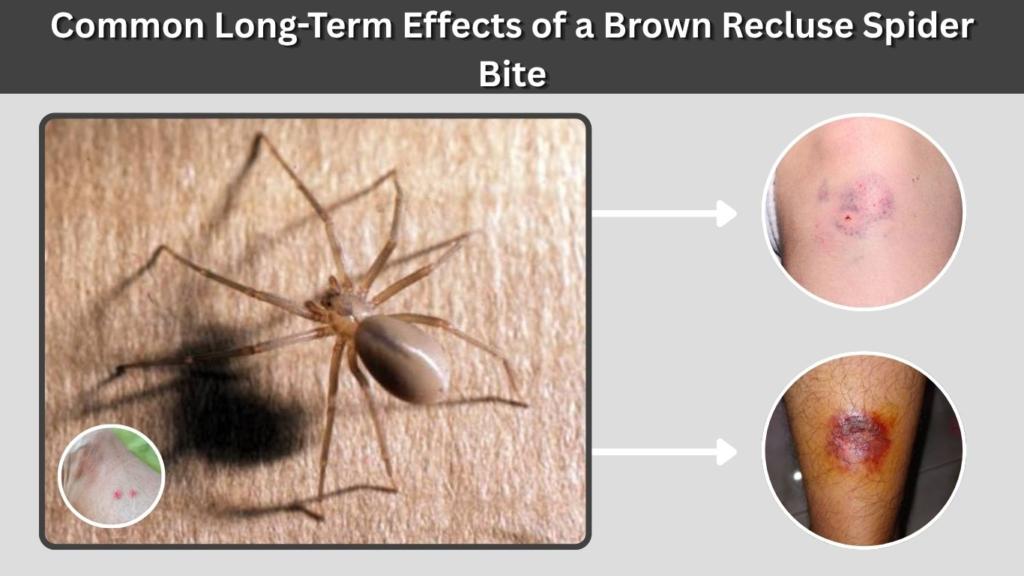
Most brown recluse bites do not cause major long-term problems. However, some people may experience lasting skin changes, especially if the bite becomes necrotic or infected.
1. Scarring
Scarring is one of the most common long-term effects. If the bite forms an ulcer or open wound, the healed skin may leave a flat, raised, or discolored scar.
Scars are more likely when:
- The wound becomes deep
- Skin tissue dies
- The bite is scratched or picked
- Infection develops
- Healing takes several weeks or months
A small bite may leave little or no mark. A larger necrotic wound may leave a visible scar that lasts for years.
2. Skin Discoloration
After healing, the bite area may stay darker or lighter than the surrounding skin. This is called post-inflammatory pigmentation. It can happen after swelling, blistering, infection, or tissue damage.
Skin discoloration may fade slowly over several months, but in some people, it can remain long-term.
3. Slow-Healing Ulcer
A severe brown recluse bite may develop into an ulcer. This is an open sore where the skin breaks down. Some ulcers heal within a few weeks, while deeper wounds may take months.
Medical sources note that recluse bites can take longer to heal than most spider bites and may sometimes leave a scar.
4. Tissue Loss
Brown recluse venom can sometimes cause necrosis, meaning tissue death. This may create a dark center, blister, or open wound. In severe cases, the wound may remove enough tissue to leave a dent or uneven skin texture after healing.
Tissue loss is not common in every case, but it is the main reason people worry about long-term damage.
5. Secondary Infection
A brown recluse bite itself is venom-related, but an open wound can become infected. Infection may delay healing and increase the risk of long-term scarring.
Signs of infection include:
- Increasing redness
- Warmth around the wound
- Pus or drainage
- Worsening pain
- Fever
- Red streaks spreading from the bite
If these symptoms appear, medical care is important.
Brown Recluse Bite Healing Timeline
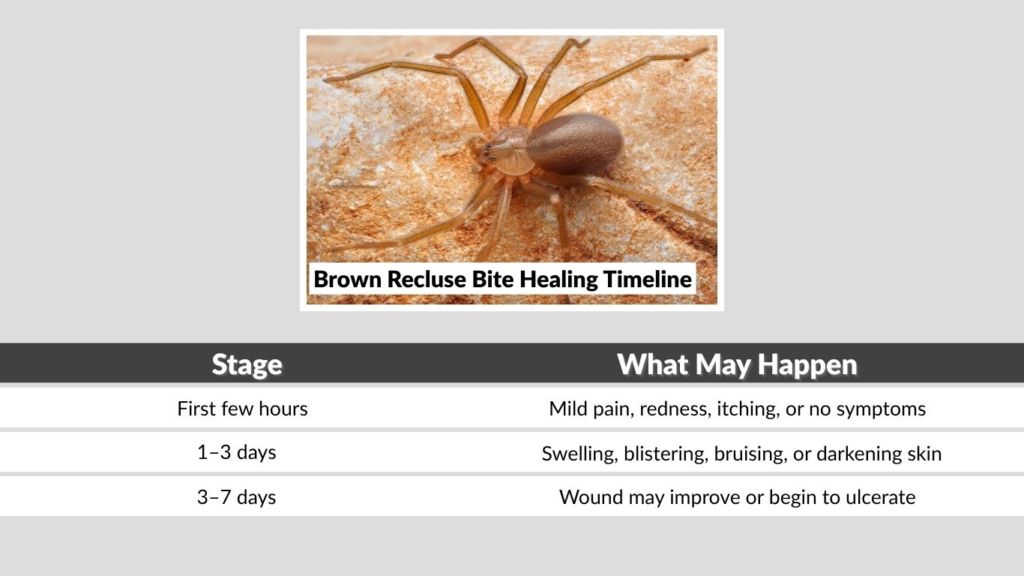
The healing time depends on how much venom was injected, the bite location, the person’s health, and whether infection develops.
| Stage | What May Happen |
| First few hours | Mild pain, redness, itching, or no symptoms |
| 1–3 days | Swelling, blistering, bruising, or darkening skin |
| 3–7 days | Wound may improve or begin to ulcerate |
| 1–3 weeks | Mild bites often heal |
| Several weeks to months | Severe wounds may slowly close |
| Long term | Scar, discoloration, or uneven skin may remain |
Cleveland Clinic notes that untreated brown recluse wounds may lead to bruising, blisters, open sores, and scarring.
Can a Brown Recluse Bite Cause Permanent Damage?
Yes, but permanent damage is uncommon. When it happens, it usually affects the skin rather than the whole body. The most likely permanent effects are scarring, discoloration, or a small area of tissue loss.
A study on brown recluse bite outcomes found that long-term outcomes were generally good and serious complications were rare. Only a small number of patients required skin grafting.
Rare Long-Term or Serious Complications
Most brown recluse bites stay local, meaning symptoms happen around the bite area. Rarely, the venom can cause systemic loxoscelism, a whole-body reaction.
Systemic Loxoscelism
Systemic symptoms may include fever, nausea, headache, muscle pain, weakness, rash, and in severe cases, blood-related problems. Children may have a higher risk of severe systemic reactions.
Rare severe complications may include:
- Hemolytic anemia
- Kidney injury
- Blood clotting problems
- Severe rash
- Organ stress
- Hospitalization
The Missouri Poison Center notes that systemic effects are rare and may appear 24–72 hours after a bite, sometimes later.
Factors That Increase Long-Term Effects
Not everyone reacts the same way to a brown recluse bite. Some people heal quickly, while others develop slow-healing wounds.
Higher-Risk Factors
Long-term effects may be more likely if:
- The bite is on fatty tissue, such as the thigh or abdomen
- The wound becomes infected
- The person has diabetes or poor circulation
- The immune system is weakened
- The bite is not cleaned or protected
- The wound is treated too aggressively too early
- The person delays medical care after worsening symptoms
Children may also be more vulnerable to serious whole-body reactions.
What Does a Bad Brown Recluse Bite Look Like Later?
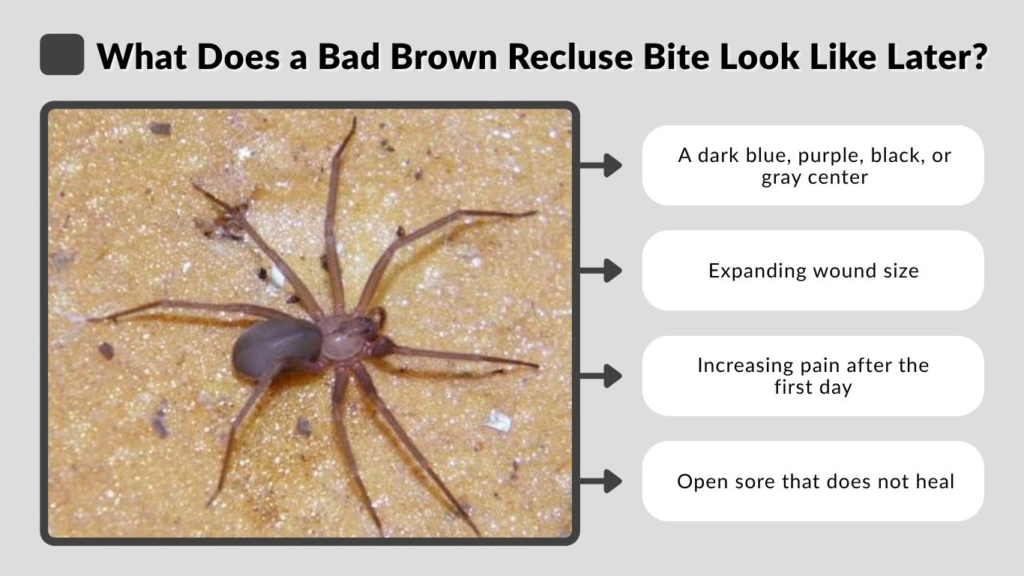
A severe bite may go through several changes. It may start as a red or swollen spot, then develop a blister, bruise-like center, or dark scab. The skin may open and form an ulcer.
A concerning bite may show:
- A dark blue, purple, black, or gray center
- Expanding wound size
- Increasing pain after the first day
- Open sore that does not heal
- Dead-looking skin
- Fever or body aches
- Dark urine or yellowing skin
If the wound keeps growing or systemic symptoms appear, it should be treated as urgent.
Treatment to Reduce Long-Term Effects
Early and proper care can reduce scarring, infection, and slow healing. Do not cut the wound, apply heat, or use harsh home remedies.
Basic First Aid
For a suspected bite:
- Wash the area with soap and water
- Apply a cool compress
- Keep the bite elevated if possible
- Avoid scratching
- Use a clean bandage
- Take pain relief if safe for you
- Monitor the wound for changes
Mayo Clinic recommends basic first aid such as cleaning the area and using a cool cloth for spider bites.
Medical Treatment
A doctor may recommend wound care, pain control, a tetanus booster, antibiotics if infection is present, or specialist care for severe ulcers. Surgery is usually not the first step and may be considered only after the wound stabilizes.
When to See a Doctor
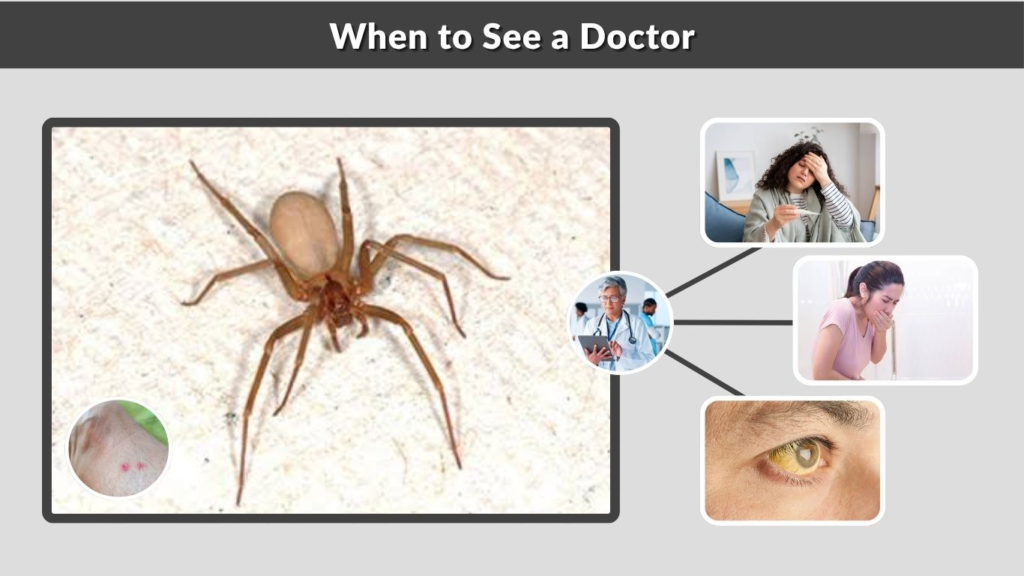
You should contact a healthcare provider if the bite worsens instead of improving, forms a blister or ulcer, becomes very painful, or shows signs of infection.
Seek urgent care if you notice:
- Fever or chills
- Nausea or vomiting
- Severe weakness
- Widespread rash
- Dark urine
- Yellow skin or eyes
- Rapidly spreading redness
- Severe pain
- Bite on a child, older adult, or high-risk person
These symptoms may suggest a severe reaction or infection.
Brown Recluse Bite vs Other Skin Problems
Many skin conditions are mistaken for brown recluse bites. This matters because the wrong diagnosis can delay proper treatment.
| Condition | Why It Looks Similar |
| MRSA infection | Can cause painful boils, redness, pus, and skin damage |
| Tick bite | May cause redness, swelling, or rash |
| Bed bug bite | Can cause itchy red bumps |
| Abscess | May look like a swollen bite with pus |
| Allergic reaction | Can cause redness, itching, and swelling |
| Other insect bite | May blister or become inflamed |
If there was no confirmed spider, it is safer to say “suspected spider bite” until a clinician checks it.
How to Prevent Long-Term Problems
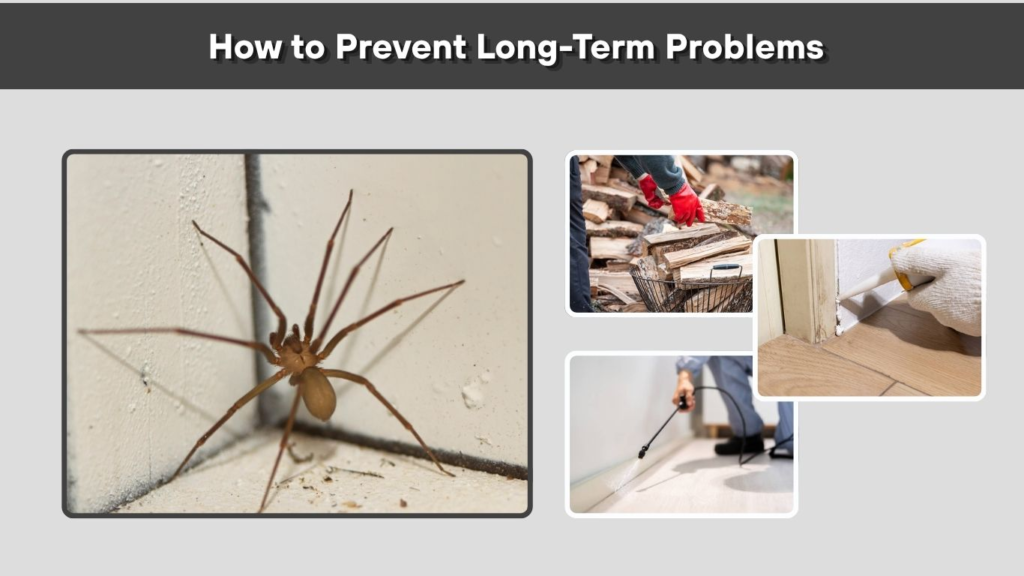
The best way to avoid long-term effects is to reduce the chance of bites and care for wounds early.
Prevention Tips
- Shake out shoes, gloves, and clothing before wearing
- Keep storage areas clean and uncluttered
- Wear gloves when moving boxes or firewood
- Seal cracks and gaps indoors
- Move beds away from walls
- Avoid leaving clothes on the floor
- Use pest control if brown recluse spiders are common in your area
Brown recluse spiders usually bite when trapped against skin, such as inside clothing, bedding, or shoes.
FAQs
Can a brown recluse spider bite cause long-term effects?
Yes, but serious long-term effects are uncommon. The most common lasting problems are scarring, skin discoloration, and uneven skin texture. Severe bites may cause slow-healing ulcers or tissue loss, especially if the wound becomes infected or does not receive proper care.
How long does a brown recluse bite take to heal?
Mild bites may heal within one to three weeks. More serious bites with blisters, ulcers, or skin necrosis may take several weeks or months. If a wound keeps growing, becomes infected, or does not improve, it should be checked by a healthcare provider.
Can a brown recluse bite leave a permanent scar?
Yes. A brown recluse bite can leave a permanent scar if it creates an open sore, damages deeper skin, or causes tissue death. Small bites may heal with little marking, while severe wounds can leave visible scars or skin dents.
Can a brown recluse bite cause death later?
Death from a brown recluse bite is very rare. Severe systemic reactions are more likely in children and may involve blood or kidney problems. Anyone with fever, dark urine, severe weakness, yellowing skin, or widespread rash after a suspected bite needs urgent medical care.
What are the warning signs of long-term damage?
Warning signs include a wound that keeps expanding, black or dead-looking skin, an ulcer that does not close, worsening pain, pus, fever, or spreading redness. These symptoms may indicate necrosis, infection, or a severe reaction that needs medical treatment.
