
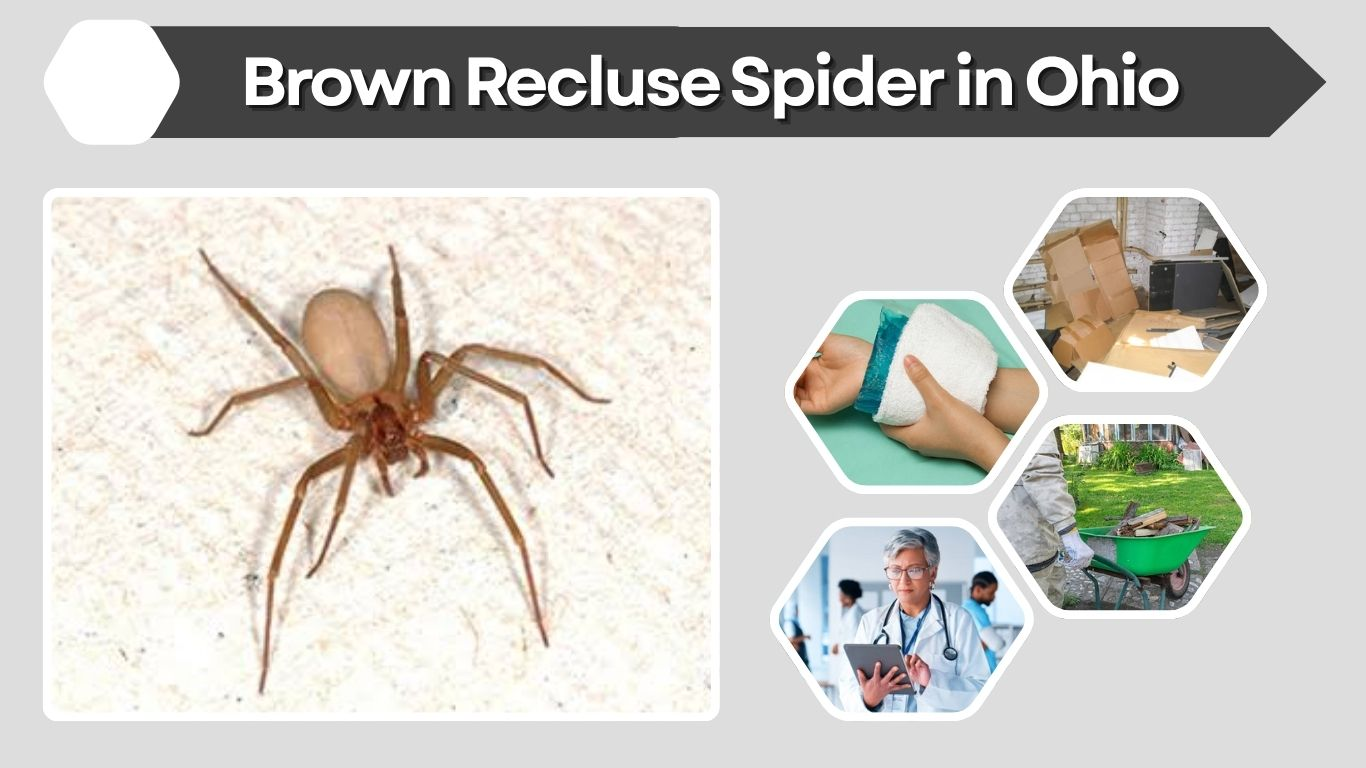
Brown recluse spiders in Ohio are a common concern, but they are not as common as many people think. Homeowners often mistake wolf spiders, cellar spiders, nursery web spiders, and other brown house spiders for a brown recluse. Still, isolated brown recluse spiders can appear indoors after being transported in boxes, furniture, or stored materials. This guide explains where they may occur in Ohio, how to identify them, what bites look like, and when to seek help.
Are Brown Recluse Spiders Found in Ohio?
Brown recluse spiders can be found in Ohio, but they are considered uncommon. Their main range is south and west of Ohio, and verified records in the state are limited. The Ohio Spider Survey notes that recluse spiders found in Ohio are usually associated with buildings and are often introduced by human activity.
The confusion comes from the fact that Ohio has many brown spiders. A spider being brown does not make it a brown recluse. Most “brown recluse spider Ohio” reports turn out to be harmless or less medically significant species.
Brown Recluse Range in Ohio
Brown recluse spiders are more likely to be reported in southern Ohio than in northern Ohio, but even there, verified records are not common. OSU Extension states that isolated Ohio cases are likely linked to spiders transported from other states in materials, boxes, or household goods.
They are less likely to be naturally established outdoors in cold northern areas. In Ohio, recluse spiders are mainly found in or near buildings, especially where they can hide in dry, undisturbed spaces.
Ohio Cities People Search Most
People often search for brown recluse spiders in:
- Cincinnati
- Columbus
- Cleveland
- Dayton
- Toledo
- Northeast Ohio
- Northwest Ohio
- Southern Ohio
These searches usually come from fear after seeing a brown spider indoors. A confirmed identification requires more than location. The spider’s eyes, body pattern, legs, and overall shape matter.
Brown Recluse Spider Identification in Ohio
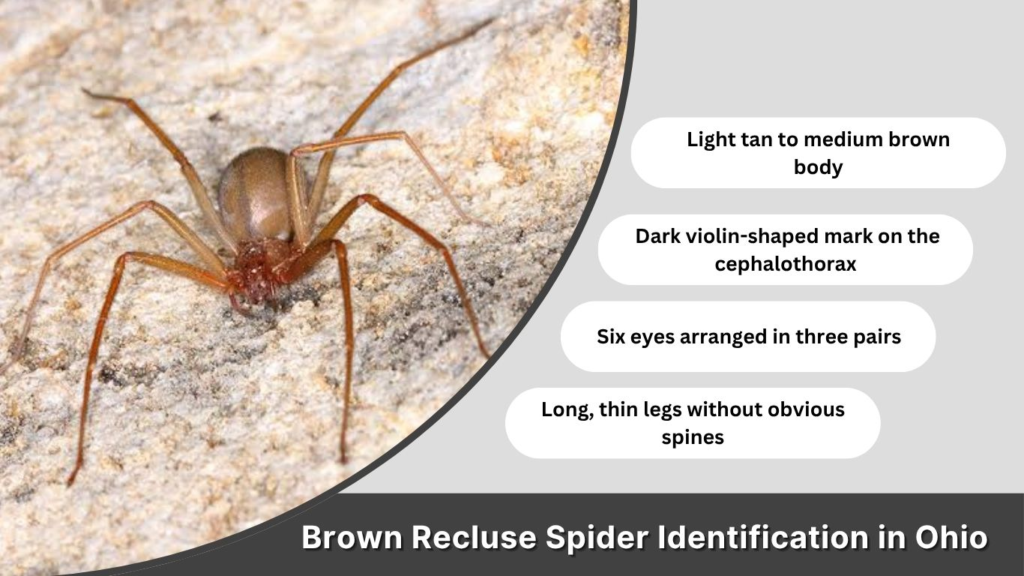
Correct identification is the most important part of this topic. Many spiders have brown bodies or dark markings, but true brown recluse spiders have a specific set of features. OSU Extension explains that the violin marking can help, but the six-eye pattern is a better identification feature.
Key Signs of a Brown Recluse
Look for these features together:
- Light tan to medium brown body
- Dark violin-shaped mark on the cephalothorax
- Six eyes arranged in three pairs
- Long, thin legs without obvious spines
- Plain, uniform abdomen without stripes or spots
- Body size smaller than many large house spiders
A brown recluse is not usually large, hairy, striped, or brightly patterned. Indiana State University’s Brown Recluse Project notes that the violin marking is not foolproof because other spiders can have markings on the front body area.
What Is Not a Brown Recluse?
A spider is probably not a brown recluse if it has:
- Eight eyes
- A patterned abdomen
- Thick hairy legs
- Bright stripes, spots, or bands
- A very large body
- Jumping behavior
- A classic orb web or messy house web used for catching prey
Brown recluse spiders do not build large prey-catching webs like orb weavers. They create small retreats in hidden spaces.
Brown Recluse vs Wolf Spider in Ohio
Many Ohio homeowners confuse wolf spiders with brown recluse spiders. This is why “brown recluse Ohio wolf spider” appears in keyword data. Wolf spiders are much more common in Ohio. The Ohio spider resource Spiders in Ohio notes that there are 57 known wolf spider species in the state.
| Feature | Brown Recluse | Wolf Spider |
| Common in Ohio? | Rare/uncommon | Very common |
| Eyes | 6 eyes in 3 pairs | 8 eyes, large and noticeable |
| Body | Plain tan to brown | Often patterned brown, gray, or black |
| Legs | Long, thin, not very hairy | Stout, hairy-looking legs |
| Behavior | Hides in quiet indoor areas | Active hunter on floors/ground |
| Egg sac | Hidden in retreat | Female carries egg sac |
Wolf spiders may look scary because they are larger and faster. However, they are not brown recluse spiders. Their large eyes and patterned body are major differences.
Where Brown Recluse Spiders Hide in Ohio Homes
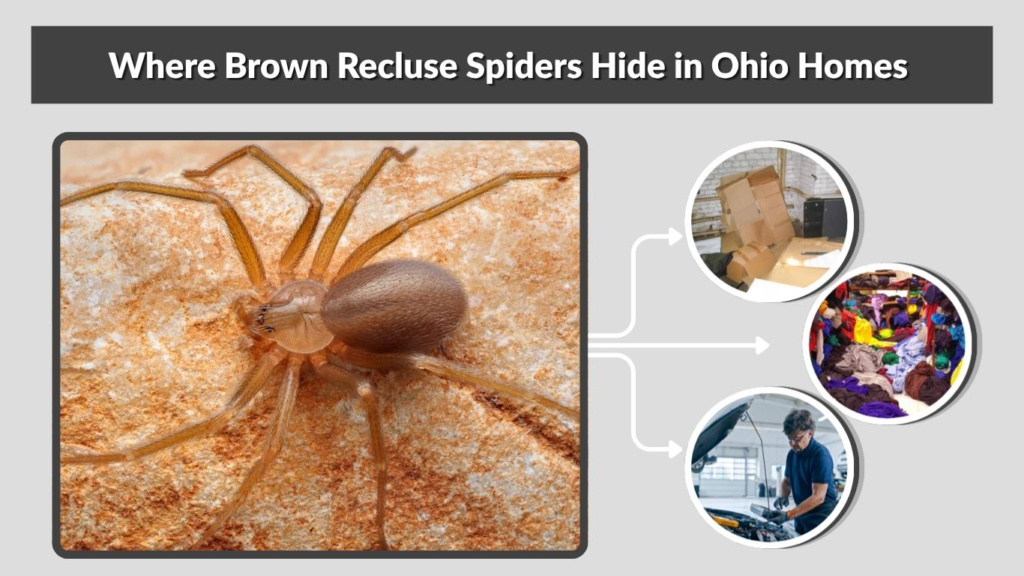
Brown recluse spiders prefer dry, dark, undisturbed places. They are called “recluse” because they avoid open activity and usually stay hidden. OSU Extension lists indoor hiding places such as attics, basements, crawl spaces, closets, storage boxes, shoes, folded linens, and areas behind furniture.
Common hiding spots include:
- Cardboard boxes in basements
- Stored clothing
- Shoes or boots left unused
- Closets and crawl spaces
- Attics and garages
- Behind furniture
- Under clutter
- Stored linens or towels
They are most often noticed when people move stored items or clean areas that have not been disturbed for a long time.
Brown Recluse Spider Bite in Ohio
A brown recluse bite in Ohio is possible but often overdiagnosed. Many skin wounds blamed on brown recluse spiders are caused by infections, allergic reactions, other insects, or unrelated medical issues. The Ohio Spider Survey states that many wounds attributed to recluse bites are likely misdiagnoses, and it notes very few verified brown recluse records in Ohio.
Brown recluse spiders are not aggressive. They usually bite only when trapped against skin, crushed in clothing, or handled accidentally.
Symptoms of a Brown Recluse Bite
A bite may cause:
- Mild pain or stinging at first
- Redness and swelling
- Increasing pain after several hours
- A blister or pale center
- Slow-healing sore in more serious cases
- Rare tissue damage
Mayo Clinic notes that most spider bites heal on their own, but a recluse bite may take longer and can sometimes leave a scar.
When to Seek Medical Help
Get medical attention if the bite area worsens, becomes very painful, develops an open wound, shows spreading redness, or comes with fever, nausea, weakness, or other body-wide symptoms. Children, older adults, and people with health problems should be especially careful.
What to Do After a Suspected Brown Recluse Bite
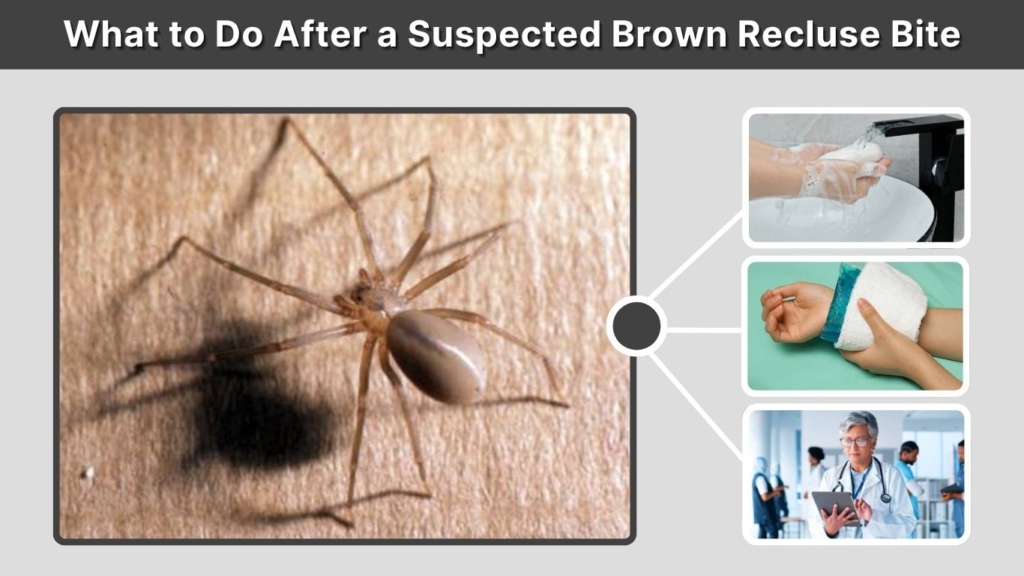
If you think a spider bite happened, stay calm and treat it like a wound first. The CDC recommends washing the bite area with soap and water, applying a cold cloth or ice pack to reduce swelling, elevating the area if possible, and seeking professional medical attention when needed.
| Step | What to Do |
| Clean | Wash with mild soap and water |
| Cool | Apply a cold compress or wrapped ice pack |
| Elevate | Raise the affected area if possible |
| Monitor | Watch for spreading redness, pain, or infection |
| Get help | Contact a doctor if symptoms worsen |
Do not cut the wound or try to remove venom. If the spider was safely captured, keep it in a sealed container for identification. Do not risk another bite trying to catch it.
How to Prevent Brown Recluse Spiders in Ohio Homes
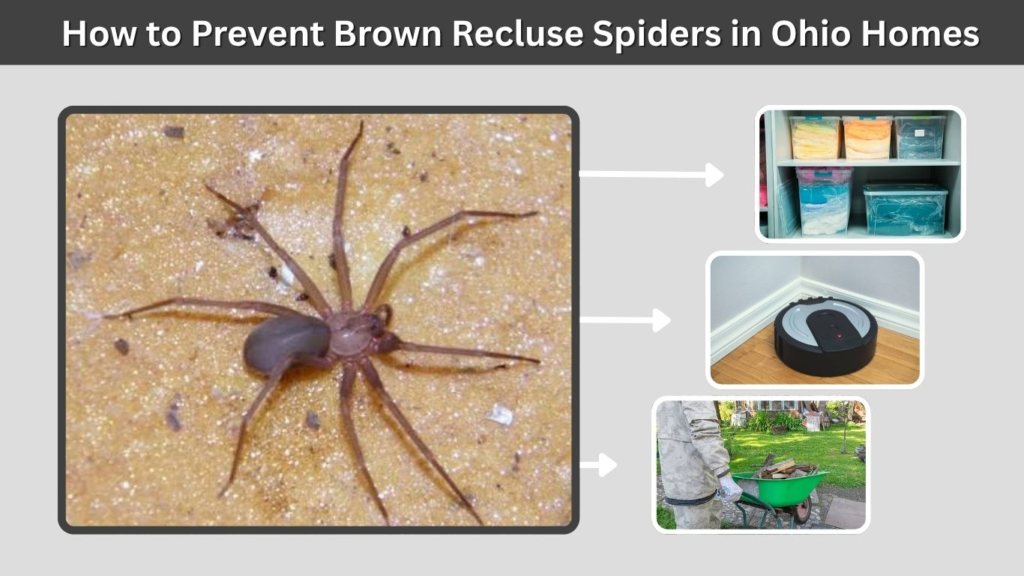
Prevention is mostly about reducing hiding places and avoiding accidental contact. Even if your Ohio home does not have brown recluse spiders, these steps help reduce many indoor spiders.
Indoor Prevention Tips
- Reduce clutter in basements, closets, garages, and attics.
- Store clothing and linens in sealed plastic bins.
- Shake out shoes, gloves, boots, and stored clothing before use.
- Keep beds away from walls if spiders are a concern.
- Vacuum corners, baseboards, and storage areas.
- Seal cracks around doors, windows, and utility lines.
- Use sticky traps to monitor spider activity.
Outdoor Prevention Tips
- Move firewood away from the house.
- Clear piles of lumber, rocks, and debris.
- Trim vegetation touching the home.
- Seal gaps around foundations and vents.
- Wear gloves when handling stored outdoor materials.
CDC prevention advice also includes inspecting clothing and equipment before use and wearing protective clothing when handling stacked or undisturbed materials.
Brown Recluse Spider Ohio Map: What It Really Means
A brown recluse spider Ohio map can be confusing because range maps show general distribution, not guaranteed presence in every city. Brown recluse spiders are mainly associated with the central and southern United States. Indiana State University’s Brown Recluse Project notes that recluses are rarely found outside their known range and that isolated encounters should not be treated as proof that the range is expanding.
For Ohio, the better interpretation is simple: possible, but uncommon. A spider in Cincinnati, Columbus, Cleveland, Toledo, or Dayton should not be assumed to be a brown recluse without proper identification.
Should You Worry About Brown Recluse Spiders in Ohio?
Most Ohio residents do not need to panic about brown recluse spiders. They are rare compared with common house spiders and wolf spiders. The bigger risk is misidentifying harmless spiders or assuming every skin wound is a spider bite.
Still, caution is smart. If you see a suspicious spider, take a clear photo or save the specimen safely. A local extension office, pest professional, or qualified spider expert may help with identification.
FAQs
Does the brown recluse spider live in Ohio?
Yes, but it is uncommon in Ohio. Verified records are limited, and many suspected brown recluse spiders turn out to be other brown spiders. They are more likely to appear indoors after being transported in boxes, furniture, or stored materials from areas where they are more common.
Are brown recluse spiders common in Cleveland, Ohio?
No, brown recluse spiders are not considered common in Cleveland or northeast Ohio. Most suspected sightings are misidentified house spiders, cellar spiders, wolf spiders, or nursery web spiders. A confirmed identification should be based on eye pattern, body color, and expert review.
What spider is mistaken for a brown recluse in Ohio?
Wolf spiders are one of the most common spiders mistaken for brown recluse spiders in Ohio. They are usually larger, hairier, and more patterned. Other spiders, including nursery web spiders and cellar spiders, may also be confused with brown recluse spiders.
What should I do if I find a brown recluse in my Ohio home?
Avoid handling it directly. Capture it safely in a sealed container or take a clear photo for identification. Then reduce clutter, inspect stored items, use sticky traps, and contact a pest professional if you find multiple suspicious spiders indoors.
Are brown recluse spider bites deadly in Ohio?
Brown recluse bites are rarely life-threatening, but they can cause painful, slow-healing wounds in some cases. Medical care is important if symptoms worsen, the wound spreads, or body-wide symptoms appear. Many suspected recluse bites are actually other medical problems.
