
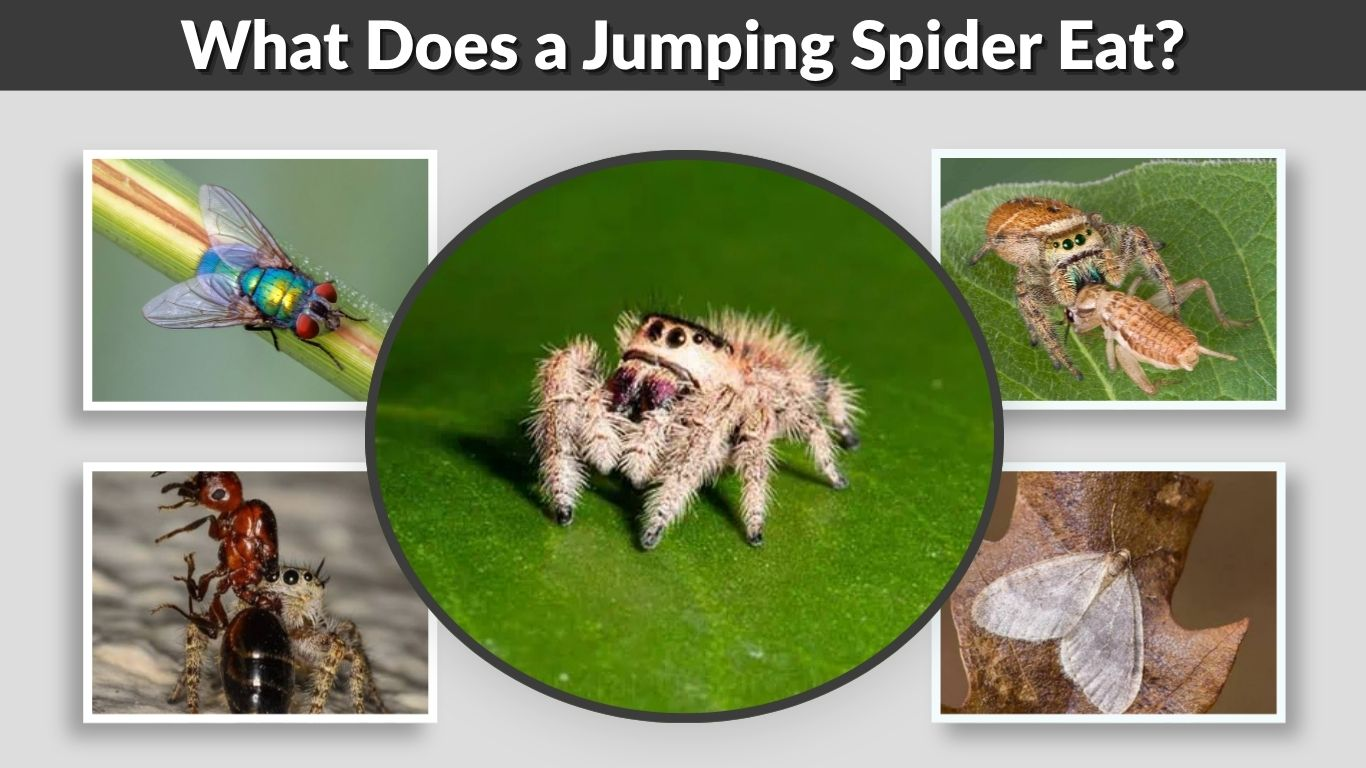
Jumping spiders are active hunters that eat small live prey. They do not spin webs to trap food like many other spiders. Instead, they use sharp eyesight, careful stalking, and fast jumps to catch insects and other tiny arthropods. Their diet changes with size, age, species, and habitat, but most jumping spiders rely on flies, gnats, mosquitoes, moths, small crickets, and similar prey.
What Do Jumping Spiders Eat in the Wild?
Jumping spiders are mostly carnivorous. They hunt living prey in gardens, forests, grasslands, walls, window frames, tree bark, and inside homes. Their food depends on what small insects are available in that place.
Most jumping spiders eat insects and other tiny arthropods. A small species may focus on gnats and fruit flies, while a larger species may catch moths, houseflies, small crickets, or even other spiders.
Common wild foods include:
- Flies
- Gnats
- Mosquitoes
- Moths
- Small crickets
- Aphids
- Leafhoppers
- Tiny beetles
- Small caterpillars
- Ants
- Termites
- Other small spiders
Jumping spiders are not web-trap hunters. They may use silk for safety lines, retreats, egg sacs, and resting spots, but they usually catch food by jumping directly onto prey. Their large front eyes help them judge distance before they attack.
A jumping spider may sit still, watch an insect, move closer slowly, and then leap at the right moment. This hunting style makes them useful predators around plants and homes.
How Jumping Spiders Catch Their Food
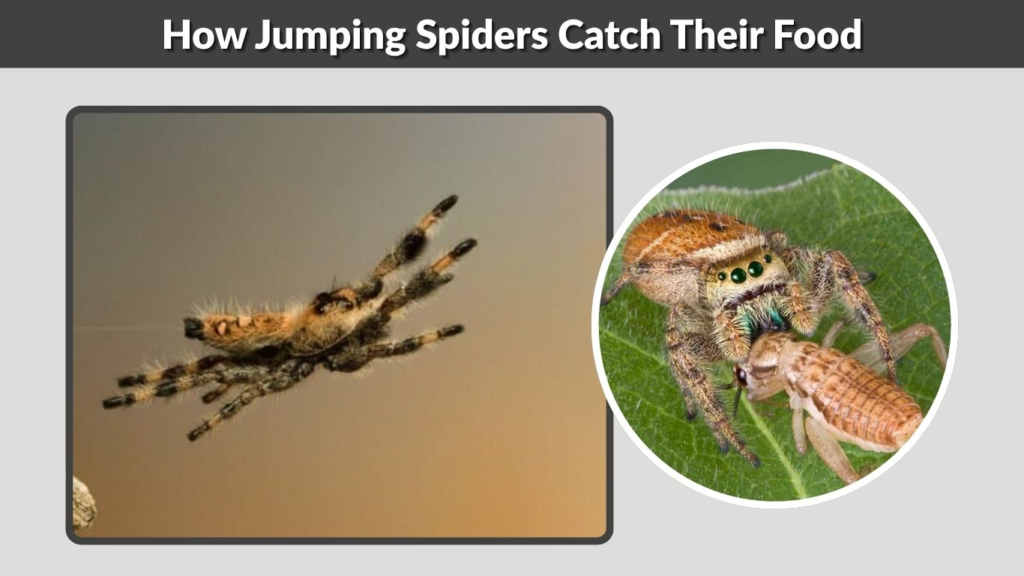
Jumping spiders are visual hunters. They have excellent eyesight compared with many other spiders. Their front eyes help them track movement, judge distance, and focus on prey before jumping.
A jumping spider usually does not rush blindly. It watches first. Then it moves closer in short steps. When the spider is close enough, it attaches a silk dragline and jumps onto the prey. The dragline works like a safety rope if the jump fails.
Their hunting steps usually look like this:
- Spot movement with their eyes
- Turn toward the prey
- Stalk slowly from a safe distance
- Attach a silk line before jumping
- Leap onto the prey
- Bite and hold it
- Feed by sucking liquid from the prey body
Jumping spiders do not chew food like mammals. They inject digestive fluids into the prey and then drink the softened liquid. After feeding, the dry remains may be dropped or left behind.
This hunting method works best on small, soft-bodied insects. Very large or aggressive prey can injure a jumping spider, especially inside a pet enclosure.
Best Foods for Pet Jumping Spiders
Pet jumping spiders should be fed live prey that is safe, clean, and the right size. The best food depends on the spider’s age and body size. Spiderlings need very tiny prey, while adults can handle larger feeder insects.
Good feeder options include:
- Flightless fruit flies
- House flies
- Blue bottle flies
- Green bottle flies
- Small crickets
- Pinhead crickets
- Small roaches
- Small mealworms
- Waxworms as treats
- Springtails for very tiny spiderlings
Flies are often one of the best foods because jumping spiders naturally react to movement. Fruit flies are useful for young spiderlings, while bottle flies are better for larger juveniles and adults.
Crickets can be used, but they must be small. Large crickets may bite or stress the spider. Mealworms are also common, but they should not be the only food because they can be fatty and may burrow into substrate.
A varied diet is better than feeding one prey type all the time. Different feeders give different nutrition and encourage natural hunting behavior.
Jumping Spider Feeding Chart
Feeding size is more important than feeding quantity. A prey insect should usually be smaller than or close to the spider’s body size. Oversized prey can scare, injure, or kill a small spider.
| Jumping Spider Stage | Best Food | Feeding Frequency |
| Tiny spiderling | Fruit flies, springtails | Every 2–3 days |
| Small juvenile | Fruit flies, tiny crickets | Every 2–4 days |
| Medium juvenile | Small flies, pinhead crickets | Every 3–5 days |
| Adult male | Flies, small crickets, small roaches | Every 5–7 days |
| Adult female | Flies, small crickets, roaches, occasional worms | Every 4–7 days |
This chart is only a general guide. Some spiders eat more often, while others refuse food before molting. Temperature, age, species, and abdomen size can change feeding needs.
A spider with a plump abdomen does not need another meal right away. A spider with a small or shrunken abdomen may need food and hydration.
What Does a Daring Jumping Spider Eat?
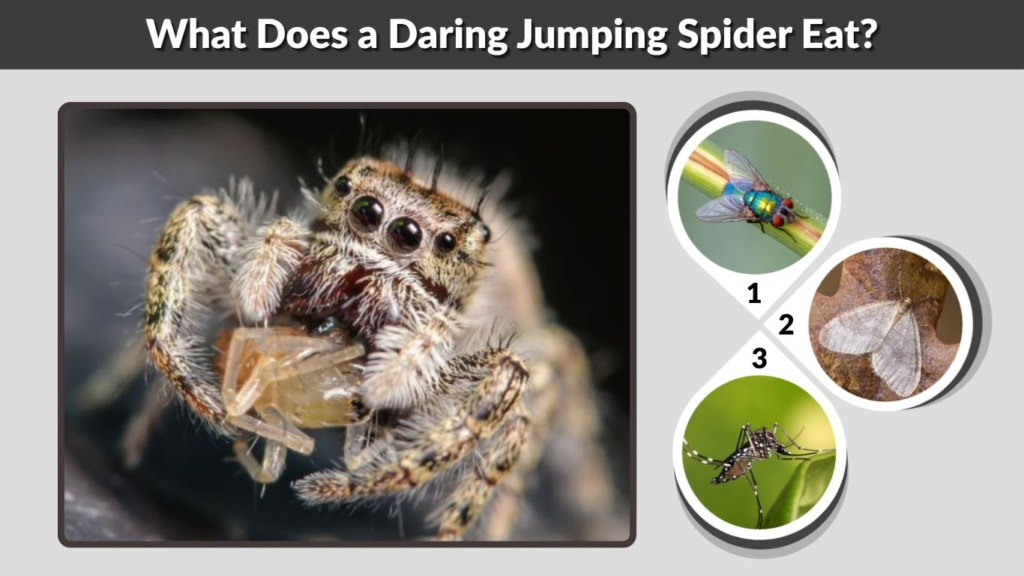
The daring jumping spider, also called the bold jumping spider, is a strong and active hunter. It is often seen on walls, fences, tree trunks, gardens, and around buildings. Because it is larger than many tiny jumping spiders, it can catch a wider range of prey.
A daring jumping spider may eat:
- Flies
- Moths
- Mosquitoes
- Gnats
- Small grasshoppers
- Small crickets
- Aphids
- Leafhoppers
- Small beetles
- Other small spiders
In captivity, bold jumping spiders usually do well with bottle flies, house flies, small crickets, small roaches, and occasional mealworms. Young bold jumpers should start with fruit flies or very small feeders.
A bold jumping spider may refuse food before molting. This is normal. During this time, do not force feed and do not leave crickets inside the enclosure. A molting spider is soft and vulnerable.
What Does a Himalayan Jumping Spider Eat?
The Himalayan jumping spider is known from very high mountain regions. In such harsh places, food is limited compared with gardens or forests. These spiders depend on small insects and other tiny arthropods that live or move through rocky mountain habitats.
Their diet may include small flies, springtails, tiny insects, and other small arthropods available in their environment. At high elevations, prey is seasonal and less predictable, so these spiders must hunt when food is available.
Unlike pet jumping spiders kept in stable indoor conditions, wild high-altitude species may face cold, wind, and short feeding seasons. Their survival depends on patience, shelter, and the ability to catch small prey quickly.
For an article about general care, Himalayan jumping spiders should not be treated the same as common pet species. Most pet keepers care for regal, bold, zebra, tan, or similar jumping spiders instead.
Do Jumping Spiders Eat Ants?
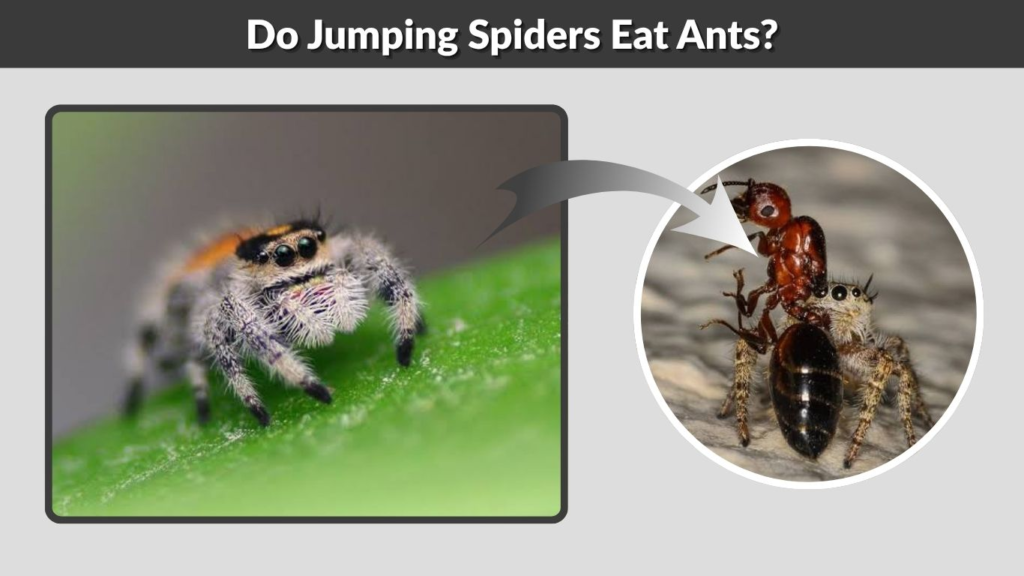
Some jumping spiders do eat ants, but ants are not always the safest prey. Ants can bite, spray chemicals, and fight back. Many ants are aggressive for their size, and some may injure a spider inside a small enclosure.
In the wild, certain jumping spiders specialize in hunting ants. Others avoid them or only catch small, weak, or isolated ants. A spider may attack an ant if the opportunity is right, but that does not mean ants are the best feeder option.
For pets, ants are usually not recommended. They can stress the spider and may carry pesticides if collected outdoors. Safer foods include fruit flies, bottle flies, small crickets, and captive-bred roaches.
If a wild jumping spider catches an ant in the garden, that is normal natural behavior. But for a pet spider, controlled feeder insects are safer.
Do Jumping Spiders Eat Mosquitoes and Flies?
Yes, jumping spiders commonly eat small flies and mosquitoes when they can catch them. Flies are one of their most natural food sources because they move often and trigger a strong hunting response.
Mosquitoes, gnats, fruit flies, house flies, and bottle flies are all possible prey. Small flying insects are especially useful for spiderlings and juveniles.
Flies are good because:
- They encourage natural hunting behavior.
- They are soft-bodied and easy to digest.
- They are available in different sizes.
- They are safer than many wild insects.
- They are easy for active spiders to notice.
For pet jumping spiders, flightless fruit flies are excellent for babies. Bottle flies or house flies are better for larger spiders. Wild flies should be avoided if they may have contacted pesticides, cleaners, or contaminated areas.
Do Jumping Spiders Eat Other Spiders?
Jumping spiders may eat other spiders if they are small enough to overpower. Some species are known for hunting other spiders more often than others. They may stalk web-building spiders, small house spiders, or other tiny arachnids.
However, feeding spiders to a pet jumping spider is risky. Other spiders can bite, fight back, carry parasites, or be exposed to chemicals. There is also no need to use spider prey when safe feeder insects are available.
In the wild, eating another spider can be a useful survival strategy. In captivity, it is better to offer clean, captive-bred prey.
Safe alternatives include:
- Fruit flies
- Bottle flies
- Small crickets
- Small roaches
- Small mealworms
- Waxworms as occasional treats
A varied feeder diet is safer and easier to manage than offering unknown wild spiders.
Foods Jumping Spiders Should Not Eat
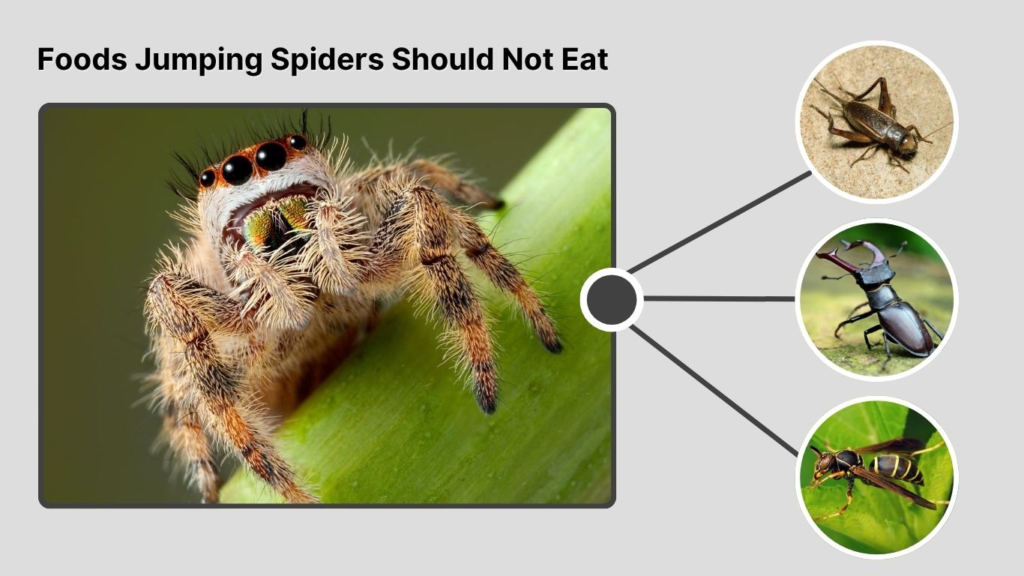
Not every small insect is safe for a jumping spider. Some prey can bite, sting, poison, or injure the spider. Others may contain pesticides or parasites.
Avoid feeding:
- Large crickets
- Large beetles
- Wasps
- Bees
- Fire ants
- Wild insects from sprayed areas
- Dead insects found outdoors
- Hard-bodied insects that are too large
- Prey bigger than the spider’s body
- Human food
- Meat, fruit, bread, or sugar water as a main diet
Jumping spiders need animal prey, not human snacks. They may drink water droplets and some species may take nectar in nature, but a pet jumping spider should mainly eat live feeder insects.
Never leave dangerous prey inside the enclosure overnight. Crickets and some roaches can injure a spider, especially when the spider is molting or resting.
How Often Do Jumping Spiders Eat?
Feeding frequency depends on age. Young spiders grow quickly and need food more often. Adults can go longer between meals. Females may eat more when producing eggs, while adult males sometimes eat less.
General feeding rhythm:
- Spiderlings: every 2–3 days
- Juveniles: every 3–5 days
- Adult females: every 4–7 days
- Adult males: every 5–7 days
- Older spiders: less often, depending on activity
Do not feed only by schedule. Watch the abdomen. A round abdomen means the spider is full. A flat or shrunken abdomen means it may need food or water.
A spider may stop eating before a molt. This can last several days or longer. During this period, keep the enclosure calm, remove prey, and provide light misting for hydration.
How to Tell If a Jumping Spider Is Hungry
A hungry jumping spider may become more active and watch prey closely. It may sit near the front of the enclosure, move around more, or react quickly when food appears.
Signs of hunger include:
- Smaller abdomen
- More active hunting behavior
- Strong interest in feeder insects
- Quick turning toward prey movement
- More time spent outside the web retreat
A full spider often ignores prey. It may turn away, hide, or remain in its retreat. This is normal. Overfeeding can make the abdomen too large and may increase the risk of injury from falls.
Hydration is also important. A dehydrated spider may have a wrinkled or shrunken abdomen and low energy. Lightly mist one side of the enclosure so the spider can drink tiny droplets. Do not soak the enclosure.
Can Jumping Spiders Eat Dead Food?
Most jumping spiders prefer live prey. Movement helps trigger their hunting response. Some individuals may accept freshly killed prey from tweezers, but many ignore dead insects.
Dead insects found outdoors should never be used. They may contain pesticides, bacteria, or parasites. If you use pre-killed food, it should be a safe feeder insect and offered fresh.
Live food is usually better because it supports natural behavior. However, prey should be safe and properly sized. A tiny fly is better than a large cricket that can fight back.
For weak or older spiders, some keepers offer a freshly killed small feeder with tongs. This should be done carefully and only when the spider shows interest.
FAQs
What is a jumping spider’s favorite food?
Many jumping spiders strongly respond to flies. Fruit flies are great for spiderlings, while house flies and bottle flies are good for larger juveniles and adults. They also eat small crickets, roaches, moths, gnats, and other tiny insects when available.
Do jumping spiders eat every day?
Jumping spiders do not need to eat every day. Spiderlings may eat every few days, but adults often eat once or twice a week. A spider with a round abdomen is already full and should not be forced to eat more.
Can jumping spiders eat crickets?
Yes, jumping spiders can eat crickets, but the cricket must be small. Large crickets can bite or injure the spider. Pinhead crickets are better for juveniles, while adults can take small crickets if they are supervised and removed when uneaten.
Do jumping spiders drink water?
Yes, jumping spiders drink water from tiny droplets on leaves, enclosure walls, or decorations. Pet spiders should not have deep water dishes because they may drown. Light misting on one side of the enclosure is usually enough for hydration.
What should I feed a baby jumping spider?
Baby jumping spiders need very tiny prey. Flightless fruit flies are one of the best choices. Very small springtails may also work for tiny spiderlings. Avoid large prey because baby jumping spiders are delicate and can be injured easily.
