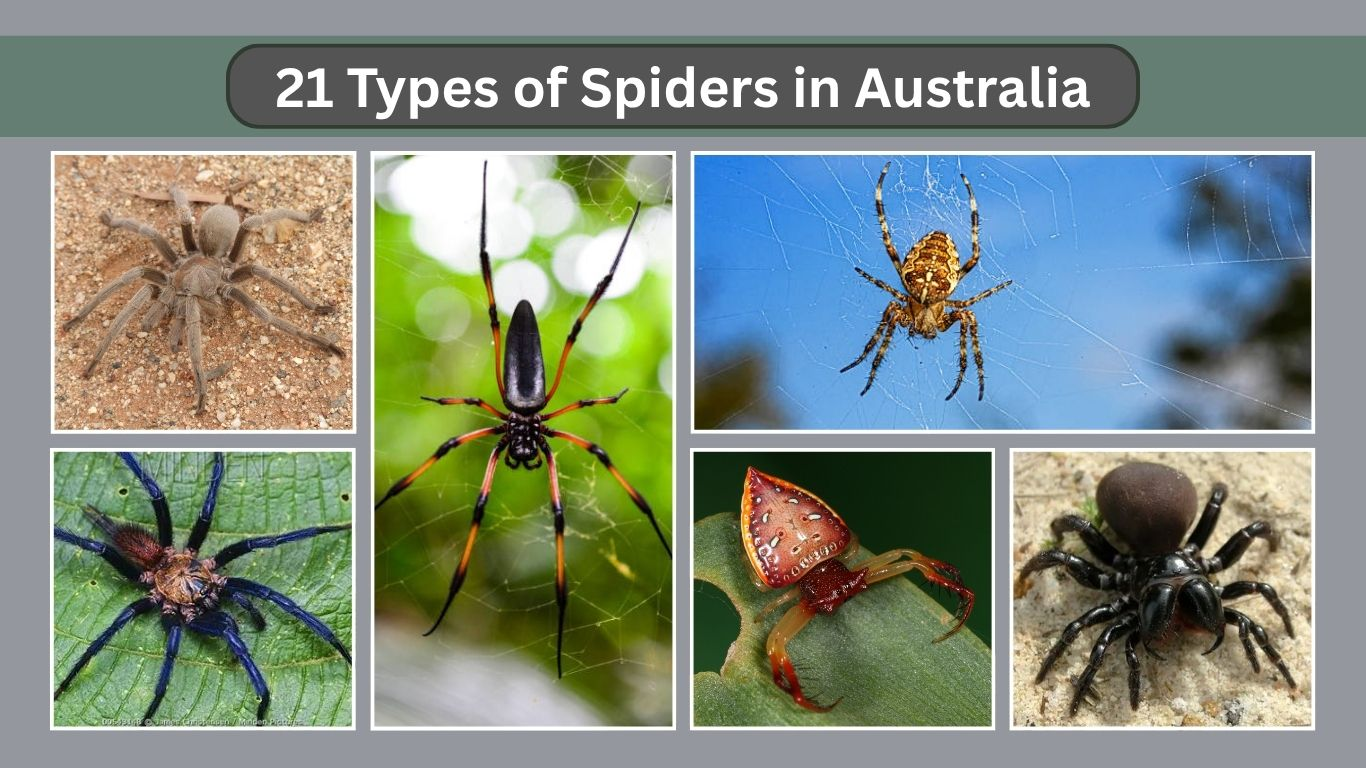
Australia is home to a remarkable variety of spiders, ranging from tiny, colorful hunters to large, impressive orb-weavers. Many are harmless, while a few are medically significant, like the Sydney Funnel-Web and Redback Spider. These arachnids play a vital role in controlling insect populations and maintaining ecological balance. This guide highlights 21 common Australian spiders, detailing their key features, habitats, diets, and lifecycles for easy identification and understanding.
1. Sydney Funnel-Web Spider
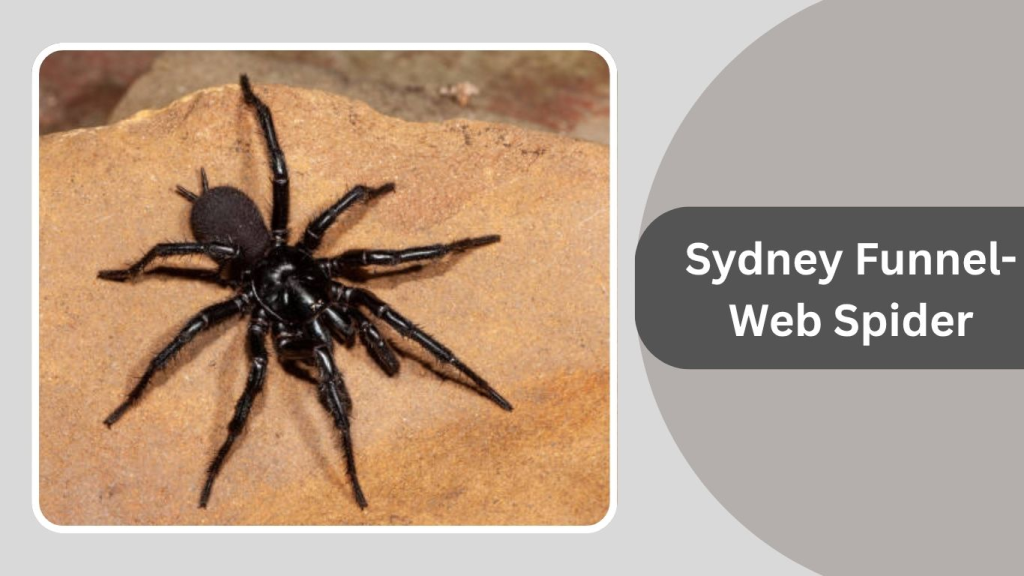
The Sydney Funnel-Web Spider is one of Australia’s most infamous and dangerous spiders. Native to the Sydney region, it is highly venomous but typically avoids human contact. Males are especially active and are responsible for most bites. Despite its fearsome reputation, it plays a vital role in controlling insect and small vertebrate populations in its natural habitat.
Identification
- Size: Females 25–35 mm; males 20–25 mm body length
- Colour: Dark brown to black
- Body Shape: Robust, shiny body with strong, large fangs
- Web Type: Funnel-shaped silk burrow with a flat, silk-lined surface for prey detection
- Distinct Features: Aggressive when threatened, particularly males; glossy carapace
Habitat
Sydney Funnel-Web Spiders prefer moist, sheltered environments such as under logs, leaf litter, rocks, or garden mulch. They construct silk-lined burrows with funnel-shaped entrances that allow quick retreats and ambushes.
Diet
They are nocturnal hunters, feeding on insects, small lizards, and other invertebrates. They ambush prey near their burrow entrance and use their strong fangs to inject venom.
Lifecycle & Lifespan
Females can live up to 10 years, spending most of their lives in the same burrow, while males live 1–2 years and wander in search of mates. Eggs are laid in silk sacs, and spiderlings disperse after hatching.
2. Redback Spider
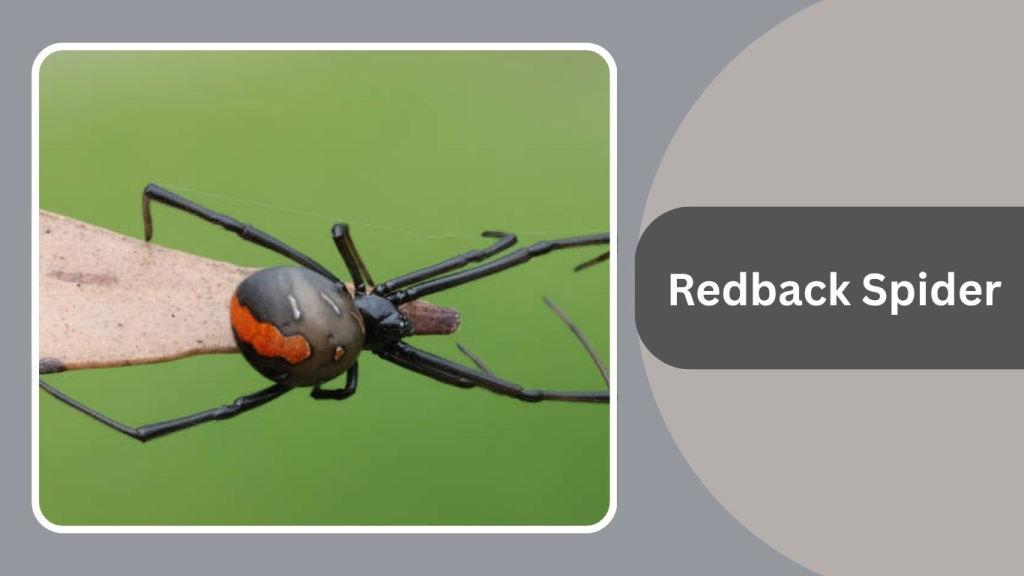
The Redback Spider is one of Australia’s most well-known and medically significant spiders. Famous for the distinctive red stripe on the female’s black abdomen, it is venomous but bites are rarely fatal due to antivenom availability. Redbacks are highly adaptable and often found near human habitation.
Identification
- Size: Females 10–15 mm; males much smaller at 3–4 mm
- Colour: Shiny black body with a prominent red or orange stripe on the abdomen
- Body Shape: Rounded, bulbous abdomen with long, thin legs
- Web Type: Irregular, tangled web often built in corners, crevices, or sheltered areas
- Distinct Features: Red stripe on the abdomen; females larger and more venomous than males
Habitat
Redback Spiders thrive in urban and rural areas, commonly found in sheds, garages, fences, gardens, and outdoor furniture. They prefer dry, sheltered spots where prey is plentiful.
Diet
They feed primarily on insects, including ants, flies, beetles, and small arthropods, trapping them in their sticky cobwebs.
Lifecycle & Lifespan
Females can live up to 2 years, producing multiple egg sacs containing hundreds of eggs. Spiderlings disperse after hatching. Males usually die shortly after mating, while females remain in their webs year-round.
3. White-tailed Spider
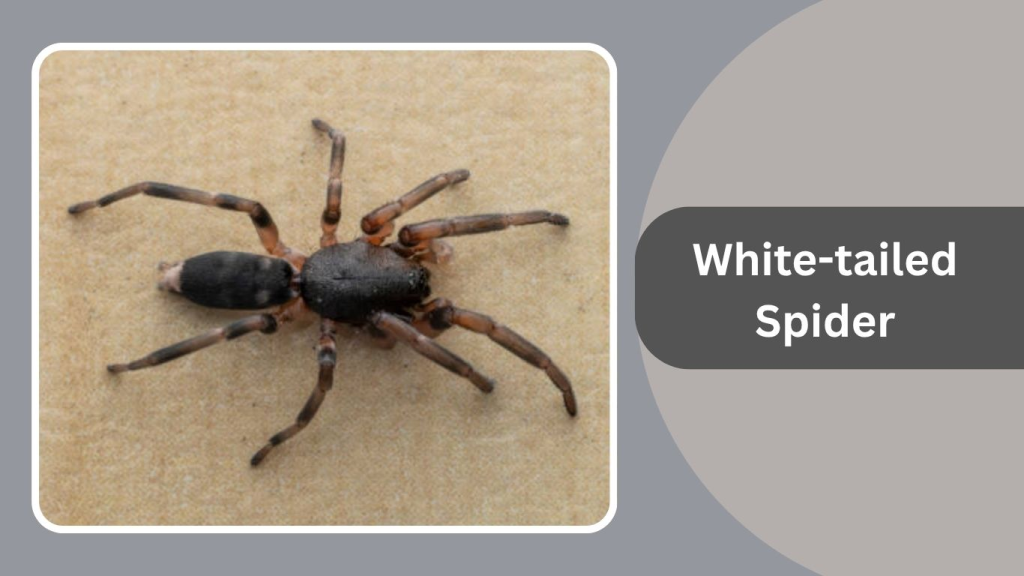
The White-tailed Spider is a medium-sized Australian spider known for its pale, elongated body and distinctive white tip at the end of its abdomen. It is often feared due to myths about necrotic bites, but it is generally harmless to humans.
Identification
- Size: 10–20 mm body length
- Colour: Grey to brown with a white spot at the tip of the abdomen
- Body Shape: Slender, elongated body with long legs
- Web Type: Minimal web; often found hunting rather than trapping prey
- Distinct Features: White “tail” marking on the abdomen; fast-moving hunter
Habitat
White-tailed Spiders are commonly found under bark, in leaf litter, sheds, garages, and homes. They prefer dark, sheltered areas and are often encountered indoors at night.
Diet
They are nocturnal hunters that primarily feed on other spiders, including black house spiders, making them beneficial for controlling spider populations.
Lifecycle & Lifespan
Females lay egg sacs under bark or in sheltered areas. Spiderlings hatch and disperse after a few weeks. White-tailed Spiders typically live for 1–2 years, with females outliving males.
4. Huntsman Spider
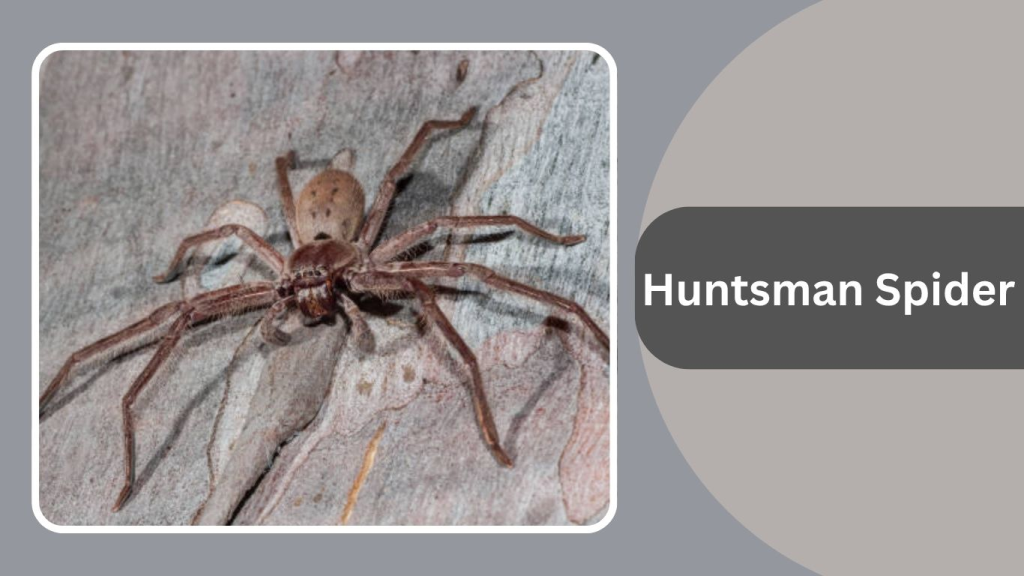
The Huntsman Spider is one of Australia’s largest and fastest spiders. Known for its impressive leg span and flattened body, it is harmless to humans but can startle due to its speed and size. Huntsman Spiders are beneficial predators that help control insects around homes and gardens.
Identification
- Size: Leg span up to 15 cm; body length 20–35 mm
- Colour: Brown, grey, or tan with banded legs and subtle markings
- Body Shape: Flattened, wide body with long, crab-like legs
- Eye Pattern: Eight eyes in two curved rows
- Distinct Features: Extremely fast runner; can move sideways like a crab
Habitat
Huntsman Spiders are often found under bark, rocks, logs, and in crevices. They also commonly enter houses, sheds, and garages, particularly in warmer months.
Diet
They actively hunt insects and other small invertebrates, including cockroaches, moths, and flies. They do not spin webs to catch prey.
Lifecycle & Lifespan
Females lay eggs in flat, silken sacs and guard them until they hatch. Huntsman Spiders typically live for 1–2 years, with females sometimes surviving longer in protected environments.
5. Golden Orb-Weaver
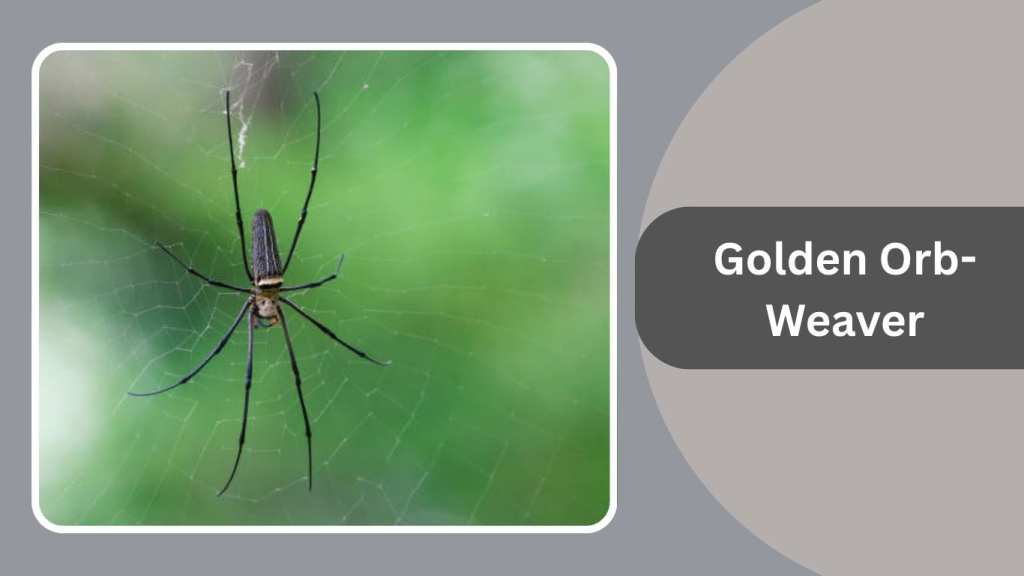
The Golden Orb-Weaver is a large and visually striking Australian spider, famous for the golden-colored silk it produces. It is harmless to humans and plays an important role in controlling insect populations. Its impressive webs can span several meters and are often seen glistening in sunlight.
Identification
- Size: Females 20–40 mm body length; males much smaller
- Colour: Yellow, orange, or brown with patterned abdomen; legs often banded
- Body Shape: Large, robust abdomen with long legs
- Web Type: Large orb-shaped web with golden silk
- Distinct Features: Golden-colored silk; web can be very wide and visible in sunlight
Habitat
Golden Orb-Weavers are commonly found in forests, gardens, parks, and near walking trails. They anchor their webs between trees, shrubs, or man-made structures where flying insects are abundant.
Diet
They feed on flying insects such as moths, flies, bees, and small beetles. Their large, sticky webs trap prey, which is immobilized with silk before feeding.
Lifecycle & Lifespan
Females lay egg sacs in late summer, often hidden in foliage. Spiderlings hatch and disperse shortly afterward. Adults live about one year, with females surviving longer than males, especially during the breeding season.
6. St Andrew’s Cross Spider
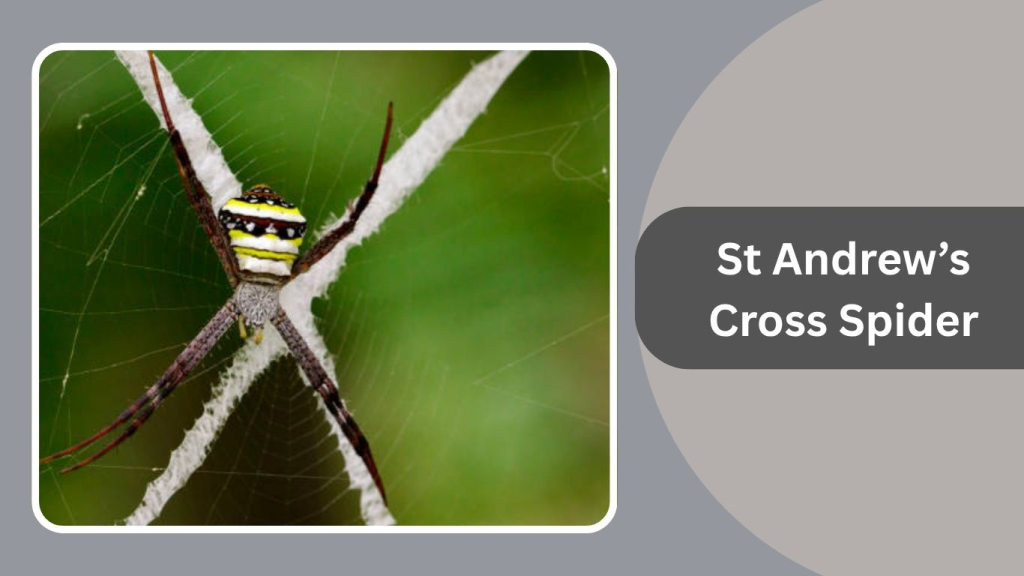
The St Andrew’s Cross Spider is an Australian orb-weaving spider known for its unique habit of resting in an “X” or cross shape on its web. It is harmless to humans and recognized for its striking yellow and black body patterns.
Identification
- Size: Females 15–25 mm body length; males smaller
- Colour: Yellow and black patterned abdomen; legs often banded
- Body Shape: Rounded abdomen with long legs
- Web Type: Orb-shaped web with stabilimentum forming a cross in the center
- Distinct Features: X-shaped posture in the center of the web; brightly patterned body
Habitat
These spiders are commonly found in gardens, forest edges, and shrubs, where they can build large webs to catch flying insects. They prefer sunny spots with good visibility for prey.
Diet
They feed on flying insects, including flies, moths, bees, and small beetles. They ambush prey from the center of their web and wrap it in silk before feeding.
Lifecycle & Lifespan
Females lay egg sacs attached to vegetation near their webs. Spiderlings hatch and disperse after a few weeks. Adults typically live for about one year, with females outliving males slightly longer.
7. Mouse Spider
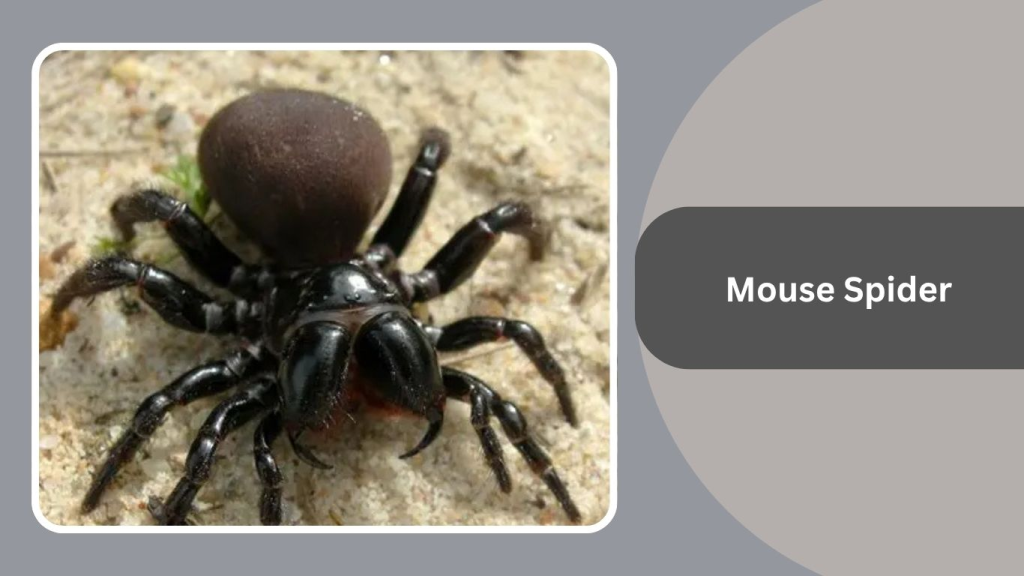
The Mouse Spider is a robust Australian spider often mistaken for funnel-web spiders due to its similar appearance. While its bite can be medically significant, it is rarely aggressive toward humans. They are burrowing spiders that primarily hunt at night.
Identification
- Size: Females 15–30 mm body length; males smaller
- Colour: Dark brown to black, often with a glossy cephalothorax; some have red or orange markings on the face
- Body Shape: Stout, robust body with strong fangs
- Web Type: Burrow lined with silk; may have a short silk funnel entrance
- Distinct Features: Powerful fangs; stocky, glossy body; resembles funnel-web spiders
Habitat
Mouse Spiders live in burrows, often in moist soil under logs, rocks, or leaf litter. They are commonly found in eastern Australia but can also be encountered in urban gardens.
Diet
They feed on insects, small invertebrates, and occasionally other spiders. They ambush prey near the burrow entrance.
Lifecycle & Lifespan
Females lay eggs in silk-lined sacs within their burrows. Spiderlings hatch and disperse through the surrounding area. Adults typically live 2–3 years, with females often surviving longer than males.
8. Trapdoor Spider
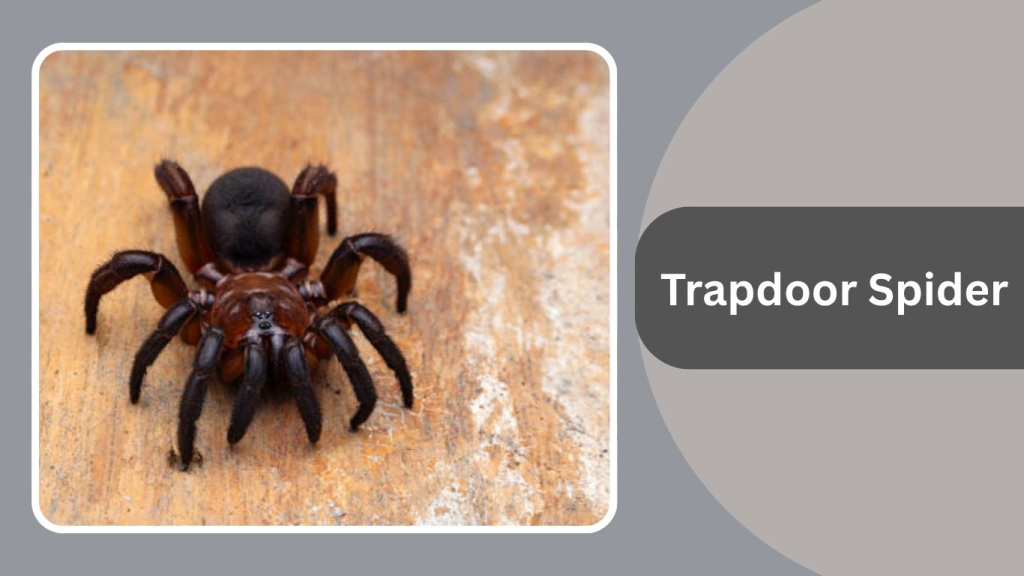
The Trapdoor Spider is a burrowing Australian spider known for creating camouflaged silk-lined burrows with hinged “trapdoors.” It is harmless to humans and is a fascinating ambush predator.
Identification
- Size: Females 15–30 mm body length; males smaller
- Colour: Brown, black, or reddish-brown
- Body Shape: Robust, compact body with strong front legs for digging
- Web Type: Silk-lined burrow with a camouflaged trapdoor
- Distinct Features: Hinged trapdoor for ambushing prey; stout body
Habitat
Trapdoor Spiders live in burrows in soil, under rocks, logs, and leaf litter. They prefer warm, sheltered locations and are mostly found in forests, gardens, and scrublands.
Diet
They are ambush predators, feeding on insects, small invertebrates, and occasionally other spiders. Prey passing near the trapdoor is quickly grabbed and pulled into the burrow.
Lifecycle & Lifespan
Females lay eggs in silk sacs inside their burrows. Spiderlings hatch and disperse locally. Adults can live for several years, with females often outliving males. These spiders are mostly nocturnal hunters.
9. Wolf Spider
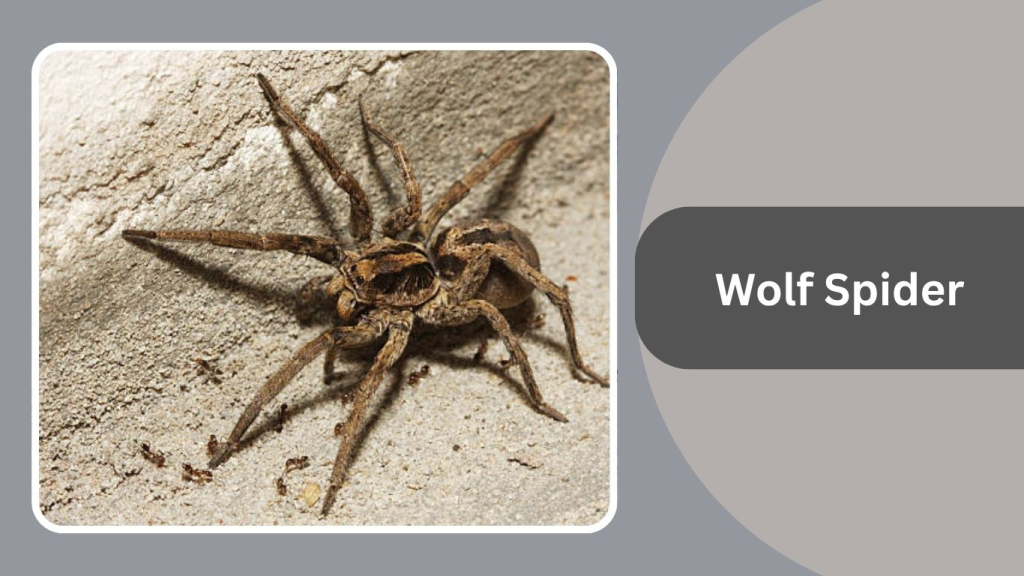
The Wolf Spider is a fast-moving, ground-dwelling spider found throughout Australia. Known for its excellent eyesight and active hunting behavior, it does not rely on webs to catch prey and is harmless to humans.
Identification
- Size: 10–35 mm body length depending on species
- Colour: Brown, grey, or sandy with darker stripes or mottled patterns
- Body Shape: Robust body with long, strong legs
- Eye Pattern: Eight eyes arranged in three rows, with two large central eyes
- Distinct Features: Females carry egg sacs on their abdomen and spiderlings ride on the mother’s back
Habitat
Wolf Spiders live in grasslands, forests, gardens, and under rocks or leaf litter. They prefer ground-level habitats where they can hunt effectively.
Diet
They are active hunters, feeding on insects, small arthropods, and other invertebrates. Their speed and vision make them efficient predators.
Lifecycle & Lifespan
Females carry eggs in silk sacs attached to their abdomen. Spiderlings hatch and climb onto the mother’s back for protection before dispersing. Adults typically live 1–2 years, with females often surviving longer.
10. Daddy Long-Legs Spider (Cellar Spider)
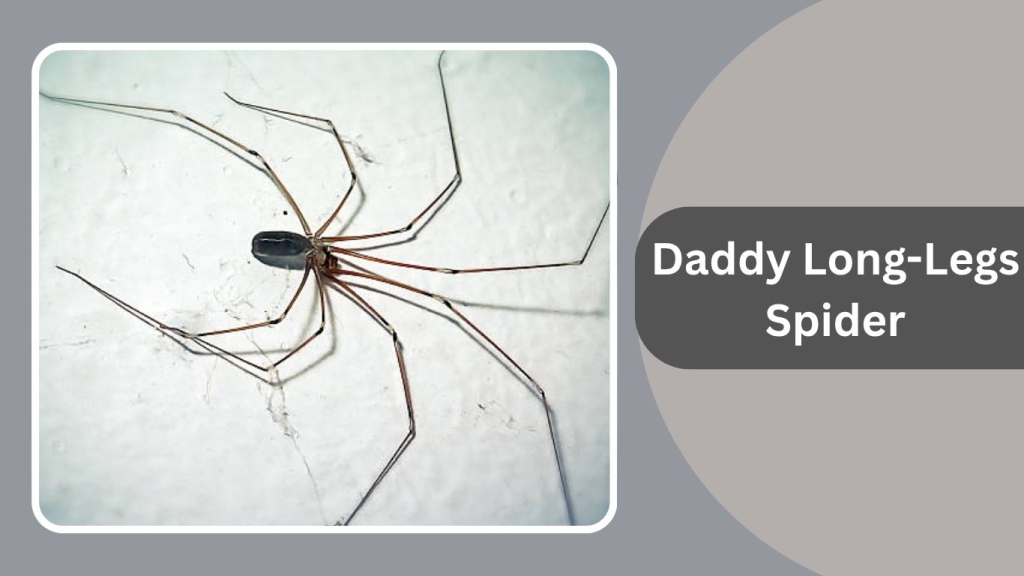
The Daddy Long-Legs Spider, also known as the Cellar Spider, is a common Australian spider famous for its extremely long, thin legs and small body. It is harmless to humans and often found indoors.
Identification
- Size: Body 7–10 mm; legs extremely long, often several times body length
- Colour: Pale brown or beige
- Body Shape: Small, elongated body with very long, fragile legs
- Web Type: Loose, irregular cobwebs in corners, ceilings, and dark areas
- Distinct Features: Extremely long, thin legs; delicate body; moves quickly when disturbed
Habitat
They are commonly found indoors in basements, sheds, garages, and attics. Outdoors, they inhabit caves, under logs, and dense vegetation. They prefer dark, undisturbed locations.
Diet
They feed on small insects and other spiders, often capturing prey in their irregular webs. They may also scavenge insects trapped in other spiders’ webs.
Lifecycle & Lifespan
Females lay eggs in silk sacs within their webs. Spiderlings hatch and remain in the web until dispersal. Adults live about 1–2 years, with females surviving longer. They are active year-round, especially indoors.
11. Peacock Spider
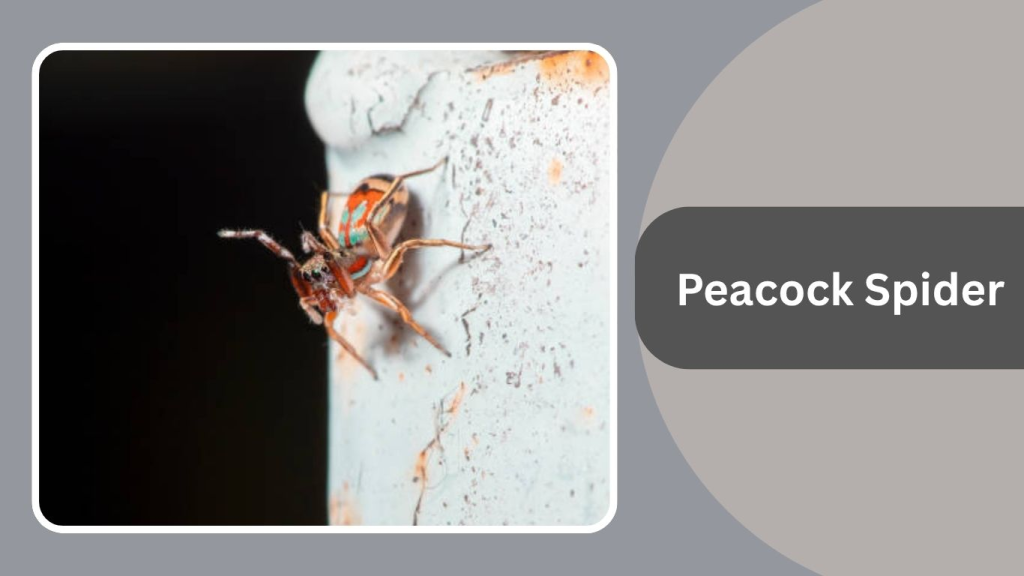
The Peacock Spider is a small Australian jumping spider famous for its vibrant colors and elaborate courtship dances. Despite its tiny size, it is one of the most visually striking spiders in Australia.
Identification
- Size: 3–5 mm
- Colour: Males brightly colored with red, blue, orange, or black patterns; females mostly brown
- Body Shape: Compact, stout body with short legs
- Eye Pattern: Large forward-facing eyes typical of jumping spiders
- Distinct Features: Males display colorful abdominal flaps during mating dances
Habitat
Peacock Spiders are commonly found in leaf litter, low vegetation, and grassy areas in southern and eastern Australia. They prefer sunny, open spaces where males can perform mating displays.
Diet
They are active hunters, feeding on small insects such as ants, flies, and springtails. They stalk and leap on prey rather than using webs to catch it.
Lifecycle & Lifespan
Females lay eggs in silk sacs hidden in vegetation. Spiderlings hatch and disperse after a few weeks. Adults generally live about one year, with males dying shortly after mating.
12. Brown Huntsman Spider
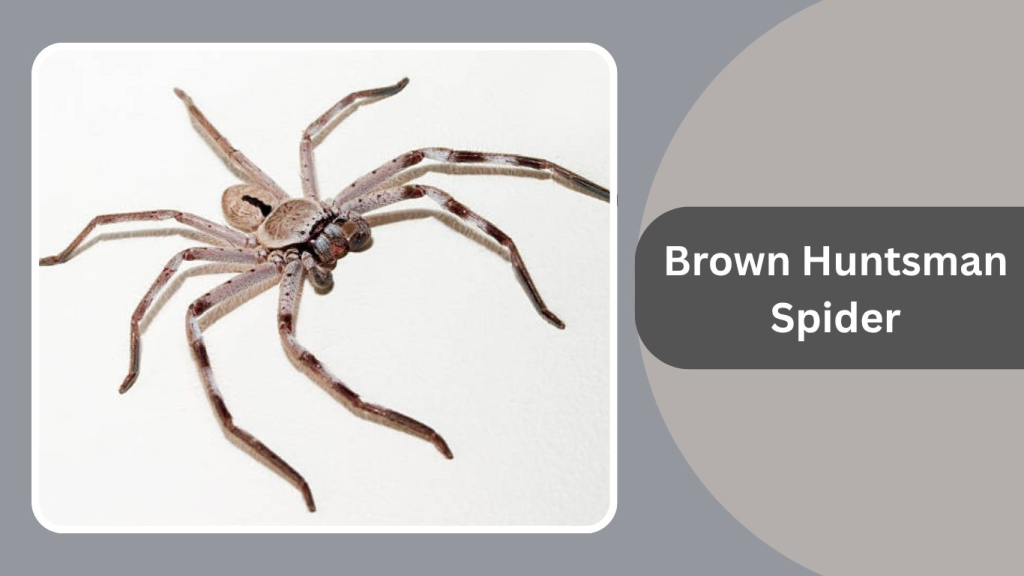
The Brown Huntsman Spider is a large, fast-moving spider found across Australia. It is known for its impressive leg span and ability to climb walls and ceilings. While it can startle people, it is harmless and highly beneficial for controlling insect populations.
Identification
- Size: Leg span up to 15 cm; body length 20–30 mm
- Colour: Light to dark brown with subtle banding on legs
- Body Shape: Flattened body with long, sideways-oriented legs
- Eye Pattern: Eight eyes arranged in two curved rows
- Distinct Features: Extremely fast and agile; can move sideways like a crab; often found indoors
Habitat
Brown Huntsman Spiders prefer tree bark, crevices, sheds, garages, and inside homes. They thrive in warm, humid climates and are particularly common in urban and suburban areas of Australia.
Diet
They are nocturnal hunters feeding on cockroaches, moths, flies, and other small insects. Huntsman Spiders do not spin webs for catching prey but rely on speed and stealth.
Lifecycle & Lifespan
Females lay eggs in flat silk sacs and guard them until hatching. Spiderlings disperse soon afterward. Adults live 1–2 years, with females often surviving longer than males, especially in protected indoor environments. Brown Huntsman Spiders are active year-round in warmer regions.
13. Nursery Web Spider
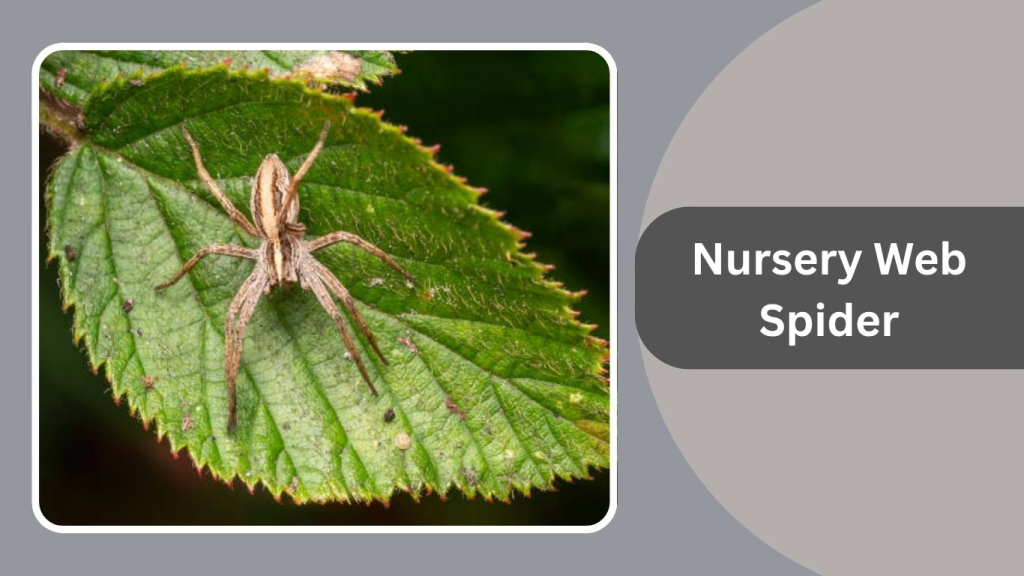
The Nursery Web Spider is an Australian spider known for its unique reproductive behavior, where females carry egg sacs and construct “nursery webs” for their spiderlings. They are harmless to humans and agile hunters.
Identification
- Size: Females 15–20 mm; males smaller
- Colour: Brown or grey with lighter and darker markings on the abdomen
- Body Shape: Elongated body with long legs adapted for hunting
- Web Type: Minimal web; females create silk nursery tents for spiderlings
- Distinct Features: Female carries egg sac in her jaws; builds protective nursery web for young
Habitat
Nursery Web Spiders are commonly found in forests, grasslands, gardens, and shrubs. They prefer low vegetation or dense foliage where they can hunt and protect their eggs.
Diet
They are active hunters, feeding on insects such as flies, moths, beetles, and other small invertebrates. They do not rely on webs to catch prey.
Lifecycle & Lifespan
Females carry the egg sac until the spiderlings are ready to hatch. She then builds a protective nursery web where the spiderlings stay for a short period before dispersing. Adults generally live 1–2 years, with females often surviving longer than males.
14. Garden Orb-Weaver
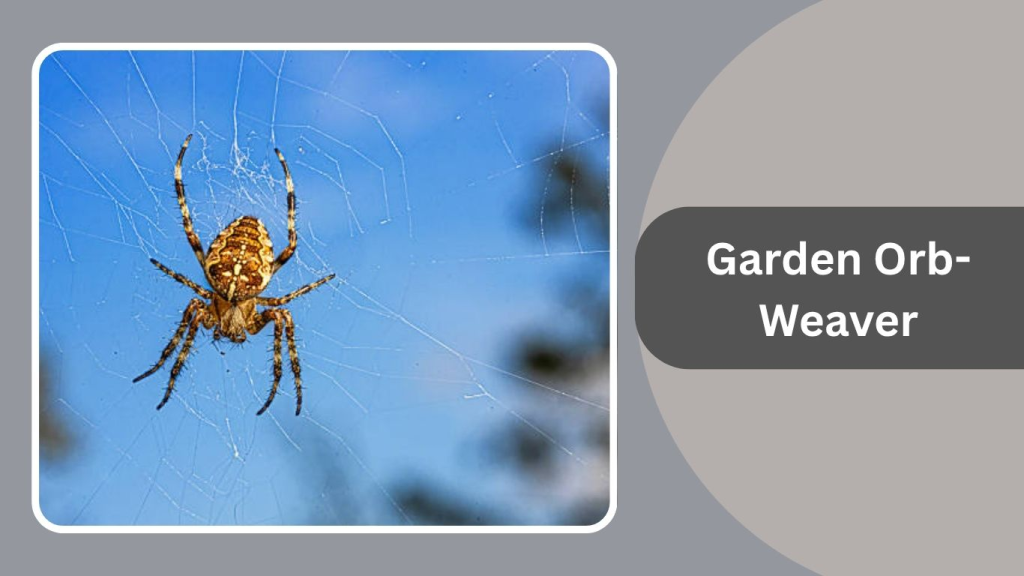
The Garden Orb-Weaver is a common Australian spider recognized for its large, circular webs and colorful patterned abdomen. It is harmless to humans and plays an important role in controlling garden insect populations.
Identification
- Size: Females 15–25 mm; males smaller
- Colour: Brown, orange, yellow, or reddish with patterned abdomen
- Body Shape: Rounded, bulbous abdomen with long, banded legs
- Web Type: Classic orb-shaped web, often built between plants or garden structures
- Distinct Features: Symmetrical orb web; vibrant, patterned abdomen
Habitat
Garden Orb-Weavers are commonly found in gardens, parks, forest edges, and shrubs. They prefer areas with good sun exposure and plenty of vegetation to anchor their webs and catch prey.
Diet
They feed on small flying insects such as flies, mosquitoes, moths, and beetles. Prey is caught in their orb webs and immobilized with silk before consumption.
Lifecycle & Lifespan
Females lay egg sacs attached to foliage or hidden spots near their webs. Spiderlings hatch and disperse after a few weeks. Adults are most active from spring to autumn, and their lifespan is typically about one year, with females often living longer.
15. Triangle Spider
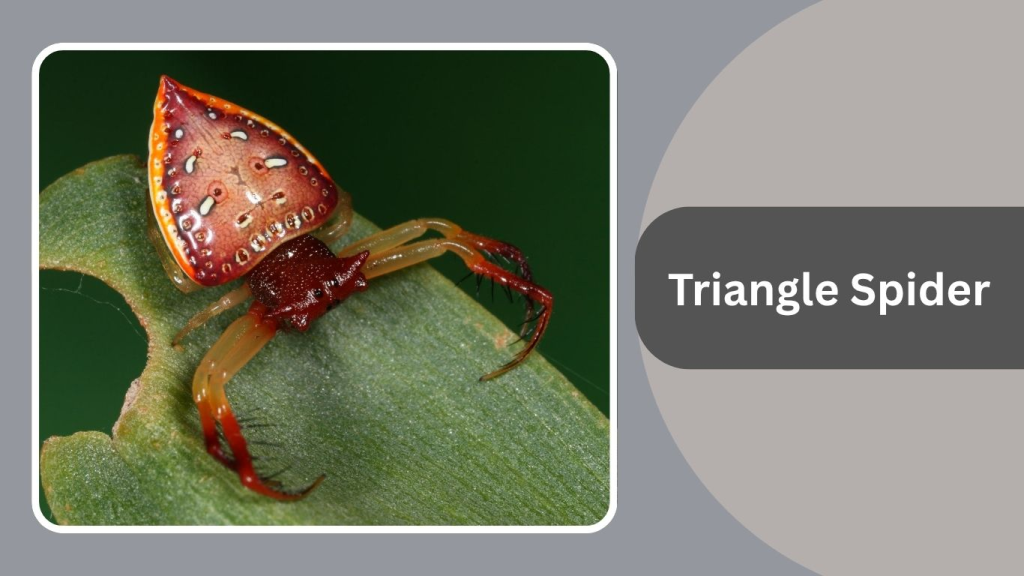
The Triangle Spider is a small Australian orb-weaving spider known for the triangular pattern on its abdomen. It is harmless to humans and builds small, delicate orb webs to catch flying insects.
Identification
- Size: Females 6–12 mm; males smaller
- Colour: Brown or grey with a distinct triangular marking on the abdomen
- Body Shape: Small, rounded body with proportionally long legs
- Web Type: Small orb-shaped webs, often near ground level
- Distinct Features: Triangular marking on the abdomen; delicate web structure
Habitat
Triangle Spiders are commonly found in gardens, forest undergrowth, shrubs, and grasslands. They prefer low vegetation and sheltered areas where they can anchor their small webs.
Diet
They feed on small flying insects such as flies, mosquitoes, and tiny beetles. Their orb webs capture prey efficiently, and the spider wraps it in silk before feeding.
Lifecycle & Lifespan
Females lay egg sacs in or near their webs. Spiderlings hatch and disperse within a few weeks. Adults live approximately one year, with females usually surviving longer than males.
16. Funnel-Web Tarantula
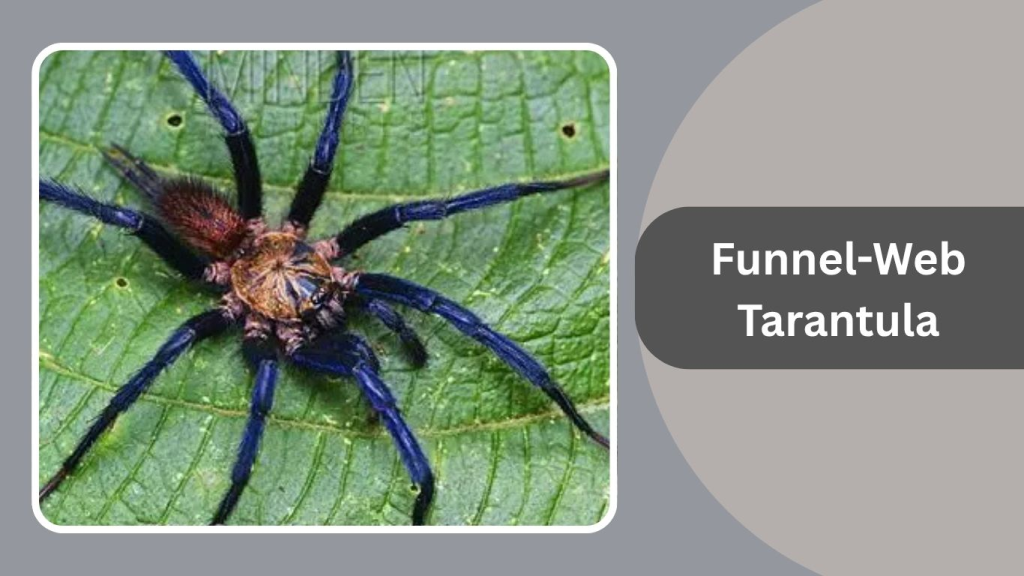
The Funnel-Web Tarantula is a burrowing Australian spider closely related to the infamous Sydney Funnel-Web Spider. While large and intimidating, it is generally not aggressive toward humans. It is a nocturnal ambush predator.
Identification
- Size: Body length 25–35 mm; leg span up to 8 cm
- Colour: Dark brown to black, glossy cephalothorax
- Body Shape: Robust, muscular body with strong front legs
- Web Type: Silk-lined burrow with funnel-shaped entrance
- Distinct Features: Powerful fangs; burrow entrance often camouflaged with soil or leaf litter
Habitat
Funnel-Web Tarantulas inhabit burrows in moist soil, under logs, rocks, and leaf litter. They are mostly found in forests and woodland areas of eastern Australia.
Diet
They feed on insects, small invertebrates, and occasionally small vertebrates. Prey is ambushed near the burrow entrance and subdued with venom.
Lifecycle & Lifespan
Females lay eggs in silk sacs inside their burrows. Spiderlings hatch and disperse nearby. Adults can live several years, with females often outliving males. These spiders are primarily nocturnal hunters.
17. Black House Spider
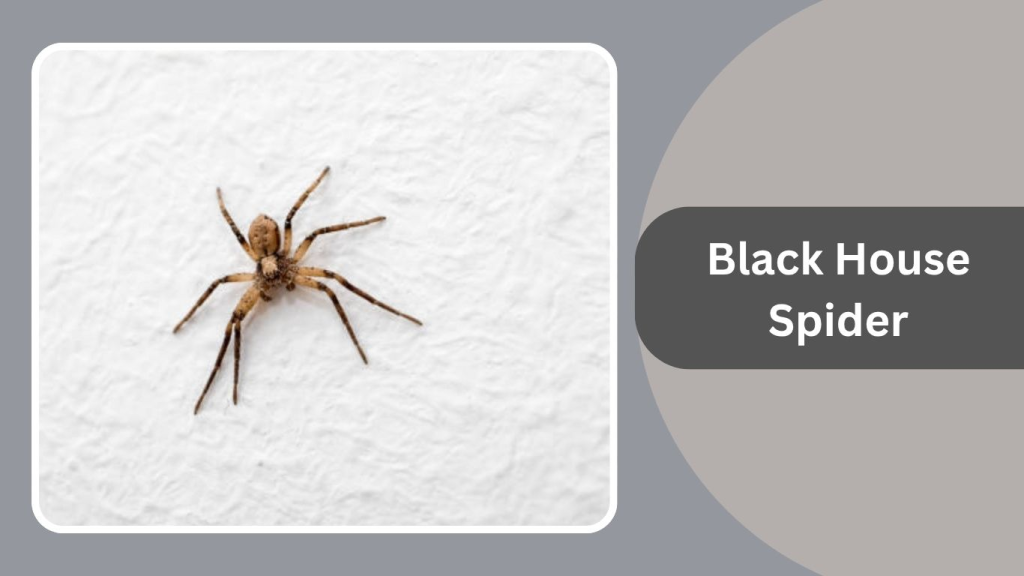
The Black House Spider is a common Australian spider known for building messy, funnel-shaped webs in and around homes. It is venomous but rarely causes serious harm to humans. These spiders are shy and usually remain hidden.
Identification
- Size: Females 12–18 mm; males smaller
- Colour: Dark brown to black, sometimes with lighter patterns on the abdomen
- Body Shape: Robust body with strong legs adapted for web-building
- Web Type: Funnel-shaped cobweb with silk retreat
- Distinct Features: Funnel-like web entrances; females larger and more sedentary than males
Habitat
Black House Spiders are often found in corners of walls, under eaves, window frames, garages, sheds, and inside houses. They prefer dark, sheltered locations where insects are abundant.
Diet
They feed on insects and other small invertebrates that become trapped in their webs. The spider immobilizes prey with silk and venom before feeding.
Lifecycle & Lifespan
Females lay egg sacs within their funnel retreats. Spiderlings hatch and disperse after a few weeks. Adults live about 1–2 years, with females surviving longer. They are most active during warmer months but remain in webs year-round in sheltered areas.
18. Crab Spider
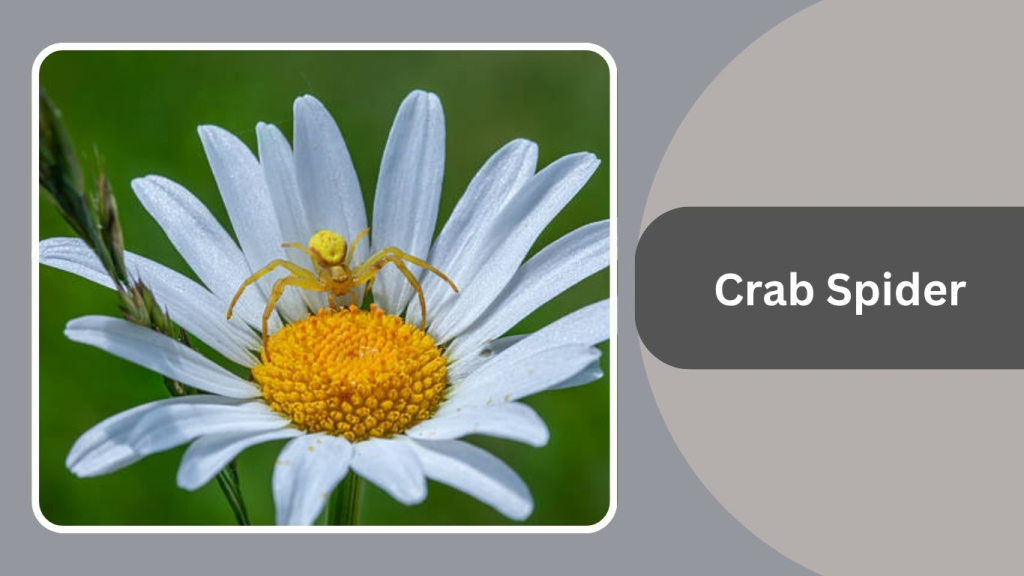
The Crab Spider is a small, ambush-hunting Australian spider named for its sideways walking style. It is harmless to humans and relies on camouflage to catch prey rather than spinning webs.
Identification
- Size: 4–10 mm depending on species
- Colour: White, yellow, green, or brown, often matching flowers or foliage
- Body Shape: Flat, wide body with longer front legs
- Behaviour: Ambush predator; sits motionless and grabs prey with strong front legs
- Distinct Features: Sideways movement; ability to blend in with flowers
Habitat
Crab Spiders are commonly found on flowers, shrubs, gardens, meadows, and forest edges. They prefer sunny locations where pollinators are active.
Diet
They feed on insects such as bees, flies, and butterflies that visit flowers. Using strong front legs, they immobilize prey with a venomous bite.
Lifecycle & Lifespan
Females lay eggs in silk sacs attached to leaves or stems. Spiderlings hatch and disperse after a short period. Adults typically live for about one year, with females living slightly longer.
19. Bark Spider
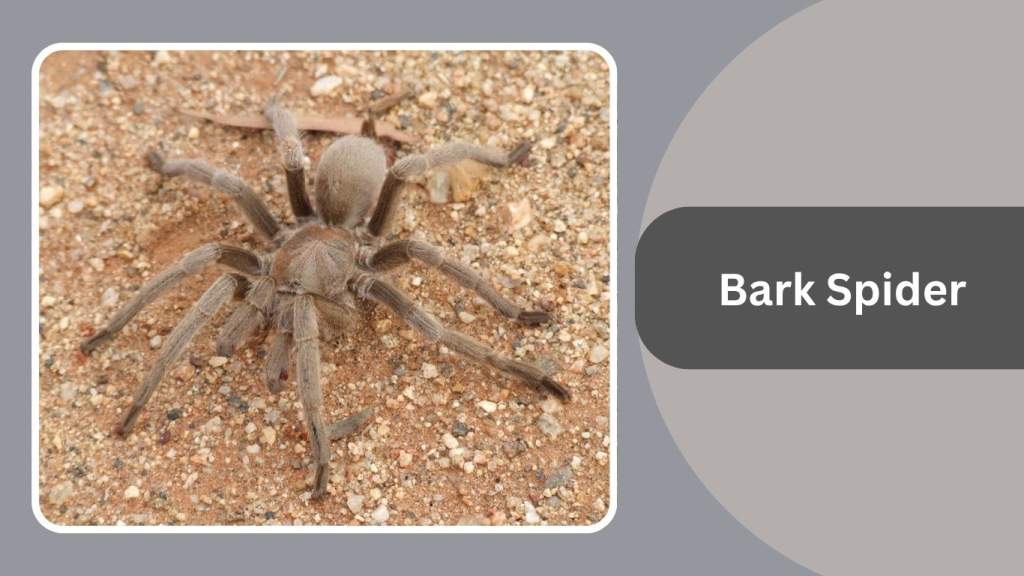
The Bark Spider is an Australian orb-weaver known for its impressive camouflage and large, strong webs. It is harmless to humans and often goes unnoticed due to its bark-like appearance. Its silk is incredibly strong, making it one of the most efficient insect trappers.
Identification
- Size: Females 20–35 mm; males much smaller
- Colour: Brown, grey, or mottled patterns resembling tree bark
- Body Shape: Flattened, elongated body with long, spindly legs
- Web Type: Large orb web, often spanning several meters, usually built between trees
- Distinct Features: Excellent camouflage blending with tree bark; highly durable silk
Habitat
Bark Spiders inhabit forests, woodlands, and urban parks. They prefer to build their webs on tree trunks, branches, or between foliage where flying insects are plentiful. They are mostly found in areas with minimal disturbance.
Diet
They feed on flying insects such as moths, flies, beetles, and occasionally small butterflies. Their large, strong webs allow them to capture sizable prey effectively.
Lifecycle & Lifespan
Females lay egg sacs in hidden spots near their webs. Spiderlings hatch and disperse after a few weeks. Adults are most active during warmer months and generally live about one year, with females surviving slightly longer than males. Their webs are regularly maintained and repaired to ensure efficiency.
20. Marbled Orb-Weaver
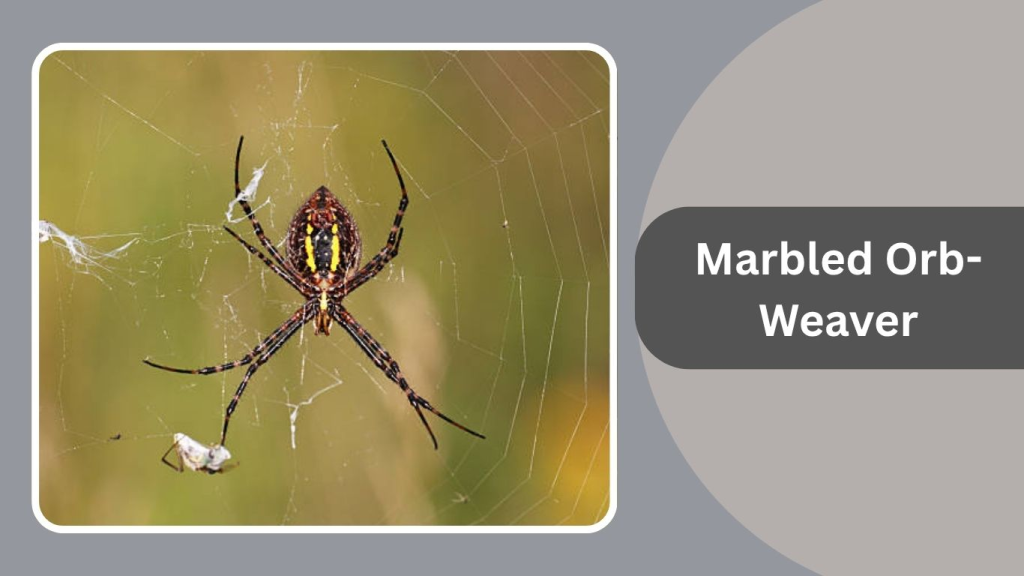
The Marbled Orb-Weaver is a visually striking Australian spider known for its colorful, marbled abdomen and classic orb-shaped web. It is harmless to humans and plays a vital role in controlling insect populations in gardens and forests.
Identification
- Size: Females 10–20 mm; males smaller
- Colour: Brown, yellow, orange, or red with marbled patterns on the abdomen
- Body Shape: Rounded, bulbous abdomen with long legs
- Web Type: Symmetrical orb web, often built between shrubs, trees, or garden structures
- Distinct Features: Distinct marbled pattern on the abdomen; highly visible orb web
Habitat
Marbled Orb-Weavers are commonly found in gardens, forest edges, parks, and shrublands. They prefer sunny areas with vegetation for web attachment and abundant insect prey.
Diet
They feed on flying insects such as flies, mosquitoes, moths, and small beetles. Their orb webs are highly efficient for trapping prey, which is immobilized with silk before feeding.
Lifecycle & Lifespan
Females lay egg sacs in late summer or autumn, attaching them to foliage or hidden surfaces. Spiderlings hatch and disperse shortly afterward. Adults typically live about one year, with females outliving males slightly. Their webs are often rebuilt or repaired daily to maintain hunting efficiency.
21. Red-legged Golden Orb-Weaver
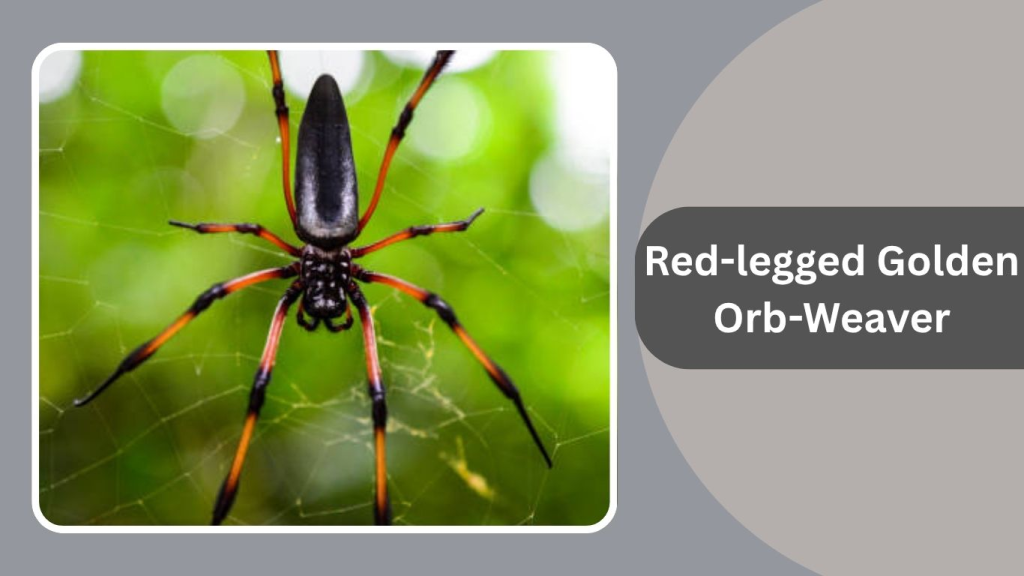
The Red-legged Golden Orb-Weaver is a large Australian spider known for its striking red legs and golden-colored silk. It is harmless to humans and is admired for the strength and beauty of its webs.
Identification
- Size: Females 25–40 mm body length; males much smaller
- Colour: Golden or yellow abdomen with bright red legs; sometimes orange markings on the body
- Body Shape: Large, elongated abdomen with long legs
- Web Type: Large orb-shaped web with golden silk
- Distinct Features: Red-colored legs; strong, visible golden web; impressive size
Habitat
They are commonly found in forests, woodlands, gardens, and parks. They build webs between trees, shrubs, or structures where flying insects are abundant.
Diet
Their diet consists of flying insects including moths, flies, bees, and small beetles. The strong golden silk web captures prey efficiently, which is then wrapped in silk before feeding.
Lifecycle & Lifespan
Females lay egg sacs in foliage near the web. Spiderlings hatch and disperse shortly afterward. Adults typically live for about one year, with females surviving longer than males. Webs are rebuilt or maintained regularly to ensure effective hunting.