
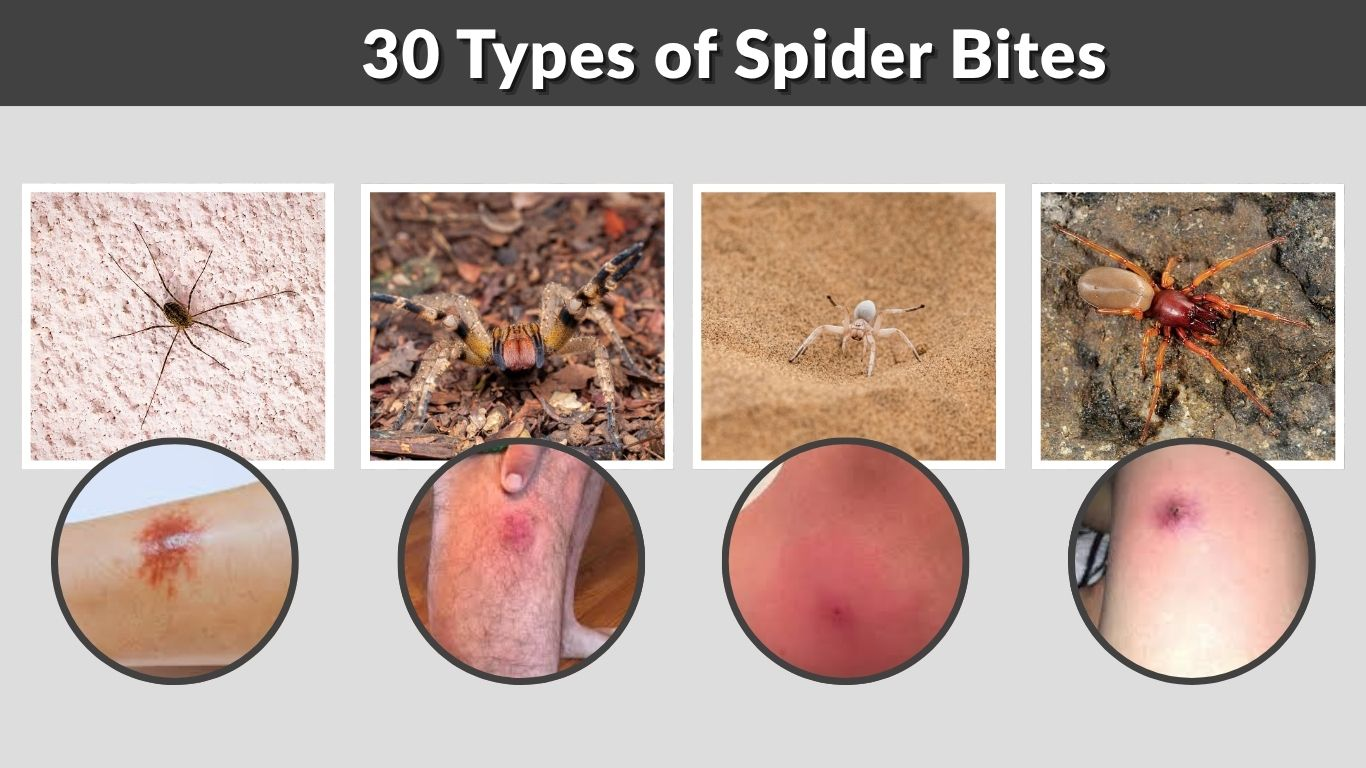
Spider bites can vary widely depending on the species, ranging from mild skin irritation to more serious reactions that require medical attention. While most spiders are harmless and rarely bite humans, understanding the different types can help you identify symptoms and respond appropriately. This guide covers 30 types of spider bites, explaining how they look, what symptoms they cause, and the level of risk involved. By learning the basics, you can stay informed, avoid unnecessary panic, and know when simple home care is enough or when to seek professional help.
1. Brown Recluse Spider Bite

A brown recluse spider bite is one of the most talked-about spider bites due to its potential to cause skin damage in rare cases. These spiders are mostly found in certain regions and tend to avoid human contact. Bites are uncommon but can become serious if not monitored properly.
Identification
- Small spider with a light to dark brown color
- Distinct violin-shaped marking on its back
- Long, thin legs without noticeable spines
- Usually found in dark, undisturbed areas like closets or basements
Symptoms
A brown recluse bite may not be painful at first, but symptoms can develop over time. The reaction varies depending on the individual and severity of the bite. In some cases, the skin around the bite may begin to break down, forming a slow-healing wound.
Risk
The main risk of a brown recluse bite is tissue damage. While many bites remain mild, some can lead to necrosis (skin tissue death). People with weaker immune systems or underlying health conditions may face higher risks of complications.
Treatment
Treatment depends on the severity of the bite. Mild cases can be managed at home, while more serious reactions require medical attention. Cleaning the area, applying a cold compress, and avoiding pressure on the bite can help. If symptoms worsen, a doctor may prescribe medications or additional care.
2. Black Widow Spider Bite

A black widow spider bite is known for its venom, which can affect the nervous system. These spiders are recognized worldwide and are more medically significant than most house spiders. Although bites are uncommon, they can cause noticeable symptoms and should be taken seriously.
Identification
- Shiny black body with a round abdomen
- Distinct red hourglass marking on the underside
- Long, slender legs
- Commonly found in dark, sheltered places like garages or woodpiles
Symptoms
A black widow bite often causes immediate pain at the site, followed by muscle cramps and tightness. The pain can spread to the abdomen, back, or chest. Some people may also experience sweating, nausea, or restlessness as the venom affects the body.
Risk
The main risk comes from the venom’s effect on the nervous system. While rarely fatal, symptoms can be intense, especially in children, older adults, or individuals with health conditions. Medical attention may be needed in moderate to severe cases.
Treatment
Treatment focuses on relieving symptoms and monitoring the patient. Applying a cold compress and keeping the affected area still can help initially. In more serious cases, doctors may provide pain relief, muscle relaxants, or antivenom depending on severity.
3. Wolf Spider Bite

A wolf spider bite is generally harmless and often mistaken for more dangerous spider bites. These spiders are active hunters and do not rely on webs to catch prey. While they can bite if provoked, their venom is not considered dangerous to humans.
Identification
- Large, hairy body with brown or gray coloring
- Distinct striped or patterned markings
- Long, strong legs adapted for running
- Commonly found on the ground, in gardens, or inside homes
Symptoms
A wolf spider bite usually causes mild pain, similar to a bee sting. The area may become red, slightly swollen, and itchy. In most cases, symptoms remain localized and fade within a few days without complications.
Risk
The risk from a wolf spider bite is very low. Most reactions are mild and do not lead to serious health issues. However, individuals with sensitive skin or allergies may experience slightly stronger reactions.
Treatment
Treatment is simple and can be done at home. Clean the bite area, apply a cold compress to reduce swelling, and use anti-itch cream if needed. Avoid scratching to prevent infection, and seek medical advice only if symptoms worsen.
4. Hobo Spider Bite

A hobo spider bite is often discussed due to past concerns about its effects, but recent research suggests its bites are usually mild. These spiders are commonly found in certain regions and prefer quiet, undisturbed spaces. Bites are rare and typically not dangerous.
Identification
- Medium-sized brown spider
- Long legs with subtle hair
- Chevron (V-shaped) markings on the abdomen
- Often found in basements, crawl spaces, or near ground level
Symptoms
A hobo spider bite may cause mild redness, slight pain, and minor swelling. In most cases, symptoms remain localized and do not worsen. The bite can resemble other common insect bites and usually heals within a few days.
Risk
The risk associated with a hobo spider bite is considered low. Earlier beliefs linked it to severe skin damage, but this is now widely questioned. Most bites do not lead to serious complications or long-term effects.
Treatment
Treatment involves basic first aid. Clean the bite area, apply a cold compress, and keep it protected. Over-the-counter creams can help with itching or irritation. Medical attention is only needed if unusual symptoms develop or the area shows signs of infection.
5. Yellow Sac Spider Bite

A yellow sac spider bite is relatively common compared to other spider bites, as these spiders often roam indoors and may come into contact with humans. While their bites can be uncomfortable, they are usually not dangerous and heal without major issues.
Identification
- Small, pale yellow or light green body
- Long, thin legs
- Smooth, shiny appearance
- Commonly found on walls, ceilings, and corners indoors
Symptoms
A yellow sac spider bite may cause a stinging sensation at first. The bite area can become red, swollen, and slightly painful. In some cases, a small blister may form, but symptoms usually remain mild and localized.
Risk
The risk from this bite is low, though it may feel more irritating than other common spider bites. Rarely, the bite can lead to minor skin irritation that takes longer to heal, but serious complications are uncommon.
Treatment
Treatment is simple and similar to other mild bites. Wash the area with soap and water, apply a cold compress, and use anti-itch or antibiotic cream if needed. Avoid scratching, and seek medical care if the bite worsens or shows signs of infection.
6. Jumping Spider Bite

A jumping spider bite is rare and typically harmless. These small, active spiders are known for their quick movements and excellent vision. They are curious but not aggressive, and bites usually happen only if the spider is directly handled or threatened.
Identification
- Small, compact body
- Often black, brown, or brightly colored
- Large front eyes giving a “cute” appearance
- Short legs with a slightly hairy body
Symptoms
A jumping spider bite usually causes mild discomfort, similar to a small insect bite. The area may become slightly red and itchy, but symptoms are short-lived and do not spread. Most people notice only minor irritation that fades quickly.
Risk
The risk from a jumping spider bite is extremely low. Their venom is not harmful to humans, and serious reactions are very rare. At most, some individuals may experience slightly increased sensitivity or irritation.
Treatment
Treatment is minimal and can be handled at home. Clean the bite area, apply a cold compress if needed, and use an anti-itch cream for comfort. Symptoms usually disappear within a day or two without further care.
7. Funnel-Web Spider Bite

A funnel-web spider bite is considered one of the most serious spider bites, particularly in regions like Australia. These spiders are highly venomous, and their bites can cause severe symptoms. Immediate medical attention is essential if a bite is suspected.
Identification
- Large, dark-colored spider (black or dark brown)
- Glossy body with strong, thick legs
- Prominent fangs
- Builds funnel-shaped webs in soil, gardens, or crevices
Symptoms
A funnel-web spider bite can cause intense pain almost immediately. Symptoms may quickly progress to include sweating, muscle twitching, difficulty breathing, and confusion. The effects can become severe within a short time, making it a medical emergency.
Risk
The risk from a funnel-web spider bite is high due to its potent venom. Without prompt treatment, the bite can be life-threatening. Children and vulnerable individuals are at greater risk of severe complications.
Treatment
Immediate medical care is critical. Apply a pressure immobilization bandage and keep the affected limb still while seeking emergency help. Antivenom is highly effective when given quickly, and hospital treatment is required to manage symptoms safely.
8. Redback Spider Bite

A redback spider bite is medically significant and commonly reported in Australia. These spiders are related to black widows and have potent venom. While bites are not always severe, they can cause strong symptoms and should be monitored carefully.
Identification
- Small black spider with a round abdomen
- Distinct red stripe on the back
- Long, thin legs
- Found in dry, sheltered places like sheds, outdoor furniture, or under objects
Symptoms
A redback spider bite often causes immediate sharp pain that may spread from the bite area. Over time, symptoms can include sweating, nausea, headache, and muscle weakness. Pain may persist and become more intense if untreated.
Risk
The risk level is moderate to high, especially in untreated cases. While fatalities are extremely rare, the venom can cause significant discomfort and systemic symptoms. Children and older adults may experience stronger reactions.
Treatment
Medical attention is recommended for most redback bites. Apply a cold compress to the area and keep the person calm. Unlike some other spider bites, pressure bandaging is not typically advised. Doctors may provide pain relief or antivenom in more severe cases.
9. House Spider Bite

A house spider bite is one of the most common yet least harmful types of spider bites. These spiders live indoors and are not aggressive toward humans. Bites are rare and usually occur only when the spider is accidentally disturbed.
Identification
- Small to medium-sized spider
- Brown, gray, or black coloration
- Long, thin legs
- Commonly found in corners, ceilings, and indoor spaces
Symptoms
A house spider bite typically causes a mild skin reaction. The bite may appear as a small red bump with slight itching or irritation. Symptoms are usually minor and remain localized, fading within a few days without complications.
Risk
The risk from a house spider bite is very low. These spiders do not have strong venom harmful to humans, and serious reactions are extremely rare. Most bites do not require medical attention.
Treatment
Treatment is simple and can be done at home. Clean the area with soap and water, apply a cold compress to reduce swelling, and use anti-itch cream if needed. Avoid scratching, and the bite should heal naturally within a few days.
10. Giant House Spider Bite

A giant house spider bite may sound alarming due to the spider’s size, but it is generally harmless. These spiders are common in homes, especially in cooler regions, and prefer to avoid human interaction. Bites are rare and usually mild.
Identification
- Large brown spider with long legs
- Fast-moving and often seen on floors or walls
- Hairy body with subtle patterns
- Common in basements, garages, and corners
Symptoms
A giant house spider bite typically causes mild discomfort. The area may become slightly red, swollen, and itchy. Pain is usually minimal, and symptoms remain localized without spreading.
Risk
The risk from a giant house spider bite is very low. Despite their size, they are not dangerous to humans. Serious reactions are extremely uncommon, and most bites heal without any complications.
Treatment
Treatment involves basic first aid. Clean the bite area, apply a cold compress, and use anti-itch cream if necessary. Avoid scratching to prevent irritation, and the bite should heal within a few days.
11. Cellar Spider Bite

A cellar spider bite is extremely rare and generally harmless. These spiders are commonly found in basements and quiet indoor areas. They are often called “daddy long-legs” (though the name is shared with other species) and are not known to pose any real threat to humans.
Identification
- Small body with very long, thin legs
- Pale yellow, light brown, or gray color
- Delicate appearance with a tiny abdomen
- Found in corners, ceilings, and basements
Symptoms
A cellar spider bite, if it happens at all, usually causes very mild symptoms. The bite may feel like a slight pinch and result in minor redness or irritation. Most people may not even notice they’ve been bitten.
Risk
The risk from a cellar spider bite is extremely low. Their venom is not harmful to humans, and they rarely bite. Most encounters with these spiders are completely safe and uneventful.
Treatment
No specific treatment is usually needed. If a bite occurs, simply clean the area and apply a cold compress if there is minor irritation. The skin typically returns to normal quickly without any complications.
12. Garden Spider Bite

A garden spider bite is uncommon and usually harmless. These spiders are often seen outdoors in gardens, where they build large, circular webs. They are not aggressive and will only bite if directly handled or threatened.
Identification
- Medium to large spider with bright markings
- Often yellow, black, or orange in color
- Rounded abdomen with distinct patterns
- Found in gardens, bushes, and outdoor spaces
Symptoms
A garden spider bite may cause mild pain, similar to a bee sting. The area can become slightly red and swollen, with minor itching. Symptoms are typically short-lived and do not spread or worsen.
Risk
The risk from a garden spider bite is very low. Their venom is not dangerous to humans, and serious reactions are extremely rare. Most bites result in only minor discomfort.
Treatment
Treatment is simple and involves basic care. Wash the bite with soap and water, apply a cold compress to reduce swelling, and use anti-itch cream if needed. The bite usually heals within a few days without further treatment.
13. Banana Spider Bite

A banana spider bite can vary depending on the species referred to, as “banana spider” is a common name used for different spiders. Some are harmless, while others, like the Brazilian wandering spider, can be more serious. Proper identification is important.
Identification
- Large spider with long legs
- Yellow, brown, or golden coloration
- Often found in tropical regions or gardens
- May be seen in banana plants or vegetation
Symptoms
Symptoms can range from mild to more noticeable depending on the species. A typical bite may cause pain, redness, and swelling at the site. In more serious cases, symptoms could include sweating, nausea, or muscle discomfort.
Risk
The risk level depends on the specific type of banana spider. Most are harmless and cause only mild reactions, but certain species can deliver venom that leads to stronger symptoms. Caution is advised in tropical regions.
Treatment
For mild bites, clean the area, apply a cold compress, and monitor symptoms. If stronger symptoms develop, such as severe pain or spreading effects, seek medical attention immediately. Proper identification helps determine the level of care needed.
14. Orb-Weaver Spider Bite

An orb-weaver spider bite is rare and typically harmless. These spiders are known for their large, circular webs often seen in gardens and outdoor spaces. They are non-aggressive and usually avoid humans, biting only when directly handled.
Identification
- Medium to large spider with a rounded abdomen
- Bright colors such as yellow, orange, black, or brown
- Distinct patterns on the body
- Builds large circular (orb-shaped) webs
Symptoms
An orb-weaver spider bite may feel like a mild sting. The area can become slightly red, swollen, and itchy. Symptoms are usually minor and disappear within a short time without spreading.
Risk
The risk from an orb-weaver spider bite is very low. Their venom is not harmful to humans, and serious reactions are extremely rare. Most bites cause only temporary discomfort.
Treatment
Treatment is simple and involves basic first aid. Clean the bite area, apply a cold compress, and use anti-itch cream if needed. Avoid scratching, and the bite should heal naturally within a few days.
15. Crab Spider Bite

A crab spider bite is very rare and usually harmless. These spiders are named for their crab-like movement and are often found on flowers where they wait to catch prey. They are not aggressive and rarely interact with humans.
Identification
- Small to medium-sized spider
- Flattened body with long front legs
- Often white, yellow, or green in color
- Commonly found on flowers and plants
Symptoms
A crab spider bite may cause mild irritation similar to a small insect bite. The area can become slightly red, with minimal swelling or itching. Most symptoms are short-lived and do not spread.
Risk
The risk from a crab spider bite is extremely low. Their venom is not harmful to humans, and bites are uncommon. Most encounters with these spiders are completely safe.
Treatment
Treatment is minimal and involves basic care. Clean the bite area, apply a cold compress if needed, and use anti-itch cream for comfort. The bite usually heals quickly without complications.
16. Mouse Spider Bite

A mouse spider bite is considered potentially serious due to its venom, especially in certain regions like Australia. These spiders are less aggressive but can deliver a painful bite if disturbed. While serious cases are uncommon, caution is advised.
Identification
- Medium to large, robust spider
- Black or dark-colored body
- Shiny head with large fangs
- Often found in burrows in soil or ground areas
Symptoms
A mouse spider bite can cause immediate pain at the site. In some cases, symptoms may include sweating, tingling, nausea, or muscle discomfort. The reaction can vary from mild to more noticeable depending on the amount of venom delivered.
Risk
The risk from a mouse spider bite is moderate to high, as their venom is similar to that of funnel-web spiders. Although severe cases are rare, the bite should be treated with caution and monitored closely for worsening symptoms.
Treatment
Seek medical attention as a precaution. Apply a pressure immobilization bandage and keep the affected area still. Hospital care may be required in more serious cases, where doctors can provide appropriate treatment and monitoring.
17. Trapdoor Spider Bite

A trapdoor spider bite is uncommon and usually not dangerous to humans. These spiders live in burrows with hidden entrances and prefer to stay out of sight. They are not aggressive and will only bite if provoked or handled.
Identification
- Medium to large, dark brown or black spider
- Thick, sturdy body with short legs
- Large fangs adapted for digging
- Found in burrows with “trapdoor” lids in soil
Symptoms
A trapdoor spider bite may cause mild to moderate pain at the site. The area can become red and slightly swollen, with some tenderness. Symptoms usually remain localized and do not develop into serious reactions.
Risk
The risk from a trapdoor spider bite is low. Although they have strong fangs, their venom is not considered dangerous to humans. Most bites result in temporary discomfort only.
Treatment
Treatment involves basic first aid. Clean the bite area thoroughly, apply a cold compress to reduce swelling, and monitor for any unusual symptoms. Medical attention is rarely needed unless signs of infection appear.
18. Huntsman Spider Bite

A huntsman spider bite can be alarming due to the spider’s large size, but it is generally harmless. These spiders are fast-moving and commonly found in homes, especially in warm regions. They prefer to escape rather than bite.
Identification
- Large, flat-bodied spider with long legs
- Brown, gray, or tan coloration
- Legs spread outward in a crab-like stance
- Often found on walls, ceilings, or under bark
Symptoms
A huntsman spider bite may cause mild pain or a stinging sensation. The area can become slightly red and swollen, with minor itching. Symptoms are usually short-lived and do not spread.
Risk
The risk from a huntsman spider bite is very low. Their venom is not dangerous to humans, and serious reactions are extremely rare. Most bites result in only temporary discomfort.
Treatment
Treatment is simple and involves basic care. Clean the bite area, apply a cold compress, and use anti-itch cream if needed. Avoid scratching, and the bite should heal within a few days without complications.
19. False Widow Spider Bite

A false widow spider bite has gained attention due to its resemblance to the black widow, but it is far less dangerous. These spiders are increasingly found in homes and urban areas. While bites can be uncomfortable, they are rarely serious and usually resolve with basic care.
Identification
- Medium-sized spider with a bulbous abdomen
- Dark brown or purplish color with lighter cream markings
- Glossy body similar to a black widow (but no red hourglass)
- Found indoors, in sheds, walls, and outdoor furniture
Symptoms
A false widow spider bite can cause a noticeable reaction compared to other common house spiders. The bite may feel sharp at first, followed by increasing discomfort. The affected area can become red, swollen, and sometimes warm to the touch. In certain cases, mild blistering may occur. Some individuals also report flu-like symptoms such as fatigue, headache, or mild fever. These symptoms usually remain manageable and improve within a few days.
Risk
The risk level is considered low to moderate. While the venom is not life-threatening, it can cause stronger local reactions than typical house spider bites. In rare cases, the bite site may become infected, especially if scratched. People with sensitive skin or weakened immune systems may experience more noticeable symptoms, but severe complications are uncommon.
Treatment
Treatment focuses on managing pain and preventing infection. Clean the bite area thoroughly with soap and water to reduce the risk of bacteria entering the skin. Apply a cold compress to reduce swelling and discomfort. Over-the-counter pain relievers and antihistamines can help control symptoms. If the bite area becomes increasingly painful, swollen, or shows signs of infection such as pus or spreading redness, medical advice should be sought.
20. Lace-Web Spider Bite

A lace-web spider bite is uncommon but can cause moderate discomfort. These spiders are often found around homes, especially near windows, walls, and fences. They are not aggressive but may bite if disturbed or accidentally handled.
Identification
- Medium-sized brown or dark-colored spider
- Slightly hairy body with patterned markings
- Long legs adapted for web-building
- Found in cracks, walls, window frames, and outdoor structures
Symptoms
A lace-web spider bite can be more noticeable than a typical house spider bite. It may cause a sharp stinging sensation at first, followed by redness and swelling. The area can become tender and itchy, and in some cases, mild blistering may occur. Symptoms usually stay localized and improve within a few days.
Risk
The risk level is low to moderate. While the bite can be painful, it is not considered dangerous. Most reactions are temporary and do not lead to serious complications. However, discomfort may last longer compared to milder spider bites.
Treatment
Treatment includes cleaning the bite area and applying a cold compress to reduce swelling. Pain relief medication and antihistamines may help manage symptoms. Keeping the area clean and avoiding scratching will prevent infection. Medical attention is only needed if symptoms worsen or do not improve.
21. Fishing Spider Bite

A fishing spider bite is rare and usually not dangerous to humans. These large spiders are often found near water and are known for their ability to move across the surface of ponds or streams. Despite their intimidating size, they are not aggressive and will typically avoid human contact.
Identification
- Large spider with long, strong legs
- Brown, gray, or tan body with striped patterns
- Hairy appearance with a flattened body
- Commonly found near water sources like ponds, lakes, and rivers
Symptoms
A fishing spider bite may cause a noticeable but mild reaction. The bite can feel similar to a bee sting, with immediate slight pain followed by redness and mild swelling. The affected area may become itchy or tender, but symptoms usually remain localized. In some cases, a small bump or minor inflammation may develop. Symptoms generally fade within a few days without complications.
Risk
The risk from a fishing spider bite is very low. Their venom is not considered harmful to humans, and serious reactions are extremely rare. Most bites occur only when the spider is handled or accidentally pressed against the skin. Individuals with sensitive skin may experience slightly stronger irritation, but long-term effects are not expected.
Treatment
Treatment is simple and focuses on basic care. Clean the bite area thoroughly with soap and water to prevent infection. Apply a cold compress to reduce swelling and discomfort. Over-the-counter antihistamines or anti-itch creams can help relieve irritation. Avoid scratching the area, as this may lead to infection. Seek medical advice only if unusual symptoms develop or if the bite does not improve over time.
22. Ground Spider Bite

A ground spider bite is uncommon and generally mild. These spiders live close to the ground and are often found under rocks, debris, or inside homes near floor level. They are not aggressive and usually avoid human contact, biting only when disturbed.
Identification
- Small to medium-sized spider
- Brown, gray, or dark-colored body
- Smooth or slightly hairy appearance
- Fast-moving and often found on floors or under objects
Symptoms
A ground spider bite typically causes mild irritation. The bite may feel like a small pinprick, followed by slight redness and swelling. The area can become itchy or mildly tender, but symptoms usually stay localized. In most cases, the reaction is similar to a minor insect bite and fades within a few days without complications.
Risk
The risk from a ground spider bite is very low. Their venom is not harmful to humans, and serious reactions are extremely rare. Most bites occur accidentally and do not lead to any long-term effects. Individuals with sensitive skin may notice slightly more irritation, but this is still mild and temporary.
Treatment
Treatment involves simple first aid. Wash the bite area with soap and water to keep it clean. Apply a cold compress to reduce swelling and discomfort. Anti-itch creams or antihistamines can help relieve irritation if needed. Avoid scratching the area to prevent infection. Medical attention is rarely required unless unusual symptoms develop.
23. Nursery Web Spider Bite

A nursery web spider bite is rare and usually mild. These spiders are commonly found in grassy areas, gardens, and vegetation. They are known for carrying their egg sacs and building protective “nursery” webs. Despite their size, they are not aggressive toward humans.
Identification
- Medium to large spider with long legs
- Brown or gray body with light stripe patterns
- Slender build with a slightly pointed abdomen
- Found in tall grass, bushes, and garden plants
Symptoms
A nursery web spider bite may cause mild pain similar to a small insect sting. The bite area can become slightly red and swollen, with some itching or tenderness. Symptoms are usually localized and do not spread. In most cases, discomfort fades within a few days without any serious effects.
Risk
The risk from a nursery web spider bite is very low. Their venom is not harmful to humans, and serious reactions are extremely uncommon. Most bites happen only when the spider is accidentally handled or pressed against the skin.
Treatment
Treatment is simple and can be managed at home. Clean the bite area with soap and water to prevent infection. Apply a cold compress to reduce swelling and discomfort. Anti-itch creams or antihistamines may help relieve irritation. Avoid scratching, and the bite should heal naturally within a few days.
24. Green Lynx Spider Bite

A green lynx spider bite is rare and typically harmless. These bright green spiders are commonly found on plants and shrubs, where they hunt insects. They are active during the day and are not aggressive toward humans, biting only when directly handled or threatened.
Identification
- Bright green body with long legs
- Slender shape with spiny legs
- Often blends with leaves and vegetation
- Found in gardens, bushes, and grassy areas
Symptoms
A green lynx spider bite may cause mild to moderate discomfort. The bite can feel like a quick sting, followed by redness and slight swelling. Some people may experience itching or tenderness at the site. In rare cases, mild localized pain can last a bit longer, but symptoms usually remain limited and improve within a few days.
Risk
The risk from a green lynx spider bite is low. While the bite can be slightly more painful than some other harmless spiders, it does not pose a serious threat to humans. Severe reactions are extremely rare, and most cases resolve without complications.
Treatment
Treatment involves basic first aid. Wash the bite area with soap and water to keep it clean. Apply a cold compress to reduce swelling and discomfort. Anti-itch creams or antihistamines can help relieve irritation. Avoid scratching the area to prevent infection. Medical care is only needed if symptoms worsen or unusual reactions occur.
25. Bold Jumping Spider Bite

A bold jumping spider bite is rare and generally harmless. These spiders are known for their curious behavior and excellent vision. They often observe humans rather than avoid them, but bites only occur if they are directly handled or feel threatened.
Identification
- Small, compact spider with a stout body
- Black with white spots or markings
- Large front-facing eyes
- Often seen on walls, windows, and outdoor surfaces
Symptoms
A bold jumping spider bite usually causes mild discomfort. The bite may feel like a small pinch, followed by slight redness and minor swelling. Some individuals may notice mild itching or irritation. Symptoms remain localized and typically disappear within a short time.
Risk
The risk from a bold jumping spider bite is extremely low. Their venom is not harmful to humans, and serious reactions are very rare. Most bites do not cause any significant health concerns and resolve quickly.
Treatment
Treatment is minimal and can be done at home. Clean the bite area with soap and water, apply a cold compress if needed, and use anti-itch cream for comfort. Avoid scratching, and the bite should heal within a day or two without complications.
26. Spiny Orb-Weaver Spider Bite

A spiny orb-weaver spider bite is extremely rare and usually harmless. These spiders are easily recognized by their unusual, spiked appearance and are commonly found in gardens and outdoor spaces. Despite their intimidating look, they are non-aggressive and rarely bite humans.
Identification
- Small, brightly colored spider with a flat, wide body
- Distinct spines or “spikes” on the abdomen
- Colors may include white, yellow, red, or black
- Builds circular webs in gardens, bushes, and trees
Symptoms
A spiny orb-weaver spider bite, if it occurs, typically causes very mild symptoms. The bite may feel like a small pinprick, followed by slight redness or irritation. Most people experience little to no discomfort, and symptoms usually fade quickly without spreading.
Risk
The risk from a spiny orb-weaver spider bite is extremely low. Their venom is not harmful to humans, and bites are very uncommon. Even when a bite does occur, it does not lead to serious health issues.
Treatment
Treatment is simple and rarely needed. Clean the bite area with soap and water and apply a cold compress if there is mild irritation. Avoid scratching the area, and the skin should return to normal quickly without complications.
27. Woodlouse Spider Bite

A woodlouse spider bite can be slightly more noticeable than other harmless spider bites due to its strong fangs. These spiders hunt woodlice (pill bugs) and are commonly found in damp environments. While bites can occur, they are not considered dangerous.
Identification
- Medium-sized spider with a reddish-orange head
- Pale gray or beige abdomen
- Large, forward-pointing fangs
- Found in damp areas like basements, under rocks, or garden debris
Symptoms
A woodlouse spider bite may cause a sharp, brief pain at the moment of the bite. The area can become red, swollen, and slightly itchy. Some people report a burning sensation that lasts for a short time. Symptoms remain localized and usually improve within a few days without complications.
Risk
The risk from a woodlouse spider bite is low. Although the bite can feel more painful due to the spider’s large fangs, the venom itself is not harmful to humans. Serious reactions are extremely rare, and most cases resolve without any lasting effects.
Treatment
Treatment involves basic first aid. Clean the bite area thoroughly with soap and water to prevent infection. Apply a cold compress to reduce swelling and discomfort. Anti-itch creams or mild pain relievers can help manage symptoms. Avoid scratching, and seek medical advice only if unusual symptoms develop.
28. Six-Eyed Sand Spider Bite

A six-eyed sand spider bite is extremely rare but considered potentially serious due to its potent venom. These spiders live in desert regions and are rarely encountered by humans. They are shy and avoid contact, but their bite can cause significant skin damage if it occurs.
Identification
- Medium-sized, sandy-colored spider
- Flattened body adapted for burrowing
- Covered with fine hairs that trap sand
- Found in deserts or dry, sandy environments
Symptoms
A six-eyed sand spider bite may not be immediately painful, but symptoms can develop over time. The bite area may become red and swollen, followed by tissue damage in severe cases. Skin breakdown and slow-healing wounds can occur due to the venom’s effect.
Risk
The risk from this bite is high, although actual bites are extremely rare. The venom can cause necrotic effects (tissue destruction), making it one of the more medically significant spider bites. Lack of frequent human contact keeps incidents uncommon.
Treatment
Immediate medical attention is important if a bite is suspected. Clean the area and avoid disturbing the wound. Doctors may provide supportive care to manage symptoms and prevent complications. Monitoring is essential due to the potential for tissue damage.
29. Brazilian Wandering Spider Bite

A Brazilian wandering spider bite is considered one of the most dangerous spider bites due to its highly potent venom. These spiders are found mainly in South and Central America and are known for their active, roaming behavior. Bites are rare but can be serious and require immediate medical attention.
Identification
- Large, hairy spider with long legs
- Brown or gray coloration with subtle markings
- Strong, prominent fangs
- Often found on the ground, in vegetation, or occasionally indoors
Symptoms
A Brazilian wandering spider bite can cause immediate and intense pain at the bite site. Symptoms may quickly progress to include sweating, muscle cramps, nausea, and increased heart rate. In severe cases, neurological effects and breathing difficulties can occur.
Risk
The risk from this bite is high due to the strength of the venom. Without prompt treatment, symptoms can become life-threatening, especially in children or vulnerable individuals. However, fatalities are rare with proper medical care.
Treatment
Emergency medical care is essential. Keep the affected area still and seek immediate help. Hospital treatment may include pain management and the use of antivenom. Early intervention greatly improves recovery and reduces complications.
30. Recluse Spider Bite

A recluse spider bite refers to bites from spiders in the recluse family, including species similar to the brown recluse. These spiders are known for their shy nature and preference for hidden spaces. Bites are uncommon but can sometimes lead to noticeable skin reactions.
Identification
- Light to dark brown spider
- Long, thin legs with a smooth body
- May have a faint violin-shaped marking
- Found in dark, undisturbed areas like storage boxes, closets, or basements
Symptoms
A recluse spider bite may start with mild discomfort or go unnoticed at first. Over time, the area can become red, swollen, and tender. In some cases, the skin may develop a blister or begin to break down, forming a slow-healing wound. Symptoms vary depending on the individual and severity.
Risk
The risk from a recluse spider bite is moderate. While many bites remain mild, some can lead to tissue damage. People with sensitive skin or underlying conditions may experience stronger reactions, but severe complications are not common in most cases.
Treatment
Treatment depends on how the bite develops. Clean the area with soap and water and apply a cold compress. Avoid pressure or irritation on the bite. If the wound worsens, becomes painful, or shows signs of infection, medical attention should be sought for proper care and monitoring.
FAQs
Which spider bite is the most dangerous?
Among spider bites, the Brazilian wandering spider and funnel-web spider bites are considered the most dangerous due to their potent venom. These bites can cause severe symptoms and require immediate medical attention. However, such spiders are region-specific and encounters are rare.
How can I tell if a spider bite is serious?
A spider bite may be serious if you experience severe pain, spreading redness, muscle cramps, difficulty breathing, or unusual symptoms like fever. If the bite worsens over time or shows signs of infection, it’s important to seek medical care promptly.
Do all spiders bite humans?
No, most spiders do not bite humans. Spiders generally avoid people and only bite in self-defense when they feel threatened or are accidentally pressed against the skin. Many species are harmless and never bite at all.
How long do spider bites usually take to heal?
Most spider bites heal within 3 to 7 days, especially if they are from non-dangerous species. Mild symptoms like redness and itching gradually fade. More serious bites may take longer and require medical treatment.
What is the best first aid for a spider bite?
The best first aid includes cleaning the bite with soap and water, applying a cold compress to reduce swelling, and avoiding scratching. Over-the-counter creams or antihistamines can help relieve itching. Seek medical help if symptoms become severe.
