
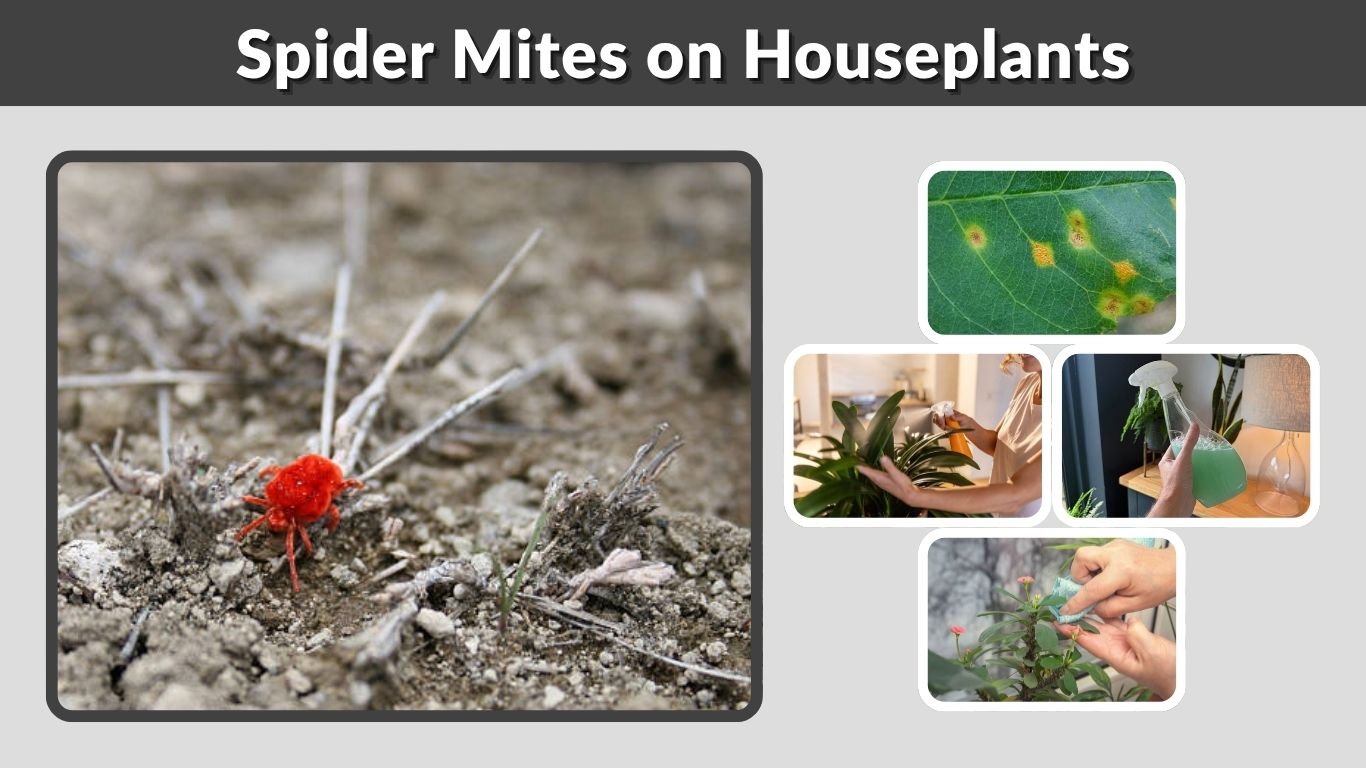
Spider mites on houseplants can turn healthy green leaves into speckled, yellow, or bronzed foliage surprisingly quickly. These tiny arachnids feed by piercing plant cells and are often difficult to notice until damage or fine webbing appears. Warm, dry indoor conditions can help populations increase rapidly, especially on stressed plants. Fortunately, early infestations can often be managed with washing, pruning, horticultural oils, or insecticidal soaps. This guide explains identification, early warning signs, treatment, natural remedies, and effective ways to prevent spider mites from returning.
What Are Spider Mites on Houseplants?
Spider mites are tiny arachnids related to spiders and ticks rather than true insects. The two-spotted spider mite is one of the most common species attacking houseplants. Adults are only about 1/50 inch long, so magnification may be needed to see them clearly. They feed mainly on leaf undersides by piercing plant tissue and removing cell contents.
How to Identify Spider Mites
Look for these characteristics:
- Extremely tiny oval-shaped bodies
- Usually yellowish, greenish, orange, or reddish coloration
- Eight legs as adults
- Dark spots on the sides of two-spotted spider mites
- Tiny amber-colored eggs
- Whitish shed skins
- Fine silk webbing during heavier infestations
- Small moving dots on leaf undersides
- Black fecal specks around feeding areas
Because mites are so small, place a sheet of white paper beneath a leaf and gently tap it. Tiny moving specks falling onto the paper can help confirm their presence.
Red, White, and Green Spider Mites
Spider mites can appear in several colors depending on species, age, season, and feeding conditions. A mite that looks reddish is not necessarily a different type from one that appears greenish.
Color alone is therefore unreliable for identification. Leaf stippling, webbing, eggs, and moving mites on the underside of foliage provide more useful evidence.
Early Stage Spider Mites on Houseplants
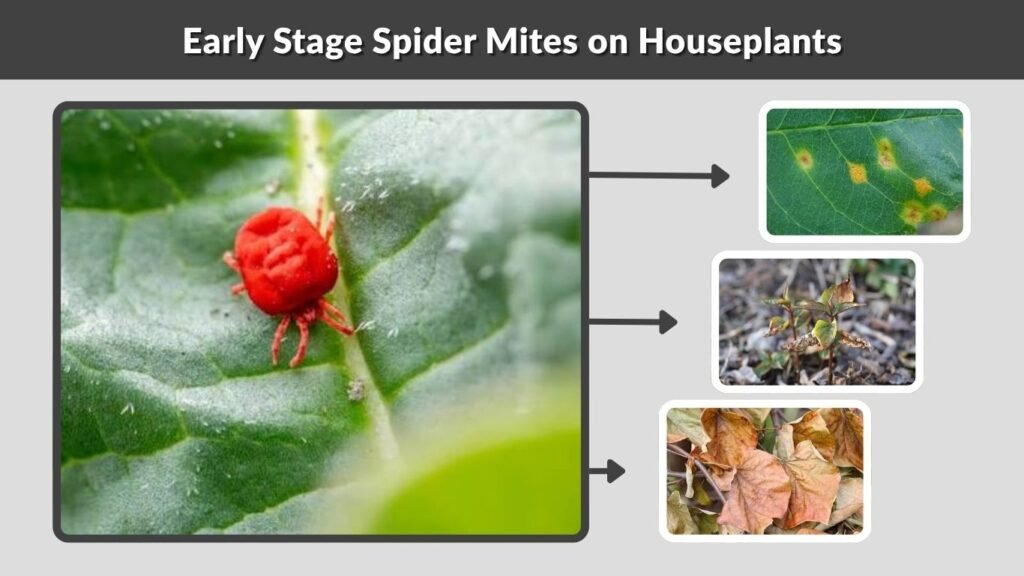
Early detection makes spider mites much easier to manage. At first, there may be no obvious webbing at all. Instead, feeding damage often begins as tiny pale dots or patches on the undersides of leaves. As numbers increase, discoloration spreads and leaves can eventually turn yellow, grayish, bronze, or bleached before dropping.
Early Signs to Watch For
Check plants for:
- Tiny white or yellow specks on leaves
- Fine stippling across leaf surfaces
- Small pale patches near leaf veins
- Dull or faded leaf color
- Tiny mites moving underneath leaves
- Small round eggs
- Early strands of fine webbing
- Gradual yellowing or bronzing
- Premature leaf drop in worsening infestations
Webbing generally becomes more noticeable as mite populations grow, so waiting for obvious webs can allow an infestation to become established.
Which Houseplants Get Spider Mites?
Many houseplants can be attacked. Commonly affected plants include ivy, dracaena, figs, hibiscus, schefflera, and Norfolk Island pine.
Other indoor plants can also become infested, particularly when environmental conditions are warm and dry.
Regular inspection is therefore more useful than assuming a particular houseplant is resistant.
What Causes Spider Mites on Houseplants?
Spider mites do not simply appear from nowhere. They can arrive on newly purchased plants, plants brought back indoors after spending time outside, or nearby infested vegetation. Once established, mites can crawl between closely spaced plants or be moved accidentally on hands, clothing, tools, and watering equipment.
Why Indoor Conditions Encourage Them
Warm, dry conditions are especially favorable to spider mites. Houseplants experiencing water stress may also become more vulnerable to serious damage.
Indoor heating during cooler months can create dry air that supports mite outbreaks. Plants placed near heating vents or very warm windows may therefore require closer inspection.
However, increasing humidity alone should not be considered a complete treatment. Existing mites and eggs still need to be physically removed or controlled.
How to Get Rid of Spider Mites on Houseplants
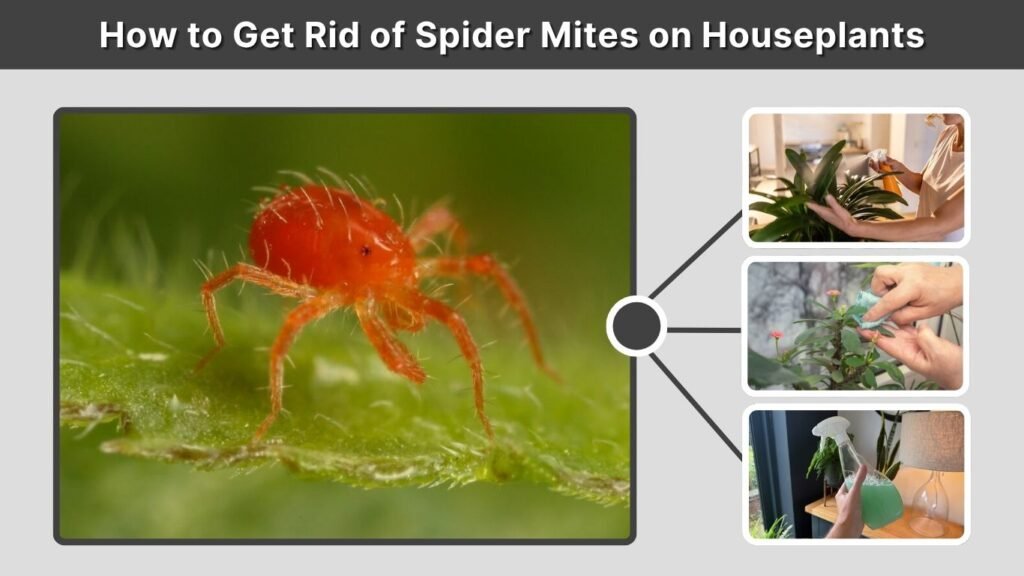
Treatment works best when started early and repeated as necessary. Spider mites have short life cycles, so a single treatment may leave eggs or newly emerged mites behind. Colorado State University recommends treating susceptible houseplants together, removing heavily infested material, and repeating washing or wiping while populations remain.
Step-by-Step Spider Mite Treatment
Use this approach:
- Isolate the infested plant from other houseplants.
- Inspect nearby plants carefully.
- Remove heavily damaged leaves and place them in a sealed bag.
- Rinse the plant thoroughly in a shower or sink.
- Direct water toward leaf undersides.
- Wipe larger leaves with a damp cloth.
- Apply a houseplant-labeled insecticidal soap or horticultural oil if needed.
- Cover leaf undersides thoroughly when spraying.
- Follow all product label directions.
- Reinspect and repeat treatment as necessary.
A vigorous water spray can physically knock mites and eggs from foliage and reduce webbing.
When to Discard a Plant
A severely infested plant can continually spread mites to healthier plants. If most foliage is damaged, webbing covers large portions of the plant, and repeated treatment has failed, disposal may sometimes be more practical.
Bag the plant before carrying it through areas containing other houseplants to reduce the chance of spreading mites.
Natural Remedies for Spider Mites on Houseplants
For light infestations, physical removal is one of the simplest low-impact options. Regular washing can reduce both mites and eggs without immediately relying on stronger pesticides. Horticultural oils and properly formulated insecticidal soaps are also commonly used for spider mite management on houseplants when their labels permit indoor application.
Natural and Low-Impact Options
Consider:
- Rinsing foliage thoroughly with water
- Wiping leaves with a soft damp cloth
- Removing heavily infested leaves
- Using labeled insecticidal soap
- Using labeled horticultural oil
- Improving plant watering and growing conditions
- Keeping infested plants separated
- Using predatory mites in suitable indoor growing situations
Predatory mites can help in greenhouses or larger indoor plant collections, although they may be less practical for a single household plant.
Be Careful With Homemade Soap Sprays
Household dish detergents are sometimes recommended online, but they are not the same as formulated insecticidal soaps. Colorado State University notes that household soaps and detergents can have insecticidal effects but may also injure plants.
A product specifically labeled as an insecticidal soap for houseplants offers more predictable directions and plant-safety information.
How to Prevent Spider Mites on Houseplants
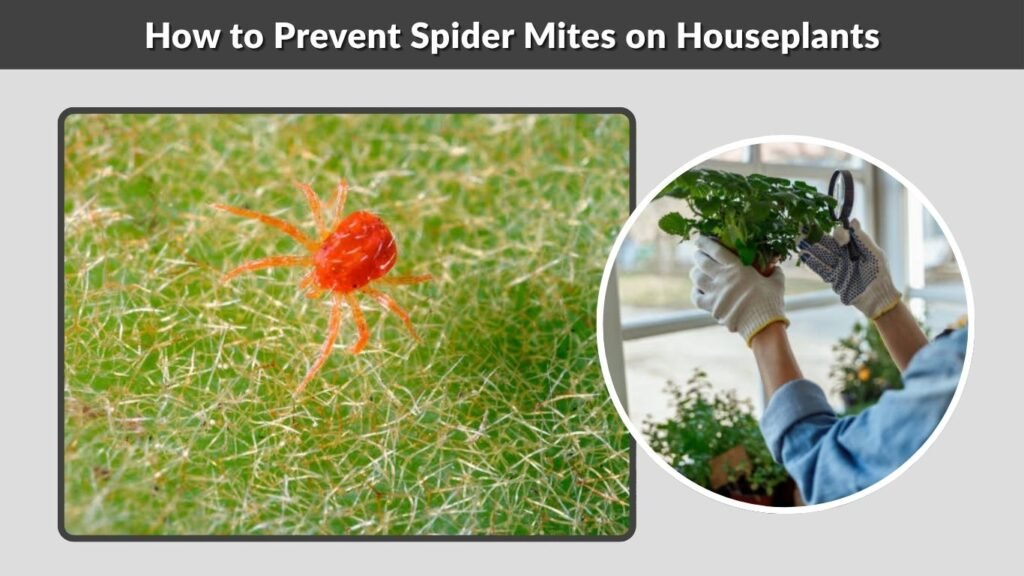
Prevention mainly involves inspecting plants, maintaining good growing conditions, and preventing pests from moving through your collection. New plants are one of the easiest ways for mites to enter a home unnoticed. Colorado State University recommends quarantining new houseplants separately for about three weeks before placing them with an established collection.
Keep Plants Healthy and Inspect Regularly
Examine leaf undersides whenever you water your plants, especially during warm, dry conditions. Check for stippling before webbing becomes obvious.
Avoid letting plants remain chronically dry, but do not overwater simply to discourage mites. Water according to each plant’s needs.
Clean tools after working with an infested plant, wash your hands, and avoid immediately handling healthy plants. Leave enough space between plants to make inspection easier.
FAQs
Spider mites can be frustrating because their tiny size allows populations to grow before they are easily visible. Looking for feeding damage, checking leaf undersides, and acting at the first signs usually provides a better chance of control. The following answers cover common questions about identifying, treating, and preventing spider mites on indoor plants.
1. What do spider mites look like on houseplants?
Spider mites look like extremely tiny moving dots, often yellowish, greenish, orange, or red. Adults have eight legs, but magnification is usually needed for a detailed view. Eggs, cast skins, stippling, and fine webbing provide additional identification clues.
2. What is the best way to get rid of spider mites?
For a light infestation, isolate the plant and repeatedly wash both sides of the leaves with water. More persistent infestations may require a labeled horticultural oil or insecticidal soap. Reinspection and repeated treatment are important because eggs may survive the first treatment.
3. Are spider mites dangerous to humans?
Spider mites that infest houseplants are plant-feeding pests. They do not live on humans or behave like ticks that feed on people. Their primary concern indoors is damage to plants.
4. How do spider mites get on indoor plants?
They can arrive on newly purchased plants, plants that spent time outdoors, or infested plant material. They may also spread short distances between nearby plants or be moved accidentally on hands, clothing, or tools.
5. Can a houseplant recover from spider mites?
Yes. Plants with mild or moderate infestations can often recover once mite populations are controlled and growing conditions improve. Existing damaged leaves may not return to their original appearance, but healthy new growth can develop when the plant is otherwise in good condition.
