
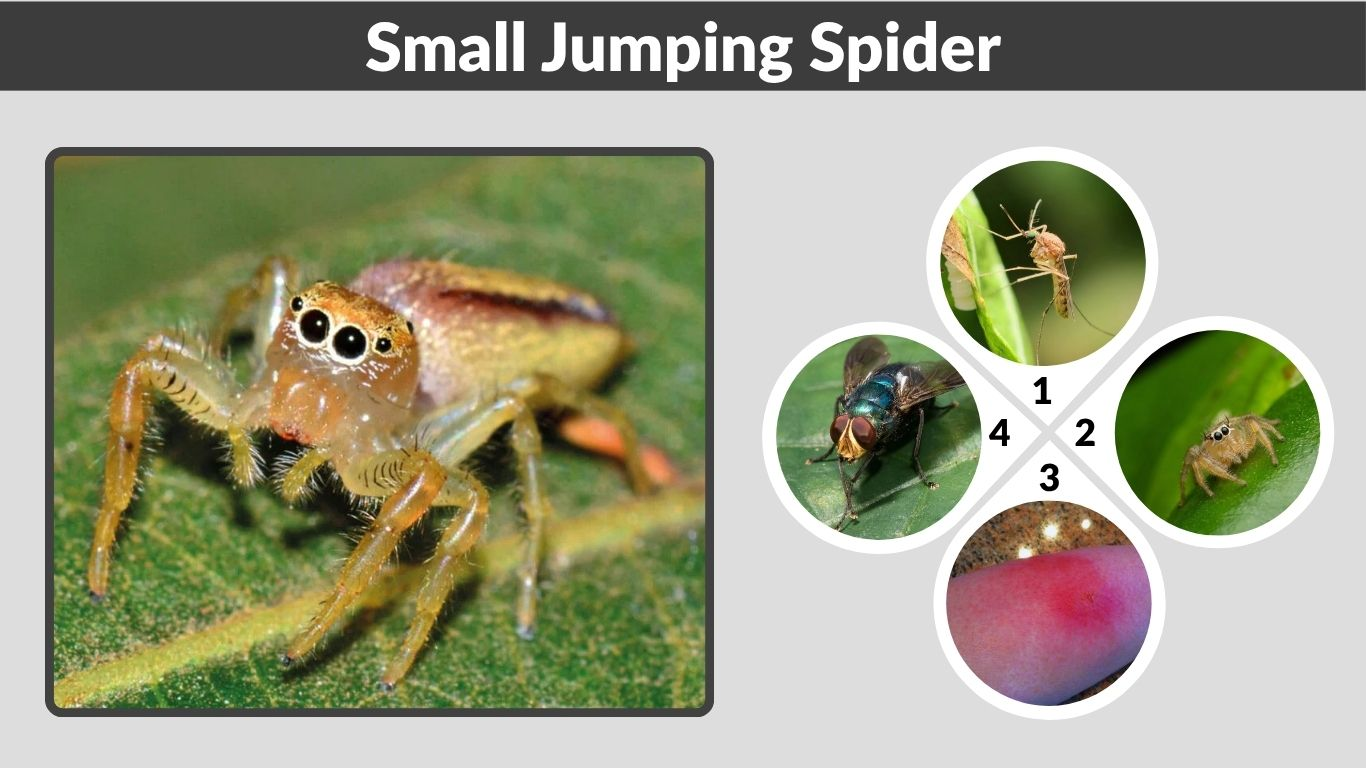
A small jumping spider is usually harmless, curious, and easy to recognize once you know what to look for. These tiny spiders belong to the family Salticidae, one of the largest spider families in the world. They are known for their compact bodies, large front-facing eyes, quick movements, and short jumps. Many people notice them on walls, windowsills, plants, fences, and garden furniture because they hunt in open areas during the day.
What Is a Small Jumping Spider?
A small jumping spider is any small spider from the jumping spider family. These spiders do not rely on sticky webs to catch prey. Instead, they actively stalk insects, judge distance with sharp vision, and leap when they are close enough.
Jumping spiders are often described as alert or curious because they may turn toward movement and appear to look directly at people. Their large front eyes help them track prey and navigate surfaces. This eye pattern is one of the strongest clues that a spider belongs to the jumping spider family.
Most small jumping spiders are only a few millimeters to around half an inch long, depending on the species and age. Some are black, brown, grey, white, tan, yellow, or patterned with stripes and spots. The exact species can vary by region, but their behavior and body shape are often similar.
How to Identify a Small Jumping Spider
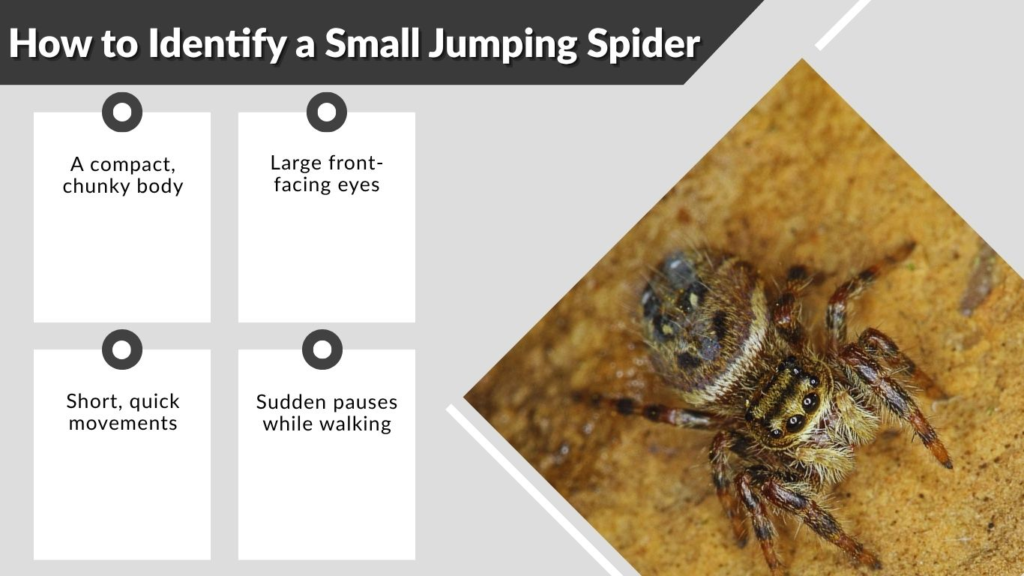
The easiest way to identify a small jumping spider is by its body shape, eyes, and movement. These spiders are usually short, sturdy, and somewhat fuzzy. They do not have the long, thin legs of cellar spiders or the round shiny body of widow spiders.
Look for these signs:
- A compact, chunky body
- Large front-facing eyes
- Short, quick movements
- Sudden pauses while walking
- Small jumps from surface to surface
- Fuzzy or hairy legs
- Active hunting during daylight
Many small jumping spiders move in a stop-and-go pattern. They may walk a short distance, pause, turn, then jump. If the spider seems to watch you or follow movement with its body, it may be a jumping spider.
Jumping spiders are also different from many web-building spiders. They may make silk retreats for resting, molting, or laying eggs, but they do not usually spin large sticky webs to trap insects.
Common Types of Small Jumping Spiders
There are many small jumping spider species, and exact identification can be difficult without a clear photo. However, several general types are commonly noticed around homes and gardens.
Small Black Jumping Spider
A small black jumping spider is one of the most common types people notice indoors or outside. It may be mostly black with white, orange, yellow, or grey markings. Some black jumping spiders have bright green or blue-green mouthparts, especially in the genus Phidippus.
A common example in North America is the bold jumping spider, Phidippus audax. Penn State Extension describes jumping spiders as small, compact hunting spiders, and notes that the bold jumper is commonly seen around homes in Pennsylvania.
Small Brown Jumping Spider
A small brown jumping spider may be harder to identify because many spiders are brown. Brown jumping spiders are often found on tree bark, dry leaves, fences, walls, and outdoor furniture. Their coloring helps them blend into natural surfaces while hunting.
Some brown species are slender, while others are rounder and fuzzier. A brown spider that jumps, pauses, and turns toward movement is more likely to be a jumping spider than a web-building house spider.
Small Black and White Jumping Spider
A small black and white jumping spider may be a zebra jumper or a related species. These spiders often have bold light and dark markings. The zebra jumper, Salticus scenicus, is a small patterned jumping spider often seen on walls, fences, and sunny surfaces.
Penn State Extension notes that zebra jumpers are small, boldly patterned jumping spiders and are considered beneficial around homes.
Small Grey or Tan Jumping Spider
Grey, tan, and light brown jumping spiders are common in many outdoor habitats. They may be seen on rocks, siding, tree trunks, dry grass, and garden plants. Their muted colors make them harder to notice, but their large eyes and quick jumps are useful identification clues.
Small Jumping Spider Size
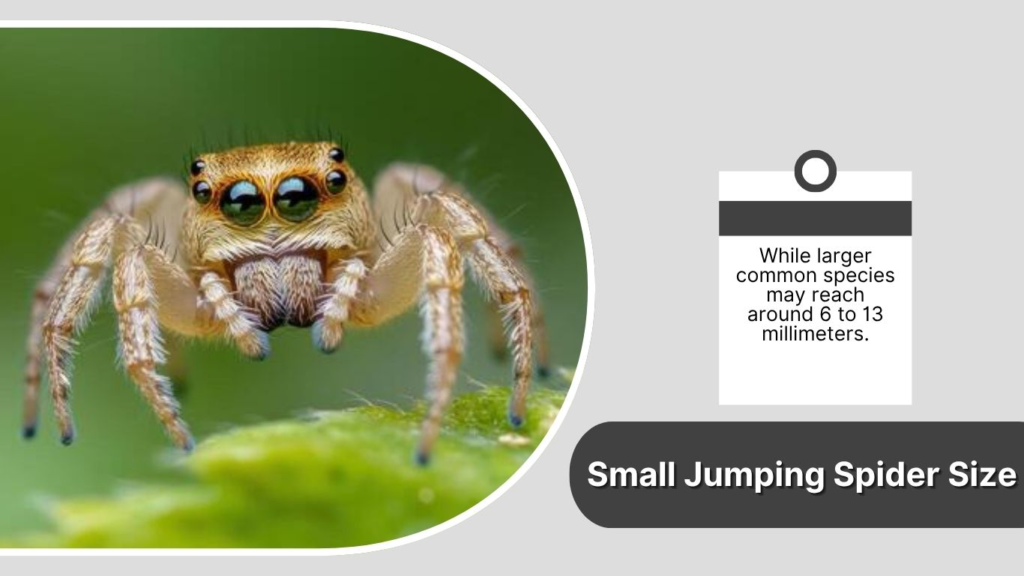
Most small jumping spiders are genuinely tiny. Some are only a few millimeters long, while larger common species may reach around 6 to 13 millimeters. Juveniles can be even smaller and may look like moving specks until viewed closely.
A tiny small jumping spider is often a young spider, but some adult species are naturally small. Size alone does not confirm the species. Color, pattern, location, and eye arrangement all matter.
A baby jumping spider can be extremely small. If you see several tiny spiders near a silk retreat, they may be spiderlings that recently emerged. They usually disperse on their own and do not need treatment unless they are appearing indoors in large numbers.
Are Small Jumping Spiders Dangerous?
Small jumping spiders are not considered dangerous to people. Like most spiders, they have venom for subduing prey, but their venom is not considered medically important for humans. They are also unlikely to bite unless trapped, squeezed, or handled roughly.
The University of Minnesota Extension explains that spiders very rarely bite people and that most spiders are harmless to people. It also notes that many suspected spider bites are overdiagnosed and may actually be caused by other skin issues.
Jumping spiders generally prefer to escape rather than defend themselves. If one jumps near you, it is not attacking. It may be moving away, crossing a gap, or reacting to sudden movement.
Small Jumping Spider Bite
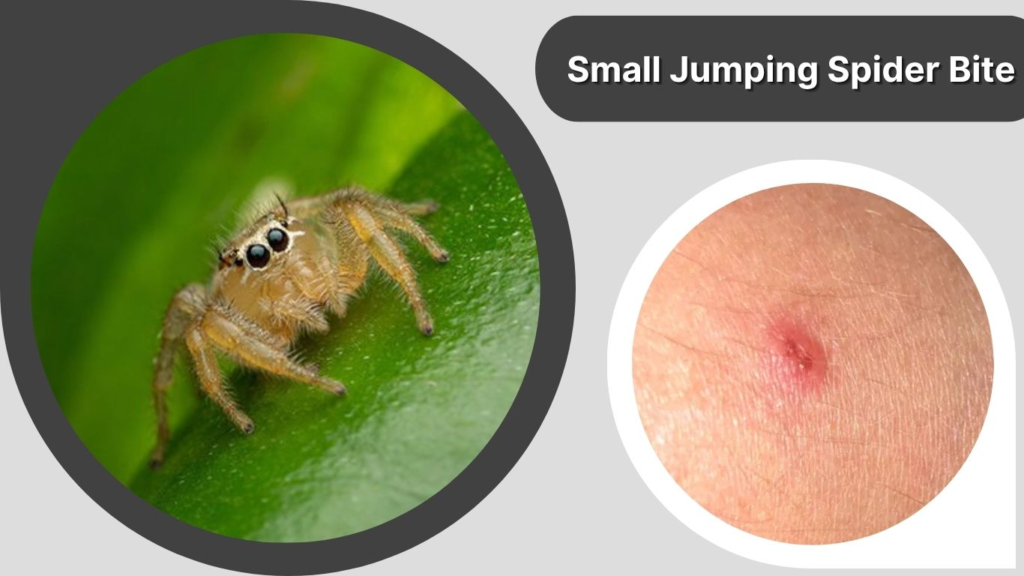
A small jumping spider bite is uncommon and usually mild. If a bite does happen, it may feel like a tiny pinch. Some people may notice redness, slight swelling, itching, or tenderness around the spot.
Basic care is usually enough:
- Wash the area with soap and water
- Apply a cool compress
- Avoid scratching
- Keep the area clean
- Watch for unusual symptoms
Seek medical advice if symptoms become severe, spread quickly, or include trouble breathing, dizziness, fever, intense pain, or signs of infection. These reactions are not typical for jumping spiders, but any unusual bite reaction should be taken seriously.
Why Is a Small Jumping Spider in the House?
A small jumping spider in the house is usually there by accident or because it is hunting small insects. These spiders may enter through open doors, windows, wall gaps, vents, or plants brought indoors. They are often found near bright windows because light attracts small insects.
Common indoor places include:
- Windowsills
- Walls
- Ceiling corners
- Houseplants
- Door frames
- Bathroom or kitchen areas
- Near lamps or bright surfaces
Finding one small jumping spider indoors does not mean you have an infestation. It usually means the spider wandered in. Unlike pantry pests or fabric pests, jumping spiders do not eat stored food, clothing, wood, or paper.
If you want to remove one, place a cup over it, slide a piece of paper underneath, and release it outside. This is safer for the spider and avoids unnecessary contact.
Are Small Jumping Spiders Good for Gardens?
Small jumping spiders are beneficial in gardens because they feed on insects and other small arthropods. UC IPM explains that most spiders are beneficial predators of insects and other arthropods, and most cannot harm people.
Jumping spiders can help control tiny flies, gnats, leafhoppers, and other small insects. They are not a complete pest-control solution, but they are part of a healthy outdoor ecosystem.
You may see them moving across leaves, stems, fences, and rocks during the day. They do not damage plants. Their silk retreats may appear as small webbed shelters, but these are not harmful to leaves or stems.
What Do Small Jumping Spiders Eat?
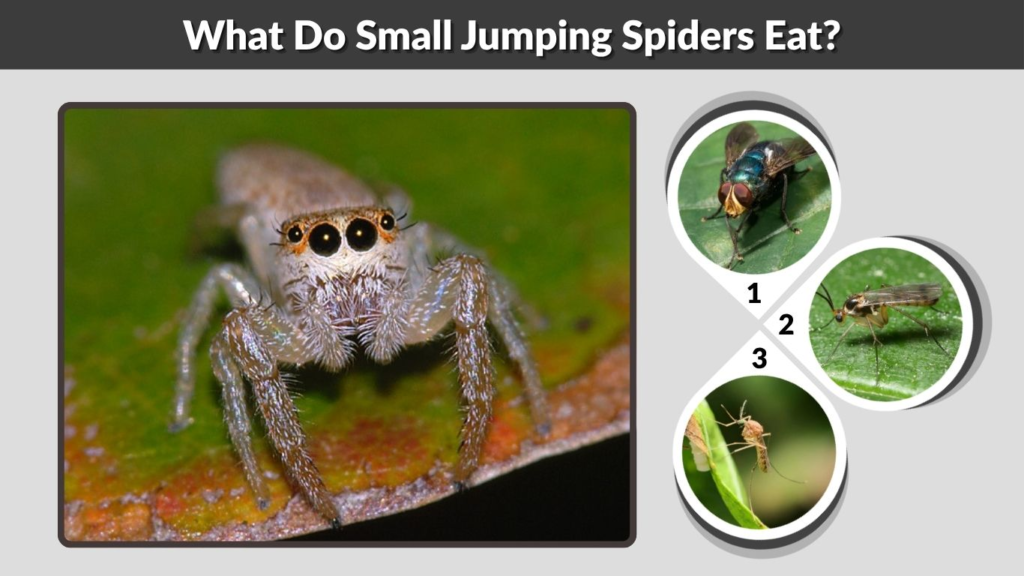
Small jumping spiders mostly eat small insects and other tiny arthropods. Their diet may include flies, gnats, mosquitoes, moths, small crickets, aphids, and other soft-bodied prey. They hunt by sight and pounce when close enough.
A small jumping spider does not need human feeding outdoors. It will hunt naturally. If someone keeps a jumping spider as a pet, suitable food depends on the spider’s size. Very small spiders need tiny prey, while larger species can eat small flies or appropriately sized feeder insects.
For a pet jumping spider, prey should be smaller than or close to the spider’s body size. Avoid wild insects from areas treated with pesticides, because they may harm the spider. A pet spider also needs safe ventilation, moisture control, and an escape-proof enclosure.
Small Jumping Spider Enclosure Basics
Some people keep jumping spiders as pets because they are small, active, and interesting to watch. A small jumping spider enclosure should be secure, ventilated, and sized for the spider. Too much space can make feeding difficult, while too little space limits movement.
A simple setup may include:
- A small ventilated container
- Twigs, bark, or artificial plants for climbing
- A place near the top for a silk retreat
- Light misting for moisture
- Tiny feeder insects
- A secure lid to prevent escape
Do not place the enclosure in direct sun, because small containers can overheat quickly. Also avoid over-misting, which can cause poor conditions or drown tiny spiderlings.
Small Jumping Spiders by Location
Searches for small jumping spiders often include locations such as Florida, Texas, California, Georgia, Australia, the UK, Canada, and South Africa. This makes sense because jumping spiders are widespread, but the exact species differs by region.
In warm areas like Florida, Texas, Arizona, and California, jumping spiders may be active for much of the year. In cooler regions like Canada, the UK, and northern U.S. states, sightings may be more common during warmer months or around sunny walls and windows.
Because there are many species, a location-based identification is best made with a clear photo. A small black jumping spider in Georgia may not be the same species as a small black jumping spider in Australia or the UK.
Small Jumping Spider vs Other Small Spiders
Not every small spider that moves quickly is a jumping spider. Some small spiders run, drop on silk, or make short sudden movements that look like jumping.
Jumping spiders usually have:
- Large front eyes
- A compact body
- Short, controlled jumps
- Daytime activity
- Active hunting behavior
Other small spiders may have:
- Long thin legs
- Large webs
- Round smooth bodies
- Fast running without pausing
- No obvious front-facing eyes
Springtails are another common source of confusion. They are tiny jumping arthropods, not spiders. Springtails have six legs, while spiders have eight. They are often found in damp areas and may jump when disturbed.
Should You Kill a Small Jumping Spider?
In most cases, there is no reason to kill a small jumping spider. It is usually harmless, beneficial, and easy to relocate. If it is indoors, gently move it outside. If it is in the garden, leaving it alone is usually the best choice.
Killing spiders can also remove helpful predators from your home or yard. A single jumping spider may quietly reduce small insect activity around windows, plants, or outdoor seating areas.
If you see many spiders indoors, focus on prevention instead of spraying. Seal gaps, repair screens, reduce indoor insects, remove clutter, and avoid leaving doors open at night.
When to Be Careful
Although small jumping spiders are generally safe, caution is still smart. Do not handle unknown spiders with bare hands. Avoid pressing spiders against skin, especially when moving boxes, clothes, shoes, or garden materials.
Be especially careful if you live in an area with medically important spiders such as black widows or recluse spiders. Jumping spiders look different from these species, but many people misidentify spiders when they are startled.
Take a photo if you need identification. A clear image from the front and top is more useful than a blurry close-up.
FAQs
Are small jumping spiders harmful?
Small jumping spiders are usually not harmful to people. They have venom for catching prey, but their bites are not considered medically significant. These spiders are shy hunters and normally avoid humans. If one appears indoors, it can usually be relocated outside with a cup and paper.
What does a small black jumping spider look like?
A small black jumping spider usually has a compact, hairy body, large front-facing eyes, and quick stop-and-go movement. Some have white, orange, yellow, or grey markings on the abdomen. Others may have shiny green or blue-green mouthparts, especially in certain common jumping spider groups.
Why do jumping spiders look at you?
Jumping spiders have excellent vision compared with many other spiders. When they turn toward you, they are usually tracking movement, judging distance, or deciding where to go. This behavior can seem curious, but it is normal hunting and navigation behavior rather than aggression.
Can a small jumping spider live in my house?
A small jumping spider can survive indoors for a while if it finds tiny insects and suitable hiding places. However, most do better outside where prey is more available. If you find one indoors, gently releasing it near plants, shrubs, or a sheltered outdoor area is a good option.
What should I feed a small jumping spider?
A wild small jumping spider does not need feeding. If you keep one as a pet, offer tiny live prey that matches its size, such as small flies or appropriately sized feeder insects. Avoid insects from pesticide-treated areas. The enclosure should also have ventilation, climbing space, and safe moisture levels.
