
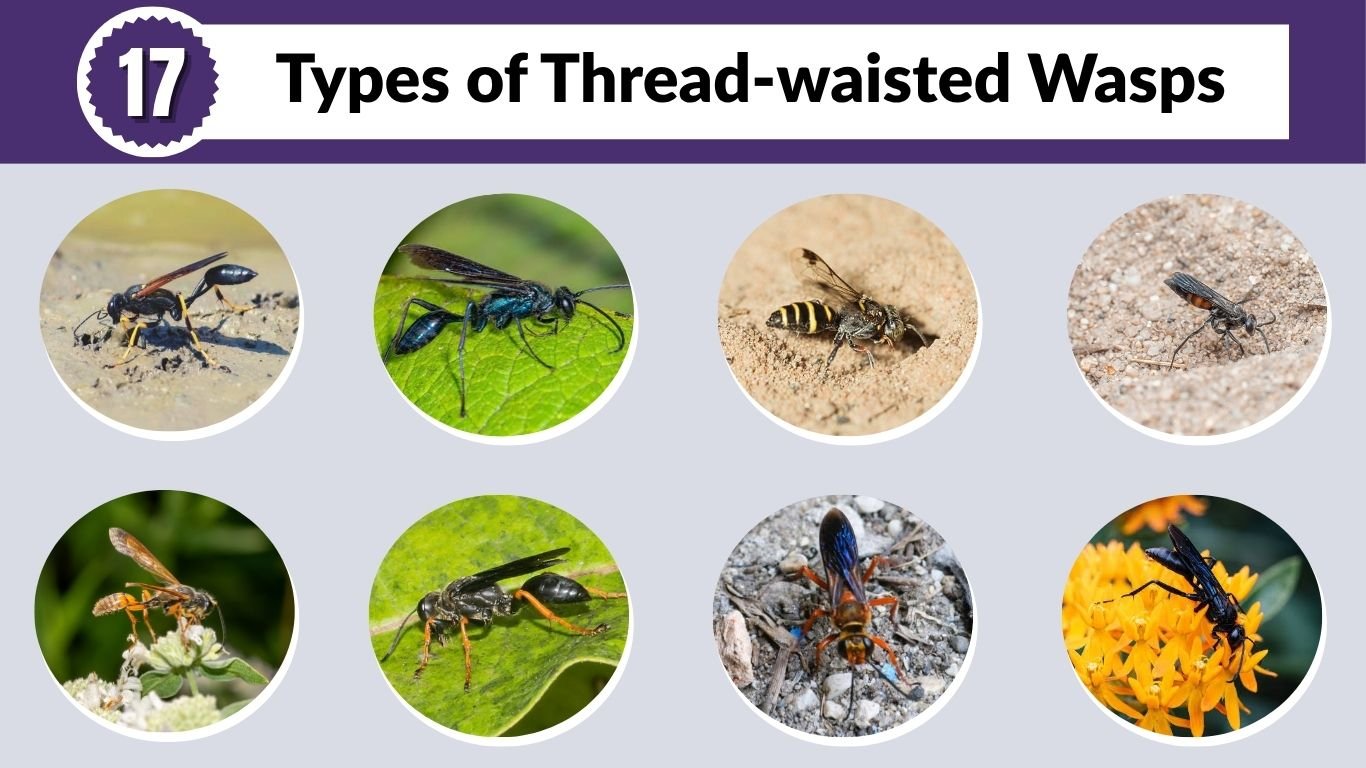
Thread-waisted wasps are a fascinating group of solitary wasps known for their extremely narrow waists, long bodies, and impressive hunting skills. Depending on the species, females may dig underground burrows, build mud nests, or use existing cavities for raising their young. Many hunt caterpillars, spiders, katydids, crickets, and grasshoppers, making them valuable natural predators. This guide covers 17 types of thread-waisted wasps, including their identification features, habitats, behaviors, diets, lifespans, and lifecycles.
1. Common Thread-waisted Wasp

The Common Thread-waisted Wasp (Ammophila procera) is a slender, solitary wasp in the family Sphecidae. It is especially recognizable by its extremely narrow waist connecting the thorax and abdomen. Unlike social wasps, it does not form colonies. Females build individual underground nests and provision them with paralyzed caterpillars for their developing young.
Identification
- Scientific name: Ammophila procera
- Family: Sphecidae
- Body: Long, slender body with a very thin, thread-like waist
- Color: Mostly black with reddish-orange areas on the abdomen
- Wings: Narrow, transparent to slightly smoky wings
- Legs: Long, thin legs adapted for walking and digging
- Distinctive feature: Exceptionally elongated connection between the thorax and abdomen
Habitat and Distribution
Common Thread-waisted Wasps prefer open, sunny habitats where the ground is relatively soft and easy to excavate. They may occur in meadows, gardens, fields, woodland edges, sandy areas, and other places with exposed soil. The species has a broad North American distribution, occurring from southern Canada through much of the United States and Mexico and extending into parts of Central America.
Behavior and Diet
This wasp is solitary and spends much of its time searching for flowers or hunting prey. Adults mainly obtain energy from flower nectar. Females hunt caterpillars and sawfly larvae, paralyzing them with their sting before carrying or dragging them back to an underground nest. The captured prey is not primarily adult food; instead, it becomes a fresh food source for the developing wasp larva.
Lifespan and Lifecycle
The lifecycle begins when a female digs a burrow and prepares a nesting chamber. She captures a caterpillar or similar larva, paralyzes it, places it inside, and lays an egg on the prey. The egg can hatch within a few days, after which the young larva consumes the stored prey. It then forms a pupa inside the nest before eventually emerging as a fully developed adult wasp.
2. Abert’s Thread-waisted Wasp
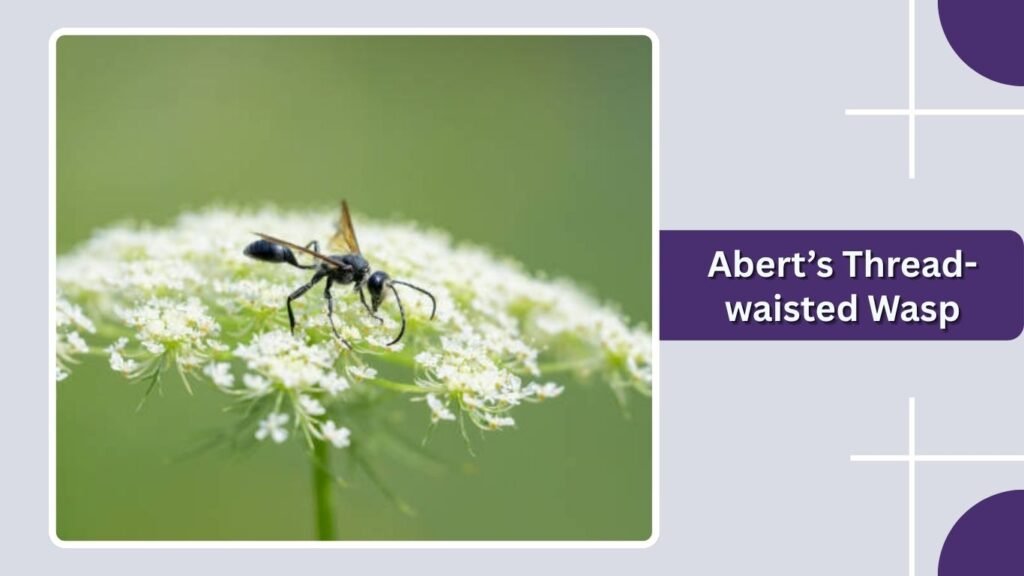
Abert’s Thread-waisted Wasp is a slender solitary wasp recognized by its narrow waist, elongated abdomen, and graceful appearance. Like many members of the thread-waisted wasp group, females dig nests in the ground and hunt soft-bodied insects for their larvae. Adults are generally nonaggressive and are often seen visiting flowers for nectar.
Identification
- Body: Long and narrow with a strongly constricted waist
- Color: Mainly dark with reddish or orange markings
- Wings: Clear to lightly smoky
- Legs: Long and slender
- Antennae: Long and slightly curved
- Size: Medium to relatively large for a solitary wasp
Habitat and Distribution
Abert’s Thread-waisted Wasp is generally associated with warm, open environments where loose soil provides suitable nesting sites. It may be encountered in grasslands, dry fields, roadsides, gardens, and sandy areas. Adults are most noticeable during warmer months when flowers and insect prey are abundant.
Behavior and Diet
Adults feed mainly on nectar and other sugary plant resources. Females spend considerable time searching vegetation for caterpillars or similar prey. After locating suitable prey, they sting it to immobilize it and transport it to a prepared burrow, where it becomes food for developing larvae.
Lifespan and Lifecycle
Females excavate individual nesting chambers in soil and provision each chamber with paralyzed prey. An egg is laid on or beside the stored insect. After hatching, the larva feeds on the prey before entering the pupal stage. The adult later emerges from the underground nest to begin another generation.
3. Parker’s Thread-waisted Wasp
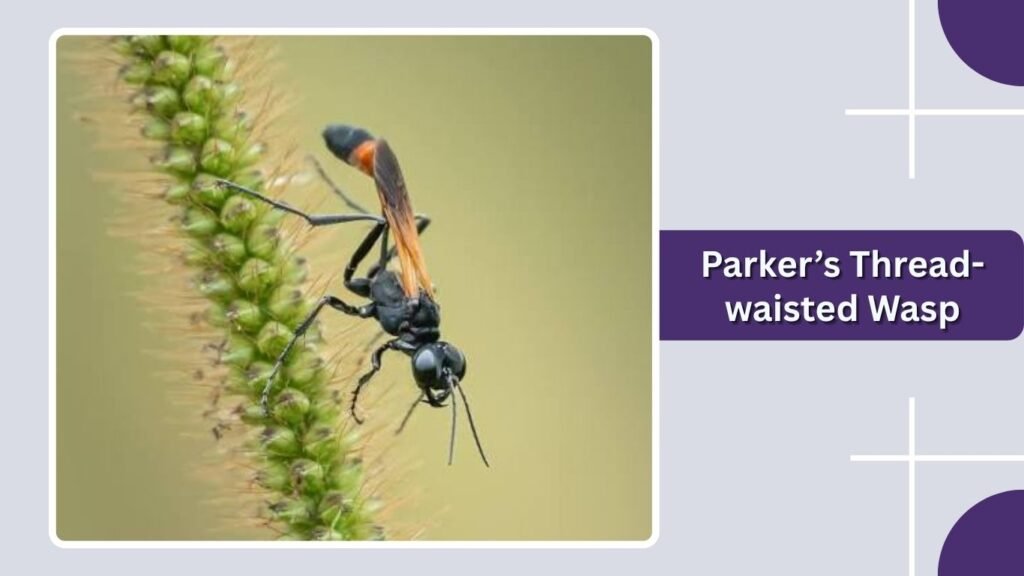
Parker’s Thread-waisted Wasp is another solitary hunting wasp distinguished by its remarkably thin connection between the thorax and abdomen. It plays a beneficial ecological role by hunting insects that might otherwise become abundant. Although its appearance can seem intimidating, it normally avoids people and concentrates on nesting, feeding, and searching for prey.
Identification
- Shape: Slender body with an extremely narrow waist
- Color: Predominantly black with reddish abdominal markings
- Wings: Transparent or slightly darkened
- Legs: Long and adapted for ground movement
- Head: Broad compared with the narrow waist
- Flight: Fast and purposeful near nesting sites
Habitat and Distribution
This wasp favors sunny, relatively dry habitats with exposed or lightly covered soil. Suitable areas may include meadows, agricultural margins, open woodland, sandy paths, and disturbed ground. Its distribution varies with local climate and the availability of both flowering plants and appropriate prey.
Behavior and Diet
Parker’s Thread-waisted Wasp lives independently rather than forming a colony. Adults visit flowers for nectar, while females hunt caterpillars and other soft-bodied insects. A captured insect is paralyzed rather than killed immediately, allowing it to remain fresh as food for the larva inside the nest.
Lifespan and Lifecycle
The female creates a burrow, places captured prey inside, and deposits an egg. The newly hatched larva begins feeding on the immobilized prey until it has enough energy to pupate. Development continues within the protected nest chamber, and the mature adult eventually digs or pushes its way to the surface.
4. Gold-marked Thread-waisted Wasp
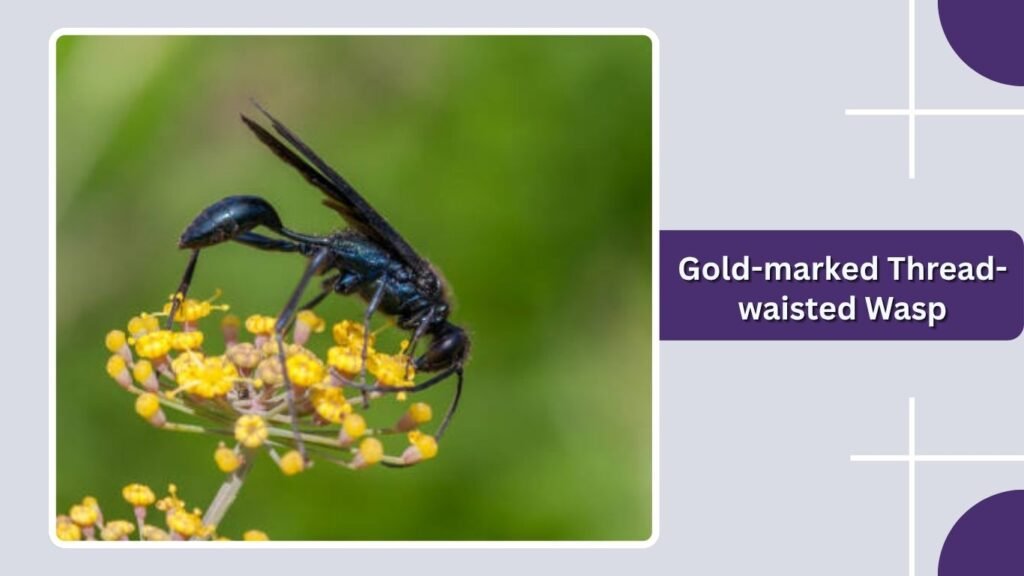
The Gold-marked Thread-waisted Wasp gets attention from its combination of a slim body and contrasting pale or golden markings. It is a solitary species that does not maintain communal nests like yellowjackets or paper wasps. Its hunting activity helps regulate populations of caterpillars and other insects in natural and cultivated habitats.
Identification
- Body: Thin, elongated body with a thread-like waist
- Markings: Yellowish or golden markings against darker body areas
- Wings: Clear to smoky and narrow
- Legs: Long with a lightweight appearance
- Antennae: Long and dark
- Overall form: Noticeably slimmer than most social wasps
Habitat and Distribution
Gold-marked Thread-waisted Wasps generally occur in open habitats with abundant flowers and insect prey. They may be found in prairies, fields, gardens, sandy areas, and woodland margins. Warm, sunny places are particularly suitable because they provide both feeding opportunities for adults and appropriate soil for nesting.
Behavior and Diet
Adults frequently visit flowers to drink nectar, which supplies energy for flight and hunting. Females search for caterpillars or other insects to provision their nests. Their hunting strategy involves using the sting to paralyze prey, then carrying or dragging it to a nesting chamber prepared in the soil.
Lifespan and Lifecycle
Each female manages her own nest and reproductive cycle. After a burrow is completed, she places one or more suitable prey items inside and lays an egg. The larva consumes the stored prey after hatching, grows quickly, and later pupates. An adult eventually emerges and begins feeding, mating, and nesting.
5. Great Golden Digger Wasp

The Great Golden Digger Wasp is one of the most recognizable thread-waisted wasps because of its bright golden hairs, reddish-orange abdomen, and dark wings. Despite its large size, it is usually docile toward people. This solitary wasp is an important pollinator and an efficient predator of grasshoppers, katydids, and crickets.
Identification
- Scientific name: Sphex ichneumoneus
- Body: Large, slender, and distinctly narrow-waisted
- Thorax: Covered with golden or orange hairs
- Abdomen: Reddish-orange toward the front and darker toward the tip
- Wings: Smoky or amber-colored
- Size: Commonly around 2–3 cm long
Habitat and Distribution
Great Golden Digger Wasps are widely found across much of North America. They prefer sunny, open habitats such as gardens, fields, meadows, parks, roadsides, and woodland edges. Females require patches of loose soil for burrowing, while nearby flowering plants provide nectar for adults.
Behavior and Diet
Adults consume nectar from many kinds of flowers and may contribute to pollination. Females specialize in hunting orthopteran insects, particularly katydids, grasshoppers, and crickets. Prey is paralyzed with a sting and flown or dragged to an underground nest, where it is stored as larval food.
Lifespan and Lifecycle
A female digs a branching underground nest that may contain several individual chambers. Each chamber is stocked with paralyzed prey before an egg is laid. The larva feeds on these insects, grows, and forms a pupa underground. After completing development, the new adult emerges during the appropriate warm season.
6. Great Black Digger Wasp
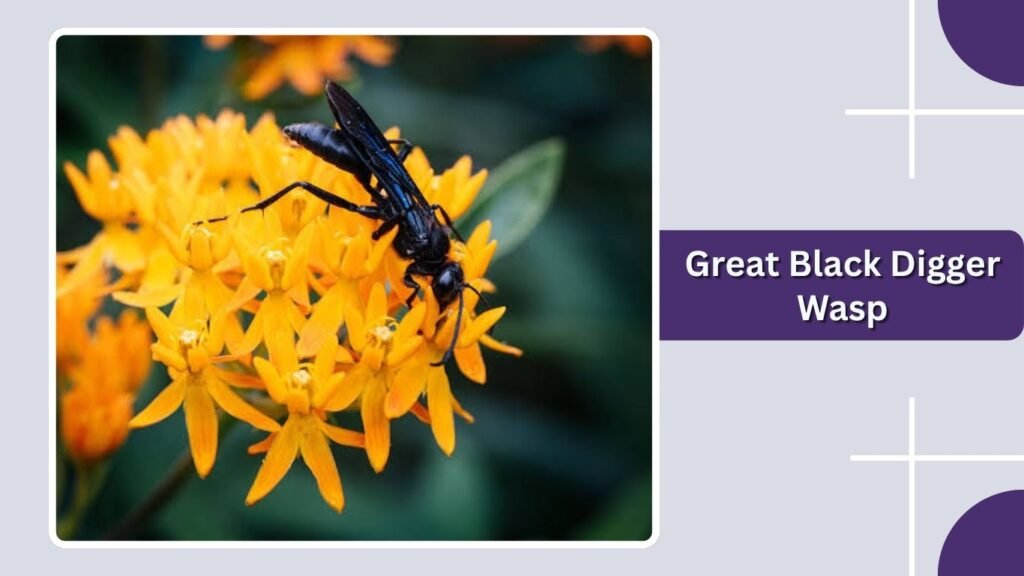
The Great Black Digger Wasp is a large, striking species with an entirely dark body and smoky wings that may appear bluish or violet in sunlight. It is a solitary wasp and generally poses little threat to humans. Females are highly active hunters and provide their offspring with katydids and related insects.
Identification
- Scientific name: Sphex pensylvanicus
- Color: Glossy black over most or all of the body
- Wings: Dark, smoky, sometimes with a blue or violet sheen
- Waist: Narrow and elongated
- Legs: Long and black
- Size: Usually about 2–3.5 cm in length
Habitat and Distribution
Great Black Digger Wasps occur throughout large portions of North America. They are frequently seen in open sunny areas, including flower gardens, farms, meadows, prairies, and roadsides. Loose, well-drained soil is especially valuable because females excavate underground burrows in which their offspring develop.
Behavior and Diet
Adults rely heavily on flower nectar for energy and can often be observed feeding alongside bees and butterflies. Females hunt katydids, crickets, and grasshoppers. After stinging prey to paralyze it, a female carries it to her burrow and places it inside a nest chamber for her future larva.
Lifespan and Lifecycle
The nesting process begins with the female excavating a tunnel and one or more chambers. She stocks these chambers with immobilized insects and lays an egg. The larva hatches and consumes the prey while remaining underground. It later pupates, completes metamorphosis, and emerges as an adult during the following suitable season.
7. Jamaican Digger Wasp
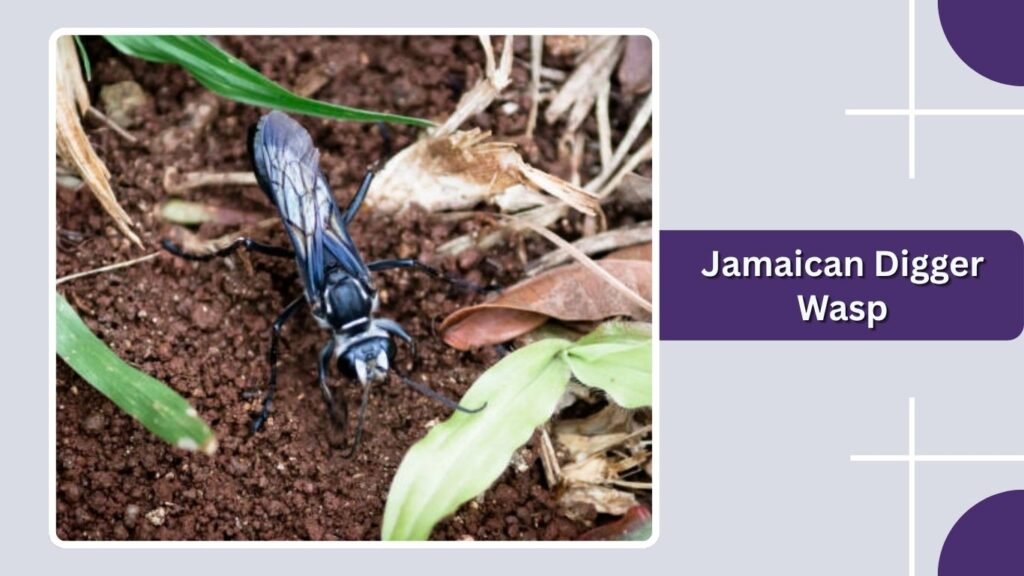
The Jamaican Digger Wasp is a distinctive solitary wasp belonging to the thread-waisted wasp group. Its narrow waist and elongated body are typical of digger wasps, while its powerful flight and active hunting behavior make it noticeable in warm habitats. Females construct underground nests and capture insects to feed their developing offspring.
Identification
- Body: Long and slender with a narrow thread-like waist
- Color: Usually dark with contrasting reddish or lighter markings
- Wings: Narrow and somewhat smoky
- Legs: Long and suited for walking and digging
- Antennae: Prominent and elongated
- Appearance: Streamlined compared with stockier social wasps
Habitat and Distribution
Jamaican Digger Wasps are associated with warm tropical and subtropical environments. They may occur in open fields, dry grassy areas, gardens, forest margins, and locations with sandy or loose soil. Flower-rich habitats are particularly useful because adults require nectar while females also need nearby populations of suitable prey.
Behavior and Diet
These wasps are solitary and spend much of the day flying between flowers, nesting areas, and hunting grounds. Adults primarily consume nectar. Females capture insects that are suitable for larval development, immobilize them with their sting, and transport them to underground nesting chambers.
Lifespan and Lifecycle
A female prepares the nest before hunting for prey. Once enough food has been placed in a chamber, she lays an egg and seals the nest or chamber entrance. The larva feeds on the stored insect after hatching and later changes into a pupa. Metamorphosis is completed underground before the new adult emerges.
8. Golden-reined Digger Wasp
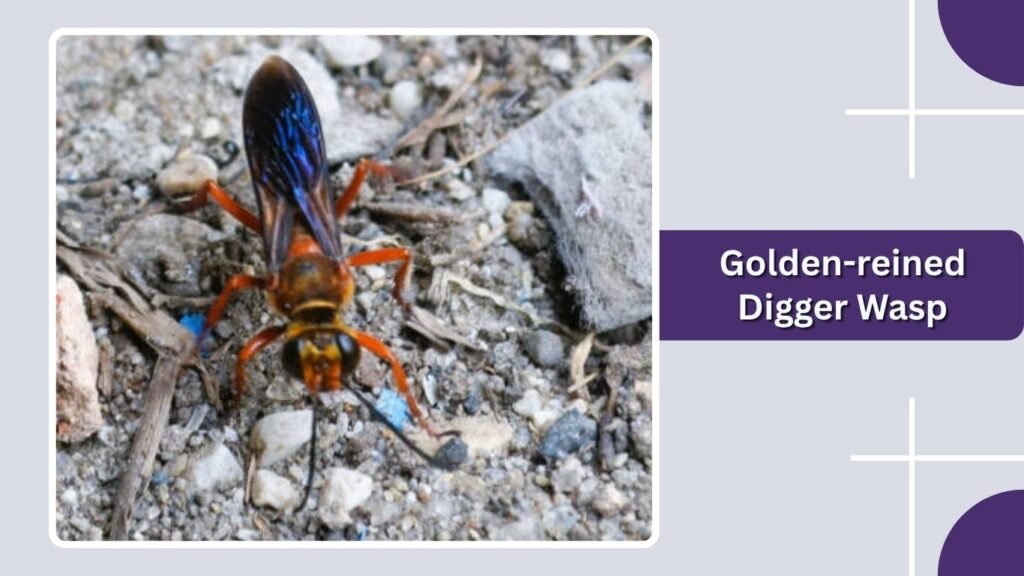
The Golden-reined Digger Wasp is a slender solitary wasp known for its narrow waist and attractive golden or yellowish markings. Like other thread-waisted wasps, it does not live in a colony. Females dig their own nests and hunt insects for their offspring, while adults spend much of their time feeding on flower nectar.
Identification
- Body: Long and slender with a very narrow waist
- Color: Mostly dark with golden or yellowish markings
- Wings: Clear to slightly smoky
- Legs: Long and thin
- Antennae: Slender and dark
- Shape: Noticeably elongated compared with social wasps
Habitat and Distribution
Golden-reined Digger Wasps are generally associated with warm, open environments where sunlight, flowers, and suitable nesting soil are available. They may be found in grasslands, gardens, field edges, sandy areas, and open woodland. Females usually favor loose or well-drained soil because it is easier to excavate underground nesting chambers.
Behavior and Diet
Adults primarily feed on nectar from flowering plants, which provides the energy required for flight and reproduction. Females actively hunt insects to provision their nests. After locating suitable prey, the female paralyzes it with her sting and transports it back to a burrow, where it becomes food for the developing larva.
Lifespan and Lifecycle
The female digs a nest with one or more chambers and stocks each chamber with immobilized prey. An egg is deposited with the stored food. After hatching, the larva consumes the prey, grows rapidly, and eventually enters the pupal stage. The new adult later emerges from the soil and begins the reproductive cycle again.
9. Katydid Wasp

The Katydid Wasp is a solitary hunting wasp that specializes in capturing katydids and related insects. Its long body, narrow waist, and powerful wings give it the classic appearance of a thread-waisted wasp. Females are impressive hunters and may transport prey almost as large as themselves to underground nesting chambers.
Identification
- Body: Long, narrow, and strongly constricted at the waist
- Color: Usually black or dark with reddish areas
- Wings: Smoky or slightly tinted
- Legs: Long and adapted for handling prey
- Antennae: Long and prominent
- Size: Medium to large solitary wasp
Habitat and Distribution
Katydid Wasps are often found in meadows, gardens, woodland margins, open fields, and other places where katydids are common. They favor sunny areas with access to loose soil for nesting. Flowering vegetation is also important because adults depend heavily on nectar as an energy source.
Behavior and Diet
Adult wasps feed mostly on nectar, but females hunt katydids for their larvae. The female locates a katydid, stings it to cause paralysis, and then carries or drags it back to her nest. Because the prey remains alive but immobilized, it provides fresh food for the developing larva.
Lifespan and Lifecycle
After excavating an underground burrow, the female creates individual chambers and places paralyzed katydids inside them. She then lays an egg on or near the prey. The larva hatches and feeds until fully grown. It then forms a pupa underground, completing metamorphosis before emerging as an adult.
10. Mexican Grass-carrying Wasp

The Mexican Grass-carrying Wasp is a slender thread-waisted wasp recognized for its unusual nesting behavior. Instead of relying only on underground burrows, females may use existing cavities and line or seal them with pieces of dry grass. This behavior makes the species especially interesting and sometimes brings it into close proximity to homes.
Identification
- Body: Slender with a pronounced narrow waist
- Color: Mainly dark or black
- Wings: Clear to lightly smoky
- Legs: Long and narrow
- Antennae: Long and curved slightly forward
- Special feature: Often seen carrying pieces of dry grass
Habitat and Distribution
Mexican Grass-carrying Wasps occur in warm regions and may be found in gardens, parks, woodland edges, fields, and residential areas. Females often search for small natural or artificial cavities, including hollow stems, crevices, and narrow openings around buildings, where they can establish protected nests.
Behavior and Diet
Adults mainly drink nectar from flowers. Females hunt crickets, katydids, or similar insects that can be stored as food for larvae. One of their most recognizable behaviors is carrying strands of dry grass to the nesting cavity. The grass is used to separate, protect, or seal the nest chambers.
Lifespan and Lifecycle
The female selects a suitable cavity and provisions it with paralyzed prey. She lays an egg in each prepared chamber and may use grass as nesting material between sections. Once the egg hatches, the larva feeds on the stored insects. It later pupates inside the nest and eventually emerges as an adult.
11. Brown-legged Grass-carrying Wasp
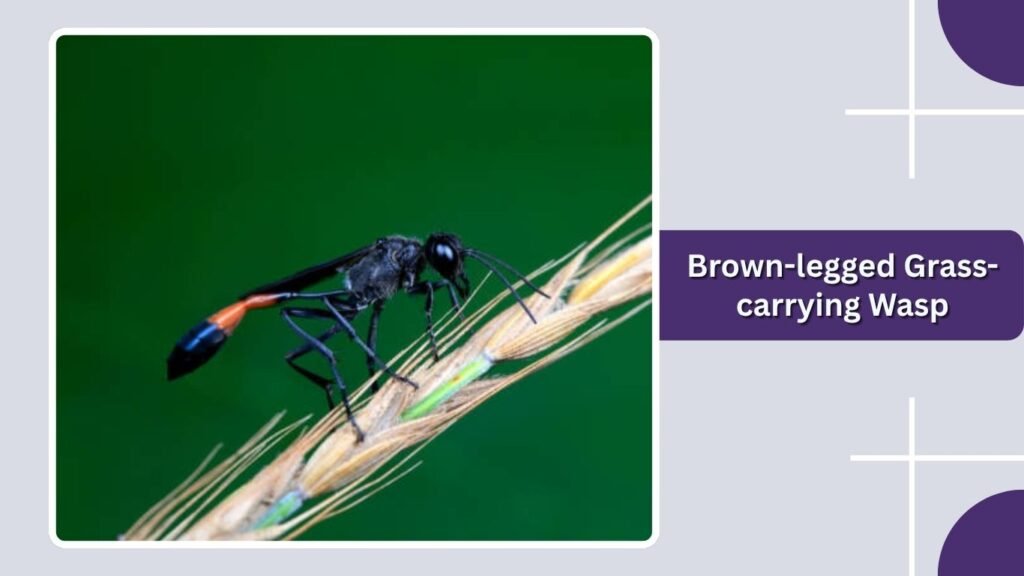
The Brown-legged Grass-carrying Wasp is a solitary species that combines insect hunting with distinctive nest-building behavior. Females collect dry grass and use it to construct or seal nests in natural cavities. Their slim body and long legs make them easy to distinguish from heavier-bodied social wasps such as hornets and yellowjackets.
Identification
- Body: Thin and elongated with a narrow waist
- Color: Mostly dark
- Legs: Brownish or reddish-brown
- Wings: Transparent to smoky
- Antennae: Long and dark
- Behavioral clue: Females may carry grass stems while flying
Habitat and Distribution
Brown-legged Grass-carrying Wasps are most likely to occur in open habitats with plentiful insects and flowers. Gardens, woodland edges, fields, parks, and residential landscapes can provide suitable conditions. They commonly seek small cavities for nesting and may take advantage of holes in wood, hollow plant stems, or protected crevices.
Behavior and Diet
Adults obtain most of their energy from nectar. Females capture small orthopteran insects, including young crickets and katydids, for their offspring. Prey is paralyzed with a sting and transported into the nest. The female also gathers pieces of grass, which are carried back and arranged around the nesting chambers.
Lifespan and Lifecycle
Reproduction begins when the female selects a cavity and starts building the nest. Each chamber receives one or more paralyzed insects and an egg. The larva hatches and consumes the supplied prey before entering the pupal stage. After metamorphosis is complete, the adult leaves the nest and begins feeding and mating.
12. Charcoal Digger Wasp
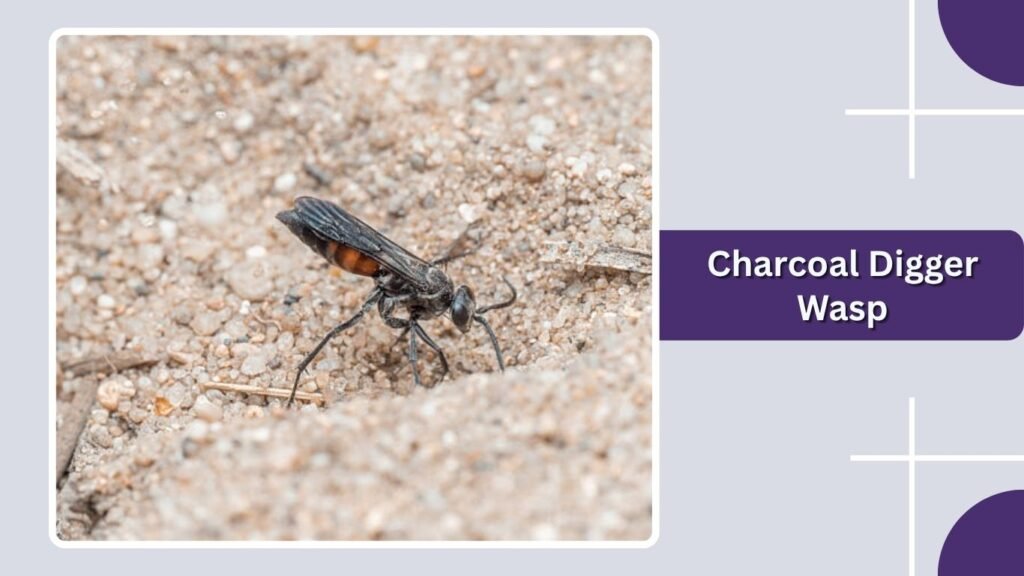
The Charcoal Digger Wasp is a dark-colored solitary wasp with the narrow waist typical of thread-waisted species. Its charcoal-black appearance can make it look intimidating, but it usually focuses on hunting insects and feeding on flowers rather than interacting with people. Females construct individual nests and provide prey for each developing larva.
Identification
- Color: Dark charcoal, black, or deep gray
- Body: Long and slender
- Waist: Extremely narrow and elongated
- Wings: Dark or smoky
- Legs: Long and usually dark
- Overall appearance: Sleek, narrow-bodied solitary wasp
Habitat and Distribution
Charcoal Digger Wasps favor sunny landscapes where both prey and suitable nesting soil are available. They may occur in grasslands, gardens, agricultural areas, open woodland, and sandy or disturbed ground. Locations with patches of bare soil are particularly attractive to nesting females.
Behavior and Diet
Adults commonly visit flowers and feed on nectar. Females spend much of their activity period searching for insects that can be used as larval provisions. Captured prey is immobilized with a sting and transported to a prepared nest. The wasp generally hunts alone and does not defend a communal colony.
Lifespan and Lifecycle
A female excavates a burrow and prepares a protected chamber underground. She supplies the chamber with paralyzed prey and lays an egg. The larva consumes the stored food after hatching, gradually increasing in size before pupating. The adult develops within the nest and later emerges to feed, mate, and reproduce.
13. Yellow-legged Mud-dauber Wasp

The Yellow-legged Mud-dauber Wasp is a slender solitary wasp recognized by its narrow waist, dark body, and contrasting yellowish legs. Unlike social wasps, it does not live in large colonies or defend a communal nest. Females construct individual mud nests and stock the chambers with paralyzed spiders that provide food for their developing larvae.
Identification
- Body: Slender with a long, thread-like waist
- Color: Primarily black or dark brown
- Legs: Yellowish to orange-yellow
- Wings: Clear or lightly smoky
- Antennae: Long and dark
- Nest: Small mud cells or tubes attached to protected surfaces
Habitat and Distribution
Yellow-legged Mud-dauber Wasps are usually associated with warm environments where mud, flowers, and spider prey are readily available. They may occur around gardens, woodland edges, farms, sheds, porches, and other sheltered structures. Females often select protected locations where their mud nests are less likely to be damaged by heavy rain.
Behavior and Diet
Adults mainly feed on nectar from flowers and are generally calm around people. Females search vegetation and sheltered areas for spiders, which they sting and paralyze. The immobilized spiders are carried individually to the nest and placed inside mud chambers. Several spiders may be provided to supply enough food for one developing larva.
Lifespan and Lifecycle
The female builds a mud chamber, fills it with paralyzed spiders, and lays an egg before sealing the opening. After hatching, the larva consumes the stored prey and grows within the protected chamber. It eventually forms a pupa and completes metamorphosis. The adult later breaks through the hardened mud wall and emerges.
14. Asian Mud-dauber Wasp
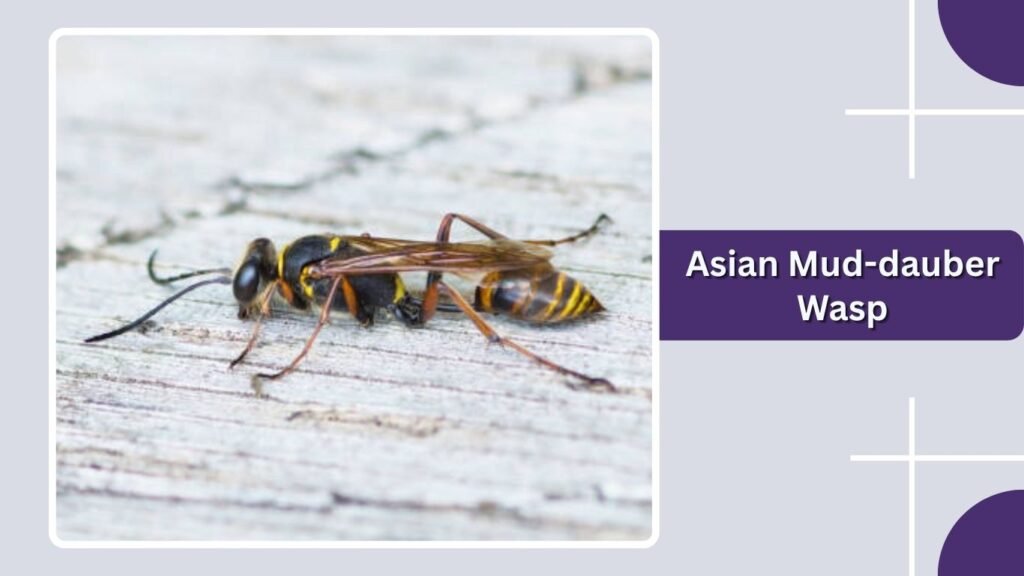
The Asian Mud-dauber Wasp is a solitary nest-building wasp with the slim body and elongated waist typical of thread-waisted wasps. Females are skilled builders that collect wet soil and shape it into protected nest cells. They are also effective spider hunters, making them useful natural predators in many environments where they occur.
Identification
- Body: Long and narrow with an obvious thread-like waist
- Color: Usually dark with yellow or reddish markings
- Wings: Transparent to slightly smoky
- Legs: Long and slender
- Antennae: Dark and elongated
- Nest: Hardened mud structures containing separate chambers
Habitat and Distribution
Asian Mud-dauber Wasps are associated primarily with warm parts of Asia, although some related species have expanded beyond their original ranges. They occupy gardens, agricultural land, forest margins, towns, and areas around buildings. Protected walls, roof edges, bridges, sheds, and other sheltered surfaces can provide suitable nesting locations.
Behavior and Diet
Adult wasps feed mainly on flower nectar. Females collect small portions of moist mud, transport them to a nesting site, and gradually construct individual cells. They then hunt spiders, paralyzing them with their sting and placing them inside the cells. These stored spiders are intended exclusively as food for the developing young.
Lifespan and Lifecycle
Once a nest chamber has enough prey, the female lays an egg and closes the chamber with additional mud. The larva hatches and feeds on the preserved spiders until it reaches maturity. It then pupates within the sealed nest. Following metamorphosis, the adult cuts or pushes through the mud covering and begins life outside the nest.
15. Clayman’s Mud-dauber Wasp

Clayman’s Mud-dauber Wasp is a solitary thread-waisted wasp associated with mud-based nesting behavior. Its elongated body and extremely narrow waist distinguish it from many stockier wasps. Females work independently, gathering wet soil to create protected nests and hunting spiders or other suitable arthropods to provide nutritious food for their offspring.
Identification
- Body: Long, narrow, and lightly built
- Waist: Thin and prominently elongated
- Color: Mostly dark with possible lighter markings
- Wings: Clear to smoky
- Legs: Long and slender
- Nest: Constructed from collected mud or clay
Habitat and Distribution
Clayman’s Mud-dauber Wasps favor places where moist soil and suitable nesting surfaces occur close together. Gardens, stream margins, farms, woodland clearings, and residential buildings can provide favorable conditions. Females often establish nests in sheltered locations such as beneath ledges, inside sheds, or against walls protected from direct rainfall.
Behavior and Diet
Adults regularly visit flowers for nectar and generally show little interest in humans. Females devote much of their time to nest construction and prey collection. They gather mud in small quantities and transport it to the chosen nesting location. Suitable prey is captured, paralyzed, and placed within the completed chambers.
Lifespan and Lifecycle
The female creates individual nest cells and provisions each one before depositing an egg. Once sealed, the chamber protects the developing offspring from environmental conditions and many predators. The larva feeds on the stored prey, passes through several growth stages, and eventually pupates. A fully developed adult later emerges by opening the mud chamber.
16. Common Blue Mud-dauber Wasp

The Common Blue Mud-dauber Wasp is a striking solitary wasp known for its metallic blue or blue-black body. Rather than usually constructing completely new mud nests, females may reuse abandoned nests made by other mud-dauber species. They are particularly valuable predators of spiders, including several species commonly found around human structures.
Identification
- Scientific name: Chalybion californicum
- Color: Metallic blue, blue-black, or bluish violet
- Body: Slender with a pronounced narrow waist
- Wings: Dark or smoky
- Legs: Long and metallic dark
- Size: Commonly around 1.5–2.5 cm long
- Appearance: Shiny body without the yellow markings of many wasps
Habitat and Distribution
Common Blue Mud-daubers are widespread across much of North America and also occur in several other regions. They can be seen around gardens, meadows, woodland edges, barns, porches, garages, and other buildings. Existing mud nests are particularly attractive because females often renovate and reuse them rather than constructing an entirely new structure.
Behavior and Diet
Adults drink nectar from flowers for energy. Females are active spider hunters and may capture orb-weavers, cobweb spiders, and other small species. They sting spiders to paralyze them and place several within a nest chamber. Blue mud-daubers are considered beneficial because their hunting can reduce spider populations around buildings and gardens.
Lifespan and Lifecycle
A female locates an old mud nest, softens or repairs it using water and mud, and prepares the chambers for reuse. After adding paralyzed spiders, she lays an egg and seals the cell. The larva consumes the spiders after hatching, later pupates, and eventually develops into an adult that exits through the nest wall.
17. Tyde’s Sand Wasp
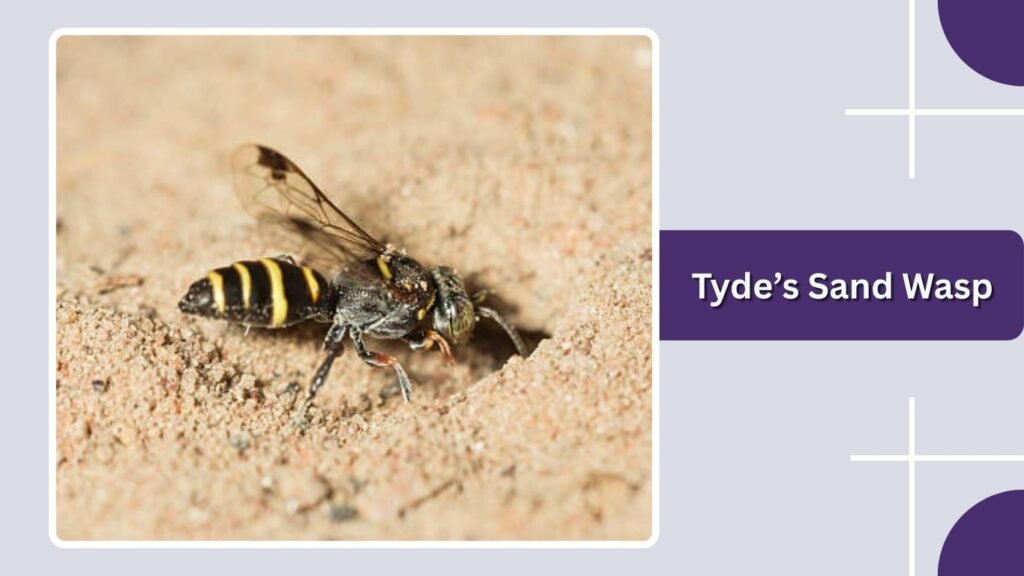
Tyde’s Sand Wasp is a solitary ground-nesting wasp adapted to open, sandy environments. Its streamlined body and strong digging abilities allow females to excavate burrows efficiently in loose soil. Like other solitary hunting wasps, it does not form large defensive colonies. Its activities contribute to natural insect control within dry grasslands and sandy habitats.
Identification
- Body: Slender and elongated
- Color: Generally dark with lighter abdominal markings
- Waist: Clearly narrowed between thorax and abdomen
- Wings: Clear to lightly smoky
- Legs: Strong and suited for digging
- Antennae: Long and noticeable
- Nesting clue: Frequently encountered around exposed sandy soil
Habitat and Distribution
Tyde’s Sand Wasp favors dry, sunny landscapes where loose sand or sandy soil makes burrow construction easier. Suitable habitats may include dunes, open grasslands, sandy fields, roadsides, riverbanks, and sparsely vegetated areas. Adults are most active during warm weather when flowering plants and insect prey are plentiful.
Behavior and Diet
Adult sand wasps primarily obtain energy from nectar and may regularly visit wildflowers. Females hunt suitable insects that can be carried back to their underground nests. Prey is subdued or paralyzed with the sting before being transported into a burrow. Each female works independently and is generally not aggressive toward people away from direct disturbance.
Lifespan and Lifecycle
A female digs an underground tunnel ending in one or more nesting chambers. After capturing suitable prey, she places it inside and deposits an egg. The larva hatches and feeds on the stored insect until fully developed. It then pupates within the protected chamber. After completing metamorphosis, the adult emerges from the sandy ground and begins feeding and reproducing.
FAQs
1. Are thread-waisted wasps dangerous to humans?
Thread-waisted wasps are generally not dangerous to people. Most species are solitary and do not aggressively defend large colonies like yellowjackets. Females can sting when handled or threatened, but they normally avoid humans and concentrate on hunting prey, feeding on nectar, and building nests.
2. What do thread-waisted wasps eat?
Adult thread-waisted wasps mainly feed on flower nectar and other sugary plant sources. Females also hunt insects or spiders for their larvae. Depending on the species, prey may include caterpillars, katydids, crickets, grasshoppers, or spiders that are paralyzed and stored inside nests.
3. Where do thread-waisted wasps build their nests?
Many thread-waisted wasps dig underground burrows in sandy or loose soil. Others construct mud nests or use existing cavities in wood, stems, or buildings. Nesting habits vary by species, but females typically create individual chambers where eggs and paralyzed prey are placed.
4. Why do thread-waisted wasps have such thin waists?
Their extremely narrow waist connects the thorax to the abdomen and is a characteristic feature of many species in this group. The elongated body provides flexibility during hunting, nesting, and stinging. It also gives thread-waisted wasps their distinctive appearance compared with more compact social wasps.
5. Are thread-waisted wasps beneficial?
Yes. Thread-waisted wasps can be highly beneficial because they naturally control populations of caterpillars, grasshoppers, katydids, crickets, spiders, and other small animals. Adults also visit flowers for nectar and may contribute to pollination while moving between different flowering plants.