
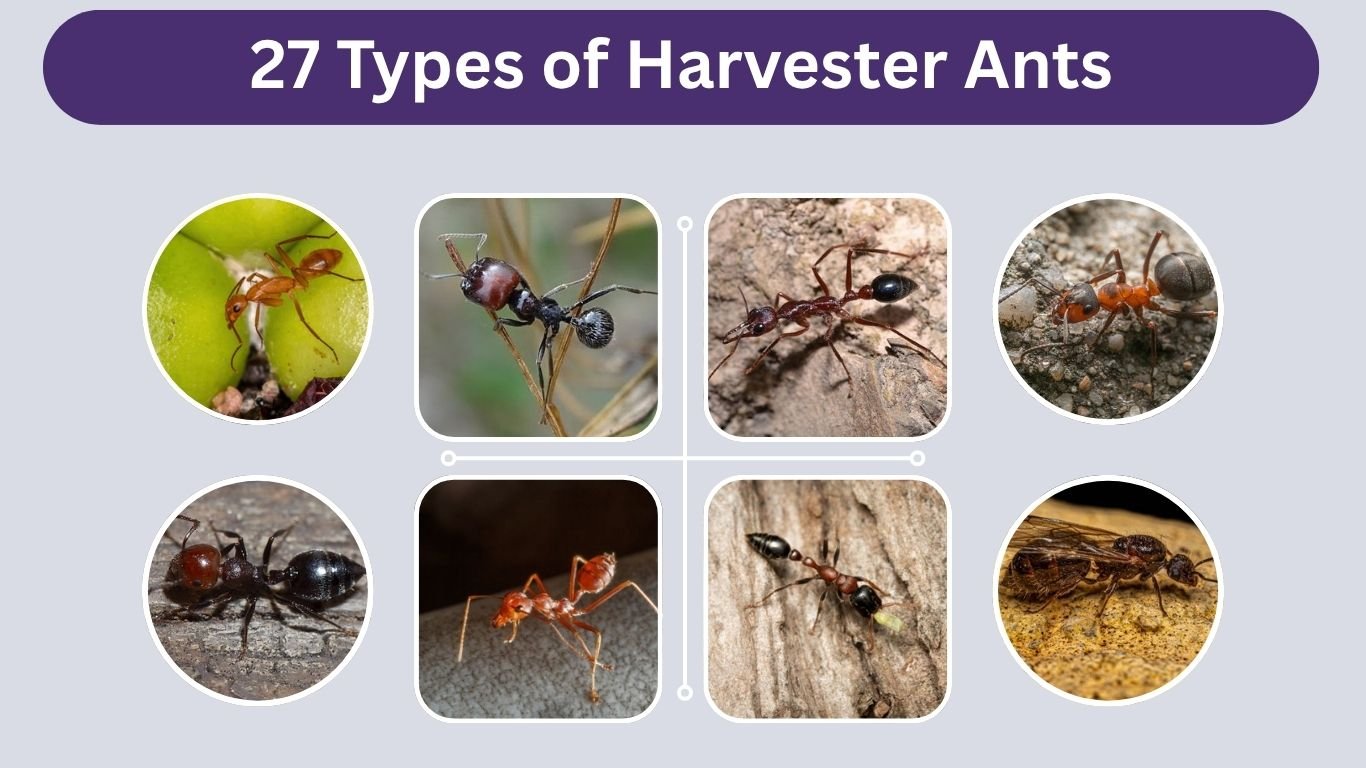
Harvester ants are seed-collecting ants known for their organized foraging trails, underground nests, and important role in dry ecosystems. Many species gather seeds from grasses, wildflowers, and shrubs, storing them in specialized chambers for later use. They occur across deserts, grasslands, scrublands, and other open habitats in the Americas, Europe, Africa, and Asia. This guide covers 27 types of harvester ants, including their identification, habitat, behavior, diet, and life cycle.
1. Red Harvester Ant

The Red Harvester Ant (Pogonomyrmex barbatus) is a large seed-collecting ant native to the southwestern United States. It is especially noticeable around its underground nests, where workers clear vegetation and create open areas around the entrance. Although sometimes confused with fire ants because of its reddish color, it belongs to a different group of ants and is an important seed predator and disperser.
Identification
- Workers are usually red to dark reddish-brown.
- Body length is approximately 5–7 mm, although some workers can appear larger.
- The head is relatively broad or square.
- Workers possess strong mandibles for handling seeds.
- A fringe of hairs beneath the head helps with soil excavation.
- Colonies typically have obvious ground-level nest entrances.
Habitat and Distribution
Red Harvester Ants are associated mainly with arid and semiarid areas of the southwestern United States and northern Mexico. They favor open grasslands, desert margins, scrubland, and other sunny areas where seeds are abundant. Colonies establish extensive underground nests, often surrounded by areas from which workers have removed vegetation.
Behavior and Diet
Seeds make up a major portion of their diet. Workers search the ground for grass and wildflower seeds and carry them back to underground storage chambers. They also collect dead insects and other animal material. Their foraging activities can influence plant communities by removing, transporting, and occasionally dispersing seeds.
Lifespan and Life Cycle
A new colony begins when a winged female mates and digs a nest. She sheds her wings and produces eggs that hatch into larvae before becoming pupae and adults. Workers take over food collection, brood care, and nest maintenance. Mature colonies eventually produce new winged males and females that leave for mating flights.
2. Western Harvester Ant

The Western Harvester Ant (Pogonomyrmex occidentalis) is one of the most conspicuous harvester ants of western North America. Its gravel-covered nest mounds and surrounding vegetation-free zones can be visible from a considerable distance. Colonies can persist for many years and play an important ecological role through seed harvesting, soil disturbance, and nutrient movement.
Identification
- Workers are commonly dark red or reddish-brown.
- Mature workers average around 6 mm long.
- The body is robust with strong jaws.
- A hair fringe occurs beneath the head.
- Nests often have gravel-covered mounds.
- A conspicuous bare area may surround a mature colony.
Habitat and Distribution
Western Harvester Ants occur across much of the interior western United States. They are especially associated with deserts, dry grasslands, shrublands, and open rangeland. Colonies favor well-drained soils and sunny sites where surrounding plants provide a steady supply of seeds.
Behavior and Diet
Workers collect seeds from the ground and directly from plants. Pollen and recently dead insects may also be carried back to the nest. Foraging activity changes with temperature; during very hot weather, workers often avoid the hottest part of the day and become more active during cooler morning and evening periods.
Lifespan and Life Cycle
Colonies typically contain one reproductive queen and may eventually support thousands of workers. Queens are remarkably long-lived and can survive for decades under suitable conditions. Winged males and females are produced by mature colonies. After mating, a young queen establishes a new underground nest and begins raising her first workers.
3. California Harvester Ant

The California Harvester Ant (Pogonomyrmex californicus) is a reddish seed-harvesting species native to the southwestern United States and northern Mexico. It is especially associated with warm, dry, sandy environments. Its colonies are recognizable by crater-like nest entrances and accumulations of seed husks and plant debris around the nesting area.
Identification
- Workers are usually reddish or reddish-brown.
- They measure approximately 5.5–8.7 mm long.
- The waist has two distinct nodes.
- Long hairs occur beneath the head.
- The head and thorax often show noticeable grooves or ridges.
- Nest entrances may be surrounded by loose soil and seed remains.
Habitat and Distribution
California Harvester Ants occur in California and other parts of the American Southwest, extending into northern Mexico. They prefer open, warm habitats with sandy or loose soil, including deserts, scrublands, grasslands, dry hillsides, agricultural areas, and sparsely vegetated ground.
Behavior and Diet
Workers forage primarily for seeds but also collect dead insects and occasionally capture small arthropods. They are mostly active during daylight hours, adjusting their activity when temperatures become extreme. Harvested seeds are carried underground, where they can be stored and later used by the colony.
Lifespan and Life Cycle
Queens establish new colonies after reproductive flights. Eggs hatch into larvae that are completely dependent on adult workers for food and protection. Larvae eventually pupate and emerge as workers, males, or reproductive females. As the colony matures, worker numbers increase and the underground nest becomes progressively more complex.
4. Florida Harvester Ant

The Florida Harvester Ant (Pogonomyrmex badius) is a large reddish ant associated with sandy habitats in the southeastern United States. It is particularly notable because its colony contains workers of dramatically different sizes, including large-headed major workers. It is also the only Pogonomyrmex harvester ant naturally occurring in the eastern United States.
Identification
- Workers are usually dark rusty-red.
- Worker length is roughly 6–10 mm.
- Major workers have unusually large heads.
- Smaller workers have narrower heads.
- A fringe of hairs is present beneath the head.
- Nests often appear as broad cleared sandy areas.
Habitat and Distribution
Florida Harvester Ants occur across Florida and extend into parts of the southeastern Atlantic and Gulf Coastal Plains. They strongly favor well-drained sandy soils. Typical habitats include scrub, open pine woodland, grassland, coastal dunes, and other dry areas with sparse vegetation.
Behavior and Diet
These ants primarily gather seeds and store them in underground granaries. Workers may also collect insects and other animal material. They are active during daylight and can tolerate the hot conditions of exposed sandy habitats. Colony members maintain a cleared zone around the nest that can make mature colonies easy to recognize.
Lifespan and Life Cycle
A colony contains a reproductive queen as well as minor, intermediate, and major workers. Eggs hatch into larvae, which workers feed until pupation. The differences between worker sizes become obvious as the colony matures. Winged reproductive ants are produced seasonally and leave the nest to mate and establish future colonies.
5. Maricopa Harvester Ant

The Maricopa Harvester Ant (Pogonomyrmex maricopa) is a reddish harvester ant of deserts and dry landscapes in the southwestern United States and northern Mexico. It is well known for its defensive sting and powerful venom, although the ants generally use their venom for colony defense rather than actively pursuing humans.
Identification
- Workers are reddish to reddish-brown.
- Adult workers are roughly 6–8 mm long.
- The body has a robust appearance.
- Workers have strong seed-carrying mandibles.
- A characteristic hair fringe occurs beneath the head.
- Nest surfaces may contain gravel or small stones.
Habitat and Distribution
Maricopa Harvester Ants occur in Arizona and several neighboring western states, as well as northern Mexico. They inhabit desert scrub, sandy dunes, mesquite woodland, grasslands, and other arid habitats. Colonies typically excavate their nests directly into soil, often forming crater-like openings.
Behavior and Diet
Workers harvest seeds and collect dead arthropods while foraging across the ground. They can become defensive if their colony is disturbed. Like other Pogonomyrmex, their seed-collecting activities affect the movement of plant material and nutrients throughout desert environments.
Lifespan and Life Cycle
Mature colonies consist of a queen, workers, brood, and seasonal reproductive individuals. Eggs become larvae and then pupae before adults emerge. Winged males and females leave established colonies during reproductive periods. After mating, females search for suitable soil and begin founding new colonies.
6. Rough Harvester Ant

The Rough Harvester Ant (Pogonomyrmex rugosus) is a large harvester ant found across deserts of the southwestern United States and northern Mexico. Its scientific name refers to the strongly sculptured or “rough” surface of its body. This species is adapted to extremely hot, open landscapes where workers forage widely for seeds and other food.
Identification
- Workers are commonly dark reddish-brown to nearly black.
- The head and thorax have strongly grooved or rough surfaces.
- Workers are relatively large and robust.
- Strong mandibles are used for gathering seeds.
- A fringe of hairs occurs underneath the head.
- Nests are commonly found in open sandy or gravelly soil.
Habitat and Distribution
Rough Harvester Ants inhabit deserts and other arid areas across the southwestern United States and northern Mexico. They are particularly associated with open, hot, sandy habitats. Sparse vegetation and exposed ground provide ideal nesting conditions and allow workers to forage efficiently for scattered seeds.
Behavior and Diet
Seeds are an important food source, although workers also collect dead insects and other animal material. Individuals may travel substantial distances from the nest while searching for food. Their activity is influenced strongly by surface temperature, and workers avoid periods when exposed ground becomes dangerously hot.
Lifespan and Life Cycle
After mating flights, fertilized queens establish underground colonies. Eggs develop into larvae, pupae, and workers. Young colonies grow gradually as additional workers become available for foraging and nest construction. Large, established colonies eventually invest resources in producing winged males and females, beginning the reproductive cycle again.
7. Desert Harvester Ant

The Desert Harvester Ant (Pogonomyrmex desertorum) is a seed-collecting species adapted to the arid landscapes of the southwestern United States and northern Mexico. It is smaller and generally less conspicuous than some of the largest Pogonomyrmex species, but it performs the same important ecological role of gathering seeds and moving organic material through desert soils.
Identification
- Workers are usually reddish or rust-colored.
- The body is moderately sized and relatively robust.
- Strong mandibles help workers manipulate seeds.
- Workers have the typical two-node waist of Pogonomyrmex.
- A fringe of hairs beneath the head assists with moving soil.
- Colonies may produce small crater-like nest entrances.
Habitat and Distribution
Desert Harvester Ants occur in dry portions of the southwestern United States and northern Mexico. They favor desert grasslands, sandy flats, gravelly soils, and other exposed arid habitats. Underground nests protect colonies from intense daytime heat and large temperature fluctuations at the soil surface.
Behavior and Diet
Workers forage mainly for seeds from desert grasses and other plants. They may also collect insect remains when available. Seeds carried underground provide a dependable food reserve in environments where resources can vary dramatically with rainfall and season.
Lifespan and Life Cycle
The colony begins with a newly mated queen that excavates a protected chamber in the soil. She produces eggs that pass through larval and pupal stages before becoming adults. Workers later assume food collection, brood care, defense, and excavation. Once mature, colonies produce winged males and females that disperse during reproductive flights.
8. Comanche Harvester Ant

The Comanche Harvester Ant (Pogonomyrmex comanche) is a seed-collecting ant native to the south-central United States. It is particularly associated with sandy prairies and open areas near oak woodland. Like other Pogonomyrmex species, it spends much of its foraging time collecting seeds and transporting them to an underground nest.
Identification
- Workers are generally reddish to reddish-brown.
- The body is moderately large and robust.
- Workers have strong mandibles for handling seeds.
- A beard-like group of hairs occurs beneath the head.
- The waist consists of two distinct nodes.
- Nests are usually established in sandy soil.
Habitat and Distribution
Comanche Harvester Ants are recorded primarily from Texas, Oklahoma, Kansas, Arkansas, and Louisiana. They have a particularly strong association with deep, well-drained sandy soils in prairie habitats surrounded by oak woodland. Their specialized habitat requirements can make colonies locally distributed even within their broader geographic range.
Behavior and Diet
Seeds form an important part of the colony’s food supply. Individual workers leave the nest to search for suitable seeds and carry them underground. They may also collect dead insects and other protein-rich material when available. Workers can sting if handled or if their colony is seriously disturbed.
Lifespan and Life Cycle
Queens establish colonies and produce eggs that become larvae, pupae, and adult workers. Workers later take responsibility for nest excavation, seed collection, defense, and brood care. Mature colonies eventually produce reproductive males and females that disperse and mate.
9. Pima Harvester Ant

The Pima Harvester Ant (Pogonomyrmex pima) is a relatively small harvester ant native to the desert Southwest. It is especially interesting because the species can produce two forms of reproductive females: conventional winged queens and wingless reproductive queens. This unusual reproductive system has made it an important species for studies of ant colony organization.
Identification
- Workers are relatively small compared with many harvester ants.
- Color is usually deep reddish or rust-red.
- Workers are roughly 4–5 mm long.
- The body has the typical two-node waist of Pogonomyrmex.
- Strong mandibles are used for gathering food.
- Queens may occur in winged or wingless forms.
Habitat and Distribution
Pima Harvester Ants are associated mainly with southern Arizona and neighboring Sonora in Mexico. Colonies inhabit warm desert and semidesert landscapes and may establish nests in exposed soil or sheltered sites beneath stones. The species was originally described from specimens collected around Tucson and Phoenix, Arizona.
Behavior and Diet
Workers forage primarily for seeds scattered through desert vegetation. Their smaller body size allows them to exploit relatively fine seeds that may be overlooked by larger harvester species. Insects and other organic material may supplement the colony’s seed-based diet.
Lifespan and Life Cycle
The species is unusual because both winged and wingless queen forms can be fully reproductive. Colonies produce eggs, larvae, pupae, and adults in the typical ant sequence. Research has shown that the two queen forms are part of the same species rather than separate populations.
10. Saltflat Harvester Ant
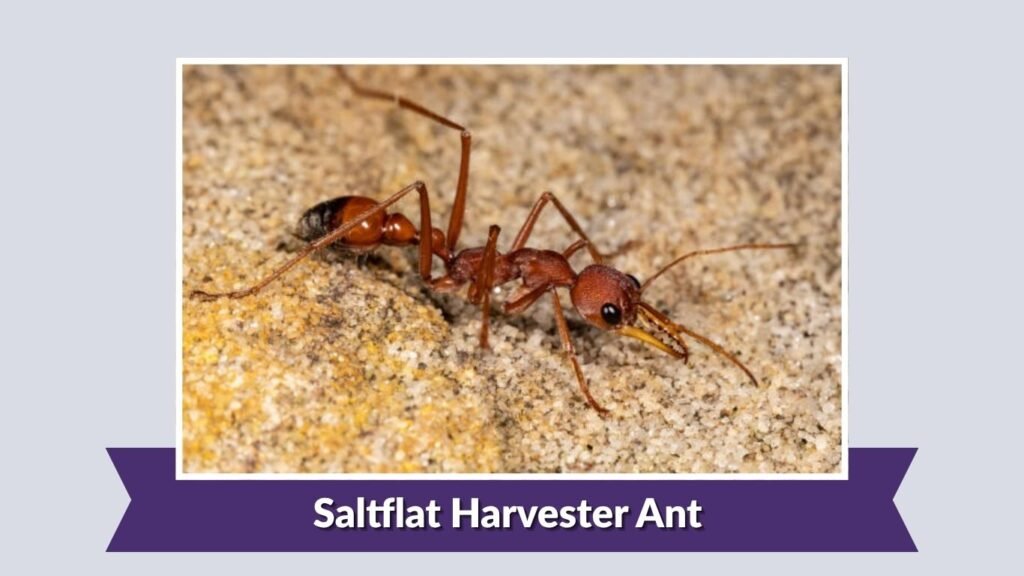
The Saltflat Harvester Ant (Pogonomyrmex salinus) is a North American harvester ant associated with dry interior landscapes. Its scientific name refers to saline or salt-influenced environments, although colonies are not restricted exclusively to salt flats. Like related species, workers gather seeds and transport them into underground storage chambers.
Identification
- Workers are generally reddish-brown to dark brown.
- The body is sturdy and adapted to ground foraging.
- Workers have strong mandibles.
- The waist contains two obvious nodes.
- A beard-like hair structure may be visible beneath the head.
- Nests are constructed underground in open soil.
Habitat and Distribution
Saltflat Harvester Ant records extend through parts of the western United States and southwestern Canada. NatureServe lists populations from states including Idaho, Montana, and Wyoming and Canadian provinces including Alberta, British Columbia, and Saskatchewan. AntWeb records also document its taxonomic history from California.
Behavior and Diet
Workers collect seeds from grasses, herbs, and other plants growing around the colony. Seeds can be carried considerable distances before being stored underground. Small insects and carrion may provide additional protein. Their harvesting behavior can influence which seeds remain available for germination.
Lifespan and Life Cycle
A colony develops around its reproductive queen or queens, depending on colony structure. Eggs hatch into larvae that workers feed before they become pupae. Adults then emerge and take on tasks such as foraging, nest maintenance, and brood care. Mature colonies produce reproductive individuals for dispersal.
11. Black Harvester Ant
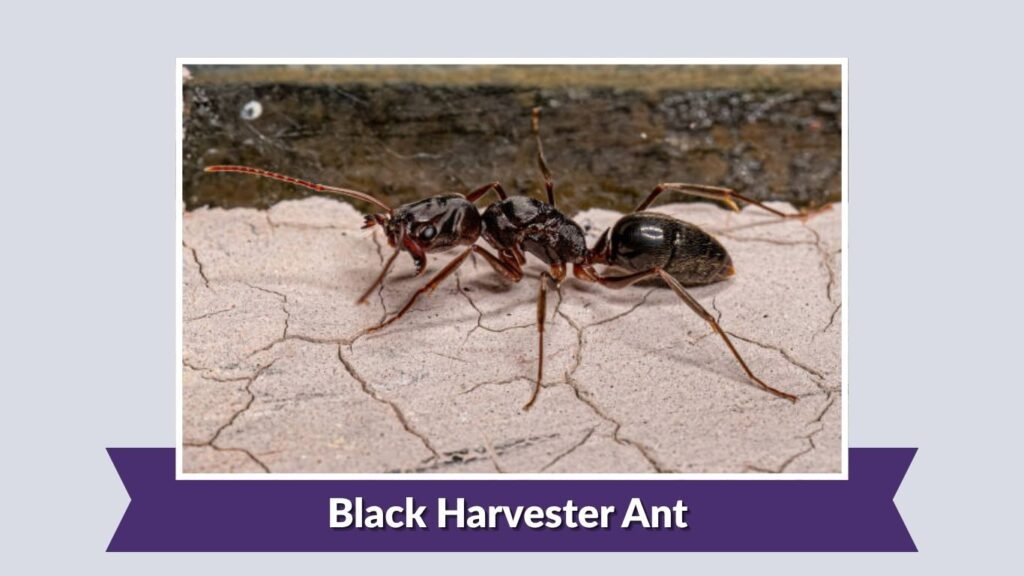
The Black Harvester Ant commonly refers to Veromessor pergandei, formerly classified as Messor pergandei. This desert species is native to the southwestern United States and northern Mexico. Unlike the reddish Pogonomyrmex ants, workers are typically dark and may form conspicuous foraging columns when traveling between seed-rich areas and their nests.
Identification
- Workers are typically dark brown to black.
- Worker size varies within a colony.
- The body is relatively slender compared with some Pogonomyrmex species.
- Mandibles are well developed for manipulating seeds.
- Workers may travel in organized foraging trails.
- Colonies create underground nests in dry soils.
Habitat and Distribution
Black Harvester Ants occur principally in desert regions of the southwestern United States, particularly southeastern California, and extend into Baja California in Mexico. They are well adapted to hot, dry environments containing sparse vegetation and abundant seasonal seeds.
Behavior and Diet
The species is strongly granivorous. Workers organize large-scale foraging activity and collect many types of seeds, bringing them back to underground chambers. Research from Death Valley documented collection from numerous plant species, showing that these ants are flexible seed harvesters rather than strict specialists.
Lifespan and Life Cycle
Colonies begin with reproductive queens and expand as successive generations of workers emerge. Eggs become larvae, pupae, and adults. As colonies grow, workers take on increasingly specialized roles involving food collection, brood care, excavation, and processing stored seeds.
12. Large Seed Harvester Ant

“Large Seed Harvester Ant” is a descriptive rather than universally standardized common name. Messor structor is a good example of a large Old World seed-harvesting ant. Its colonies contain workers of noticeably different sizes, allowing them to collect, carry, and process seeds of varying dimensions across dry Mediterranean and steppe habitats.
Identification
- Workers range from roughly 4–10 mm long.
- Color is generally dark brown to black.
- Colonies contain workers of several sizes.
- Major workers possess relatively broad heads.
- Strong mandibles are suited to seed processing.
- The body often bears noticeable stiff hairs.
Habitat and Distribution
Messor structor occurs from southern Europe through parts of North Africa and western Asia. It favors warm, dry, open environments such as grasslands, sandy plains, steppe, semidesert, and agricultural landscapes where seed-producing plants are plentiful.
Behavior and Diet
Workers harvest seeds throughout the warmer portions of the year and carry them to underground storage chambers. Large-headed workers can help process tougher seeds. Like other Messor, the colony may chew seed material into a softer food sometimes called ant bread.
Lifespan and Life Cycle
Colonies can grow to thousands of individuals and may contain multiple queens in some populations. Eggs develop into larvae, pupae, and adults. Worker size and role vary considerably, while reproductive males and females are produced when colonies become mature.
13. Mediterranean Harvester Ant
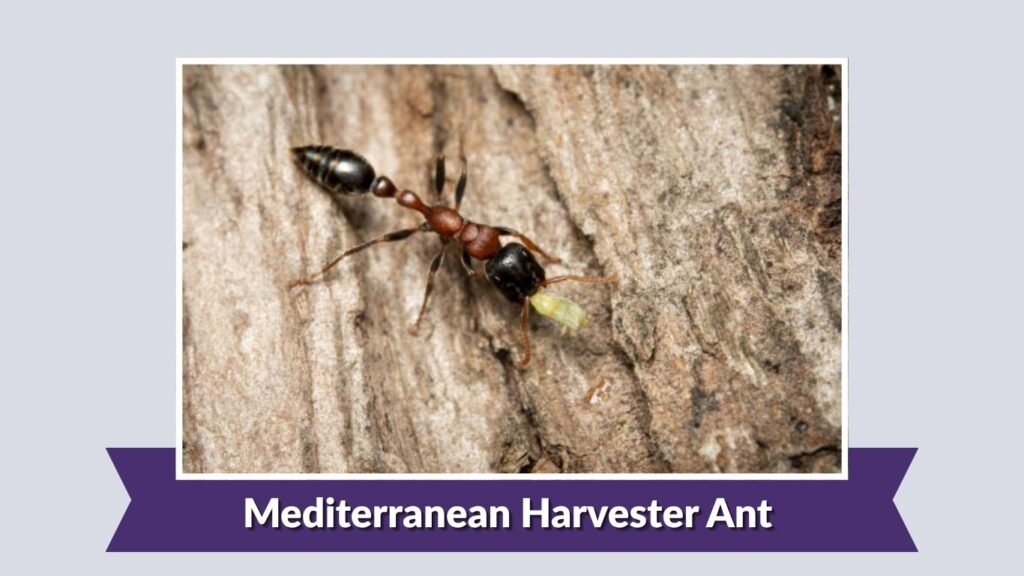
The name Mediterranean Harvester Ant can apply broadly to several Messor species. One well-documented example is Messor wasmanni, a seed-harvesting ant of southeastern Mediterranean habitats. Its ecology revolves heavily around gathering seeds from surrounding vegetation and carrying them to underground nests for storage and consumption.
Identification
- Workers are generally dark brown to black.
- Colonies contain workers of different sizes.
- Major workers have noticeably enlarged heads.
- Strong jaws help process hard seeds.
- The waist has two distinct nodes.
- Foraging workers frequently carry seeds individually.
Habitat and Distribution
Messor wasmanni occurs in southeastern Mediterranean environments. Studies on the Croatian island of Cres found colonies in areas characterized by Mediterranean climate and dry vegetation. Similar Messor ants commonly occupy open grasslands, scrub, rocky slopes, farmland, and other sunny habitats.
Behavior and Diet
Seeds dominate the diet. Workers collect plant material from surrounding grassland and scrub, often creating visible trails between productive feeding areas and the nest. Different worker sizes help colonies handle everything from tiny grass seeds to considerably larger food items.
Lifespan and Life Cycle
Queens produce eggs that develop through larval and pupal stages. Workers care for the brood and maintain seed stores inside the nest. Mature colonies produce winged males and females, typically timed with environmental conditions favorable for mating and new colony establishment.
14. Barbarian Harvester Ant

The Barbarian Harvester Ant (Messor barbarus) is one of Europe’s best-known seed-harvesting ants. It is widespread in the western Mediterranean and North Africa and forms large colonies containing workers that range dramatically in size. Large majors may have striking reddish heads contrasting with their darker bodies.
Identification
- Workers vary greatly in size.
- Most workers are dark brown or black.
- Large majors can develop reddish or red-brown heads.
- Major workers possess massive mandibles.
- The waist consists of two nodes.
- Seed-carrying trails often lead to underground nests.
Habitat and Distribution
Barbarian Harvester Ants inhabit dry grasslands, scrublands, fields, roadsides, and other open areas around the western Mediterranean. They occur in parts of southern Europe and North Africa and thrive in climates with hot, dry summers.
Behavior and Diet
Workers gather a wide range of seeds and transport them along established trails. Inside the nest, seeds are stored in relatively dry chambers and processed by workers. Larger majors are particularly effective at opening tough seeds with their powerful jaws.
Lifespan and Life Cycle
A mature colony contains a reproductive queen, brood, and numerous worker sizes. Eggs develop into larvae and pupae before adults emerge. As the colony becomes established, its population can grow substantially and eventually produce winged males and females for mating and dispersal.
15. Egyptian Harvester Ant

The Egyptian Harvester Ant can be represented by Messor aegyptiacus, a seed-harvesting species originally described from Egypt. Like other members of Messor, it is adapted to warm, relatively dry environments where colonies gather seeds and store them underground. Its range extends beyond Egypt into parts of North Africa and the eastern Mediterranean.
Identification
- Workers are generally dark brown to black.
- Larger workers may have broader heads than minor workers.
- Strong mandibles are used for handling and processing seeds.
- The waist consists of two distinct nodes.
- Worker size can vary noticeably within a colony.
- Nests are usually constructed directly in soil.
Habitat and Distribution
Messor aegyptiacus is recorded from Egypt, Morocco, Mauritania, and Israel. It is associated with warm Palearctic and North African environments where dry soils and seed-producing vegetation provide favorable conditions for colony development.
Behavior and Diet
Seeds are the principal food source. Workers search the surrounding ground for grass and herb seeds and transport them into the nest. As with many harvester ants, animal material such as dead arthropods may supplement the colony’s diet when available.
Lifespan and Life Cycle
Queens produce eggs that become larvae, pupae, and adult ants. Worker castes handle foraging, seed processing, brood care, excavation, and defense. Once colonies reach maturity, they produce winged males and females that leave the nest to mate and establish the next generation.
16. Black Mediterranean Harvester Ant

Black Mediterranean Harvester Ant is a useful descriptive name for dark Mediterranean Messor species such as Messor capitatus. This large, strongly polymorphic ant inhabits dry regions around the western Mediterranean and is especially well adapted to collecting and storing seeds during favorable periods.
Identification
- Workers are typically dark brown or black.
- Worker sizes range from small minors to very large majors.
- Major workers have massive heads and powerful jaws.
- The body has a two-segmented waist.
- Mature workers have a robust appearance.
- Foraging trails may contain several worker sizes.
Habitat and Distribution
Messor capitatus occurs around the western Mediterranean, including southern Europe and parts of North Africa. Colonies favor open, sunny, dry habitats such as grassland, scrub, farmland, rocky slopes, and areas beneath stones.
Behavior and Diet
The species is primarily granivorous. Workers collect seeds individually or in groups and carry them into underground granaries. Larger workers can break open hard seed coverings, while smaller workers help process and distribute food within the colony. Plant and animal remains may also be consumed.
Lifespan and Life Cycle
Colonies generally develop around a reproductive queen. Eggs hatch into larvae, which are fed by workers until pupation. Adult workers emerge in several size classes. Mature colonies produce winged reproductive ants, with mating flights commonly occurring during favorable seasonal conditions.
17. Steppe Harvester Ant
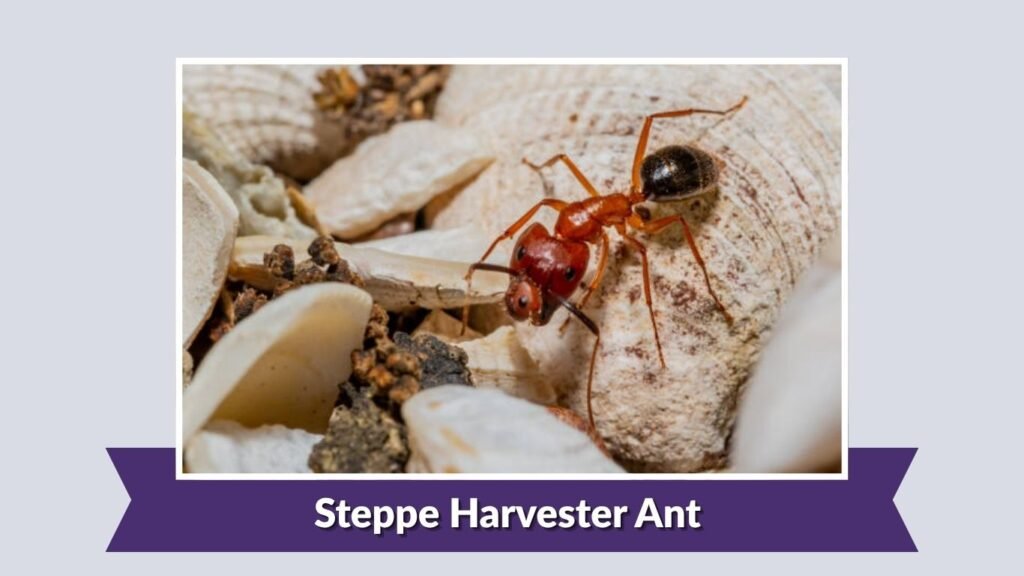
The Steppe Harvester Ant commonly refers to Messor structor, an Old World seed-harvesting ant associated with dry grasslands and steppe environments. Colonies contain workers of dramatically different sizes, ranging from small foragers to large-headed majors capable of breaking open tougher seeds.
Identification
- Workers range from medium-sized to large.
- Color is usually dark brown to black.
- Major workers have broad, enlarged heads.
- Strong mandibles are adapted for seed processing.
- Worker size varies considerably within colonies.
- The waist contains two clearly defined nodes.
Habitat and Distribution
Steppe Harvester Ants inhabit dry grassland, open steppe, pastures, field margins, and other warm habitats across portions of Europe and western Asia. They generally prefer relatively dry soil and open areas where grasses and other seed-producing plants are abundant.
Behavior and Diet
Workers collect grass seeds and seeds from many herbaceous plants. Food is carried underground and stored in chambers where it remains protected from unfavorable weather. Workers may also take dead insects and other sources of protein.
Lifespan and Life Cycle
A queen establishes the reproductive foundation of the colony and continually produces eggs as conditions permit. Larvae depend on workers for food and care before pupating. Mature colonies eventually develop winged males and females that participate in mating flights and establish new populations.
18. Sand Harvester Ant
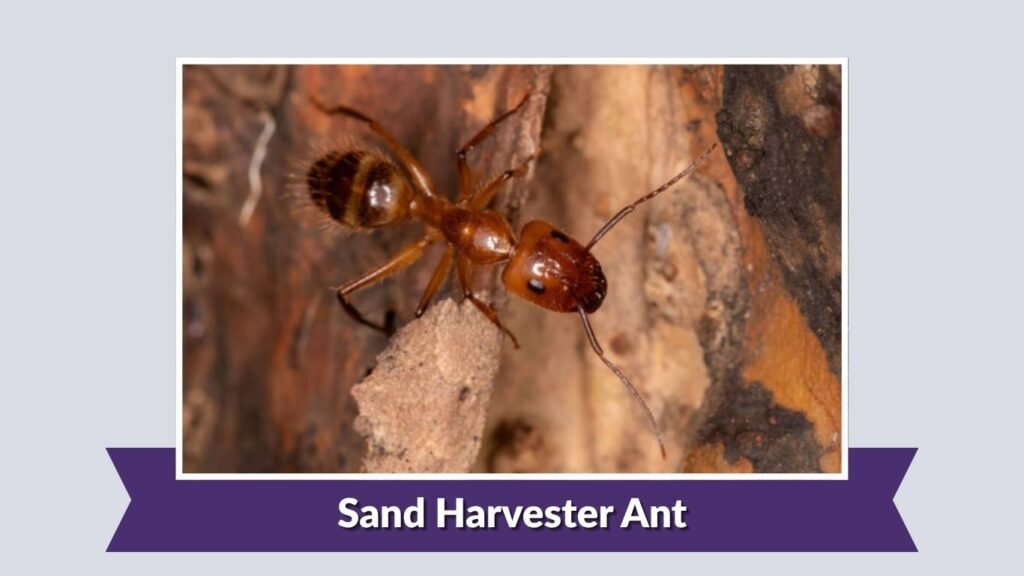
Sand Harvester Ant is a descriptive name well suited to Messor arenarius, whose name itself reflects its association with sandy environments. This Old World seed harvester occurs in North Africa and neighboring regions and has been collected from habitats such as Tunisian sand dunes.
Identification
- Workers are usually dark brown, reddish-brown, or blackish.
- Colonies contain workers of different sizes.
- Major workers possess large heads.
- Strong jaws help carry and process seeds.
- The body has a two-node waist.
- Workers are often seen foraging across exposed ground.
Habitat and Distribution
Messor arenarius is associated with North Africa and nearby arid regions. Records include Tunisia and Egypt, with specimens documented from sandy and desert environments. Colonies are particularly suited to loose, well-drained soils where extensive underground chambers can be excavated.
Behavior and Diet
The colony relies heavily on seeds gathered from desert and semidesert plants. Workers may travel over exposed sandy surfaces to locate seasonal food sources before carrying seeds back to protected underground chambers.
Lifespan and Life Cycle
Eggs produced by the queen develop through larval and pupal stages. Workers maintain the nest and stored food while protecting the developing brood. Mature colonies invest in winged reproductive ants that eventually disperse during suitable weather.
19. Desert Seed Harvester Ant

The Desert Seed Harvester Ant (Veromessor pergandei) is a highly specialized seed collector of North America’s hottest deserts. It is particularly notable for its enormous colonies, long foraging trails, and unusual colony-founding behavior in which queens may establish nests alone or cooperate with other queens.
Identification
- Workers are typically dark reddish-brown to black.
- Worker sizes vary within mature colonies.
- Mandibles are strong and adapted to seed handling.
- Colonies create conspicuous ground nests.
- Large groups may travel in organized foraging columns.
- Foraging trails can extend many meters from the nest.
Habitat and Distribution
This species inhabits the Sonoran, Mojave, and Colorado deserts of southwestern North America, often in sandy soils below about 900 meters elevation. It is particularly adapted to extremely hot and dry landscapes.
Behavior and Diet
Seeds provide the primary food supply. Huge numbers of workers can emerge to harvest seasonal seed crops and transport them along established trails. Mature colonies may contain more than 35,000 foragers, with trails extending over 35 meters from their nests.
Lifespan and Life Cycle
Mating flights generally occur in late winter or early spring. Newly mated queens may establish colonies alone or cooperate in groups, especially in particularly dry areas. Eggs develop into larvae, pupae, and workers, after which colony growth can accelerate dramatically when rainfall and food conditions are favorable.
20. North African Harvester Ant

North African Harvester Ant is a broad descriptive name rather than one standardized species name. Messor minor provides a good example because its range includes Morocco, Tunisia, the Canary Islands, southern Europe, the Middle East, and other nearby regions. It is a typical seed-harvesting member of the diverse Mediterranean Messor fauna.
Identification
- Workers are relatively small to medium-sized.
- Some populations have a reddish head and thorax.
- The abdomen is commonly much darker or black.
- Major workers have broader heads than minor workers.
- Strong mandibles are used to handle seeds.
- Workers have a two-node waist.
Habitat and Distribution
Messor minor occurs across parts of the Mediterranean, including Morocco and Tunisia in North Africa, as well as southern Europe and portions of western Asia. Colonies may occupy sandy ground, dry grassland, scrub, and other open habitats containing abundant seed-producing vegetation.
Behavior and Diet
Workers gather seeds and transport them underground for storage. Seed harvesting provides the colony with a dependable food supply during dry periods. Dead insects and other protein-rich items may also be collected opportunistically.
Lifespan and Life Cycle
The queen lays eggs that develop into larvae, pupae, and adult workers. Worker size and role can vary within mature colonies. Reproductive males and females are produced seasonally, and successful mating eventually leads to the founding of new underground colonies.
21. Asian Harvester Ant
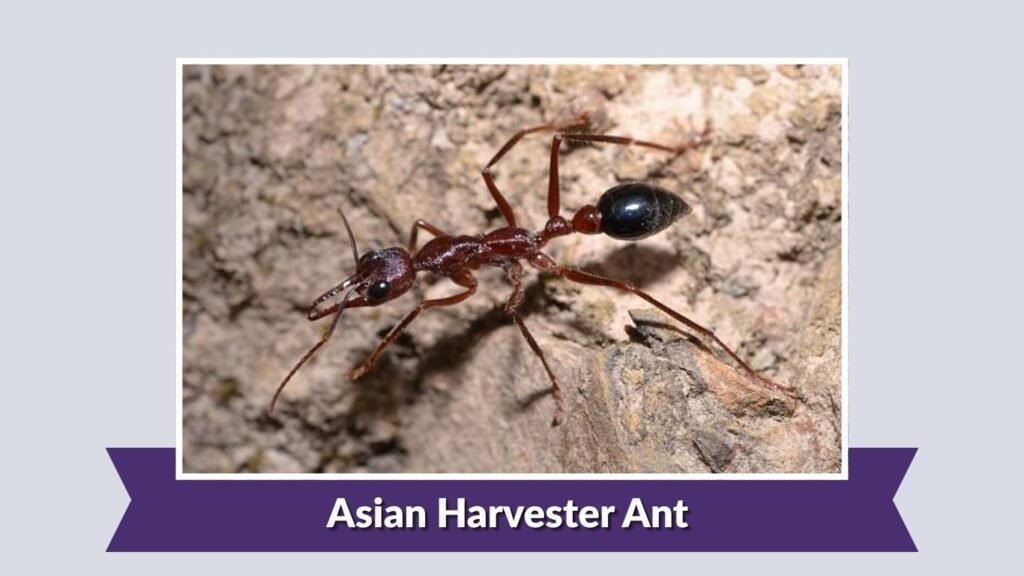
Asian Harvester Ant is another broad regional name that can cover many species. Messor orientalis is a representative Asian seed-harvesting ant with records extending from Afghanistan and China through Iran, Iraq, Israel, Syria, and Türkiye, as well as neighboring southeastern Europe.
Identification
- Workers are generally dark brown to blackish.
- Worker sizes can vary within a colony.
- Larger workers have broader heads and powerful mandibles.
- The waist has two distinct nodes.
- Antennae are elbowed.
- Workers frequently forage directly on the ground.
Habitat and Distribution
Messor orientalis occupies a broad range of environments across western and central Asia. Records include oak woodland, pastures, roadsides, olive plantations, limestone valleys, and mountain plateaus. Specimens have been collected from near sea level to elevations of around 1,700 meters.
Behavior and Diet
Like other Messor species, it is primarily adapted to collecting seeds. Workers search open ground and vegetation for suitable plant material and carry it back to underground storage areas. Different worker sizes allow a colony to handle a broad range of seed sizes efficiently.
Lifespan and Life Cycle
Colonies contain reproductive queens, workers, developing brood, and seasonal reproductive individuals. Eggs hatch into larvae and later become pupae before adults emerge. Once a colony becomes mature, winged males and females are produced and disperse to reproduce and establish new colonies.
22. Japanese Harvester Ant

Japanese Harvester Ant is a descriptive common name that can be applied to Messor aciculatus, a seed-harvesting ant known from Japan and other parts of eastern Asia. Like other members of Messor, it belongs to a group famous for collecting plant seeds and storing them within underground nests. The species was originally described from specimens collected in Japan.
Identification
- Workers are generally dark brown to black.
- Worker size varies within the colony.
- Larger workers have broad heads and strong mandibles.
- The waist consists of two distinct nodes.
- Antennae are strongly elbowed.
- Workers commonly forage along the ground for seeds.
Habitat and Distribution
Messor aciculatus occurs in Japan and other suitable areas of eastern Asia. Colonies generally favor open ground, grasslands, woodland edges, and other habitats where seed-producing plants are plentiful. Nests are constructed underground, providing protection from temperature changes and predators.
Behavior and Diet
Workers primarily collect seeds and transport them to the nest. Different worker sizes allow the colony to handle seeds of varying dimensions. Small insects, dead arthropods, and other protein-rich materials may also supplement the seed-based diet.
Lifespan and Life Cycle
Winged males and females are produced by mature colonies. After mating, fertilized queens establish new nests and begin laying eggs. Eggs develop into larvae, pupae, and adult workers. As worker numbers increase, the colony expands its underground chambers and seed-storage areas.
23. Iberian Harvester Ant

The Iberian Harvester Ant (Messor ibericus) is a seed-harvesting species particularly associated with the Iberian Peninsula. It occurs in dry, open environments where workers collect seeds from grasses and other plants. The species has also attracted scientific attention because of its unusually complex reproductive relationship with another harvester ant, Messor structor.
Identification
- Workers are generally reddish-brown to dark brown.
- Worker length is roughly 4–9 mm.
- Larger workers have noticeably broad heads.
- Mandibles are powerful and adapted for processing seeds.
- The waist has two distinct nodes.
- Colonies contain workers of several sizes.
Habitat and Distribution
Iberian Harvester Ants are strongly associated with Spain and Portugal, although records extend into other parts of Europe. They prefer dry, open habitats such as grasslands, scrub, field margins, and sunny disturbed ground where seeds are readily available.
Behavior and Diet
Workers collect a wide variety of seeds and transport them to underground nest chambers. Harvester ants can have substantial effects on vegetation because they remove, redistribute, and occasionally leave viable seeds in and around their nests.
Lifespan and Life Cycle
The reproductive biology of M. ibericus is unusually complex. Recent research has shown remarkable interactions involving M. structor reproductive material. Like other ants, however, colony members still pass through egg, larval, pupal, and adult stages before assuming specialized roles.
24. Saharan Harvester Ant
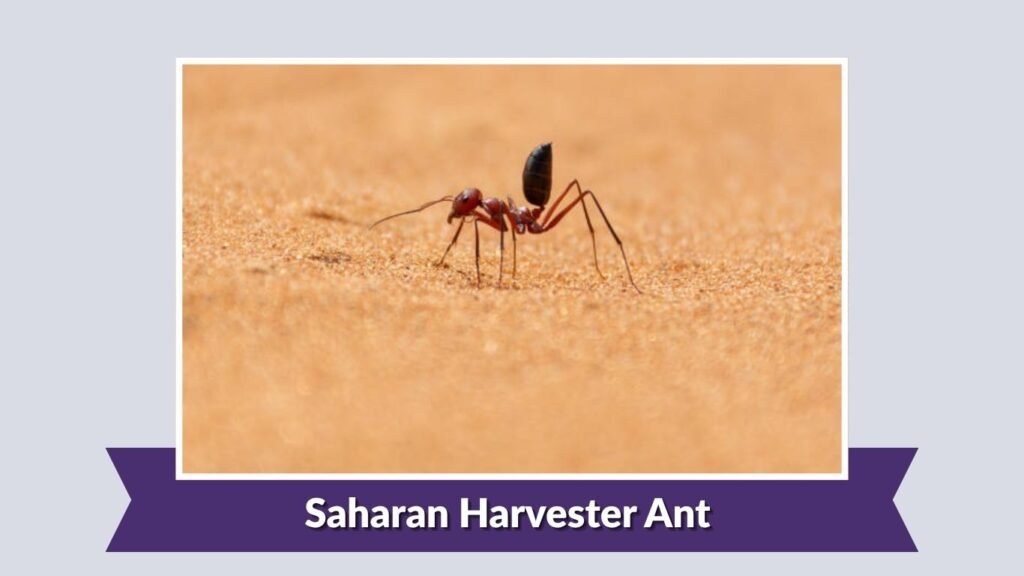
Saharan Harvester Ant is a descriptive name suitable for large desert-dwelling Messor species such as Messor arenarius. This impressive harvester ant occurs across parts of North Africa and the Middle East, including Algeria, Egypt, Tunisia, Israel, Kuwait, and Saudi Arabia. It is particularly well suited to sandy and arid environments.
Identification
- Workers are generally brownish-black.
- The thorax may occasionally have reddish coloration.
- The species is exceptionally large for a Messor.
- The body is covered with noticeable erect hairs.
- Major workers possess large heads and strong jaws.
- The propodeum has short, strong spines.
Habitat and Distribution
Messor arenarius inhabits North African and Middle Eastern drylands. Records include sandy dunes and other desert or semidesert environments. Underground nests help colonies escape extreme surface temperatures while providing protected chambers for brood and stored food.
Behavior and Diet
Workers forage across open ground for seeds produced by desert grasses, herbs, and shrubs. Collected material is returned to the nest for storage and processing. Their ability to exploit seeds makes harvester ants particularly successful in arid environments where insect prey and sugary foods may be unpredictable.
Lifespan and Life Cycle
The queen produces eggs that hatch into larvae and later develop into pupae. Adult workers emerge and take responsibility for collecting food, maintaining the nest, caring for brood, and defending the colony. Mature nests eventually produce winged reproductive individuals.
25. Grass Harvester Ant
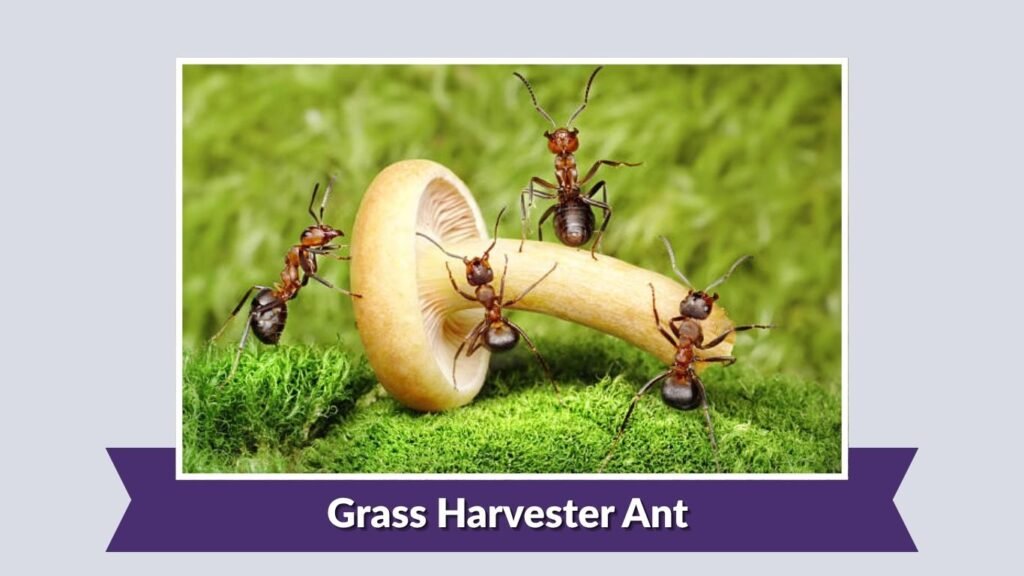
Grass Harvester Ant is a broad descriptive name rather than a standardized species name. The South African harvester ant Messor capensis provides a good example because it occupies arid rangelands and collects enormous quantities of seeds produced by grasses, shrubs, and other plants. Its activities can strongly influence seed movement and soil ecology.
Identification
- Workers are generally dark brown to blackish.
- Colonies include workers of varying sizes.
- Larger workers possess strong seed-crushing mandibles.
- The body has a two-node waist.
- Workers frequently carry seeds back to the nest.
- Nest entrances may be surrounded by disturbed soil.
Habitat and Distribution
Messor capensis occurs in South Africa and is well studied in the arid and semiarid Karoo region. Colonies occupy open rangeland and other dry landscapes where seasonal seed production provides an abundant source of food.
Behavior and Diet
These ants are highly effective seed collectors. Research in South African rangeland found that colonies removed millions of seeds per hectare annually. They tend to concentrate on abundant seeds of suitable size, storing many of them in underground granaries.
Lifespan and Life Cycle
A reproductive queen produces the colony’s eggs, while workers maintain stored food and developing brood. Eggs become larvae, pupae, and adults. Mature colonies periodically produce reproductive males and females that leave to mate and begin new colonies.
26. Seed Harvester Ant

Seed Harvester Ant is a general name rather than a single species. It can describe numerous ants in genera such as Messor, Pogonomyrmex, and Veromessor that specialize in gathering seeds and storing them in underground chambers. This seed-harvesting lifestyle has independently become an important adaptation in many dry environments.
Identification
- Workers usually have strong mandibles for carrying seeds.
- Many species have workers of different sizes.
- Colors range from reddish-orange to black.
- Most have a two-segmented waist.
- Workers may form visible seed-carrying trails.
- Nest entrances often occur in open soil.
Habitat and Distribution
Seed-harvesting ants occur across many warm and dry regions of the world. Pogonomyrmex and Veromessor are especially important in the Americas, while Messor species are widespread across Europe, Africa, and Asia. Many occupy deserts, grasslands, scrublands, and open agricultural landscapes.
Behavior and Diet
Seeds dominate the diet of most true harvester ants. Workers may selectively gather seeds based on size, abundance, nutritional value, and ease of transport. Many species also scavenge insects and carrion, which provide additional protein to developing larvae.
Lifespan and Life Cycle
Colonies generally contain one or more queens, workers, larvae, pupae, and seasonal reproductive ants. Young queens establish nests after mating, while emerging workers gradually take over foraging and brood care. Successful colonies may persist for many years.
27. Rough Seed Harvester Ant

Rough Seed Harvester Ant is best treated as an alternative descriptive name for the Rough Harvester Ant, Pogonomyrmex rugosus, rather than as a separate species. The ant’s name refers to its strongly sculptured body, while its ecology centers heavily on collecting and selecting seeds in arid and semiarid habitats.
Identification
- Workers are dark reddish-brown to nearly black.
- The head and thorax have a rough, strongly sculptured texture.
- Workers are relatively large and robust.
- Strong mandibles are used to gather seeds.
- A fringe of hairs occurs beneath the head.
- The waist consists of two nodes.
Habitat and Distribution
Rough Harvester Ants occur across parts of the southwestern United States and northern Mexico. They inhabit desert scrub, coastal sage scrub, sandy areas, grasslands, and other open dry habitats where suitable seeds are available.
Behavior and Diet
Seed selection can be surprisingly specific. Research on P. rugosus in California found that workers strongly selected seeds of certain plant species while avoiding others, demonstrating that harvester ants do not simply collect every seed they encounter.
Lifespan and Life Cycle
Fertilized queens establish underground nests and produce the first generation of workers. Eggs pass through larval and pupal stages before becoming adults. As colonies expand, workers forage farther from the nest and eventually help support the production of winged reproductive ants.
FAQs
1. Why are they called harvester ants?
They are called harvester ants because workers “harvest” seeds from surrounding vegetation and soil. Seeds are carried into the nest and commonly stored in underground chambers called granaries. The name refers to a feeding behavior rather than one single closely related group of ants.
2. What do harvester ants eat?
Most harvester ants primarily eat seeds from grasses, wildflowers, shrubs, and other plants. Many species also collect dead insects, carrion, and other animal material to provide additional nutrients, especially protein for growing larvae.
3. Do harvester ants sting?
Many Pogonomyrmex harvester ants can sting when handled or when their nests are disturbed. Some species have particularly potent venom. Messor species are generally better known for their powerful mandibles and seed-harvesting behavior than for medically important stings.
4. Where do harvester ants live?
Harvester ants are especially common in deserts, grasslands, scrublands, dry forests, and other open habitats. Major harvester-ant groups occur in North and South America, Europe, Africa, and Asia. They usually construct extensive underground nests in well-drained soil.
5. Are harvester ants beneficial?
Yes. Harvester ants are important ecosystem engineers. Their nests aerate and mix soil, while seed collecting can influence plant distribution, seed survival, and vegetation composition. Seeds remaining in abandoned or disturbed granaries may sometimes germinate and contribute to new plant growth.