

Cuckoo wasps are some of the most eye-catching wasps in the world, known for their brilliant metallic green, blue, red, purple, and gold colors. Most species are solitary and use the nests of other wasps or bees instead of building their own. Their tough, armored bodies help protect them during encounters with host insects. This guide covers 25 types of cuckoo wasps, including their identification features, habitats, behaviors, diets, lifespans, and lifecycles.
1. Ruby-tailed Wasp
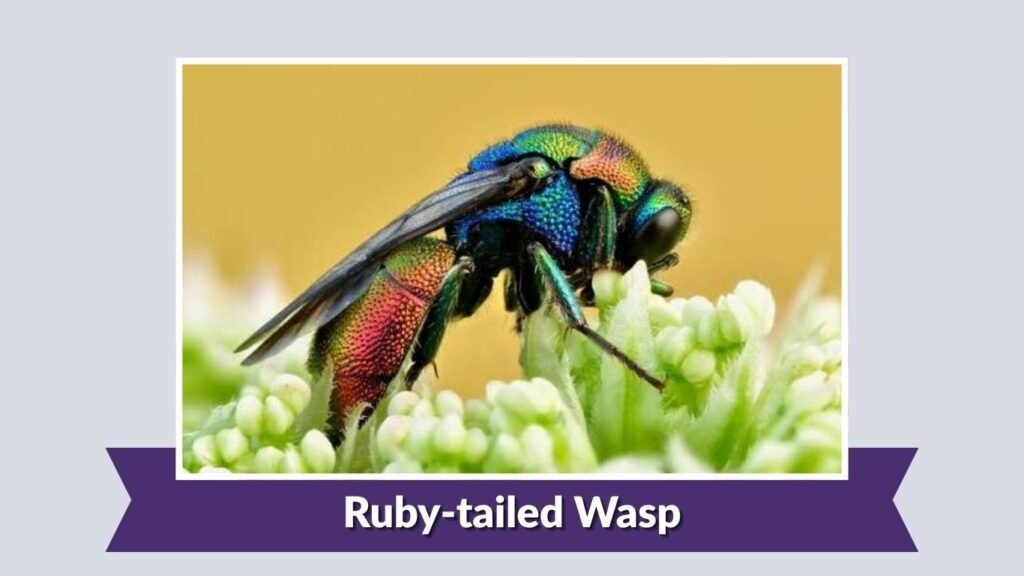
The Ruby-tailed Wasp is a striking member of the cuckoo wasp family, Chrysididae, famous for its brilliant metallic colors. Its body often combines shimmering blue, green, turquoise, and ruby-red tones. Rather than constructing and provisioning its own nest, the female typically lays eggs in the nests of other solitary wasps or bees, where its developing young use the host’s stored food.
Identification
- Body: Small, compact, and heavily armored
- Color: Metallic blue or green on the head and thorax with a bright ruby-red abdomen
- Size: Usually around 6–12 mm long
- Wings: Clear to lightly smoky
- Surface: Strongly textured or pitted body
- Antennae: Dark and moderately long
- Distinctive feature: Brilliant jewel-like coloration
- Defense: Can curl into a tight ball when threatened
Habitat and Distribution
Ruby-tailed Wasps occur across much of Europe and parts of Asia, with related cuckoo wasps found in many other regions. They favor sunny, warm habitats such as gardens, woodland edges, dry grasslands, old walls, sandy banks, and areas containing dead wood. They are especially likely to appear where solitary bees and wasps have established nests.
Behavior and Diet
Adults mainly feed on flower nectar and occasionally other sugary substances. Females spend considerable time searching for suitable host nests. Once a nest is located, a female enters or approaches it and deposits an egg inside. Their tough external skeleton and ability to curl into a ball provide protection if attacked by the host wasp.
Lifespan and Lifecycle
The lifecycle depends closely on a host species. After a female lays an egg inside another insect’s nest, the cuckoo wasp larva hatches and develops using resources within the chamber. It may consume the host egg or larva and then feed on the stored provisions. After feeding, it pupates inside the nest and eventually emerges as a metallic-colored adult.
2. Blue Cuckoo Wasp

The Blue Cuckoo Wasp is a small metallic wasp known for its vivid blue or blue-green body. Like other members of the cuckoo wasp family, it usually does not construct a nest of its own. Instead, females search for the nests of solitary bees and wasps and lay their eggs inside, relying on the host’s nest provisions for larval development.
Identification
- Body: Small, compact, and heavily armored
- Color: Brilliant metallic blue to blue-green
- Size: Usually less than 15 mm long
- Wings: Clear or lightly smoky
- Surface: Often strongly pitted or textured
- Antennae: Dark and moderately long
- Distinctive feature: Intense jewel-like blue coloration
Habitat and Distribution
Blue Cuckoo Wasps are generally found in sunny habitats where solitary bees and wasps are abundant. Typical locations include gardens, dry grasslands, woodland edges, old walls, sandy banks, and places with exposed timber. Their distribution varies by species, but cuckoo wasps as a group occur widely across temperate and warm regions.
Behavior and Diet
Adults mainly feed on flower nectar and other sugary liquids. Females spend much of their time inspecting cracks, holes, soil burrows, and other nesting sites used by potential hosts. Once a suitable nest is found, the female deposits an egg inside. Their hard body armor helps protect them if attacked by the host.
Lifespan and Lifecycle
After the egg hatches, the larva develops inside the host nest. Depending on the species, it may consume the host egg or larva before feeding on stored prey or pollen provisions. The cuckoo wasp larva later pupates inside the protected nest chamber and eventually emerges as a fully developed adult.
3. Emerald Cuckoo Wasp

The Emerald Cuckoo Wasp is admired for its brilliant green metallic body, which can flash blue, turquoise, or golden tones under sunlight. Despite its jewel-like appearance, it has an unusual reproductive strategy. Females use the nests of other solitary insects rather than building their own, making them classic examples of brood parasites among wasps.
Identification
- Body: Compact and strongly armored
- Color: Metallic emerald green, sometimes with blue highlights
- Size: Small to medium-sized
- Wings: Transparent to slightly smoky
- Surface: Coarsely sculptured or dotted
- Legs: Slender and usually metallic or dark
- Distinctive feature: Bright emerald-green sheen
Habitat and Distribution
Emerald Cuckoo Wasps favor warm, sunny environments where their host insects are common. They may be encountered in flower-rich gardens, meadows, woodland clearings, sandy habitats, rocky slopes, and around old wooden structures. Their presence often depends on the availability of nesting solitary bees and wasps.
Behavior and Diet
Adults commonly visit flowers to drink nectar. Females are more often seen searching walls, wood, soil, and other potential nesting locations for host insects. They may remain near a host nest until an opportunity appears to enter. If discovered, their hard body and ability to curl defensively can reduce injury from stings or bites.
Lifespan and Lifecycle
The female lays an egg inside a suitable host nest. Once hatched, the young cuckoo wasp uses resources intended for the host offspring. In many species, the host egg or larva is eliminated. The developing cuckoo wasp feeds, grows, and pupates within the nest before emerging as a brightly colored adult.
4. Rainbow Cuckoo Wasp
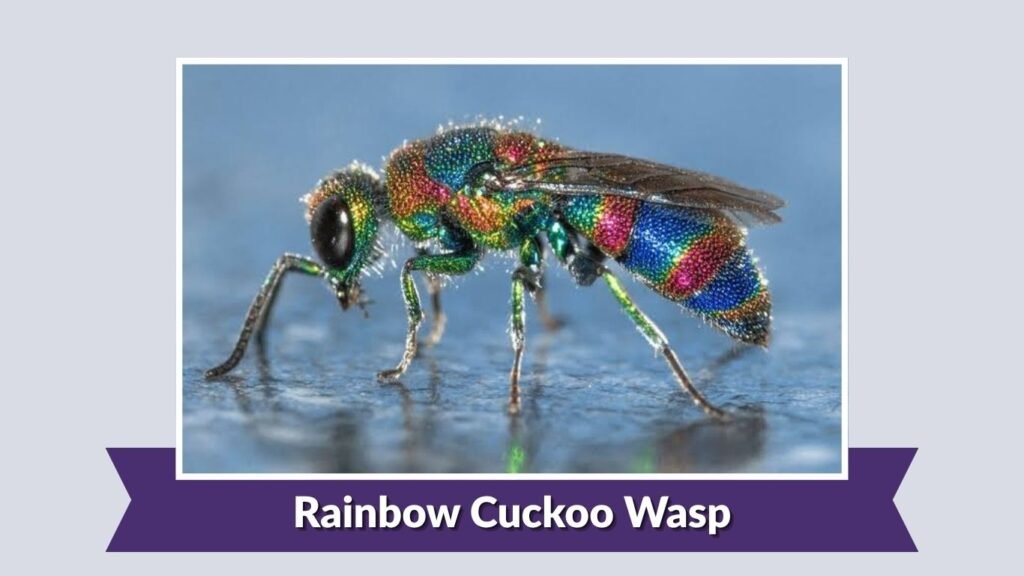
The Rainbow Cuckoo Wasp gets its name from the remarkable mixture of metallic colors across its body. Shades of green, blue, purple, red, and gold can appear as the insect moves in sunlight. Like other cuckoo wasps, it is a solitary brood parasite that depends on the nests of other wasps or bees for successful reproduction.
Identification
- Body: Small and compact
- Color: Multicolored metallic green, blue, red, purple, or gold
- Wings: Clear to lightly shaded
- Exoskeleton: Hard and highly reflective
- Antennae: Dark and segmented
- Surface: Often deeply pitted
- Distinctive feature: Iridescent rainbow-like coloration
Habitat and Distribution
Rainbow Cuckoo Wasps are generally associated with sunny, dry habitats where host species construct nests. They can occur in gardens, open woodland, grasslands, deserts, sandy banks, and around old buildings or fallen wood. Specific ranges differ among species, but colorful cuckoo wasps occur on several continents.
Behavior and Diet
Adults mainly obtain energy from nectar, though they may also consume other sugary plant secretions. Females actively search for nests made by solitary wasps and bees. Their quick movement and tough bodies help them approach dangerous hosts. When threatened, many cuckoo wasps curl their abdomen beneath the body to form a protective ball.
Lifespan and Lifecycle
A female enters or approaches a host nest and places an egg in the brood chamber. The cuckoo wasp larva later hatches and takes advantage of the food supply inside. It may destroy the host offspring before consuming stored provisions. After completing larval growth, it pupates and later emerges as an iridescent adult.
5. Northern Osmia Ruby-tailed Wasp

The Northern Osmia Ruby-tailed Wasp is a specialized cuckoo wasp associated with nests of mason bees, particularly species in the genus Osmia. It is recognized by its brilliant metallic coloration and compact armored body. Rather than collecting pollen or building nest chambers, the female relies on a host bee’s nesting efforts to raise her offspring.
Identification
- Body: Compact, rounded, and heavily armored
- Color: Metallic green or blue with reddish or coppery abdominal tones
- Size: Small, generally under 15 mm
- Wings: Transparent or lightly smoky
- Surface: Strongly sculptured and reflective
- Antennae: Dark and relatively short
- Distinctive feature: Ruby-colored abdomen contrasting with a green or blue thorax
Habitat and Distribution
This type of ruby-tailed wasp is typically found in areas where mason bees nest. Suitable habitats include gardens, woodland edges, rocky landscapes, old stone walls, and places with hollow stems or holes in timber. It is more likely to occur in regions with strong populations of solitary Osmia bees.
Behavior and Diet
Adults feed mainly on nectar and are often active in warm sunshine. Females search carefully for mason bee nests, especially cavities containing completed or nearly completed brood cells. They attempt to enter unnoticed and lay an egg inside. Their compact shape and armored exoskeleton provide useful protection against defensive host bees.
Lifespan and Lifecycle
The female places an egg inside a mason bee nest. After hatching, the cuckoo wasp larva develops within the brood cell and consumes resources originally collected for the bee larva. It eventually completes feeding, pupates inside the nest, and remains protected until development is finished. The mature adult later emerges and begins searching for food and hosts.
6. Metallic Bluish-green Cuckoo Wasp

The Metallic Bluish-green Cuckoo Wasp is a small, brilliantly colored wasp known for its blue-green iridescent body and hard outer covering. Like other cuckoo wasps, females do not usually construct their own nests. Instead, they locate nests made by solitary bees or wasps and lay their eggs inside, allowing their offspring to develop using the host’s resources.
Identification
- Body: Small, compact, and strongly armored
- Color: Metallic blue-green, turquoise, or emerald
- Size: Usually under 15 mm long
- Wings: Transparent to lightly smoky
- Surface: Shiny and often heavily pitted
- Antennae: Dark and segmented
- Distinctive feature: Bright bluish-green metallic sheen
Habitat and Distribution
Metallic Bluish-green Cuckoo Wasps are most commonly found in warm, sunny habitats where solitary bees and wasps are abundant. Gardens, woodland edges, dry grasslands, sandy banks, rocky areas, and old wooden structures can all provide suitable conditions. Their distribution largely follows the presence of appropriate host species.
Behavior and Diet
Adults feed mainly on nectar from flowers. Females spend much of their time searching holes, crevices, burrows, and nesting cavities for suitable hosts. If confronted, many cuckoo wasps protect themselves by curling their abdomen beneath the body, creating a hard armored ball that is difficult for attacking hosts to injure.
Lifespan and Lifecycle
A female deposits an egg within the nest of another solitary insect. After hatching, the larva may consume the host egg or young larva and then feed on food stored inside the chamber. It eventually pupates within the host nest and later emerges as a brightly colored adult.
7. Large Cuckoo Wasp
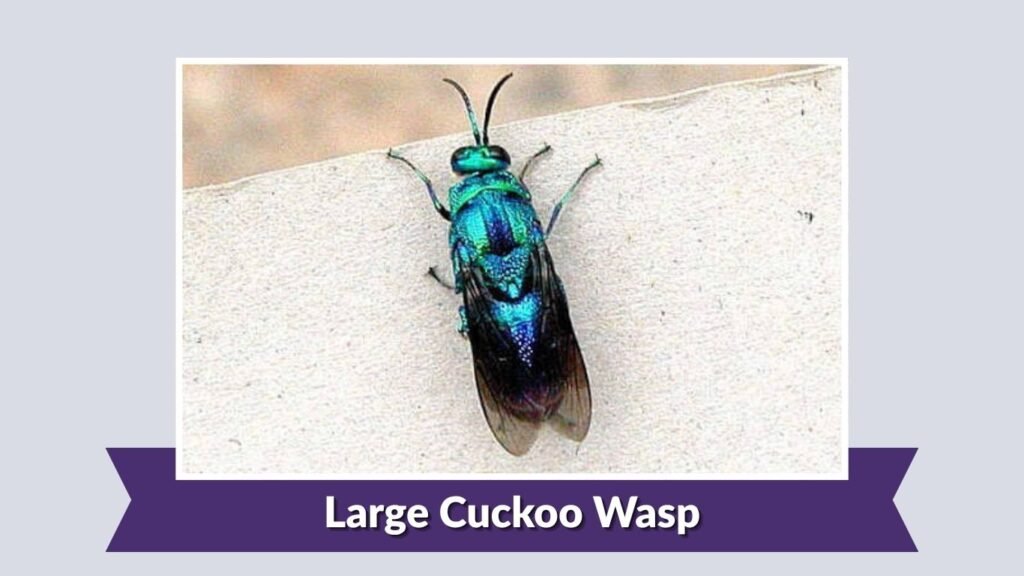
The Large Cuckoo Wasp is more robust than many other members of the Chrysididae family and is often noticeable because of its brilliant metallic colors. Despite its size and striking appearance, it remains solitary. Females rely on nests made by other solitary wasps or bees instead of collecting provisions and constructing nests themselves.
Identification
- Body: Larger and more robust than many cuckoo wasps
- Color: Metallic green, blue, red, or combinations of these colors
- Exoskeleton: Thick and heavily armored
- Wings: Clear or slightly smoky
- Surface: Strongly textured with pits or grooves
- Legs: Slender and metallic or dark
- Defense: Capable of curling into a protective ball
Habitat and Distribution
Large Cuckoo Wasps generally occur in dry, sunny places rich in potential host nests. They may be seen around meadows, gardens, open woodland, sandy slopes, stone walls, dead wood, and old buildings. Their exact distribution differs among species, but suitable host populations are essential for their survival.
Behavior and Diet
Adults frequently visit flowers for nectar and can be active during the hottest parts of sunny days. Females patrol areas where solitary wasps build nests, carefully searching for an opportunity to enter an unattended chamber. Their thick body armor helps them survive attacks if the host discovers the intrusion.
Lifespan and Lifecycle
The lifecycle begins when a female places an egg inside a host nest. The cuckoo wasp larva develops alongside or instead of the host offspring. Depending on the species, it may consume the host larva or use stored prey. After completing larval development, it pupates inside the nest and later emerges as an adult.
8. Lassen Cuckoo Wasp
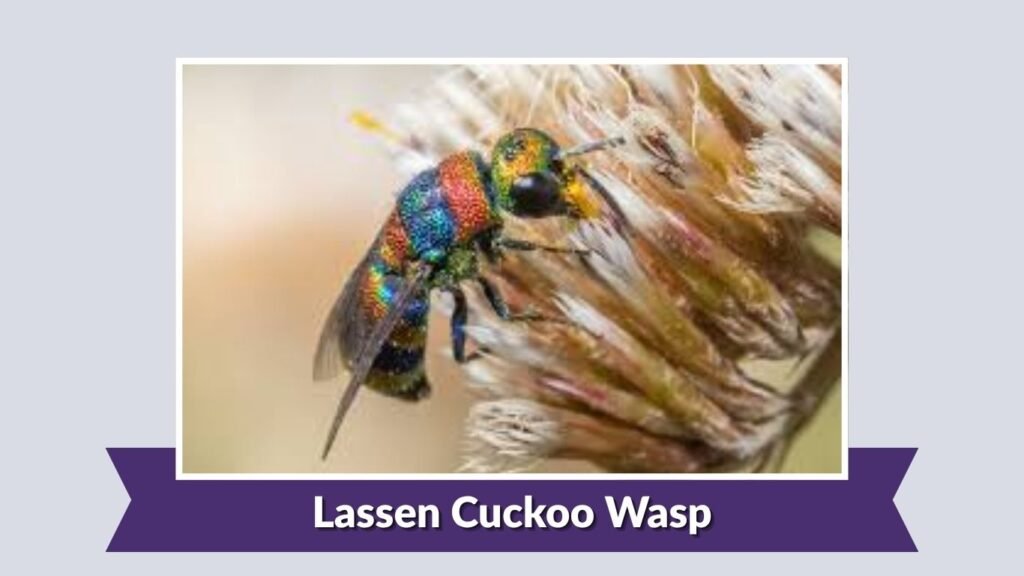
The Lassen Cuckoo Wasp is a metallic solitary wasp associated with western North American habitats. Like other cuckoo wasps, it is best known for its parasitic nesting strategy. Females search for nests created by other solitary wasps and lay eggs within them, leaving their developing larvae to use the food and shelter prepared by the host.
Identification
- Body: Small to medium-sized and compact
- Color: Metallic green, blue, or bluish-purple
- Wings: Transparent or lightly tinted
- Surface: Shiny with noticeable sculpturing
- Antennae: Dark and moderately long
- Legs: Slender and usually metallic
- Distinctive feature: Jewel-like coloration and hardened body
Habitat and Distribution
Lassen Cuckoo Wasps are associated with dry and sunny habitats in western regions, including open forests, grasslands, rocky slopes, and sandy areas. They may also occur around old wood or exposed soil where solitary host wasps establish nests. Their local presence depends strongly on suitable host populations.
Behavior and Diet
Adults mainly drink nectar and may visit a variety of flowering plants. Females spend considerable time watching host nesting sites and searching entrances. When an opportunity arises, they enter quickly and lay an egg. If attacked, the wasp’s tough exoskeleton and ability to curl defensively offer effective protection.
Lifespan and Lifecycle
Once inside a host nest, the cuckoo wasp egg develops within the protected chamber. The larva may eliminate the host offspring and then consume stored provisions. After reaching maturity, it forms a pupa inside the nest. The adult emerges when development and environmental conditions are suitable.
9. Bradley’s Cuckoo Wasp
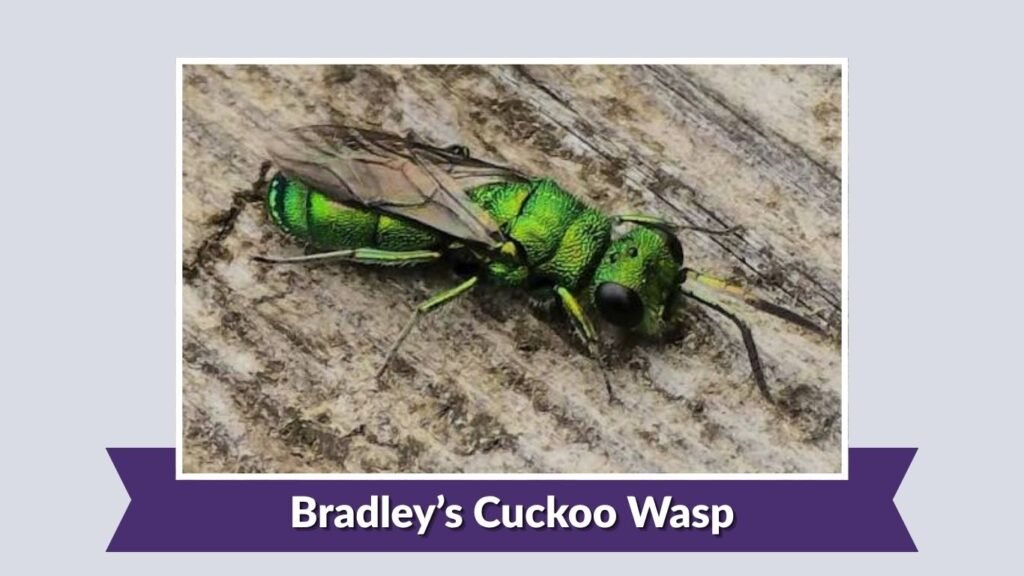
Bradley’s Cuckoo Wasp is a colorful solitary species characterized by its metallic appearance and parasitic reproductive behavior. Instead of building a nest, the female locates the nest of another wasp or bee. Its offspring then develop inside that protected chamber, using resources originally intended for the host’s young.
Identification
- Body: Compact and heavily armored
- Color: Metallic green, blue, or reddish tones
- Size: Small to medium-sized
- Wings: Clear to slightly smoky
- Body surface: Strongly pitted or sculptured
- Antennae: Dark and segmented
- Distinctive feature: Bright iridescent coloration
Habitat and Distribution
Bradley’s Cuckoo Wasps occur where suitable solitary host wasps or bees are present. They may inhabit gardens, dry grasslands, woodland margins, sandy areas, rocky slopes, and places containing old wood. Sunny locations are particularly favorable because both cuckoo wasps and many of their hosts are most active in warm conditions.
Behavior and Diet
Adults primarily feed on nectar. Females actively inspect nesting holes and burrows used by potential hosts. Their movements can be quick and cautious as they attempt to enter nests without being detected. When threatened, they can use their tough exoskeleton and curled body posture to reduce damage from host attacks.
Lifespan and Lifecycle
The female lays an egg in a suitable host chamber. Once hatched, the cuckoo wasp larva develops using the host nest’s provisions and may kill or consume the original occupant. After feeding and growing, it pupates within the chamber. A new adult eventually emerges and begins searching for nectar and host nests.
10. Piute Mountains Cuckoo Wasp
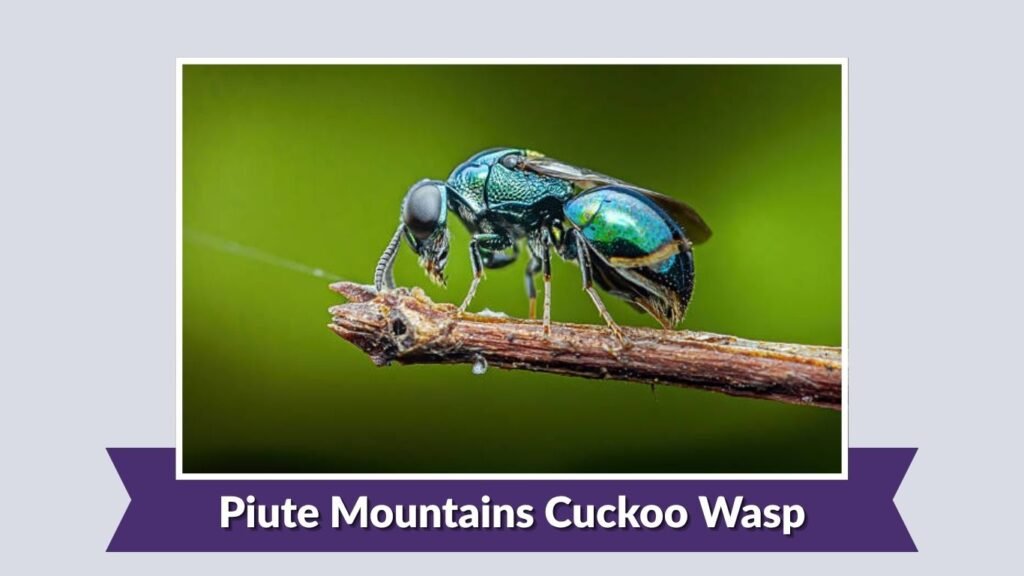
The Piute Mountains Cuckoo Wasp is a jewel-like solitary wasp associated with dry western landscapes. It belongs to the cuckoo wasp family, whose members are known for using nests constructed by other insects. Its hard metallic body provides both a striking appearance and protection when females approach potentially defensive host species.
Identification
- Body: Small, rounded, and compact
- Color: Metallic blue, green, or turquoise
- Wings: Transparent to lightly shaded
- Exoskeleton: Thick, shiny, and strongly sculptured
- Legs: Slender and dark or metallic
- Antennae: Prominent and segmented
- Defense: Can curl tightly when threatened
Habitat and Distribution
Piute Mountains Cuckoo Wasps are associated with arid and semi-arid landscapes, including rocky slopes, desert margins, open scrub, sandy ground, and dry grasslands. Areas containing nesting solitary bees and wasps provide the best conditions. Adults are generally most active during warm periods with abundant sunlight and flowering plants.
Behavior and Diet
Adults obtain energy mainly from flower nectar. Females search exposed soil, rock crevices, and nesting holes for potential hosts. Once a host leaves temporarily, the cuckoo wasp may quickly enter and deposit an egg. Its armored body helps protect it if the returning host discovers the intrusion.
Lifespan and Lifecycle
The egg develops inside the host’s nest chamber. After hatching, the cuckoo wasp larva may consume the host offspring or the stored food supply. It remains protected within the nest during growth and pupation. Once development is complete, the adult emerges and begins the cycle of feeding, mating, and finding new host nests.
11. Desert Cuckoo Wasp

The Desert Cuckoo Wasp is a brilliantly colored solitary wasp adapted to hot, dry environments. Its metallic body may shine green, blue, turquoise, or reddish under strong sunlight. Like other cuckoo wasps, females generally do not build nests of their own. Instead, they search for nests made by other solitary wasps or bees and place their eggs inside.
Identification
- Body: Small, compact, and heavily armored
- Color: Metallic green, blue, turquoise, or coppery
- Wings: Clear to slightly smoky
- Surface: Strongly sculptured or pitted
- Antennae: Dark and segmented
- Legs: Slender and usually metallic
- Defense: Capable of curling tightly when threatened
Habitat and Distribution
Desert Cuckoo Wasps are associated with arid and semi-arid regions where suitable host insects are present. They may occur in desert scrub, sandy flats, rocky slopes, dry grasslands, and open areas with exposed soil. Adults are particularly active during sunny periods when temperatures are warm enough for both them and their host species.
Behavior and Diet
Adults mainly feed on flower nectar and other sugary plant liquids. Females actively search the entrances of nests made by solitary wasps and bees. They may wait nearby until the host leaves before entering quickly to lay an egg. Their hardened exoskeleton provides protection if the host discovers them.
Lifespan and Lifecycle
After an egg is laid inside the host nest, the larva hatches within the protected chamber. It may consume the host egg or larva and then use the stored food provisions. Once fully grown, it pupates inside the nest. The adult later emerges and begins feeding, mating, and locating new host nests.
12. Menke’s Cuckoo Wasp

Menke’s Cuckoo Wasp is a small metallic wasp recognized for its jewel-like body and solitary lifestyle. It belongs to the family Chrysididae, whose members are commonly called cuckoo or jewel wasps. Females rely on nests made by other insects, making their reproductive strategy very different from that of wasps that hunt and provision their own offspring.
Identification
- Body: Small and compact
- Color: Metallic blue, green, or bluish-purple
- Exoskeleton: Hard and highly reflective
- Wings: Transparent to lightly tinted
- Surface: Pitted or strongly textured
- Antennae: Dark and moderately long
- Distinctive feature: Brilliant metallic appearance
Habitat and Distribution
Menke’s Cuckoo Wasps are generally associated with warm, open habitats containing suitable host species. Dry grasslands, sandy areas, rocky slopes, open woodland, and desert margins can provide appropriate conditions. Their presence is closely linked to areas where solitary bees or wasps are actively nesting.
Behavior and Diet
Adults feed mostly on nectar from flowers. Females spend much of their active period searching for host nests in soil, wood, plant stems, or crevices. When they locate a suitable nest, they attempt to enter without being noticed and deposit an egg. Their armored bodies provide protection against defensive attacks.
Lifespan and Lifecycle
The female places an egg inside a host nest that already contains food or prey for the host larva. After hatching, the cuckoo wasp larva develops by using those resources. It may eliminate the host offspring before feeding. The larva eventually pupates inside the nest and later emerges as a mature adult.
13. Tulare Cuckoo Wasp

The Tulare Cuckoo Wasp is a colorful solitary wasp with the characteristic metallic sheen of the Chrysididae family. Its compact body is well protected by a hardened exoskeleton. Females use a brood-parasitic strategy, placing their eggs in nests prepared by other solitary insects rather than constructing and provisioning their own brood chambers.
Identification
- Body: Compact and rounded
- Color: Metallic green, blue, turquoise, or reddish
- Wings: Clear to slightly smoky
- Exoskeleton: Thick and strongly armored
- Surface: Often covered with small pits or grooves
- Legs: Slender and dark
- Defense: May curl into a ball when disturbed
Habitat and Distribution
Tulare Cuckoo Wasps are associated with dry, sunny habitats where host insects are available. They may occur in open grasslands, agricultural edges, sandy areas, scrublands, and dry woodland margins. Exposed soil and nesting cavities can be especially important because many potential host wasps establish their nests in such places.
Behavior and Diet
Adults primarily consume nectar and are often seen around flowers during warm weather. Females spend more time searching nest entrances and watching host activity. Once the host is absent, the cuckoo wasp may enter the nest quickly and lay an egg. Its durable body helps reduce injury during encounters with the host.
Lifespan and Lifecycle
Development starts when an egg is deposited in another insect’s brood chamber. The cuckoo wasp larva hatches and takes advantage of food stored for the host offspring. In many species, the host egg or young larva is destroyed. The cuckoo larva later pupates and remains protected until it emerges as an adult.
14. Humboldt Cuckoo Wasp

The Humboldt Cuckoo Wasp is a small, iridescent solitary wasp known for its bright metallic coloration and parasitic reproductive behavior. It does not need to gather prey or pollen for its young because females use nests prepared by other wasps or bees. Its tough outer body is an important adaptation for approaching potentially aggressive hosts.
Identification
- Body: Small, compact, and strongly armored
- Color: Metallic blue-green, emerald, or turquoise
- Wings: Transparent to slightly shaded
- Surface: Shiny and heavily sculptured
- Antennae: Dark and segmented
- Legs: Slender with metallic reflections
- Distinctive feature: Bright jewel-like coloration
Habitat and Distribution
Humboldt Cuckoo Wasps may occur in open habitats where suitable hosts establish nests. Dry meadows, woodland openings, sandy ground, rocky areas, and places containing dead wood can all provide favorable conditions. Adults are generally more visible during sunny weather when host insects are actively building or provisioning nests.
Behavior and Diet
Adults feed mainly on nectar. Females search carefully around burrows, holes in wood, and other nesting sites used by solitary insects. They may move rapidly between possible host nests and enter when the owner is away. If attacked, the wasp can rely on its hard body and defensive curling behavior.
Lifespan and Lifecycle
A female lays her egg inside a suitable host chamber. The larva hatches and develops within the nest, often consuming the host offspring or the provisions intended for it. After reaching full size, the larva enters the pupal stage. Metamorphosis takes place inside the protected chamber before the adult finally emerges.
15. Riverside Cuckoo Wasp

The Riverside Cuckoo Wasp is a metallic solitary wasp with a compact, armored body and brilliant coloration. Like many members of the cuckoo wasp family, it depends on other insects for nesting resources. Females locate nests made by solitary bees or wasps and secretly place their eggs inside, allowing their larvae to develop in a protected environment.
Identification
- Body: Small to medium-sized and compact
- Color: Metallic green, blue, purple, or turquoise
- Wings: Clear to lightly smoky
- Exoskeleton: Hard, shiny, and strongly textured
- Antennae: Dark and moderately long
- Legs: Thin and usually metallic or dark
- Defense: Can curl its body tightly when threatened
Habitat and Distribution
Riverside Cuckoo Wasps are associated with sunny, dry environments containing suitable nesting hosts. They may be found in sandy fields, desert edges, rocky slopes, open grasslands, gardens, and woodland margins. Areas with exposed soil or nesting cavities can be especially attractive because solitary host wasps frequently use them.
Behavior and Diet
Adult wasps feed mostly on flower nectar. Females actively patrol nesting areas and inspect holes or burrows for suitable hosts. They may wait for a host to leave before entering the nest. Because encounters can be dangerous, their strong exoskeleton helps protect them from bites and stings.
Lifespan and Lifecycle
The female lays an egg inside a host nest containing food resources for developing young. Once hatched, the cuckoo wasp larva may consume the host offspring and then feed on stored provisions. After completing larval development, it pupates within the chamber. The mature adult eventually emerges and begins the same parasitic reproductive cycle.
16. Borax Lake Cuckoo Wasp

The Borax Lake Cuckoo Wasp is a small metallic wasp associated with dry western habitats. Like other cuckoo wasps, it has a brilliantly reflective body and relies on the nests of other solitary insects for reproduction. Females search carefully for suitable host nests and place their eggs inside rather than building and provisioning their own chambers.
Identification
- Body: Small, compact, and strongly armored
- Color: Metallic blue, green, turquoise, or violet
- Wings: Clear to lightly smoky
- Surface: Shiny and strongly pitted
- Antennae: Dark and segmented
- Legs: Slender and often metallic
- Defense: Can curl its body tightly when threatened
Habitat and Distribution
Borax Lake Cuckoo Wasps are associated with warm, open habitats where suitable host insects are available. Dry grasslands, desert margins, sandy flats, rocky ground, and sparsely vegetated areas can provide favorable conditions. Their local distribution is strongly influenced by the presence of solitary wasps and bees that provide suitable nesting hosts.
Behavior and Diet
Adults mainly feed on nectar from flowers and other sugary plant resources. Females spend much of their time inspecting burrows, holes, and nesting cavities. When a host leaves its nest, the cuckoo wasp may quickly enter and lay an egg. Its hardened body provides protection if the host returns unexpectedly.
Lifespan and Lifecycle
The egg develops inside the host’s brood chamber. After hatching, the larva may consume the host egg or young larva and then use the stored provisions. It grows within the protected nest before entering the pupal stage. The adult later emerges and begins feeding, mating, and searching for new host nests.
17. Ventura Cuckoo Wasp

The Ventura Cuckoo Wasp is a jewel-like solitary wasp recognized for its metallic coloration and compact body. It follows the characteristic reproductive strategy of cuckoo wasps by using nests built by other solitary insects. This allows the female to avoid collecting food for her own young and instead exploit resources already stored by a host.
Identification
- Body: Compact and rounded
- Color: Metallic green, blue, purple, or coppery
- Wings: Transparent to slightly tinted
- Exoskeleton: Thick and strongly armored
- Surface: Often deeply pitted or sculptured
- Antennae: Dark and moderately long
- Distinctive feature: Bright iridescent coloration
Habitat and Distribution
Ventura Cuckoo Wasps are generally associated with sunny environments that support healthy populations of solitary host insects. They may occur in coastal scrub, dry meadows, sandy ground, gardens, woodland edges, and areas with dead wood or exposed soil. Warm weather usually brings the greatest adult activity.
Behavior and Diet
Adults commonly feed on nectar from a variety of flowers. Females patrol potential nesting sites and watch the activity of solitary wasps and bees. When an opportunity appears, they enter a host nest and deposit an egg. If attacked, their hard external skeleton and ability to curl defensively can reduce the risk of serious injury.
Lifespan and Lifecycle
After the egg hatches inside the host nest, the cuckoo wasp larva uses the food and shelter within the brood chamber. It may destroy the host offspring before consuming the stored provisions. Once fully grown, it pupates in the chamber and later emerges as a metallic-colored adult.
18. Borrego Parnopes Cuckoo Wasp
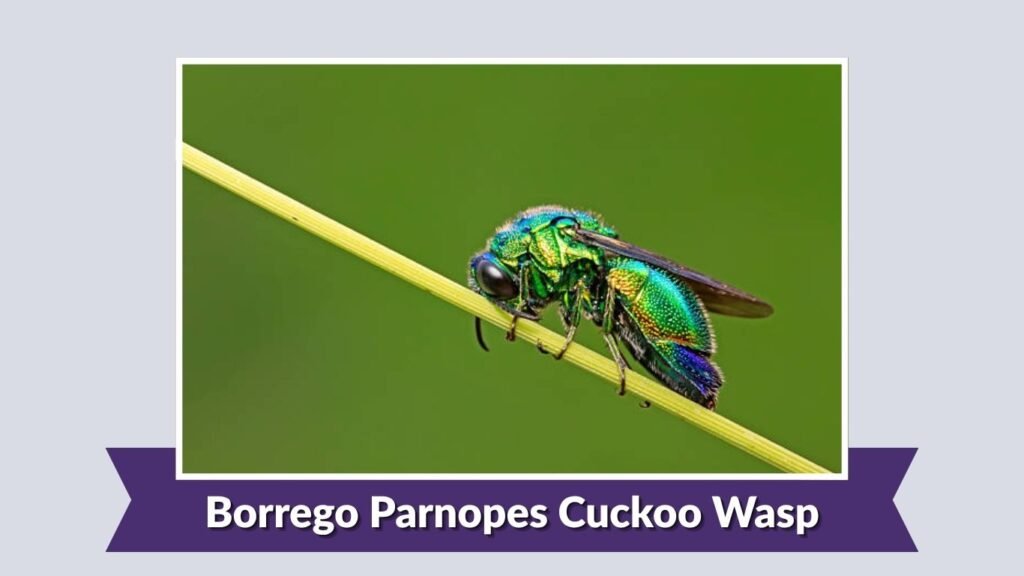
The Borrego Parnopes Cuckoo Wasp is a distinctive member of the cuckoo wasp family associated with dry desert environments. It has the bright metallic colors typical of Chrysididae and a tough body that helps it survive encounters with host insects. Females rely on other solitary wasps to provide suitable nests for their developing offspring.
Identification
- Body: Small to medium-sized and compact
- Color: Metallic green, blue, reddish, or purple
- Wings: Clear to slightly smoky
- Exoskeleton: Hard and strongly sculptured
- Legs: Slender and usually dark
- Antennae: Prominent and segmented
- Appearance: Bright jewel-like sheen in sunlight
Habitat and Distribution
Borrego Parnopes Cuckoo Wasps are associated with arid landscapes, including desert flats, sandy washes, rocky slopes, and open scrub. They are most likely to occur where suitable host wasps establish ground nests. Flowering plants are also important because adults depend on nectar for energy.
Behavior and Diet
Adults mainly visit flowers and feed on nectar. Females search for nests created by host wasps, often inspecting sandy ground and exposed nesting sites. Once an unattended nest is found, the female can enter rapidly and lay her egg. Their strong body armor helps them withstand defensive attacks from returning hosts.
Lifespan and Lifecycle
The egg is laid inside the host nest and hatches within the protected chamber. The larva develops by using resources intended for the host’s offspring and may consume the host larva itself. After completing its feeding stage, it pupates inside the nest before emerging as a mature adult.
19. Jewel Wasp

Jewel Wasp is a broad common name often used for brightly metallic cuckoo wasps because their bodies resemble polished gemstones. These insects may display vivid green, blue, purple, red, or golden colors. Their attractive appearance contrasts with their unusual reproductive strategy, in which females use the nests of other solitary wasps or bees.
Identification
- Body: Small and compact
- Color: Brilliant metallic green, blue, red, purple, or gold
- Wings: Clear to lightly smoky
- Surface: Highly reflective and often heavily pitted
- Exoskeleton: Thick and protective
- Antennae: Dark and segmented
- Distinctive feature: Intense gemstone-like coloration
Habitat and Distribution
Jewel wasps occur in many regions of the world, especially in warm, sunny habitats. Gardens, grasslands, sandy areas, woodland margins, rocky slopes, old walls, and places with dead wood can provide suitable conditions. Their presence is usually connected to the availability of solitary bees and wasps that serve as hosts.
Behavior and Diet
Adults primarily feed on nectar and may be seen visiting small flowers during warm weather. Females search for potential host nests and often move rapidly around burrows, holes, or crevices. Their hard body covering and defensive curling behavior help protect them from attacks while they attempt to enter occupied nesting areas.
Lifespan and Lifecycle
The female places an egg inside the nest of another solitary insect. After hatching, the jewel wasp larva may kill the host offspring and consume food stored within the chamber. It develops and pupates inside the protected nest before emerging as an adult with its characteristic brilliant metallic coloration.
20. Gold Wasp

Gold Wasp is a common descriptive name for cuckoo wasps that display strong golden, bronze, or yellow-green metallic reflections. These tiny insects often shine dramatically in direct sunlight. Like other cuckoo wasps, they are solitary and usually depend on nests built by other insects instead of constructing brood chambers themselves.
Identification
- Body: Small, compact, and armored
- Color: Metallic gold, bronze, yellow-green, or green
- Wings: Transparent to lightly tinted
- Surface: Shiny with distinct pits or sculpturing
- Antennae: Dark and moderately long
- Legs: Slender and often metallic
- Distinctive feature: Bright golden or bronze body reflections
Habitat and Distribution
Gold Wasps can occur wherever appropriate host insects and warm nesting habitats are available. They may be found in dry grasslands, sunny gardens, sandy banks, woodland clearings, old stone walls, and around dead wood. Adults are especially noticeable during warm sunny periods when they visit flowers and inspect host nesting sites.
Behavior and Diet
Adults feed primarily on nectar and other sugary plant liquids. Females actively search for nests belonging to solitary wasps or bees. Once a suitable chamber is located, an egg is deposited inside. Their armored exoskeleton allows them to survive encounters with defensive hosts, while their ability to curl helps protect vulnerable body parts.
Lifespan and Lifecycle
The cuckoo wasp egg hatches inside the host’s nesting chamber. The larva may consume the host offspring and then feed on stored prey or other provisions. After reaching maturity, it pupates within the same protected nest. The adult later emerges and begins searching for flowers, mates, and suitable host nests.
21. Ruby Wasp
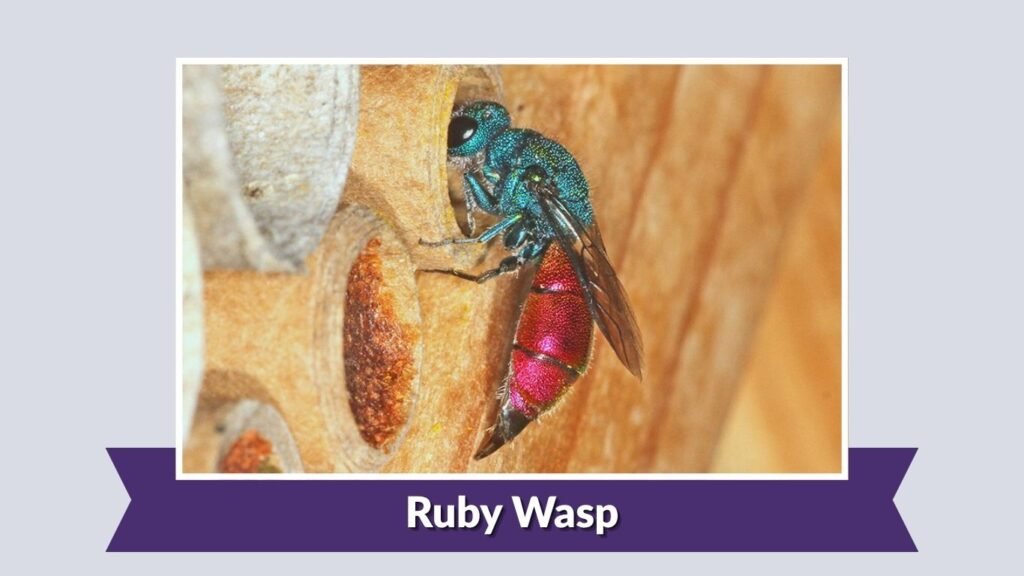
The Ruby Wasp is a brilliantly colored cuckoo wasp known for its intense red, copper, or ruby-toned abdomen combined with metallic green or blue on other parts of the body. Its jewel-like appearance makes it easy to notice in sunlight. Like other cuckoo wasps, females generally rely on nests prepared by solitary bees or wasps.
Identification
- Body: Small, compact, and strongly armored
- Color: Metallic red, ruby, copper, green, or blue
- Wings: Clear to lightly smoky
- Surface: Shiny and often deeply pitted
- Antennae: Dark and segmented
- Legs: Slender and usually metallic
- Distinctive feature: Bright ruby-red abdominal coloration
Habitat and Distribution
Ruby Wasps are typically found in warm, sunny habitats where suitable host insects are abundant. They may occur in gardens, dry meadows, woodland edges, sandy banks, old walls, and areas containing dead wood. Their distribution depends heavily on the availability of solitary bees and wasps that provide nesting chambers.
Behavior and Diet
Adults primarily feed on nectar from flowers. Females spend much of their time searching for host nests in soil, wood, stems, or crevices. They may wait until the host leaves before entering and laying an egg. If attacked, the wasp can rely on its tough outer skeleton and defensive curling posture.
Lifespan and Lifecycle
The female deposits an egg inside a host nest. After hatching, the larva may consume the host egg or larva and then feed on the provisions stored in the chamber. Once fully developed, it pupates inside the nest and later emerges as a brightly colored adult.
22. Emerald Wasp

The Emerald Wasp is named for its dazzling green metallic coloration, which may shift to blue, turquoise, or gold depending on the light. Many cuckoo wasps show this emerald appearance. They are solitary insects whose females use the nests of other wasps or bees rather than constructing and provisioning nests of their own.
Identification
- Body: Small and compact
- Color: Metallic emerald green with blue or golden reflections
- Wings: Transparent to slightly smoky
- Exoskeleton: Thick and heavily armored
- Surface: Often strongly sculptured
- Antennae: Dark and moderately long
- Distinctive feature: Brilliant emerald-green shine
Habitat and Distribution
Emerald Wasps occur in a variety of sunny habitats, including gardens, dry grasslands, woodland clearings, sandy areas, rocky slopes, and old wooden structures. They are most common where solitary bees or wasps nest in abundance. Warm conditions generally increase both host activity and cuckoo wasp activity.
Behavior and Diet
Adults obtain energy mainly from nectar. Females actively investigate holes, burrows, and crevices used by potential hosts. Once they find a suitable nest, they may enter quickly and place an egg inside. Their hardened body helps protect them from host stings and bites during risky encounters.
Lifespan and Lifecycle
The egg hatches inside the host nest, where the young cuckoo wasp develops using the available resources. The larva may eliminate the host offspring before feeding on stored provisions. It then pupates within the protected chamber and eventually emerges as a mature metallic-green adult.
23. Metallic Cuckoo Wasp
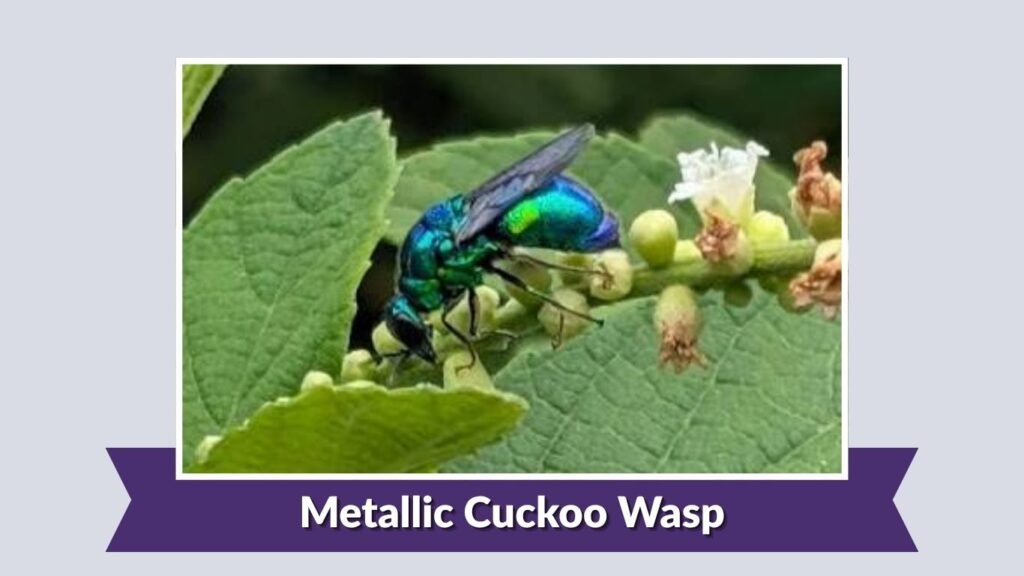
The Metallic Cuckoo Wasp is a general name used for cuckoo wasps with strongly reflective, jewel-like bodies. Depending on the species, individuals may appear green, blue, violet, red, or bronze. Their vivid appearance is paired with a brood-parasitic lifestyle in which females use the nests of other solitary insects for reproduction.
Identification
- Body: Compact and heavily armored
- Color: Metallic green, blue, purple, red, or bronze
- Wings: Clear to lightly tinted
- Surface: Highly reflective and often pitted
- Antennae: Dark and segmented
- Legs: Thin and usually metallic
- Defense: Can curl into a tight protective position
Habitat and Distribution
Metallic Cuckoo Wasps can be found across many temperate and tropical regions. They prefer warm, open environments such as gardens, meadows, dry woodland edges, rocky slopes, sandy banks, and places containing old wood. Their occurrence is closely tied to the presence of suitable solitary bee and wasp hosts.
Behavior and Diet
Adults mainly feed on nectar and occasionally other sugary substances. Females patrol host nesting areas and carefully inspect entrances to burrows and cavities. If a host temporarily leaves, the cuckoo wasp may quickly enter and lay an egg. Its armored body is especially useful if the host returns unexpectedly.
Lifespan and Lifecycle
After hatching, the larva develops inside the host nest. Depending on the species, it may consume the host offspring or compete for stored food. The larva grows within the protected chamber, enters the pupal stage, and later emerges as a fully developed metallic adult.
24. Green Cuckoo Wasp

The Green Cuckoo Wasp is recognized by its brilliant green metallic body, often highlighted with blue, turquoise, or bronze reflections. It is a solitary brood parasite rather than a nest-building species. Females depend on other wasps or bees to prepare nesting chambers and food resources that can later be used by their own offspring.
Identification
- Body: Small, rounded, and compact
- Color: Metallic green to blue-green
- Wings: Clear or lightly smoky
- Exoskeleton: Hard and shiny
- Surface: Frequently pitted or sculptured
- Antennae: Dark and moderately long
- Distinctive feature: Strong green iridescent coloration
Habitat and Distribution
Green Cuckoo Wasps occur in sunny habitats where host insects are active. They may be seen in gardens, dry grasslands, woodland margins, rocky ground, sandy areas, and around old walls or dead wood. Flower-rich environments are particularly useful because adults require nectar while searching for host nests.
Behavior and Diet
Adults commonly visit flowers for nectar. Females spend considerable time locating burrows and cavities occupied by solitary bees or wasps. They may remain nearby until the host leaves and then enter to lay an egg. When threatened, their tough exoskeleton and curled body posture can protect vulnerable parts.
Lifespan and Lifecycle
The female lays an egg inside a host brood chamber. After hatching, the young cuckoo wasp may consume the host larva or use the food stored for it. The larva eventually completes its growth and pupates within the nest. The adult later emerges and begins searching for flowers and suitable hosts.
25. Golden Cuckoo Wasp
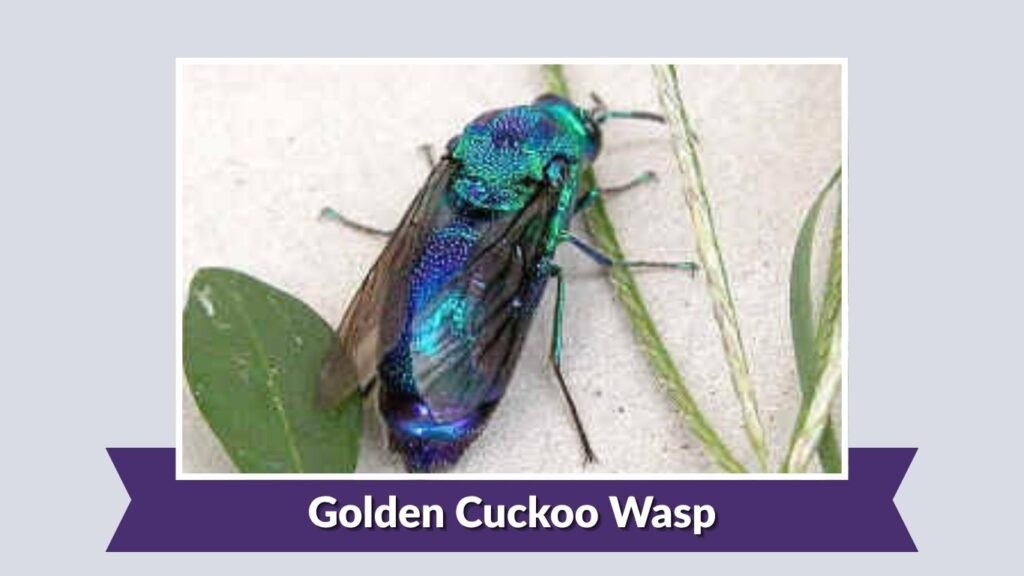
The Golden Cuckoo Wasp is a striking metallic wasp that may appear golden, bronze, greenish-gold, or coppery in sunlight. Its hardened body and brilliant coloration are typical of cuckoo wasps. Females do not normally build nests themselves but instead exploit nests created by solitary wasps or bees.
Identification
- Body: Small and strongly armored
- Color: Metallic gold, bronze, copper, or greenish-gold
- Wings: Transparent to lightly smoky
- Surface: Shiny and often strongly textured
- Antennae: Dark and segmented
- Legs: Slender with metallic reflections
- Distinctive feature: Bright golden or bronze appearance
Habitat and Distribution
Golden Cuckoo Wasps are generally found in warm, sunny habitats that support suitable host insects. Typical environments include gardens, dry fields, sandy banks, rocky slopes, woodland clearings, old walls, and areas with dead timber. Their range varies depending on the particular species represented by the common name.
Behavior and Diet
Adults mainly feed on nectar from flowers. Females search carefully for the nests of solitary bees and wasps and may inspect many cavities before finding a suitable host. Once inside, they deposit an egg. Their thick exoskeleton helps them survive encounters with defensive nest owners.
Lifespan and Lifecycle
The egg develops within the host’s nest chamber. After hatching, the cuckoo wasp larva uses the host’s food supply and may destroy the original offspring. It feeds until mature, pupates inside the nest, and eventually emerges as an adult with the distinctive metallic coloration typical of cuckoo wasps.
FAQs
1. Are cuckoo wasps dangerous to humans?
Cuckoo wasps are generally not dangerous to people. They are solitary and do not defend large colonies. Most species are far more interested in flowers and the nests of other insects than in humans. Their small size and nonaggressive behavior make encounters relatively harmless.
2. Why are they called cuckoo wasps?
They are called cuckoo wasps because many species lay their eggs in the nests of other wasps or bees, similar to the way cuckoo birds use the nests of other birds. Their larvae then develop using the host’s stored food or offspring.
3. What do cuckoo wasps eat?
Adult cuckoo wasps mainly feed on nectar and other sugary plant liquids. Their larvae have a very different diet. Depending on the species, they may eat the host larva, egg, or the stored prey and food provisions inside the host nest.
4. Where do cuckoo wasps live?
Cuckoo wasps live in many warm and temperate regions around the world. They are often found in gardens, meadows, sandy areas, woodland edges, rocky slopes, old walls, and places with dead wood where solitary bees and wasps commonly build nests.
5. Why are cuckoo wasps so colorful?
Their metallic green, blue, red, purple, and gold colors come from microscopic structures on the exoskeleton that reflect light. This structural coloration gives them their jewel-like appearance. Their hard outer body also provides protection when they enter nests belonging to potentially aggressive host insects.