
Army ants are known for their coordinated foraging, mobile colonies, and remarkable teamwork. Yet these insects do not all behave alike. Some hunt in visible columns across the forest floor, while others spend most of their lives in underground tunnels. Found across tropical and subtropical regions, different species vary in appearance, nesting habits, and food preferences. This guide explores 20 types of army ants, highlighting their identification features, habitats, behavior, diets, and life cycles to help you understand the diversity behind their shared name.
1. Eciton burchellii

Eciton burchellii is one of the best-known army ants of tropical America. Its colonies send broad hunting swarms across the forest floor, flushing insects and other small animals from hiding. Workers cooperate in capturing prey, transporting food, and building temporary nests from their own bodies.
Identification
- Workers vary considerably in size, measuring approximately 3–12 millimeters long.
- Body coloration ranges from golden or reddish brown to darker brown.
- Soldiers have large heads and long, curved mandibles specialized for defense.
- Workers have elongated legs, small eyes, and a waist consisting of two segments.
Habitat and Distribution
This species inhabits tropical forests from southern Mexico through Central America into South America. Shaded ground and humid conditions provide suitable routes for its hunting columns. Colonies occupy temporary shelters called bivouacs, where thousands of workers link together around the queen and developing young. These living structures can be dismantled when the colony moves.
Behavior and Diet
Raids usually take place during daylight. Workers spread into a broad front, searching through leaf litter and overwhelming prey through coordinated attacks. Their diet includes other ants and their brood, along with various insects and spiders.
Birds often follow these swarms to catch animals escaping the ants. The birds generally pursue fleeing prey rather than feeding on the army ants themselves. Workers also form bridges across gaps, helping nestmates travel between the hunting front and bivouac.
Life Cycle
Development proceeds through egg, larva, pupa, and adult stages. Colony movements follow a repeating cycle associated with brood development.
During the stationary phase, the queen lays eggs while the older brood develops into adults. When the eggs hatch, growing larvae require substantial food, and the colony enters its nomadic phase. Workers frequently relocate the bivouac while carrying the young between sites. The cycle lasts roughly five weeks, although this describes colony activity rather than an individual ant’s lifespan.
2. Eciton hamatum

Eciton hamatum is a tropical army ant recognized for its organized hunting columns and frequent use of trees while searching for prey. Its workers raid colonies of other social insects, carrying captured broods back along busy trails to feed their own colony.
Identification
- Smaller workers are generally orange-yellow to reddish orange.
- Soldiers have enlarged heads with long, curved mandibles.
- The soldier’s head surface is relatively smooth and shiny.
- The first waist segment is elongated and low when viewed from the side.
Habitat and Distribution
Its range extends from Mexico through Central America to parts of South America, including Brazil and Bolivia. In Costa Rica, it is especially associated with wet lowland forests.
Workers travel across the forest floor but also climb trunks and branches. This ability gives them access to insect colonies nesting above ground. Observations from Costa Rica distinguish its habitat preferences from those of species that also occupy dry forests and mountainous areas.
Behavior and Diet
Hunting parties typically move in columns rather than the broad carpets characteristic of Eciton burchellii. Raids can occur during the day or at night, so activity time alone is not a dependable identification feature.
Common prey includes the brood of other ants and social wasps. Workers may climb trees to reach nests containing concentrated supplies of larvae and pupae. Recorded ant prey includes members of Camponotus and Dolichoderus.
This feeding strategy makes the species a predator of entire insect colonies, with workers cooperating to retrieve food from defended nesting sites.
Life Cycle
Like other Eciton species, this ant alternates between stationary and nomadic phases linked to brood development. Workers care for the queen, feed larvae, and transport developing young during relocations.
The queen remains wingless throughout her life. New colonies arise through colony division, with workers accompanying a queen, rather than through a lone queen flying away to establish a nest independently. This keeps reproduction closely connected to the colony’s cooperative way of life.
3. Eciton dulcium

Eciton dulcium is a comparatively inconspicuous army ant whose narrow trails can be difficult to follow through forest litter. Its less visible activity makes it easy to overlook, even in places where researchers have studied army ants for many years.
Identification
- In the Central American subspecies E. dulcium crassinode, smaller workers have dark reddish-brown heads and middle body sections.
- The rear body region is a contrasting orange-brown.
- Soldiers possess long, sickle-shaped mandibles and a finely textured, dull head surface.
- Fine hairs and the shape of the waist help specialists distinguish it from similar species.
Habitat and Distribution
Records include Costa Rica and Panama, as well as parts of South America, including Brazil and Argentina. Central American observations frequently concern the subspecies E. dulcium crassinode.
In Costa Rica, researchers have recorded it in lowland forests, including the Osa Peninsula and La Selva Biological Station. Its discovery at well-surveyed sites demonstrates why infrequent sightings should not automatically be interpreted as proof that a species is absent.
Behavior and Diet
Colonies raid in relatively small, loosely spaced columns. A trail may be only one worker wide, with ants disappearing between fallen leaves. Nocturnal activity further reduces their visibility, although daytime observations also exist.
This species feeds primarily on other ants and their brood. Comparative research has documented a diet focused on particular large predatory ants, rather than the wider variety of arthropods taken by Eciton burchellii. Such dietary differences help explain why several army ant species can occupy the same forest.
Life Cycle
Eggs develop into larvae, then pupae, before emerging as adults. Workers provide food and protection throughout the immature stages.
The colony follows the alternating stationary and nomadic pattern characteristic of Eciton. Its bivouacs occupy underground cavities, but this does not mean all hunting occurs underground. Workers also raid and relocate across the surface, where their narrow trails may remain partly concealed by leaf litter.
4. Eciton mexicanum
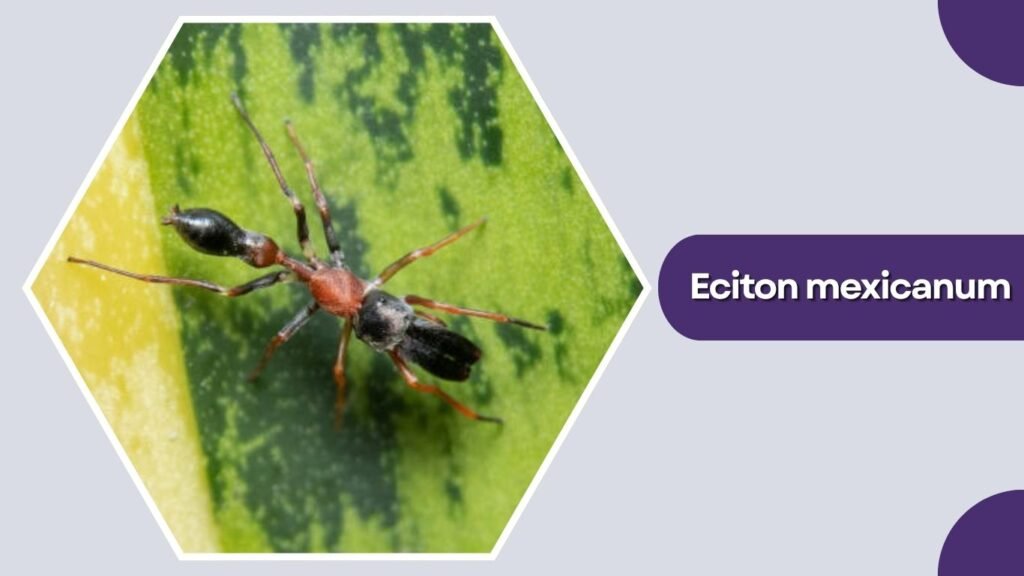
Eciton mexicanum is a widespread army ant found across a broader range of forest conditions than its name might suggest. Its hunting columns are often encountered after dark, and colonies shelter in underground cavities between periods of activity.
Identification
- Smaller workers typically have maroon or dark reddish-brown heads and middle body sections.
- The rear body region is often lighter, appearing yellowish brown.
- Soldiers have enlarged heads with a dull, finely textured surface.
- The first waist segment is relatively long and low, helping distinguish it from some similar species.
Habitat and Distribution
This species ranges from Mexico through Central America into South America, reaching northern Argentina. It occurs in both wet and dry forests, with records extending from lowland environments into mountainous areas.
That broad distribution means neither the country of observation nor forest moisture alone can confirm its identity. Color provides a useful starting point, but accurate identification requires examining structural details and comparing workers of similar size.
Behavior and Diet
Workers hunt in columns rather than spreading into a broad swarm. Activity is frequently nocturnal, although columns sometimes appear during daylight.
Other ants form an important part of its diet. Field observations have recorded prey belonging to Ectatomma and ants historically classified within Pachycondyla. These observations identify known prey, but they should not be treated as a complete menu across the species’ extensive range.
Its underground nesting habits also need to be distinguished from its hunting behavior: workers can travel and raid above ground despite sheltering below the surface.
Life Cycle
The colony’s brood passes through egg, larval, pupal, and adult stages. As in related species, synchronized brood development accompanies alternating periods of residence and movement.
During migration, workers transport the young while the queen travels with the colony. One documented relocation occurred more than 12 hours after earlier raiding activity. Researchers suggested that workers were following a persistent chemical trail toward a previously selected bivouac site.
5. Eciton vagans

Eciton vagans is an army ant whose colonies usually hunt in columns, often at night. It can resemble other dark-colored Eciton species, making the structure of individual workers more useful for identification than color or marching behavior alone.
Identification
- Smaller workers commonly appear dark brown or maroon, sometimes with a lighter rear body region.
- Soldiers have enlarged heads and curved defensive mandibles.
- In Costa Rican identification keys, smaller workers have a raised ridge near the front of the first waist segment.
- Worker size and regional variation must be considered when comparing specimens.
Habitat and Distribution
The species occurs in tropical America, with records from Mexico, Central America, and parts of South America. It has been reported from both wet and dry forest environments.
Its bivouacs may occupy sheltered spaces beneath logs or within rock crevices. Some are relatively exposed, while others remain well concealed. This variation makes nest position alone an unreliable way to identify the species.
Behavior and Diet
Foraging workers move along organized trails, with activity commonly occurring after sunset. Their column formation helps distinguish a typical raid from the broad hunting front of Eciton burchellii, although several other army ants also form columns.
Other ants and their brood are important prey. Workers cooperate in attacking nests and carrying captured food away. Studies of Eciton feeding ecology show that prey selection differs among species, so a shared hunting style does not necessarily mean an identical diet.
For field identification, a combination of behavior, worker appearance, and microscopic features is more dependable than any single clue.
Life Cycle
The life cycle includes complete metamorphosis: egg, larva, pupa, and adult. Developing young remain dependent on workers for food, transport, and protection.
Colonies alternate between stationary periods and a more mobile phase associated with growing larvae. During relocations, workers carry brood along the migration route to another temporary shelter. The whole colony moves together, maintaining care of the young while changing its nesting location.
6. Eciton lucanoides
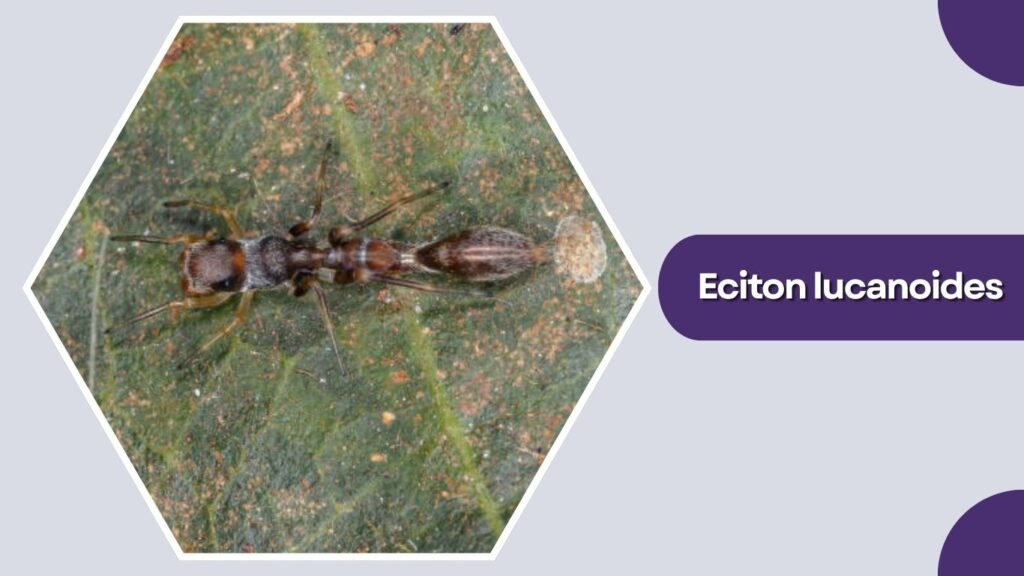
Eciton lucanoides is a tropical army ant that resembles Eciton hamatum but differs in several details of its soldiers and body structure. Its colonies hunt in organized columns, and observations from Costa Rica show that activity can occur during both daylight and darkness.
Identification
- Smaller workers are generally orange-yellow, sometimes with reddish shading on the middle body.
- Soldiers have a dull, finely textured head rather than the shiny head typical of Eciton hamatum.
- The soldiers’ curved mandibles carry a noticeable tooth along the inner edge.
- Viewed from behind, raised structures on the rear of the middle body form a Y-shaped ridge.
Habitat and Distribution
Records extend from Nicaragua through Central America into parts of South America, including Peru, Bolivia, and western Brazil. In Costa Rica, the species inhabits mature wet forests along the Atlantic slope.
It occurs in lowland forests and at intermediate elevations. Because workers resemble those of Eciton hamatum, reliable identification requires examining more than their color or the appearance of a moving column.
Behavior and Diet
Workers raid in columns rather than forming the broad hunting carpets associated with Eciton burchellii. Columns may disappear among leaves and roots, making their full extent difficult to observe.
Other ants are important prey. Research comparing army ant communities in Costa Rica and Ecuador included this species and documented its prey relationships. Such studies show why army ants should not all be described as indiscriminate hunters: different species can concentrate on different portions of the available ant community.
Life Cycle
Development follows the egg, larva, pupa, and adult sequence. Workers feed the larvae and protect developing broods within the colony’s temporary shelter.
As general Eciton biology, colony activity alternates between stationary and nomadic phases associated with brood development. This pattern provides context for understanding E. lucanoides, but precise developmental times and individual lifespans should not be borrowed from better-studied species.
7. Eciton quadriglume
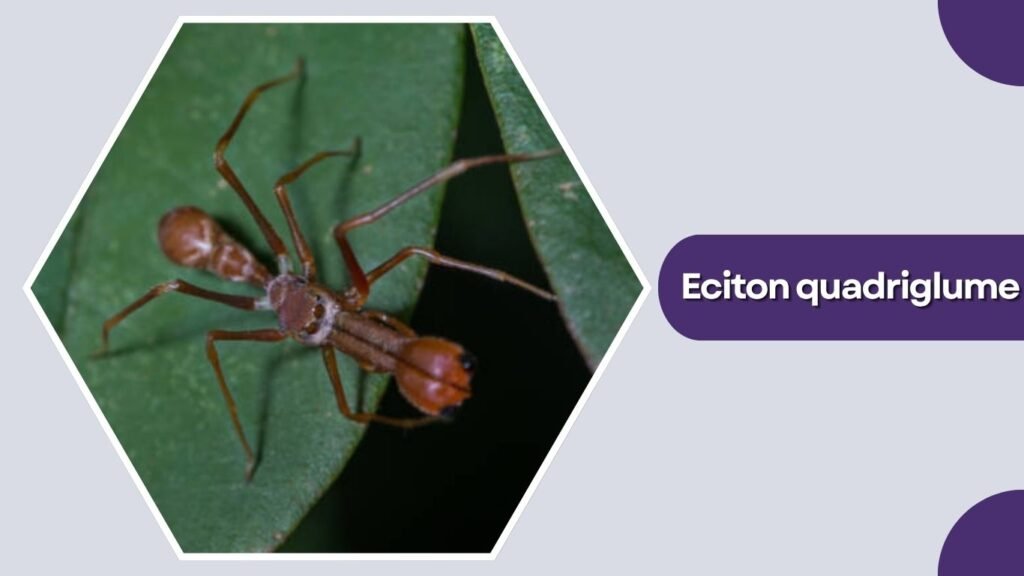
Eciton quadriglume is an army ant recorded across parts of Central and South America. Although less familiar than Eciton burchellii, it has appeared in taxonomic studies, research on ant-associated insects, and reports concerning attacks on other ant colonies.
Identification
- Soldiers possess elongated, curved mandibles.
- Historical comparisons describe a relatively small tooth along the inner edge of each soldier’s mandible.
- Workers have the narrow, two-segmented waist characteristic of Eciton.
- Identification requires comparing the head, mandibles, and waist with specialist descriptions rather than relying on color alone.
The soldier’s mandibular tooth is less developed than that described for Eciton lucanoides, providing a useful comparative feature.
Habitat and Distribution
Published records include Argentina, Brazil, Colombia, Panama, Paraguay, and Peru. These records establish a substantial geographic range, but they do not demonstrate that the species is equally common throughout it.
Information about its precise nesting preferences and local abundance is less complete than for the most intensively studied army ants. Consequently, a country record should not be interpreted as evidence that every forest within that country supports colonies.
Behavior and Diet
This species has been reported among army ants capable of raiding nests of Atta, the leaf-cutting ants. That association distinguishes it from army ants that often ignore these well-defended colonies.
An attack on leaf-cutting ants does not make Eciton quadriglume a leaf eater. It is the ants and their developing brood, rather than the vegetation they collect, that provide potential animal food. The available reports should not be treated as a complete account of its diet.
Life Cycle
Like other ants, this species undergoes complete metamorphosis. Its winged males have been recorded in studies of reproductive flight activity in southern Brazil.
Those observations document male seasonality at particular locations. They do not establish a universal breeding month, worker lifespan, or development schedule across the species’ entire range.
8. Eciton rapax

Eciton rapax stands out because it lacks the separate, highly modified soldier caste found in many other Eciton species. Its workers still differ in size and duties, demonstrating that an army ant colony can divide labor without producing distinctive, oversized soldiers.
Identification
- Colonies lack the conspicuous soldier form with greatly enlarged heads and specialized sickle-shaped jaws.
- Workers vary in size but retain broadly similar body proportions.
- Larger foraging workers are particularly important in transporting captured prey.
- Identification should consider several workers, since one individual cannot reveal the colony’s size distribution.
Habitat and Distribution
This species occurs in South America, including Amazonian forests. Research in Pará, Brazil, documented temporary nests beneath fallen logs, among roots, and in cavities associated with the ground.
The same study recorded a bivouac inside a hollow tree approximately three meters above ground. This observation shows that its nesting behavior is more flexible than a simple description of “underground nesting” would suggest. A sheltered cavity above ground may also offer protection during wet conditions.
Behavior and Diet
A detailed foraging study described exceptionally extensive raid systems. The species specializes in hunting other ants associated with the forest floor and vegetation above it.
Worker size influences the division of labor. Researchers found that ants retrieving prey were, on average, larger than other foraging workers. This does not mean every large worker performs one fixed task, but it demonstrates a relationship between body size and food transport.
Its hunting system therefore combines collective raiding with differences in how individual workers contribute.
Life Cycle
Young develop through egg, larval, and pupal stages before emerging as adults. Workers care for the brood within temporary bivouacs and transport it during colony movements.
The lack of a separate soldier caste does not remove the need for brood care, defense, or food collection. These colony functions are performed by workers whose differences are less visually dramatic than those of many related army ants.
9. Eciton setigaster

Eciton setigaster is among the least thoroughly documented species in this list. Much of its available taxonomic information concerns male specimens. Its inclusion illustrates an important point: scientists can recognize an ant species even when detailed observations of its colonies remain unavailable.
Identification
- Available diagnostic descriptions emphasize males rather than familiar marching workers.
- Males possess conspicuous hairs, called setae, on the rear body.
- These abdominal hairs can create a resemblance to males of Nomamyrmex.
- Compared with Nomamyrmex, the hairs are less dense and less exceptionally long.
These are specialist identification features. They should not be used as a description of the worker caste or as a simple guide to identifying ants moving across the forest floor.
Habitat and Distribution
Historical specimen records include Brazil, Bolivia, and Peru. The original material included males collected in the Amazon region, and museum catalogues preserve information about these specimens.
Such records establish where identified individuals were collected. However, a flying male can travel away from its natal colony, so its collection point does not necessarily reveal the colony’s nesting site or preferred ground conditions.
Behavior and Diet
A detailed, verified account of this species’ hunting behavior is not available in the sources reviewed here. Its classification within Eciton suggests a relationship to the collective predation characteristic of the genus, but that is an inference rather than a documented feeding study.
Specific prey species, raid widths, colony populations, and daily hunting schedules should therefore remain unspecified. Descriptions of enormous daytime swarms would imply observations that have not been established.
Life Cycle
As an ant, it develops through egg, larval, pupal, and adult stages. Beyond that general sequence, its developmental timing and reproductive biology remain poorly documented.
Studies have recorded male flight activity, but male captures alone cannot establish worker lifespan, queen longevity, or the timing of colony division. Those questions require observations connecting reproductive individuals with their colonies.
10. Eciton drepanophorum

Eciton drepanophorum is a South American army ant described by Frederick Smith in 1858. It resembles certain other Eciton species, and much of the accessible information concerns its appearance and geographic records rather than detailed observations of its daily colony activities.
Identification
- The original description characterizes larger workers as reddish-yellow with a paler yellow head.
- The head of the described larger worker is smooth and shiny.
- The basal antennal segment is reddish brown, described historically as ferruginous.
- Larger workers possess elongated, curved mandibles.
These features come from the original taxonomic account. Modern identification should compare specimens with current reference material, because worker size, geographic variation, and historical species interpretations can complicate comparisons.
Habitat and Distribution
Records include Bolivia, Brazil, Colombia, Ecuador, French Guiana, Peru, and Suriname. This places the species across a considerable portion of tropical South America.
Researchers have also recorded it in surveys of leaf-litter ants in Guianese rainforest. Such observations establish its presence in forest communities, but they do not demonstrate that it is abundant everywhere within its reported range.
Behavior and Diet
Its placement in Eciton identifies it with the group-hunting army ants. However, detailed information about preferred prey, raid dimensions, and the balance between daytime and nighttime activity is limited in the available accounts.
The safest description is therefore a predatory army ant whose particular feeding ecology needs further documentation. Claims that it routinely consumes certain insects, forms exceptionally large swarms, or hunts continuously should not be presented as established facts without direct observations.
Life Cycle
Development includes eggs, larvae, pupae, and adults. In studying Eciton species, workers coordinate brood care with alternating stationary and nomadic phases.
That broader pattern is useful background, but it does not provide a measured timetable for Eciton drepanophorum. Exact egg production, developmental duration, and individual longevity should remain unspecified until supported by research on this species.
11. Eciton jansoni
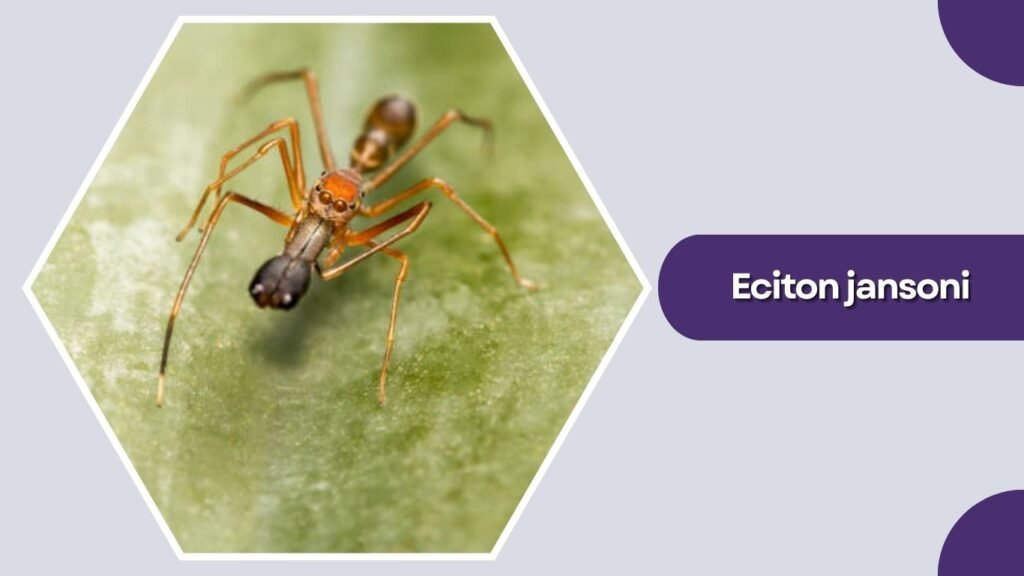
Eciton jansoni is an army ant name associated primarily with male specimens. Its relationship with Eciton lucanoides remains an important taxonomic question. Although listed separately in catalogues, researchers have suggested that these names may describe different castes belonging to the same species.
Identification
- Published descriptions primarily concern winged males.
- Males have the developed eyes and flight structures typical of reproductive male ants.
- A slight projection along the inner edge of the male mandible has been noted.
- Identification requires specialist comparison; these features do not provide a confirmed description of its workers.
Habitat and Distribution
Historical records extend from Nicaragua through Costa Rica and Panama into Colombia and Ecuador. In Costa Rica, males identified as Eciton jansoni have been associated with primary forests along the Atlantic slope.
These localities overlap with records of Eciton lucanoides. That overlap helped researchers propose a connection between the male-based name and colonies identified from workers. However, overlapping distributions alone cannot establish that two names represent the same species.
Behavior and Diet
A separate, securely documented account of hunting behavior under the name Eciton jansoni is difficult to provide. If the proposed association with Eciton lucanoides is confirmed, observations of that species would help explain its colony behavior.
Until then, specific prey lists, raid sizes, and hunting schedules should not be presented as independently established facts. Male specimens reveal information about reproduction and distribution, but they do not directly show how workers locate and capture food.
Life Cycle
Like other ants, individuals develop through egg, larval, pupal, and adult stages. In army ants generally, winged males disperse to mate, while workers remain wingless.
The unresolved association between males and workers limits what can confidently be assigned to this particular name. Connecting specimens through colony collections or genetic evidence would help clarify both its identity and life history. This is why the earlier list should not be interpreted as twenty equally well-understood, unambiguously distinct biological species.
12. Eciton uncinatum

Eciton uncinatum is a poorly documented army ant described by Thomas Borgmeier in 1953. Its original description was based on a male collected in Ecuador. Available records provide a foundation for recognizing the name, but reveal little about the colonies that produced these reproductive ants.
Identification
- The original reference specimen is a male rather than a worker.
- Identification depends on male anatomical features examined in taxonomic descriptions.
- A dependable description of worker coloration, size, or soldier appearance is not established in the sources reviewed.
- Photographs of unidentified marching army ants cannot reliably be assigned to this species from location alone.
Habitat and Distribution
The documented type locality is Chimborazo, Ecuador. A museum catalogue records the original male as having been collected in September 1894, decades before the species was formally described.
This distinction between collection date and description date is common in taxonomy: specimens may remain in collections until a specialist studies them. The locality establishes a historical occurrence, but it does not define the species’ complete range, preferred elevation, or nesting habitat.
Behavior and Diet
Detailed observations of its workers, raids, and prey are not available in the accounts reviewed. Its placement within Eciton suggests the collective predatory lifestyle associated with that genus, but this remains an inference when applied to its undocumented colony behavior.
Descriptions of enormous swarms, particular prey preferences, or regular nighttime hunting would therefore go beyond the available evidence. Even a flying male’s collection site may be some distance from its natal colony.
Life Cycle
The basic developmental sequence is egg, larva, pupa, and adult. Precise development times, queen longevity, worker lifespan, and colony population remain undocumented here.
The September collection date records one adult male’s presence. It does not establish an annual mating season. Repeated observations across years, together with securely identified colonies, would be needed to describe its reproductive schedule.
13. Dorylus nigricans

Dorylus nigricans belong to the African driver ants, a group famous for collective hunting and substantial differences in worker size. Its name has a complicated taxonomic history, so descriptions from different regions and older publications require care when comparing appearance, distribution, and behavior.
Identification
- Workers vary markedly in size, with large individuals bearing substantial heads and mandibles.
- Workers lack functional eyes.
- The waist has a single distinct node, unlike the two-segmented waist of Eciton workers.
- Species identification requires examining head shape, mandibles, and other structural details rather than color alone.
These features help recognize Dorylus, but are not all unique to Dorylus nigricans. Similar driver ants can be difficult to distinguish without specialist examination.
Habitat and Distribution
The name has been applied to driver ants across sub-Saharan Africa. Members of its species group inhabit forest and savanna landscapes, although individual species and regional forms differ in their distributions.
Recent taxonomic work continues to clarify these relationships. Consequently, an older record using Dorylus nigricans should be checked before assuming it refers to exactly the same population or form discussed in another study.
Behavior and Diet
Driver ants hunt collectively, using chemical communication to maintain trails and coordinate movement. Large workers contribute to defense, while other workers capture, process, and transport food.
Surface raids search through ground vegetation and litter for animal prey. Driver ants collectively consume a variety of invertebrates, but prey composition varies among species, colonies, and locations. A dramatic observation of one raid should not be treated as a complete diet description.
Their coordinated activity also does not depend on the queen directing individual hunters. Workers respond to signals and encounters along the trail.
Life Cycle
Individuals pass through egg, larval, pupal, and adult stages. Colonies generally contain a reproductive queen supported by numerous workers.
Queens are permanently wingless, and new colonies form through division with accompanying workers. Nest relocations and brood development should not automatically be assigned the rigid five-week schedule often described for better-studied Eciton species.
14. Dorylus wilverthi
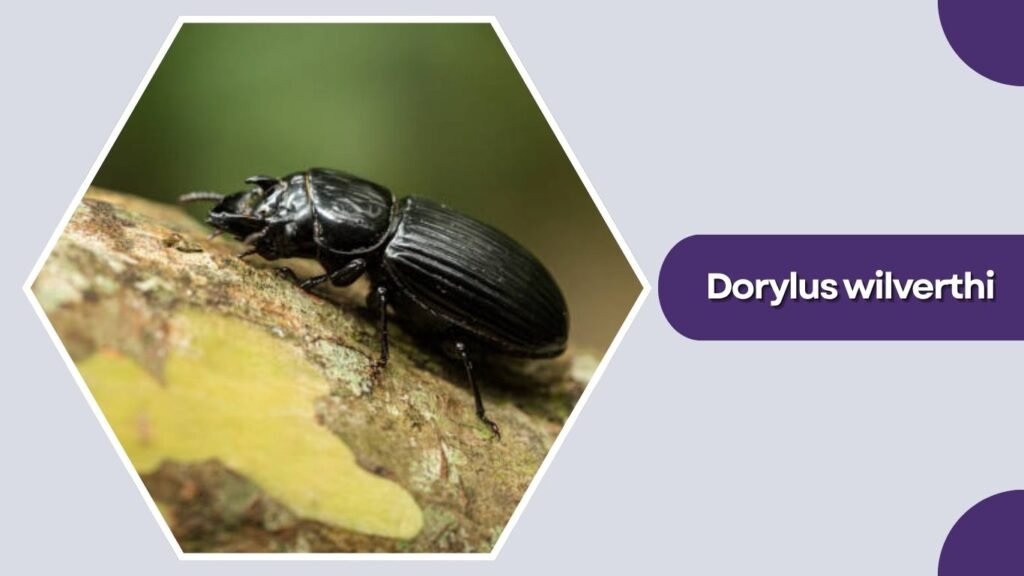
Dorylus wilverthi is a conspicuous African driver ant associated with tropical forests. Its large colonies conduct collective raids, and workers cooperate in transporting prey. Research on this species has also helped reveal how forest loss can affect army ant populations.
Identification
- Workers show substantial size variation, including large defensive individuals.
- Larger workers characteristically have horn-like projections at the rear corners of the head.
- Workers possess strong mandibles and lack functional eyes.
- Head projections can vary between populations, so this feature should be assessed alongside other characters.
Studies comparing related East African driver ants have shown why identification can become complicated where populations overlap.
Habitat and Distribution
This species occurs in tropical Africa, with well-studied populations in central and eastern African forests. Field research includes sites in Uganda and western Kenya.
In the Kakamega region of Kenya, researchers found a strong relationship between surrounding forest cover and colony abundance. Their results indicate that conserving sufficient forest across the landscape matters, rather than considering only the immediate location where a hunting trail is observed.
Behavior and Diet
Workers forage collectively across the ground and into low vegetation. Their prey includes various invertebrates, and systematic sampling has shown that diet must be assessed across multiple colonies and raids.
An especially interesting behavior is cooperative food transport. Several workers can combine their efforts to carry a heavy item that would be difficult for one ant to move. Research comparing Dorylus wilverthi with Eciton burchellii documented efficient transport teams in both species.
Life Cycle
Eggs hatch into larvae, which depend on workers for feeding and protection. After pupation, adults emerge and contribute to colony activity.
The wingless queen remains with the colony, while males possess wings for reproductive dispersal. Colonies occupy temporary nesting sites and relocate periodically. These movements should not be described as constant wandering: a colony can remain at one location while workers continue making hunting trips.
15. Dorylus gribodoi
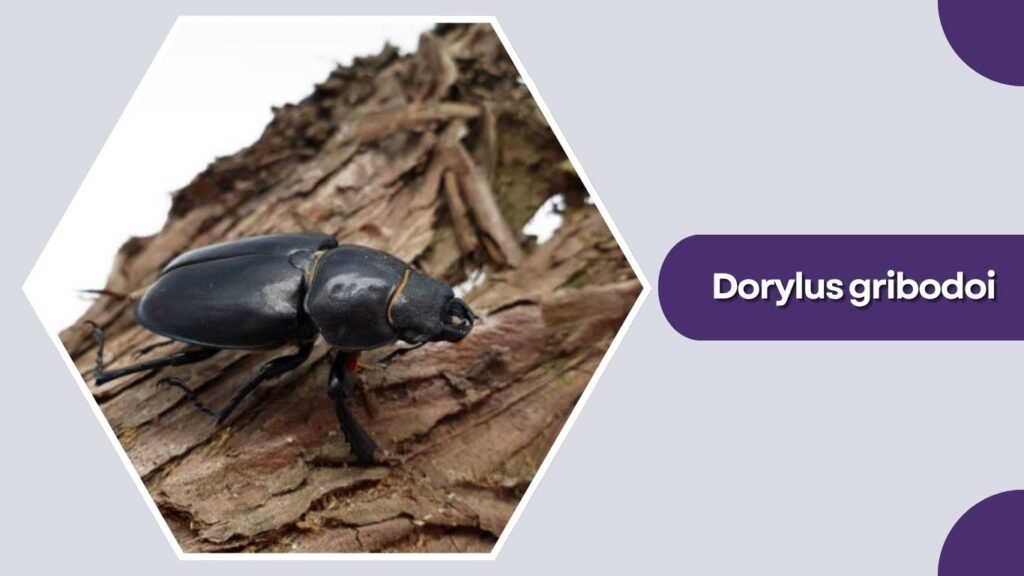
Dorylus gribodoi is a West African army ant whose relatively concealed hunting activity contrasts with the conspicuous surface swarms of some driver ants. Its identification and biology became clearer when researchers connected previously separate male and worker names using genetic and morphological evidence.
Identification
- The waist node is nearly circular when viewed from above.
- Larger workers have a ridge along the rear of the head, ending in small horn-like projections.
- Workers vary considerably in size.
- Their legs and mandibles are relatively shorter than those of comparable surface-swarming driver ants.
Habitat and Distribution
Documented populations extend from Guinea and Liberia eastward to Cameroon. The species occupies humid environments, including rainforest and gallery forest within landscapes containing both woodland and savanna.
Records reach elevations of approximately 1,600 meters. Its concealed nests and litter-level activity make colonies harder to locate than those producing conspicuous exposed trails.
Behavior and Diet
Workers hunt within the leaf-litter layer and retreat into tunnels when disturbed or exposed to sunlight. Limited observations suggest that earthworms form a particularly important part of their diet.
However, those observations do not establish that earthworms are their only food everywhere. Prey availability and local conditions may influence what a colony captures.
This species also illustrates the variety hidden within the term “army ant.” Group predation does not always produce an obvious carpet of ants crossing open ground; substantial activity may occur beneath leaves and close to the soil surface.
Life Cycle
Development follows the usual ant sequence of egg, larva, pupa, and adult. Workers provide the care that allows immature stages to develop within the colony.
Researchers described a queen collected together with workers in Ivory Coast, helping link the reproductive and worker forms. That association is particularly valuable in army ants, whose males, queens, and workers can look very different. Detailed lifespan and developmental estimates remain less established than its identifying anatomy, so figures from other Dorylus species should not be substituted.
16. Dorylus laevigatus
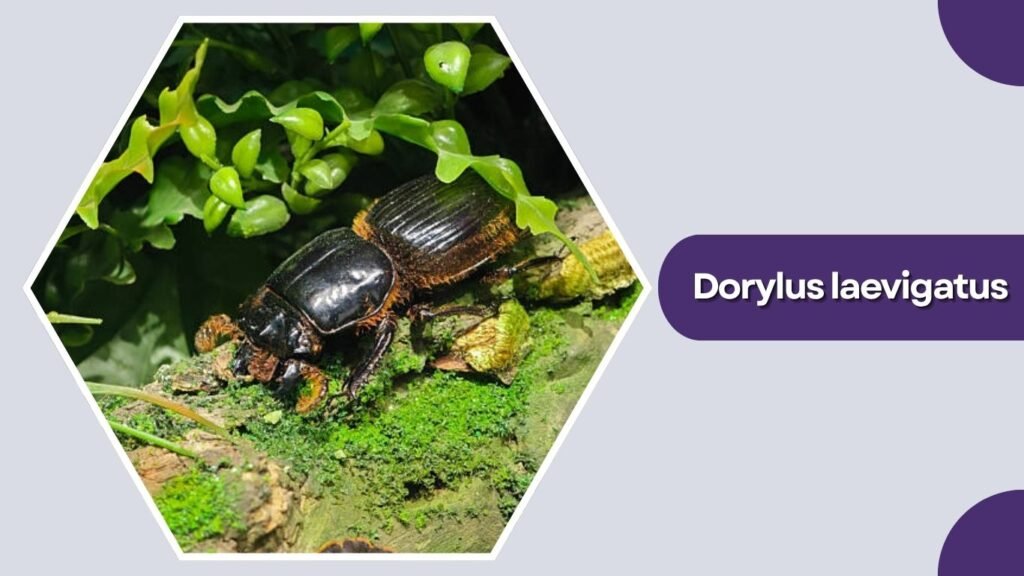
Dorylus laevigatus is an Asian army ant that spends most of its life underground. Its colonies use branching tunnels to find food, making their activities much less conspicuous than the surface raids associated with many other army ants.
Identification
- Workers lack functional eyes and vary considerably in size.
- Worker antennae have 12 segments.
- Larger workers have broader heads and stronger mandibles than smaller workers.
- Antennal structure helps distinguish it from other Asian Dorylus species.
Habitat and Distribution
This species occurs in Southeast Asia, with detailed studies conducted in Malaysia. It occupies underground habitats in both forests and agricultural landscapes, including oil palm plantations.
Its nests can be difficult to locate because the surface may show little evidence of the colony below. Researchers have used buried food baits and excavation to trace workers back toward their nesting chambers.
Behavior and Diet
Workers forage through relatively stable tunnel networks. Smaller individuals explore narrow spaces, while larger workers can assist when substantial food sources are discovered. Occasional surface raids have also been recorded, particularly at night.
Its feeding habits extend beyond a simple description of an insect predator. Research documents arthropod hunting, while a study in northern Thailand reported infestations of vegetable roots, including Chinese radish, pak choi, and peanut. These findings show that its relationship with agriculture varies by setting.
Life Cycle
The colony contains a wingless reproductive queen, workers, and developing brood. Workers maintain the nest and care for the immature ants.
Nest occupancy and relocation do not follow the rigid schedule familiar from some Eciton species. Studies describe flexible nesting arrangements, including colonies occupying connected underground cavities. This flexibility allows colony organization to accommodate changing conditions below ground.
17. Dorylus orientalis
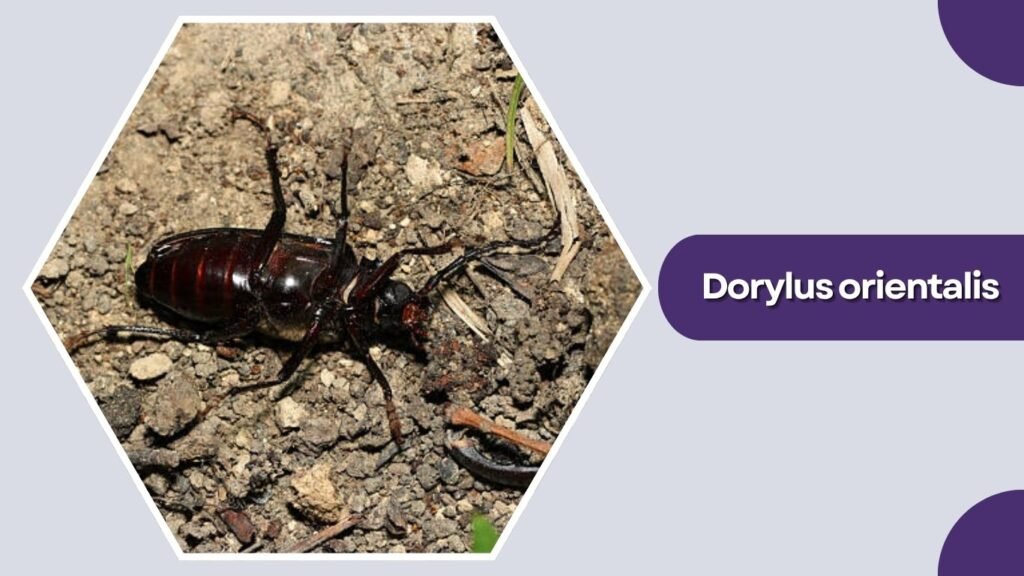
Dorylus orientalis is a subterranean Asian army ant often called the red ant in agricultural literature. It is especially notable because workers can damage roots and tubers, making it an economically significant pest in some farming regions.
Identification
- Workers are generally yellowish brown to reddish brown.
- They lack functional eyes and vary in size within a colony.
- Worker antennae have nine segments.
- Identification requires examining antennae and head structure; body color alone is insufficient.
Habitat and Distribution
This species occurs across parts of South and Southeast Asia, including India, Nepal, Bangladesh, and Thailand. It lives primarily in soil, where workers can move through underground passages without appearing on the surface.
Cultivated fields provide suitable habitat in some areas. Consequently, farmers may first notice damaged underground plant parts rather than an obvious ant trail.
Behavior and Diet
Unlike army ants described solely as animal predators, Dorylus orientalis has well-documented associations with plant feeding. Workers attack roots, underground stems, and tubers. Potatoes and several vegetable crops can suffer damage.
Bhutan’s National Plant Protection Centre identifies it as a pest of potatoes and cole crops. Research in northern Thailand also recorded it infesting Chinese radish. However, finding ants near a damaged plant does not by itself establish which species caused the injury; specimens should be identified.
Life Cycle
Development passes through egg, larval, pupal, and adult stages. Workers care for the brood within the underground colony.
The general Dorylus reproductive pattern involves wingless queens and winged males, with new colonies established through division of an existing colony. Precise development times and relocation schedules should not be assumed for this species from observations of other army ants.
18. Dorylus helvolus
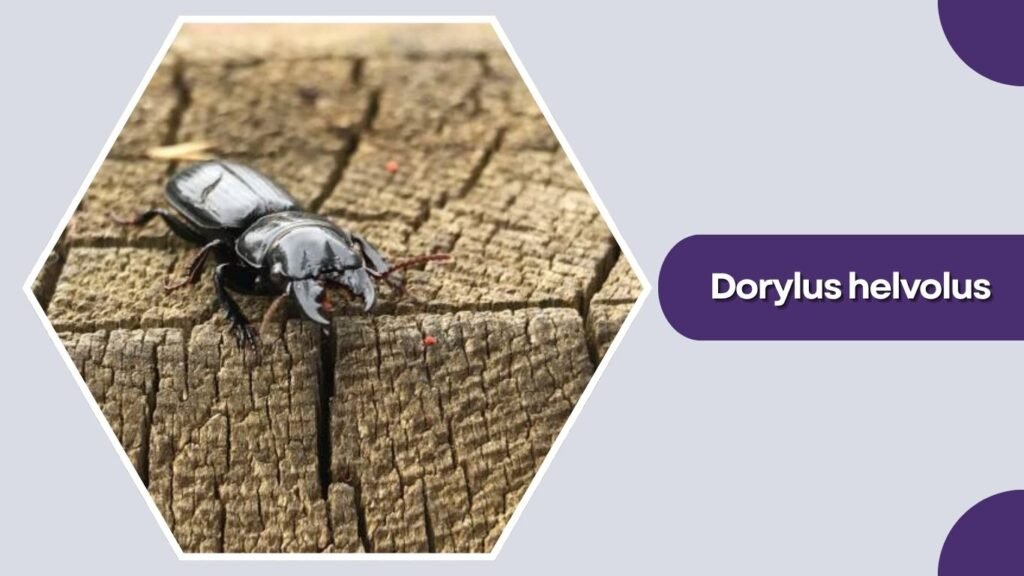
Dorylus helvolus is an African army ant whose workers and males look remarkably different. The large winged male was originally described by Linnaeus as a wasp, illustrating how easily the reproductive and worker forms can be mistaken for unrelated insects.
Identification
- Workers are reddish to yellowish red and lack functional eyes.
- Worker sizes vary, with larger individuals having more substantial heads and mandibles.
- Males possess wings and conspicuous eyes.
- The male’s elongated appearance gives rise to the informal description “sausage fly.”
Habitat and Distribution
This species occurs in Africa, including southern Africa. Its workers are associated with the ground and concealed foraging routes.
A flying male and a worker column provide very different kinds of evidence about its presence. Seeing a male does not necessarily reveal the location of the colony, because reproductive males can travel away from their natal nests.
Behavior and Diet
Dorylus helvolus is predatory. Historical observations include workers attacking earthworms, although this should not be interpreted as evidence that earthworms are its only food. Its feeding ecology belongs within the broader diversity of hunting strategies found among African driver ants.
The striking differences between males and workers also extend to their head anatomy. Researchers studying this species found differences in mouthpart structures and musculature associated with the distinct roles of reproductive males and colony workers.
Life Cycle
As in other Dorylus army ants, reproduction involves wingless queens and winged males. Workers provide the care needed by eggs, larvae, and pupae.
New colonies arise through colony division rather than a queen flying away to establish a nest alone. Species-specific egg production rates and brood development times should not be inferred from better-studied driver ants.
19. Dorylus fulvus
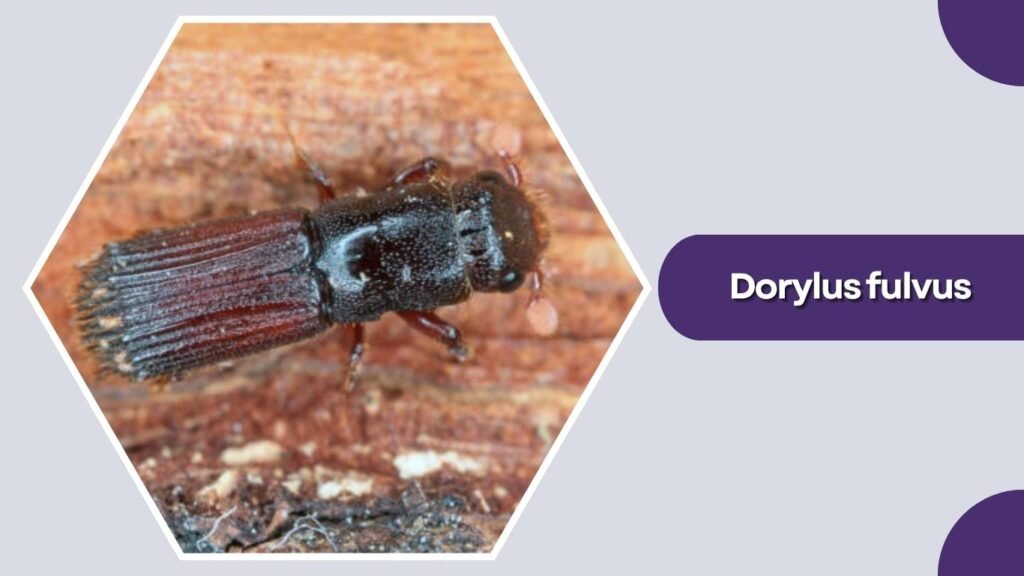
Dorylus fulvus is a subterranean African army ant with an important role as a predator of other social insects. Although its workers remain largely hidden underground, its winged males have helped researchers investigate how geographically separated populations remain genetically connected.
Identification
- Workers have 11-segmented antennae.
- Workers lack functional eyes and differ in size.
- Larger workers have prominent heads and powerful mandibles.
- Males have narrow, pincerlike mandibles, a useful feature in comparisons with certain other Dorylus species.
Habitat and Distribution
The species is reported widely across Africa, including Morocco and South Africa. It occupies underground habitats across multiple ecosystems.
Moroccan studies document its occurrence alongside another subterranean species, Dorylus aethiopicus. Distinguishing these ants requires attention to anatomical features, especially antennal segmentation in workers, rather than assuming every underground driver ant belongs to the same species.
Behavior and Diet
Dorylus fulvus attacks other social insects, including termites and ants. Published accounts identify Macrotermes termites among its prey and describe attacks involving other army ant colonies.
These interactions show that an underground colony can affect surrounding insect communities even when its hunting activity is rarely visible to people. Its concealed lifestyle also makes direct observation of colony movements difficult.
Life Cycle
Queens remain wingless, while males disperse by flight. Colonies reproduce through division, with a queen accompanied by workers.
A genetic study of South African populations found that males contributed much more strongly than queens to movement of genes between populations. In practical terms, flying males help connect colonies whose queens have comparatively limited mobility. This finding explains how populations can exchange genetic material despite the constraints of underground colony movement.
20. Dorylus labiatus

Dorylus labiatus is a South Asian army ant associated with life below ground. It is less familiar than the conspicuous surface-raiding species, and its identification is better documented than many details of its day-to-day colony behavior.
Identification
- Workers are uniformly brownish yellow.
- Worker antennae have 11 segments.
- Colonies contain workers of noticeably different sizes.
- It closely resembles Dorylus fulvus, making specialist comparison important for reliable identification.
Habitat and Distribution
The species was described from India and is also included in the published ant checklist of Sri Lanka. Indian records demonstrate that it is part of the region’s native army ant fauna.
Its subterranean habits make it easy to overlook during casual observation. Surveys concentrated on vegetation or exposed walking trails may provide an incomplete picture of ants living within the soil. A lack of visible surface activity therefore does not necessarily indicate local absence.
Behavior and Diet
Accounts describe Dorylus labiatus as predatory, but detailed information about its natural prey and hunting routines is limited. It should not automatically be assigned the same diet or spectacular swarm behavior as African driver ants.
Its similarity to other Dorylus species also makes identification relevant when interpreting feeding observations. Reports of an unidentified “red ant” attacking insects or underground plant parts cannot confidently be attributed to this species without examining specimens.
Life Cycle
Its development follows the ant sequence of egg, larva, pupa, and adult. Workers tend the developing brood and support the reproductive members of the colony.
The expected reproductive arrangement follows the broader army ant pattern: wingless queens, winged males, and colony division. However, precise brood development times, queen lifespan, and regular migration intervals are not sufficiently documented to provide dependable species-specific figures.
FAQs
Army ants have varied lifestyles. These answers explain their defining characteristics and some important differences between species.
1. What Are Army Ants?
Army ants are ants known for cooperative group foraging and colonies that relocate their nests. They belong to several genera, including Eciton and Dorylus. Their queens depend on workers, and new colonies generally form when an existing colony divides.
2. Where Do Army Ants Live?
Army ants occur mainly in tropical and subtropical regions of the Americas, Africa, and Asia. Depending on the species, they inhabit forests, grasslands, or agricultural areas. Many nest and forage underground, making them difficult to observe.
3. What Do Army Ants Eat?
Most army ants hunt insects and other invertebrates. Some specialize in attacking other ant colonies or termites. However, their diets differ: certain Asian Dorylus species also feed on underground plant parts, including roots and tubers.
4. Do All Army Ants Form Large Surface Swarms?
No. Although some species produce conspicuous surface raids, many forage through soil, leaf litter, or underground tunnels. Even among surface-foraging species, raids can differ in width, organization, and the kinds of prey targeted.
5. Do Army Ants Have Queens?
Yes. Army ant queens are wingless reproductive females supported by colony workers. Unlike queens of many other ants, they do not fly away to establish colonies alone. Colony reproduction generally involves splitting an established colony into groups, each with a queen and workers.